
Reviewed · SERENGETI SAFARIS
4 Day Mid-range Serengeti Safari
Tarangire’s giant baobabs and elephants make a fine opening act, but the real prize is the changing scenery: dry woodland, highland farms, open Serengeti plains, and the steep walls of Ngorongoro Crater. In four days, you get three of northern Tanzania’s major wildlife areas without having to arrange transfers, park fees, meals, or camps yourself.
I like the included 4×4 transport and park fees, which make the $1,800 price easier to understand. I also like the mix of accommodation, from Farm Dream Lodge to a tented camp and Ngorongoro Wildlife Lodge. The main drawback is time: the route covers long distances, so some days involve plenty of driving and only one main game drive.
The four things that matter most
- Tarangire begins the safari with elephants and baobabs, plus a picnic lunch inside the park.
- Seronera gives you the Serengeti’s central wildlife zone, including the Seronera River and its dependable water supply.
- Olduvai Gorge adds human history to a trip otherwise focused on animals and scenery.
- Ngorongoro Crater packs many species into one enclosed setting, with a strong chance of seeing lions, hyenas, buffalo, zebra, wildebeest, and elephants.
- The package includes a pop-up roof 4×4, guide, meals, water, lodging, and park fees, but drinks, visas, tips, and personal purchases cost extra.
- Communication has been a strong part of the service, with Lucas, Linah, and Safina handling trip questions and planning, while guides named David, Godlisten, Praise, Ombeni, and Abbu have led past safaris.
What this four-day safari is really designed to do
This is a compact northern Tanzania safari for someone who wants the headline parks without spending a full week on the road. You begin near Moshi, travel through Arusha, and then make a loop through Tarangire, Serengeti, and Ngorongoro.
The route works because each park offers a different setting. Tarangire is about elephants and old baobabs. The Serengeti gives you wide-open country and the classic search for predators. Ngorongoro is more concentrated, with animals gathered around permanent water and grassland inside an ancient volcanic crater.
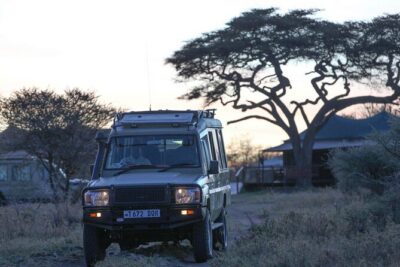
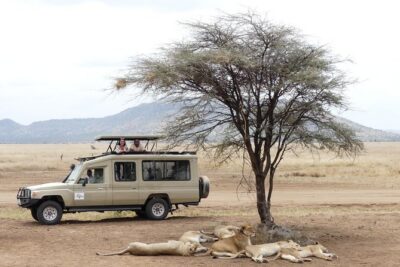
You ride in a 4×4 safari vehicle with a pop-up roof. That roof matters. It gives you a clear view for photographs and lets you watch animals while standing or sitting above the vehicle. Mineral water, meals, and park fees are included, so you are not constantly reaching for your wallet during the safari.
The listed maximum is 50 people, but the actual number in your vehicle may vary. Ask before booking how the group is divided among vehicles. A smaller vehicle group usually makes it easier to ask questions, choose a viewing position, and keep the day flexible.
Other park itineraries that start in Moshi:
- Safari Serengeti And Ngorongoro
★ 5.0 · 288 reviews - Big Five Safari In Tanzania
★ 5.0 · 99 reviews - Unforgettable Tanzania Safari And Zanzibar Beach
★ 5.0 · 97 reviews
Day one: Tarangire’s elephants and baobab country
After breakfast, the trip heads first toward Arusha for last-minute purchases. This is a useful stop if you need snacks, toiletries, or other supplies before entering the parks. Do not treat it as a sightseeing visit. It is mainly a practical chance to pick up anything you forgot.
From Arusha, you continue to Tarangire National Park. The park is especially known for its large elephant population and huge baobab trees. Its wildlife cycle can include thousands of elephants, wildebeest, and zebra, though animal sightings always depend on season, water, and the skill of your guide.
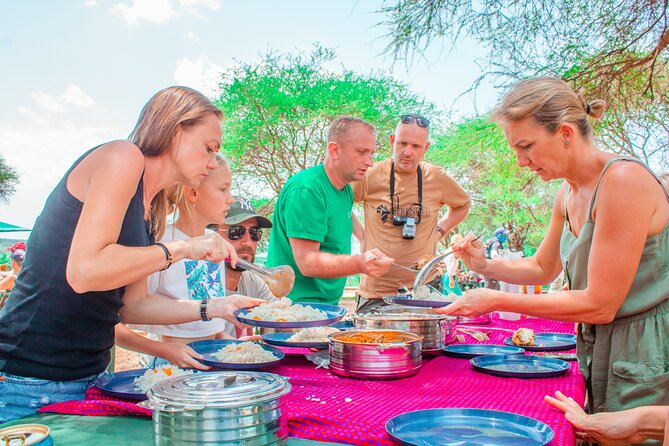
The first game drive comes with a picnic lunch in the park. That saves time and keeps you close to the wildlife instead of leaving for a restaurant outside the gates. You might find the day tiring because the transfer from the Moshi area, Arusha stop, park entry, game drive, and lodge arrival add up to a long first day.
Tarangire is a strong choice for the opening stop. The scenery changes quickly, and the elephants give you an immediate sense of the scale of northern Tanzania. The baobabs also provide a visual contrast to the open grasslands you see later in the Serengeti.
Dinner and overnight accommodation are at Farm Dream Lodge. The package describes this as a mid-range safari, so expect comfort rather than high-end luxury. Accommodation can be mixed across the trip, which is part of the appeal but also means you should not assume every night has the same style or facilities.
Day two: crossing the highlands into Seronera
Day two begins after breakfast with a long transfer toward Serengeti National Park. The route passes through the high farmland around Karatu and the Ngorongoro Conservation Area before dropping toward the Serengeti.
This is one of the most rewarding travel days for scenery, but also one of the hardest on your body. The distance is considerable, and much of the value comes from watching the country change outside the vehicle. If you prefer short drives and long stays at one camp, a four-day circuit may feel rushed.
The destination is the central Serengeti, particularly the Seronera area. The Seronera River provides a regular water source, which helps attract a broad mix of wildlife. This central zone is a sensible choice for a short safari because you are not spending all your time traveling to a remote corner of the park.
You arrive in time for lunch, followed by an afternoon game drive. The timing gives you a first look at the Serengeti before dinner, and the open plains create the kind of views many people picture when they think of Tanzania.
Dinner and overnight accommodation are at Domel Wilderness Tented Camp. A tented camp adds a closer connection to the setting than a conventional lodge, but it may feel less polished than a permanent hotel. Ask what type of bathroom and power setup will be available if those details matter to you.
The Serengeti is where your guide’s experience becomes especially useful. A good guide can explain animal behavior, read the terrain, and communicate with other vehicles about sightings. Guides named David, Godlisten, Praise, Ombeni, and Abbu have been associated with strong guest experiences, but you should confirm who will lead your departure because guide assignments can change.
Day three: early wildlife viewing and Olduvai Gorge
Day three begins with an early morning game drive in the Serengeti. Early starts are standard on safari for a practical reason: animals are often active before the heat of the day, and the softer light is better for photographs.
The schedule then turns toward the Ngorongoro Conservation Area. This change gives you a final chance to view the Serengeti before the route shifts from open plains to highland country.
A stop at Olduvai Gorge adds a different kind of interest. The site is associated with the anthropologists Louis and Mary Leakey and their discoveries of early human fossils, including Nutcracker Man and Handy Man. It gives the journey a useful human-history layer rather than making the entire trip about spotting animals.
Do not expect Olduvai Gorge to be a full museum visit unless your guide confirms the available time and access. On this schedule, it is a stop between major parks. Still, it helps explain why the Ngorongoro area matters beyond its wildlife.
Late in the day, you transfer to Ngorongoro Wildlife Lodge for dinner and overnight accommodation. The lodge is positioned for the crater visit that follows, which reduces the need for a very early transfer from a distant base.
Day three may feel less packed with animal viewing than day one or day four. That is not necessarily a weakness. You are moving between two major areas, and Olduvai gives the day a useful pause. The tradeoff is that the schedule leaves little room for delays.
Other safaris people book out of Moshi:
- 8-Day Essence of Tanzania Safari – Luxury
★ 5.0 · 72 reviews - Great Migration Safari In Tanzania
★ 5.0 · 71 reviews - 6 Days 5 Night Safari
★ 5.0 · 57 reviews - 4-day Tanzania Safari
★ 5.0 · 53 reviews
Day four: descending into Ngorongoro Crater
After an early breakfast, you descend more than 600 meters into Ngorongoro Crater. The descent is one of the trip’s memorable physical transitions. You move from the high rim into a broad enclosed area with grassland, water, and animal habitat.
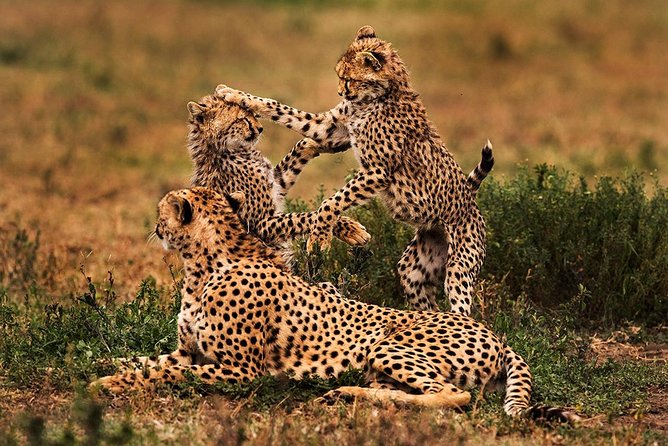
The crater supports wildebeest, zebra, buffalo, eland, warthog, hippo, and African elephants. It is also known for predators, including lions, hyenas, jackals, cheetahs, and the harder-to-spot leopard.
The crater’s compact setting gives you a good chance to see several species in one morning, though no guide can promise the full Big Five. Past guests on this route have sometimes seen all five, but you should treat that as a fortunate result rather than a guarantee.
You also visit Lake Magadi, a large, shallow alkaline lake in the crater’s southwestern corner. The lake is one of the crater’s main features and can draw wildlife, but the exact view depends on conditions and the route allowed that day.
This is the most concentrated wildlife day of the trip. If you have children, the chance to see familiar animals such as lions and elephants can make the day especially engaging. Families have also found the trip manageable when the children are comfortable with early mornings and long vehicle rides.
The supplied schedule does not give a detailed final transfer time or endpoint after the crater visit. If you need to catch a flight, connect with a hotel, or return to Moshi on a strict timetable, confirm the final drop-off and estimated arrival before paying.
What the $1,800 price includes
At $1,800 per person, this is not a budget safari. It is also not priced like a private luxury expedition. The value comes from combining three major parks with transportation, a guide, meals, lodging, water, and park fees in one package.
Included are:
- 4×4 transport with a pop-up roof
- An English-speaking professional guide
- Breakfast, lunch, and dinner according to the travel plan
- Mineral water
- Lodging in safari lodges and tented camps
- National park fees
The meal information lists four breakfasts and four lunches, along with three dinners. That is worth clarifying before departure because the daily schedule and inclusion list do not match perfectly on every meal. Alcoholic drinks and soft drinks are not included.
You also pay separately for a visa, tips, souvenirs, and other personal spending. Accommodation in Arusha can be arranged on request, but it is not part of the stated package. If you arrive early or need a night before the safari, ask for that cost in advance.
The package can be good value if you want the practical pieces handled for you. Park fees alone can add significantly to a self-arranged trip, and organizing vehicles, lodges, permits, and transfers requires time. The price is less attractive if you want private use of a vehicle, luxury accommodation, or a slow pace.
Guides, planning, and communication
The company has handled planning through contacts including Lucas, Linah, and Safina. Their roles appear to include answering questions, arranging payments, and shaping the trip before departure. That support matters in Tanzania, where small changes to pickup times, accommodation, or park access can affect the whole route.
The guide is the key person during the safari. Names connected with this program include David, Godlisten, Praise, Ombeni, and Abbu. Guests have highlighted clear explanations, animal expertise, calm driving, and the ability to answer questions.
Still, ask for the name of your assigned guide and the expected vehicle group before you arrive. The information states that the maximum group size can reach 50, so you should not assume a private safari or a small shared group unless it is confirmed in writing.
Pickup is offered, and the meeting information lists Kilimanjaro International Airport in the Kilimanjaro area. The stated start time is 12:00 am, which may be a system placeholder rather than your actual collection time. Confirm the local pickup time directly.
Who should book this safari
I would choose this trip if you have four days, want Tanzania’s best-known parks, and prefer one company to handle the moving parts. It suits first-time safari visitors, families who want a clear route, and people who value an English-speaking guide and included park fees.
It also suits you if you like variety. You get elephants and baobabs at Tarangire, open country in the Serengeti, fossil history at Olduvai Gorge, and concentrated wildlife in Ngorongoro Crater.
I would hesitate if you dislike long drives, need a slow schedule, or expect luxury accommodation every night. The route is ambitious for four days, and the mixed lodge and tented-camp setup may not offer the same level of comfort throughout.
Free cancellation is available up to 24 hours before the start time. Within 24 hours, the paid amount is not refunded, and late changes are not accepted.
Should you book it?
Book this safari if your priority is seeing the major northern Tanzania parks in a short, organized trip. The combination of Tarangire, central Serengeti, Olduvai Gorge, and Ngorongoro gives you a lot of variety for four days.
Before booking, confirm three things: your exact pickup time, the size of your vehicle group, and the final transfer after Ngorongoro. If those details suit you, the package offers a practical mid-range route with strong wildlife potential and a good balance of included services.
FAQ
Where does the safari start?
The meeting information lists pickup at Kilimanjaro Airport in the Kilimanjaro National Park area. Pickup is offered, but you should confirm the exact collection point and local time before departure.
How long does the safari last?
The safari lasts approximately four days.
Which parks and sites are included?
The route includes Tarangire National Park, Serengeti National Park, the Ngorongoro Conservation Area, Ngorongoro Crater, and a stop at Olduvai Gorge.
Is transportation included?
Yes. Transportation is provided in a 4×4 safari vehicle with a pop-up roof.
Is a guide included?
Yes. The package includes a professional English-speaking guide.
Are meals included?
Yes. Breakfast, lunch, and dinner are included according to the travel plan. The inclusion details list four breakfasts, four lunches, and three dinners, so confirm the exact meal plan when booking.
Are park fees included?
Yes. All national park fees are included.
What is not included in the price?
Alcoholic drinks, soft drinks, visa fees, tips, souvenirs, and other personal spending are not included. Accommodation in Arusha can be arranged separately on request.
What is the cancellation policy?
You can cancel at least 24 hours before the experience starts for a full refund. Cancellations and changes made within 24 hours are not accepted for a refund.
More Serengeti safaris from Moshi
- 5 Days Camping Tarangire, Serengeti & Ngorongoro crater & Visiting Maasai
★ 5.0 · 58 reviews - 4 Days Group Joining Camping Safari to Tarangire Serengeti Ngorongoro Crater
★ 5.0 · 50 reviews - 4 Day Private Tour Throughout Tarangire, Serengeti and Ngorongoro
★ 5.0 · 42 reviews - 7 Days Safari. Serengeti, Tarangire, Lake Manyara & Ngorongoro Crater.
★ 5.0 · 34 reviews
Just added in Moshi
- Kilimanjaro Airport Private Transfer from/to Moshi★ 5.0 · 14 reviews
- 6 Days Machame route Kilimanjaro climbing★ 5.0 · 22 reviews
- 7 Days Highlight of Tanzania Mid-Range Standard★ 5.0 · 22 reviews
- Kilimanjaro Climbing 5 days Marangu route★ 5.0 · 22 reviews
- Kilimanjaro Trekking 7Days 6Night Lemosho Route★ 5.0 · 23 reviews
- 6 Days: Classic Camping( Tarangire, Manyara, Serengeti And Ngorongoro).★ 5.0 · 26 reviews
- Mt Kilimanjaro Climb – 7 days Machame★ 5.0 · 26 reviews
- 10-Day Predators Tanzania Safari Luxury Package★ 5.0 · 24 reviews
Serengeti Safaris, compared.
Serengeti Balloon Safari and authentic bush breakfast
Read our review →
3 Days Serengeti & Ngorongoro Group Camping Safari
Read our review →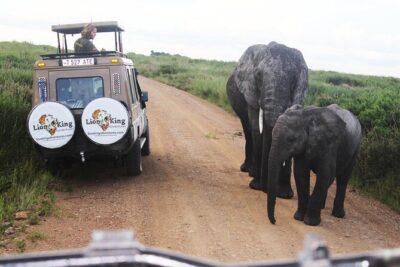
5-Day Highlights mid-Range Crater, Serengeti, Tarangire
Read our review →
Private 6-Day Tarangire Manyara Crater and Serengeti with Mid-Range Lodges
Read our review →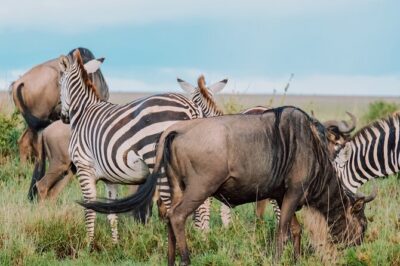
10-Day Serengeti Wildebeest Migration Safari from Arusha
Read our review →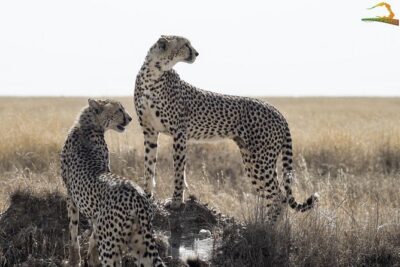
2 Day Serengeti Safari Experience from Mwanza
Read our review →Browse the lists this tour appears in