
Reviewed · MAASAI VILLAGE TOURS
Maasai World
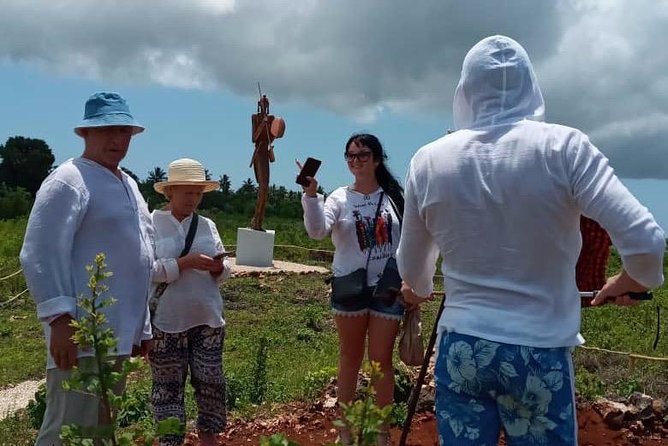
Maasai World gives you a chance to meet Maasai people in Zanzibar and learn about their customs through objects, stories, music, movement, and hands-on activities. You can see traditional clothing and tools, tour an authentic Maasai village, dance with the community, and try shooting a bow and arrow.
I like the direct contact with Maasai people, especially the chance to ask questions instead of simply walking past displays. I also like the modest $20 price, which covers about two hours of guided activities in a private booking for your own group. The main consideration is that the visit is focused on cultural presentation and participation, not a broad Zanzibar sightseeing tour, so you should come with that clear expectation.
Key points to know before you go
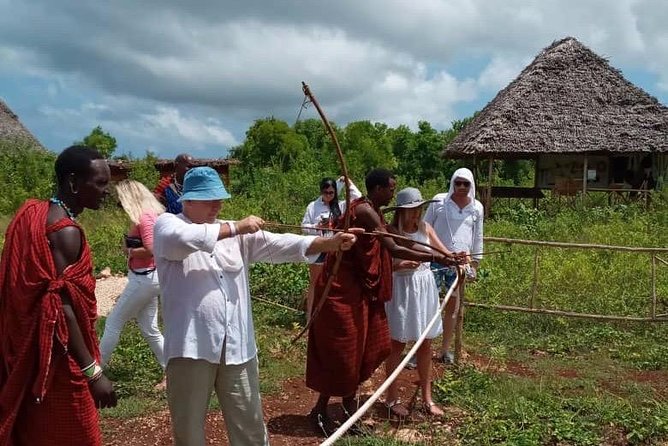
- A two-hour cultural visit: The program covers Maasai history, clothing, tools, daily life, dancing, and archery.
- Guide David may lead your visit: He has been praised for clear explanations about Maasai history and present-day life.
- You can ask direct questions: The format allows time to discuss customs and ways of living with Maasai people.
- The bow and arrow activity is hands-on: You do not only look at traditional equipment, you get a chance to use it.
- Your group stays together: This is a private activity, so only your group participates.
- Book ahead if your dates are fixed: The experience is often reserved about 33 days in advance, and online booking gives you a mobile ticket.
Meeting Maasai culture in Zanzibar
The first thing to understand is that Maasai World is not a museum with glass cases and a silent audio guide. It is built around contact, explanation, and participation. You visit a Maasai village in Mpandeni, learn about the people’s history and present-day life, and take part in activities connected to that culture.
That matters because cultural visits can easily become a quick photo stop. Here, the stated program gives you several ways to engage: you see clothing and tools, hear about customs, dance with Maasai people, and try a traditional bow and arrow. The mix gives you something to do while also leaving room for questions.
The visit lasts about two hours. That is long enough for a useful introduction without taking over your day in Zanzibar. I would treat it as a focused cultural appointment, then plan other activities around it rather than expecting a full-day village visit or a general tour of the island.
Other village visits from Zanzibar:
- Zanzibar: Sea Turtle Swim at Salam Cave in Kizimkazi Village
★ 4.2 · 368 reviews - Zanzibar: Quad Bike Adventure Tour to a Local Village
★ 4.9 · 166 reviews - Massai village & Baraka turtules aquarium
★ 4.7 · 42 reviews
What happens during the village visit
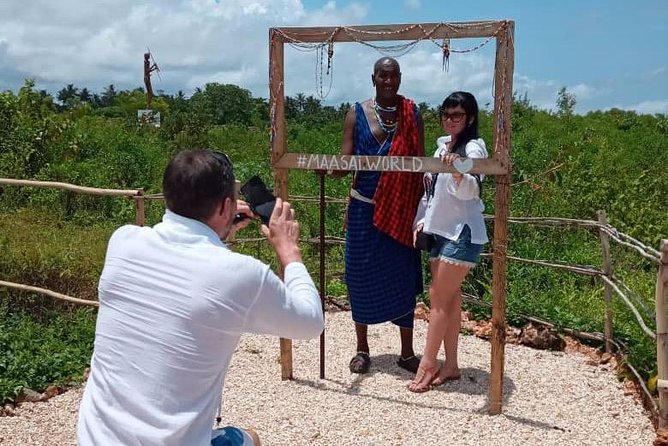
Your meeting point is Maasai World at 58H2+2CP, Mpandeni, Tanzania. The activity begins and ends there, so you do not need to keep track of a separate finish point. The attraction is open daily from 10:00 a.m. to 7:00 p.m. during the stated operating period, giving you a fair amount of choice when arranging your day.
The exact order can vary, but the visit is built around several connected parts. You learn about Maasai history and culture, look at traditional tools and clothing, tour the village, take part in dancing, and try archery. The best way to approach it is to see these as pieces of one lesson about daily life rather than separate performances.
The village setting gives the information a physical context. A tool is easier to understand when you can ask how it was used. Clothing becomes more than a costume when it is discussed alongside customs and identity. You might also gain more from the visit if you ask specific questions instead of waiting for a lecture to cover everything.
Clothing, tools, and everyday life
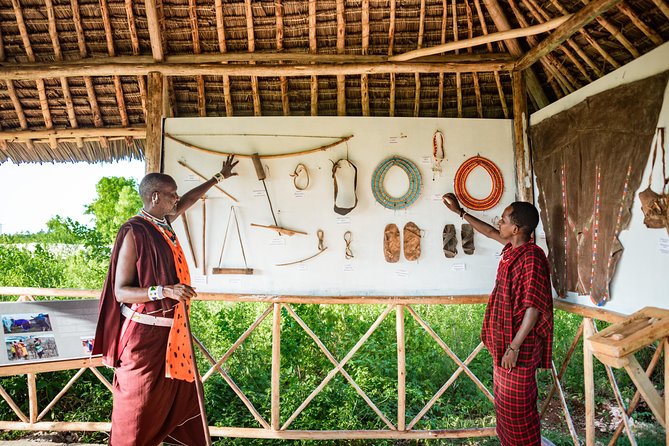
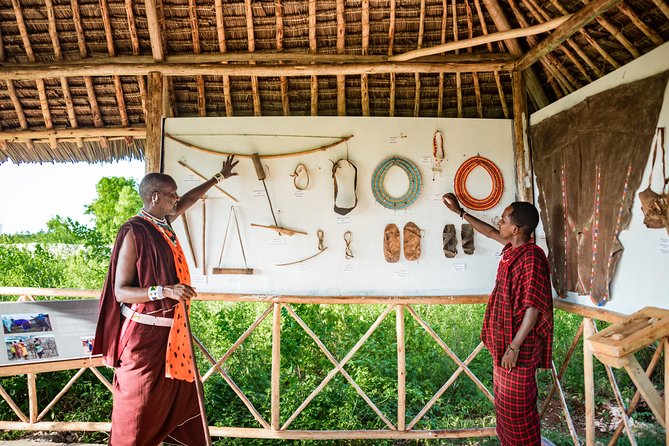
The display of Maasai clothing and tools is one of the most useful parts for anyone who wants more than a quick dance show. You get a chance to look at objects connected to Maasai life and ask how they fit into daily routines and customs.
The supplied description does not list each item or explain every tool in detail, so you should not expect a fixed museum-style catalog. What you can expect is an introduction to the types of clothing and equipment traditionally used by Maasai people, along with explanations about their way of living.
This open format can be a strength. You can direct the conversation toward topics that interest you, such as family life, clothing, work, customs, or changes over time. Guide David has been praised for discussing both Maasai history and present-day life, which is important. A culture should not be presented as if it belongs only to the past.
One point deserves care. Some customs may be unfamiliar or difficult for visitors from Western countries to understand. That does not make them less important, but it does call for respectful questions and a willingness to listen. The value of this visit is not that every practice will match your own outlook. It is that you get a chance to hear explanations directly and consider a different way of living.
Dancing with the Maasai
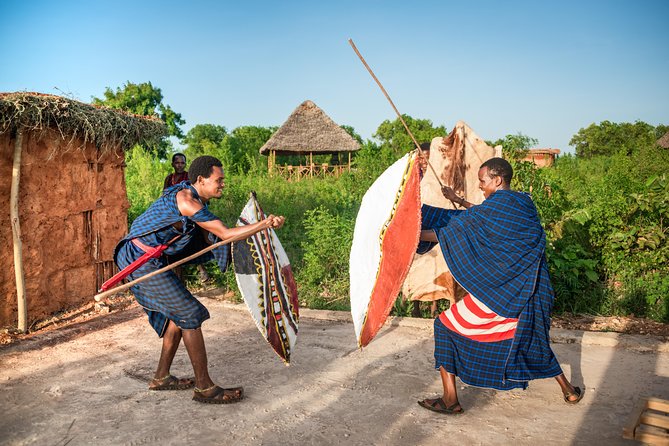
Dancing is part of the planned visit, and it brings energy to what could otherwise feel like a classroom lesson. You are not only hearing about Maasai culture, you are invited into an activity involving movement and shared attention.
The information provided does not specify the length or exact form of the dancing, so it is best to think of it as one part of the two-hour program rather than a full evening performance. You may take part, watch, or do both, depending on how the activity is handled during your visit.
I like this part because it gives you a natural way to interact without needing a perfect set of questions. Cultural exchange often works best when it is not limited to a speech. Still, you should keep your approach respectful. Participate because you want to engage, not because you expect a staged show built only for photographs.
For families and groups, dancing may be the most accessible activity. It gives younger visitors something active to do, while adults can pay attention to the social meaning and presentation. It also helps break up the discussion of history, tools, and clothing.
Same base, a different kind of day out:
- From Zanzibar: Mikumi Safari Day Trip with Flights and Meal
★ 4.7 · 1,470 reviews - Zanzibar: Quad Bike Adventure departing from Kendwa or Nungwi
★ 4.9 · 1,233 reviews - Zanzibar: Stone Town, Spice Tour, Prison Island with Lunch
★ 4.4 · 1,219 reviews - From Zanzibar: Day Selous Game Reserve Safari with Flights
★ 4.7 · 1,025 reviews
Trying the traditional bow and arrow
The bow and arrow activity is the clearest hands-on feature. You get to try a traditional form of equipment rather than only seeing it displayed. That small act can make the discussion of tools more memorable.
The supplied information does not state the exact setup, distance, safety instructions, or number of attempts. For that reason, I would not book this expecting a detailed archery lesson or a sports session. Think of it as a cultural activity connected to the broader explanation of Maasai life.
You may find this especially appealing if your group wants a little action during a cultural visit. It also gives children and teenagers a simple way to stay involved, though the activity is open to most participants rather than designed only for a particular age group.
Ask for guidance before handling the equipment and follow the instructions given on site. The point is to try a traditional skill in context, not to test your aim or turn the visit into a competition.
Asking questions and hearing present-day perspectives
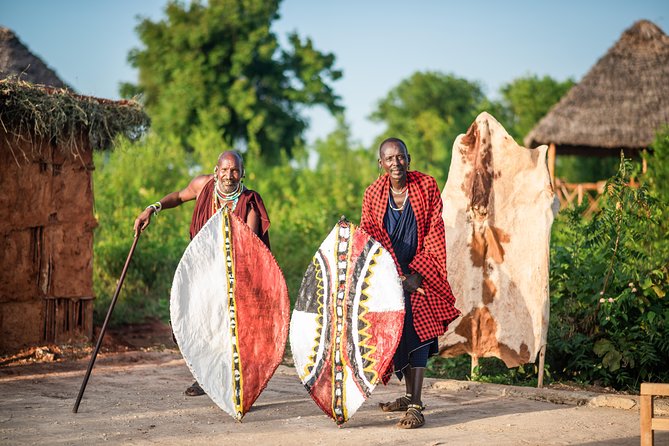
Time for questions may be the strongest feature of the experience. You can ask Maasai people about local customs and daily life rather than relying only on a prepared description. That makes your own interests part of the visit.
Guide David has been specifically praised for explaining how Maasai people have developed over time. His role appears to include both historical context and discussion of current life, which gives the visit more balance than a presentation focused only on old traditions.
Come prepared with a few thoughtful questions. You might ask how clothing is used, how tools fit into daily routines, how customs have changed, or what parts of Maasai life are often misunderstood. The available information confirms that questions are welcome, but it does not promise that every subject will be covered in a set order.
You should also allow room for answers that challenge your assumptions. A good cultural visit does not flatten people into a colorful symbol. The opportunity to hear direct explanations is valuable precisely because it can complicate what you thought you knew.
Why the private format matters
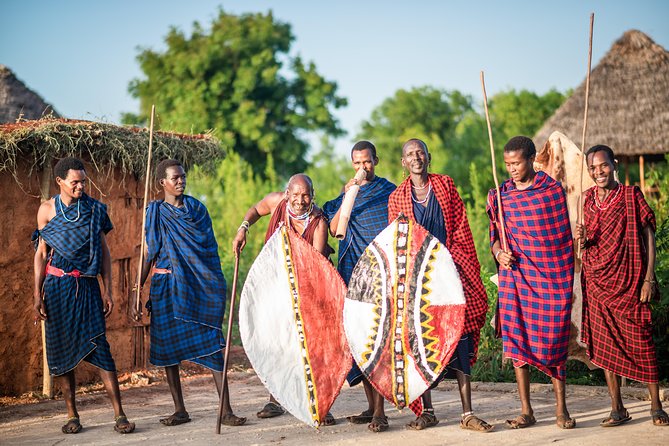
This is a private activity, meaning only your own group participates. That can make a noticeable difference. You do not have to compete with a large crowd to hear the guide, and your questions can shape the conversation more easily.
A private booking can also suit groups with different levels of interest. One person may want to focus on clothing and tools, while another is more interested in history or the bow and arrow activity. A shared guide can move between those interests without the rigid pace of a large tour.
The tradeoff is that a private format does not automatically mean a fully customized itinerary. The listed program still centers on the same village visit, cultural explanation, dancing, and archery. You should expect a private group setting, not a completely bespoke cultural study.
The activity is also listed as suitable for most participants, near public transportation, and open to service animals. Those are useful practical points, though the information does not give details about ground conditions, seating, or specific mobility arrangements. If you have access needs beyond the general information provided, confirm them before booking.
Is $20 a fair price?
At $20 per person, Maasai World is priced as a short, focused cultural activity rather than a major full-day excursion. The value depends on what you want from your time in Zanzibar.
I think the price is fair if you want direct cultural contact, an explanation of clothing and tools, a village visit, dancing, and a hands-on activity in one appointment. The private format adds value for a small group because you are not joining a large mixed party.
The price will feel less worthwhile if you are looking for transport from your hotel, a long guided tour of Zanzibar, or a detailed workshop in archery. No transport service is included in the information provided, and the meeting point is at Maasai World in Mpandeni. Plan how you will reach the site before you reserve.
The experience has received a 4.9 rating from 46 reviews, with 100 percent recommending it. That is a strong signal of satisfaction, especially for a small cultural attraction. I would still judge it by fit: the visit works best for someone curious about Maasai culture and willing to participate, not for someone seeking a passive sightseeing stop.
Timing, tickets, and cancellation
The attraction is open Monday through Sunday from 10:00 a.m. to 7:00 p.m. The activity itself takes about two hours. Since the visit begins and ends at the same meeting point, you can place it before or after another plan, but allow enough time to arrive without rushing.
You receive confirmation when booking, and the ticket is mobile. The experience is often reserved about 33 days ahead, so I would book early if you are visiting Zanzibar on fixed dates or during a busy period.
Free cancellation is available if you cancel at least 24 hours before the start time. A cancellation inside that 24-hour window is not refunded, and changes made within that period are not accepted. The cut-off uses local time, so check your booking carefully before the deadline.
Who will enjoy Maasai World most?
I would recommend this visit to you if you enjoy cultural learning with some participation. It suits couples, families, small private groups, and anyone who wants to ask questions rather than simply take photographs.
It may be especially useful for visitors who have seen documentaries or read about the Maasai but want a direct introduction to people, objects, and customs. One particularly enthusiastic participant had followed Maasai documentaries for more than a decade and found the chance to meet Maasai men and women meaningful. You do not need that level of prior interest, but curiosity will make the visit better.
The experience also suits groups who want a manageable two-hour activity. A group of 10 journalists and professional colleagues enjoyed the combination of education and entertainment and returned with a smaller group the following year. That suggests the format can work for both larger private groups and repeat visitors.
I would hesitate to recommend it if you dislike interactive activities, want a strictly academic museum visit, or expect an extensive tour across Zanzibar. The program is compact and people-focused. Its success depends on your interest in listening, asking, and taking part.
Should you book Maasai World?
Book Maasai World if you want a short, reasonably priced introduction to Maasai culture that includes real interaction, questions, dancing, and a bow and arrow activity. Guide David may add particular value through his explanations of both past and present Maasai life.
The best reason to go is the combination of direct conversation and participation. You are not limited to looking at objects. You can connect the clothing and tools to customs, hear about daily life, and test a traditional skill.
Skip it if your priority is a full-day Zanzibar tour, hotel transport, or a formal archery course. For everyone else, the $20 fee and two-hour schedule make this an easy cultural addition to a Zanzibar itinerary. Reserve ahead if your dates matter, arrive ready to ask respectful questions, and treat the village visit as a chance to learn rather than a quick photo stop.
FAQ
Where is Maasai World located?
Maasai World is located at 58H2+2CP, Mpandeni, Tanzania, in Zanzibar.
How long does the activity last?
The visit lasts approximately two hours.
What time is Maasai World open?
Maasai World is open Monday through Sunday from 10:00 a.m. to 7:00 p.m. during the stated operating period.
What does the visit include?
The visit includes information about Maasai history and culture, traditional tools and clothing, a village tour, dancing with Maasai people, an arrow and bow activity, and an introduction to their way of living.
Can I try a bow and arrow?
Yes. The program includes a traditional bow and arrow activity.
Can I ask questions about Maasai customs?
Yes. The experience gives you the opportunity to ask Maasai people questions about local customs and daily life.
Is this a private tour?
Yes. Only your group participates in this private activity.
How much does Maasai World cost?
The listed price is $20 per person.
Is a mobile ticket available?
Yes. The experience includes a mobile ticket, and confirmation is received when you book.
What is the cancellation policy?
You can cancel at least 24 hours before the start time for a full refund. Cancellations or changes made less than 24 hours before the start time are not accepted, and the amount paid is not refunded.
Just added in Zanzibar
- Jet Ski Experience from Kendwa Beach★ 5.0 · 21 reviews
- Zanzibar: Parasailing Experience with Instructor★ 4.2 · 17 reviews
- Stone Town: Sunset Dhow Cruise Experience★ 4.0 · 22 reviews
- Stonetown Historical Walking Tour & Traditional Lunch★ 4.8 · 22 reviews
- 2h-Quad Zanzibar: Explore the heart of zanzibar by Quad★ 4.8 · 22 reviews
- From Zanzibar: 3-Day Selous Safari Trip with Flights★ 4.4 · 22 reviews
- Full-Day Private Stone Town Spice Farm and Prison Island Tour★ 4.5 · 24 reviews
- Full-day Prison Island, Nakupenda and Stone Town Tour with Lunch Buffet★ 4.5 · 26 reviews
Maasai Village Tours, compared.

Sea Turtle Swim at Salam Cave in Kizimkazi Village
Read our review →

Maasai village visit, Materuni waterfalls & coffee experience
Read our review →
Materuni Waterfalls, Visiting Chagga Village, CoffeeTour Kikuletwa Hotsprings
Read our review →
5 Days Camping Tarangire, Serengeti & Ngorongoro crater & Visiting Maasai
Read our review →

Hidden Arusha Waterfall, Coffee & Village Tour (All-Inclusive)
Read our review →Browse the lists this tour appears in