
Reviewed · MAASAI VILLAGE TOURS
Jambiani Village Women at work and play
Jambiani Village Women at Work and Play brings you into the everyday world of a Zanzibar coastal village. You move from women’s homes to the beach, watching coconut husks become rope and doormats, seeing seaweed cultivation, and learning how a kanga is worn. The guide comes from Jambiani, which gives the walk a personal connection that a standard sightseeing circuit cannot match.
I like the close look at practical skills, especially the chance to try coconut-fiber weaving and palm-leaf work rather than simply admire finished crafts. I also like the private format, since your group can spend more time with a craftswoman or ask questions without keeping up with a large tour.
The main caution is timing. The advertised visit can last up to three hours, but one account describes only about 1.5 hours of village activity, with much of the day taken up by transport. Confirm the schedule and pickup plan before you pay, especially if you are coming from Stone Town.
Key points to know before booking
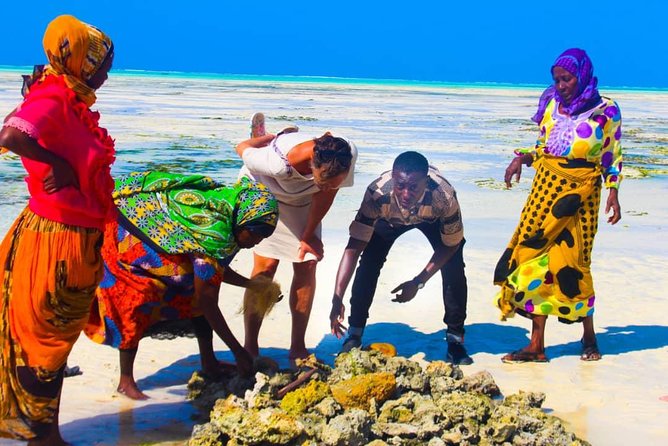
- Seaweed work on the beach: See where local women collect and cultivate seaweed, an important part of coastal life in Jambiani.
- Hands-on craft demonstrations: Watch coconut rope, husk doormats, palm-leaf and makuti weaving, plus handmade kofia sewing.
- A village guide with local ties: Ameir is named in one account as a warm and helpful guide from the community.
- Private attention: Only your group takes part, making it easier to ask questions and adjust the pace.
- Optional lunch in a woman’s home: Arrange it at least 48 hours ahead, including any dietary needs.
- A walking tour with a real physical limit: You should be comfortable walking more than 2 kilometers.
Meeting Jambiani through its working women

Jambiani is not presented as a collection of monuments. Its interest lies in ordinary work, family homes, shoreline activity, and skills passed from one generation to the next. That makes this a useful choice if you want to see how people live, rather than spend another morning moving between polished attractions.
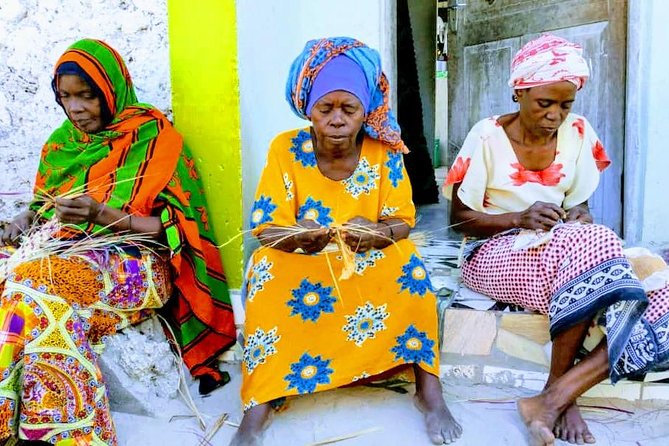
Your guide leads you to several women’s homes. This home-based format gives the experience a human scale. You are not watching a staged dance performance or touring a large workshop. Instead, you see individual women making useful household items and clothing by hand.
The visit also gives you a chance to understand the value of materials that might otherwise look like beach debris. Coconut husks collected along the shore can become strong rope and textured doormats. Palm leaves can be woven into household goods, while makuti work shows how plant materials are shaped into practical items.
I would approach this part with patience and respect. The point is not to rush through a checklist of crafts or treat the homes like exhibits. Watch how the work is done, ask sensible questions, and buy something only if you genuinely want it. The setting is part of the experience, so expect a village visit rather than a formal museum.
Other village visits from Zanzibar:
- Zanzibar: Sea Turtle Swim at Salam Cave in Kizimkazi Village
★ 4.2 · 368 reviews - Zanzibar: Quad Bike Adventure Tour to a Local Village
★ 4.9 · 166 reviews - Maasai World
★ 5.0 · 46 reviews
From coconut husks to rope and doormats
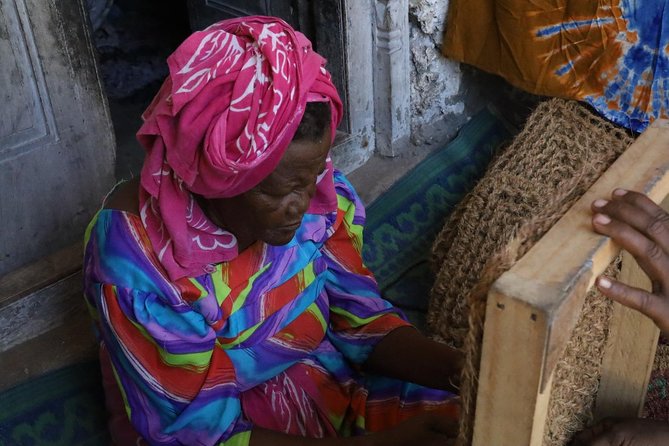
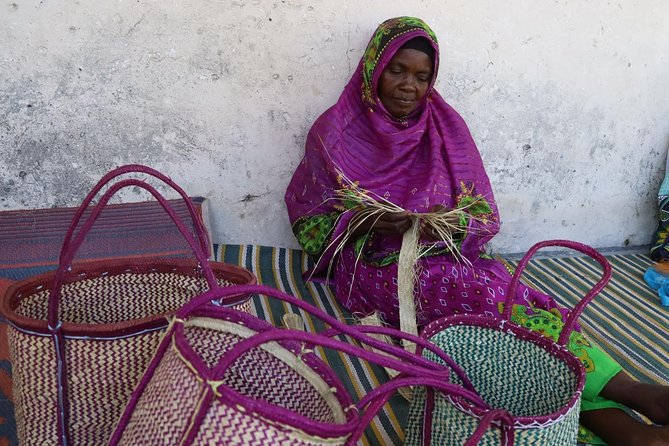
The craft demonstrations are the most hands-on part of the walk. You can watch the women turn coconut fiber into rope and doormats, then try weaving the material yourself. The work looks simple until you handle it. Fibers must be gathered, aligned, twisted, and woven with enough tension to hold their shape.
That small attempt helps explain the value of handmade goods. A doormat made from coconut husks is not just a souvenir with a tropical look. It represents time, local material, and a useful skill. Trying the process also gives you a better sense of how much labor sits behind an inexpensive-looking object.
Palm-leaf weaving adds another layer. You may try working with the leaves as the women show you the basic method. The supplied information does not promise that you will complete a finished item, so think of this as a short practical lesson, not a full craft class.
The tour also includes traditional handmade kofia sewing. A kofia is a brimless cap worn in parts of East Africa, and the sewing demonstration gives you a look at another kind of local handiwork. I like the mix of fiber work and clothing because it keeps the visit from feeling like one repeated demonstration.
Seeing seaweed cultivation along the shore
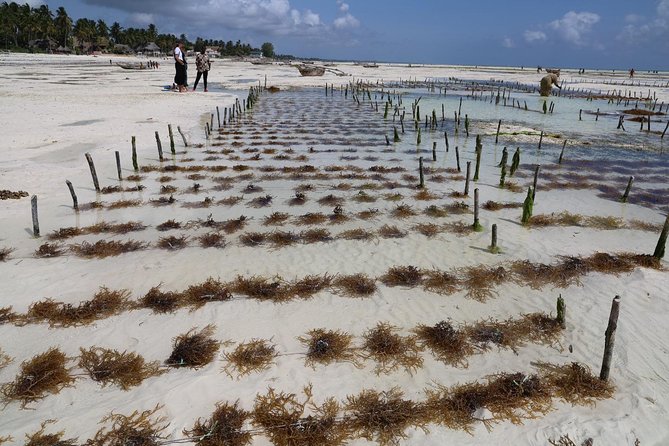
The walk goes to the beach to see women collecting seaweed and learn how it is cultivated. This changes the focus from home craft to coastal work. You get a clearer picture of how the sea supports daily life and income in Jambiani.
The beach visit is not simply a scenic pause. You are there to understand the work. Your guide can explain what the women are doing and how seaweed fits into the community. The supplied details do not specify the exact season, tide, or amount of time spent on the shore, so ask your guide what conditions mean on the day of your visit.
This is one reason the village guide matters. A guide who comes from Jambiani can connect the beach activity with the homes and crafts you have already seen. Instead of treating each stop as an isolated photo opportunity, you can ask how the different kinds of work fit into local life.
Bring practical walking gear. The tour includes homes, village paths, and the beach, so comfortable shoes and sun protection make sense. You should also be realistic about the walking distance. The activity is not recommended for someone who cannot walk more than 2 kilometers.
Learning to wear a kanga
The kanga demonstration adds a social and cultural detail that many sightseeing walks skip. You learn how this traditional garment is worn, rather than simply seeing one hanging in a shop.
The demonstration is also interactive. If you want to take part, you can try arranging the cloth yourself. The activity may be especially appealing to women, since one account specifically notes that women can try some of the work shown by the local craftswomen. The exact level of participation depends on the visit, so do not expect a formal costume presentation.
I like this kind of lesson because clothing often explains daily customs better than a long speech. How a garment is wrapped, held, or adjusted tells you something about practical life and personal presentation. Keep the tone light and respectful, and let the women lead the demonstration.
Same base, a different kind of day out:
- From Zanzibar: Mikumi Safari Day Trip with Flights and Meal
★ 4.7 · 1,470 reviews - Zanzibar: Quad Bike Adventure departing from Kendwa or Nungwi
★ 4.9 · 1,233 reviews - Zanzibar: Stone Town, Spice Tour, Prison Island with Lunch
★ 4.4 · 1,219 reviews - From Zanzibar: Day Selous Game Reserve Safari with Flights
★ 4.7 · 1,025 reviews
Henna adds a short, playful finish
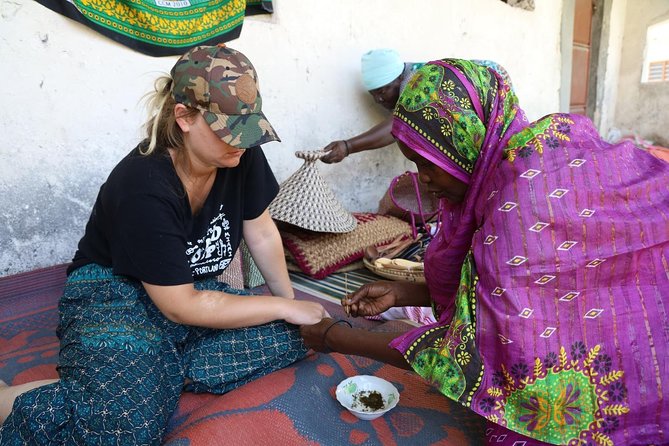
Henna painting is another included activity. The supplied information does not say how large or elaborate the design will be, so think of it as a brief cultural experience rather than a dedicated henna appointment.
You may want to ask about the design and how long it needs to dry before it begins. No specific advice is provided about ingredients or aftercare, so if you have skin sensitivities, mention them before taking part. The tour description confirms the activity, but not the type of henna or the exact design options.
Along with the kanga lesson, henna gives the walk a more social feel. You are not only watching people work. You are taking part in small, simple activities that make conversation easier.
An optional lunch in a woman’s home
Lunch is available for an extra charge in one of the women’s houses, but it must be arranged at least 48 hours in advance. You also need to provide dietary requirements when booking so the meal can be prepared properly.
I see this as a worthwhile add-on if you want to slow the visit down and spend more time in the community. A meal in a local home can make the experience feel less like a short walk between demonstrations. At the same time, it adds planning and cost, so it is not necessary if your main goal is to see the crafts and beach work.
Do not wait until the morning of the tour to request lunch. The required notice is clear. Tell the operator about allergies, vegetarian needs, or other restrictions when you arrange the meal. The information confirms that special diets can be considered, but it does not list a set menu.
Why the private format matters
This is a private activity, so only your group takes part. That is a meaningful advantage here. A large group would make it harder to fit comfortably inside homes, ask questions, or try weaving without getting in the way.
A private guide can also adjust the emphasis. You may care most about seaweed cultivation, while another group might want more time on sewing or kanga dressing. The tour is described as flexible and personal, although the exact amount of flexibility depends on the day and the women available to demonstrate their work.
A private format does not automatically mean every stop will be longer. One account found the active village visit shorter than expected, around 1.5 hours rather than three. Ask for a clear breakdown of walking time, transport time, and time with the craftswomen before booking.
Price, transport, and the real value
The price is $32.65 per person. For a private, local-led walk with several home visits, craft demonstrations, beach activity, and interactive elements, that can be fair value if you are already staying near Jambiani.
The calculation changes if you need transport from Stone Town. Hotel pickup there is available for an extra charge starting at $45. That fee can make the total cost much higher than the headline price, particularly for one person. If you are traveling with a small group, ask how the transport charge is applied and compare it with arranging your own transfer.
Group discounts are available, which may help families or friends sharing the experience. The private format also means you are paying for personal attention instead of joining a large group at a lower price. I would book it for the access and local contact, not for a long list of sights.
The activity is often booked about 41 days ahead. That does not guarantee that every date sells out, but it suggests that you should plan early if your Zanzibar schedule is tight. Confirmation is sent within 48 hours of booking, subject to availability.
Timing, walking, and what to clarify
The stated duration is about two to three hours, with the village visit described as three hours. In practice, the time can feel shorter if transport takes up a large part of the day. One account specifically reported about 1.5 hours of touring, so I would confirm the expected start and finish times before committing to another activity afterward.
You should be comfortable walking more than 2 kilometers. Since the route includes homes, village paths, and the beach, it may not suit anyone with limited walking ability. Service animals are allowed, and most people can take part.
The activity requires good weather. If poor weather forces cancellation, you can choose another date or receive a full refund. You can also cancel for a full refund up to 24 hours before the start time. Changes or cancellations made inside that 24-hour window are not accepted for a refund.
Who will enjoy this Jambiani walk?
I would choose this for you if you want contact with local people, enjoy watching traditional work, and prefer a small private experience to a packed sightseeing group. It suits curious visitors who want context for Zanzibar’s coastal economy and household crafts.
Families may enjoy the hands-on parts, though the walking distance and home setting should fit your group. Couples and small groups can use the private format to set a comfortable pace. The optional lunch is a good fit if you want more time around the village and can plan ahead.
I would be more cautious if you have only a short window in Zanzibar and are staying in Stone Town. The additional $45 pickup fee and the drive can take a large share of your day. I would also skip it if you want a polished performance, a formal cooking class, or a guaranteed three-hour schedule filled with activities.
Should you book Jambiani Village Women at Work and Play?
Book it if your priority is direct contact with village life, women’s crafts, seaweed work, and small activities such as kanga dressing and henna. The strongest parts are the local guide, private setting, and chance to see useful goods made from coconut husks and palm leaves.
Before booking, confirm the active tour duration, transport plan, and whether lunch is desired. If you are staying near Jambiani, $32.65 is a reasonable price for a personal village walk. If you need Stone Town pickup, calculate the full cost first. For the right visitor, this is a thoughtful, grounded addition to a Zanzibar trip, but its value depends on accepting a simple village visit rather than expecting a tightly timed attraction.
FAQ
How long does the Jambiani village tour last?
The experience is advertised as approximately two to three hours, with the walking visit described as three hours. The actual village activity may be shorter if transportation takes up part of the day, so confirm the timing before booking.
What crafts will I see in Jambiani?
You can see women making coconut rope and doormats from coconut husks collected on the beach. The visit also includes palm-leaf and makuti weaving, traditional handmade kofia sewing, and opportunities to try some of the work.
Is lunch included?
No. Lunch is optional and costs extra. It can be served in one of the women’s homes, but you must provide at least 48 hours’ notice and share any dietary requirements.
Is hotel pickup included?
No. The private local guide is included, but pickup from a Stone Town hotel is available for an extra charge starting at $45.
How much walking is involved?
You should be able to walk more than 2 kilometers. The activity includes village walking, visits to homes, and a beach visit, so it may not suit people with limited walking ability.
Can I cancel for a refund?
Yes. You can cancel at least 24 hours before the start time for a full refund. Cancellations or changes made less than 24 hours before the activity are not refunded, and poor-weather cancellations offer either another date or a full refund.
Just added in Zanzibar
- Jet Ski Experience from Kendwa Beach★ 5.0 · 21 reviews
- Zanzibar: Parasailing Experience with Instructor★ 4.2 · 17 reviews
- 2h-Quad Zanzibar: Explore the heart of zanzibar by Quad★ 4.8 · 22 reviews
- From Zanzibar: 3-Day Selous Safari Trip with Flights★ 4.4 · 22 reviews
- Stone Town: Sunset Dhow Cruise Experience★ 4.0 · 22 reviews
- Stonetown Historical Walking Tour & Traditional Lunch★ 4.8 · 22 reviews
- Zanzibar: Prison Island, Nakupenda, Stone Town Trip with BBQ★ 4.3 · 25 reviews
- Zanzibar : Secret Beach, Kuza Cave and Jozani with transfer★ 4.2 · 27 reviews
Maasai Village Tours, compared.

Sea Turtle Swim at Salam Cave in Kizimkazi Village
Read our review →

Maasai village visit, Materuni waterfalls & coffee experience
Read our review →
Materuni Waterfalls, Visiting Chagga Village, CoffeeTour Kikuletwa Hotsprings
Read our review →
5 Days Camping Tarangire, Serengeti & Ngorongoro crater & Visiting Maasai
Read our review →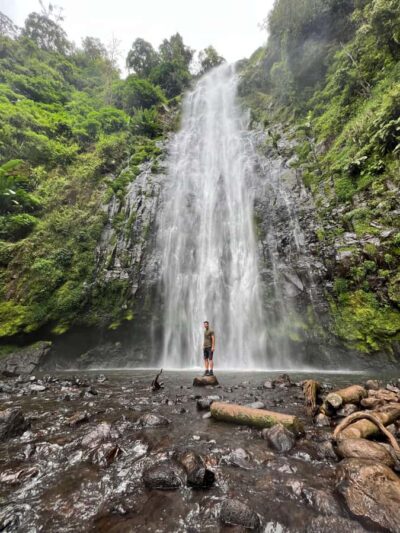

Browse the lists this tour appears in