
Reviewed · WALKING TOURS
Dar es Salaam City Center: Walking Tour
Dar es Salaam reveals itself best on foot, especially around the Kivukoni Fish Market, where the city’s seaside trade, working fishermen, and everyday food culture come together. This two-hour walk links that local scene with churches, monuments, gardens, an art gallery, and old government buildings.
I like the way Derick Lawrence connects grand landmarks with ordinary city life. I also like the flexible timing and route. One guest shifted from 2 p.m. to 5 p.m. to avoid the strongest heat, while another replaced the fish market with Coco Beach because of a smell allergy. The main caution is simple: two hours is tight, and one person felt the pace left too little time for photographs.
Key points at a glance
- Kivukoni Fish Market: The most hands-on stop, with seafood sales, fishermen at work, and the option to try local street food.
- Derick Lawrence as guide: Expect clear explanations about Dar es Salaam, Tanzania, colonial rule, the sultanate period, and modern city life.
- A flexible route: The tour can be adjusted around your interests, timing, and comfort.
- Six central sights: Churches, the Askari Monument, Botanical Garden, Old Boma, the fish market, and local art fit into one short outing.
- Useful first look: This is a good way to get your bearings before exploring Dar es Salaam on your own.
- Walking pace matters: Wear comfortable shoes, allow time for heat, and tell Derick if you want more photo stops.
Why this short walk works in Dar es Salaam
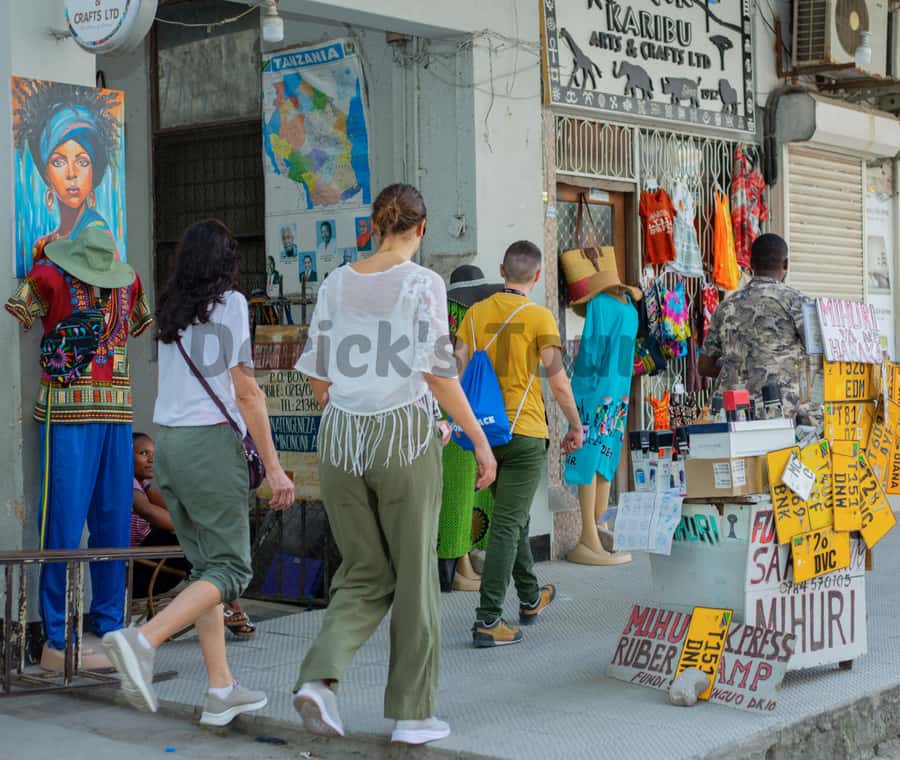
Dar es Salaam is Tanzania’s economic and cultural center, but its central sights are not packaged into one neat historic quarter. A church may sit near a busy road. A colonial-era building may share the same area with shops, offices, traffic, and street trade.
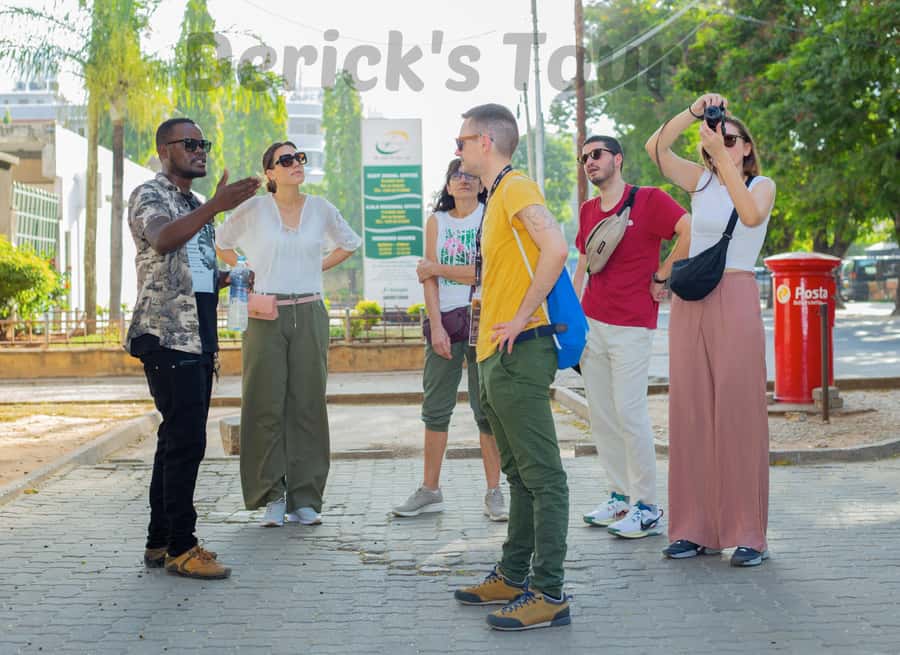
That is why a guide adds real value here. Derick does not simply point at buildings. He explains how the city developed and places its landmarks within the wider story of Tanzania. You can ask about the sultanate period, German influence, British rule, independence, culture, and present-day life as you walk.
The tour is priced at $30 per person for two hours. I see that as fair if you want a personal introduction rather than a list of names and dates. You are paying for local interpretation, route planning, and the chance to ask questions. It is less attractive if you prefer to linger at every stop or explore at a slow photographic pace.
The format also works well for a first afternoon in town. You can see several important places, learn how the center fits together, and then decide where to return later. The tour is offered in English, and the guide has been praised for explaining clearly and answering questions in detail.
Other guided walks in Dar es Salaam:
- Stone Town Private Walking Tour
★ 5.0 · 371 reviews - Zanzibar: 3 Hours Private Stone Town walking Tour with Guide
★ 4.6 · 301 reviews - Zanzibar: Stone Town Historical Cultural Walking Guided Tour
★ 4.5 · 179 reviews
Starting with St. Joseph Cathedral
St. Joseph Cathedral gives the walk a strong opening. Its Gothic-style design makes it one of the most recognizable religious buildings in central Dar es Salaam, and it offers an immediate reminder that the city has been shaped by many outside influences as well as local traditions.
You can expect Derick to explain the building’s place in the city rather than treat it as a quick photo stop. That matters because Dar es Salaam’s architecture makes more sense when you understand the political and religious forces that shaped it.
The cathedral is also a good place to begin noticing the contrast that defines the city center. Formal architecture and active streets sit close together. I like that this tour does not isolate historic buildings from modern Dar es Salaam. You see them in their working setting.
As with any active place of worship, be respectful about noise, clothing, and photography. The supplied information does not promise interior access, so think of the cathedral primarily as a landmark and a starting point for the walking route.
Azania Front Church and the German chapter
The next major church is Azania Front Lutheran Church. Its appearance reflects the German colonial period, giving you a second architectural reference point soon after St. Joseph Cathedral.
Seeing these two churches together helps you compare different religious and colonial influences without needing a long museum visit. Derick can explain how the city changed through the sultanate period, German administration, British rule, and later national development.
I find this part especially useful for visitors who know little about Dar es Salaam before arrival. A guide can turn a façade into a doorway to larger questions: who built the city, who worked in it, how power changed hands, and how local life continued through those changes.
Do not expect a full architectural tour with long stops at every detail. The route covers a lot in two hours. If church architecture is your main interest, tell Derick in advance so the walk can give those buildings more attention.
The Askari Monument and a difficult past
The Askari Monument honors African soldiers who served during World War I. It is a compact but important stop, since it points to the role of East Africans in a global conflict often taught from a European viewpoint.
This is where a good guide helps most. A monument can be photographed in seconds, but its meaning takes longer to grasp. Derick’s route places it within Tanzania’s wider past and gives you a chance to ask about the people represented and the colonial system around them.
The stop is valuable because it broadens the tour beyond attractive buildings. You are not just collecting city-center photographs. You are seeing how Dar es Salaam remembers military service, empire, and the complicated history of East Africa.
The amount of time here will depend on the group and your questions. If you want a longer discussion, say so. The walk covers several more sites, so the guide may need to balance conversation with the clock.
Same base, a different kind of day out:
- Dar es Salaam: City Tour
★ 4.7 · 159 reviews - Dar es Salaam City Tour – Everyday
★ 5.0 · 64 reviews - MIKUMI NATIONAL PARK – 3 Days
★ 4.5 · 63 reviews - 2 nights 3 days safari to mikumi national park
★ 5.0 · 62 reviews
A green pause at the Botanical Garden
The Botanical Garden offers a change of pace. After churches, roads, and monuments, you reach a quieter green area with tropical plants and trees.
I like this pause because it shows another side of central Dar es Salaam. A city introduction should not be all stone and traffic. The garden gives you a chance to slow down, notice local plant life, and take a breath before the more active parts of the route.
It is also a practical place for the guide to connect the city’s natural setting with its urban growth. Dar es Salaam is a coastal city, and the garden helps you notice how tropical surroundings remain part of daily life even in the center.
The information provided does not promise a formal botanical lecture or a long garden visit. Treat it as a peaceful stop within a wider city walk, not as a stand-alone garden tour.
Local art and the city beyond monuments
The route includes a stop at a lively local gallery. This adds something many short city tours miss. Churches, monuments, and old buildings explain parts of the past, while art can show how people see the city and culture now.
The exact gallery is not specified, and the route can be customized. That means you should message Derick before booking if local art is a priority. Ask what gallery is available for your date and how much time the tour can spend there.
For you, the value is in seeing Dar es Salaam as a living cultural center rather than a collection of colonial-era landmarks. A gallery stop can also provide a useful break from walking and a chance to ask about Tanzanian artists and local creative life.
Because the tour lasts only two hours, this stop may be brief. If you want time to browse carefully or buy art, you may need a separate visit later.
Kivukoni Fish Market brings the city to life
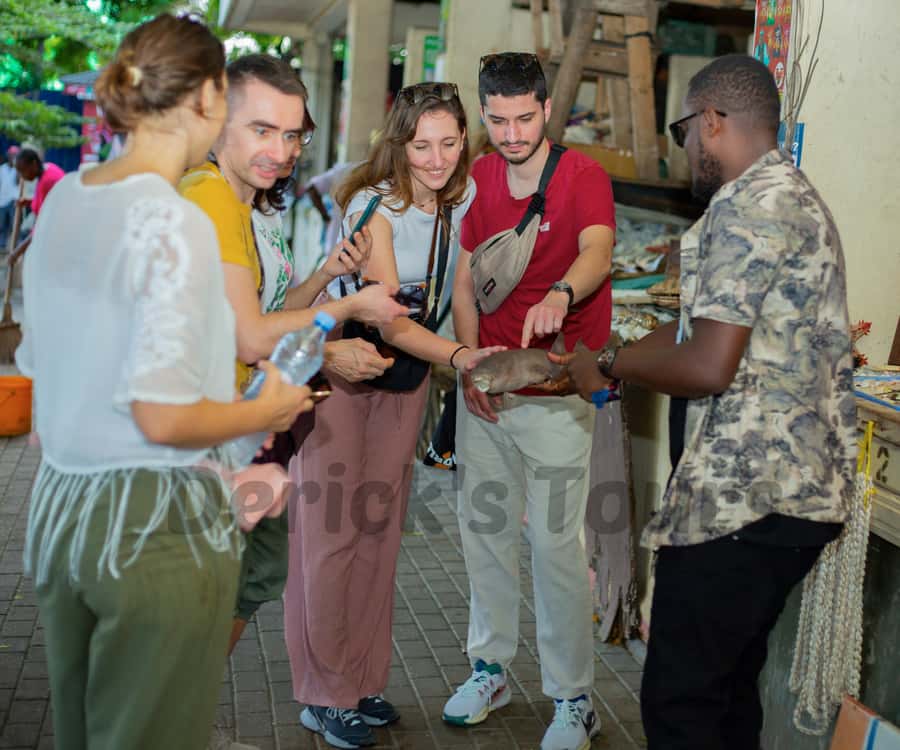
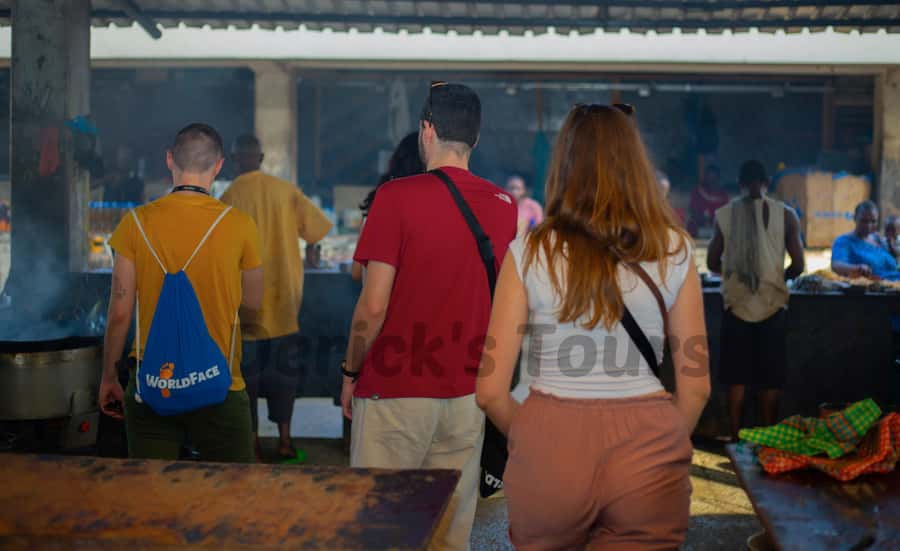
The fish market is the tour’s most memorable stop for many people, and it is easy to understand why. Here you encounter fresh seafood sales, fishermen replacing nets, and the fast-moving trade that links Dar es Salaam to the ocean.
This is not a polished attraction. That is the point. You see local work happening in real time, with smells, noise, movement, and close contact with the daily economy of the waterfront. If you want a city tour that feels connected to ordinary life, this is the place that delivers it.
One visitor tried street food with Derick at the end of the walk and found it fresh and delicious. You should treat food tasting as something to discuss with the guide rather than an automatic part of the advertised inclusions. If you have allergies or dislike strong seafood smells, say so before the tour. The route can change, and one guest visited Coco Beach instead.
The market may be uncomfortable for people who want quiet streets and carefully arranged displays. Bring an open mind, keep your belongings secure, and follow Derick’s lead around working sellers and fishing equipment. You are entering a workplace, not a staged show.
Old Boma and the shape of old Dar
Old Boma is one of the oldest surviving buildings in Dar es Salaam. Its value is not only its age. It helps you picture the earlier city and understand how government, trade, and colonial administration shaped the center.
The building is a useful counterpoint to the fish market. At Kivukoni, you see present-day work and commerce. At Old Boma, you look at the structures left by earlier systems of power. Put together, the two stops give you a stronger sense of how Dar es Salaam has changed.
Derick’s explanations are particularly helpful here because a building alone can be hard to read. He has been praised for covering the city’s past and present, including the sultanate period, German rule, British rule, and modern Tanzania.
Again, the tour’s short duration limits how long you can spend inside or around each landmark. If Old Boma is your main reason for booking, ask about the planned stop before you arrive.
How the timing and pace affect the day
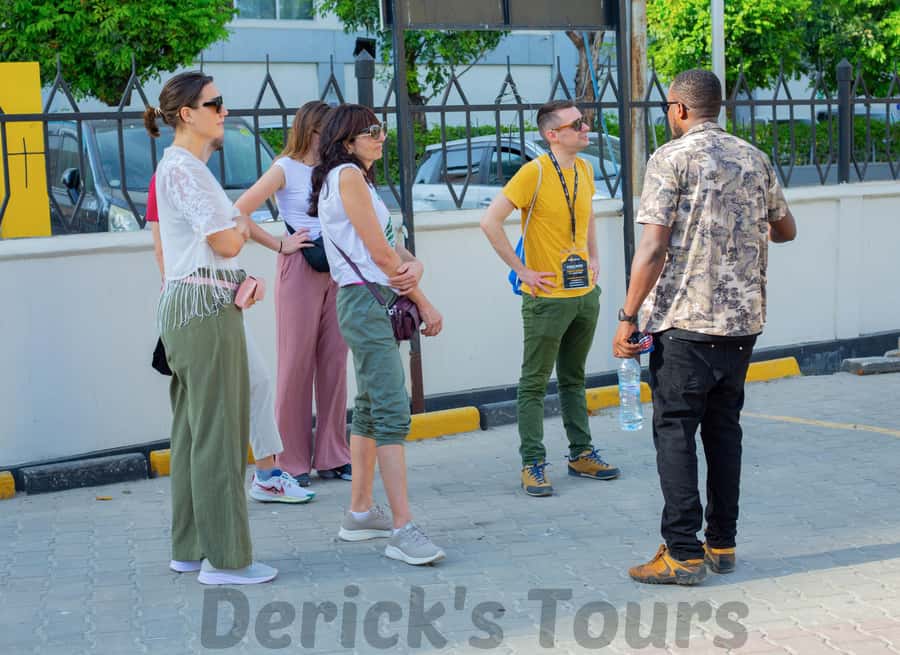
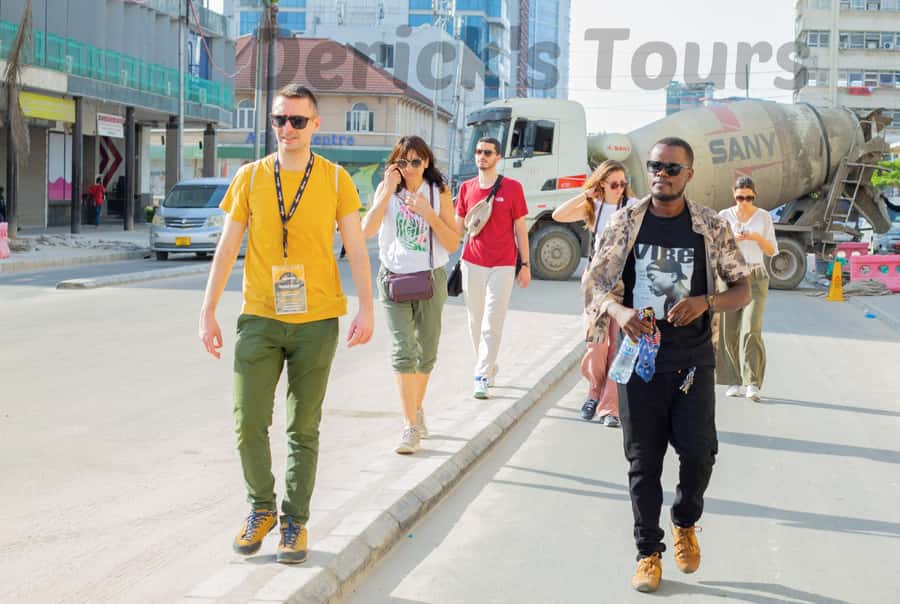
The advertised duration is two hours, so this is an overview rather than a slow study of every site. You will move between several central landmarks, with time for explanations and questions.
Timing matters in Dar es Salaam’s heat. A later start helped one guest avoid the hottest part of the day, and a morning alternative worked well for another person. Ask about available times rather than assuming the listed hour is your only option.
The pace seems generally manageable, but it can feel brisk if you want photographs at every stop. One four-star assessment specifically found the guide rushed through parts of the walk. I would tell Derick at the beginning that you want photo time, especially at the churches, Askari Monument, and Old Boma.
The route is also flexible for private or very small groups. One solo participant ended up completing the tour by motorbike because no one else was booked for that time slot. That is not a standard feature to count on, but it shows that the arrangement may adapt to the day.
What the guide adds
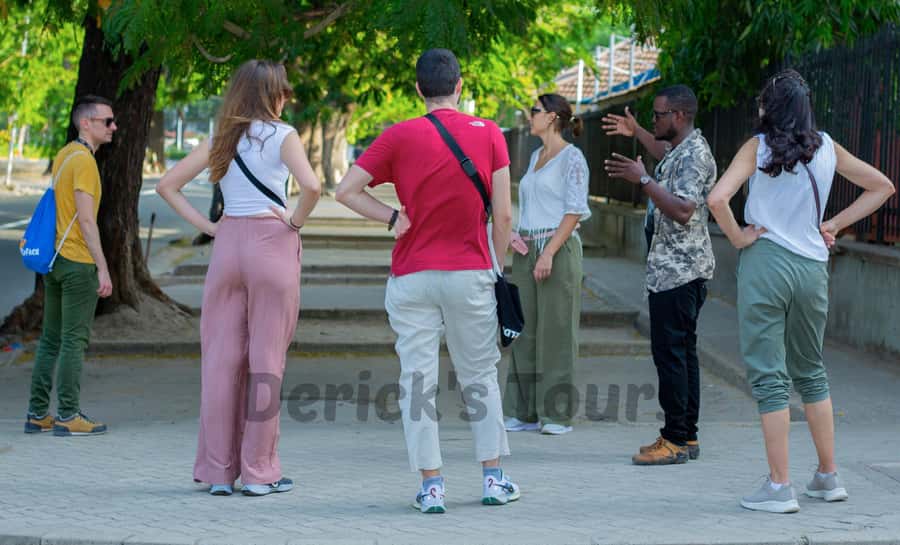
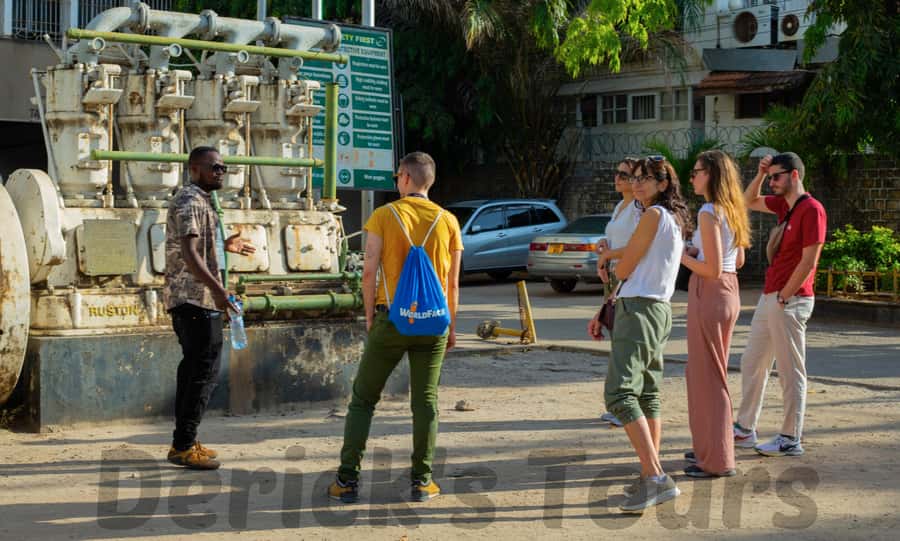
Derick Lawrence is the central reason to choose this tour. His role is not limited to walking you from one landmark to the next. He explains the city, answers questions, and adjusts the route when a visitor has a different interest or practical need.
He has also been flexible with missed or changed bookings. Several experiences involved shifting the day or time, including a move from Saturday to Sunday morning and a change from afternoon to evening. You should still contact the provider as soon as plans change, but the tour has room for human judgment.
The guide’s style appears best suited to curious visitors who want conversation. You can ask about history, culture, traditions, architecture, and modern city life. If you prefer a silent walk with only brief facts, you may not get as much from the format.
Solo visitors should also feel comfortable asking questions about the meeting point and route. A solo female participant found the city walk comfortable and well organized. That does not remove the need for normal city awareness, but a local guide gives you useful support during the first look around.
Practical value at $30 per person
At $30, this is good value if you have only a few hours in Dar es Salaam and want more than a self-guided stroll. The price includes an English-speaking local guide, guided visits to the listed landmarks, and the option to shape the route around your interests.
The value is strongest for first-time visitors. You get a quick map of the center, background for important buildings, and a look at the waterfront economy. You also save the effort of working out how the sites relate to one another.
The price is less compelling if you already know central Dar es Salaam or want long visits at one or two places. You may prefer to hire a guide for a longer private outing or visit selected sites independently.
Booking is flexible: you can reserve and pay later, and cancellation is free up to 24 hours before the tour for a full refund. Starting times depend on availability. Those terms help if your Dar es Salaam plans are still moving around.
Who should book this walk
I would choose this tour if you are new to Dar es Salaam, have a short stop in the city, or want a local introduction before exploring alone. It suits history-minded visitors, solo travelers, couples, and small groups who enjoy asking questions.
It is also a good fit if you want a mix of formal landmarks and ordinary city life. The fish market, local gallery, and gardens keep the walk from becoming a procession of façades.
You may want another option if you dislike heat, strong food smells, or active markets. Tell Derick early if you need to avoid the fish market. The route can be changed, but the tour’s appeal comes partly from seeing the city as it works.
Should you book the Dar es Salaam city walk?
Yes, if you want a well-priced first orientation with a guide who can explain both the famous sights and the less polished parts of central Dar es Salaam. Derick Lawrence receives a 4.8 rating from 102 bookings, and the strongest pattern is clear: visitors value his explanations, friendly manner, flexibility, and ability to tailor the route.
Book it early in your stay, choose a cooler time if available, and message ahead about allergies, photography, or special interests. Give yourself permission to slow the pace when a place matters to you. If you do that, this short walk can give you a useful feel for Dar es Salaam without pretending that two hours will cover the whole city.
FAQ
How long is the Dar es Salaam city walking tour?
The tour lasts two hours.
What does the tour cost?
The price is $30 per person.
Which landmarks are included?
The route includes St. Joseph Cathedral, Azania Front Lutheran Church, the Askari Monument, Botanical Garden, Kivukoni Fish Market, Old Boma, and a local art gallery, along with other city-center sights.
Who guides the tour?
The experience is provided by Derick Lawrence, with a live guide speaking English.
Can the route be customized?
Yes. You can contact Derick in advance to request changes based on your interests or preferences.
Can the fish market be replaced?
Yes. The route can be adjusted. One guest avoided the fish market because of a smell allergy and visited Coco Beach instead.
What happens if I need to change or cancel?
You can cancel up to 24 hours in advance for a full refund. You can also reserve now and pay later, subject to the booking terms and available starting times.
Just added in Dar es Salaam
- Mikumi National Park & Udzungwa Water Falls 3 Days Group Tour★ 4.5 · 19 reviews
- 8 Days Safari to Mikumi, Ruaha & Udzungwa Mountains★ 5.0 · 14 reviews
- Mnemba island snorkeling tour★ 4.0 · 22 reviews
- Dar es Salaam: Mikumi National Park Day Trip with Train Ride★ 4.8 · 25 reviews
- 2-Day Private Mikumi National Park Tour with Pickup★ 5.0 · 31 reviews
- Full-Day Private Tour of Dar es Salaam★ 4.5 · 37 reviews
- Dar es Salaam History and Architectural Tours★ 5.0 · 36 reviews
- 2 Days and 1 Night Mikumi Safari Private Tour★ 5.0 · 32 reviews
Walking Tours, compared.
3 Hours Private Stone Town walking Tour with Guide
Read our review →
Stone Town Historical Cultural Walking Guided Tour
Read our review →
Arusha Guided Walking City Tour, Culture, Lifestyle & History
Read our review →

Browse the lists this tour appears in