

Reviewed · MAASAI VILLAGE TOURS
Village Tour With Witch Doctor Visit
The most revealing part of this Zanzibar tour is not a grand monument. It is the chance to see how village life works, from seaweed farming and coconut-fiber rope making to local health care and handmade goods. In Jambiani, your guide leads you beyond the resort strip and into daily routines that most beach holidays leave out.
I like the private format, which gives you room to ask questions and set a comfortable pace. I also like the practical inclusions: lunch, bottled water, and air-conditioned transport are covered in the $96 price. The main drawback is the long drive for a six-hour outing, especially if you are staying far from Jambiani or hoping for a relaxed beach day afterward.
Key points at a glance

- Jambiani village life: See a women’s handicraft group, seaweed harvesting, a school, and a hospital in one local visit.
- Traditional healing: Meet a working healer who uses old natural remedies, a memorable part of the day but not a replacement for medical care.
- Private guide service: Guides named in booking accounts include Abdul and Abdulkarm, with drivers including Achmec and Zahran.
- Coconut-fiber craft: Watch a local woman turn coconut husk fibers into rope, a small skill with a strong connection to island life.
- Useful inclusions: The price covers lunch, bottled water, an air-conditioned vehicle, and pickup.
- Best for curious visitors: Choose it if you want community contact and everyday culture more than polished sightseeing.
Why this village visit feels different
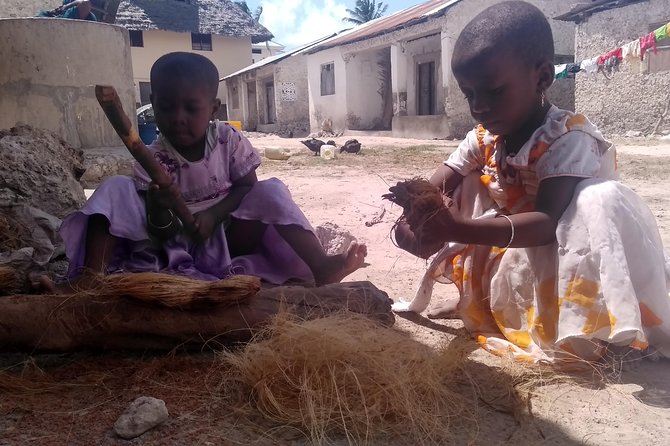
Zanzibar is easy to experience from a hotel pool, a spice farm, or a Stone Town walking tour. Those are worthwhile, but they can leave you with only a partial picture of the island. This outing takes you toward Jambiani, where work, family life, education, health care, and small-scale craft production come into view.
The focus is not on a single famous sight. Instead, you move through several parts of village life. That variety gives the tour its value. You might begin with handmade products, then learn about seaweed, see a school and hospital, watch rope being made, and finish with a traditional healer.
I would not choose this trip if you want a tightly staged cultural show. The appeal is the local setting and the conversations along the way. The experience may feel more informal than a museum visit, and the quality of each stop can depend on the day and the people available to meet you.
The private format matters here. With only your own group, you can ask Abdul or another guide to explain a custom, pause at a stop, or clarify something you do not understand. A group tour often moves on before those questions get answered. This one gives you more control.
Other village visits from Zanzibar:
- Zanzibar: Sea Turtle Swim at Salam Cave in Kizimkazi Village
★ 4.2 · 368 reviews - Zanzibar: Quad Bike Adventure Tour to a Local Village
★ 4.9 · 166 reviews - Maasai World
★ 5.0 · 46 reviews
The road to Jambiani and the value of pickup
The tour starts at 8:00 a.m. Pickup is offered, and one booking account describes being collected at the port before a roughly 90-minute drive to the village. The exact ride depends on your starting point, so allow a good part of the morning for transport if you are not staying near Jambiani.
That drive is not just a nuisance. It is the tradeoff for reaching a community away from the main city sights. You will want to start with breakfast, carry any personal essentials, and use the provided water to stay comfortable in Zanzibar’s heat.
An air-conditioned vehicle is included, which is especially useful on a longer transfer. The private vehicle also avoids the uncertainty of arranging separate transport to a rural village. If you are arriving by ship, confirm the pickup point and timing clearly when booking. A driver named Achmec is praised in one account, while another names Zahran as the driver, so the exact driver may vary.
The tour lasts about six hours. That includes the drive and several village stops, not six full hours of walking or sightseeing. You should wear practical shoes and light clothing suitable for warm weather, though the supplied details do not specify a dress code.
Handmade work at the women’s group
The women’s handicraft collective is one of the most useful early stops because it connects culture with income. You are not simply looking at an old object behind glass. You are seeing local production and the role handmade goods can play in household finances.
The visit can also give you a better sense of what to buy in Zanzibar. If you want a souvenir with a direct local connection, crafts made through a village group may feel more meaningful than a generic airport purchase. Ask your guide how the group operates and who makes the items. The tour is private, so you have a good chance to get more than a quick sales pitch.
Keep your expectations sensible. The information provided does not promise a large workshop, a formal demonstration, or a particular range of products. It is best to treat this as a short introduction to women’s craft work rather than a full shopping trip.
I also recommend bringing small cash if you hope to buy something, but the tour details do not state which payment methods are accepted or whether purchases are expected. Ask before photographing people or their work. Respectful curiosity goes a long way in a community visit.
Seaweed harvesting and the work behind a beach destination
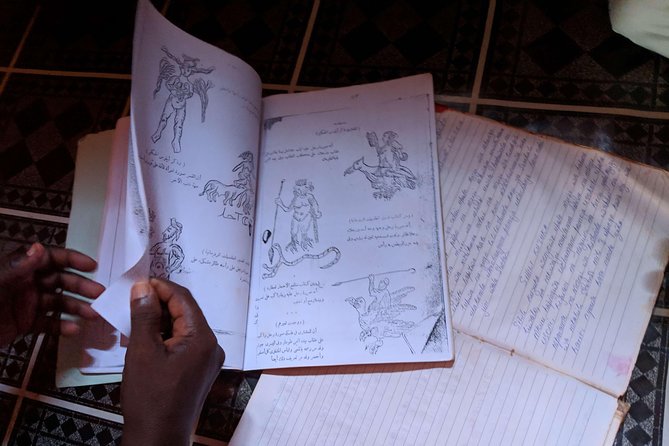
The seaweed stop adds an important layer to Zanzibar’s coastal story. Many visitors see the island as a place of sand, water, and hotels. Here, you learn about a form of work tied directly to the sea and to the local economy.
Your guide should explain how seaweed farming fits into village life. The supplied details do not specify the season, the exact farm setup, or how close you will get to the growing areas, so the presentation may be more conversational than technical. Still, this stop helps you connect the island’s natural setting with the work people do there.
Weather and tide can affect what you see. If conditions change, you may hear more explanation than demonstration. That is not a flaw so much as a reminder that this is a working community, not a performance built around a fixed show schedule.
For me, the strongest reason to include this stop is context. A beach holiday can make Zanzibar seem simple. Seaweed farming shows you one of the practical ways coastal residents use their surroundings and organize their working lives.
Same base, a different kind of day out:
- From Zanzibar: Mikumi Safari Day Trip with Flights and Meal
★ 4.7 · 1,470 reviews - Zanzibar: Quad Bike Adventure departing from Kendwa or Nungwi
★ 4.9 · 1,233 reviews - Zanzibar: Stone Town, Spice Tour, Prison Island with Lunch
★ 4.4 · 1,219 reviews - From Zanzibar: Day Selous Game Reserve Safari with Flights
★ 4.7 · 1,025 reviews
A school and hospital visit with a human scale

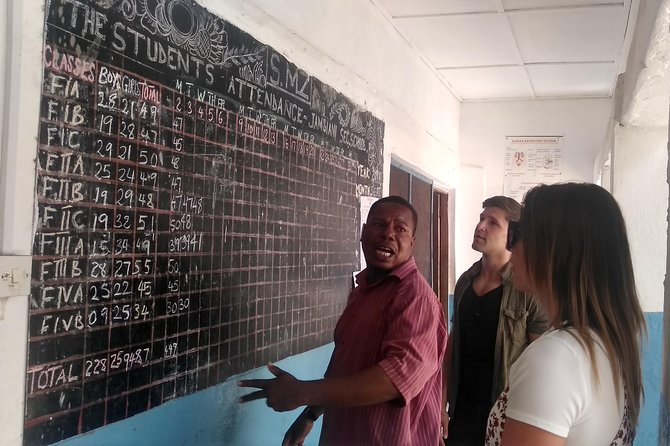
The school and hospital visits move the tour into public services. These are not conventional attractions, and that is exactly why they can be revealing. You get a look at the places that support everyday life, rather than seeing only craft stalls and scenic stops.
The supplied information does not say how long you spend at either place or whether you enter every building. It also does not state whether classes or medical services are operating during your visit. Expect an introduction arranged through the local guide, not a detailed institutional tour.
Use good manners here. Ask before taking photographs, especially around children, patients, staff, or private spaces. If the guide tells you that a room or area is off limits, accept that without argument. A village visit works best when the people you meet are treated as people, not as photo subjects.
This part may be less exciting than the rope demonstration or healer visit, but it gives the day balance. You see how a community teaches children and responds to illness. That makes the outing more than a sequence of unusual encounters.
Coconut husk becomes rope
The rope-making demonstration is a small but memorable detail. A local woman shows you how coconut husk fibers are turned into rope, revealing a practical use for a common island material.
I like this stop because it is easy to understand. You see the raw material, the handwork, and the finished result. It also gives your guide a chance to explain how coconut fits into local life beyond food and shade.
The details do not say that you will make the rope yourself, so do not book this expecting a hands-on workshop. The wording indicates that the process is shown to you. Even as a demonstration, it can be one of the clearest moments of the day because the skill is direct and visible.
This is also where a private tour has an advantage. You can ask how long the process takes, what the rope is used for, or whether similar work is still common. The answers may help you understand how traditional skills survive alongside modern products.
Meeting a traditional healer
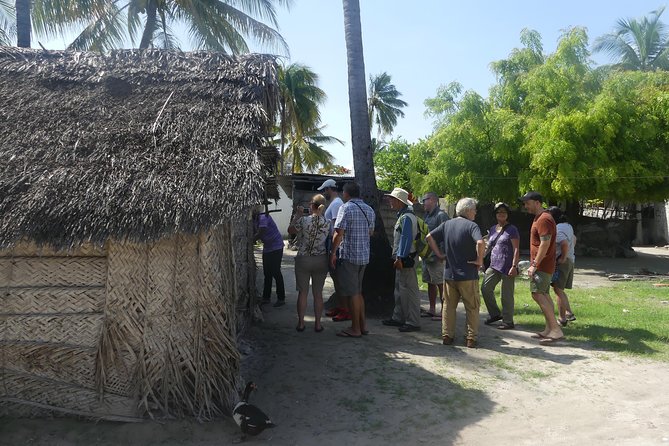
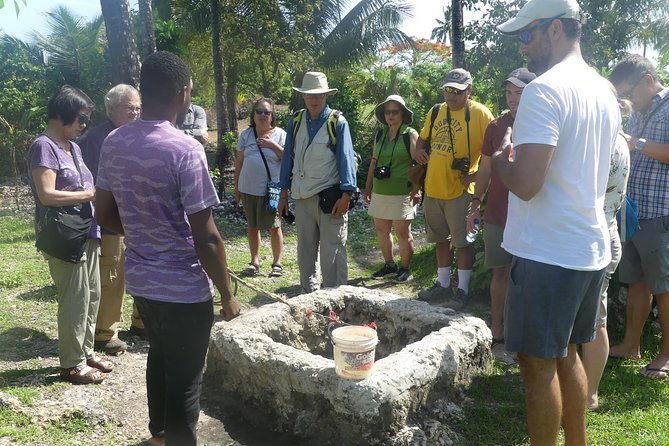
The traditional healer visit is likely to be the most unusual part of the tour. You meet a local practitioner who still helps people with old forms of natural medicine. This is not a staged history lesson. The healer is described as someone who is actively working.
One account describes a herbal treatment that helped a chronic headache. That is a personal experience, not medical proof, and you should not treat the visit as a substitute for a doctor, prescribed medicine, or emergency care. If you have an illness or take medication, speak with a qualified health professional before using any remedy.
The value of the stop is cultural as much as practical. It shows that health care can include traditions passed through generations, even while formal hospitals serve the community. You can ask the guide how the healer’s work fits with modern medical care and how people decide where to seek help.
Approach the visit with an open mind and sensible boundaries. You may find the remedies fascinating, but do not feel obliged to accept treatment or make health claims based on a short encounter. The best way to experience this stop is to listen, ask respectful questions, and remember that traditional practice and proven medical care are not the same thing.
Lunch, water, and the $96 price
At $96 per person, this is not the cheapest way to see rural Zanzibar. It is a private six-hour experience with pickup offered, an air-conditioned vehicle, a guide, lunch, and bottled water. Those inclusions make the price easier to justify, especially if you would otherwise arrange a private driver and separate village visits.
Lunch is served at no extra charge. One account describes it as home-cooked, which fits the local focus, but the supplied details do not give a menu or confirm the meal for every dietary need. Tell the provider about important dietary restrictions before the day.
The value depends on what you want from Zanzibar. If your priority is a low-cost transfer or a beach excursion, $96 may feel high. If you want private transport and several community-based stops without planning the route yourself, the price is more reasonable.
The booking pattern also matters. This experience is booked about 46 days ahead on average, which suggests you should not leave it until the last minute if it is important to your plans. Free cancellation is available up to 24 hours before the start time. Changes or cancellations made inside that window are not refunded.
Who should book this Jambiani experience
I would recommend this tour to you if you want to understand how people live beyond Zanzibar’s resort areas. It suits curious visitors who enjoy conversation, practical demonstrations, and smaller encounters more than grand monuments.
It is also a good choice for a private group with mixed interests. One person can ask about farming, another about traditional medicine, and another about crafts, while the guide adjusts the pace. Most people can participate, and service animals are allowed.
You may want to skip it if you dislike long drives, feel uncomfortable visiting working community institutions, or want a polished attraction with a fixed script. The hospital and school stops may feel quiet or brief, and the healer visit requires a respectful, thoughtful approach.
The tour is not designed as a medical excursion, shopping tour, or beach day. It is a compact look at village work and local customs, with enough variety to keep the six hours moving.
Should you book it?
Book this experience if your idea of a good Zanzibar day includes meeting local people, asking questions, and seeing the work behind island life. The combination of seaweed farming, handmade crafts, coconut rope, public services, and traditional healing gives you a broader picture than a standard resort outing.
The strongest reasons to choose it are the private guide, practical inclusions, and local focus. The main cost is time on the road, and the main responsibility is to behave respectfully at the school, hospital, and healer’s home. If that sounds like a fair trade, this is a useful and memorable way to spend a day near Jambiani.
FAQ
How long is the Village Tour With Witch Doctor Visit?
The tour lasts approximately six hours.
What time does the tour start?
The stated start time is 8:00 a.m.
Where does the tour take place?
The main village visit takes place in Jambiani, near Zanzibar City, Tanzania.
Is transportation included?
Yes. Pickup is offered, and transport is provided in an air-conditioned vehicle.
Is lunch included in the price?
Yes. Lunch is served at no extra charge.
Is this a private tour?
Yes. Only your group participates in the activity.
Can I cancel for a full refund?
Yes. You can cancel at least 24 hours before the local start time for a full refund. Cancellations or changes made less than 24 hours before the start time are not refunded or accepted.
Just added in Zanzibar
- ZANZIBAR: Jozani Forest, butterfly center & Reptile park★ 4.7 · 3 reviews
- Zanzibar: Jozani Chwaka Bay National Park and Spice Farm …★ 4.6 · 5 reviews
- Zanzibar hidden: Starfish, Blue Lagoon, &The Rock Restaurant★ 5.0 · 3 reviews
- Zanzibar: Horse Riding and Kayaking with Video and Photos★ 4.9 · 10 reviews
- Zanzibar: Half-Day Spice Farm Tour,the flavours of Zanzibar★ 4.7 · 3 reviews
- Zanzibar Half Day Trip in Mnemba Island★ 4.4 · 16 reviews
- Zanzibar: Full-Day Conservation Safari with BBQ Lunch★ 3.9 · 9 reviews
- Zanzibar: Half-Day Prison Island, Tortoises and Spices Tour★ 3.7 · 7 reviews
Maasai Village Tours, compared.

Sea Turtle Swim at Salam Cave in Kizimkazi Village
Read our review →

Maasai village visit, Materuni waterfalls & coffee experience
Read our review →
Materuni Waterfalls, Visiting Chagga Village, CoffeeTour Kikuletwa Hotsprings
Read our review →
5 Days Camping Tarangire, Serengeti & Ngorongoro crater & Visiting Maasai
Read our review →

Browse the lists this tour appears in