
Reviewed · SAFARI TOURS
7-Day Tanzania Odyssey Safari- High End Tour
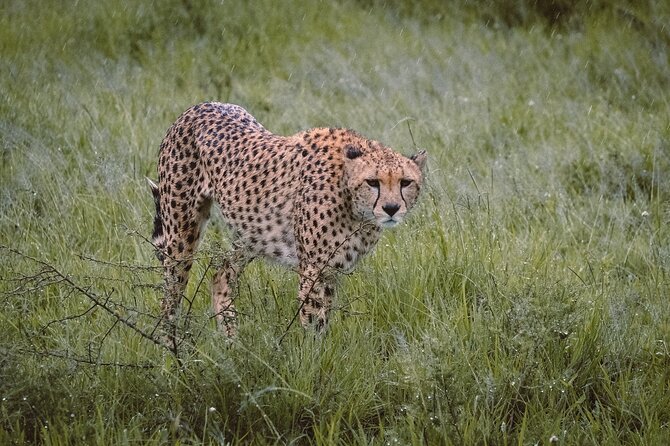
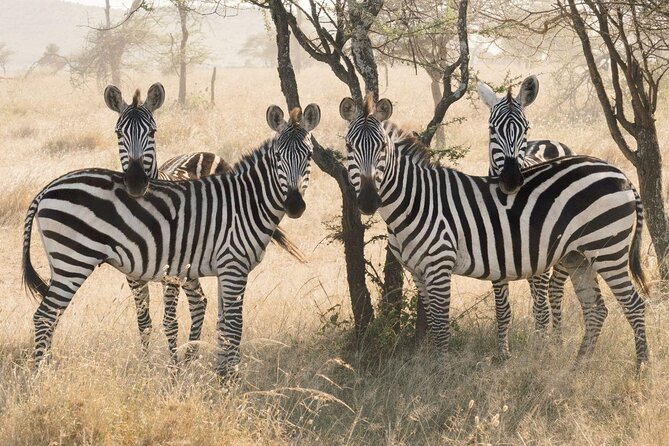
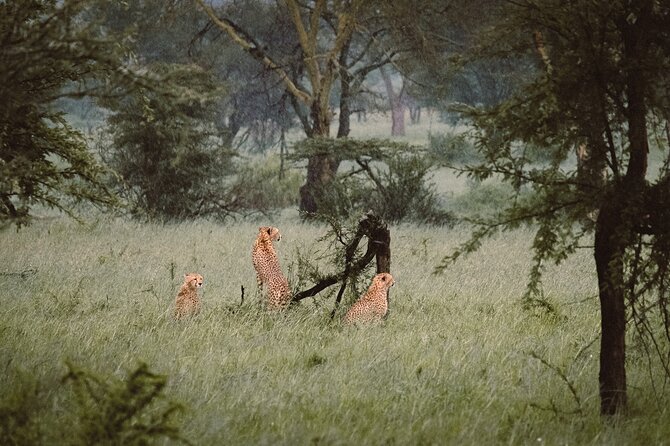
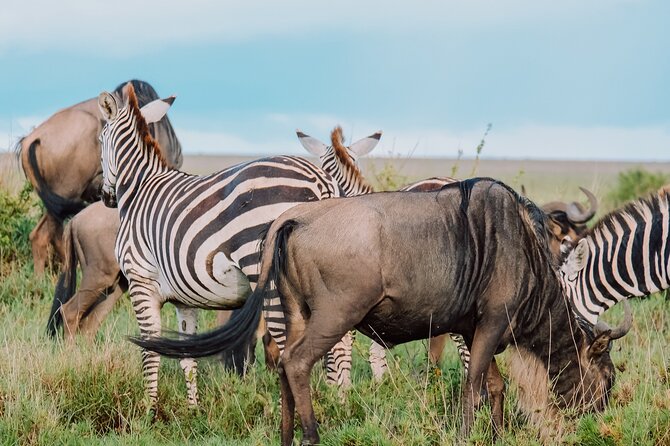
The main event here is the Great Migration in northern Serengeti, where huge herds move toward the Mara River. You may see wildebeest and zebras gathering near the water, with crocodiles below and lions or cheetahs watching from shore. It is thrilling, but a crossing is never scheduled like a show.
I like the private format, since your guide can shape the day around your interests instead of following a bus schedule. I also like the mix of habitats: elephant country in Tarangire, the wildlife-packed Ngorongoro Crater, and the open plains of Serengeti. The main drawback is the price, $7,630 per person, plus long hours on rough park roads and the real possibility that you will miss a river crossing.
Key points to know before booking
- Private seven-day route: Only your group takes part, with pickup at Kilimanjaro International Airport and a professional driver-guide throughout most of the safari.
- Three major wildlife areas: Tarangire, Ngorongoro Crater, and central and northern Serengeti each offer a different setting and animal experience.
- Migration focus: The Mara region is the goal, but herds can wait beside the river for days or change direction.
- Strong guide reputation: Guides named in the published feedback include Juma, Rodrick, Albert, Samir, Roderick, Calvin Kileo, and Frank Winstone.
- Comfort built into the route: Accommodation, six breakfasts, six lunches, six dinners, park fees, transport, and a flight from Kogatende to Arusha are part of the arrangement.
- High cost, high convenience: The price covers a substantial private safari, but you should confirm the exact lodges, room category, and flight details before paying.
Why this safari works as a seven-day Tanzania sampler
This is a fast but impressive introduction to northern Tanzania. In one week, you move from the airport and Arusha to Tarangire, then Ngorongoro, then across the Serengeti to the Mara region. That gives you a broad view of the country rather than keeping you in one park.
The route is especially appealing if you want the migration but also want classic safari scenery and a strong chance of seeing big animals outside the migration story. Tarangire brings elephants and baobabs. Ngorongoro adds a compact crater floor with many predators. Serengeti supplies the wide plains and the possibility of watching herds move toward the Mara River.
The private setup matters. You are not sharing the vehicle with strangers, so the pace can better match your group. If you want to spend extra time watching a lion, stop for photographs, or ask more questions about plants and local culture, your guide can respond to that. The guide is the heart of a safari, and this company has several names associated with strong field skills.
Juma is described as patient, funny, and careful with small details. Rodrick is repeatedly praised for animal knowledge, driving, and finding good camera positions. Albert brings 23 years of experience and carries his own animal reference books. Samir is noted for patience and problem solving, while Frank Winstone is praised for his warm welcome and extra care. You cannot usually request a particular guide with certainty, but it is sensible to ask about this before booking.
Other park itineraries that start in Moshi:
- Safari Serengeti And Ngorongoro
★ 5.0 · 288 reviews - Big Five Safari In Tanzania
★ 5.0 · 99 reviews - Unforgettable Tanzania Safari And Zanzibar Beach
★ 5.0 · 97 reviews
Day 1: A gentle start at Arusha Coffee Lodge
Your safari begins with pickup at Kilimanjaro International Airport. Gosheni staff meet you, answer questions, give a short briefing, and take you to Arusha Coffee Lodge.
This is more than a transfer day. It gives you time to recover from a flight and sort out practical matters before heading into the parks. Use the briefing to confirm the next morning’s departure time, what is packed in the vehicle, how meals work, and how long the road days will be.
The start is listed as an eight-hour stop, but that does not mean eight hours of sightseeing. Airport arrival, transfer, check-in, and orientation make up the day. If you arrive late, confirm how the pickup will work and whether your accommodation before or after the safari is included. The supplied terms say extra accommodation before and at the end is not included.
Day 2: Elephants and baobabs in Tarangire
After breakfast in Arusha, you drive to Tarangire National Park for a full day of game viewing. Tarangire is known for large elephant herds, baobab trees, tree-climbing lions, and the Tarangire River, which flows through the park all year.
That permanent water source helps explain why the park can be so rewarding in the dry season. Animals gather near water, and the scenery feels different from the open grasslands you will see later in Serengeti. The baobabs give the park its own visual identity, with thick trunks and strange, spreading branches.
I like having Tarangire near the beginning of the trip. It gives you an immediate safari experience without waiting several days for the Serengeti. Elephants are the headline attraction, and the park also gives your guide a chance to explain how water shapes animal movement.
The tradeoff is time on the road. This is a transfer from Arusha into the park, followed by game viewing and another move toward the next overnight stop. Keep your expectations flexible. A safari day can involve long stretches of driving between sightings, with the reward coming when your guide spots something from far away.
Day 3: The Ngorongoro Crater’s crowded wildlife stage
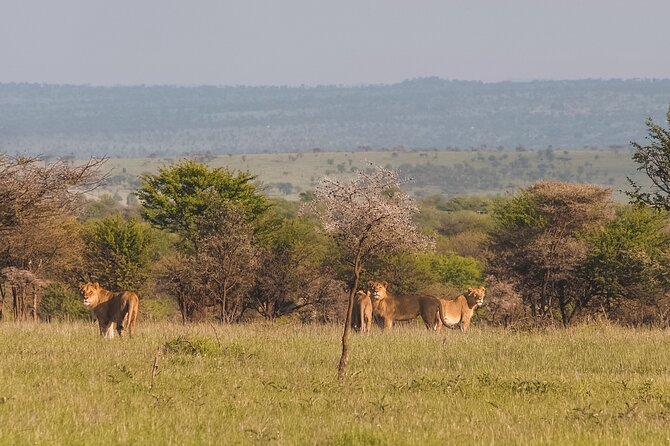
Day three takes you to Ngorongoro Crater, with a picnic descent to the crater floor. About 20,000 mammals are described as living in the area, including roughly 20 black rhinoceros. The crater also has a high concentration of predators.
This is one of the most efficient wildlife days in the itinerary. The crater is a contained area, so you have a good chance of seeing a wide range of animals without covering the vast distances required in Serengeti. Lions, cheetahs, hyenas, and jackals are regularly seen, while leopards, servals, and bat-eared foxes require more luck.
The black rhino possibility gives this day extra weight. Sightings are not guaranteed, and you should not expect to walk up close to one. Your guide will work with other vehicles and park rules to find animals without disturbing them.
The picnic lunch is practical, but remember that this is still a full outdoor day. You are down on the crater floor, away from lodge comforts, and the schedule can feel busy. If you prefer slow wildlife watching, tell your guide. A private vehicle gives you a better chance to balance the must-see animals with time simply sitting and watching.
Other safaris people book out of Moshi:
- 8-Day Essence of Tanzania Safari – Luxury
★ 5.0 · 72 reviews - Great Migration Safari In Tanzania
★ 5.0 · 71 reviews - 6 Days 5 Night Safari
★ 5.0 · 57 reviews - 4-day Tanzania Safari
★ 5.0 · 53 reviews
Day 4: Entering the central Serengeti at Seronera
After breakfast, you leave for central Serengeti with a picnic lunch and game viewing along the way. Seronera is a useful base because it places you in one of the park’s best-known wildlife zones before the route continues north.
The Serengeti is famous for the annual movement of more than 1.5 million wildebeest and hundreds of thousands of zebras. The supplied schedule highlights July through October for territorial contests, mating, and river crossings, but migration timing changes from year to year. Do not treat a calendar date as a promise.
The scale is what makes this part special. The animals are not moving through a small enclosure. They are spread across enormous open country, and your guide may need sharp eyes and good communication with other drivers to locate the action.
One striking detail is the calving cycle. Wildebeest can produce more than 8,000 calves in a day during the calving period, before the long movement begins again. That helps you see the migration as more than a dramatic river crossing. It is a year-round cycle of birth, feeding, mating, danger, and movement.
You may see lions, cheetahs, hyenas, and other predators taking advantage of the herds. The best guide is not just someone who can name animals. You want someone who can read behavior, position the vehicle well, and explain what is happening without rushing you.
Day 5: Chasing the Mara River in northern Serengeti
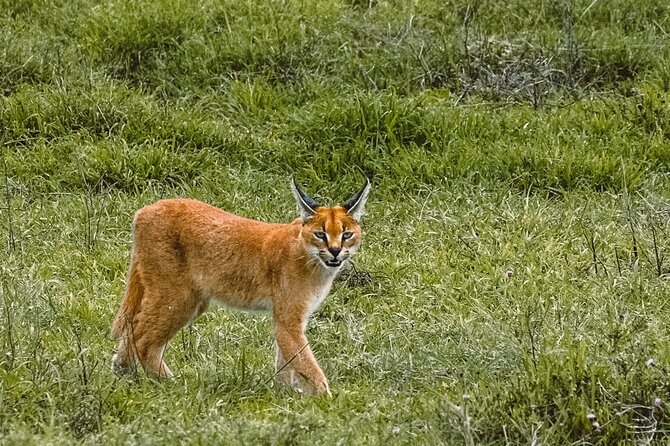
Day five heads north toward the Mara area. The route includes kopjes, woodland, river vegetation, and open plains, with scenery similar to Kenya’s Masai Mara.
The Mara River is the focus, but this is where honest expectations matter most. You may find herds close to the river, yet they may wait for hours or days. They can also cross north and then return south a few days later. A crossing depends on animal behavior, water conditions, weather, and luck.
That uncertainty is not a flaw in the park. It is the nature of watching wild animals. If your only goal is a crossing photograph, you may find the waiting frustrating. If you see the river as one part of a larger day that includes plains, kopjes, woodland, and normal game viewing, the experience is easier to enjoy.
Your guide’s judgment matters here. Experienced drivers can help you understand where herds are gathering and how to wait without turning the day into a race. The published feedback gives special attention to guides who find good viewing positions and who remain patient when conditions change.
Day 6: A full game-drive day in the Mara region
The sixth day is reserved for game viewing in the Mara area. This is a smart part of the plan because one night near the river would give you only a narrow chance of seeing a crossing.
A full day lets you spend time watching herds, searching for predators, and returning to the river if conditions look promising. It also makes room for the possibility that the animals will do absolutely nothing dramatic while you are there. That is frustrating only if the day is judged by one event.
Bring patience and a camera with spare memory and batteries. The exact equipment is not specified, but the guides are praised for helping with camera positions and spotting animals at a distance. If photography matters to you, discuss your priorities before the trip so your guide understands whether you want action, close portraits, or wide scenes showing the scale of the herds.
The northern Serengeti is also a good place to pay attention to smaller details. Kopjes may hold resting predators. River vegetation attracts birds and animals. Woodland breaks up the open plains and gives the day more variety than a simple search for wildebeest.
Day 7: Flight from Kogatende to Arusha
After breakfast, you drive to Kogatende Airstrip for a flight to Arusha, arriving in time for lunch. You are then driven to Kilimanjaro International Airport for your onward flight.
This flight is one of the most useful parts of the arrangement. A road return from the Mara region would take valuable time and add another long driving day. Flying gives you a cleaner finish and makes the seven-day schedule possible.
You should still confirm the flight time and luggage limits before departure. The provided details confirm the air transfer but do not state baggage rules, aircraft type, or the exact Arusha airport used. If your international flight leaves soon after lunch, build in a generous buffer for the road transfer to Kilimanjaro Airport.
What the $7,630 price really covers
At $7,630 per person, this is an expensive safari. It is also not a simple park excursion. The price includes accommodations, park entrance fees, transport, a professional driver-guide, six breakfasts, six lunches, and six dinners. The route also includes the flight from Kogatende to Arusha, although the detailed inclusion list does not spell out every air-transfer cost, so confirm that point in writing.
The value comes from the private vehicle, the length of the route, the park fees, the high-end lodging plan, and the northern Serengeti logistics. Reaching the Mara region and returning by air costs more than staying in one accessible park. The private format also gives you control over the day, which is important when wildlife does not follow a timetable.
The price does not include visas, travel insurance, souvenirs, airport or departure tax, extra nights before or after the safari, or tips. The suggested tipping guideline is $20 per person per day. For seven days, that is $140 per person if you follow the guideline.
The exact accommodation names are not given in the tour details. The published experiences refer to luxury tented lodges and Acacia properties in Tarangire and Serengeti, with good food and attentive camp staff. Ask for your confirmed lodge list, room type, meal plan, and any seasonal changes before booking. High-end should mean more than a nice photograph.
Who should book this safari
You should consider this trip if you want a private, polished safari with a strong focus on wildlife and the migration. It suits couples, families, and small private groups who value a dedicated guide and do not want to share a vehicle.
It is also a good fit if you want several major Tanzanian highlights in one trip. Tarangire gives you elephants and baobabs. Ngorongoro offers compact wildlife viewing. Serengeti adds open plains, predators, and the chance of seeing migration behavior.
I would hesitate if you need a relaxed holiday with little time in the vehicle. The itinerary lists many eight-hour activity days, and those include driving, game viewing, meals, and park logistics. You should also think twice if the Mara River crossing is your only reason for coming. The trip improves greatly when you treat the crossing as a possibility rather than a guarantee.
The published score is 5 out of 5 from 35 ratings, with 100 percent recommending the experience. The praise centers on guide care, driving skill, animal spotting, photography positions, cultural explanations, and comfortable accommodation. Those are exactly the parts that can make a safari work, but your final experience will depend on the guide assigned and the conditions during your dates.
Should you book it?
Book this safari if you want a high-end, private route that reaches northern Serengeti without giving up Tarangire and Ngorongoro. The strongest reasons are the skilled guide team, the full day near the Mara River, and the return flight that saves you from another long road journey.
Before you commit, ask three questions: Which guide is assigned? Which lodges are included? What exactly does the Kogatende to Arusha flight cover? If the answers fit your expectations and the cost is comfortable, this is a strong choice for a first Tanzania safari.
FAQ
Where does the safari begin?
The experience begins with pickup at Kilimanjaro International Airport in Tanzania. Gosheni staff provide a briefing and transfer you to accommodation in Arusha.
Where does the safari end?
After flying from Kogatende Airstrip to Arusha, you are driven to Kilimanjaro International Airport for your onward journey.
Is this a private tour?
Yes. Only your group participates in the activity.
Which parks and regions are included?
The route includes Tarangire National Park, Ngorongoro Crater, central Serengeti around Seronera, and northern Serengeti in the Mara region.
Is a Mara River crossing guaranteed?
No. Herds may gather near the river without crossing, and they may cross north and later return south. Finding a crossing depends on animal behavior and luck.
What meals are included?
Six breakfasts, six lunches, and six dinners are included.
Are park entrance fees included?
Yes. Park entrance fees are included in the tour price.
Is accommodation before or after the safari included?
No. Additional accommodation before and at the end of the tour is not included. The first listed accommodation is in Arusha.
What is the cancellation policy?
You can cancel at least 24 hours before the experience begins for a full refund. Cancellations or changes made less than 24 hours before the start time are not accepted for a refund. If poor weather cancels the experience, you are offered another date or a full refund.
Just added in Moshi
- Kilimanjaro Airport Private Transfer from/to Moshi★ 5.0 · 14 reviews
- Kilimanjaro Climbing 5 days Marangu route★ 5.0 · 22 reviews
- 6 Days Machame route Kilimanjaro climbing★ 5.0 · 22 reviews
- 7 Days Highlight of Tanzania Mid-Range Standard★ 5.0 · 22 reviews
- 4 Day Mid-range Serengeti Safari★ 5.0 · 22 reviews
- Machame Route 6 days 5 Nights/Kilimanjaro Climb★ 5.0 · 23 reviews
- Private 4-Days Northern Circuit National Parks in Tanzania★ 4.5 · 26 reviews
- Tanzania Safari – The Great Migration in the North of the Serengeti and Lake Natron★ 5.0 · 25 reviews
Safari Tours, compared.
Serengeti Balloon Safari and authentic bush breakfast
Read our review →
Mikumi Safari Day Trip with Flights and Meal
Read our review →
3 Days Serengeti & Ngorongoro Group Camping Safari
Read our review →
7-Day Premium Luxury Tanzania Safari All-Inclusive
Read our review →
Safari Blue Lagoon Trip with Snorkeling and Lunch
Read our review →
Browse the lists this tour appears in