
Reviewed · ARUSHA NATIONAL PARK TOURS
4 Days Mount Meru Climbing | Hiking | Trekking Tour
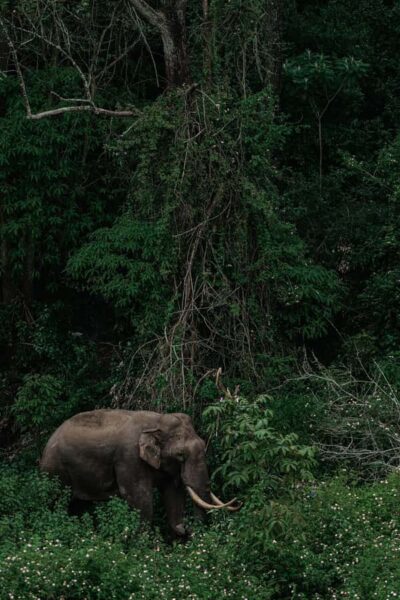
Mount Meru gives you a rare combination: a serious high-altitude climb and a chance to see wildlife on the lower slopes. With an armed ranger beside you, the route passes through forest where elephants, giraffes, buffalo, zebras, monkeys, and antelope may appear before the trail turns steep and rocky.
I like the dramatic crater-rim ridge and the fact that you sleep in huts rather than tents. I also like the slow build of the trip, from forest on day one to a sunrise summit at 4,565 meters. The main caution is simple: this is not an easy warm-up walk. The summit night lasts up to 12 hours, park fees are extra, and the price is high at $2,600 per person.
Key points before you book
- Wildlife comes early: The first day passes through Arusha National Park, with possible sightings of elephants, giraffes, buffalo, zebras, monkeys, and antelope.
- An armed ranger is required: The park’s wildlife makes ranger support part of the normal climbing plan.
- The hardest section starts at 1:30 a.m.: Summit morning includes steep hiking to Rhino Point, Cobra Point, and the main peak.
- You sleep in mountain huts: Miriakamba Hut and Saddle Hut replace camping, though conditions remain basic.
- The crater ridge is the scenic prize: The final route follows a narrow ridge between the inner crater cliffs and the outer slope.
- The $2,600 price is not fully all-inclusive: Meals, transfers, airport pickup, and crew wages are included, but park fees, visas, flights, and tips are not.
Why Mount Meru makes a strong Kilimanjaro warm-up
Mount Meru rises to 4,568 meters and is described as Africa’s third-highest peak and Tanzania’s second-highest mountain. Its height makes it useful preparation for Kilimanjaro, but the value is not only physical.
You get a chance to learn how your body handles altitude before committing to a longer Kilimanjaro route. You also get a practical test of your habits: how slowly you need to walk, how much water you need, how well you sleep in a hut, and how you respond when the alarm rings at 1:30 in the morning.
That last point matters. The final ascent is steep, cold, tiring, and mentally demanding. Several accounts connected with this trip stress the importance of not giving up during the last night. Guides and porters help with pacing and encouragement, including the local singing and dancing that may greet you after the summit.
The timing needs thought if you plan to climb Kilimanjaro immediately afterward. One itinerary uses Meru as a warm-up before Kilimanjaro only two days later. That can work for a fit person, but four demanding days on Meru will not leave everyone fresh. I would build in recovery time if your wider schedule allows it.
Other days in the park nearest Arusha:
- Arusha National Park Private Safari
★ 5.0 · 59 reviews - 4 Days Mount Meru Trekking
★ 5.0 · 55 reviews - Arusha National Park Full-Day Safari
★ 4.8 · 25 reviews
Day 1: Arusha to Miriakamba Hut through forest
The morning begins with pickup and a drive from Arusha to Momela Gate. The listed meeting point is Arusha Center Inn TouristTZ on Arusha Main Street, at Bondeni Street, with an 8:30 a.m. start. Airport pickup and drop-off are included in the package details, but you should confirm the exact pickup plan before arrival.
At Momela Gate, you complete registration and meet the armed ranger who accompanies the walk. This is not a decorative extra. Mount Meru lies within Arusha National Park, and the wildlife presence means hikers must climb with ranger protection.
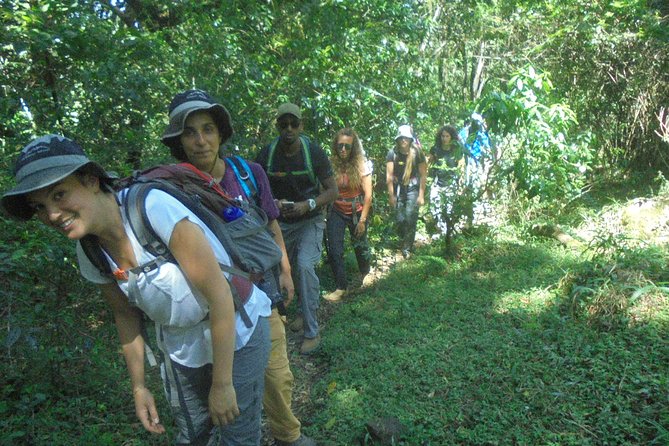
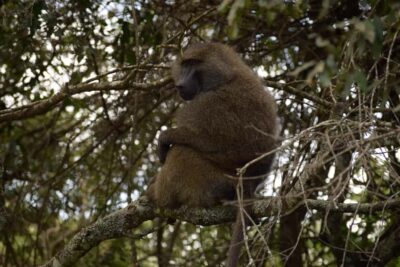
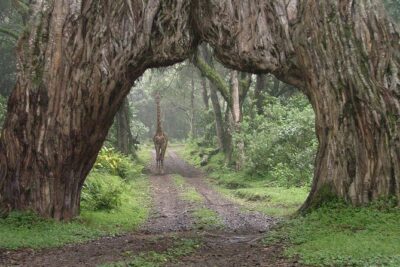
The opening walk covers about 10 kilometers and takes roughly four to six hours. The route moves through montane forest, where the attraction is as much the possibility of wildlife as the walking itself. You might see elephants, giraffes, buffalo, zebras, monkeys, or antelope along the lower slopes.
The first day is listed with inconsistent elevation figures in the supplied details, but the practical message is clear: this is a long approach walk rather than a summit day. You gain height gradually and finish at Miriakamba Hut.
Miriakamba is your first mountain overnight stop. Sleeping in a hut means you avoid carrying or sleeping in a tent, but do not picture a hotel. Conditions are basic, and you should expect a simple mountain base after a full walking day. Dinner is provided.
I like this opening because it gives you time to settle into the pace. The possible wildlife sightings also make the approach feel different from a standard peak climb. The drawback is that you cannot treat day one as a gentle stroll. Ten kilometers through forest, followed by a hut night, will test your legs before the steep work begins.
Day 2: Miriakamba to Saddle Hut and Little Meru
Day two is shorter in distance, around eight kilometers, but steeper. You climb from Miriakamba Hut toward Saddle Hut, moving through forest and then moorland. The route follows a ridge and begins to reveal the Meru Crater and Ash Cone.
This is one of the most rewarding parts of the route because the scenery changes quickly. You leave the enclosed feel of the forest and begin walking beside broad volcanic views. The mountain is no longer just a trail through trees. You start to understand its shape.
After lunch at Saddle Hut, you can make a short climb to Little Meru at 3,820 meters. The timing is designed to give you views before sunset. This extra summit is optional in the sense that it is described as a short climb, but it adds another ascent on a day when you are already gaining height.
Saddle Hut sits at roughly 3,570 meters. That is high enough for altitude symptoms to show, even before the main summit attempt. Move slowly, eat what you can, drink regularly, and tell your guide if you feel unwell. The point of this day is not to prove toughness. It is to reach the next hut in good enough shape for the early start.
The hut stay is a useful part of the acclimatization process. You sleep high, then climb higher the next morning. It is also where you learn whether the basic hut routine suits you. The provided meals include breakfast, lunch, and dinner across the trip, with four lunches listed in the package details.
Day 3: Rhino Point, Cobra Point, and the 4,565-meter summit
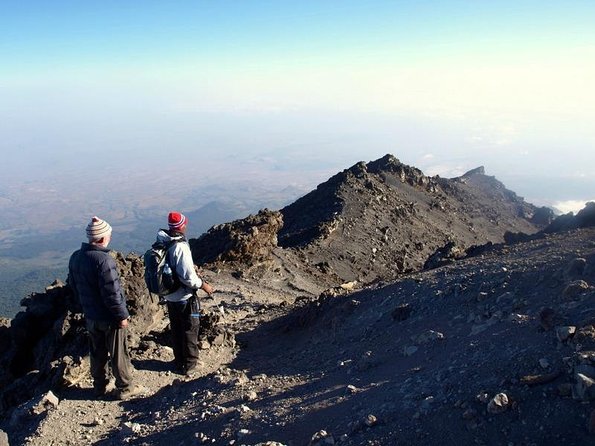
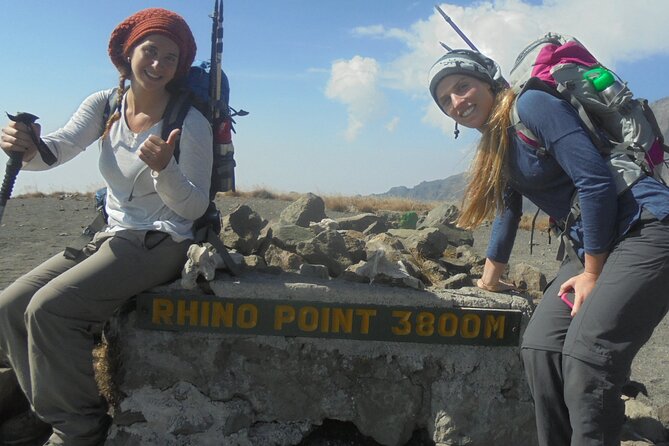
Day three is the heart of the climb. You start at about 1:30 a.m. and climb steeply toward Rhino Point at 3,800 meters, then continue to Cobra Point at 4,350 meters.
The early departure is necessary if you want to reach the top near sunrise. It is also the section most likely to feel tough. You are walking in darkness, climbing on tired legs, and gaining height quickly. The advice here is plain: go slowly. The supplied accounts repeatedly point to the difference that pacing and guide support can make.
From Cobra Point, the route reaches the summit at about 4,565 meters. If conditions are clear, you may see Kilimanjaro rising above the clouds. You also get views into the Meru Crater and across the volcanic structure below.
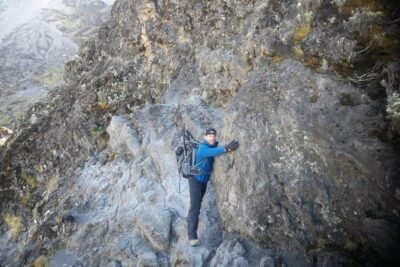
The final ridge is the feature that makes this climb special. The trail runs between steep inner crater cliffs and the sloping outer wall. It is narrow and exposed in places, so you need a steady head and careful footing. This is not a broad, easy summit path.
After time at the top, you descend to Saddle Hut for a short rest and brunch. Then you continue down to Miriakamba Hut. The stated distance is about five kilometers up and 13 kilometers down, with 10 to 12 hours of hiking in total.
That is a very long day. Do not judge the climb only by the 4,565-meter height. The combination of a pre-dawn start, steep ascent, summit exposure, and long descent is what makes it demanding.
The descent to Miriakamba is also where tired knees can become a problem. Trekking poles would be sensible, although they are not specifically listed as provided. Pack only what you need for the summit morning and keep your daypack light.
A few more things to do in Arusha worth a look
- 8-Day Small-group Lemosho Kilimanjaro Summit Trekking
★ 5.0 · 186 reviews - Mountain Kilimanjaro Day Hike
★ 5.0 · 102 reviews - Private Full Day Hiking Experience to Marangu Route
★ 5.0 · 61 reviews - 4 days Best experience Kilimanjaro Hike, Serengeti &Ngorongoro
★ 5.0 · 54 reviews
Day 4: The quick return to Momela Gate
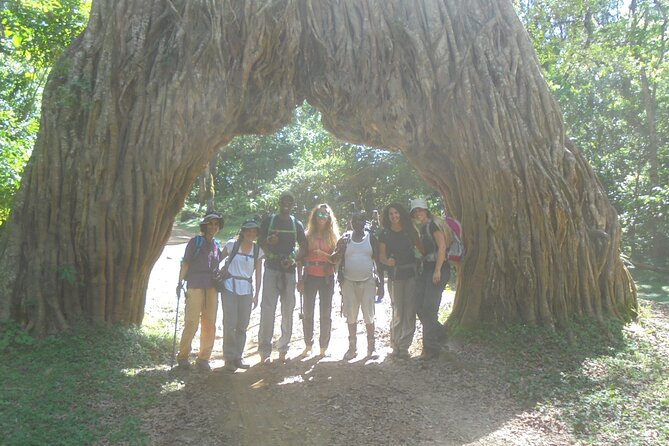
The final day covers about 10 kilometers and takes two to four hours. From Miriakamba Hut, you descend through open grassland and mixed forest toward Momela Gate.
This is a much shorter day than the summit push, but the descent still deserves care. Tired muscles and loose footing can make a quick downhill walk uncomfortable. The lower route also gives you another chance to see wildlife before leaving the park.
A transfer waits at Momela Gate to return you to your hotel in Arusha or Moshi. The supplied details say the activity ends back at the meeting point, so confirm whether your personal drop-off is in Arusha, Moshi, or another agreed location.
The final morning is a good reason not to schedule an important flight immediately afterward. The listed return is in the late morning, but mountain timing can shift. Keep your onward plans flexible.
The ranger, guide, cook, and porter team
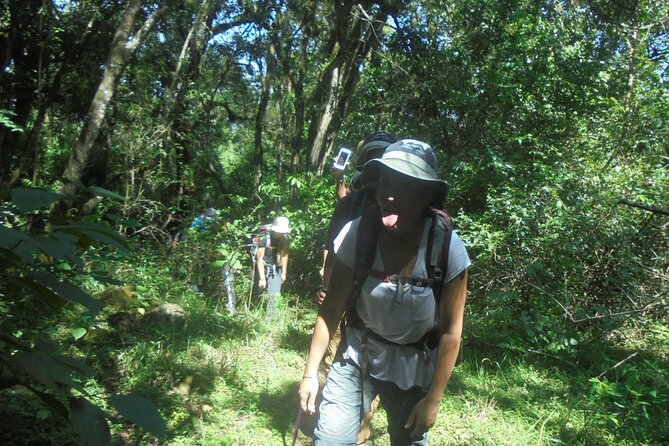
The support team is central to this experience. You climb with an armed ranger because of the park’s wildlife, while the tour crew handles guiding, meals, and porter work.
The strongest praise focuses on encouragement during the summit attempt. The slow pace, simple guidance, and morale support matter more than fancy speeches when you are climbing in the dark. Some groups are welcomed after the summit with singing and dancing, a cheerful local touch after a hard morning.
The supplied details do not identify a specific guide by name, so I would not choose this trip on the promise of one particular individual. Instead, ask who will lead your group, how many climbers will be in it, and how the company handles guide-to-climber ratios.
The advertised maximum is 200 people. That is a very large possible group, even if your actual departure is smaller. Ask for the expected group size before paying. A small walking group will usually make pacing, communication, and hut arrangements easier.
Also clarify porter arrangements and tipping expectations. Crew wages are included, but tips are not. Tipping is listed as your responsibility, so request the operator’s current guidance before the climb.
Meals, huts, and what the price covers
The price is $2,600 per person. That is a substantial amount for four days, so the included services matter.
The package lists airport pickup and drop-off, transfers to the gate, crew wages, three breakfasts, three dinners, and four lunches. The mountain nights are spent in designated huts rather than campsites. This cuts out tent equipment and some camping work, but you still need to prepare for basic mountain accommodation.
The main price concern is the separate park fee. Mount Meru park fees can be paid directly to the park or through the operator, and they are not included in the advertised price. Flights, visas, and tips are also excluded.
Before booking, request a written cost breakdown showing:
- The exact park fee
- Airport and hotel transfer details
- Any accommodation before or after the climb
- Porter and guide arrangements
- Expected tip amounts
- What happens if the weather delays the climb
At this price, I would expect clear answers. The package can offer good value if you need airport transfers, a full support crew, meals, and a guided climb arranged in one booking. It is less attractive if you already have transport, lodging, and park access organized separately.
Who should choose this climb
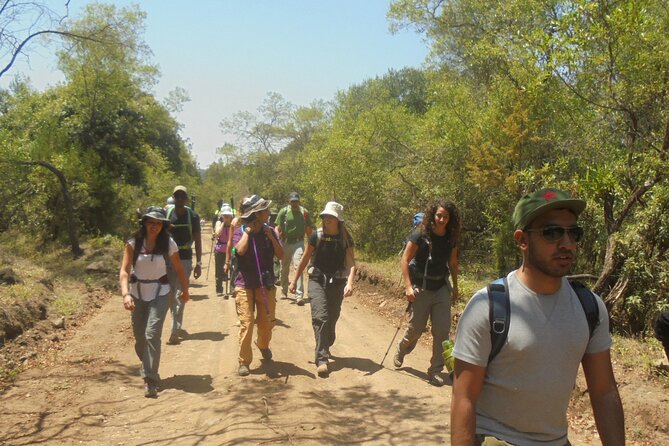
I would recommend Mount Meru to a fit person who wants a demanding four-day mountain trip with changing scenery and a real summit goal. It suits someone who likes the idea of wildlife, crater views, hut accommodation, and a long summit morning.
It is particularly useful if you plan to climb Kilimanjaro and want a high-altitude trial first. You can test your pace, gear, sleep, and response to height before tackling a longer Kilimanjaro itinerary.
I would be cautious about booking it as a casual holiday hike. The summit day can last 10 to 12 hours, and the route includes steep sections and a narrow ridge. Several of the supplied accounts make the same practical point in different ways: do not underestimate Mount Meru, and prepare properly.
You should also consider the recovery period before Kilimanjaro. The climb is described as a warm-up, but it is still a serious mountain effort. If your next major climb starts only two days later, make sure your body and schedule can handle that turnaround.
Practical preparation for the four days
You do not need to arrive as an elite climber, but you should be comfortable with long uphill walks and extended descents. Training on hills, stairs, or uneven ground will help more than relying only on flat-distance fitness.
For the summit morning, plan for:
- Warm layers for the pre-dawn start
- A headlamp
- Water and useful snacks
- Sturdy hiking shoes
- A small daypack
- Sun protection for the descent
- Any personal medication you need
The supplied information does not give a packing list, so ask the operator what equipment is supplied and what you must bring. The same applies to water, sleeping gear, and luggage storage.
Altitude is the main physical issue. Little Meru at 3,820 meters and the Saddle Hut night at about 3,570 meters give you early warning of how you are responding. Do not hide symptoms to protect your summit chance. Your guide needs accurate information to make safe decisions.
The trip is described as suitable for most people, but that does not remove the need for preparation. The final ascent is steep, long, and tiring. Fitness and a patient walking pace will help you more than speed.
Cancellation and booking details
You can cancel at least 24 hours before the local start time for a full refund. Cancellations or changes within 24 hours are not refunded or accepted.
The climb depends on good weather. If poor weather cancels the activity, you are offered another date or a full refund. Confirmation is provided at booking, and pickup is available, but confirm the exact meeting point and transfer plan because the listing gives both an Arusha meeting point and airport transfers.
Should you book the Mount Meru climb?
Book this trip if you want more than a basic mountain walk. The wildlife-filled lower slopes, armed ranger escort, crater views, volcanic ridge, hut nights, and sunrise summit make Mount Meru a varied experience in only four days.
I would book it as a Kilimanjaro preparation climb only after checking the recovery schedule. I would also ask for the exact park fee, actual group size, crew plan, and transfer details before accepting the $2,600 price.
Skip it if you want a relaxed hike, dislike early starts, or need a guaranteed short walking day. Choose it if you are ready for a demanding summit attempt and value a supported route through one of Tanzania’s most unusual mountain settings.
FAQ
How long is the Mount Meru climbing tour?
The tour lasts approximately four days, including the approach to Miriakamba Hut, the climb to Saddle Hut, the summit attempt, and the descent to Momela Gate.
What is the highest point reached?
The summit is listed at approximately 4,565 meters, while Mount Meru’s height is given as 4,568 meters.
Is an armed ranger required?
Yes. Because Mount Meru is inside Arusha National Park and has wildlife on the mountain, hikers must climb with an armed ranger.
What wildlife might I see?
Possible sightings include elephants, giraffes, buffalo, zebras, monkeys, and antelope, especially on the lower forest and grassland sections.
Where do I sleep during the climb?
You sleep in designated mountain huts, including Miriakamba Hut and Saddle Hut.
Is food included?
Yes. The package includes breakfast, dinner, and lunch. The details list three breakfasts, three dinners, and four lunches.
Are park fees included in the $2,600 price?
No. Mount Meru park fees are excluded and can be paid directly to the park or through the tour operator.
What does the $2,600 price include?
It includes airport pickup and drop-off, gate transfers, crew wages, and the listed meals. Flights, visas, tips, and park fees are not included.
What is the cancellation policy?
You can receive a full refund if you cancel at least 24 hours before the experience start time. Cancellations within 24 hours are not refunded. If poor weather cancels the climb, you are offered another date or a full refund.
Just added in Arusha
- 4 Days Private Midrange Lodge Safari to Serengeti & Ngorongoro★ 5.0 · 4 reviews
- Extraordinary Hot air Bolloon ride in Serengeti | BURIGI CHATO SAFARIS CO L.T.D★ 5.0 · 6 reviews
- 3 days leopard safaris★ 5.0 · 4 reviews
- 8 Days Serengeti Migration safari★ 5.0 · 11 reviews
- tarangire, ngorongoro & lake manyara park 3 days private tour★ 5.0 · 11 reviews
- Mt. Kilimanjaro: Shira plateau to Cathedral point 3872m Day hike★ 5.0 · 7 reviews
- serengeti, ngorongoro & tarangire 4 days private tour★ 5.0 · 18 reviews
- tarangire & ngorongoro 2 days tour★ 5.0 · 14 reviews
Arusha National Park Tours, compared.
7 Day Joined Safari Serengeti,Ngorongoro,Manyara,Tarangire,Arusha National Park
Read our review →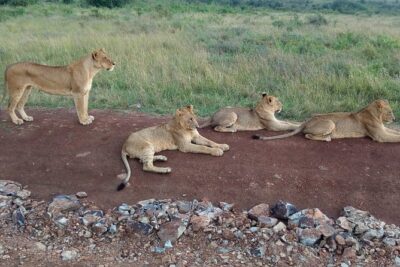
Arusha National Park Day Tour with All-Inclusive
Read our review →Browse the lists this tour appears in