
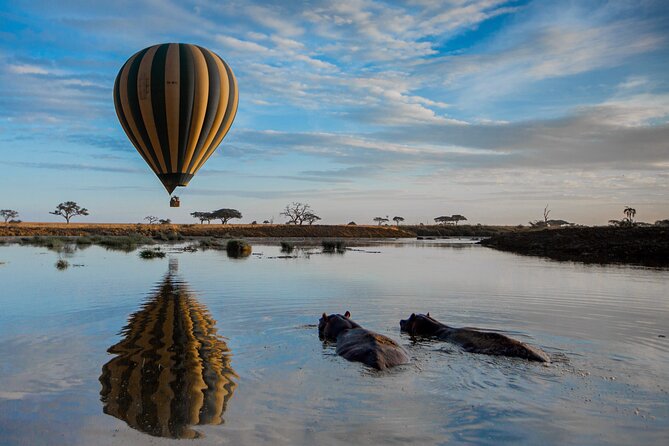
Reviewed · NGORONGORO CRATER TOURS
6 Days Tarangire, Serengeti, Ngorongoro & Manyara Joining Tour
The big draw here is time. You get three days around the Serengeti, not a rushed morning visit, plus Tarangire, Ngorongoro Crater, and Lake Manyara. That gives you a fair chance to follow changing animal movements and still enjoy several different types of wildlife country.
I like the small maximum group of seven, which matters in a safari jeep when everyone wants a clear view through the pop-up roof. I also like the practical setup: a guide-driver handles the wildlife search while a chef prepares the included meals, and bottled water is supplied at three litres or more per day.
The main consideration is the pace. This is a long road safari, with a six-hour transfer toward the Serengeti and early starts on several days. Camping adds real atmosphere and keeps the price reasonable, but you should not expect a resort-style holiday.
Key points to know before booking
- Three Serengeti days: You have time to search different parts of the park according to animal movements instead of relying on one short game drive.
- A pop-up-roof safari jeep: The raised roof gives you a useful standing view for wildlife watching and photography.
- Seven people maximum: The small group size should make vehicle space and viewing easier than on a large coach-style safari.
- Rhino search in Ngorongoro Crater: The crater floor makes many animals easier to spot, but black rhino remains one of the harder sightings.
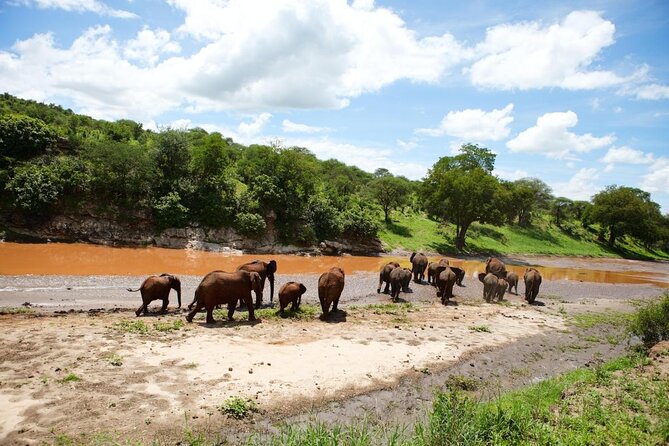
- Elephants and baobabs in Tarangire: This first park is especially good for elephant families and huge ancient trees.
- Camping with meals included: Sleeping gear, six breakfasts, six lunches, five dinners, park fees, taxes, drinks, and water are covered.
Four parks, one long northern Tanzania circuit
This safari links four famous stops in northern Tanzania, each with a different reason to visit. Tarangire is about elephants and baobabs. Serengeti is the main wildlife stage, with the possibility of seeing the great wildebeest migration alongside large numbers of zebra. Ngorongoro Crater packs many animals onto a compact crater floor, while Lake Manyara adds birds, hippos, monkeys, and the chance of seeing lions in trees.
That variety is the real strength of the plan. You are not spending six days looking at the same scenery from the same type of road. The tradeoff is distance. The parks are spread out, so some days include several hours in the jeep, with short stops along the way.
You leave from Arusha at 7:30 in the morning. Pickup is offered, and the group can include no more than seven people. The custom safari vehicle has a pop-up roof, a useful feature for both photographs and simple wildlife watching. You can sit low while moving and raise the roof when the jeep stops near animals.
The trip is described as a camping and lodge safari. Camping equipment includes a sleeping bag and mattress, and the route also uses a lodge and campsite near Lake Manyara. Ask for the exact night-by-night accommodation arrangement before paying if sleeping conditions matter to you.
Other trips down into the crater from Arusha:
- 3 Days Serengeti & Ngorongoro Group Camping Safari
★ 5.0 · 574 reviews - 5 Days Camping Tarangire, Serengeti & Ngorongoro crater & Visiting Maasai
★ 5.0 · 229 reviews - 4 Days Join Group tour Tarangire Serengeti and Ngorongoro crater
★ 5.0 · 219 reviews
Day one: elephants and baobabs in Tarangire
Tarangire is about a two-hour drive from the pickup point, so the first day gets you into the park without a punishing transfer. The park is known for its ancient baobabs and one of Tanzania’s strongest elephant concentrations. If elephants are high on your list, this is an excellent opening act.
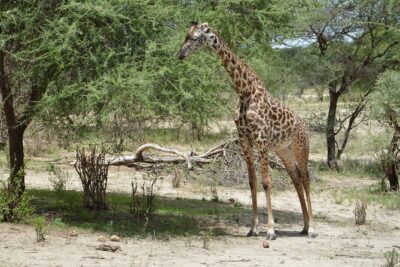
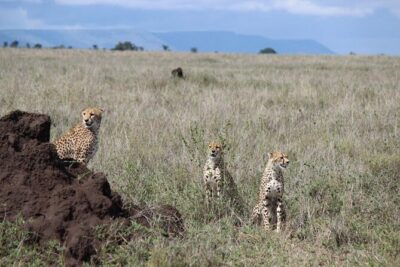
The guide-driver looks for current animal sightings rather than following a fixed route. Herbivores such as giraffes, wildebeest, and zebra are expected highlights. Lions, cheetahs, and leopards are possible too, but predators are less predictable and usually take more patience to find.
I like the way this day sets a clear wildlife rhythm. You have roughly six hours in the park, enough time for a proper game drive rather than a quick look before heading to camp. Elephant families can also offer the most rewarding viewing because you may see adults and young animals interacting, not just one animal standing beside the road.
The practical point is to keep your expectations sensible. Tarangire has many animals, but no guide can promise a cheetah or leopard. The value is in the range of wildlife and the distinctive baobab country, not in checking off every species.
Day two: the long road to the Serengeti
After breakfast, you drive from the Mto wa Mbu area toward Serengeti National Park. The journey takes about six hours, including stops, and passes through the Ngorongoro area. This is the day when the safari feels most like a proper overland trip.
A short stop at the Ngorongoro gate and viewpoint gives you a look over the crater. It is only about 20 minutes, so treat it as a preview rather than a full visit. The main crater-floor game drive comes on day five.
You can also choose an optional Maasai village visit lasting about 20 to 45 minutes. It offers a chance to learn about Maasai culture and older traditions connected with warrior life, hunting, and cattle. This stop is optional, and some people prefer to use the time to continue toward the Serengeti.
The six-hour drive is the drawback here. You lose much of the day to transport, although the route also lets you see how the parks connect geographically. Once you reach the Serengeti, the reward is that the next two days give you far more time for wildlife viewing.
Days three and four: making the most of the Serengeti
Day three is the main search day. After an early breakfast, you set out for a long game drive, stopping for lunch and continuing until evening before returning to camp. The route may go toward the north, south, east, or west, depending on where wildlife is moving.
That flexibility is important. The Serengeti is huge, and animals are not arranged for easy viewing. A guide who responds to current sightings gives you a better chance than a rigid plan that visits the same viewpoint regardless of conditions.
The Serengeti is famous for the annual movement of more than a million wildebeest, alongside more than 250,000 zebra. The exact quality of a migration sighting depends on timing and location, so you should see the migration figures as context, not a guarantee for your dates. Even outside the main movement, the park offers a strong chance of seeing large herds and predators.
An early start can be worthwhile. Cooler hours are often more comfortable in an open-roof vehicle, and morning game drives give you more time before the heat of the day. You may also spot animals near the campsite, so keep your eyes open even after the main drive ends.
Day four begins with another early game drive. You continue viewing wildlife until afternoon, then return to camp to eat and pack. The vehicle keeps searching as it leaves the Serengeti, followed by about a two-hour drive to Simba campsite near the Ngorongoro rim.
This is a smart use of the route. Instead of spending the entire next morning driving from Serengeti, you position yourself near Ngorongoro Crater. The cost is another long day with packing and moving, so it is not the relaxed option. It is the efficient option.
Other Serengeti itineraries out of Arusha:
- Serengeti Balloon Safari and authentic bush breakfast
★ 5.0 · 2,480 reviews - Balloon Safari & Bush Breakfast in Serengeti – Miracle Experience
★ 5.0 · 1,646 reviews - 5-Day Highlights mid-Range Crater, Serengeti, Tarangire
★ 5.0 · 296 reviews - 3-Day Classic Serengeti Safari
★ 5.0 · 263 reviews
Day five: down into Ngorongoro Crater
Ngorongoro Crater is the visual high point of the trip. From the rim, the view feels almost unreal, with the broad crater floor below and steep sides surrounding it. The next morning, after an early breakfast, you descend into the crater to search for wildlife.
The crater floor makes animal viewing easier than in a huge open park. Many species are concentrated in a smaller area, and you may see buffaloes, wildebeest, zebra, and other large animals during the game drive. The central goal is black rhino, one of the most difficult animals to find in the crater.
That search is worth taking seriously. Rhinos are never a guaranteed sighting, and a six-hour visit cannot change the habits of a shy animal. Still, the crater gives you one of the better settings in this route for trying.
After lunch, you continue the game drive and then ascend to camp. The journey continues toward the Fig Big Tree lodge and campsite near Lake Manyara National Park. Swimming may be available there for anyone interested, but it is best to confirm the exact facilities with the operator before you count on it.
This day combines a major view, a concentrated wildlife area, and another transfer. You will probably feel the early start by evening, but the positioning makes the final park visit easier.
Day six: birds, hippos, and Lake Manyara
Lake Manyara is a good closing park because it offers a different feel from the Serengeti and Ngorongoro. The lake is known for flamingoes, and the park also supports many bird species. Depending on conditions, the water may be one of the day’s most memorable sights.
The park is also associated with tree-climbing lions. They are famous, but rare, so do not book this safari mainly for that one image. If you see lions resting in the branches, it will be a lucky bonus rather than a normal part of the schedule.
You also visit the hippo pool, where you can look at hippos from close range, and the hot spring. During the game drive, possible sightings include buffaloes, wildebeest, warthogs, vultures, eagles, and monkeys.
The final day lasts about six hours. That is enough time for a real game drive, but it also means you are still on safari right through the finish rather than simply driving back to Arusha after breakfast. For bird lovers, photographers, and anyone who wants variety after several large-mammal days, Manyara adds useful contrast.
Camping, food, and the daily routine
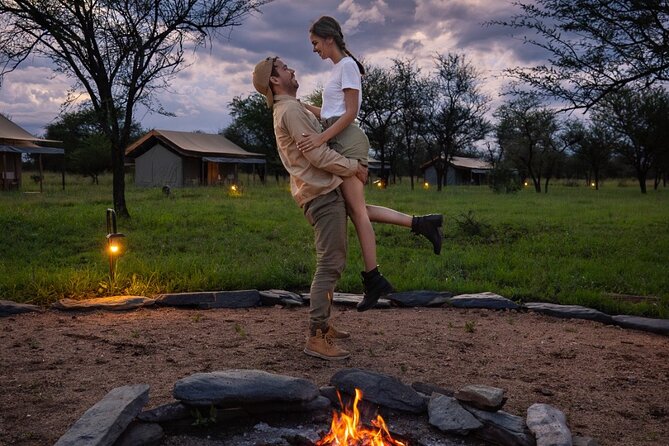
Camping changes the feel of this safari. You are closer to the parks and more aware of the evening and morning sounds. It also means your comfort depends on being happy with basic sleeping arrangements. A sleeping bag and mattress are supplied, but the information does not describe private facilities, tent size, or whether every night is in a tent or lodge.
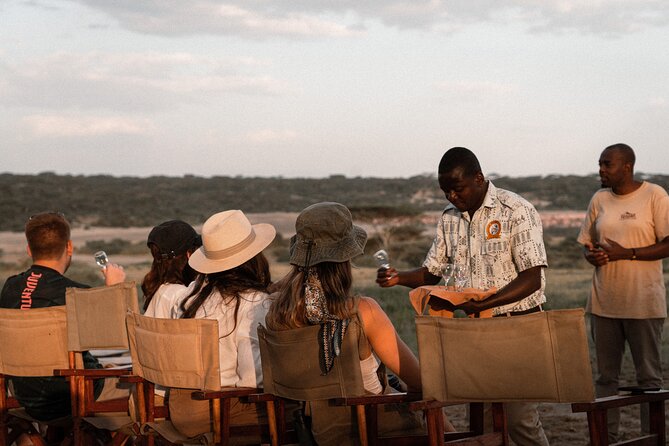
A chef accompanies the group, which is a major practical advantage on a six-day route. Breakfast, lunch, and dinner are included, with six breakfasts, six lunches, and five dinners listed. Drinks include soft drinks and bottled water, with at least three litres of water per person each day.
The missing dinner on the final day likely reflects the timing of the schedule, but check how meals are handled on your exact departure. Tips are not included, and neither are flights or a visa.
Expect an early breakfast on most wildlife days, long hours in the jeep, and a mix of driving, stopping, waiting, and sudden excitement when an animal appears. That uneven rhythm is normal on safari. A good sighting may come after a quiet stretch, so patience matters.
Is $1,600 good value?
At $1,600 per person, this is not a cheap holiday, but the price covers a great deal: park entrances and taxes, a guide-driver, a chef, safari transport, camping equipment, water, drinks, and most meals. You also get six days across four major destinations, including three days connected with Serengeti wildlife viewing.
The group size helps the value. With no more than seven people, you are not paying for a fully private jeep, but you should have a more manageable vehicle than on a large group departure. The included park fees are especially important in Tanzania, where entrance costs can add up quickly.
The price makes most sense if you want wildlife time more than polished accommodation. You are paying for access, transport, meals, and repeated game drives. If you want a high-end lodge in every park, this is not the right format. If you want a practical safari with a chef, a small group, and plenty of time in the parks, the package is easier to justify.
Who should choose this safari?
I would point this trip toward you if animals are the main reason you are visiting Tanzania. The schedule gives you repeated chances to see wildlife, and the four parks offer different habitats and viewing conditions.
It also suits photographers. The pop-up roof gives you a better angle than a closed vehicle, and three Serengeti days give you more chances to work with changing light and animal behavior. The small group can help, though you should still discuss seating and photography needs before booking.
This is less suitable if you dislike long drives, early breakfasts, shared camping, or changing accommodation. It is also not ideal if you want a slow cultural trip. The optional Maasai visit is brief, while most of the schedule is built around wildlife and road travel.
Pickup is offered, confirmation is sent at booking, and most people can take part. The activity is near public transportation, but the supplied information does not give detailed accessibility guidance, so ask direct questions if you have mobility needs.
Should you book it?
Book this safari if you want a serious wildlife itinerary with three Serengeti days, a small group, and meals handled by an accompanying chef. Tarangire’s elephants, Ngorongoro’s crater floor, and Lake Manyara’s birds give the route enough variety to keep it from feeling repetitive.
Think twice if your priority is luxury, private space, or short transfers. Before booking, confirm the camping and lodge arrangement, the exact pickup point, and the timing of the final day. If you are comfortable with early mornings and long drives, the $1,600 price gives you a solid six-day route through Tanzania’s best-known northern parks.
Free cancellation is available if you cancel at least 24 hours before the local start time. Changes or cancellations made inside that window are not accepted for a refund.
FAQ
How long is the safari?
The experience lasts approximately six days, starting at 7:30 in the morning.
Which parks and areas are included?
The route includes Tarangire National Park, Serengeti National Park, Ngorongoro Conservation Area and Crater, and Lake Manyara National Park.
How many people can join the tour?
The maximum group size is seven people.
Is camping equipment provided?
Yes. Camping equipment includes a sleeping bag and sleeping mattress. The route also uses a lodge and campsite near Lake Manyara.
Are meals and drinks included?
Yes. The package includes six breakfasts, six lunches, five dinners, soft drinks, and at least three litres of bottled water per day.
What is not included in the price?
Tips, flights, and a visa are not included.
More Lake Manyara safaris from Arusha
- 3 Days Tarangire, Ngorongoro & Lake Manyara Group Camping Safari
★ 5.0 · 102 reviews - 3 Days Private Safari – manyara, Ngorongoro & Tarangire
★ 5.0 · 94 reviews - 05 Days Tarangire, Serengeti, Ngorongoro and Lake Manyara
★ 5.0 · 54 reviews - 5 Days 4 Nights Tarangire, Serengeti , Ngorongoro & Manyara Wildlife Safari
★ 5.0 · 40 reviews
More Tarangire safaris from Arusha
- Private 6-Day Tarangire Manyara Crater and Serengeti with Mid-Range Lodges
★ 5.0 · 238 reviews - 4-Day Safari from Arusha: Tarangire, Serengeti and Ngorongoro
★ 5.0 · 173 reviews - 2 Days Tarangire and Ngorongoro Group Camping Safari
★ 5.0 · 146 reviews - 4 Days Tarangire Serengeti Ngorongoro Crater
★ 5.0 · 117 reviews
Just added in Arusha
- 4 Days Private Midrange Lodge Safari to Serengeti & Ngorongoro★ 5.0 · 4 reviews
- Extraordinary Hot air Bolloon ride in Serengeti | BURIGI CHATO SAFARIS CO L.T.D★ 5.0 · 6 reviews
- 3 days leopard safaris★ 5.0 · 4 reviews
- 8 Days Serengeti Migration safari★ 5.0 · 11 reviews
- tarangire, ngorongoro & lake manyara park 3 days private tour★ 5.0 · 11 reviews
- serengeti, ngorongoro & tarangire 4 days private tour★ 5.0 · 18 reviews
- tarangire & ngorongoro 2 days tour★ 5.0 · 14 reviews
- Mt. Kilimanjaro: Shira plateau to Cathedral point 3872m Day hike★ 5.0 · 7 reviews
Ngorongoro Crater Tours, compared.
3 Days Serengeti & Ngorongoro Group Camping Safari
Read our review →
4-Day Safari from Arusha: Tarangire, Serengeti and Ngorongoro
Read our review →
2 Days Tarangire and Ngorongoro Group Camping Safari
Read our review →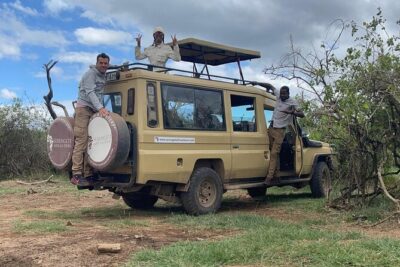
3 Days Private Safari – manyara, Ngorongoro & Tarangire
Read our review →
5 Days Tanzania Group Joining Safari, Tarangire/Serengeti/Ngorongoro Crater
Read our review →
4 Days Tarangire, Serengeti and Ngorongoro Mid-Range Group Safari
Read our review →Browse the lists this tour appears in