
Reviewed · WALKING TOURS
Dar es Salaam City Walking tour – Explore the Life of the Local People!
Dar es Salaam comes into focus when you leave the tour vehicle behind. This private outing takes you through the city on foot and by public bus, linking major sights with everyday scenes that a standard sightseeing drive can miss. Guide Aloys E. Malekela leads the way, explaining the city as you move through it.
I like the chance to see several important places in one day, especially the National Museum and Kariakoo Bazaar. I also like the public transport element, since it gives you a small taste of how people move around Dar es Salaam rather than keeping you inside a private car.
The main drawback is the heat. One guest found the fish market interesting but very smelly, and northern European visitors may find the conditions hard going. Bring water, wear light clothing, and expect a real city walk rather than a gentle stroll.
Key points to know before you book
- A private city introduction: Only your group takes part, so you can ask Aloys questions as you go.
- Walking plus public transport: You see Dar es Salaam from street level and use a public bus as local people do.
- Several major sights in one day: The route includes the National Museum, historic churches, Sultan Majjid Building, Kariakoo Bazaar, and Mwenge Curio Shops.
- A close look at local commerce: The fish market and Kariakoo Bazaar show two very different sides of daily business.
- Plan for five to seven hours: The day includes regular stops, explanations, walking, and transport between places.
- Heat affects the experience: The route is rewarding, but weather and strong market smells can test your stamina.
Why this walking tour is useful in Dar es Salaam
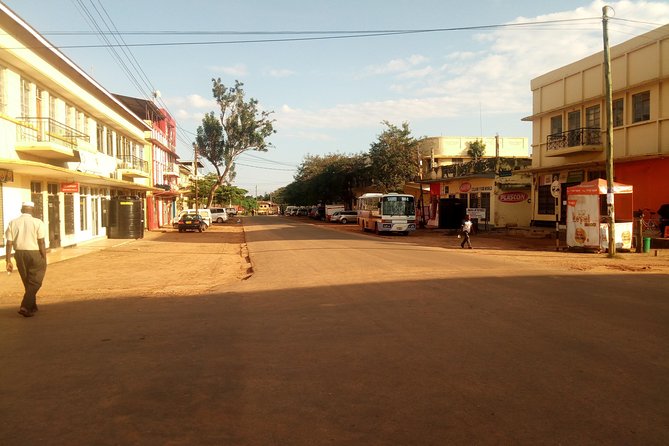
Dar es Salaam is a large, active coastal city, and it can be hard to understand from a hotel, a taxi window, or a single museum visit. This tour gives you a broad first look in one day. You move through a compact area of about three to five kilometers, with stops for sightseeing and explanations.
That compact route matters. You are not spending the day crossing the whole city. Instead, you get a series of short walks and visits that connect history, religion, trade, and ordinary city life. The result is less polished than a standard sightseeing circuit, but it is also more revealing.
I especially like the combination of formal sights and working markets. The churches and old buildings help explain Dar es Salaam’s past. The fish market and Kariakoo Bazaar show how the city functions now. You get both sides in a single outing.
This is a private activity, so your group is not joined by strangers. That gives you more room to ask about a building, pause for an explanation, or tell Aloys what interests you most. The published rating is 4.7 from 17 ratings, with 94 percent recommending the experience. That is a strong response, though the sample is still fairly small.
Other guided walks in Dar es Salaam:
- Dar es Salaam City Center: Walking Tour
★ 4.8 · 102 reviews - 3 Days Nyerere NP [Selous GR] Game, Walking and Boat
★ 5.0 · 19 reviews - 5 Days Selous/Nyerere & Mikumi NP Game drive, Maasai and Walking
★ 5.0 · 13 reviews
The National Museum begins the history lesson
The National Museum of Tanzania is scheduled for about an hour, making it the longest single stop on the route. That tells you something about the shape of the day: this is not only a market walk. It also gives you a base for understanding Tanzania and Dar es Salaam before you head back into the streets.
A full hour allows time to see the displays without treating the museum as a quick photo stop. Aloys can provide context as you go, which is useful if you do not want to carry a guidebook or spend your first day trying to work out the city’s historical outline on your own.
The museum is likely to be one of the calmer parts of the experience. Afterward, the route shifts toward street activity, religious buildings, and markets. If you enjoy history, this stop may be the part that gives the rest of the day more meaning.
The exact exhibits and order of the visit are not specified, so you should think of the museum as a guided introduction rather than a fixed museum lecture. The value comes from combining the visit with the other stops.
The fish market brings you close to daily trade

The fish market receives about 20 minutes. That is enough time for a short look at the trade and atmosphere without making the market the entire focus of the morning or afternoon.
This is one of the most direct local-life stops. You see a working place rather than a site arranged for sightseeing. The smells can be strong. One guest described the market as interesting but smelly, so this is a good place to adjust your expectations. If you are sensitive to odors, keep the visit brief and follow Aloys’s lead.
The market also shows why a walking tour can offer something different from a standard city tour. You are not just hearing that Dar es Salaam is an important port city. You are seeing a food trade connected to the coast and to ordinary household life.
The tour includes all fees and public transport, but food is not included. Do not expect a market meal to be part of the price. Plan to buy lunch or dinner separately, or ask Aloys about the timing of a suitable break.
Sultan Majjid Building and Missionaries House
The Sultan Majjid Building receives about 40 minutes, one of the longer architectural stops. The city was founded by Sultan Majjid in 1862. He lived in Zanzibar and spent weekends in Dar es Salaam, a detail that gives the city’s early story a personal connection to the wider Swahili coast.
This stop is useful because it shifts your attention from modern traffic and markets to the city’s early political and coastal connections. Forty minutes should allow time to look closely, hear the story, and ask questions instead of rushing past the building.
Missionaries House follows for around 20 minutes. Its place on the route adds another layer to the city’s past. Together, these two stops help you see how Dar es Salaam developed through different local, religious, and colonial-era influences, without reducing the city to a list of old buildings.
The tour does not promise long indoor visits at every site, so expect explanations and exterior viewing to be part of the experience. The appeal here is the link between buildings and the city around them.
Same base, a different kind of day out:
- Dar es Salaam: City Tour
★ 4.7 · 159 reviews - Dar es Salaam City Tour – Everyday
★ 5.0 · 64 reviews - MIKUMI NATIONAL PARK – 3 Days
★ 4.5 · 63 reviews - 2 nights 3 days safari to mikumi national park
★ 5.0 · 62 reviews
Two churches, two different city landmarks
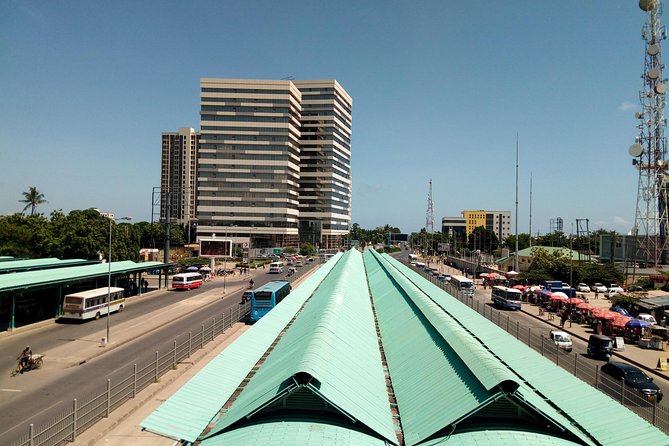
Saint Joseph Church receives about 15 minutes, followed by 20 minutes at Azania Front Church. These are relatively short stops, but they break up the walking and give you a chance to see important religious landmarks.
The schedule suggests that these visits are focused and practical. You will likely hear the main points from Aloys, look at the architecture, and continue rather than spending a long time inside each building. That works well in a half-day city overview, especially when the route already includes a museum and two markets.
Religious buildings also help explain the variety of Dar es Salaam’s city center. They are not isolated sights. You encounter them among streets, shops, public transport, and daily business. This setting is part of the experience.
As with any place of worship, you should follow local guidance about dress and behavior. The supplied details do not specify dress rules or photography rules, so ask Aloys before taking pictures inside.
Kariakoo Bazaar is the busiest part of the route
Kariakoo Bazaar receives about 30 minutes. This is one of the most useful stops for anyone who wants to understand the city’s commercial life. You are seeing a major market environment, not a quiet souvenir lane.
Half an hour is enough for a strong first impression, though not enough to explore every corner. Stay close to the guide, keep track of your belongings, and use the stop to observe rather than trying to shop for everything at once. The route is designed as a city overview, so the market visit is one piece of a larger day.
Kariakoo also contrasts well with the fish market. The fish market focuses on a particular trade. Kariakoo gives you a wider sense of buying, selling, movement, and urban energy. The two stops make the tour more practical than a day spent only looking at monuments.
If shopping is your main goal, you may want more time than this tour provides. If you want a guided introduction before returning on your own, 30 minutes is a useful starting point.
Mwenge Curio Shops add a shopping finish
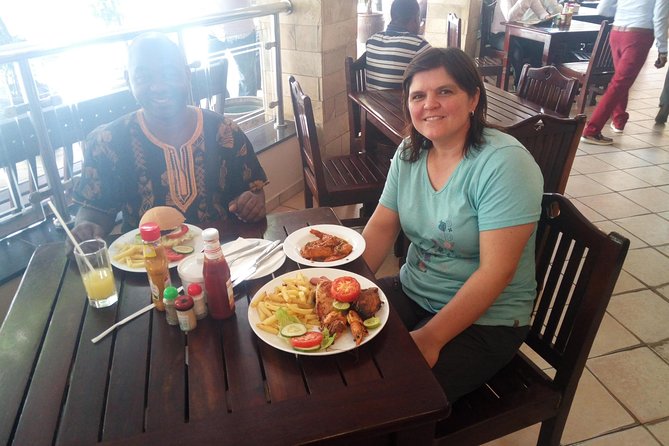
Mwenge Curio Shops appear at the end of the route, with the published timing shown as 3 hours, though the details are cut off. That unclear timing is worth checking before you book, since it may refer to the remaining portion of the day, transport, or time at the shops.
The stop gives you a chance to browse local crafts and souvenirs after the historical and market visits. Because the tour is private, you can ask Aloys for help understanding what you are seeing or for guidance on how much time to spend there.
Do not assume that purchases are included. The tour price covers fees and public transport, while lunch and dinner are excluded. Items bought at the curio shops would also be your own expense.
The shops may be especially useful if you want to buy a small reminder of Dar es Salaam without setting aside another full day. If shopping does not interest you, ask how this final stop fits with your priorities.
Public transport makes the city feel more real
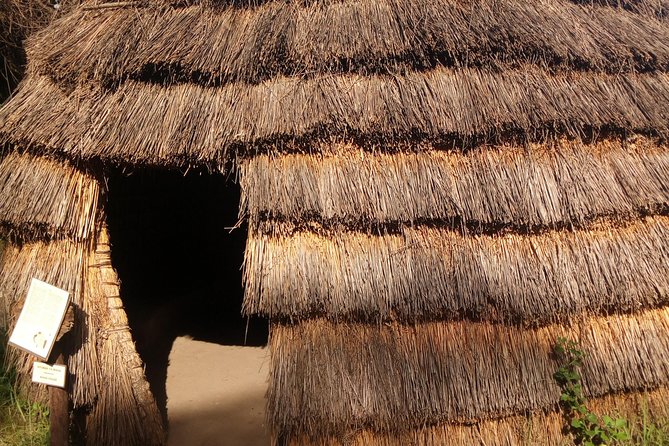
The public bus is a small but important part of the outing. You are not simply transferred between attractions in a private vehicle. You ride with local people, see the city from a different angle, and learn how the route works in everyday life.
That can be more informative than an air-conditioned drive, but it is also less controlled. The tour may feel crowded, hot, or slower than a private transfer. Since the activity is designed around public transport, you should book it because you want that local experience, not because you want the fastest possible route.
The walking distance is described as operating within a three to five kilometer radius, with regular sightseeing stops. That does not mean every moment is spent walking, but you should still expect several hours on your feet. Comfortable shoes are a must.
The published details do not state the exact bus route, the number of rides, or whether all transfers use public transport. Aloys can explain the plan on the day.
Heat, pace, and what to bring
The weather may shape your enjoyment more than any single landmark. One guest found the heat difficult as a northern European visitor. That is useful practical advice, especially because the tour can last five to seven hours.
I would plan for:
- Light, breathable clothing
- Comfortable walking shoes
- Water
- Sun protection
- A small bag that you can keep close in markets
- Some patience for public transport and city traffic
The fish market can smell strong, and the city walk is not designed as a quiet, air-conditioned excursion. The physical demands are moderate for most people according to the supplied participation information, but the heat and length can make the day tiring.
The best time of day is not specified. Ask Aloys when booking or before setting out, since he has indicated that timing can matter for visitors unused to Dar es Salaam’s heat.
Is $100 good value?
The price is $100 per person. Whether that feels worthwhile depends on how much you value a private guide and a full city introduction.
For that price, you receive a private activity, guide services, public transport, and the listed sightseeing stops. You are also paying for the time saved in planning a route through several different parts of the city. If you tried to arrange the museum, old buildings, churches, markets, and public transport alone, you would need to manage directions, timing, transport, and explanations yourself.
The value is strongest for a first visit, a short stay, or anyone who wants cultural context rather than a simple transfer between attractions. A solo visitor may find the per-person price high, while a small private group may find it easier to justify because the guide’s time is dedicated to them.
Lunch and dinner are not included. Admission fees and taxes are included, but you should budget separately for meals, drinks, and anything bought at Mwenge Curio Shops or Kariakoo Bazaar.
The experience is usually booked 55 days ahead, so advance planning makes sense if your dates are fixed. Confirmation is provided at booking. You can cancel for a full refund up to 24 hours before the start time, but changes or cancellations inside that window are not accepted.
Who will enjoy this city walk most?
I would recommend this outing to you if you want a broad introduction to Dar es Salaam and prefer seeing a city through its streets, markets, and public transport. It suits people who enjoy asking questions and moving between different kinds of places.
It is also a good fit if you have only one free day and want to cover several major sights without creating the schedule yourself. Aloys was described as friendly and informative, and one guest specifically appreciated how much he explained and how well he looked after the group.
You may prefer another type of activity if you want a slow museum day, a private vehicle throughout, or a carefully air-conditioned sightseeing route. The fish market’s smell, the city heat, and the amount of walking are not minor details.
The private format makes the tour more flexible than a large group outing, but the published information does not promise a fully custom route. Ask Aloys in advance if a particular stop matters most to you.
Should you book the Dar es Salaam walking tour?
Book it if you want to understand Dar es Salaam through both its landmarks and its daily routines. The strongest parts are the mix of the National Museum, historic buildings, churches, fish market, Kariakoo Bazaar, and public bus travel, all with Aloys explaining what you are seeing.
Think twice if heat, strong market smells, or walking for several hours will spoil the day. For everyone else, the $100 price buys more than a checklist of sights. It gives you a private introduction to a complex city, with enough structure to make your first hours in Dar es Salaam easier to understand.
FAQ
How long does the Dar es Salaam walking tour last?
The tour lasts approximately five to seven hours. The sightseeing route covers a three to five kilometer radius with regular stops and public transport.
Is this a private tour?
Yes. Only your group participates in the activity.
Who operates the tour?
The experience is provided by Aloys E. Malekela. The guide is also referred to as Aloys.
Which main attractions are included?
The route includes the National Museum of Tanzania, Dar es Salaam Fish Market, Sultan Majjid Building, Missionaries House, Saint Joseph Church, Azania Front Church, Kariakoo Bazaar, and Mwenge Curio Shops.
Is public transport included?
Yes. Public transport is included in the tour price.
Are admission fees and taxes included?
Yes. All fees and taxes are included.
Is lunch or dinner included?
No. Lunch and dinner are not included.
Where does the tour start and finish?
The activity starts in Dar es Salaam, Tanzania, and ends back at the meeting point.
Can I cancel for a full refund?
Yes. You can cancel at least 24 hours before the local start time for a full refund. Cancellations or changes made less than 24 hours before the start time are not accepted.
Just added in Dar es Salaam
- Zanzibar: 3 Days to Mikumi and Chizua Waterfalls★ 3.5 · 5 reviews
- 2 Day Wildlife Experience and Masai Culture Mikumi Park★ 5.0 · 5 reviews
- Sunrise Beach Walk with Picnic Breakfast Activity★ 5.0 · 3 reviews
- Explore Dar es Salaam: Full-Day Private City Tour★ 5.0 · 18 reviews
- 5 Days Selous/Nyerere & Mikumi NP Game drive, Maasai and Walking★ 5.0 · 13 reviews
- 3 Days Safari to Nyerere National Park (Selous Game Reserve)★ 5.0 · 8 reviews
- Mikumi Np Mid Range Tour 3 Days★ 5.0 · 3 reviews
- Saadani National Park Day Tour★ 5.0 · 3 reviews
Walking Tours, compared.
3 Hours Private Stone Town walking Tour with Guide
Read our review →
Stone Town Historical Cultural Walking Guided Tour
Read our review →
Arusha Guided Walking City Tour, Culture, Lifestyle & History
Read our review →

Browse the lists this tour appears in