
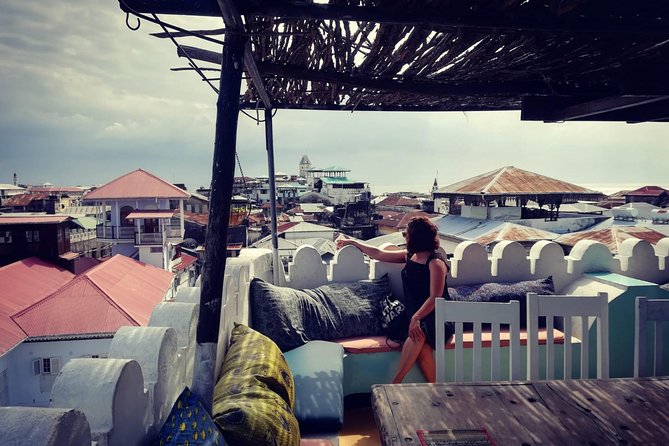
Reviewed · STONE TOWN TOURS
Stone Town Private Walking Tour
Stone Town is easiest to understand from street level, where carved doors, market lanes, old religious buildings, and weathered limestone walls sit almost shoulder to shoulder. This private walking tour gives you a local guide for about two hours, helping you find the main sights without getting turned around.
I like the personal pace and the useful local advice. Guides such as Mohammed, Imran, and Ally have been singled out for clear explanations, patience, humor, and help arranging tuk-tuks or finding lunch. The main drawback is the short running time: two hours gives you a strong introduction, not a full study of every museum or historical question.
Key points
- A practical first walk: Learn Stone Town’s layout before exploring on your own.
- Many major sights in two hours: See the Old Fort, former slave market, Darajani Market, cathedrals, baths, museums, and Freddie Mercury’s former home.
- Private attention: Your group walks with its own guide, so you can ask questions and adjust the pace.
- Strong guide quality: Mohammed, Imran, Ally, and other local guides have received praise for their clear English, patience, humor, and command of local history.
- Useful local help: Ask where to eat, what to see next, how to find a tuk-tuk, and how to handle shopping.
- Simple logistics: The tour begins and ends at the Zanzibar Tourist Information Center, with Stone Town hotel pickup available if arranged ahead.
Why Stone Town works best on foot

Stone Town can feel confusing within minutes. Narrow lanes turn sharply, buildings crowd the sidewalks, and the most interesting details are easy to miss when you are busy checking a map. A guide gives you a basic mental map while pointing out the places that matter.
The old center covers about 50 hectares and contains more than 2,000 limestone buildings. That compact size makes walking practical, but it also means the city’s layers sit close together. African, Arab, Indian, Persian, and European influences appear in the buildings, religious sites, markets, and street life.
Stone Town was named a UNESCO World Heritage Site in 2000. That label is useful, but it does not tell you how the place feels. You get the real sense of it by walking from the waterfront and Old Fort into the lanes, where grand doors, small shops, working markets, and homes share the same tight space.
I see this tour as a getting-your-bearings walk. It is especially useful on your first day in Zanzibar, after you have left your bags at your hotel and want to understand where you are before setting out alone.
Other guided walks in Zanzibar:
- Zanzibar: 3 Hours Private Stone Town walking Tour with Guide
★ 4.6 · 301 reviews - Zanzibar: Stone Town Historical Cultural Walking Guided Tour
★ 4.5 · 179 reviews - Stonetown: Food Markets and Street Food Walking Tour
★ 4.7 · 151 reviews
Starting at the Old Fort and waterfront

The meeting point is the Zanzibar Tourist Information Center on Mizingani Road. The walk begins in one of the easiest areas to recognize, near the waterfront and the Old Fort.
The Old Fort provides a natural opening lesson in Zanzibar’s past. Your guide can place Stone Town within the wider story of the island, including its African, Arab, Indian, Persian, and European connections. The tour also introduces the religious mix that shapes the town, with Christian and Islamic buildings appearing within a relatively small area.
You should expect the guide to talk while walking rather than deliver a long lecture in one spot. That format suits the setting. Stone Town is more understandable when its buildings and streets are right in front of you.
The pace can usually be adjusted. One group found its guide willing to go slower or faster in different areas, and several people praised guides for taking time with questions. If you care about architecture, doors, religion, trade, or colonial-era history, say so early. A private format gives you a better chance of shaping the conversation than a large group walk.
Carved doors and narrow lanes
Stone Town’s doors are one of its most memorable details. They are not simply entrances. Their carvings, metal studs, and styles reflect different cultural influences and offer a visual way to read the town’s past.
A good guide can explain what to notice instead of letting you pass a striking doorway with only a quick photograph. This is one of the parts of the walk where a local guide adds real value. You may remember the doors long after you have forgotten a list of dates.
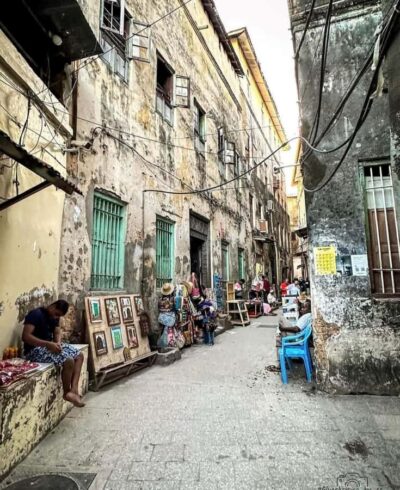
The narrow streets also show modern Stone Town, not just its preserved architecture. People live and work among old buildings, small shops, cafés, and stalls. The experience is not a quiet open-air museum. It is a working town with tourist sights mixed into daily life.
That can be a plus or a drawback. I like the fact that the walk feels connected to present-day Zanzibar, but you should not expect a polished historic district with wide, traffic-free paths. The streets can be crowded, and the walking surface may require attention. Wear comfortable shoes and keep your valuables secure in busy areas.
The former slave market and Anglican Cathedral
The Anglican Cathedral occupies the site of the former slave market. This is one of the most serious stops on the route and one that deserves time rather than a quick photograph.
The cathedral and associated museum help explain Zanzibar’s role in the East African slave trade and the later campaign against it. A guide can help connect the physical site to the wider story of the island and its people.
The presentation may feel simplified in places. One experience found the former slave market museum too focused on the British role in ending slavery, with less attention to the full complexity of the trade and its local and international participants. I would treat the stop as an introduction, not the last word on the subject.
If this part of Zanzibar’s past matters to you, use the guide to ask direct questions. The private format makes that possible. You can also take the information as a starting point for further reading rather than expecting a two-hour walk to settle every historical issue.
More of the old town on foot from Zanzibar:
- Zanzibar: Stone Town, Spice Tour, Prison Island with Lunch
★ 4.4 · 1,219 reviews - Zanzibar: Prison Island, Stone Town, & Spice Farm Tour
★ 4.5 · 579 reviews - Zanzibar: Stone Town, Spice tour & Prison Island with Lunch
★ 4.6 · 453 reviews - Full-Day Private Stone Town +Spice Farm and Prison Island Tour
★ 4.5 · 216 reviews
Markets, spices, and everyday Stone Town
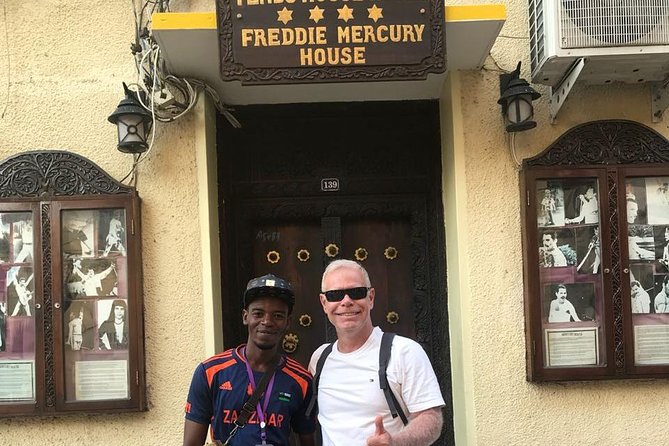
Darajani Market gives the tour a change of rhythm. Here you see the commercial side of Stone Town, with food, spices, and other goods moving through the town’s main market area.
The market is useful for understanding Zanzibar as a trading center, not just a place of old buildings. It also gives you practical information for the rest of your stay. Your guide may explain products, point out local foods, or help you understand what you are seeing.
This is also the area where the city can feel most crowded and intense. If you want quiet photographs and empty lanes, the market may test your patience. If you want to see Stone Town functioning as a real city, it is an important stop.
Shopping can enter the experience. Some people found the walk leaned too much toward shops, while others valued help with bargaining and finding souvenirs. Be clear with your guide if you want more history and less shopping. A private tour should let you set that boundary.
One useful detail from the experience is the practical help some guides provide after the official walk. Ally, for example, was described as helping with a tuk-tuk ride, bargaining, and a lunch destination. Those extras are not guaranteed, but they show why it is worth asking your guide for advice before parting ways.
Museums, baths, and religious buildings

The route includes the House of Wonders, now described as the national museum, and the Palace Museum. These sites give the walk an institutional side, adding royal and national history to the street scenes.
The House of Wonders is an important landmark in the town’s waterfront area, while the Palace Museum offers another view of Zanzibar’s ruling family and political past. The tour may pass or discuss these places rather than provide a long interior visit, so ask the guide what is included in the day’s timing.
Hamamni Baths add a different architectural detail. The former baths help show how public life and urban design worked in historic Stone Town. Along with the doors and religious buildings, they make the town feel like a collection of connected systems rather than a set of unrelated photo stops.
The Catholic Cathedral and the Anglican Cathedral provide useful contrast. The tour’s religious history discussion can help you understand how different communities shaped Zanzibar. One guide began with the history and religion of the island, which is a sensible approach because so much of Stone Town’s identity rests on those overlapping traditions.
Admission to the walking activity itself is listed as free of extra admission charges, but food, drinks, and personal purchases are not included. If a particular museum interior is important to you, confirm what you will enter and whether any separate fee applies before the walk begins.
Freddie Mercury’s former home and modern Zanzibar
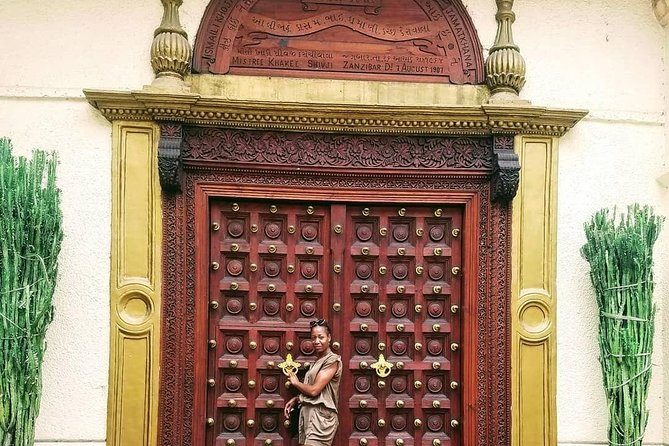
Freddie Mercury’s former home is another named stop. It offers a link between Stone Town’s older history and its more recent international profile.
This stop will likely be brief compared with the historical sites. It is still a fun addition, especially if you know his connection to Zanzibar or want a lighter moment during a serious history walk. The tour works best when you treat it as one piece of the city rather than the central attraction.
The larger point is that Stone Town is not only about forts, palaces, and trade. Its identity continues to change, and modern cultural figures are part of that story. Ask your guide how the city presents this connection today, especially if you are interested in local views rather than only the tourist angle.
How the private format changes the experience

A private tour means only your group participates. That matters in Stone Town because the streets are close, noisy, and sometimes difficult to navigate. You can stop when a doorway catches your eye, ask for a slower explanation, or move on when a subject is not holding your attention.
The format also suits solo visitors. Walking alone through an unfamiliar maze can be awkward, particularly when you are trying to locate a museum, market, or historic building while also watching your surroundings. A guide gives you a route and a person to ask about practical matters.
Guide quality is central here. Mohammed has been praised for his history knowledge, patience, humor, and good English. Imran has been described as articulate and passionate about both Stone Town’s past and current challenges, while Ally received strong praise for thoughtful commentary and careful answers. These names reflect guides who may be assigned, not a promise that you will receive a particular person.
The differences between guides also explain the mixed experiences. Most praise centers on the guide’s ability to make the city clear and enjoyable. A few people found the historical detail thin or felt the walk focused too much on shopping. Set your interests at the start, and ask for more detail when an explanation feels too brief.
Is two hours enough?
Two hours is enough to see the city’s main landmarks and get a useful first orientation. It is not enough for slow museum visits, long market browsing, and detailed discussion at every stop.
Think of the walk as a well-paced introduction. You will likely cover the Old Fort, former slave market and Anglican Cathedral, House of Wonders, Palace Museum, Darajani Market, Hamamni Baths, Catholic Cathedral, and Freddie Mercury’s former home, but the exact amount of time at each place can vary.
The short length is a value at $26.23 per person, especially for a solo visitor or small private group. You are paying for a focused guide rather than a full-day program, and the advice can help you make better use of the rest of your time in Zanzibar.
Group discounts may improve the price for larger parties. Since the activity is private, compare the total cost for your own group rather than assuming the per-person figure tells the whole story. Hotel pickup is available from Stone Town hotels by request, but transport from other parts of the island is not included.
Practical details before you book
The tour starts and ends at the Zanzibar Tourist Information Center. If you are staying in Stone Town, request hotel pickup in advance and send the operator a message so the arrangement is clear.
Confirmation is provided at booking, and most people can take part. Since this is a walking tour, plan for warm conditions and comfortable footwear. The experience requires good weather. If poor weather cancels it, you can receive a different date or a full refund.
Food and drinks are not included. That is not a serious weakness for a two-hour walk, but it means you should plan lunch or refreshments separately. A guide may suggest places such as Lukmaan, but dining is not part of the tour price.
You can cancel for a full refund up to 24 hours before the local start time. Cancellations or changes made within 24 hours are not refunded or accepted. Be careful with date changes: one missed booking resulted from an unanswered request to move the tour by one day.
Who should book this Stone Town walk?
I would choose this tour if you are visiting Stone Town for the first time, want a private guide, or feel uneasy about finding your way through unfamiliar lanes. It is also a good fit if you want a basic grounding in Zanzibar’s history before visiting other parts of the island.
It suits solo visitors particularly well, since the price includes personal attention without requiring you to join a large group. Couples and families can also benefit from the adjustable pace.
I would hesitate if you want a long, academic treatment of Zanzibar’s past, extended museum visits, or a full-day cultural program. The two-hour schedule keeps the walk manageable, but it also limits detail. You may need to do additional reading if the slave trade, colonial history, architecture, or religious history is a main reason for your visit.
Should you book it?
For $26.23 per person, this is a sensible first activity in Zanzibar City. The strongest reason to book is not simply the list of sights. It is the chance to have a local guide explain the city while you are still learning its shape.
Choose it early in your stay, ask for the subjects you care about, and tell your guide if you prefer history over shopping. If you want a clear introduction to the Old Fort, markets, religious buildings, carved doors, former slave market, and modern Stone Town, this private walk offers good value. If you need exhaustive historical detail, plan a second visit to selected museums rather than expecting two hours to cover everything.
FAQ
How long does the Stone Town Private Walking Tour last?
The tour lasts approximately two hours.
Where does the tour start?
It starts at the Zanzibar Tourist Information Center on Mizingani Road in Zanzibar, Tanzania.
Where does the tour end?
The activity ends back at the meeting point.
Is hotel pickup available?
Pickup is available from hotels in Stone Town, but you must request it and send a message in advance.
Is transport from other parts of Zanzibar included?
No. Transfers from other parts of the island are not included, and the tour starts in Stone Town.
What sights are covered?
The route includes Stone Town landmarks such as the Old Fort, Anglican Cathedral and former slave market, House of Wonders, Palace Museum, Darajani Market, Hamamni Baths, Catholic Cathedral, and Freddie Mercury’s former home.
Is this a private activity?
Yes. Only your group participates in the walking tour.
Are food and drinks included?
No. Food and drinks are not included in the price.
What is the cancellation policy?
You can cancel at least 24 hours before the local start time for a full refund. Cancellations or changes made less than 24 hours before the start are not accepted and are not refunded. If poor weather cancels the experience, you will be offered another date or a full refund.
More walking tours in Zanzibar
- Zanzibar Stone Town Walking Tour
★ 5.0 · 145 reviews - Stone Town Historical Walking Tour
★ 5.0 · 143 reviews - Walking City Tour in Zanzibar Island
★ 5.0 · 122 reviews - Zanzibar: Spice Tour & Stone Town Walking Tour
★ 4.8 · 115 reviews
Just added in Zanzibar
- Jet Ski Experience from Kendwa Beach★ 5.0 · 21 reviews
- Zanzibar: Parasailing Experience with Instructor★ 4.2 · 17 reviews
- 2h-Quad Zanzibar: Explore the heart of zanzibar by Quad★ 4.8 · 22 reviews
- From Zanzibar: 3-Day Selous Safari Trip with Flights★ 4.4 · 22 reviews
- Stone Town: Sunset Dhow Cruise Experience★ 4.0 · 22 reviews
- Stonetown Historical Walking Tour & Traditional Lunch★ 4.8 · 22 reviews
- Luxury Spice Tour With Lunch★ 4.5 · 24 reviews
- Nakupenda SandBank & Prison Island (Changuu Island)★ 5.0 · 26 reviews
Stone Town Tours, compared.

Stone Town, Spice Tour, Prison Island with Lunch
Read our review →
3 Hours Private Stone Town walking Tour with Guide
Read our review →
Full-Day Private Stone Town +Spice Farm and Prison Island Tour
Read our review →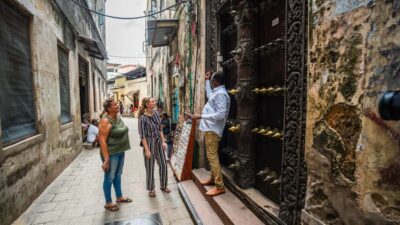
Stone Town Historical Cultural Walking Guided Tour
Read our review →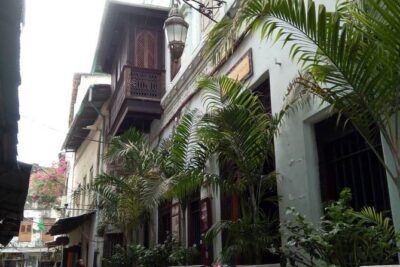


Browse the lists this tour appears in