

Reviewed · STONE TOWN TOURS
Stone Town Walking Tour
Stone Town’s narrow lanes tell several stories at once: Swahili life, Indian commerce, European rule, Islamic tradition, and the painful history of the slave trade. This private walk with Khamis Davido connects those threads through old buildings, worship sites, carved doors, and market streets.
I like the personal pace and the fact that only your group takes part. I also like the route’s balance: you get major landmarks such as the Old Fort and House of Wonders, then finish where daily life is most visible at Darajani Bazaar. The main drawback is simple: two to three hours goes quickly, and the walking route may feel hot, crowded, or tiring if you are not used to uneven city streets.
Key points to know
- Private guiding with Khamis Davido: Your group receives direct attention, with English and German guidance available.
- A serious look at slavery: The former slave market, Anglican Cathedral, slave monument, and original chains give the tour emotional weight.
- Stone Town’s famous details: Look for Zanzibar’s carved doors, Indian-style balconies, old administrative buildings, and narrow lanes.
- A useful market finish: Darajani Bazaar brings you into the sounds and smells of fish, spices, shops, and everyday trade.
- Short but full route: The walk lasts about two to three hours and returns to the Old Fort meeting point.
- Good value for a private tour: At $45 per person, taxes and entrance fees are included, though tips are not.
Why Stone Town deserves a walking tour

Stone Town is Zanzibar’s only UNESCO World Heritage site, and its appeal is not limited to one grand monument. The real pleasure comes from seeing how different influences sit side by side in a compact old city.
You walk past buildings shaped by Swahili customs, Indian trade, Islamic culture, and the colonial period. A carved wooden door may tell you about status and craftsmanship. A balcony may point to Indian architectural influence. An old administrative building may open a conversation about colonial rule.
This is why I would choose a guide rather than simply wander with a map. The lanes can look similar, and the meaning behind a doorway or ruined wall is easy to miss. Khamis Davido’s role is to connect the visible details to Zanzibar’s past and present.
The tour is private, so you do not have to match the pace of a large group. You can ask questions, spend more time at a place that interests you, or keep moving if you have a ferry, lunch, or other plans. Khamis has been described as fluent in English and German, and his German explanations are especially useful if you prefer that language.
Other guided walks in Zanzibar:
- Stone Town Private Walking Tour
★ 5.0 · 371 reviews - Zanzibar: 3 Hours Private Stone Town walking Tour with Guide
★ 4.6 · 301 reviews - Zanzibar: Stone Town Historical Cultural Walking Guided Tour
★ 4.5 · 179 reviews
Starting at the Old Fort on Mizingani Road
The meeting point is the Old Fort on Mizingani Road, a sensible place to begin because it puts you near several important Stone Town sights. The tour returns to this same point at the end.
Your first hour takes you through Stone Town’s streets along the seafront and past buildings once used as colonial administrative offices. This section gives you a useful first look at the city’s mixed character. You are not just seeing old walls. You are seeing how government, trade, religion, and home life were packed into a tight urban center.
The Old Fort is one of the major landmarks on this part of the route. The House of Wonders is another. These buildings help anchor the story, but the smaller details between them may be just as interesting. Watch for carved doors and balconies, then ask Khamis what they reveal about the people who lived or worked nearby.
The route is a walking tour, not a vehicle-based sightseeing trip. That matters. Stone Town is best understood at street level, where the lanes narrow, shopkeepers work close to the pavement, and the transitions between public and private space are easy to notice.
The tradeoff is comfort. The tour requires a moderate level of physical fitness, and you should expect a fair amount of standing and walking. The duration is listed as two to three hours, so the actual pace may depend on questions, shopping stops, and the interests of your group.
The former slave market and Anglican Cathedral

The second stop is the former slave market, now presented through the Anglican Cathedral and related memorials. Plan on roughly an hour here. This is the most serious part of the tour, and it deserves time rather than a quick photograph.
You will see the slave monument and original chains connected with the slave trade. The church occupies the site where the market once operated, creating a direct physical link between Zanzibar’s religious and commercial past. That connection can be difficult to process, but it is central to understanding the island’s place in regional trade.
I value this part of the route because it does not reduce Stone Town to pretty doors and photogenic alleys. Zanzibar’s story includes wealth built through trade, but also suffering and exploitation. A good guide can help you place the site within the wider story of the city without turning the visit into a dry list of dates.
Give yourself room to listen. The site may be emotionally heavy, and the tone changes sharply from the more decorative architecture seen earlier. That contrast is part of the point. Stone Town’s beauty and its painful past exist in the same small area.
The admission fee for this stop is included in the tour price. Tips are not included, so you can decide at the end whether you want to thank your guide for the service.
Carved doors, balconies, and the narrow lanes
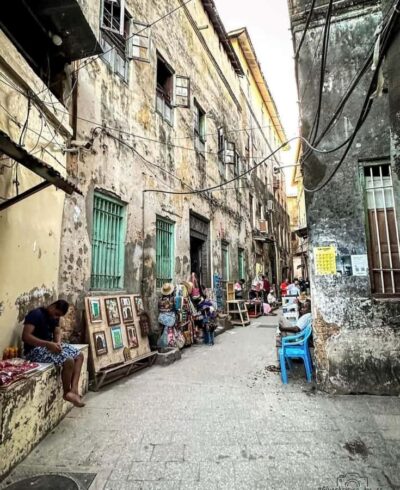
Between the main landmarks, the route brings you through Stone Town’s alleys, where the city’s character appears in smaller pieces. Zanzibar doors are a major feature. Their carvings and scale can tell you something about wealth, taste, religion, and outside influence.
You will also see Indian-style balconies and shops selling gifts and other goods. These details reflect Stone Town’s role as a meeting place for cultures across the Indian Ocean. The tour’s value comes from having those features pointed out as part of a larger story rather than seeing them as random decoration.
This is also where a private guide can be useful for shopping. Khamis has helped people find shopping possibilities and has gone along while they looked around. That does not mean you must buy anything. It simply gives you someone who can help you understand what you are seeing and keep the shopping portion from taking over the entire walk.
I would be clear about your priorities at the start. If you mainly want architecture and history, say so. If you want time for gifts, say that instead. The guide is reported to take personal requests into account, and a private tour gives you more room to shape the afternoon.
Stone Town’s lanes are not arranged like a modern museum. You may encounter busy streets, informal shops, and changing noise levels. Keep your attention on where you are walking, especially while looking upward at doors and balconies.
More of the old town on foot from Zanzibar:
- Zanzibar: Stone Town, Spice Tour, Prison Island with Lunch
★ 4.4 · 1,219 reviews - Zanzibar: Prison Island, Stone Town, & Spice Farm Tour
★ 4.5 · 579 reviews - Zanzibar: Stone Town, Spice tour & Prison Island with Lunch
★ 4.6 · 453 reviews - Full-Day Private Stone Town +Spice Farm and Prison Island Tour
★ 4.5 · 216 reviews
Ending at Darajani Bazaar
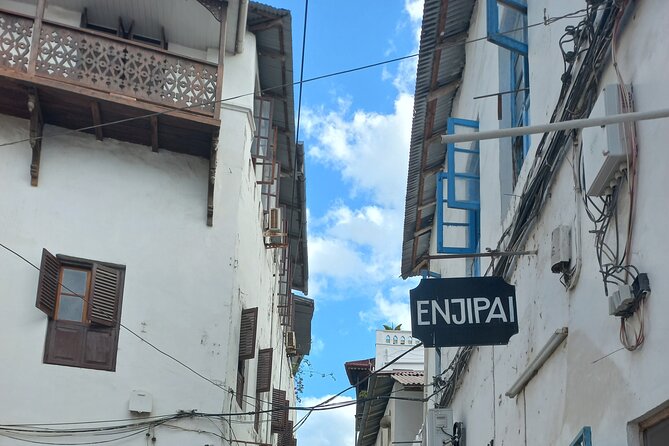
The final half hour takes you to Darajani Bazaar, where the polished landmarks give way to everyday commerce. The market includes fish and spice areas, along with shops selling goods and gifts.
This is a smart place to finish. After hearing about trade and cultural exchange, you get to see commerce in action. The market is not staged for sightseeing. It is part of local life, and the atmosphere can be more intense than at the monuments.
You might notice the strong smells of spices and fish, quick exchanges between sellers and customers, and a steady flow of people through the narrow market spaces. If you prefer quiet museums, this may feel overwhelming. If you want a closer look at ordinary Stone Town, it is one of the most useful parts of the route.
Your guide can help you understand what you are seeing, but you should still be respectful with cameras and personal space. Ask before photographing people, especially in market areas. Take care with your belongings and stay close to your group.
The tour ends back at the Old Fort meeting point. That makes the route convenient if you have arranged a driver, are staying nearby, or need to continue on foot. One particularly helpful feature of Khamis’s service is that he has assisted with finding a driver or organizing onward transport even after a tour has ended. That extra help is not a formal part of the stated route, so do not assume it is guaranteed, but it suggests a guide who pays attention to practical needs.
What $45 buys you

The price is $45 per person. For a private two to three-hour walk, that is a fair price if you want more than directions and landmark names.
The value comes from four things. You receive a private guide, entrance fees and taxes are included, the route covers both major sights and ordinary streets, and you can ask questions in English or German. A large part of Stone Town’s interest is hidden in context, so the guide’s explanations matter as much as the places themselves.
The price is less compelling if you only want a quick self-guided stroll around the Old Fort. You could see some exterior sights without booking a tour. But you would miss the structured explanation of the former slave market, the role of colonial buildings, the meaning of architectural details, and the chance to adjust the pace to your group.
Group discounts are available, which may improve the value for families or friends traveling together. Since only your group participates, you are not paying for a fixed public departure with strangers. The listed price does not include tips, so allow for that if you feel the guide has provided good service.
Khamis Davido’s guiding style
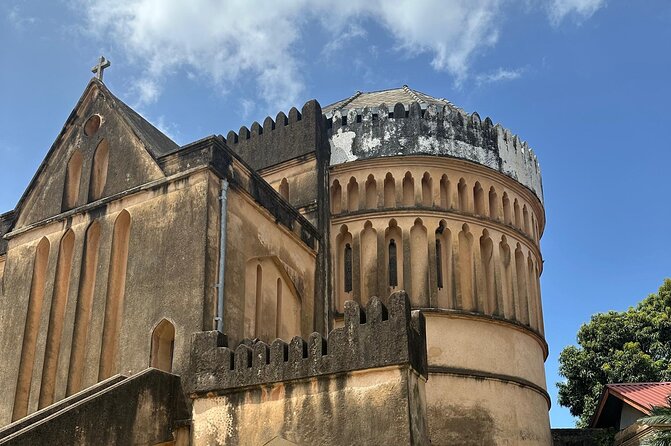
Khamis Davido receives strong praise for clear explanations, kindness, flexibility, and language skills. He is described as fluent in English and German, and several German-speaking clients found his explanations easy to follow.
That matters in Stone Town because the subject is layered. You may want to ask about architecture, slavery, religion, shopping, colonial buildings, or modern local life in the same hour. A guide who can answer questions and adjust the explanation makes the walk more useful.
Khamis also appears to be practical beyond the basic route. He has helped arrange taxis, ferry plans, and other island activities for people who asked. Again, these extra services should be treated as possible help rather than a promise included in the tour. The confirmed experience is the Stone Town walk.
A good approach is to tell him at the beginning if you have a strict end time. One group found that he fitted the sights into the time available, while another received help getting back to a driver after lunch. Clear communication should make the afternoon easier.
Planning the walk
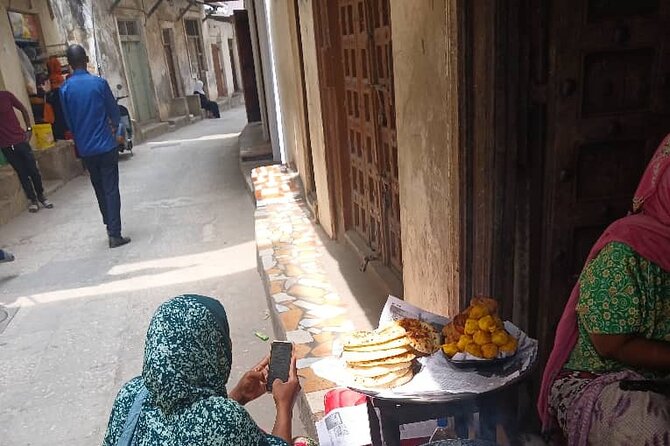
The tour is confirmed at booking, includes a mobile ticket, and is near public transportation. The meeting point is the Old Fort, Mizingani Road, Zanzibar, Tanzania.
Wear comfortable shoes and bring water. Those suggestions are practical rather than decorative: the route uses narrow city streets and requires moderate physical fitness. You will also want clothing suitable for visiting historical and worship sites, though the supplied details do not set a formal dress code.
Allow two to three hours, not just the stated one-hour segments. The route includes about one hour in the central Stone Town streets, one hour at the former slave market and Anglican Cathedral, and about thirty minutes at Darajani Bazaar. Questions, shopping, and the walking pace can affect the total.
The tour requires good weather. If poor weather causes cancellation, you are offered another date or a full refund. For your own plans, avoid scheduling an important departure immediately after the tour unless you have plenty of extra time.
Free cancellation is available up to 24 hours before the start time. Cancellations or changes within 24 hours are not refunded or accepted, and the cut-off uses local time.
Who should book this Stone Town walk

I would recommend this experience to you if you want a clear introduction to Stone Town and prefer a guide who can explain rather than simply point. It suits couples, families, and small groups who want a private pace.
It is also a good match if you care about the city’s difficult history. The former slave market is not treated as a side note, and the route gives it about an hour. People interested in architecture will appreciate the doors, balconies, old offices, and landmark buildings.
German-speaking visitors have a particular reason to consider this tour, since Khamis is repeatedly described as fluent in German. English speakers also receive a full historical and cultural walk.
I would think twice if you dislike walking, markets, heat, or serious historical subjects. Darajani Bazaar can be a strong sensory experience, and the former slave market can be emotionally difficult. If you want a relaxed beach outing, this is not the right choice. If you want to understand why Stone Town looks and feels the way it does, it is a useful investment.
Should you book it?
Book this tour if you want a private, guided introduction rather than a quick look at Stone Town’s famous buildings. The combination of colonial-era sites, the former slave market, carved doors, balconies, and Darajani Bazaar gives you a broad picture in a short time.
The strongest reason to choose it is Khamis Davido’s reported flexibility and language ability. The main caution is the pace and subject matter: two to three hours is full, and the tour asks you to walk through both beautiful and painful parts of Zanzibar’s past.
At $45 per person, with fees and taxes included, I consider it good value for a private walk, especially if you are sharing the experience with family or friends and use the guide’s time for questions.
FAQ
How long does the Stone Town Walking Tour last?
The experience lasts approximately two to three hours. The planned route includes about one hour in Stone Town, one hour at the former slave market and Anglican Cathedral, and thirty minutes at Darajani Bazaar.
Where does the tour start and end?
The tour starts at the Old Fort on Mizingani Road in Zanzibar. It ends back at the meeting point.
Is the tour private?
Yes. Only your group participates in the activity.
What is included in the $45 price?
All fees and taxes are included. Tips are not included.
Which languages does the guide speak?
Khamis Davido is described as fluent in English and German.
What happens if bad weather cancels the tour?
If poor weather causes cancellation, you will be offered a different date or a full refund. You can also cancel up to 24 hours before the start time for a full refund. Cancellations within 24 hours are not refunded.
More walking tours in Zanzibar
- Stonetown: Food Markets and Street Food Walking Tour
★ 4.7 · 151 reviews - Zanzibar Stone Town Walking Tour
★ 5.0 · 145 reviews - Stone Town Historical Walking Tour
★ 5.0 · 143 reviews - Walking City Tour in Zanzibar Island
★ 5.0 · 122 reviews
Just added in Zanzibar
- ZANZIBAR: Jozani Forest, butterfly center & Reptile park★ 4.7 · 3 reviews
- Zanzibar: Jozani Chwaka Bay National Park and Spice Farm …★ 4.6 · 5 reviews
- Zanzibar: Horse Riding and Kayaking with Video and Photos★ 4.9 · 10 reviews
- Zanzibar hidden: Starfish, Blue Lagoon, &The Rock Restaurant★ 5.0 · 3 reviews
- Zanzibar: Half-Day Spice Farm Tour,the flavours of Zanzibar★ 4.7 · 3 reviews
- Zanzibar Half Day Trip in Mnemba Island★ 4.4 · 16 reviews
- Zanzibar: Full-Day Conservation Safari with BBQ Lunch★ 3.9 · 9 reviews
- Zanzibar: Half-Day Prison Island, Tortoises and Spices Tour★ 3.7 · 7 reviews
Stone Town Tours, compared.

Stone Town, Spice Tour, Prison Island with Lunch
Read our review →

3 Hours Private Stone Town walking Tour with Guide
Read our review →
Full-Day Private Stone Town +Spice Farm and Prison Island Tour
Read our review →
Stone Town Historical Cultural Walking Guided Tour
Read our review →

Browse the lists this tour appears in