

Reviewed · STONE TOWN TOURS
Stone Town Walking Tour with Hassan
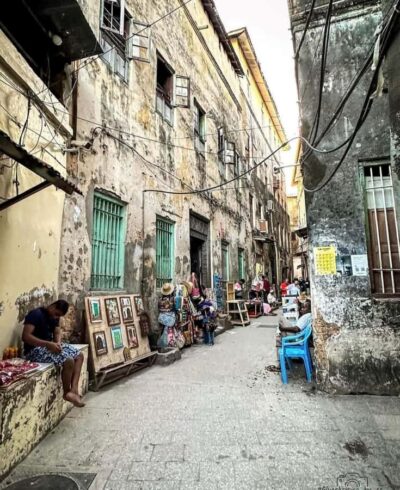
Stone Town makes sense on foot. In three hours with Hassan, you move from the Sultan’s ceremonial House of Wonders to a spice-and-produce market, a former slave market, a Catholic cathedral, and the home of Freddie Mercury. The route gives you a compact look at Zanzibar’s layered past, with Omani, Portuguese, British, African, Indian, and European influences packed into narrow streets.
I like the private format, since Hassan can explain the buildings at your pace rather than deliver a fixed speech to a large group. I also like the mix of major sights and everyday places, especially Darajani Bazaar and Jaws Corner, where Stone Town feels like a living town rather than an outdoor museum. The main consideration is that several museums and churches charge admission separately, so the $25 price does not cover every interior visit.
Key points to know before booking

- Hassan leads a private, English-language walk, so only your group takes part.
- The route covers 12 important stops in about three hours, including the Old Fort, People’s Palace, Darajani Bazaar, and the former slave market.
- Stone Town’s complicated past is central to the tour, from Omani sultans and Portuguese fortifications to the slave trade and the 1964 Revolution.
- The tour begins and ends at Forodhani Gardens, with no hotel transport included unless you arrange a Stone Town pickup in advance.
- A bottle of water is included, while admission at several stops is not.
- Free cancellation is available up to 24 hours before departure, but poor weather may also affect the schedule.
Why Stone Town works best with a guide
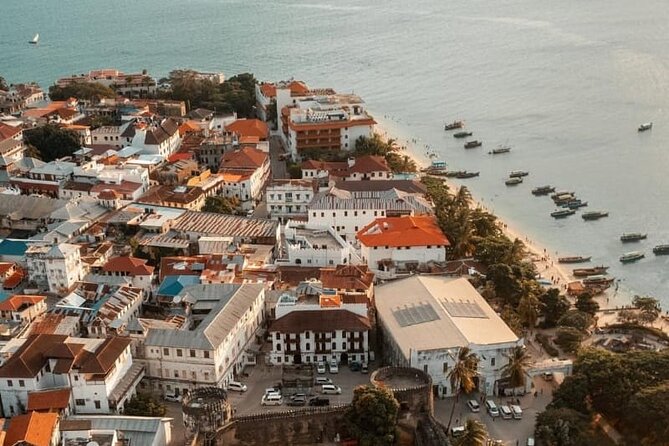
Stone Town is compact, but its story is not simple. A plain doorway may have belonged to a royal family. A church may occupy the site of a former slave market. A market building may reveal more about present-day Zanzibar than a grand palace does.
That is where Hassan’s role matters. The strongest part of this experience is not simply reaching each stop. It is the chance to connect buildings with Zanzibar’s politics, religion, trade, and daily life. One detailed account of the tour describes Hassan as informative without making the walk feel like a lecture, and as willing to discuss politics and life in Zanzibar as well as architecture. That is useful here, because Stone Town can otherwise feel like a series of attractive façades without a clear thread.
The route is also private. You are not tied to the pace of strangers, and the tour can remain focused on what interests you. The listed time is about three hours, though the scheduled stops add up to more than two hours before allowing for walking between them. Expect a steady walking tour, not a quick drive-by circuit.
Other guided walks in Zanzibar:
- Stone Town Private Walking Tour
★ 5.0 · 371 reviews - Zanzibar: 3 Hours Private Stone Town walking Tour with Guide
★ 4.6 · 301 reviews - Zanzibar: Stone Town Historical Cultural Walking Guided Tour
★ 4.5 · 179 reviews
Starting at Forodhani and the House of Wonders
The meeting point is Forodhani Gardens, on the waterfront. This is a practical place to begin because several key monuments sit close together, and the gardens also introduce you to one of Stone Town’s social centers.
The first formal stop is the House of Wonders, built by Sultan Barghash bin Said in the 19th century. It was once Stone Town’s largest and tallest building, serving as a ceremonial palace and reception hall. Its prominent position between the Old Fort and the palace museum reflects the importance of this stretch of waterfront.
The visit here is scheduled for about 10 minutes, and admission is not included. You should treat this as a short introduction unless you choose to pay for entry. The building’s importance comes from its royal function and its place in the city’s ceremonial core, not simply from its size.
Forodhani Gardens was laid out in 1936 to mark the silver jubilee of Sultan Khalifa. The tour description also connects the gardens with Zanzibar’s well-known evening food market, where local people and tourists gather for dinner. If your walk takes place before the market is active, you may see the setting rather than the full food scene. Still, this is a useful place to return later, particularly if you want to see how the waterfront changes after sunset.
The Old Fort and Zanzibar’s Portuguese chapter
The Old Fort, or Ngome Kongwe, is one of the city’s essential stops. The Portuguese built the original fortification in the 16th century, and the structure later became associated with Arab rule. It is described as the oldest building in Stone Town and is now used for Zanzibar festivals.
The stop lasts about 10 minutes, with admission included. That makes it one of the easier places to visit without worrying about an extra ticket. The fort also helps explain why Stone Town became so important: it was a protected port with control over trade routes across the Indian Ocean.
Do not expect a long museum visit here. The stop is brief, but it gives you a physical sense of the city’s defensive past before the tour moves into palaces, churches, and markets.
Freddie Mercury, a cathedral, and Jaws Corner
The Freddie Mercury Museum is a sharp change of subject. Freddie Mercury was born in Zanzibar Town on September 5, 1946, and later became the lead singer and pianist of Queen. He died on November 24, 1991.
The visit is scheduled for seven minutes, and admission is not included. That timing suggests a short stop and an exterior introduction unless you decide to purchase entry. For music fans, the connection gives Stone Town a direct link to 20th-century popular culture. It also reminds you that Zanzibar’s story is not only about sultans, forts, and trade.
St. Joseph’s Roman Catholic Cathedral offers another change in tone. Construction began in 1863 under French missionaries from Réunion, but work stopped when graves were found on the land. Building resumed about 30 years later, and the first Mass was held at Christmas in 1898.
The stop lasts about seven minutes, with admission extra. The cathedral is worth understanding as part of Zanzibar’s religious mix. In a short distance, you encounter Islamic, Catholic, and Anglican institutions, each tied to a different period and community.
Jaws Corner is a very short, three-minute stop, and it is free. It is described as the heart of town, a meeting place where local people and tourists drink coffee and joke together. This is not a major monument, and that is exactly its value. It gives the walking route a glimpse of ordinary social life between the formal sights.
More of the old town on foot from Zanzibar:
- Zanzibar: Stone Town, Spice Tour, Prison Island with Lunch
★ 4.4 · 1,219 reviews - Zanzibar: Prison Island, Stone Town, & Spice Farm Tour
★ 4.5 · 579 reviews - Zanzibar: Stone Town, Spice tour & Prison Island with Lunch
★ 4.6 · 453 reviews - Full-Day Private Stone Town +Spice Farm and Prison Island Tour
★ 4.5 · 216 reviews
The former slave market and Anglican Cathedral

The Old Slave Market and Anglican Cathedral are the most emotionally weighty part of the walk. The slave market once held enslaved people from different countries. It was closed around 1873 by Sultan Barghash, after which an Anglican church was built by Edward Steere, the third Bishop of Zanzibar, who served from 1874 to 1882.
The stop is planned for 20 minutes, the longest visit on the route, and admission is not included. Allow extra money if you want to enter the museum and church. This is one of the places where a guide adds real value, because the physical site alone cannot explain the scale and human cost of the trade.
Edward Steere died of a heart attack in the building next door and was buried behind the altar. That detail links the church’s construction and the people connected with it in a very direct way. You should expect this stop to be serious rather than light sightseeing.
The route does not treat Stone Town as a collection of pretty old buildings. It places royal power, religious change, and the slave trade in the same urban setting. That is an important reason to choose a walking tour with historical explanation instead of exploring only by yourself.
Darajani Bazaar, where the town does its daily work
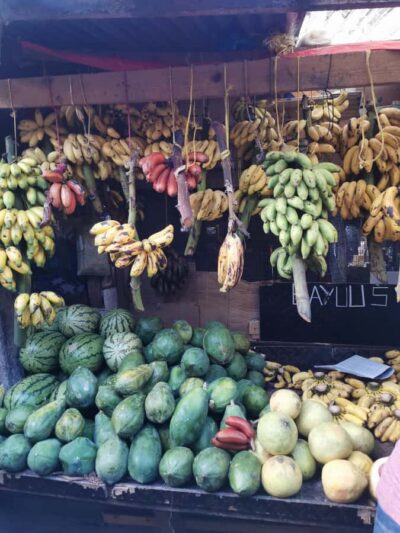
Darajani Bazaar is the largest of Stone Town’s central market structures. British architect J. H. Sinclair designed it in an eclectic style, and it opened in August 1904. The market once faced the creek and includes areas for fish, meat, spices, fruit, and vegetables.
The scheduled visit lasts 15 minutes, and admission is included. You will not have much time to linger over every stall, so think of this as an introduction rather than a full market visit. If you want to shop, photograph produce, or return for a slower look, plan another visit on your own.
This is one of my favorite parts of the route because it keeps history connected to the present. Palaces tell you who ruled Zanzibar. Darajani shows you how people buy food and conduct business now. The sights may be less polished than the waterfront monuments, but they offer a more direct look at the town’s working life.
Bring patience and pay attention to your surroundings. The experience is about seeing the market’s range and place in Stone Town, not expecting a quiet gallery or a carefully arranged display.
The Old Dispensary and Malindi Mosque
The Old Dispensary was commissioned in 1887 by Tharia Topan as a charitable hospital for poor residents. Construction was unfinished when he died in 1891. His widow resumed the work, but financial problems stopped it again in 1893. After a family quarrel, the building was sold, and the new owner completed it in 1894.
The planned stop is 15 minutes, with admission not included. The building’s story is a reminder that Stone Town’s impressive structures were shaped by private wealth, charity, family disputes, and changing ownership, not only by sultans.
Malindi Mosque, also called Ijumaa or Friday Mosque, dates from the 19th century. Zanzibar’s mosques were often plain compared with buildings with tall minarets and large domes. The mosque was completely renovated in a modern Arabesque style in 1994.
This is a nine-minute stop, with admission extra. The key point is not grand decoration. It is the way religious buildings changed over time while remaining part of the city’s daily life. As with all religious sites, dress and respectful behavior matter.
The Old Customs House and People’s Palace
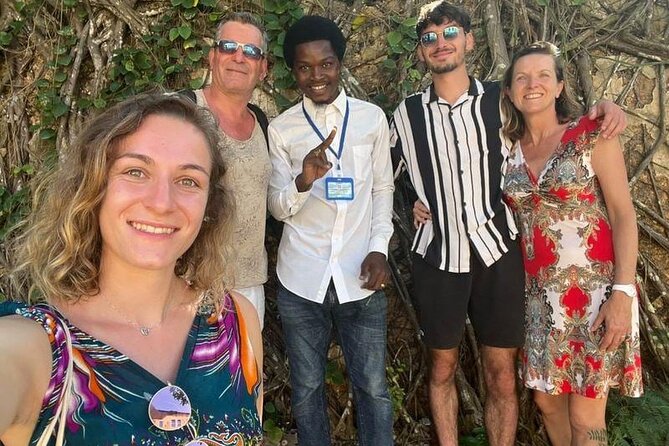
The Old Customs House was built around 1865 as a home for Zam Zam, a daughter of Seyyid Said, the first Sultan of Zanzibar, and her husband, Sayyid Humud bin Ahmed of the Busaidy family. After Humud’s death, Zam Zam left the house, which remained with relatives. In 1928, the customs authority moved there from the Forodhani area, and the building served as the Customs House until 1987.
The stop is scheduled for 18 minutes, and admission is included. Its story shows how a private family residence later became part of the machinery of trade and government. That shift is common in old port cities, but here it is easy to see in one building.
The final major stop is the People’s Palace Museum, once a palace built by Seyyid Said bin Sultan in the 1830s for members of the Sultan’s family. It was his second palace, after Mtoni Palace. The building was damaged during the Anglo-Zanzibar War in 1896 and reduced to about half its original size.
It remained an Al Busaidy palace until the Zanzibar Revolution of 1964, when Sultan Jamshid was overthrown. It was then renamed the People’s Palace and used as government offices before opening as a palace museum in 1994.
The visit lasts about 20 minutes, and admission is not included. This is a fitting end because it gathers many of the tour’s themes in one place: royal authority, war, revolution, and the change from sultanate to modern government.
What the $25 price really covers
At $25 per person, this is a strong value if you want a private guide rather than a self-guided walk. The price includes Hassan’s English-language guiding and a bottle of water. It does not include transport from your hotel to Forodhani Gardens, and admission is not included at several sites.
The Old Fort, Forodhani Gardens, Darajani Bazaar, and Old Customs House are listed with admission included. The House of Wonders, Freddie Mercury Museum, St. Joseph’s Cathedral, Old Slave Market and Anglican Cathedral, Old Dispensary, Malindi Mosque, and People’s Palace Museum are listed with admission not included.
That distinction matters. If your aim is to see the exteriors and hear the stories, the base cost may be all you need. If you want to enter most museums, budget for additional fees. The tour is best priced as a guided orientation to Stone Town, not as an all-inclusive museum pass.
Because it is a private activity, the value improves for couples, families, or small groups who would otherwise pay separate guiding fees. The tour is booked an average of 33 days ahead, so advance planning is sensible if your Zanzibar schedule is fixed.
Who should book this Stone Town walk?
I would choose this experience if you want a first look at Stone Town’s major landmarks and prefer context over wandering without a plan. It suits anyone interested in architecture, royal history, religion, trade, the slave trade, or Freddie Mercury.
It is also a good fit if you want to ask questions about Zanzibar’s politics and daily life. Hassan’s approach, as described in the available feedback, is flexible and informative without making the walk feel too long.
You should think twice if you want a slow photography walk, a full museum day, or a food-focused evening. The itinerary covers a lot in three hours, so the individual stops are often short. For deeper visits, return later to the sites that matter most to you.
The route begins and ends at Forodhani Gardens. Hotel transport is not included. If your hotel is in Stone Town, contact the provider in advance about pickup arrangements. Confirmation is provided at booking, and the activity is private. Most people can take part, but you should be ready for a substantial amount of walking through the historic center.
My verdict on Stone Town Walking Tour with Hassan
Book it if you want a focused introduction to Stone Town with a guide who can connect grand buildings to Zanzibar’s complicated past and present. The combination of royal palaces, religious buildings, markets, a former slave market, and Freddie Mercury’s birthplace gives you far more than a simple monument checklist.
The best value comes from the private format and Hassan’s broad subject range. Just keep the short stop times and extra admission fees in mind. For a first visit, this is a sensible three-hour foundation. Afterward, you can return to the People’s Palace, Darajani Bazaar, or the former slave market with a clearer idea of what you are seeing.
FAQ
How long does the Stone Town Walking Tour with Hassan last?
The tour lasts approximately three hours and ends back at the Forodhani Gardens meeting point.
Where does the tour start?
The tour starts at Forodhani Gardens in Zanzibar, Tanzania.
Is the tour private?
Yes. Only your group participates in this activity.
Is hotel pickup included?
Transport from your hotel to the meeting point is not included. If your hotel is in Stone Town, you should send an advance message to ask about pickup arrangements.
Are admission fees included?
Admission is included at Forodhani Gardens, the Old Fort, Darajani Bazaar, and the Old Customs House. Admission is not included at several other stops, including the House of Wonders, Freddie Mercury Museum, former slave market and Anglican Cathedral, and People’s Palace Museum.
What happens if the weather is poor?
The experience requires good weather. If it is canceled because of poor weather, you will be offered another date or a full refund. You can cancel for a full refund up to 24 hours before the start time.
More walking tours in Zanzibar
- Stonetown: Food Markets and Street Food Walking Tour
★ 4.7 · 151 reviews - Zanzibar Stone Town Walking Tour
★ 5.0 · 145 reviews - Stone Town Historical Walking Tour
★ 5.0 · 143 reviews - Walking City Tour in Zanzibar Island
★ 5.0 · 122 reviews
Just added in Zanzibar
- Jet Ski Experience from Kendwa Beach★ 5.0 · 21 reviews
- Zanzibar: Parasailing Experience with Instructor★ 4.2 · 17 reviews
- 2h-Quad Zanzibar: Explore the heart of zanzibar by Quad★ 4.8 · 22 reviews
- From Zanzibar: 3-Day Selous Safari Trip with Flights★ 4.4 · 22 reviews
- Stone Town: Sunset Dhow Cruise Experience★ 4.0 · 22 reviews
- Stonetown Historical Walking Tour & Traditional Lunch★ 4.8 · 22 reviews
- Zanzibar: Half Day Trip on Nakupenda with Prison Island★ 4.7 · 27 reviews
- Zanzibar: Prison Island, Nakupenda, Stone Town Trip with BBQ★ 4.3 · 25 reviews
Stone Town Tours, compared.
Stone Town, Spice Tour, Prison Island with Lunch
Read our review →
3 Hours Private Stone Town walking Tour with Guide
Read our review →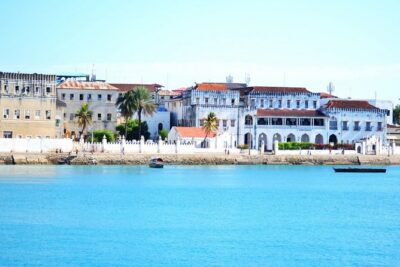
Full-Day Private Stone Town +Spice Farm and Prison Island Tour
Read our review →
Stone Town Historical Cultural Walking Guided Tour
Read our review →

Browse the lists this tour appears in