
Reviewed · STONE TOWN TOURS
3 Hours Private Stone Town Walking Tour
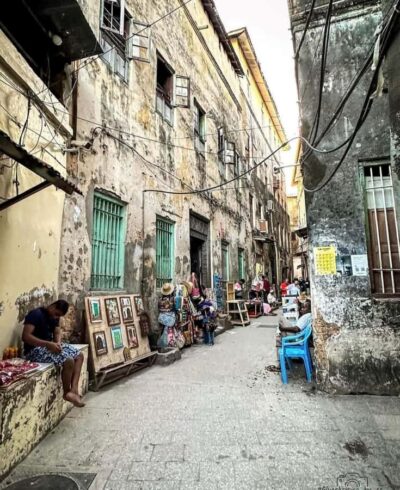
Stone Town makes the most sense on foot. Its narrow lanes lead from the 17th-century Old Fort to royal palaces, a former slave market, a busy food bazaar, and small corners where daily life carries on around you. The route gives you a useful first look at Zanzibar’s Arab, Indian, European, and Swahili influences without asking you to spend a full day on a formal city tour.
I like the private format, since your guide can walk at your pace and explain details that are easy to miss from a vehicle. I also like the mix of major sights and ordinary places, especially Darajani Bazaar, Jaws Corner, and Lukmaan Restaurant. The main consideration is that the short tour covers many stops, while several museums and interiors cost extra.
Key points to know before you book
- A compact private introduction: Expect about 2 to 3 hours with only your group and a guide.
- Strong guide reports: Rakib and Nasir are praised for clear explanations, polite service, and an easy walking pace.
- A serious history stop: The former slave market and Anglican Cathedral add important, difficult context to Stone Town.
- Local food is part of the route: Lukmaan Restaurant gives you a chance to try Swahili dishes, though lunch is not included.
- Many interiors cost extra: The Freddie Mercury Museum and some palace, bath, and slave-market admissions may require separate payment.
- Good value at $20 per person: The price is low for a private city walk, especially if you want a guide rather than a self-guided stroll.
Why Stone Town works best as a walking tour
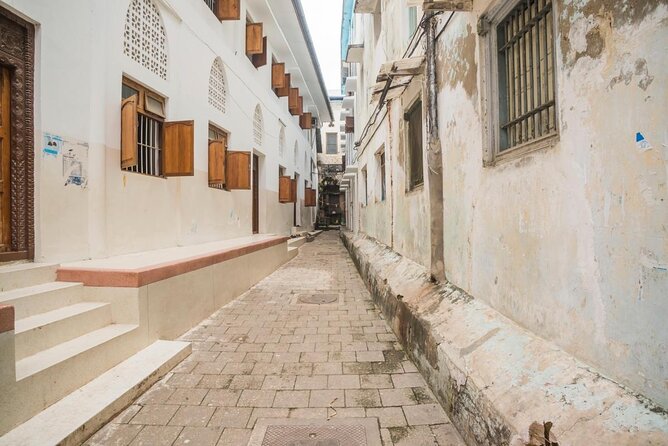
Stone Town is not a place you understand from a quick drive past the buildings. The narrow streets turn sharply, old doors hide behind busy shopfronts, and important buildings sit close together. A guide gives those walls a human story and helps you connect the different periods of Zanzibar’s past.
This route is especially useful if you have only a few hours in town. It begins at Forodhani, follows the waterfront and central lanes, then reaches markets, religious buildings, old royal sites, and local meeting places before returning to the starting point.
The private setup matters here. You are not tied to a large group or a fixed pace. If you want more time at the slave-market memorial, a quick look at a carved door, or a pause for a drink, you can ask. Past bookings identify Rakib and Nasir by name, though the guide assigned to your tour may differ.
At $20 per person, the tour offers good value for a short introduction. You receive a private guide, bottled mineral water, and the convenience of a central meeting point. The price does not cover lunch, alcoholic drinks, or every admission fee, so your final cost depends on which interiors you choose.
Other guided walks in Zanzibar:
- Stone Town Private Walking Tour
★ 5.0 · 371 reviews - Zanzibar: 3 Hours Private Stone Town walking Tour with Guide
★ 4.6 · 301 reviews - Zanzibar: Stone Town Historical Cultural Walking Guided Tour
★ 4.5 · 179 reviews
Starting at Forodhani and the Old Fort

The meeting point is Forodhani in Stone Town, and the activity ends back there. Pickup is also offered, and some bookings have included an air-conditioned vehicle from the hotel before the walking portion begins. Confirm the pickup arrangement when you book, since the stated starting point remains Forodhani.
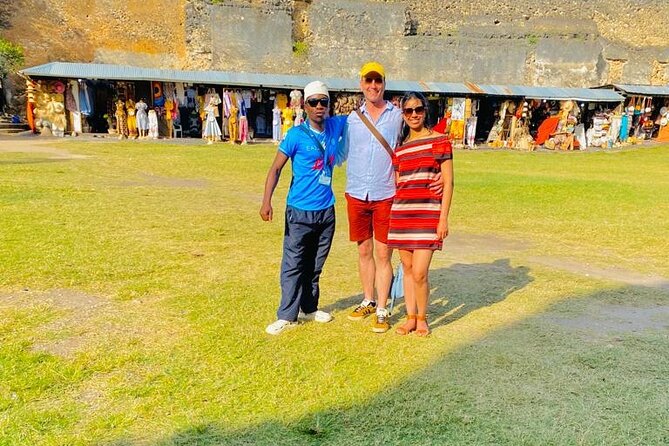
The Old Fort, or Ngome Kongwe, is a natural first stop. Omanis built it in the 17th century, and its thick walls give you a clear sense of the island’s strategic position in the Indian Ocean. Today, the fort functions as a cultural center with shops and art spaces rather than as a working military site.
You are scheduled to spend about 10 minutes here. That is enough for an introduction and a look around, but not enough for a long inspection of every corner. If you enjoy architecture, ask your guide to explain how the fort fits into Zanzibar’s Omani period.
Forodhani Gardens sit beside the water and are best known for their evening food market. The tour allows roughly 10 minutes here, so the timing may be more about orientation than a full meal. If your walk takes place before the evening market is active, you may see the setting without the full food scene.
Palaces, royal memories, and Freddie Mercury
The House of Wonders is one of Stone Town’s best-known buildings. Its grand scale reflects Swahili and Arab design, and it once hosted the Zanzibar royal family. The building now serves as a museum, although the planned stop is only about five minutes and the tour does not include a long museum visit.
The former People’s Palace, also called the Sultan’s Palace, offers another look at royal life and Zanzibar’s political past. Again, you have about five minutes. These brief stops are useful for orientation, but you should not expect a detailed palace tour unless you arrange additional time and pay the applicable admission.
The Freddie Mercury Museum is a lighter but distinctive stop. Freddie Mercury was born in Zanzibar, and the small museum covers his life and music. The walking tour normally visits the exterior, giving you time for photographs. Entry inside costs $8 per person and is not included.
I see the museum as an optional extra rather than the main reason to book. Fans may find the interior worthwhile, while others may prefer to spend the available time in the markets or at the slave-market site. The small size of the museum also means you should keep expectations in check.
The former slave market and Anglican Cathedral
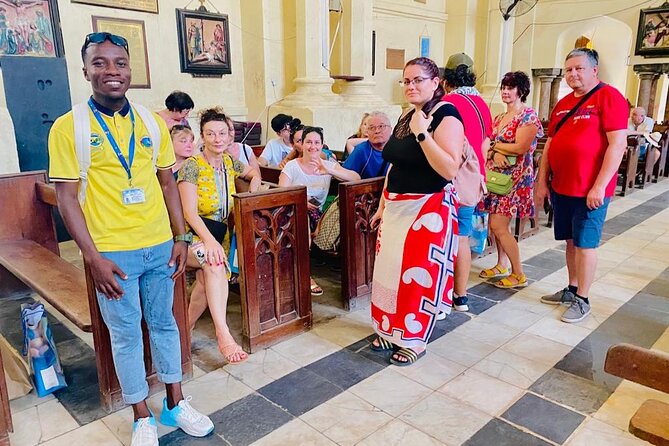
The Old Slave Market and Anglican Cathedral are the most serious part of the route. The cathedral was built on the former slave-market site, and a nearby memorial honors the people who suffered there. This stop gives you a necessary look at Zanzibar’s role in the East African slave trade.
The planned visit lasts about 15 minutes. That is enough for a focused explanation, but the subject can feel compressed if you want to read every display or sit with the memorial. I recommend treating this as more than a photo stop. Listen carefully, ask questions, and allow the subject the respect it deserves.
There is conflicting information about the admission fee. The stop description says admission is included, while the payment notes also say the old slave-market entrance is not included. One past booking specifically involved paying extra for the site. Confirm the current fee with KIB Tours and Safaris before you go, so you are not surprised.
This is one of the route’s strongest features because it prevents Stone Town from becoming only a pleasant walk among old buildings. The city’s beauty and its painful past exist side by side. A good guide can help you understand both.
More of the old town on foot from Zanzibar:
- Zanzibar: Stone Town, Spice Tour, Prison Island with Lunch
★ 4.4 · 1,219 reviews - Zanzibar: Prison Island, Stone Town, & Spice Farm Tour
★ 4.5 · 579 reviews - Zanzibar: Stone Town, Spice tour & Prison Island with Lunch
★ 4.6 · 453 reviews - Full-Day Private Stone Town +Spice Farm and Prison Island Tour
★ 4.5 · 216 reviews
Saint Joseph’s Cathedral and the Persian Baths

Saint Joseph’s Cathedral was built by French missionaries in the 19th century. Its design is described as similar to Marseille Cathedral in France, giving you another example of how European religious architecture became part of Stone Town.
The visit lasts about five minutes and admission is free. You may only see the exterior, depending on the timing and access that day. Still, it is a useful contrast with the Islamic and Omani influences visible elsewhere along the route.
Hamamni Persian Baths add another architectural layer. Built in the 19th century, the baths reflect Persian and Arabian influences on Zanzibar. The planned stop is outside the building, mainly to see its design. Entry inside costs $8 per person and is not included.
These two stops show why the walk is more than a list of famous addresses. In a small area, you see buildings connected to different communities, religions, and political powers. The downside is that the schedule gives you only a quick look. If architecture is your main interest, ask whether the guide can adjust the pace.
Darajani Bazaar, Jaws Corner, and Lukmaan Restaurant
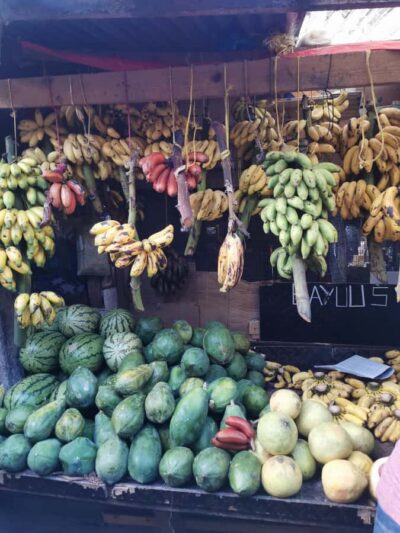
Darajani Bazaar is where the tour shifts from grand buildings to everyday commerce. You can see stalls selling spices, fruit, vegetables, textiles, and other goods. The planned visit lasts about 10 minutes, which gives you a taste of the market without leaving much time for careful shopping.
Go prepared for a busy public market rather than a polished shopping area. Keep your belongings secure, stay close to your guide, and ask before photographing people. The value here is not simply buying spices. It is seeing how Stone Town’s residents shop and work.
Jaws Corner is another short stop, lasting about five minutes. It is a well-known gathering place with local conversation and aromatic drinks. You may not have time for a long sit-down, but the stop gives you a glimpse of Stone Town’s social life away from the formal monuments.
Lukmaan Restaurant receives the longest scheduled stop, about 45 minutes. This is your chance to try Swahili cooking in a local restaurant rather than treating food as an afterthought. Dishes and prices can change, but the stated guidance is that a meal should cost no more than about $20 per person at normal prices.
Lunch is not included, and you should budget separately. Alcoholic drinks are also excluded. If you want to sample local cuisine, this is one of the best practical reasons to choose this route. You can eat, rest your feet, and ask your guide about the food instead of rushing from one landmark to the next.
The Swahili House rooftop view

The Swahili House is a hotel with a restaurant and rooftop. From above, you can look over Stone Town and get a clearer sense of the tightly packed historic center. Rooftop access is free, but you are expected to buy a drink such as water, soda, coffee, or juice.
The stop lasts about 15 minutes. That is enough for a drink and a few photographs, although you should not treat it as a free observation deck. The required purchase is modest, but it is still worth knowing before you arrive.
This is a pleasant pause late in the walk, especially after the market and the more serious historical sites. It also helps you understand Stone Town’s layout. From street level, the lanes can feel confusing. From above, the pattern becomes easier to read.
What the timing really means
The listed stops add up to more than two hours even before walking between them. That makes the advertised 2 to 3 hour duration reasonable, but you should expect a brisk introduction rather than a slow architectural study.
The tour works best if you accept that each stop has a purpose:
- Major landmarks receive a short explanation.
- The slave-market site receives more thoughtful attention.
- Lukmaan Restaurant provides the main pause.
- Optional museums and interiors can lengthen the day and raise the cost.
- The guide can adjust the pace because the activity is private.
Several bookings praise guides for explaining Stone Town clearly, keeping the pace comfortable, and making the walk accessible to people who did not want to hurry. That is important in a city where uneven lanes, heat, and frequent stops can make a short route feel longer than expected.
Most people can participate, and service animals are allowed. The tour is near public transportation, and mobile tickets are accepted. Wear comfortable walking shoes and bring sun protection, though bottled mineral water is provided.
What I like, and what I would watch closely
The strongest part is the range of the route. You move from the Old Fort and royal buildings to a cathedral, a former slave market, a market, a local restaurant, and a rooftop. That variety gives you a broad introduction in a short time.
The second strength is the guide-led explanation. Names such as Rakib and Nasir have been associated with clear, polite guiding and a pace that suits the group. A private tour also lets you ask direct questions about history, food, architecture, and daily life.
The main weakness is the compressed schedule. Five minutes at a palace or cathedral may be enough for a quick explanation but not for a full visit. The route also gives mixed information about which entrance fees are covered, particularly at the old slave market and the palace sites.
I would confirm three things before departure: who your guide will be, which interiors are open that day, and the current entrance fees. That short check avoids confusion and lets you decide if the $8 Freddie Mercury Museum or $8 Hamamni Persian Baths admission is worth adding.
Free cancellation is available up to 24 hours before the start time. Changes or cancellations inside that window are not accepted for a refund, and the cut-off uses Zanzibar local time.
Should you book this Stone Town walk?
I would book it if you have a half-day or less in Zanzibar and want a private introduction with strong historical coverage. It suits first-time visitors, cruise passengers, couples, families who prefer their own pace, and anyone who wants a guide for the city’s difficult history as well as its architecture.
I would choose a longer or more specialized tour if you want extended museum visits, serious photography time, or a slow food-focused day. At $20 per person, though, this is a strong starting point. You get the main sights, a local meal stop, market life, bottled water, and the flexibility of a private guide.
Bring cash for food, drinks, and possible admissions. If you do that and confirm the fee details in advance, this walk gives you a practical, human-scale introduction to Stone Town without taking over your entire day.
FAQ
How long does the Stone Town walking tour last?
The tour lasts approximately 2 to 3 hours.
How much does the tour cost?
The stated price is $20 per person.
Is the tour private?
Yes. Only your group participates in the activity.
Where does the tour start and finish?
It starts at Forodhani in Zanzibar and ends back at the meeting point.
Is hotel pickup available?
Pickup is offered. Some bookings have included an air-conditioned vehicle from the hotel before the walking portion.
Is bottled water included?
Yes. Mineral water is included.
Is lunch included?
No. Lunch and alcoholic beverages are not included. Lukmaan Restaurant is included as a stop, but you pay for your own meal.
Is entry to the Freddie Mercury Museum included?
No. The tour visits the outside of the museum. Entry inside costs $8 per person according to the provided information.
Can I cancel for a full refund?
Yes, if you cancel at least 24 hours before the experience start time. Cancellations or changes made less than 24 hours in advance are not accepted for a refund.
More walking tours in Zanzibar
- Stonetown: Food Markets and Street Food Walking Tour
★ 4.7 · 151 reviews - Zanzibar Stone Town Walking Tour
★ 5.0 · 145 reviews - Stone Town Historical Walking Tour
★ 5.0 · 143 reviews - Walking City Tour in Zanzibar Island
★ 5.0 · 122 reviews
Just added in Zanzibar
- Jet Ski Experience from Kendwa Beach★ 5.0 · 21 reviews
- Zanzibar: Parasailing Experience with Instructor★ 4.2 · 17 reviews
- 2h-Quad Zanzibar: Explore the heart of zanzibar by Quad★ 4.8 · 22 reviews
- From Zanzibar: 3-Day Selous Safari Trip with Flights★ 4.4 · 22 reviews
- Stone Town: Sunset Dhow Cruise Experience★ 4.0 · 22 reviews
- Stonetown Historical Walking Tour & Traditional Lunch★ 4.8 · 22 reviews
- Zanzibar : Secret Beach, Kuza Cave and Jozani with transfer★ 4.2 · 27 reviews
- From Zanzibar: Prison Island With Nakupenda Tour★ 4.4 · 23 reviews
Stone Town Tours, compared.

Stone Town, Spice Tour, Prison Island with Lunch
Read our review →
3 Hours Private Stone Town walking Tour with Guide
Read our review →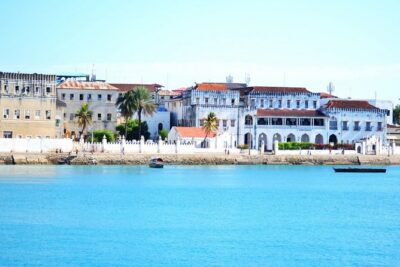
Full-Day Private Stone Town +Spice Farm and Prison Island Tour
Read our review →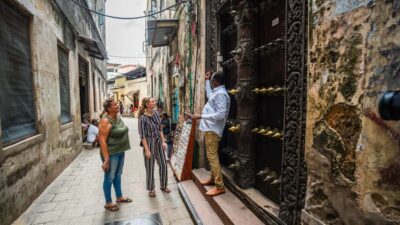
Stone Town Historical Cultural Walking Guided Tour
Read our review →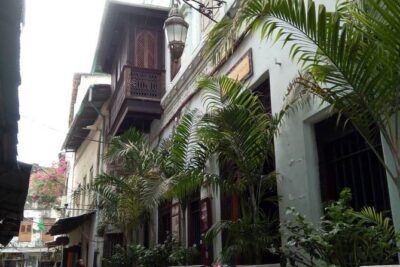

Browse the lists this tour appears in