
Reviewed · HISTORICAL TOURS
Mamas of Zanzibar – A Unique Cultural & Culinary Experience
The best part of Mamas of Zanzibar is that the meal begins before anyone reaches the kitchen. You start with local ingredients and a visit to a nearby fish market, then return to prepare lunch with a traditional Zanzibari woman. I like the hands-on format, and I like that the food, stories, and daily routine are shared in a home setting rather than presented as a staged show.
The main thing to consider is the pace. This is a four-hour community cooking session, not a broad tour of Zanzibar. The schedule can shift with the group, and the meeting point may require a little attention when you arrive.
Key points to know
- A market visit comes first: You see where ingredients fit into daily life before cooking with them.
- Maskat and the mamas host the session: Their friendly welcome is a central part of the morning.
- You prepare what you eat: The cooking class ends with a home-cooked lunch and juice.
- The group stays small: A maximum of 10 people allows for more direct help in the kitchen.
- Vegetarian guests are welcome: Special dietary needs can be arranged if shared in advance.
- Small cultural extras add charm: Swahili sweets, a boutique shop, possible henna painting, and neighborhood time round out the meal.
Why this cooking class feels different
Zanzibar has plenty of ways to see beaches, historic streets, and sea life. Mamas of Zanzibar offers something more ordinary and, for that reason, more personal: time spent around food and household routines.
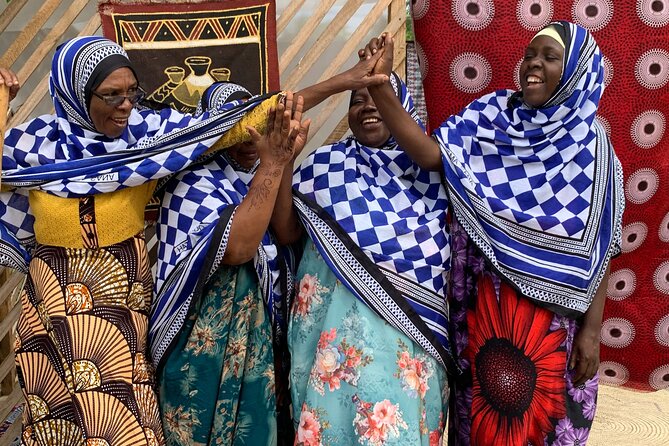
You are welcomed by a group of Zanzibari women who want to share the dishes they cook and the way those dishes fit into daily life. The tone is social and informal. You are not simply watching someone prepare food while standing behind a counter. You help with the work, ask questions, and sit down to eat the result.
I especially like the link between the market and the kitchen. A cooking class can feel disconnected from local life if all the ingredients are already laid out. Here, the morning begins with a nearby market visit, including the fish market, so you get some context before the chopping and cooking start.
This is also a useful choice if you want an activity that works for different ages. The cooking is practical, the food is shared, and the extra time for conversation gives the morning a relaxed feel.
More of the history on foot in Zanzibar:
- Zanzibar: Stone Town Historical Cultural Walking Guided Tour
★ 4.5 · 179 reviews - Stone Town Historical Walking Tour
★ 5.0 · 143 reviews - Stone Town’s Hidden History: Private Guided Walking Tour
★ 4.6 · 94 reviews
A 9:00 am start in a local neighborhood
The meeting point is listed at V6X8+8H, Zanzibar, and the activity begins at 9:00 am. It ends back at the meeting point around 1:00 pm.
Because the meeting point is given as a map code rather than a famous landmark, check the location carefully before leaving your accommodation. The tour is near public transportation, but an air-conditioned vehicle is not included. You arrange your own way to the starting point.
The morning begins with greetings and introductions. The hosts explain the menu and talk through the day’s routine. This opening matters because it gives you a sense of what you will be cooking before the market visit begins.
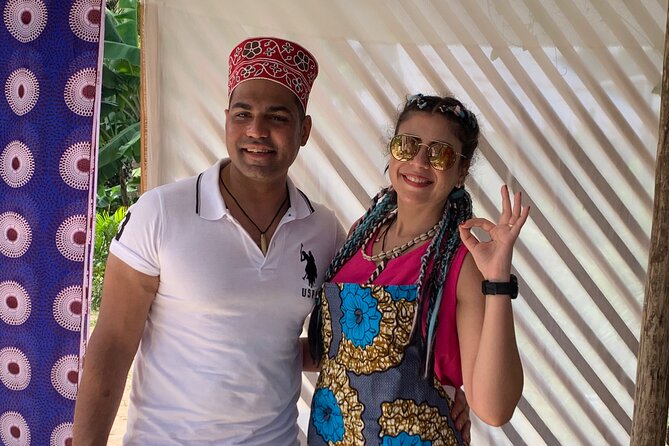
Maskat is one of the names associated with the welcome and hosting. The warm, family-style approach is not a small detail here. It shapes the entire activity, from the first greeting to the final lunch.
The market visit puts lunch in context
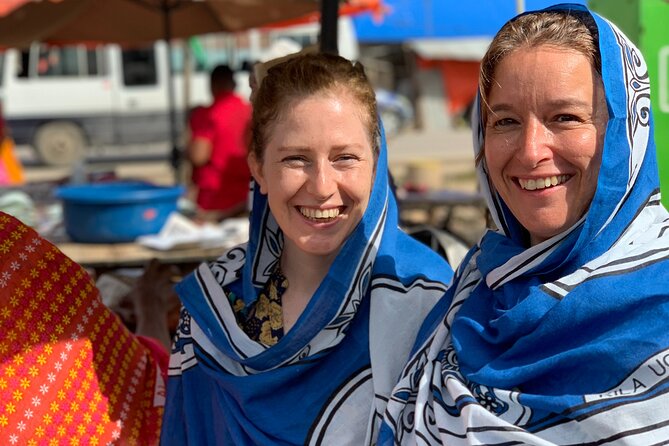
At about 9:30 am, you head to a local market. The schedule specifically includes a visit to the nearby fish market, though the precise market activity can vary with the group and the day.
This part of the morning gives you a look at the ingredients before they become a finished dish. You see the practical side of food shopping in Zanzibar, rather than only hearing a short explanation once you are indoors.
The market visit also helps you understand why the menu can change. The cooking session is based on available ingredients and the group’s shared activity, so the exact dishes are not fixed in the information provided. That is worth keeping in mind if you are hoping to learn one particular recipe.
The market is not presented as a separate sightseeing stop with a long guided talk. Its value is in the connection it creates between local shopping and the cooking class. You move from seeing ingredients for sale to preparing food with them soon afterward.
Cooking with the mamas from 10:15 to 11:30
You return to the cooking headquarters at about 10:15 am. After a short transition, the main preparation and cooking session runs from roughly 10:30 to 11:30.
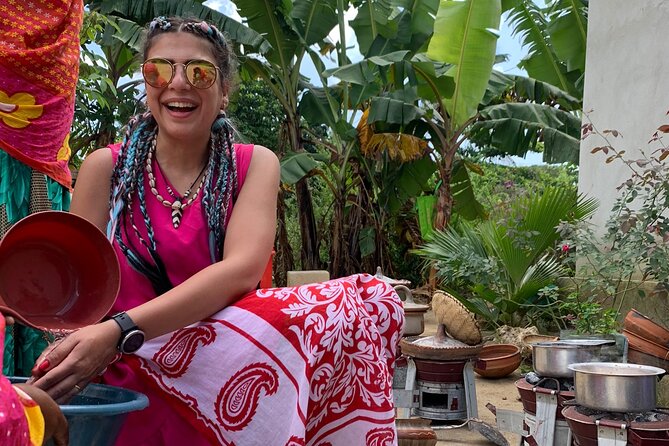
This is the heart of the experience. A traditional Zanzibari woman provides hands-on instruction, and the recipes are designed to be easy enough to follow. You do not need to be an accomplished cook to take part. The point is to learn by doing, with guidance as you prepare the items.
One detail from the hosting style is particularly appealing: what you cook is what you eat. That makes the lunch feel earned, not merely served. It also means the cooking itself is not filler between more important activities. It is the main event.
The food is traditional Zanzibari and vegetarian guests are welcome. Special dietary requirements can be accommodated, but you should share those needs when booking rather than waiting until the morning of the class.
The exact menu is not stated in advance, so you should book this for the cooking and cultural exchange rather than for one guaranteed dish. If you enjoy trying local food and learning recipes that you can repeat at home, that flexibility is part of the appeal.
Same base, a different kind of day out:
- From Zanzibar: Mikumi Safari Day Trip with Flights and Meal
★ 4.7 · 1,470 reviews - Zanzibar: Quad Bike Adventure departing from Kendwa or Nungwi
★ 4.9 · 1,233 reviews - Zanzibar: Stone Town, Spice Tour, Prison Island with Lunch
★ 4.4 · 1,219 reviews - From Zanzibar: Day Selous Game Reserve Safari with Flights
★ 4.7 · 1,025 reviews
A short break for neighborhood time and extras
After cooking, there is a period of free time while lunch is arranged. The listed schedule places this between about 11:30 am and noon.
You may use this time to look around the neighborhood, visit a boutique shop, or have henna painting. These extras are not described as guaranteed features of every session, so treat them as possible additions rather than the reason to book.
The free time also gives the morning some breathing room. Cooking in a group can take longer than expected, especially when people stop to ask questions or share stories. The hosts make room for that rather than forcing every part of the morning into a rigid timetable.
The schedule itself comes with a useful warning: the day may not follow the planned order exactly. Group stories and extra activities can change the timing. I see that as a positive if you enjoy a social activity, but it may frustrate you if you need to leave at a precise minute.
Lunch is the payoff at 12:15
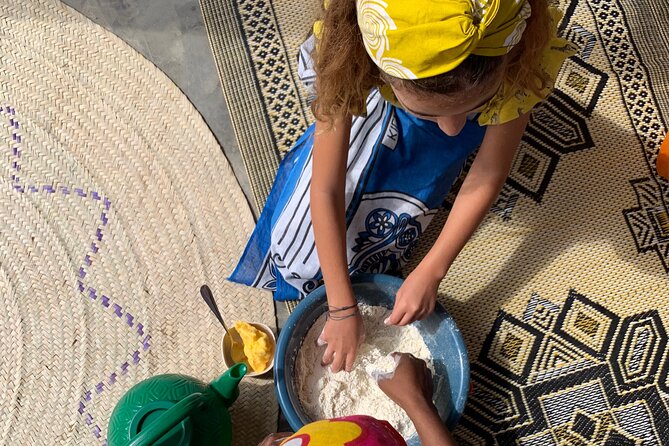
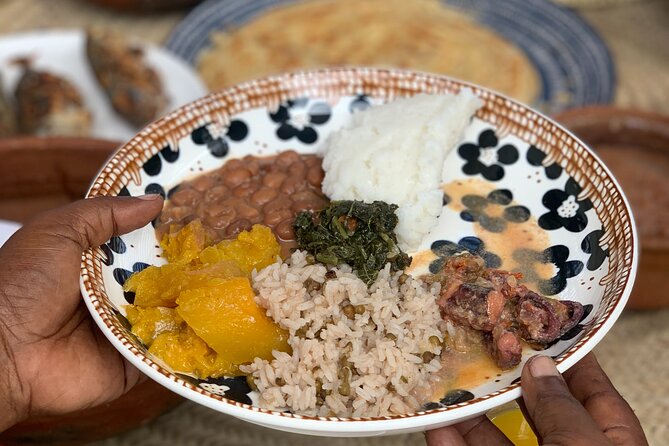
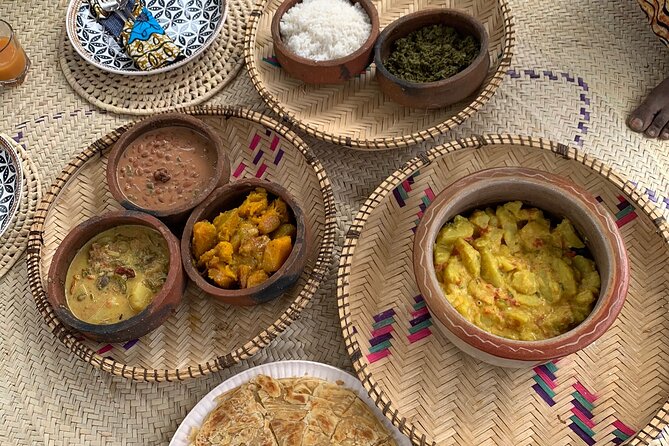
Lunch begins at about 12:15 pm. You eat the food prepared during the class, along with Zanzibar snacks and traditional Swahili sweets. Drinks are included, and the meal finishes with a glass of juice.
This is where the different parts of the morning come together. You have seen ingredients at the market, helped prepare the dishes, and now share the food in the same welcoming setting. The meal is more than a break. It is the final part of the lesson.
The food seems to be a major strength of the session. The cooking is built around home-style dishes, and the format gives you a clear sense of how preparation leads to the final meal. You also receive an easy-to-follow recipe, which is a useful souvenir because it lets you recreate at least part of the experience after returning home.
The included sweets and snacks add value, especially if you want to sample more than the main meal. Do not expect a formal restaurant service or an elaborate tasting menu. This is a communal lunch prepared during the morning.
What the $116.31 price gets you
At $116.31 per person, this is not the cheapest way to spend a morning in Zanzibar. The price makes more sense if you value direct contact with local hosts, a market visit, instruction, food, drinks, and a small-group setting in one package.
You are paying for about four hours, with a maximum group size of 10. That is a reasonable size for a practical cooking class. A group much larger than that would make it harder to get close to the work and ask questions.
The included elements are substantial:
- Market and fish market visit
- Hands-on cooking instruction
- Lunch made during the session
- Snacks and traditional Swahili sweets
- Drinks and juice
- Recipe to take home
- Possible neighborhood, boutique shop, and henna time
The value depends on what you want from Zanzibar. If your priority is a low-cost meal or a quick food demonstration, the price may feel high. If you want a personal cultural activity where the meal, instruction, and local setting are tied together, it is easier to justify.
The provider also notes that its own website may offer other experiences and better rates. It is worth checking before paying, particularly if you are comparing different cooking options or planning several activities.
Who will enjoy this morning most
I would choose this for anyone who wants a human-scale activity in Zanzibar. It suits solo visitors, couples, families, and small groups who enjoy food and conversation more than a tightly scripted sightseeing program.
It is also a good pick if you are staying in or near Stone Town and want an activity that adds a local routine to your trip. One particularly strong reason to book is the chance to spend time with the women who host the class. The connection is not an optional add-on. It is built into the cooking, the meal, and the welcome.
Vegetarians should find the format accommodating, and the hosts are happy to discuss special dietary requirements. Still, provide those details ahead of time so the menu can be planned properly.
This is less suitable if you want a major list of sights, a luxury food tour, or guaranteed precise timing. It is also not the best choice if you dislike shared meals or prefer to watch rather than participate.
Practical details before you reserve
The activity uses a mobile ticket, and confirmation is provided at booking. The group is limited to 10 people, which helps keep the class manageable.
The start time is 9:00 am, and the stated duration is approximately four hours. The end point is the same as the meeting point. Since transportation in an air-conditioned vehicle is not included, plan your own route to and from the location.
The activity requires good weather. If poor weather causes cancellation, you are offered another date or a full refund. You can cancel for a full refund up to 24 hours before the start time. Changes or cancellations inside that 24-hour window are not accepted for a refund.
Bring a little flexibility. The hosts openly note that group stories and extra fun activities can change the planned order. That relaxed approach is part of the charm, but it means you should avoid scheduling an immediate airport transfer or another fixed appointment afterward.
Should you book Mamas of Zanzibar?
Yes, if you want a personal food experience rather than a standard sightseeing stop. The market visit, hands-on cooking, Swahili snacks, recipe, and shared lunch give the morning real substance. The small group and the warm hosting by Maskat and the mamas make it feel social without requiring you to commit to a full-day tour.
I would book it early if it fits your plans, since the activity is limited to 10 people and is commonly reserved well ahead of time. Go with an open mind about the exact menu and timetable. You are choosing the local setting, the cooking, and the people as much as the food itself.
FAQ
How long does Mamas of Zanzibar last?
The activity lasts approximately four hours, beginning at 9:00 am and ending around 1:00 pm.
Where does the activity start and finish?
It starts at V6X8+8H Zanzibar, Tanzania, and ends back at the meeting point.
Is lunch included?
Yes. You eat the food prepared during the cooking class. Snacks, traditional Swahili sweets, drinks, and a glass of juice are also included.
Is the experience suitable for vegetarians?
Yes. The hosts welcome vegetarian participants and can cater to special dietary requirements.
How many people can join the cooking class?
The maximum group size is 10 people.
Is transportation included?
No. An air-conditioned vehicle is not included. The activity is near public transportation, but you arrange your own transport to the meeting point.
Can I cancel for a full refund?
Yes. You can cancel at least 24 hours before the local start time for a full refund. If poor weather causes cancellation, you will be offered another date or a full refund.
Just added in Zanzibar
- Jet Ski Experience from Kendwa Beach★ 5.0 · 21 reviews
- Zanzibar: Parasailing Experience with Instructor★ 4.2 · 17 reviews
- From Zanzibar: 3-Day Selous Safari Trip with Flights★ 4.4 · 22 reviews
- Stone Town: Sunset Dhow Cruise Experience★ 4.0 · 22 reviews
- Stonetown Historical Walking Tour & Traditional Lunch★ 4.8 · 22 reviews
- 2h-Quad Zanzibar: Explore the heart of zanzibar by Quad★ 4.8 · 22 reviews
- Full-day Prison Island and Nakupenda Sandbank with Lunch buffet★ 4.5 · 25 reviews
- Full-Day Private Stone Town Spice Farm and Prison Island Tour★ 4.5 · 24 reviews
Historical Tours, compared.
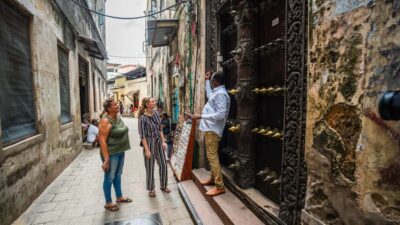
Stone Town Historical Cultural Walking Guided Tour
Read our review →
Arusha Guided Walking City Tour, Culture, Lifestyle & History
Read our review →
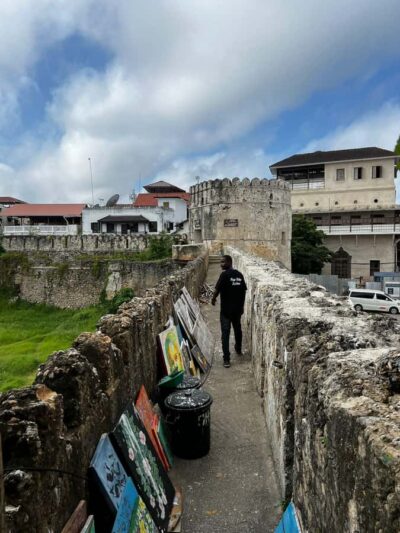
Stone Town’s Hidden History: Private Guided Walking Tour
Read our review →

The Best/Top Rated Cultural City Tour in Dar es Salaam
Read our review →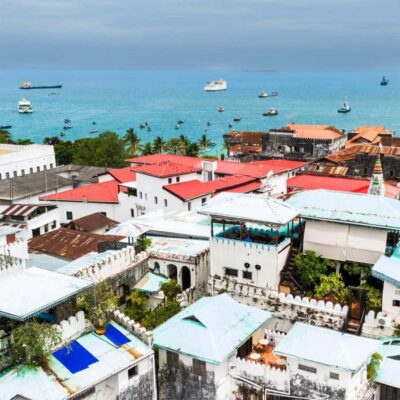
Stone Town Guided Tour: Culture, Slave Market & Spice Market
Read our review →
Browse the lists this tour appears in