
Reviewed · STONE TOWN TOURS
Zanzibar: Stone Town 3-Hour Walking Tour
Stone Town’s story unfolds one narrow lane at a time, from the old Arab Fort and House of Wonders to the former slave market and the food stalls around Forodhani Gardens. This three-hour walk gives you a useful first look at Zanzibar’s layered Swahili, Arab, Indian, and European past without asking you to spend a full day on your feet.
I like the mix of major sights and everyday places, especially Darajani Market, where fruit, spices, and local trade replace the polished feel of a museum. I also like having a guide for the former slave market and cathedral, where the history is painful and complex. The main drawback is pace: three hours passes quickly, and one report found the route less accessible than its booking label suggested.
- The former slave market: Visit the Anglican Cathedral, built on the site of a major East African slave-trading center.
- Darajani Market: See Zanzibar’s fruit and spice trade in a working market rather than a staged display.
- Stone Town’s best-known landmarks: The route includes the Old Fort, House of Wonders, Forodhani Gardens, and ferry terminal.
- Small local stops: Look for Jaws Corner, curio shops, the Zanzibar Curio Shop, and Freddie Mercury’s former home.
- Flexible booking: Hotel pickup and drop-off are included, with free cancellation up to 24 hours before the tour.
- A short orientation walk: The tour is a good introduction, but not enough time for a relaxed, thorough visit to every site.
A Useful First Walk Through Stone Town
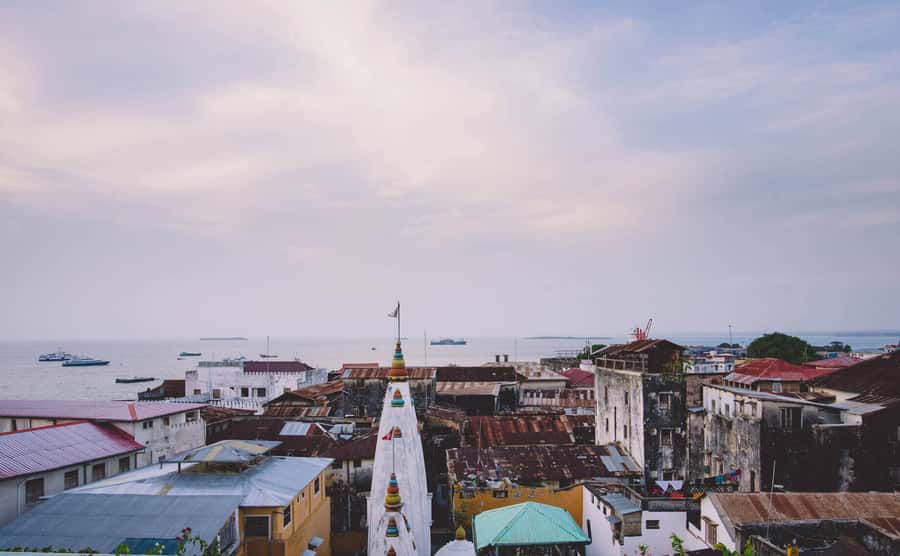
This tour works best as an introduction to Zanzibar City’s old quarter. You get a broad sweep of landmarks, markets, religion, trade, and daily life in three hours, then you can decide which places deserve a longer return visit.
The starting point is simple. If you are staying in Stone Town, the guide is scheduled to meet you in your hotel lobby at 9:00 AM. After a greeting and short briefing, you begin on foot. Pickup and drop-off are included, which is useful if your hotel is outside the old center, though the exact pickup time may need confirming in advance.
The experience is offered with a live guide in Spanish, French, German, Italian, or Russian. Several guides have been praised by name, including Amari, Mohamed, and Mohammed. Guide quality matters here because Stone Town can look like a maze of doors, walls, shops, and side streets unless someone explains what you are seeing.
I would treat the three hours as a well-chosen sampler, not a slow museum visit. You will have time to see many places, ask questions, and pause for some shopping, but you should not expect long stops at every landmark.
Starting at the Old Fort and House of Wonders
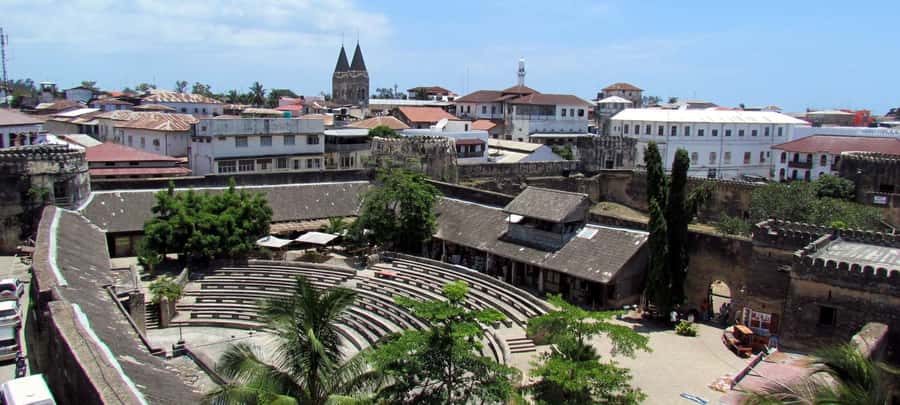
The Old Fort, also called the Arab Fort, is one of the natural opening points for a Stone Town walk. Its heavy walls and central position help explain the defensive role of the old city, while its location puts you close to several other major sights.
From there, the route continues toward the House of Wonders. These landmarks make a useful pair: one speaks to defense and power, the other to the changing public face of the town. The supplied itinerary names both, but it does not promise detailed interior access to each one, so ask your guide at the start which buildings you will enter and which you will see from outside.
The tour also includes entrance to the Sultan Palace according to the inclusions. That is a helpful value point, since an admission fee is covered, but the route description does not clearly explain how much time is spent inside the palace or how it relates to the House of Wonders stop. If the palace is a priority, confirm the plan before setting off.
Other guided walks in Zanzibar:
- Stone Town Private Walking Tour
★ 5.0 · 371 reviews - Zanzibar: 3 Hours Private Stone Town walking Tour with Guide
★ 4.6 · 301 reviews - Zanzibar: Stone Town Historical Cultural Walking Guided Tour
★ 4.5 · 179 reviews
Forodhani Gardens and the Waterfront
Forodhani Gardens gives you a change of scene after the old buildings and lanes. The gardens sit near the waterfront and the tour also visits the Zanzibar ferry terminal, giving you a glimpse of the city’s connection with the wider island and mainland.
This is a good place to ask your guide how the old town functions today. Stone Town is not only a collection of old buildings. It is also a port district, a shopping area, a religious center, and a living neighborhood.
The gardens are also linked with Zanzibar’s well-known evening food scene, although this morning tour begins at 9:00 AM for people staying in Stone Town. Do not book this walk expecting a night food outing. The value here is orientation: you learn where the waterfront is, how the public spaces connect, and where you might return later.
Darajani Market: Fruit, Spices, and Daily Trade
Darajani Market is one of the strongest parts of the route. The focus is on ordinary trade, with fruit, spices, and food sold in a setting that feels more useful than decorative.
I like this stop because it gives context to Zanzibar’s spice reputation. You are not simply shown jars of cinnamon or piles of cloves in a souvenir shop. You get a chance to see a market that serves local needs, then compare that with the polished spice displays found elsewhere.
Give yourself time to look closely, but stay aware of your belongings and your guide’s timing. The tour includes a guide fee for the markets, which means you do not have to work out the route alone.
One point deserves care. A stop at a particular spice stand can shape your buying experience, and one report felt that the suggested stall was more expensive than other nearby options. You can listen to the explanation, compare prices, and decide for yourself. Buying is not the same as taking the tour, so do not feel rushed into a purchase.
The Former Slave Market and Anglican Cathedral
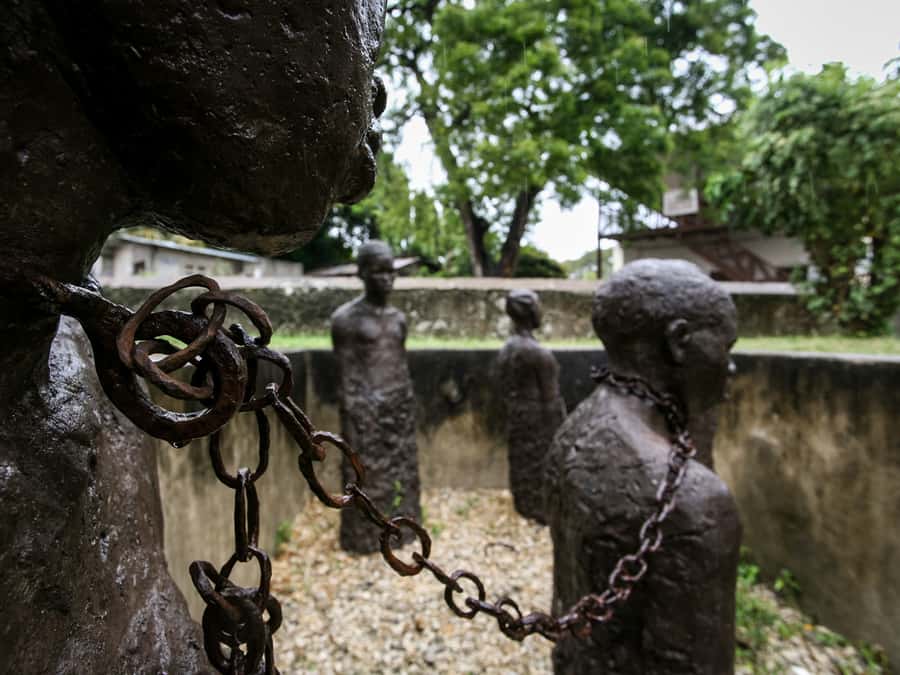
The Anglican Cathedral stands on the site of the former slave market, one of the most serious stops on the walk. For centuries, the area served as a center of the East African slave trade. People were abducted and transported from places including Malawi, Congo, Zambia, and other parts of East Africa.
This is not a stop to rush through for a photograph. The site connects Zanzibar’s wealth and trade networks with the suffering of enslaved people. A good guide can help you understand the physical setting and the wider history without reducing it to a quick list of dates.
The guide is meant to take you to the old slave market, but the exact level of guided explanation inside can vary. One account reported that the guide did not enter the slavery museum, while other guides were present inside. I recommend asking clearly: Will you enter the museum together, and is the museum admission included in this tour?
That question matters because the cathedral grounds and the museum are not the same experience. If this is your main reason for booking, confirm the arrangement before you pay.
More of the old town on foot from Zanzibar:
- Zanzibar: Stone Town, Spice Tour, Prison Island with Lunch
★ 4.4 · 1,219 reviews - Zanzibar: Prison Island, Stone Town, & Spice Farm Tour
★ 4.5 · 579 reviews - Zanzibar: Stone Town, Spice tour & Prison Island with Lunch
★ 4.6 · 453 reviews - Full-Day Private Stone Town +Spice Farm and Prison Island Tour
★ 4.5 · 216 reviews
Freddie Mercury’s House and the Smaller Stops
The route also includes a visit to Freddie Mercury’s house, along with the Zanzibar Curio Shop and Jaws Corner coffee shop. These stops add a more personal and modern layer to the walk.
Freddie Mercury was born in Zanzibar, so his former home connects the old town to a famous twentieth-century figure. The stop may be brief, and the supplied details do not promise entry into the house. One report said the guide did not visit the museum and did not clearly identify the house, so ask where the stop is and what you will see.
Jaws Corner gives the tour a local meeting-place angle. The Zanzibar Curio Shop then shifts the focus toward crafts and souvenirs. You may find the curio stop useful if you want to browse, but shoppers should remember that the tour’s limited time can disappear quickly among stalls and displays.
A visit to an artists’ association has also been part of at least one route, with local paintings and demonstrations of traditional product-making. Since the itinerary says and more rather than naming every small stop, treat this as a possible addition rather than a guaranteed feature.
Narrow Streets and Swahili Culture
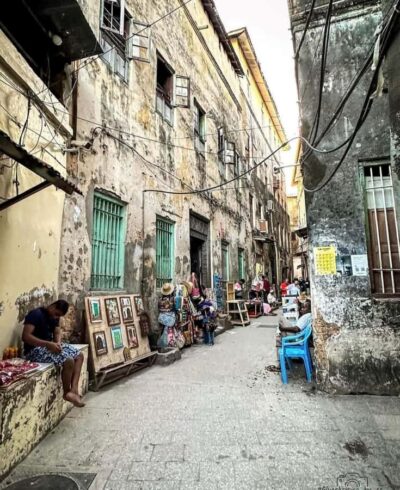
Stone Town is best understood on foot. The narrow lanes bring you close to carved doors, small shops, market stalls, and old walls. A guide can also explain the origin of Swahili and show how the city’s language and culture grew from contact among African, Arab, Indian, and other communities.
This is where the tour’s human scale matters. You are not viewing Stone Town through a vehicle window. You are walking at street level, stopping for questions, and seeing how the main sites connect.
The lanes can also be confusing. That is a reason to choose a guided walk early in your stay. After three hours, you should have a better sense of where the fort, market, waterfront, cathedral, and ferry terminal sit in relation to one another.
Please ask before photographing people. The tour instructions specifically say not to take someone’s picture without permission. That is basic courtesy, especially in market areas and religious settings.
What the Three-Hour Pace Feels Like
Three hours sounds generous until you count pickup, introductions, walking between sites, questions, market browsing, and possible shopping. One person found the time too short for extra shopping, while another felt the guide had half an hour left at the end. That difference shows why your guide and group plan matter.
If you want a relaxed look at every museum and plenty of time in the shops, this walk may feel rushed. If you want a clear first orientation, the length is practical. You can see the major points, then return on your own to the places that caught your interest.
Comfortable shoes are a must. The tour involves leisure walking through narrow streets, and the route is not designed for luggage or large bags. Bring sunscreen, and dress with care: clothing must cover at least below the knees. That rule is especially important around the cathedral and other religious or historic sites.
The experience is advertised as wheelchair accessible, but it is also marked as unsuitable for people with mobility impairments. One report specifically found the streets and fort entrance difficult for a wheelchair. I would not rely on the accessibility label without direct confirmation about the exact route, entrances, and any steps.
Is $27 a Fair Price?
At $27 per person, this is a reasonable price for a guided introduction if you use the included services. Hotel pickup and drop-off, a live guide, market guiding, government taxes, and Sultan Palace admission are listed as included.
The value is strongest for first-time visitors who want context instead of simply wandering from landmark to landmark. A guide can explain the slave market, identify the main buildings, point out the market area, and help you understand the layout of Stone Town in one morning.
The value is weaker if you mainly want independent shopping or long museum visits. You are paying for a set route, and the three-hour limit means you may have to choose between asking questions, browsing, and lingering at historic sites.
A private group is available, which could improve the pace and make it easier to request extra time at the cathedral, market, or Freddie Mercury stop. If you book a shared format, ask how many people will be walking together and how the guide handles shopping stops.
You can reserve now and pay later, and cancellation is free up to 24 hours before the tour for a full refund. Those terms help if your island plans are still changing.
Who Should Book This Stone Town Walk?
I would recommend it to you if this is your first visit to Stone Town and you want a short, structured introduction. It suits people who enjoy local markets, old buildings, cultural explanation, and walking through side streets rather than rushing from one photo stop to another.
It also works well as a morning activity before an afternoon at the beach or a later return to the market. The guide languages make it useful for Spanish, French, German, Italian, and Russian speakers.
I would be more cautious if you have limited mobility, need guaranteed wheelchair access, or want a slow and detailed museum tour. The route includes old streets and historic structures, and the accessibility information is inconsistent.
If the former slave market is your main interest, confirm that your guide will enter and explain the museum with you. If shopping is your main goal, compare spice prices and protect your free time rather than allowing one stall to dominate the walk.
Final Verdict: Book It for Orientation, Not a Full History Course
Book this tour if you want Stone Town explained in a compact morning, with the old fort, markets, cathedral, waterfront, curio shops, and smaller local stops all tied together. The strongest parts are the market visit, the former slave market, and the chance to ask questions while walking with a guide such as Amari, Mohamed, or Mohammed.
Skip it if you need a fully accessible route, guaranteed interior visits, or hours of unhurried shopping. For most first-time visitors who can manage narrow streets and a quick pace, $27 is a fair way to get your bearings and learn what deserves a second look.
FAQ
How long is the Stone Town walking tour?
The tour lasts three hours.
What is the price per person?
The price is $27 per person.
Is hotel pickup included?
Yes. Hotel pickup and drop-off are included. If you are staying in Stone Town, the guide is scheduled to collect you from your hotel lobby at 9:00 AM.
Which languages are available?
Live guides are available in Spanish, French, German, Italian, and Russian.
What places are included on the route?
The route includes the Old Fort, House of Wonders, Forodhani Gardens, Darajani fruit and spice market, Zanzibar ferry terminal, Freddie Mercury’s house, Zanzibar Curio Shop, Jaws Corner, the Anglican Cathedral, and other Stone Town stops.
Does the tour visit the former slave market?
Yes. The Anglican Cathedral, also known as the former slave market site, is included.
Is admission included?
The listed inclusions cover the entrance fee to Sultan Palace. The supplied details do not clearly confirm separate admission arrangements for every museum or interior stop.
What should I bring?
Bring sunscreen and wear comfortable walking shoes.
Is there a dress code?
Yes. Clothing must cover at least below the knees.
Can I cancel for a refund?
Yes. You can cancel up to 24 hours in advance for a full refund. You can also reserve now and pay later.
More walking tours in Zanzibar
- Stonetown: Food Markets and Street Food Walking Tour
★ 4.7 · 151 reviews - Zanzibar Stone Town Walking Tour
★ 5.0 · 145 reviews - Stone Town Historical Walking Tour
★ 5.0 · 143 reviews - Walking City Tour in Zanzibar Island
★ 5.0 · 122 reviews
Just added in Zanzibar
- Jet Ski Experience from Kendwa Beach★ 5.0 · 21 reviews
- Zanzibar: Parasailing Experience with Instructor★ 4.2 · 17 reviews
- Stone Town: Sunset Dhow Cruise Experience★ 4.0 · 22 reviews
- Stonetown Historical Walking Tour & Traditional Lunch★ 4.8 · 22 reviews
- 2h-Quad Zanzibar: Explore the heart of zanzibar by Quad★ 4.8 · 22 reviews
- From Zanzibar: 3-Day Selous Safari Trip with Flights★ 4.4 · 22 reviews
- Full-Day Private Stone Town Spice Farm and Prison Island Tour★ 4.5 · 24 reviews
- Full-day Prison Island, Nakupenda and Stone Town Tour with Lunch Buffet★ 4.5 · 26 reviews
Stone Town Tours, compared.

Stone Town, Spice Tour, Prison Island with Lunch
Read our review →

3 Hours Private Stone Town walking Tour with Guide
Read our review →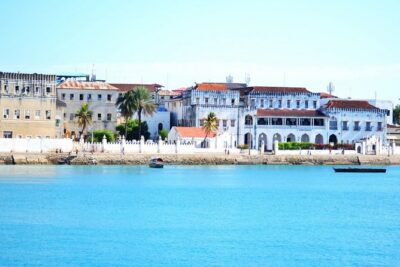
Full-Day Private Stone Town +Spice Farm and Prison Island Tour
Read our review →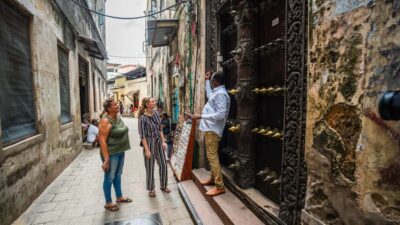
Stone Town Historical Cultural Walking Guided Tour
Read our review →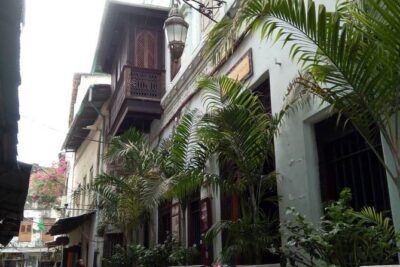

Browse the lists this tour appears in