
Reviewed · HISTORICAL TOURS
Bagamoyo Full-Day Tour: Historic Slave Trade Route & Kaole Ruins
Bagamoyo’s power comes from its layers. In one day, you follow an old slave-trading route, walk among centuries-old mosques at Kaole, and visit mission buildings tied to early Christianity on mainland East Africa. The town’s past is not neatly packaged. It is difficult, moving, and sometimes uncomfortable, which is exactly why the experience matters.
I like the way the tour connects Islamic, African, and Christian history instead of treating each site as a separate stop. I also like the practical comfort of a private, air-conditioned vehicle, lunch, unlimited bottled water, and snacks. The main drawback is the long day. Eight to ten hours includes time on the road, and some stops are brief, so this is better for focused sightseeing than a lazy beach outing.
Key points to know before you book
- Follow the old slave-trade route: Visit the former market area, harbor, customs house, and sites linked with the movement of enslaved people to Zanzibar.
- See two very different religious legacies: Kaole’s old mosques and Bagamoyo’s Holy Ghost Mission tell separate but connected stories.
- Explore Kaole Ruins: See a 13th-century mosque, a later 15th-century mosque, tombs, and trade artifacts linked with China.
- Travel privately: Your group has its own vehicle, with pickup in Dar es Salaam and no strangers joining the outing.
- Expect a full historical day: The program runs about eight to ten hours, beginning at 8:30 a.m.
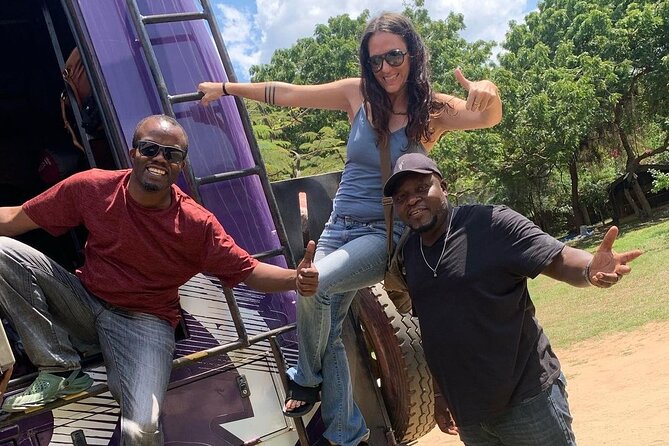
- Ask about guide Erick: He is described as funny, ethical, highly informed, and fluent in English, though guide assignment is not guaranteed.
Why Bagamoyo makes a stronger day trip than a quick coastal stop
Bagamoyo is not simply a pretty old town north of Dar es Salaam. Its location on the coast made it a major trading point for ivory, gum, spices, and enslaved people. The town later became important under German and British colonial rule, then took on a central role in Christian mission work.
That mix gives the day real substance. You are not moving from one unrelated monument to another. The Old Fort, dhow harbor, market area, Kaole Ruins, mission museum, and churches all help explain how Bagamoyo changed over time.
The town is also linked with the UNESCO heritage story of Bagamoyo. That label can create high expectations, so I would set them sensibly. Some buildings are weathered, some exhibits are modest, and not every stop has polished interpretation. The reward comes from the setting, the sequence, and the guide’s explanation.
The private format is useful here. You can ask questions about details that might otherwise pass unnoticed, such as the small chain attached to the baobab tree or the locked iron safe in the Old Boma. If you are lucky enough to have Erick as your guide, his strong English and sense of humor should help make a serious subject easier to follow.
More of the history on foot in Dar es Salaam:
- The Best/Top Rated Cultural City Tour in Dar es Salaam
★ 5.0 · 57 reviews - Dar es Salaam History and Architectural Tours
★ 5.0 · 36 reviews - Bagamoyo Historical Tour – Everyday
★ 5.0 · 13 reviews
The Old Fort shows Bagamoyo’s changing purpose
The day begins in Bagamoyo with the Old Fort, one of the clearest examples of the town’s shifting role. Arab trader Abdallah Suleiman Marhabi built it in the 1860s. It later became associated with the slave trade, served as a German garrison in 1896, and was used as a British prison by 1919.
After Tanzanian independence, the building became a police station in 1974. Today it is preserved as a heritage site. That sequence is worth keeping in mind as you walk through it. The fort was not built for only one chapter of Bagamoyo’s story. Its walls have served traders, colonial powers, police, and now heritage visitors.
You spend about an hour here, which gives the guide time to explain the building rather than rushing you through a photo stop. Still, do not expect a large museum complex. The interest lies in the structure and what happened inside and around it.
Old Boma connects the town to German rule
The Old Boma is a shorter stop, about 30 minutes, but it adds an important colonial chapter. German authorities built the building in 1895, and it served as an administrative headquarters in German East Africa until 1919. British officials then used it as the District Commissioner’s office.
The building was taken out of service in 1997 because of structural problems. Its old German iron safe remains locked, an intriguing physical reminder of the administrative work carried out here. You will not get a full answer about what the safe contains, but the detail adds a little mystery without turning the stop into a staged attraction.
This is one place where a guide matters. A bare colonial building can seem plain if you do not know its function. With the historical sequence in mind, it becomes part of the larger story of trade, control, and changing foreign rule.
Kaole Ruins reach back before the colonial era
Kaole Ruins is one of the day’s most important stops. Located about 4.8 kilometers from the Indian Ocean, the former trading town was established as early as the eighth century. The Zaramo name Kaole means Go and See, which is fitting advice for a site that can look understated until you understand what remains.
The ruins include two mosques. The older one dates to the 13th century and was built by the Sultan of Kilwa. It may be the oldest mosque in Tanzania and East Africa, though the description is best treated as a historical claim rather than a reason to make an absolute ranking. The second mosque dates from the 15th century and is surrounded by about 30 tombs.
Some tombs are linked with local rulers known as diwanis. That detail helps you read the site as more than a collection of broken walls. Kaole was a place of worship, leadership, burial, and trade.
A small museum displays objects connected with the site, including evidence of trade with China. You spend about an hour here, and that is enough for a useful introduction, though anyone fascinated by archaeology may wish for more time. The ground is historical rather than polished, so comfortable footwear is sensible.
A few more things to do in Dar es Salaam worth a look
- Private Full-Day Trip to Mikumi National Park from Dar es Salaam
★ 5.0 · 54 reviews - Dar Es Salaam City Tour (Full Day With Private Guide And Car)
★ 5.0 · 39 reviews - Full-Day Private Tour of Dar es Salaam
★ 4.5 · 37 reviews - Explore Dar es Salaam: Full-Day Private City Tour
★ 5.0 · 18 reviews
The Holy Ghost Mission brings the Christian story into view
The Holy Ghost Mission lies about 2 kilometers north of the old town. Its story begins in 1868, when Father Antoine Horner of the Holy Ghost Fathers arrived in Bagamoyo to establish a mission. Muslim leaders under Sultan Majid gave the land, an important detail that shows how the town’s religious history was not split into simple opposing camps.
The first Holy Ghost Church was built in 1872. It is described as the first church in the area and on mainland East Africa. The explorer David Livingstone spent a night at the mission in 1874, and the Livingstone Tower preserves his connection with the site.
You have about 20 minutes here, so expect a quick orientation rather than a long church visit. The value is in seeing the buildings together and hearing how Muslim generosity, missionary work, exploration, and the history of enslaved people all meet in one compound.
The Old Fathers’ House rewards a closer look

The Old Fathers’ House is easy to underestimate. Built in the pre-colonial mission style, this three-story residence was completed in stages: the ground floor in 1873, the first floor in 1877, and the second floor in 1903.
Its broad balcony gives the building a distinctive appearance. The staggered construction also hints at how the mission developed over time rather than appearing fully formed in one campaign.
The stop lasts about 20 minutes. I would use it to look at the proportions, balcony, and coral-stone construction while listening to the guide’s explanation. It is not a major indoor attraction, but it gives shape to the daily life of the religious community.
The Bagamoyo Museum presents the hardest material
The Catholic Mission Museum, also known as the Sisters’ House, dates from 1876. It is located in the old town and occupies a building once used by missionaries. The displays cover the slave trade, religion, local art, and the town’s links with Arab and Indian culture.
You may see images of enslaved people, chains, whips, religious objects, wooden artwork, and architectural pieces. The material is direct. This is not a light sightseeing stop, and you should allow yourself time to absorb it rather than treating it as another quick room on the route.
The planned visit is about 20 minutes, which may feel short if you want to read every display. Still, the museum gives essential context for the route through Bagamoyo. It helps connect the market, harbor, and mission buildings to real human suffering rather than leaving the subject as a distant historical label.
Holy Ghost Church and the Holy Grotto show two forms of devotion
The newer Holy Ghost Church was built between 1910 and 1914 with coral stone blocks. Its construction followed a major land gift from Sewa Haji, a wealthy Muslim trader and philanthropist who gave the mission 49,000 acres in 1892.
Nearby, the Holy Grotto was built by emancipated people living at the mission. Construction began in 1876, and the grotto was opened and consecrated in 1879 by Pope Leo XIII. It remains a pilgrimage site for Catholics from across Tanzania.
The visit lasts about 30 minutes. The key point is not only the architecture. The site shows how Christian institutions grew in a place shaped by Islam, local communities, forced labor, and colonial power. The story is complicated, and a good guide should resist reducing it to a simple tale of progress.
The baobab tree carries a small piece of local lore
In the churchyard, a huge baobab tree gives the day a welcome change of pace. It measures about 7 meters in diameter, and a small piece of iron chain is attached to its trunk.
The story says that a French nurse named Madam Chevalier tied her donkey to the tree and forgot to remove the chain. As the baobab grew, most of the chain disappeared into the expanding trunk. In 2012, 34 extra chain rings were added to preserve the story.
You have about 20 minutes here. Take a look, take your photograph, and listen to the explanation, but keep the tale in perspective. It is local lore, not the main historical evidence of the day. Its charm comes from the way a very small object has become part of the tree’s identity.
The old market and harbor make the trade route tangible
The Old Market area now contains a small art gallery, but it once functioned as a slave market. Enslaved people were held beneath trees before being moved toward Zanzibar. Local accounts also speak of an underground tunnel leading to the beach at high tide, though its exact location has never been found.
The nearby customs house was tied to the export trade, with a bounty paid for each enslaved person sent out through the port. This is one of the most difficult stops because the ordinary shape of the town sits over a painful past.
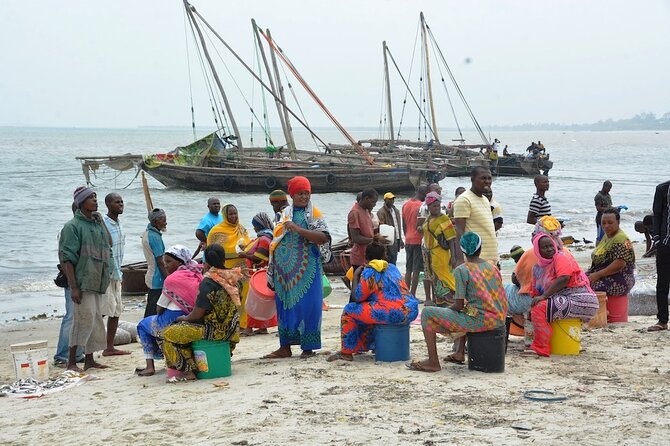
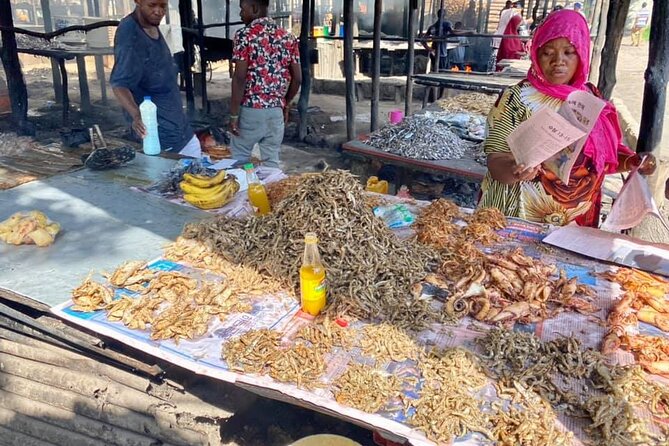
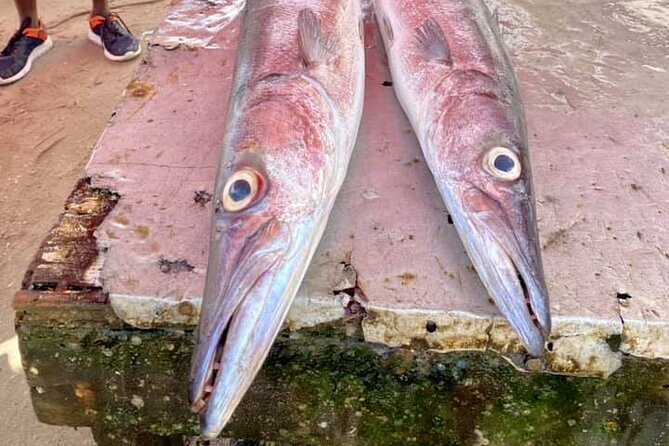
The final coastal visit includes the Bagamoyo Fish Market and the dhow harbor. The fish market handles catches such as fish, crab, lobster, prawns, and octopus. It is busiest in the morning, while this tour reaches it later in the day, so you may not see the full early auction activity.
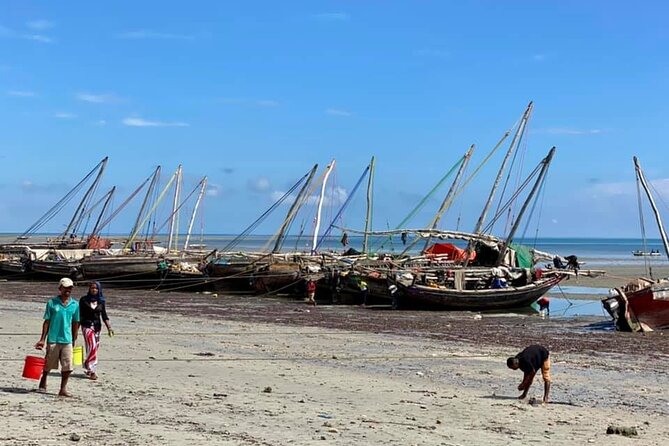
The old auction hall has links with German colonial times. At the harbor, fishing boats and tourist boats now use a port once tied to ivory and slave trading. The setting also offers views over the Indian Ocean, especially around sunrise or sunset, though the tour schedule begins at 8:30 a.m. and does not promise either light.
What the $255 price includes
At $255 per person, this is not a bargain day trip for a solo visitor. The price makes more sense for people who value privacy, transport from Dar es Salaam, and a packed historical program.
You receive private transportation in an air-conditioned vehicle, lunch, unlimited bottled water, snacks, and all fees and taxes. Dietary restrictions can be taken into account. Alcoholic drinks are available for participants aged 18 and above who choose to have them.
Lunch has been arranged at a beach setting on at least one version of the day, which is a useful counterpoint to the serious historical sites. Breakfast, dinner, and tips are not included.
Group discounts may improve the value for several people booking together. Since only your group participates, you also avoid the stop-and-start rhythm of a large coach. That can matter when you want to ask about the slave trade, mission history, or the old mosques without worrying about holding up a crowd.
Timing, transport, and who will enjoy this day
Pickup begins in Dar es Salaam at 8:30 a.m. The full experience takes roughly eight to ten hours, including driving between attractions. The itinerary can look crowded on paper, but most stops are short, ranging from 20 minutes to one hour.
I would recommend this tour to you if you want historical context more than a resort day. It suits first-time visitors to the Dar es Salaam area, people interested in East African religious history, and anyone who wants to understand the slave trade through physical places rather than a book alone.
You should think twice if you dislike long road days or prefer to spend hours at one museum. The program moves steadily, and the museum visits in particular may feel brief. Most travelers can participate, and the meeting point is near public transportation, but the tour is built around private pickup rather than independent local buses.
Confirmation is provided at booking. You can cancel for a full refund up to 24 hours before the start time. Cancellations within 24 hours are not refunded, and changes inside that period are not accepted.
Should you book the Bagamoyo day trip?
Book it if you want a serious, well-connected look at coastal Tanzania. The strongest parts are Kaole Ruins, the Catholic Mission Museum, the Old Fort, and the old market and harbor route. Together, they explain why Bagamoyo matters far better than a simple stop at the beach.
The $255 cost is easiest to justify when two or more people share the experience, or when you place high value on private transport and a guide. Ask if Erick is available if his language skills and thoughtful approach appeal to you, but do not assume a particular guide is guaranteed.
Skip it if your ideal day is mostly swimming, seafood, and relaxed coast time. Choose it if you want the difficult stories, the old buildings, the mosques, the mission compound, and the chance to see how several cultures shaped one important port.
FAQ
Where does the Bagamoyo tour start?
The tour starts in Dar es Salaam, Tanzania, with pickup at 8:30 a.m.
How long does the Bagamoyo day trip take?
The experience takes approximately eight to ten hours, including the time spent traveling between attractions.
Is this a private tour?
Yes. Only your group participates in the activity.
What transportation is provided?
Private transportation in an air-conditioned vehicle is included.
Is lunch included?
Yes. Lunch is included, and dietary restrictions can be taken into account.
Are drinks and snacks provided?
Unlimited bottled water and complimentary snacks are included. Alcoholic beverages are available for participants aged 18 and older who choose to have them.
What is not included in the price?
Breakfast, dinner, and tips or gratuities are not included.
Can I cancel for a refund?
You can cancel at least 24 hours before the start time for a full refund. Cancellations or changes made less than 24 hours before the start time are not accepted, and the amount paid is not refunded.
Just added in Dar es Salaam
- Zanzibar: 3 Days to Mikumi and Chizua Waterfalls★ 3.5 · 5 reviews
- 2 Day Wildlife Experience and Masai Culture Mikumi Park★ 5.0 · 5 reviews
- Sunrise Beach Walk with Picnic Breakfast Activity★ 5.0 · 3 reviews
- 5 Days Selous/Nyerere & Mikumi NP Game drive, Maasai and Walking★ 5.0 · 13 reviews
- 3 Days Safari to Nyerere National Park (Selous Game Reserve)★ 5.0 · 8 reviews
- Explore Dar es Salaam: Full-Day Private City Tour★ 5.0 · 18 reviews
- Saadani National Park Day Tour★ 5.0 · 3 reviews
- 3 Days Explore Selous Game Reserve + Boat safari + bushman walking★ 5.0 · 5 reviews
Historical Tours, compared.
Stone Town Historical Cultural Walking Guided Tour
Read our review →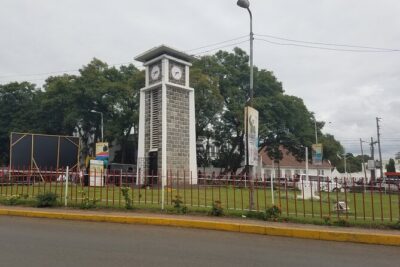
Arusha Guided Walking City Tour, Culture, Lifestyle & History
Read our review →
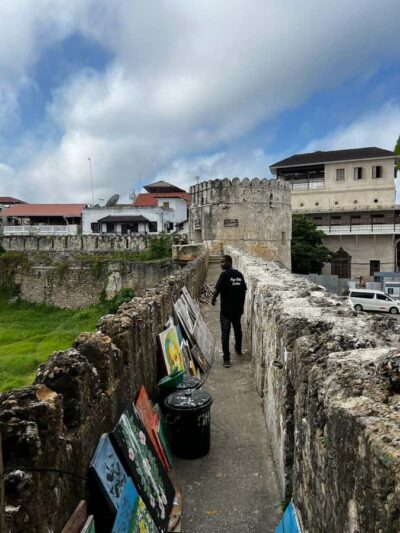
Stone Town’s Hidden History: Private Guided Walking Tour
Read our review →
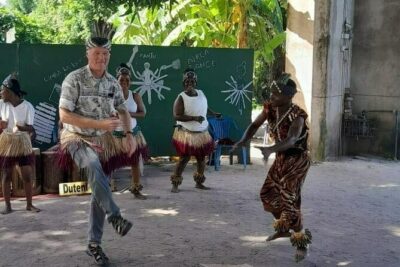
The Best/Top Rated Cultural City Tour in Dar es Salaam
Read our review →
Mamas of Zanzibar – A Unique Cultural & Culinary Experience
Read our review →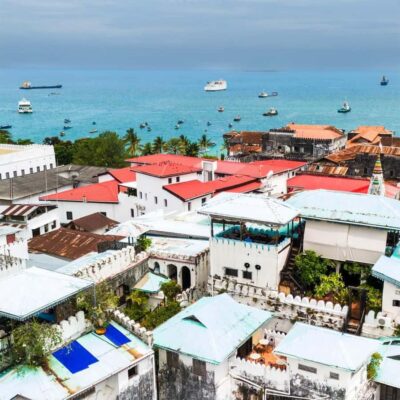
Stone Town Guided Tour: Culture, Slave Market & Spice Market
Read our review →Browse the lists this tour appears in