
Reviewed · MATERUNI WATERFALLS & COFFEE TOURS
Coffee tour and Buffet Lunch with Kingstone Asilia (Arusha)
The best part of this Arusha experience is that coffee does not arrive as an abstract export crop. You handle the cherry, remove its pulp, pound the dried beans, roast them, and drink the result. The process is practical, lively, and tied to everyday Tanzanian farming.
I like the hands-on coffee work and the way the tour adds medicinal plants, local stories, song, and dance. I also like the home-cooked vegetarian lunch, which turns a farm lesson into a proper half-day outing rather than a quick demonstration.
The main point to check is transport. Hotel pickup is available from Arusha for an extra $15, but private transportation is not included in the $55 price. The tour starts at 10:00 am and ends back at the farm, so confirm your transfer before booking.
Key points to know before you book
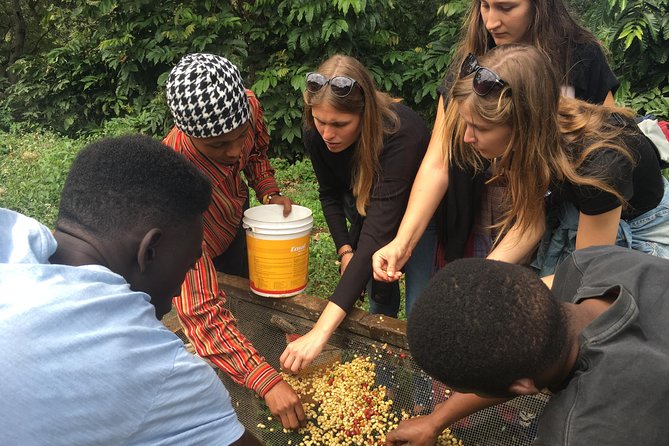
- Coffee from plant to cup: Depending on the season, you may plant a young coffee tree, pick ripe cherries, pulp beans, pound them, roast them, and grind them yourself.
- A working family farm: Kingstone Asilia Family Farm offers a quieter agricultural setting outside central Arusha, with traditional processing methods at the center of the visit.
- Culture beyond coffee: You’ll hear about medicinal plants and local uses, plus take part in a song-and-dance element while preparing the beans.
- Lunch is part of the experience: A fresh, home-cooked vegetarian meal and a traditional snack are included.
- Possible extra stops: The tour information includes Kikuletwa Hotsprings and Themi Falls Leisure Park, but confirm how these fit into your selected departure.
- Strong overall rating: The experience is listed at 4.9 out of 5 from 74 ratings, with 97 percent recommending it.
Coffee begins with a cherry, not a mug
At Kingstone Asilia, you begin with the crop itself. That sounds simple, but it changes the way you understand coffee. A finished cup hides a long chain of farm work. Here, you can see and handle several stages rather than watching a polished demonstration from a distance.
The tour introduces you to the history of coffee in Tanzania and explains how the crop became important to the country. Tanzania is known for producing high-quality coffee, and coffee is one of its major export crops. The useful part is that this is not presented only as a business story. You also learn how coffee fits into local farming and family life.
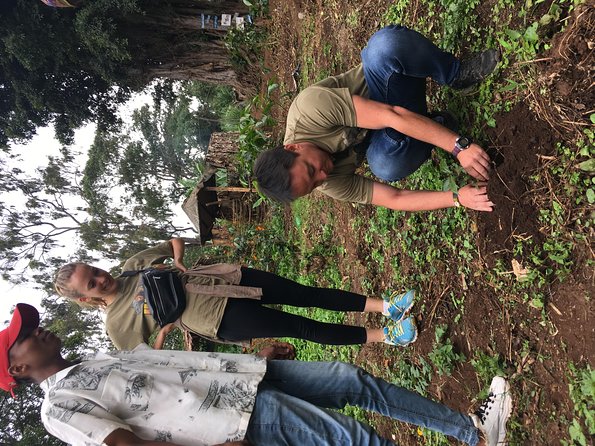
Depending on the season, you may plant a small coffee plant. This is a modest activity, but it gives the tour a sense of time. A young plant and a basket of ripe cherries represent very different stages of the same crop. If planting is not possible during your visit, the mature trees still provide the main working section of the tour.
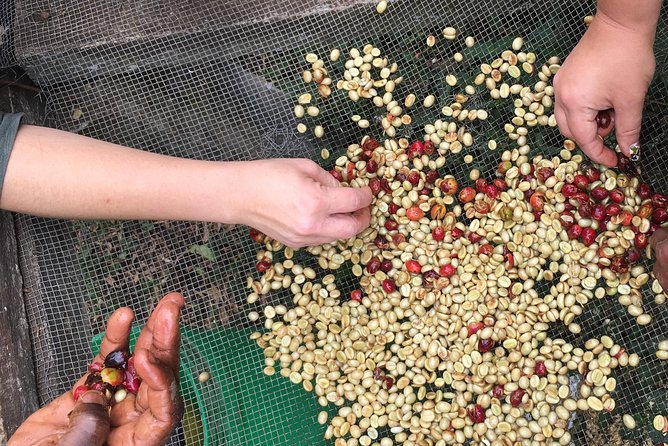
You then head to the coffee trees to pick ripe cherries. The goal is not simply to look at the plants. You help fill a basket for processing, which gives you a clear job and keeps the visit active. Coffee lovers will appreciate this direct link between the fruit on the branch and the drink in the cup.
Other waterfall and coffee days from Arusha:
- Materuni Waterfalls, coffee tour & Kikuletwa Hot Springs
★ 5.0 · 643 reviews - Materuni Waterfalls & Chemka Hotsprings Day Trip
★ 5.0 · 214 reviews - Materuni waterfalls coffee tour & Chemka hot springs Day trip
★ 5.0 · 131 reviews
Traditional processing, done by hand
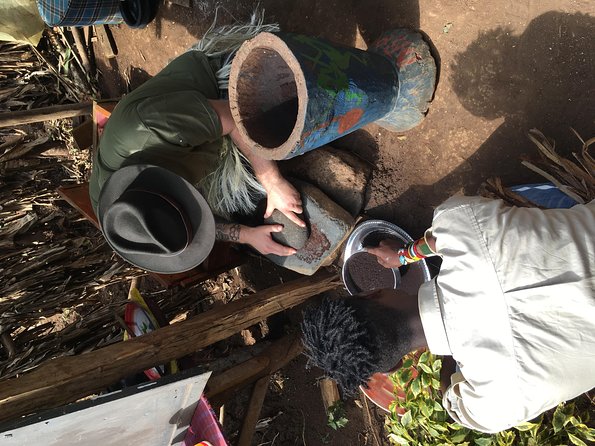
The coffee work continues with a traditional hand-powered pulping machine. You use it to remove the fruit from the coffee cherry, an uncomplicated but memorable step because it makes the processing visible and physical.
The tour also uses pre-dried beans. You pound them to remove the outer layer, accompanied by a fun song-and-dance routine. This is one of the experience’s more cultural moments. It is not just a technical lesson about coffee production. The rhythm and shared activity show how food preparation can also be social.
The hand processing takes longer than industrial machinery, and that is exactly why it has value here. You get a better sense of the effort involved before beans reach a roaster. The trade-off is that the process may feel less polished than a specialist coffee tasting in a city café. If you want detailed information about coffee grading, brewing ratios, or professional cupping, this tour may be lighter on those subjects.
Its strength is participation. You are not expected to know anything about coffee in advance. The steps are easy to follow, and the activities suit someone who enjoys making things with their hands.
Roast and grind your own cup
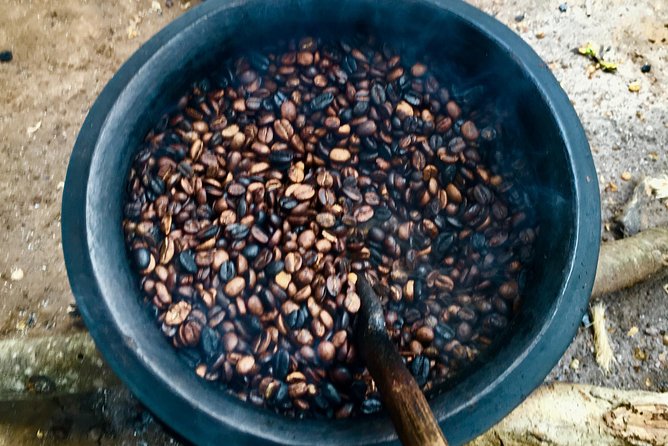
After the beans are prepared, you roast and grind them for a cup of coffee. This is the payoff of the tour, but it is also a lesson in how much work comes before brewing.
You get to taste coffee made from beans you helped process. The cup will not necessarily resemble a carefully prepared specialty coffee served by a barista, and you should not book this expecting a formal tasting menu. The appeal is more direct: you can connect the flavor to the work you just completed.
A traditional Tanzanian snack accompanies the coffee. This small addition matters because it makes the tasting feel like part of a local food experience instead of a standalone beverage sample. Foodies will find the combination more satisfying than a tour that ends after the final explanation.
The coffee section is particularly well suited to people who already enjoy their morning brew and want to understand its source. It also works for families and mixed-interest groups, since the activities offer more than technical coffee facts.
Medicinal plants and local stories
Coffee is the main subject, but the visit also includes traditional Tanzanian medicinal plants. You learn about how the plants are used and hear the stories connected with them.
This part gives the farm visit a broader cultural frame. Agriculture is not limited to one export crop. Plants can also serve household, practical, and traditional purposes. The medicinal-plant section is likely to appeal to anyone who wants a little context about local life rather than only a coffee-making lesson.
Keep your expectations measured. The available details do not name the specific plants or promise a formal botanical class. Think of this as an introduction, with stories and examples woven into the farm visit.
The lack of a listed guide name is worth noting if you prefer to book around a particular host. Kingstone Asilia Tours is the provider, but no individual guide is identified in the available information.
A few more things to do in Arusha worth a look
- Maasai village visit, Materuni waterfalls & coffee experience
★ 4.5 · 95 reviews - Materuni Waterfalls & Coffee Tour from Moshi
★ 5.0 · 92 reviews - Arusha: Materuni Waterfalls, Coffee, and Hotsprings Tour
★ 4.8 · 78 reviews - Materuni waterfalls,coffee tour & Kikuletwa(Chemka)Hot Springs
★ 5.0 · 49 reviews
A vegetarian lunch that completes the visit
The tour ends with a home-cooked vegetarian lunch prepared by the farm’s chef using fresh ingredients. This is one of the strongest reasons the $55 price can make sense. You are paying for a four-hour activity with food included, not just a short coffee explanation.
Lunch also gives the experience a natural ending. After working with the plants and beans, you sit down for a meal in the same setting. That makes the visit feel connected to the farm rather than divided into a lesson followed by an unrelated restaurant stop.
The meal is vegetarian, so you should be comfortable with that format when booking. The information provided does not specify the exact dishes or whether special dietary requests can be accommodated. If you have allergies or strict dietary needs, ask Kingstone Asilia before the day of the tour.
The included food is especially useful if you are planning a full morning around the activity. You will not need to arrange a separate lunch immediately afterward, though the final timing can vary slightly depending on the pace of the coffee work and any added stops.
Kikuletwa Hotsprings and Themi Falls
The experience description also includes Kikuletwa Hotsprings and Themi Falls Leisure Park among the possible attractions. These places add variety to a morning otherwise focused on farming.
There is an important practical wrinkle: the detailed farm sequence centers on coffee, plants, processing, coffee tasting, and lunch, while the meeting information gives the activity a duration of about four hours and says it ends back at the meeting point. Because of that, you should confirm whether the hot springs and Themi Falls are included in your specific departure or are part of an alternate itinerary.
Do not assume that every listed stop receives equal time. If you are mainly interested in coffee, the farm work is the reliable core of the visit. If you especially want Kikuletwa Hotsprings or Themi Falls, ask before paying so you know how the route and timing are arranged.
This is also why a little flexibility helps. A farm activity depends on weather, season, and the pace of a group. The tour requires good weather, and poor conditions can lead to a new date or a full refund.
What the $55 price really covers
At $55 per person, this is not the cheapest way to drink coffee in Arusha. You can find a less expensive café visit. But that is not the right comparison.
The price includes all fees and taxes, the coffee activities, the farm setting, the traditional snack, and a home-cooked vegetarian lunch. You also receive a four-hour cultural and agricultural experience rather than a short tasting. For someone who values local food and practical activities, that is a fair package.
Transport is the main extra cost. Pickup from an Arusha hotel can be arranged for $15, while private transportation is otherwise not included. The meeting point is Kingstone Asilia Coffee Tours, Restaurant, and Bar on BushMoivaro Road, and the activity returns there at the end.
A maximum group size of 50 people is listed. That is a fairly large possible group for hands-on farm work. The experience may feel more personal with a smaller departure, while a full group could mean waiting for access to the pulping machine or roasting area. If group size matters to you, ask how many people are booked for your date.
The tour is near public transportation, but the available information does not specify routes or travel times. If you are staying in central Arusha, compare the convenience of arranging the $15 pickup with making your own way to BushMoivaro Road.
Timing, seasons, and practical planning
The activity starts at 10:00 am and lasts about four hours. That makes it easy to fit into an Arusha morning and early afternoon, especially if your larger trip includes a safari departure on another day.
Coffee work changes with the season. Planting is offered depending on conditions, and picking requires ripe cherries. You should expect the main educational sequence year-round, but not every agricultural step in exactly the same form.
Wear clothes and shoes that are comfortable for farm work. The information does not set a dress code, but picking, pulping, pounding, and roasting are more enjoyable when you are not worried about delicate clothing. Bring only what you need, since the visit is built around participation rather than sightseeing from a vehicle.
Children under five can join free of charge. The activity may suit older children well because it has clear physical steps, food, plants, and a finished cup to taste. Adults who prefer a quiet, technical coffee seminar may find the song-and-dance and group activities less formal than expected.
Confirmation is provided at booking, and free cancellation is available up to 24 hours before the start time. Changes made less than 24 hours before departure are not accepted, and late cancellations are not refunded. Weather-related cancellations offer a different date or a full refund.
Who will enjoy this Arusha coffee tour?
I would choose this for coffee drinkers who want more than a plantation photo. The chance to handle the crop from cherry to cup gives the visit a clear purpose, and the lunch adds real value.
It is also a good choice if you want a cultural activity between safari days. You learn about farming, medicinal plants, food preparation, and local traditions in one outing. That makes it a broader introduction to Arusha than a coffee tasting alone.
Food lovers should appreciate the snack and vegetarian lunch. Families can benefit from the hands-on format, particularly if children enjoy planting, picking, pounding, and tasting. The free admission for children under five also helps keep the cost manageable for a family group.
I would be more cautious if you have limited time before an airport transfer or a tightly scheduled safari. The tour is scheduled for four hours, but the additional stops and group size may affect the pace. Confirm the exact plan before placing it between fixed bookings.
Should you book it?
Book this tour if you want a practical, local activity with coffee at its center, and if you value a meal and cultural context as much as the drink itself. The 4.9 rating from 74 ratings and 97 percent recommendation rate fit the experience’s strongest qualities: the work is hands-on, the subject is easy to enjoy, and the lunch gives the outing substance.
Skip it if you want a highly technical coffee course, a small private group guaranteed, or a quick stop with no transport planning. Before booking, confirm pickup, group size, and whether Kikuletwa Hotsprings and Themi Falls are part of your date’s route. For most visitors with half a day in Arusha, this is a useful and enjoyable way to connect coffee with Tanzanian farming and daily life.
FAQ
How long does the coffee tour last?
The activity lasts approximately four hours and begins at 10:00 am.
Where does the tour start and finish?
It starts at Kingstone Asilia Coffee Tours, Restaurant, and Bar on BushMoivaro Road in Arusha. The activity ends back at the meeting point.
Is hotel pickup included?
Hotel pickup from Arusha can be arranged for an extra $15. Private transportation is not included in the $55 tour price.
What is included in the price?
All fees and taxes, the coffee activities, and lunch are included. A traditional Tanzanian snack is also served with the coffee you prepare.
Is lunch vegetarian?
Yes. The included meal is a home-cooked vegetarian lunch prepared with fresh ingredients.
Can children join the activity?
Yes. Children under five do not pay for the activity.
What happens if the weather is poor?
The activity requires good weather. If it is canceled because of poor weather, you can choose a different date or receive a full refund.
Just added in Arusha
- 7-Day Private Tanzania Safari with Sunset Walking on the Crater Rim and Maasai★ 5.0 · 40 reviews
- Saadani Day Trip★ 5.0 · 13 reviews
- Nyssa Luxury Balloon in Safaris and Serengeti★ 5.0 · 69 reviews
- Arusha National Park Day Trip★ 4.5 · 18 reviews
- Arusha National Park Private Safari★ 5.0 · 59 reviews
- Arusha: Maasai Village Tour★ 4.8 · 22 reviews
- 3 Days Serengeti & Ngorongoro Tour★ 5.0 · 22 reviews
- 8 Days Mountain Kilimanjaro Lemosho Route★ 5.0 · 22 reviews
Materuni Waterfalls & Coffee Tours, compared.
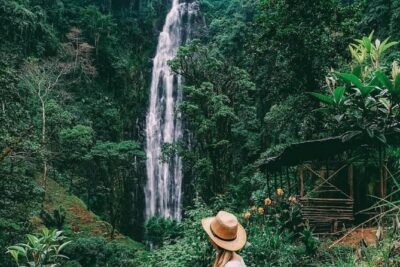
Materuni Waterfalls, coffee tour & Kikuletwa Hot Springs
Read our review →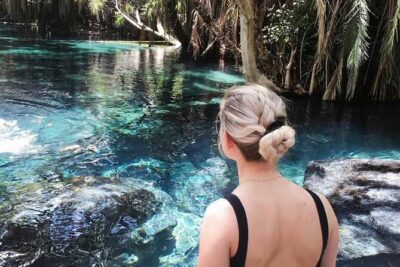
Materuni Waterfalls & Chemka Hotsprings Day Trip
Read our review →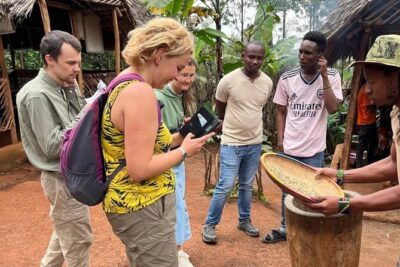
Materuni waterfalls coffee tour & Chemka hot springs Day trip
Read our review →
Materuni Waterfall, Coffee Tour and Picnic Hot Lunch
Read our review →
Maasai village visit, Materuni waterfalls & coffee experience
Read our review →
Arusha or Moshi : Hot Spring, Waterfall & Coffee Farm Tour
Read our review →
Materuni Waterfalls, Coffee, and Hotsprings Tour
Read our review →Browse the lists this tour appears in