
Reviewed · TOURS IN DAR ES SALAAM
Dar es salaam Reality Tour
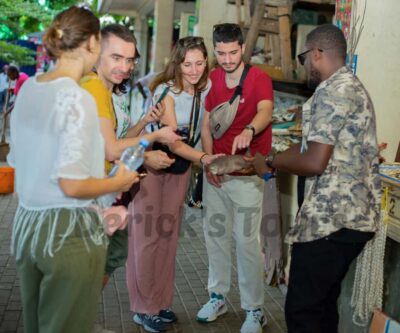
Dar es Salaam feels most real when you leave the standard sightseeing route and look at how people earn a living. This five-hour tour moves by bicycle or bajaj from the Village Museum to a coffee maker, a Swahili breakfast stop, a traditional medicine business, and a khanga shop.
I like the small-scale, local focus and the fact that it leaves most of your day free. The $51.29 price also covers your transport during the tour and drinks. The main concern is reliability: one reported booking had no guide arrive, and the alcohol information is contradictory.
Key points to know before you book
- Coffee is part of the working life you see: You visit a coffee maker who also sells coffee as an income source.
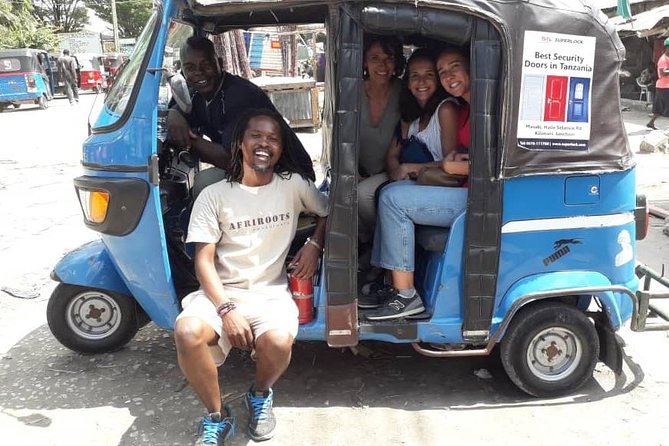
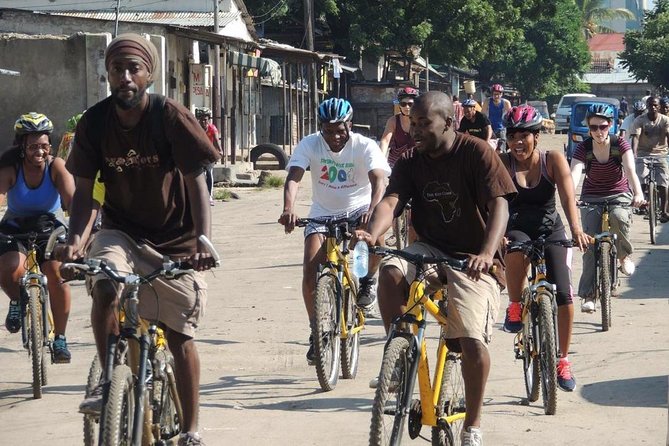
- The tour uses local transport: A bicycle or bajaj is provided, giving you a closer view of Dar es Salaam than a standard vehicle tour.
- Four useful stops fit into five hours: Expect coffee, Swahili breakfast preparation, traditional medicine, and a khanga shop.
- You avoid the usual crowds: The route is aimed at ordinary businesses and workers, not major sightseeing sites.
- The alcohol information needs checking: Drinks are listed as included, while another section says alcohol is not included.
- Build in a service check: Confirmation is issued at booking, but one account reports a no-show after booking only 24 hours ahead.
What this Dar es Salaam reality tour is really about
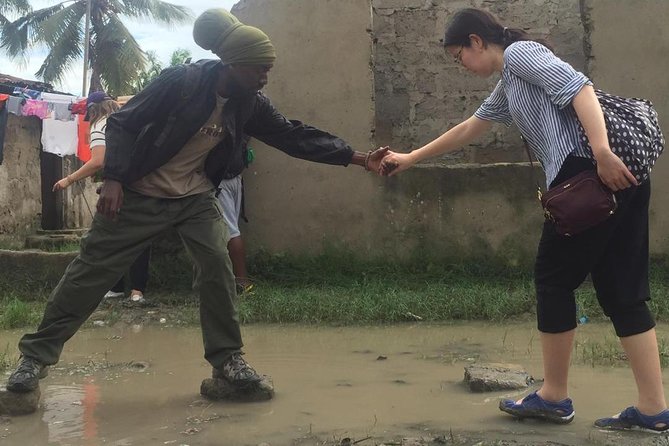
This is not a greatest-hits tour of Dar es Salaam. You are not being taken from one grand monument to another. Instead, the focus is on people working, selling, preparing, and earning money in everyday settings.
That approach gives the tour its value. A city becomes easier to understand when you see the small businesses that keep it going. Coffee is not simply a drink here. It is also a product someone prepares and sells for income. A khanga is not just a colorful piece of cloth in a shop. It connects to clothing, local taste, and commerce.
You will also see several kinds of work in a short period. The stops include food preparation, coffee selling, traditional medicine, and textile retail. The range should help you compare different ways people make a living in Dar es Salaam.
The tour starts at 8:00 a.m. at Kijiji cha Makumbusho, also called the Village Museum, in Mikocheni. It ends at the same meeting point. That makes the plan fairly easy to fit into a wider day, especially if you want the afternoon for another activity.
The experience lasts about five hours. That is long enough to create a useful picture of daily life, but short enough that you are not giving up an entire sightseeing day.
Other trips people book in Dar es Salaam:
- Dar es Salaam: City Tour
★ 4.7 · 159 reviews - Dar es Salaam City Center: Walking Tour
★ 4.8 · 102 reviews - Dar es Salaam City Tour – Everyday
★ 5.0 · 64 reviews
Starting at the Village Museum in Mikocheni
Your meeting point is Kijiji cha Makumbusho, the Village Museum, at 66FW+WG8 in Dar es Salaam. You need to arrive ready for an 8:00 a.m. start.
The meeting point matters because you are not being collected at the end of a major downtown attraction. Plan your route to Mikocheni carefully and allow time to arrive before the start. The supplied information does not give a hotel pickup option, so you should not assume one is available.
From here, the group travels by bicycle or bajaj. A bajaj, the three-wheeled taxi common in many cities, gives you a compact way to move through town. A bicycle offers an even closer connection to the streets, though the suitability of cycling will depend on your comfort and the conditions that day.
You are not promised a private tour. The maximum group size is 30 people. That is not a tiny group, and the feel of the experience may change depending on how many people actually book. A larger group can make conversations and visits less personal, while the route itself still offers more local contact than a standard sightseeing drive.
The coffee maker who also sells his own product
The coffee visit is a strong opening idea because it links a familiar drink with a person’s income. You are scheduled to meet a coffee maker who sells coffee as a way of earning money.
This is the kind of stop that can show you the practical side of a city. You are not only consuming coffee as a visitor. You are seeing the person preparing and selling it, and you may get a clearer sense of how a small business works.
The available details do not specify the exact coffee preparation method, the location, or how long you stay. Keep your expectations flexible. This is not presented as a formal tasting class or a specialist coffee workshop. The point is the person and the trade.
I like this stop because it gives the tour a human scale. A polished café can tell you what a city wants to present. A working coffee seller can tell you more about how daily income is made.
Seeing how a Swahili breakfast is prepared
The next listed stop is a place where Swahili breakfast is made. Food is one of the clearest ways to understand local habits, and watching preparation can be more useful than simply sitting down for a meal.
There is an important catch. Food is not included in the price. You can see the breakfast-making process, but you should not assume that a meal or tasting is covered. If you want to eat at the stop, ask the guide what is available and what it costs before ordering.
The tour information does not name the breakfast dish, describe the ingredients, or promise a cooking demonstration. So I would treat this as a chance to observe a local food business rather than a guaranteed hands-on cooking class.
The timing may work well for an early start. Since the tour begins at 8:00 a.m., the breakfast stop fits naturally into the morning. It also gives you a useful contrast with the coffee visit: one stop centers on a drink seller, while the other shows food preparation and sale.
Same base, a different kind of day out:
- MIKUMI NATIONAL PARK – 3 Days
★ 4.5 · 63 reviews - 2 nights 3 days safari to mikumi national park
★ 5.0 · 62 reviews - 2 Days 1 Night Mikumi National Park from Dar es salaam
★ 5.0 · 60 reviews - The Best/Top Rated Cultural City Tour in Dar es Salaam
★ 5.0 · 57 reviews
A visit to a traditional medicine business
Traditional medicine is another planned stop. This adds a different layer to the tour because it introduces a local approach to health and commerce.
The description does not explain whether you will meet a practitioner, see products, hear about remedies, or simply visit a shop. You should avoid expecting medical advice or treatment. The value here is cultural and economic: you are seeing a type of business that operates outside the clinics and pharmacies most visitors know.
Keep an open but sensible mind. You can be interested in the products and the role of the business without treating anything offered there as a substitute for professional medical care. If you have health concerns, use your own doctor or pharmacist rather than buying a remedy on impulse.
This stop may also be one of the more personal parts of the route. The tour is meant to show different socio-economic backgrounds, and a traditional medicine business fits that goal by presenting a working service rather than a staged attraction.
Browsing a khanga shop
The final named stop is a khanga shop. Khanga cloth is a familiar part of East African dress and everyday life, and a shop gives you a chance to see it as a commercial product rather than only as a cultural display.
The description does not state whether you will receive help choosing fabric, learn about patterns, or have time to buy something. You should see shopping as an option, not as a required part of the tour.
If you want a practical souvenir, this may be the most useful stop. A khanga is light to pack and connected to the region. Still, ask about the price before buying and do not feel pressured to purchase. The tour is meant to introduce you to the business, not force a sale.
The shop also rounds out the route. By this point, you have seen drinks, breakfast, health-related goods, and textiles. Together, the stops give you a basic look at several kinds of local trade.
Bicycle or bajaj: which sounds better for you?
Transport is included, and you will use either a bicycle or bajaj. The information does not explain how the choice is made, so ask when you meet the guide if you have a strong preference.
Choose the bicycle if you want a slower, more direct feel for the streets and are comfortable riding for part of the morning. Choose the bajaj if you prefer to sit back or would rather not cycle. Since the route is not described in detail, the total riding time and level of physical effort are not clear.
This is one reason the tour may suit independent visitors who enjoy some uncertainty. You are getting access to local businesses, but not a tightly scripted museum visit with every minute explained in advance.
The tour is listed as suitable for most people, and service animals are allowed. It is also near public transportation. Those points help, but they do not answer every mobility question. If you need a particular vehicle, step-free access, or limited cycling, contact the provider before booking.
What the $51.29 price gives you
At $51.29 per person, the tour sits in a reasonable middle range for a five-hour guided experience, provided the operation runs as planned. Your price covers the guide-led route, bicycle or bajaj transport, and drinks.
That value comes mainly from access to several local businesses in one morning. Arranging these visits yourself would take time, and you might not know where to go or how to approach each business. The guide provides the connection and the structure.
The price does not cover food. Alcohol is unclear. One part of the information says drinks, including alcohol, are included, while another says food and alcohol are not included. I would not count on alcohol being covered unless the provider confirms it directly.
The cost makes the most sense for you if you care about local work and daily routines more than major landmarks. If you mainly want beaches, historic buildings, or an expansive city tour, this is probably not the best use of your money.
The reliability question you should take seriously
The overall rating is 4.3 from 16 ratings, which is a positive but not large record. There is also a serious warning: one booking made 24 hours ahead reportedly had no guide arrive, and the person was still waiting for a refund.
That does not prove the tour will fail, but it is enough to change how I would book it. Do not make this the one activity that your entire day depends on. Confirm the meeting details as early as possible, and keep the provider’s contact information handy.
Confirmation is issued at the time of booking. Still, a confirmation message is not the same as a reliable final contact. If you are booking close to the start time, ask for clear confirmation of the meeting point, start time, transport type, and guide contact.
The free cancellation policy helps if you cancel at least 24 hours before the 8:00 a.m. start. Within 24 hours, you cannot receive a refund, and changes are not accepted. The tour also requires good weather. If poor weather causes cancellation, you are offered another date or a full refund.
Who will get the most from this morning?
I would choose this tour for you if you want to see how ordinary businesses work in Dar es Salaam. It suits visitors who enjoy talking with local people, watching food and drink being prepared, and seeing products in their working setting.
It is also useful if you have limited time. A five-hour morning leaves room for lunch and another activity later. Returning to the Village Museum keeps the schedule clear and avoids leaving you at an unknown location.
The tour may suit solo visitors and couples who want something more personal than a large city loop, though the maximum group size of 30 means you should not assume an intimate group. It could also work for families, but the physical comfort of a bicycle and the pace of several stops are worth considering.
I would skip it if you need a guaranteed culinary experience, a detailed historical tour, or a fully fixed schedule. The descriptions of the stops are brief, and several practical details are not provided.
My booking advice for this Dar es Salaam experience
Before paying, get three points clear: whether you will travel by bicycle or bajaj, whether alcohol is included, and how the provider will confirm the guide’s arrival. These questions matter more here than they would on a standard museum ticket.
Bring a little extra money for food and possible purchases at the breakfast or khanga stop. Do not assume the listed drinks include every drink you may want, especially alcohol.
I also recommend keeping your afternoon flexible rather than scheduling a hard-to-miss connection immediately after the tour. The official duration is about five hours, but local transport and business visits can make timing less exact.
Should you book the Dar es Salaam Reality Tour?
Book it if you want a short, practical look at local work, and if coffee, Swahili breakfast, traditional medicine, and khanga shopping sound more interesting than a list of famous sights. The route offers a useful mix of businesses, includes local transport and drinks, and leaves much of your day open.
Book with care because the alcohol details are inconsistent and one reported no-show raises a real reliability concern. Confirm the arrangements early, avoid booking inside the 24-hour cancellation window if possible, and do not make it your only plan for the day.
FAQ
Where does the Dar es Salaam Reality Tour start?
It starts at Kijiji cha Makumbusho, also known as the Village Museum, in Mikocheni, Dar es Salaam.
What time does the tour begin?
The scheduled start time is 8:00 a.m.
Where does the tour end?
The activity ends back at the Village Museum meeting point.
How long does the experience last?
The tour lasts approximately five hours.
What transport is provided?
A bicycle or bajaj is provided as part of the tour.
Is food included?
No. Food is listed as not included, so you should bring money if you want to buy something at the Swahili breakfast stop.
Is alcohol included?
The information is inconsistent. One section says drinks, including alcohol, are included, while another says alcohol is not included. Confirm this with Afri Roots Adventures before booking.
Can I cancel for a full refund?
Yes, if you cancel at least 24 hours before the local start time. Cancellations or changes made within 24 hours are not refunded or accepted.
Just added in Dar es Salaam
- Zanzibar: 3 Days to Mikumi and Chizua Waterfalls★ 3.5 · 5 reviews
- 2 Day Wildlife Experience and Masai Culture Mikumi Park★ 5.0 · 5 reviews
- Sunrise Beach Walk with Picnic Breakfast Activity★ 5.0 · 3 reviews
- 5 Days Selous/Nyerere & Mikumi NP Game drive, Maasai and Walking★ 5.0 · 13 reviews
- 3 Days Safari to Nyerere National Park (Selous Game Reserve)★ 5.0 · 8 reviews
- Explore Dar es Salaam: Full-Day Private City Tour★ 5.0 · 18 reviews
- Mikumi Np Mid Range Tour 3 Days★ 5.0 · 3 reviews
- Saadani National Park Day Tour★ 5.0 · 3 reviews
Tours in Dar es Salaam, compared.


2 Days 1 Night Mikumi National Park from Dar es salaam
Read our review →
The Best/Top Rated Cultural City Tour in Dar es Salaam
Read our review →
Private Full-Day Trip to Mikumi National Park from Dar es Salaam
Read our review →Browse the lists this tour appears in