
Reviewed · CITY TOURS
Private Insightful City Tour of Dar es Salaam
Dar es Salaam reveals itself best in its working places, and this tour puts you right in the middle of them. Kariakoo Market brings close-up city life, while Kivukoni Fish Market shows how fishermen, boats, buyers, and sellers keep the port economy moving. The stops are not polished museum displays. They are active parts of Dar es Salaam.
I like the way the tour combines two lively markets with major historic sights, giving you both daily city life and colonial-era architecture in a short visit. I also like the private format, since your guide can adjust the conversation to your interests, as happened when one guest wanted extra attention on particular subjects. The main drawback is the tight schedule: with only 1 to 2 hours, the markets may feel rushed, especially if you want time for photographs or shopping.
Key points to know before you book
- Kariakoo Market brings you into the city’s commercial heart, with shopping, movement, color, and plenty to observe.
- Kivukoni Fish Market focuses on working life, including fishermen, transport, and the fish trade.
- St. Joseph’s Cathedral dates from the early 1900s and faces the Dar es Salaam port area.
- The Askari Monument carries wartime meaning, honoring African troops and carriers who served the British Army in the First World War.
- The tour is private and short, so you receive direct attention but need to keep moving between stops.
- Pickup costs an extra $10, while bottled water and soda are included.
What this short Dar es Salaam tour is really about
This is not a grand sightseeing circuit with long stops inside museums. It is a compact introduction to central Dar es Salaam, built around street life, local commerce, and a few important landmarks.
You begin at Bustani ya Posta, a practical central meeting point, and return there at the end. The stated operating hours are 9:00 AM to 6:00 PM daily. Confirmation arrives when you book, and the meeting point is near public transportation.
The tour lasts about 1 to 2 hours. That makes it useful on a short visit, during a city stopover, or on a day when you want an orientation before exploring alone. It also means you should not expect a slow, detailed examination of every site. The appeal is the range of the experience: market, fish trade, cathedral, war memorial, and an older oceanfront landmark in one compact outing.
Because this is a private activity, only your group participates. That matters in crowded market areas. You can ask questions without waiting for a large group, and the guide can spend more time on subjects that interest you. The supplied information does not name the individual guides, but the company operating the experience is Chuh Chuh Tours.
More ways to see Dar es Salaam in a day:
- Dar es Salaam: City Tour
★ 4.7 · 159 reviews - Dar es Salaam City Tour – Everyday
★ 5.0 · 64 reviews - The Best/Top Rated Cultural City Tour in Dar es Salaam
★ 5.0 · 57 reviews
Kariakoo Market, where Dar es Salaam gets down to business
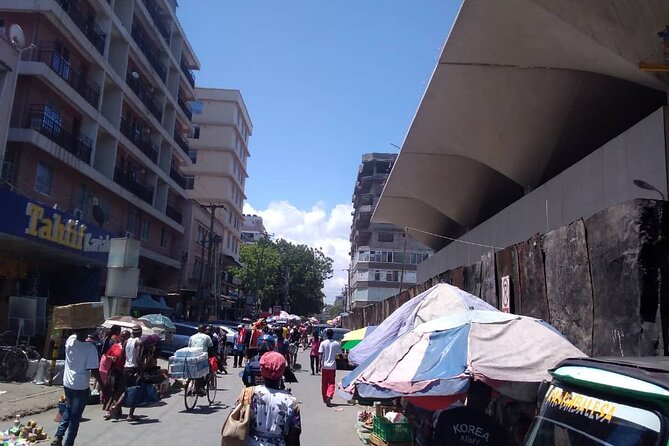
Kariakoo Market is the first major stop, with about 45 minutes set aside for it. It is described as one of the biggest markets in East Africa, and the important point for you is not simply its size. This is a working commercial district where the city’s buying and selling happen at close range.
You can expect a steady mix of people, goods, movement, and negotiation. The value of having a local guide here is that the market can otherwise feel like a wall of activity. A guide gives you context for what you are seeing and helps connect the market to the city’s wider commercial life.
The market is also the most likely part of the tour to test your senses. You may notice strong smells, bright colors, crowded passages, and constant activity. That is precisely why it feels more revealing than a quick drive past a landmark, but it can also be tiring if you prefer quiet sightseeing.
The 45-minute stop is long enough for a first look and some explanation. It is not long enough for unhurried shopping, a detailed search for specific goods, or a full exploration of the market. If you want to buy something, keep your expectations practical and ask your guide how much time you can spare.
I would wear comfortable shoes and keep your belongings secure in crowded areas. The tour requires a moderate level of physical fitness, and Kariakoo is one reason why. You should be ready to walk, stand, and keep pace through an active public market.
Kivukoni Fish Market and the daily work of the port
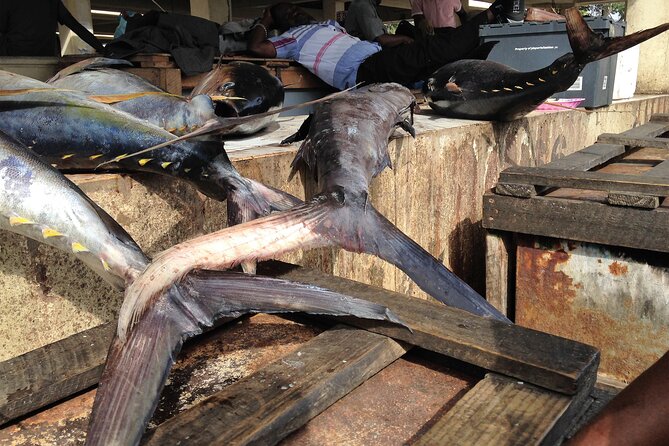
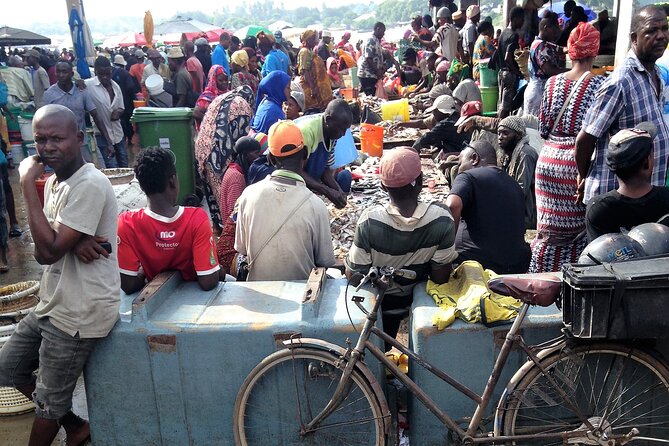
The second main stop is Kivukoni Fish Market, also planned for about 45 minutes. Here the focus shifts from general commerce to the fishing economy and the people who depend on it.
Your guide explains the day-to-day work of fishermen, the ways they get around, and how fish moves through the market. That practical focus makes this stop worthwhile. You are not just looking at seafood on display. You are learning how a coastal city connects boats, workers, buyers, and trade.
Kivukoni is likely to be especially interesting if you enjoy working markets and ordinary economic life. The fish market gives you a closer look at the port side of Dar es Salaam, rather than only its official buildings and monuments. It also provides a useful contrast with Kariakoo. One market shows a broad range of city commerce, while the other centers on a trade tied directly to the sea.
The fish market may not suit everyone. Odors can be strong, surfaces may be wet, and the setting is practical rather than comfortable. Those are not flaws in the experience so much as part of what you are there to see. Still, if you dislike crowded or sensory-heavy places, this is the stop to consider carefully.
Travel time is included in the total duration, so the 1 to 2 hour estimate covers movement between sites as well as time on location. With two 45-minute market visits, the schedule is already largely spoken for. The cathedral and monuments are shorter additions, not long visits.
St. Joseph’s Cathedral and Dar es Salaam’s German-era past
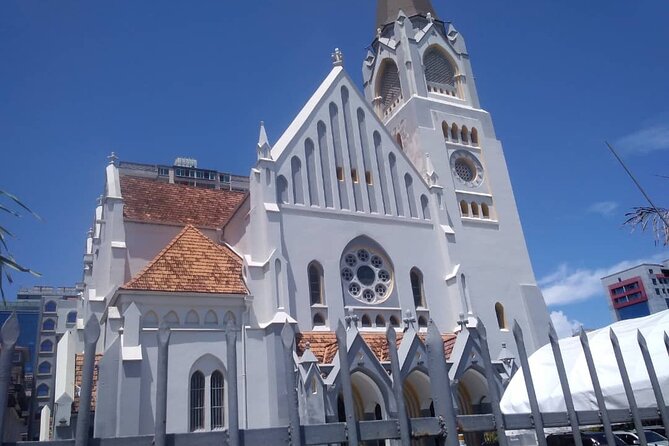
St. Joseph’s Cathedral receives about 20 minutes. It dates from the early 1900s and was built by the Germans. Its position facing the Dar es Salaam port area gives it a useful connection to the city’s coastal setting and colonial past.
Twenty minutes is enough to see the building, take in its exterior, and hear the main story from your guide. It is not enough for a long architectural study or an extended quiet visit. I would treat this as a focused landmark stop rather than a full religious or cultural tour.
The cathedral adds balance to the markets. After the noise and movement of Kariakoo and Kivukoni, you get a more formal structure and a chance to think about the different powers and communities that shaped the city. The tour description emphasizes the story connected with the cathedral, so your guide’s explanation is an important part of the stop.
The information provided does not promise interior access or a service visit. You should therefore plan on seeing the cathedral as part of the guided city route, without assuming that you will have a long time inside. Modest clothing and respectful behavior are sensible at any active place of worship.
Same base, a different kind of day out:
- Dar es Salaam City Center: Walking Tour
★ 4.8 · 102 reviews - MIKUMI NATIONAL PARK – 3 Days
★ 4.5 · 63 reviews - 2 nights 3 days safari to mikumi national park
★ 5.0 · 62 reviews - 2 Days 1 Night Mikumi National Park from Dar es salaam
★ 5.0 · 60 reviews
The Askari Monument and the meaning of public memory
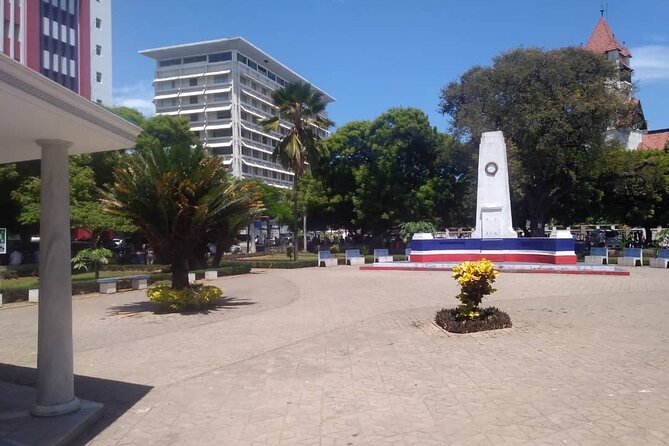
The route also includes the Askari Monument, which commemorates African troops and carriers who served the British Army in the First World War. The monument has a layered political story. Before it was put in place, a monument to a German soldier reportedly occupied the site, and that earlier monument was removed after the British took control.
That history gives the Askari Monument more weight than a quick photograph might suggest. It points to the changing colonial powers in the city and to the African people whose military service supported the British Army. Your guide can help explain why the monument is symbolic, rather than leaving you with only its name and appearance.
The supplied timing does not give a separate duration for this stop. It appears to be one of the shorter roadside or city-center visits, so you should expect a concise explanation rather than a long discussion. That is fine for an overview, but anyone especially interested in East African military history may want to ask questions early and make good use of the private format.
The 1898 oceanfront landmark
Another stop is described as a landmark sanctuary built in 1898. It faces the ocean and is surrounded by Dar es Salaam’s judiciary buildings. The name is not specified in the tour details, so you should confirm the exact landmark with the operator if identifying the building is important to you.
Even without a longer visit, the location helps connect Dar es Salaam’s religious and civic architecture. The surrounding judiciary buildings add another layer to the city center, where places of worship, government structures, public monuments, and commercial streets sit close together.
This stop appears to be brief, like the Askari Monument. Its value comes from the guide’s explanation and from seeing how several periods of the city fit together in a small area. It is not presented as an attraction with a separate admission charge, and no entrance fee is listed.
Why the private format matters in a crowded city
A private tour changes the experience in small but useful ways. You do not have to follow a large group at the same pace, and you can ask about a subject that catches your attention. The guide can also respond to your interests instead of delivering the same fixed talk to everyone.
One guest had a walking and tuk-tuk version arranged because of rain. That detail suggests some flexibility when weather affects the plan, though you should not assume that a tuk-tuk is automatically included. The listed experience offers pickup for an additional $10, while the standard meeting point is Bustani ya Posta.
The guide’s communication skills are also emphasized. That matters here because the tour depends on explanation. Kariakoo and Kivukoni can be visually striking on their own, but the meaning of the places comes from understanding how they work and how they fit into Dar es Salaam’s past.
There is one practical tradeoff. Private tours often offer better conversation, but you are still working within a short route. If you want long market visits, detailed architecture, or time to browse stalls, you may need a longer or separate experience.
Is $55.26 a fair price?
At $55.26 per person, this is not the cheapest way to take a quick look at central Dar es Salaam. The price makes more sense if you value a private guide, local explanation, and a route that combines several kinds of sights in a short period.
You are paying for interpretation as much as transportation or admission. There are no listed entry charges for Kariakoo Market, Kivukoni Fish Market, or St. Joseph’s Cathedral, and bottled water and soda are included. Pickup is not included in the base price and costs an additional $10.
For one person, the cost may feel high for a tour lasting as little as one hour. For a small private group, the value improves because the price is per person but the format remains exclusive to your group. The tour is also useful if you have limited time and want a structured introduction rather than arranging several stops yourself.
I would compare the price with your priorities. If you mainly want a cheap ride past landmarks, this is not the best fit. If you want to understand the markets, ask questions, and connect the city’s daily work with its colonial monuments, the cost is easier to justify.
Timing, walking, and what to bring
Plan for active sightseeing. The tour requires moderate physical fitness, and the two market stops alone account for about 90 minutes. You should be comfortable walking and standing, moving through public places, and coping with market conditions.
Wear practical shoes and light clothing suitable for Dar es Salaam’s climate. Bring a phone or camera if you want photographs, but keep your attention on your surroundings in crowded areas. Bottled water and soda are supplied, which is useful during a short walking route, but you may still want personal water if you prefer to drink often.
Start at Bustani ya Posta and return there at the end. Pickup can be arranged for an extra $10. Since the stated opening period runs from February 26, 2023, through June 17, 2026, with tours available Monday through Sunday from 9:00 AM to 6:00 PM, you have broad scheduling options within the operating day.
The cancellation terms are friendly but firm. You receive a full refund if you cancel at least 24 hours before the start time. Cancellations or changes made less than 24 hours ahead are not accepted for a refund.
Who will enjoy this city tour most?
I would recommend this experience to you if you want a fast, direct introduction to Dar es Salaam and prefer local explanation over a checklist of grand buildings. It suits first-time visitors, people with a short stay, and anyone curious about markets, fishing, colonial architecture, and public monuments.
It is also a good match if you want a private setting. You can ask about the parts of the city that interest you, and the guide can respond without the pressure of a large group.
I would be more cautious if you want a relaxed half-day outing, extensive shopping time, or long visits inside historic buildings. The schedule is compact, and the attraction of the tour comes from variety rather than depth at every single stop.
Should you book the Private Insightful City Tour of Dar es Salaam?
Book it if you want to see Dar es Salaam through its working markets as well as its historic center. Kariakoo and Kivukoni are the strongest reasons to go, while the cathedral, Askari Monument, and 1898 landmark give the route useful historical context.
The best way to approach it is as a concise city orientation, not a full-day cultural program. Ask questions, keep your schedule flexible, and be ready for market noise, smells, crowds, and plenty of walking. At $55.26 per person, it offers fair value for private guidance and a varied route, particularly for a small group with limited time.
FAQ
How long does the tour last?
The tour lasts approximately 1 to 2 hours, including travel time between stops.
Where does the tour begin?
The meeting point is Bustani ya Posta in Dar es Salaam, Tanzania.
Where does the tour end?
The activity ends back at the meeting point.
Is pickup included?
Pickup is offered for an additional fee of $10. The standard tour begins at Bustani ya Posta.
Is this a private tour?
Yes. Only your group participates in the activity.
What is included in the price?
Bottled water and soda are included.
What places are visited?
The route includes Kariakoo Market, Kivukoni Fish Market, St. Joseph’s Cathedral, the Askari Monument, and a landmark sanctuary built in 1898.
Can I cancel for a full refund?
Yes. You can cancel for a full refund if you do so at least 24 hours before the experience start time. Changes or cancellations made less than 24 hours ahead are not accepted for a refund.
Just added in Dar es Salaam
- Zanzibar: 3 Days to Mikumi and Chizua Waterfalls★ 3.5 · 5 reviews
- 2 Day Wildlife Experience and Masai Culture Mikumi Park★ 5.0 · 5 reviews
- Sunrise Beach Walk with Picnic Breakfast Activity★ 5.0 · 3 reviews
- 3 Days Safari to Nyerere National Park (Selous Game Reserve)★ 5.0 · 8 reviews
- Explore Dar es Salaam: Full-Day Private City Tour★ 5.0 · 18 reviews
- 5 Days Selous/Nyerere & Mikumi NP Game drive, Maasai and Walking★ 5.0 · 13 reviews
- Mikumi Np Mid Range Tour 3 Days★ 5.0 · 3 reviews
- Saadani National Park Day Tour★ 5.0 · 3 reviews
City Tours, compared.
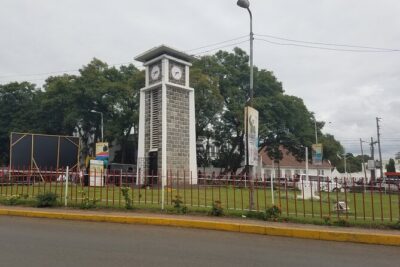
Arusha Guided Walking City Tour, Culture, Lifestyle & History
Read our review →
The Best/Top Rated Cultural City Tour in Dar es Salaam
Read our review →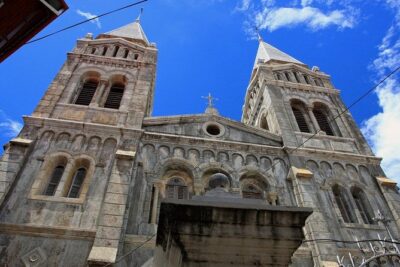

Dar Es Salaam City Tour (Full Day With Private Guide And Car)
Read our review →Browse the lists this tour appears in