
Reviewed · STONE TOWN TOURS
Zanzibar: Stone Town & Spice Farm Tour with Lunch
Zanzibar’s best one-day introduction may be the contrast between Stone Town’s layered past and a working spice farm where cinnamon, vanilla, nutmeg, and cardamom grow beneath the sun. In five hours, you move from slave-market history and fish auctions to fresh coconut, cassava leaves, and lunch cooked on the farm.
I like two things especially. First, the spice visit is hands-on: you smell and taste plants rather than simply hearing a list of spices. Second, the private format and hotel-transfer option make the day easy to manage. The main consideration is pace. Five hours covers a lot, and the Stone Town portion may feel brief if you want time inside every museum.
- Fresh spices straight from the plant: Smell, touch, and taste vanilla, cloves, cardamom, nutmeg, cinnamon, and black pepper.
- A working market visit: Watch local buying and selling at City Market, including the live fish auction.
- Stone Town’s essential sights: Visit the Old Slave Market site, Anglican Church, Palace Museum, Old Fort, Peace Memorial, and Freddie Mercury’s House.
- A farm meal with local participation: Try cassava-leaf harvesting, coconut-milk preparation, local cooking, fresh fruit, and lunch.
- Useful personal touches: Guides named Ahmed, Juma, Beka, and driver Ahmed have received praise for clear explanations and careful service.
- Cash matters: The spice shop takes cash, and you may want small notes for tips.
Why the Stone Town and spice farm pairing works
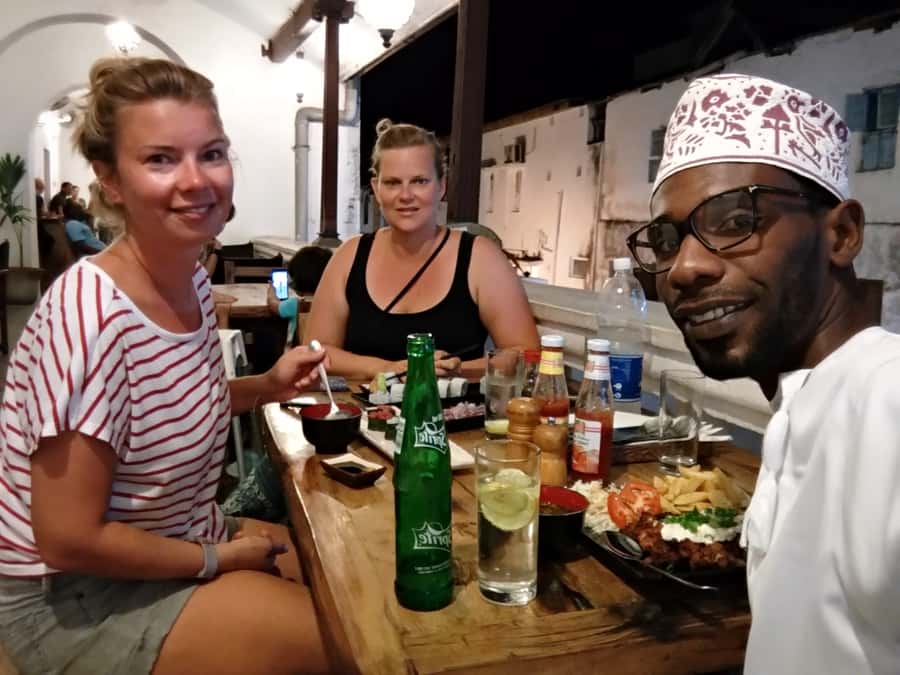
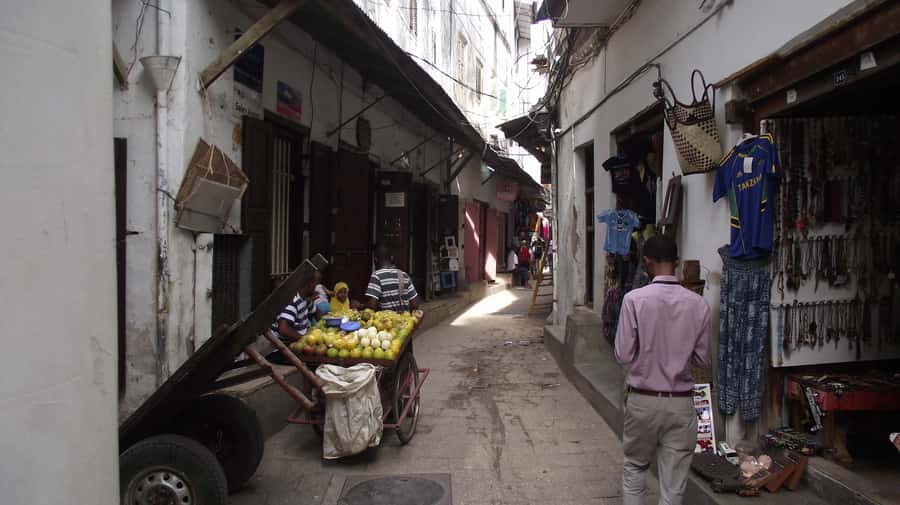
Stone Town and the countryside explain two different sides of Zanzibar. Stone Town shows how trade, religion, empire, and Swahili culture shaped the island. The farm shows the crops and food traditions that still give Zanzibar its famous scent.
I like this pairing because it avoids making the day only a history walk or only a plantation visit. You get old buildings, a working market, farm produce, and a cooked meal. It also suits first-time visitors who want a broad sense of Zanzibar without booking several separate outings.
The tour lasts about five hours and costs $73 per person. That is fair value if your booking includes transport, entrance fees, a private guide, drinking water, lunch, and both parts of the day. The value is less clear if you already have easy transport and plan to visit Stone Town on your own, since the town portion can be explored independently.
The exact order can vary in practice. Some schedules begin at the spice farm and finish with a Stone Town walk, while others start in town. If the order matters to you, confirm it when booking.
Meeting at the Old Fort at 9 AM

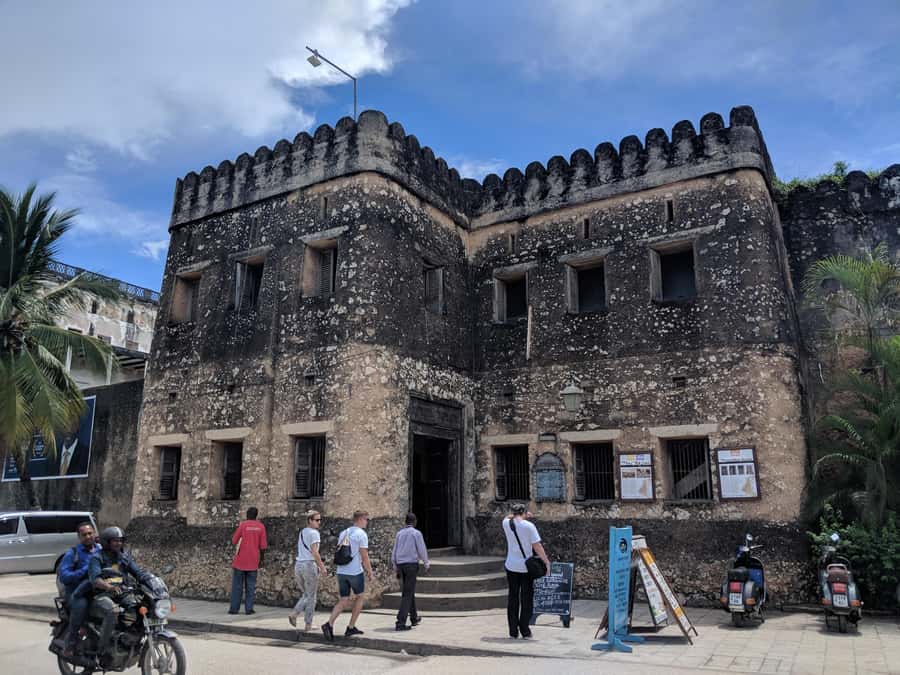
The standard meeting point is in front of the Old Fort on Mizingani Road at 9 AM. A representative waits there. Hotel pickup is available if you select that option, which is useful if you are staying away from central Stone Town or prefer not to arrange a taxi.
Bring comfortable shoes, sunscreen, water if you want extra beyond the supplied drinking water, and cash. Leave large bags and luggage behind, since they are not allowed. Stone Town’s narrow streets and the farm visit both call for light clothing and practical footwear, though the tour information does not set a dress code.
The tour is described as private, which usually means the guide can give more attention to your questions than a large group outing. Still, do not expect a slow museum day. The schedule combines transport, walking, tasting, and lunch within five hours.
More of the old town on foot from Zanzibar:
- Zanzibar: Stone Town, Spice Tour, Prison Island with Lunch
★ 4.4 · 1,219 reviews - Zanzibar: Prison Island, Stone Town, & Spice Farm Tour
★ 4.5 · 579 reviews - Zanzibar: Stone Town, Spice tour & Prison Island with Lunch
★ 4.6 · 453 reviews
Starting with Stone Town’s difficult history
The Old Slave Market site and Anglican Church provide a serious opening. This is not a decorative old-town stroll. The stop connects Stone Town to the history of the East African slave trade and the religious and political changes that followed.
I would give this section your full attention. The buildings may look simple compared with the town’s grander landmarks, but the site gives meaning to the streets you walk afterward. Ask your guide questions if you want more context, since the quality of the explanation matters greatly here.
Stone Town’s architecture developed through Arab, Persian, Indian, and European influences. Most of the town’s buildings date from the 19th century, and the mix is visible in doors, balconies, facades, and street plans. UNESCO listed Stone Town as a World Heritage Site in 2000.
The guide named Juma received particularly strong praise for explaining the town’s past in a relaxed and engaging way. Another guide, Ahmed, was also praised for his command of Zanzibar’s history. English is the stated tour language, but one booking found communication harder with a guide who spoke limited English. If detailed historical discussion is important to you, mention that preference when arranging the tour.
City Market and the fish auction

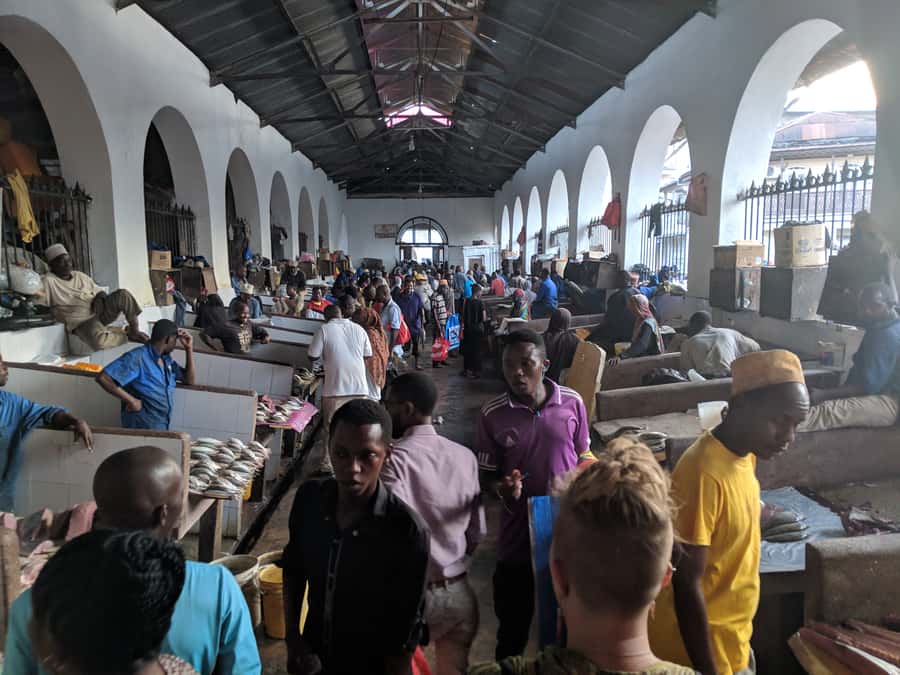
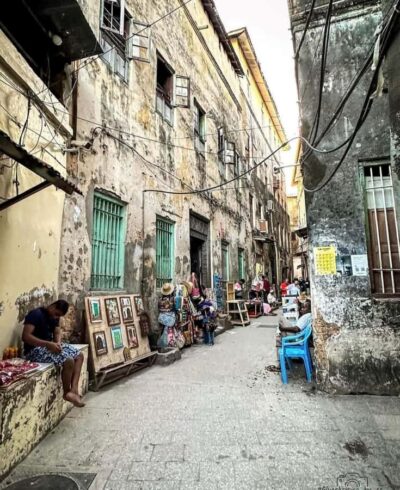
The walk continues through narrow streets to City Market. This is one of the more useful stops because it shows Stone Town as a place where people shop and work, not only as an old quarter preserved for sightseeing.
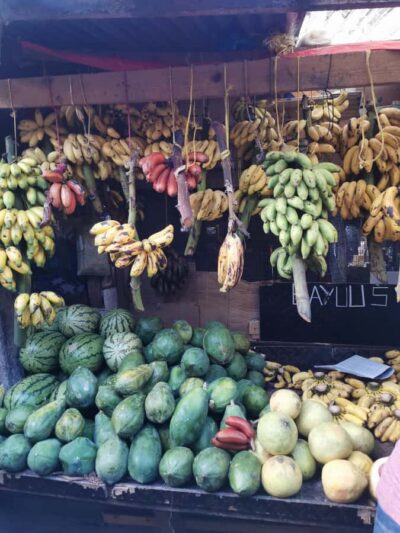
You can look at fresh produce and fruit, then watch the fish auction. The auction offers a direct look at local commerce, with buying and selling happening in real time. It is likely to feel more crowded and less polished than a museum or fort, so keep your belongings close and follow your guide.
This part also helps connect the farm visit to daily food. Spices are not just souvenirs here. They are tied to cooking, trade, medicine, and the island economy. The market gives you a better sense of how food moves through Zanzibar before you later see ingredients at their source.
Palace Museum, House of Wonder, and the Old Fort
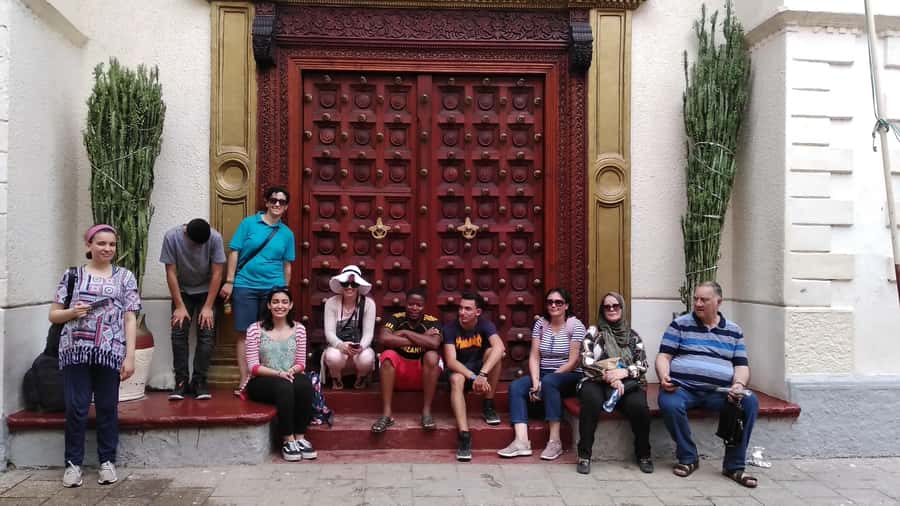
After the market, the sightseeing route takes in several major buildings. The Palace Museum offers a look at Zanzibar’s royal past. The House of Wonder, also called Bait-al-ajab, is described as the largest and tallest building in Stone Town.
The itinerary also includes the Old Fort, Tippu Tip, the Peace Memorial, and the Natural History Museum, along with other sights. Freddie Mercury’s House is another stop. It is one of the town’s most famous addresses and adds a modern cultural note to a route otherwise focused on older political and commercial history.
You should think of this as an outside-oriented city tour unless your guide confirms which buildings you will enter. The information promises sightseeing at these landmarks, but it does not say that every museum or building includes an interior visit. The advantage is coverage. The tradeoff is that you may not have long at any one place.
The Old Fort is also the meeting point, so it gives you a useful reference at the beginning or end of the day. If you arrive early, you can get your bearings around Mizingani Road before the tour begins.
Other spice farm visits from Zanzibar:
- Full-Day Private Stone Town +Spice Farm and Prison Island Tour
★ 4.5 · 216 reviews - Spice Tour + Stone Town Tour + Prison Island
★ 4.5 · 130 reviews - Zanzibar: Spice Tour & Stone Town Walking Tour
★ 4.8 · 115 reviews - Zanzibar: The Swahili Spice Experience – Spice Tour + Culinary Journey
★ 4.7 · 96 reviews
The spice farm’s smells, plants, and practical lessons
The farm is the strongest part of the experience for many visitors, and I can see why. You do not just buy a packet of cinnamon or cloves in a shop. A farm guide shows you how the plants grow and explains how the spices are used in food and traditional medicine.
You can see and handle vanilla, cardamom, nutmeg, cloves, cinnamon, black pepper, and other herbs and spices. The most useful feature is the sensory element. Smelling a fresh plant or seed makes the difference between memorizing names and understanding what each ingredient is like.
The farm is described as organic, and the visit is to a real working farm rather than a display room. That gives the stop a more direct connection to Zanzibar’s nickname, the Spice Islands. Zanzibar and Tanzania’s Mafia Island are associated with spice production, especially cloves.
The farm guide may spend two to three hours with you, depending on the schedule. One guide named Beka was praised for explaining how spices are grown, while another farm guide was noted for covering medicinal uses and cooking. The quality of this part depends heavily on the guide, but the structure gives you plenty to see, smell, and taste.
Coconut, cassava, and lunch on the farm
The farm visit is not limited to plants. You may join a cassava-leaf harvest, learn how coconut milk is made, and try some cooking. A coconut climber picks young coconuts from the tree for you to taste.
That coconut stop is a small but memorable detail. It turns a familiar fruit into a short demonstration of how it reaches the table. You can also sample fresh fruits and local food before lunch.
Lunch is included and is served at the farm. The meal has been a strong point, with several bookings describing it as very good or surprisingly good. The tour information does not give a fixed menu, so do not book it expecting a specific dish. Instead, expect a traditional farm meal connected to the ingredients and cooking methods introduced during the visit.
The food section makes the $73 price easier to justify. You are paying for more than transport between sights. You receive a guided farm visit, tastings, a practical food demonstration, and lunch, alongside the town tour and entry fees.
Transport, guides, and the tipping question

If you select hotel pickup, the day includes transfers. One driver named Ahmed was praised for punctuality, friendliness, and a clean, cool van. That matters in Zanzibar, where a smooth transfer can save time and reduce the stress of finding transport between the farm and Stone Town.
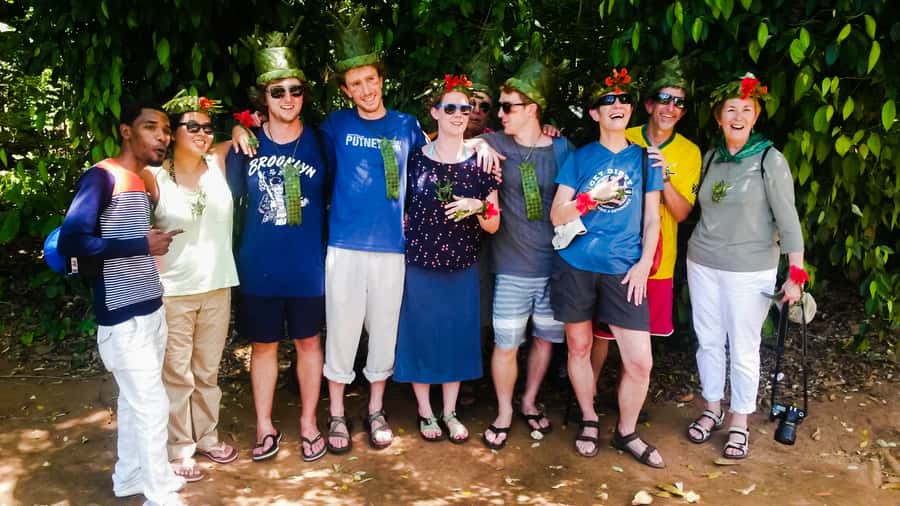
You may work with more than one person during the day. A driver, a spice-farm guide, and a Stone Town guide can each handle a different part of the experience. That arrangement can improve the explanations, since a farm specialist is better placed to discuss cultivation while a town guide focuses on history.
Carry enough cash for the farm shop and tips. The shop is cash only. You may also feel inclined to tip several people, not just one guide. One practical account counted five or six people over the course of the day who might reasonably receive something. Tipping is not listed as included, so budget for it separately in small denominations.
Who will get the most from this tour
I would choose this tour if you have limited time in Zanzibar and want history, food, markets, and agriculture in one outing. It suits first-time visitors, couples, families who enjoy tasting and seeing how food is grown, and anyone who wants more context than a simple Stone Town photo walk provides.
It also works well if you prefer a guided introduction before exploring on your own. The private setup can make it easier to ask questions and adjust the pace, although the total time remains fixed at about five hours.
I would be more cautious if your main goal is a slow museum visit. The route includes many Stone Town sights, but it does not promise long interior visits. I would also think twice if you dislike shopping stops, since there is an opportunity to buy spices and local products at the farm.
The accessibility information needs clarification. The activity details describe it as wheelchair accessible, but the same information says it is not suitable for wheelchair users. Stone Town’s narrow streets and the farm setting may present practical limits, so contact the provider before booking if you use a wheelchair.
Is the $73 price fair?
For a five-hour private tour, $73 per person is a reasonable price when lunch, entrance fees, water, guiding, and selected hotel transfers are included. The strongest value comes from combining two experiences that would otherwise require separate planning.
The price is less attractive if you only want Stone Town. You can meet at the Old Fort and explore the town with a guide, or perhaps walk independently, without needing the farm portion. The spice farm is what gives this package its extra value.
I would also factor in tips, spice purchases, and any transport choice not covered by your selected option. The tour is not a bargain in the bare-bones sense, but it offers a full half-day with food and hands-on activities rather than only a guided walk.
Final decision: book it for the farm, history, and ease
I would book this tour if you want an efficient introduction to Zanzibar’s food, farming, and past. The spice farm is the main reason to choose it, with the Stone Town walk adding useful context and major sights.
I would not book it solely for museum interiors or an unhurried look at Stone Town. In that case, explore the town separately and spend more time at the places that interest you. For most first visits, though, the farm, market, fish auction, coconut tasting, and lunch make this a well-rounded day at a fair price.
FAQ
How long does the tour last?
The tour lasts five hours.
What time does the tour begin?
The standard meeting time is 9 AM.
Where is the meeting point?
Meet in front of the Old Fort on Mizingani Road in Stone Town, Zanzibar.
Is hotel pickup available?
Yes. Hotel pickup is available if you select that option when booking.
What language is the tour conducted in?
The stated tour language is English.
What is included in the price?
The tour includes entrance fees, a private guide, drinking water, and lunch. Hotel transfers are included only if that option is selected.
What can I see at the spice farm?
You can see spices and herbs such as vanilla, cardamom, nutmeg, cloves, cinnamon, and black pepper. You can touch, smell, and taste some of them directly from the plants.
Is lunch included?
Yes. Lunch at the spice farm is included.
Should I bring cash?
Yes. Bring cash for the spice shop, which accepts cash only, and for optional tips.
Can I bring luggage or a large bag?
No. Luggage and large bags are not allowed.
What should I bring?
Bring comfortable shoes, sunscreen, and cash.
Is the tour suitable for wheelchair users?
The activity information gives conflicting details. It describes the tour as wheelchair accessible but also says it is not suitable for wheelchair users. Contact the provider before booking to confirm whether the route works for your needs.
Just added in Zanzibar
- Jet Ski Experience from Kendwa Beach★ 5.0 · 21 reviews
- Zanzibar: Parasailing Experience with Instructor★ 4.2 · 17 reviews
- From Zanzibar: 3-Day Selous Safari Trip with Flights★ 4.4 · 22 reviews
- Stone Town: Sunset Dhow Cruise Experience★ 4.0 · 22 reviews
- Stonetown Historical Walking Tour & Traditional Lunch★ 4.8 · 22 reviews
- 2h-Quad Zanzibar: Explore the heart of zanzibar by Quad★ 4.8 · 22 reviews
- Full-day Prison Island and Nakupenda Sandbank with Lunch buffet★ 4.5 · 25 reviews
- Full-Day Private Stone Town Spice Farm and Prison Island Tour★ 4.5 · 24 reviews
Stone Town Tours, compared.

Stone Town, Spice Tour, Prison Island with Lunch
Read our review →
3 Hours Private Stone Town walking Tour with Guide
Read our review →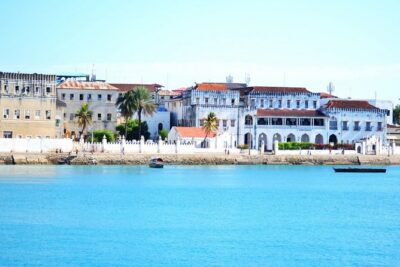
Full-Day Private Stone Town +Spice Farm and Prison Island Tour
Read our review →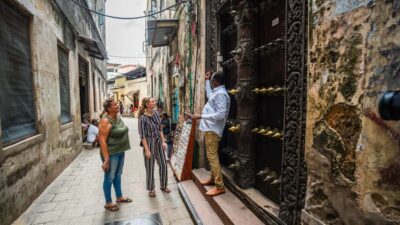
Stone Town Historical Cultural Walking Guided Tour
Read our review →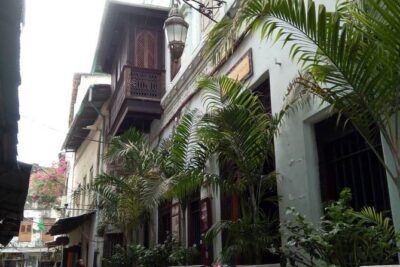

Browse the lists this tour appears in