
Reviewed · KILIMANJARO TREKS
#1. Best 7 days kilimanjaro trek Machame route join group
Kilimanjaro’s Machame Route gives you the mountain in chapters: rainforest, moorland, alpine desert, and snow-cold summit terrain. The seven-day plan takes you through the scenic Shira Plateau, past Lava Tower, over Barranco Wall, and up to Uhuru Peak, Africa’s highest point.
I like the careful altitude pattern, especially the climb to Lava Tower followed by a lower night at Barranco. I also like the varied scenery and the final descent through rainforest. The main caution is cost clarity: the advertised $900 price does not include national park fees, and one detailed account put extra charges at about $950, plus tips.
Key points to know before booking
- The route reaches 5,895 meters: The summit push begins around midnight from Barafu Camp and can take 10 to 14 hours.
- Lava Tower helps with acclimatization: You climb to about 4,600 meters, then sleep lower at Barranco Camp.
- Barranco Wall is the most hands-on section: Expect a steep scramble rather than a simple walking path.
- The accommodation details need checking: The plan refers to camps, camping equipment, and a sleeping mattress, although the highlights mention huts.
- The $900 headline price is not the full cost: National park fees are excluded, and extra guide, porter, and tipping charges may apply.
- The final day is a real descent: You walk from Mweka Camp to Mweka Gate, collect your certificate, and transfer to Moshi or Arusha.
Seven days from rainforest to Uhuru Peak
This is a demanding mountain trek, not a sightseeing tour with a quick summit add-on. Your route moves through several ecological zones, and each day changes the feel of the climb.
The itinerary begins at Machame Gate and ends at Mweka Gate. Transport from your hotel in Moshi to the gate is included, along with meals, drinking water, camping equipment, and a sleeping mattress. The experience is offered in English by KILINGE-ADVENTURES.
The stated price is $900 per person, but you should treat that as a starting figure. National park fees are specifically excluded. One detailed account placed the additional entrance, porter, and guide charges at about $950 for seven days, with tips estimated at about $50 per accompanying person. That account also mentioned seven guides and total costs of about $2,150. Ask for a written cost breakdown before you pay, since crew arrangements and tip expectations should be clear.
Other routes up the mountain from Moshi:
- Kilimanjaro climb by Lemosho Route (7-day)
★ 5.0 · 651 reviews - Kilimanjaro climb, Machame Route (7-day)
★ 5.0 · 262 reviews - Kilimanjaro Climbing Lemosho Route 8 Days.
★ 5.0 · 186 reviews
Day 1: Machame Gate to Machame Camp
After registration at Machame Gate, you begin in the montane rainforest. The distance is listed as 11 kilometers, although the supplied itinerary prints 1 kilometer followed by 7 miles, so confirm the exact figure with the operator. Hiking time is estimated at five to seven hours.
The trail climbs from about 1,800 meters to 2,835 meters. This first day is humid and green, with thick forest, colorful birds, and the possibility of seeing colobus monkeys. It is an appealing introduction because the mountain does not reveal every side of itself at once. You start beneath a leafy canopy, then gradually gain height.
Your first night is at Machame Camp. Rest matters here. The combination of a long walk, rising altitude, and unfamiliar sleeping conditions can make the first evening more tiring than expected.
Day 2: Moorland and the Shira Plateau
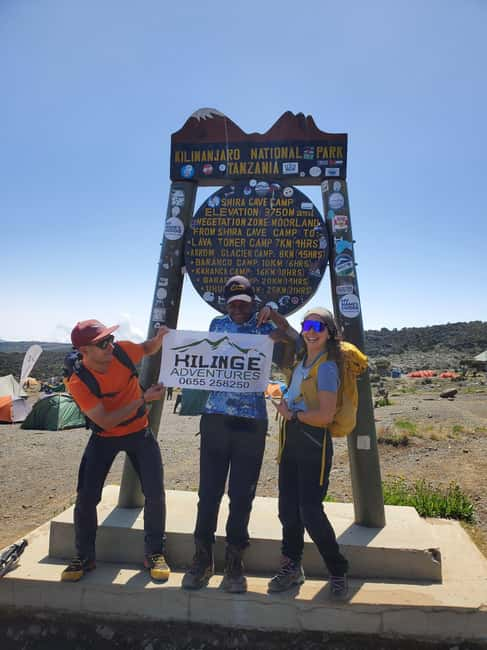
Day two covers about five kilometers in four to six hours, climbing from 2,835 meters to roughly 3,750 meters. The forest gives way to moorland, with fewer trees and wider views.
The trail becomes steeper and rockier. You may find this section more exposed than day one, but the reward is a better view toward the Shira Plateau and Kibo Peak. This is one of the route’s strongest scenic changes. The forest feels enclosed, while the moorland opens the mountain around you.
Shira Camp is high enough for altitude to become a serious concern. Walk slowly, drink the supplied water regularly, and do not judge your progress by speed. The point is to keep moving steadily and save energy for the summit day.
Day 3: Lava Tower, then down to Barranco
This is one of the most useful days in the schedule. You walk about 10 kilometers for seven to eight hours, leaving Shira Camp at around 3,750 meters and reaching a high point of approximately 4,600 meters at Lava Tower.
The route crosses alpine desert, a stark zone with little vegetation and broad volcanic scenery. Lava Tower is not the night’s sleeping place. After a break, you descend to Barranco Camp at about 3,900 meters.
That high climb followed by a lower night is valuable for acclimatization. You get your body used to a higher elevation without spending the night at the highest point of the day. Barranco Valley also brings one of the route’s memorable plant sights, the giant senecios.
This day can feel tough because the air is thinner and the trail is long. Still, the structure is smart. It adds height during the day, then gives you a modest drop before sleep.
Same base, a different kind of day out:
- Safari Serengeti And Ngorongoro
★ 5.0 · 288 reviews - Climbing Kilimanjaro – Machame Route
★ 5.0 · 170 reviews - Climbing Kilimanjaro through 7 days Machame Route
★ 5.0 · 151 reviews - Kilimanjaro climb, Lemosho Route (8-day)
★ 5.0 · 148 reviews
Day 4: The Barranco Wall and Karanga Camp
The Barranco Wall is the day’s main event. The itinerary calls it an exhilarating scramble, which tells you more than a simple distance figure can. You should expect hands-on movement over steep ground rather than a smooth uphill path.
The day covers about five kilometers in four to five hours. You climb from around 3,900 meters to 4,035 meters, crossing ridges and valleys before reaching Karanga Camp.
The short distance does not mean effortless walking. Uneven ground, altitude, and the wall itself can make this a full day. The shorter schedule is helpful because it gives you time to recover after Lava Tower and before the higher camps.
Karanga is also a useful preparation point. From here, you are close to the final base camp, so the trek begins to feel more focused on the summit ahead.
Day 5: Karanga Camp to Barafu Camp
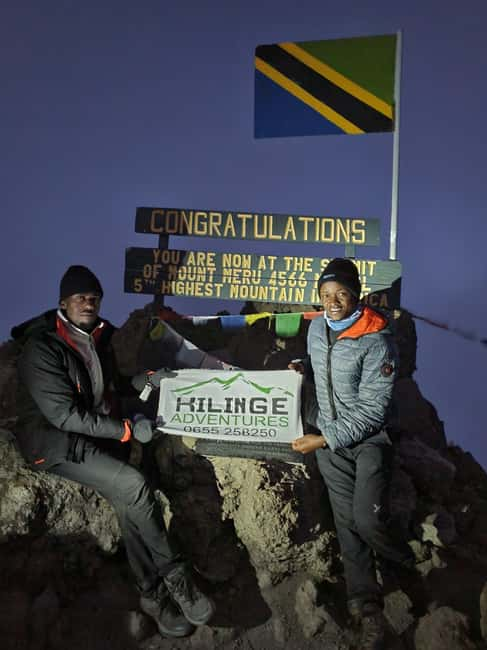
Day five is about four kilometers and four to five hours. You climb from approximately 4,035 meters to 4,640 meters through alpine desert.
Barafu Camp is your launch point for the summit attempt. The scenery is sparse, the air is thin, and the practical task is simple: rest, hydrate, eat, and prepare your clothing and equipment.
You should not expect a relaxed evening. The summit attempt starts around midnight, so your sleep schedule will be unusual. Keep your headlamp or flashlight close, organize your daypack early, and make sure your gloves, jacket, socks, and snacks are easy to reach.
The supplied packing list includes a sleeping bag, climbing and trekking gear, a daypack, hiking pants, a flashlight, gloves, socks, snacks, a jacket, and a power bank. Since equipment standards can differ, ask exactly what KILINGE-ADVENTURES supplies and what you must bring yourself.
Day 6: Stella Point, Uhuru Peak, and Mweka Camp
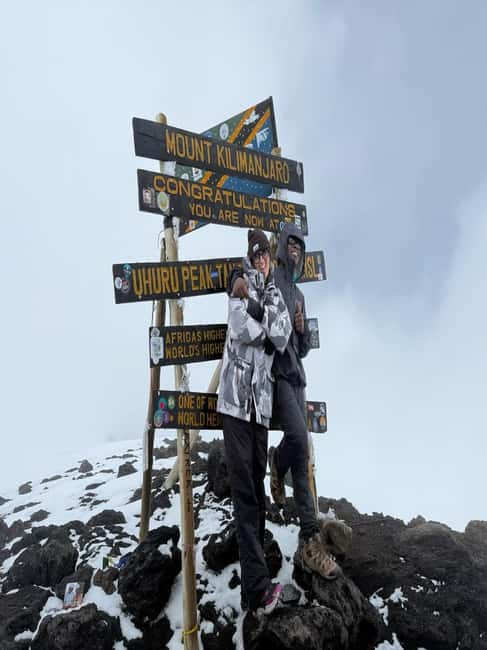
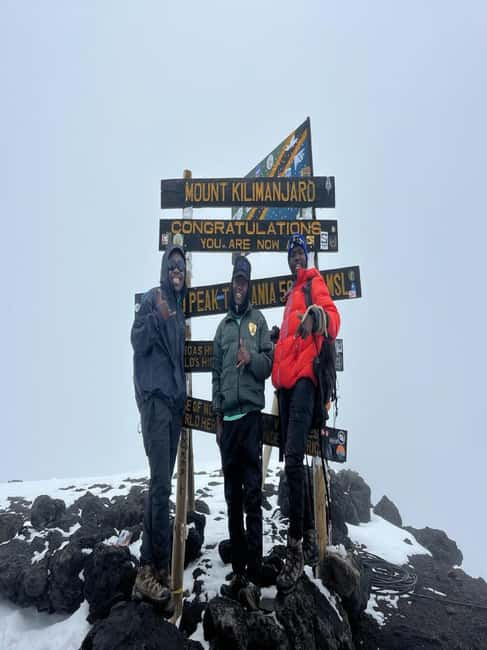
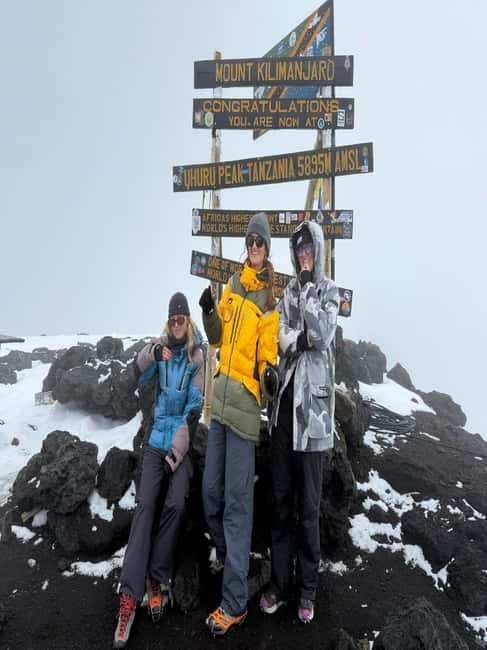
This is the longest and hardest day. The total distance is about 17 kilometers, with 10 to 14 hours of walking. You start at Barafu Camp around 4,640 meters, climb to Uhuru Peak at 5,895 meters, then descend to Mweka Camp at about 3,110 meters.
The summit section begins in darkness. You work upward toward Stella Point, then continue to Uhuru Peak. At the top, the reward is not just a summit photograph. You have crossed from alpine desert into the Arctic zone and reached the highest point in Africa.
The final push can be slow. The itinerary’s 10 to 14-hour estimate gives you a realistic sense of the day. Cold, fatigue, altitude, and the steep descent all add up. Do not pack your daypack as if the climb ends at the summit. You still need to descend a long way afterward.
Mweka Camp provides a lower night after the summit. That drop in elevation should feel welcome, but your legs may be tired from the combined ascent and descent. Eat, drink, and keep your evening simple.
Day 7: Mweka Gate and the return to town
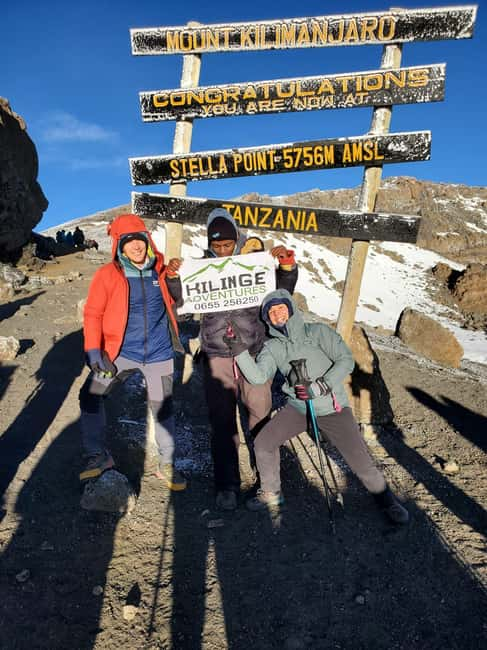
The final day covers about 10 kilometers in three to four hours. You descend from Mweka Camp through rainforest to Mweka Gate, dropping from about 3,110 meters to 1,640 meters.
This is still a proper walk, but it is less demanding than summit day. The return to thicker forest gives the trek a satisfying full-circle feeling. You began among trees at Machame and finish among trees at Mweka, after passing through several very different mountain zones.
At the gate, you collect your certificate of achievement. Transport then takes you back to Moshi or Arusha, where you can rest or continue your trip.
The big question: huts or tents?
There is an important detail to clarify before booking. The highlights describe hut accommodation, unlike camping on other routes. Yet the day-by-day plan names Machame, Shira, Barranco, Karanga, Barafu, and Mweka camps, while the inclusions list camping equipment and a sleeping mattress.
Those details point to tent camping rather than hut lodging, but the information is not fully consistent. Ask these direct questions:
- Will I sleep in tents or huts?
- Is a tent provided?
- Is the sleeping bag included, or must I bring one?
- Is the mattress a standard camping mattress?
- What exactly does the equipment package cover?
This matters because camping changes the comfort level, luggage needs, and nightly routine. A hut-based trip and a tent-based trip are not interchangeable products.
Meals, water, transport, and practical comfort
Meals and drinking water are included, which reduces the amount you need to arrange yourself. You should still bring snacks for long walking days, especially the Lava Tower crossing and the summit push.
Transport from a hotel in Moshi to Machame Gate is included. The final transfer goes from Mweka Gate to Moshi or Arusha. The information does not specify all transfer times, vehicle details, or hotel arrangements, so ask if you need a return to a particular property.
Bring a power bank because charging access is not described. A flashlight is also listed, and it is essential for the midnight summit start. Pack layers rather than relying on one heavy jacket, since conditions change sharply from rainforest to summit altitude.
What the price really means
At $900 per person, the trip may look like a low-cost way to climb Kilimanjaro. But the excluded park fees are a major part of the final bill. The detailed cost warning is unusually important: it describes about $950 in extra entrance, porter, and guide charges, plus tips of roughly $50 per accompanying person.
That would bring the total close to $2,150 in the example provided. I would not assume that every booking will produce exactly that number, but I would insist on a full written quote. Ask which fees are mandatory, which are crew payments, how many guides and porters are assigned, and what tip amount the company expects.
The five-star rating is encouraging, and the trip was described as well organized. Still, good organization does not remove the need for clear pricing. The best value comes when you know the real total before arriving in Tanzania.
Who should choose this trek?
I would consider this route for a fit hiker who wants varied scenery and a full seven-day schedule rather than the shortest possible climb. The Lava Tower and Barranco arrangement gives the itinerary a useful acclimatization rhythm, while the route includes several of Kilimanjaro’s most distinctive sections.
It suits someone comfortable with basic mountain conditions, long walking days, a midnight start, and uncertain accommodation unless the hut question is settled in advance. It is not a good choice for anyone expecting hotel-style comfort or a simple guided walk.
You also need to be realistic about altitude. The summit is nearly 5,900 meters, and the itinerary cannot guarantee that every participant will reach Uhuru Peak. A careful pace and good communication with the guide team matter more than rushing.
Should you book KILINGE-ADVENTURES?
Book this trek if the Machame Route scenery appeals to you, you want seven days on the mountain, and the operator gives you a clear final price in writing. The route has a strong sequence: forest, moorland, Shira, Lava Tower, Barranco Wall, Barafu, Uhuru Peak, and Mweka.
Wait before booking if the accommodation remains unclear or if the $900 figure is presented as the complete cost. Confirm the national park fees, crew charges, tips, equipment, and hut or tent arrangements first.
The route itself is appealing and the organization has received a top rating, but the real buying decision depends on transparency. Once the final cost and sleeping arrangements are settled, this can be a worthwhile seven-day attempt on Africa’s highest mountain.
FAQ
How long is the Kilimanjaro Machame Route trek?
The trek lasts seven days, beginning at Machame Gate and ending at Mweka Gate, followed by a transfer to Moshi or Arusha.
What is the highest point of the trek?
Uhuru Peak is the highest point, at 5,895 meters or 19,341 feet.
Is the Machame Route suitable for acclimatization?
The itinerary includes a climb to Lava Tower at about 4,600 meters, followed by a descent to Barranco Camp at about 3,900 meters. This provides a climb-high, sleep-lower pattern.
When does the summit attempt begin?
The summit attempt begins around midnight from Barafu Camp.
How long is summit day?
The sixth day takes about 10 to 14 hours and includes the climb to Uhuru Peak and the descent to Mweka Camp.
Are national park fees included in the $900 price?
No. National park fees are specifically excluded from the advertised price.
Are meals and drinking water included?
Yes. Meals and drinking water are included in the experience.
Is camping equipment provided?
Camping equipment and a sleeping mattress are listed as included. However, the information also mentions hut accommodation, so confirm the exact sleeping arrangement before booking.
What language is used by the guides?
The listed guide language is English.
More Hiking & Trekking in Moshi
- Private Kilimanjaro Hike 7 Day Lemosho Route
★ 5.0 · 60 reviews - Best Kilimanjaro hiking day trip tour with Kilinge Adventures
★ 4.5 · 54 reviews - #1. Best Kilimanjaro Day hike Tour-Machame Route-ISMANI
★ 4.2 · 47 reviews - Best Kilimanjaro Adventure 7 days Machame route Trekking
★ 5.0 · 42 reviews
Just added in Moshi
- Wildlife Extravaganza: Manyara, Tarangire & Ngorongoro in 3 Days★ 5.0 · 3 reviews
- West Kilimanjaro cycling Adventures★ 4.5 · 8 reviews
- machame route★ 5.0 · 16 reviews
- Kilimanjaro Climb • Machame Route ~ 10 Day★ 5.0 · 6 reviews
- Kilimanjaro Climbing Umbwe Route★ 5.0 · 3 reviews
- Mt Kilimanjaro 6 days Marangu route hike★ 5.0 · 3 reviews
- Kilimanjaro Climb • Marangu Route ~ 9 Day★ 5.0 · 4 reviews
- 3 Days Private E-Bike Tour in West Kilimanjaro★ 5.0 · 3 reviews
Kilimanjaro Treks, compared.



8-Day Small-group Lemosho Kilimanjaro Summit Trekking
Read our review →

5 Days Best of Tanzania Luxury Safari Northern Circuit
Read our review →

Climbing Kilimanjaro through 7 days Machame Route
Read our review →
7-Day Machame Kilimanjaro Summit Tour from Arusha
Read our review →Browse the lists this tour appears in