
Reviewed · KILIMANJARO TREKS
5 Day Mount Kilimanjaro Climbing via Marangu Route
The Marangu Route gives you Kilimanjaro with a bed overhead instead of a tent underfoot. You walk from Moshi through rainforest, heath, moorland, and high volcanic terrain, sleeping in basic dormitory huts along the way. I like the hut accommodation and the fact that park fees, meals, transport, guides, porters, and safety equipment are bundled into the price.
I also like the route’s gradual trail and direct layout, which makes navigation simple. The tradeoff is important: five days is a short time for altitude adjustment, and you return by the same route. You get a classic Kilimanjaro climb, but not the best variety of scenery or the gentlest acclimatization schedule.
Key points to know before booking
- You sleep in huts: Mandara and Kibo Huts have 60 bunk beds each, while Horombo Hut has 120.
- The summit day starts very early: Expect a midnight to 2 a.m. departure for the climb toward Gillman’s Point and Uhuru Peak.
- The price covers the main climb costs: The $1,650 fee includes park fees, private transport, meals, hut accommodation, guides, porters, and safety equipment.
- The route is gradual but demanding: The trail is considered one of the easier ways up Kilimanjaro, yet the short schedule makes altitude a serious concern.
- Rainforest mud is part of the deal: Gaiters and trekking poles are especially useful on days one and five.
- The support team matters: Kentau Safaris provides a climbing crew, and the experience includes a team appreciation ceremony before the final descent.
What you are really buying for $1,650
At $1,650 per person, this is not simply a guided walk. You are paying for access to Kilimanjaro National Park, a support crew, food, transport, hut beds, and the practical work needed to move a small group up and down the mountain.
The package includes four dinners, five lunches, and four breakfasts. It also covers the transfer from Moshi to the Marangu trailhead and the drive back after the climb. That matters because a Kilimanjaro trip has many separate costs, and the listed price keeps the main expenses together.
The maximum group size is 15 people. That is large enough to provide company on the trail, but still limited compared with a mass departure. If you are climbing alone, the group setting can also make the long days feel less solitary. One solo woman described feeling safe and comfortable with the male support crew, which is useful context if you are considering the trip on your own.
You still need to budget for a visa, international and internal flights, and tips for the guides, cooks, and porters. Tipping is not included, and you should plan to leave money for the crew at the end. You will say goodbye to part of the team at Mandara Huts during the descent, before continuing to the park gate.
Other routes up the mountain from Moshi:
- Kilimanjaro climb by Lemosho Route (7-day)
★ 5.0 · 651 reviews - Kilimanjaro climb, Machame Route (7-day)
★ 5.0 · 262 reviews - Kilimanjaro Climbing Lemosho Route 8 Days.
★ 5.0 · 186 reviews
Day one: Marangu Gate and the wet rainforest
The first drive from Moshi takes about an hour and passes through the village of Marangu before reaching the Kilimanjaro National Park Gate. The gate is more than a formality. You wait while permits are issued and watch the climbing crews organize supplies and prepare for the trail.
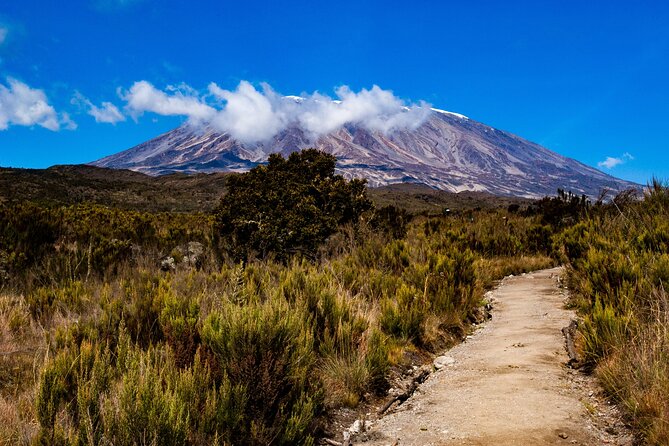
The walking begins at about 1,830 meters, or 6,000 feet, and finishes near 2,740 meters, or 9,000 feet. The day takes about five hours. At this height, the rainforest is the main attraction, with thick vegetation, winding trails, and local plant and animal life explained by your guide.
This is also where the trail can be wet, muddy, and slippery. Do not treat the opening day as an easy stroll just because the elevation is lower. Gaiters will help keep mud out of your boots, and trekking poles give you extra balance on slick ground.
The rainforest section has a pleasant sense of motion. You hear the crew working around the gate, then gradually leave the practical starting point behind as the path narrows into greenery. The direct route is easy to understand, but the weather can make the footing slow.
At Mandara Huts, you sleep in a dormitory rather than a tent. The hut has 60 bunk beds, and mattresses and pillows are provided. You still need a sleeping bag. A communal dining hall gives the group a place to eat, while the washrooms are basic but more comfortable than anything at higher elevations.
Day two: heathland, giant plants, and Horombo Hut
After breakfast, the route leaves the rainforest and climbs from 2,740 meters to about 3,690 meters, or 12,100 feet. This section takes around seven hours, so you should expect a full walking day rather than a short transfer between huts.
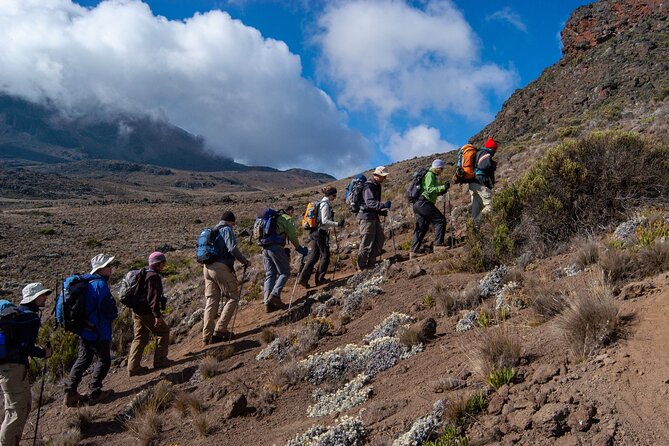
The forest gives way to heathland, where you may see giant lobelias and groundsels. Farther up, the vegetation thins into open moorland, with small shrubs replacing the taller forest growth. This change makes the climb feel more exposed and reminds you that the mountain is setting its own pace.
A lunch stop provides views toward Mawenzi, one of Kilimanjaro’s major peaks. The scenery becomes more open here, and the wider view helps explain the mountain’s scale. You are no longer simply following a forest trail. You are crossing high ground beneath the summit area.
Horombo Hut sits at about 3,690 meters. It has 120 bunk beds, making it the largest hut stop on this route. As afternoon turns toward evening, temperatures drop. Keep warm layers close rather than buried in your pack.
This is a key point in the trip. The trail has been gradual, but altitude begins to matter more than distance. Eat your meals, drink what you can, and pay attention to how you feel. The five-day schedule gives you less time to adjust than a longer Kilimanjaro route.
Day three: the Mawenzi and Kibo saddle
Day three climbs from Horombo Hut to about 4,695 meters, or 15,400 feet. The walk takes roughly six hours and changes character again. The remaining heathland fades into a broad, sparse area that feels almost lunar.
You cross the saddle between Mawenzi and Kibo, the two major volcanic peaks in this part of the mountain. Lunch comes on or near this open stretch, where the setting is stark and wide. You can look toward Kibo and see the summit climb ahead.
This day is not just a passage to the next sleeping place. It gives you time to study the route you will climb a few hours later. That can be useful mentally, though it may also make the summit attempt feel very real.
Kibo Hut is basic. You sleep at about 4,695 meters, where the cold and thin air can make rest difficult. Conditions here are less comfortable than at the lower huts. Expect a long-drop toilet and buckets of water rather than running water and the more familiar facilities found lower down.
You should organize your summit clothing, water, headlamp, and other essential items before trying to rest. The schedule calls for an early start between midnight and 2 a.m. There is no leisurely summit morning, so use the afternoon and evening to keep things simple.
Same base, a different kind of day out:
- Safari Serengeti And Ngorongoro
★ 5.0 · 288 reviews - Climbing Kilimanjaro – Machame Route
★ 5.0 · 170 reviews - Climbing Kilimanjaro through 7 days Machame Route
★ 5.0 · 151 reviews - Kilimanjaro climb, Lemosho Route (8-day)
★ 5.0 · 148 reviews
Day four: the midnight summit attempt
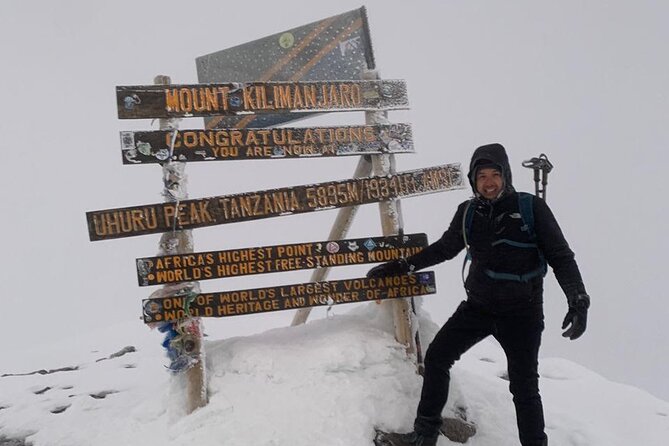
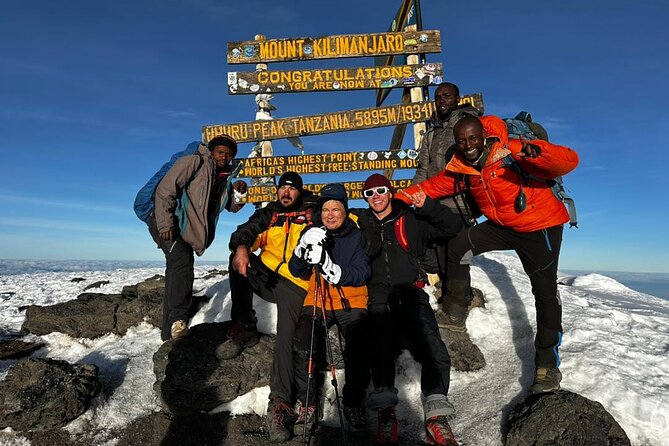
Day four is the heart of the climb. You leave Kibo Hut between midnight and 2 a.m., climbing from about 4,695 meters to 5,895 meters, or 19,340 feet, before descending all the way to Horombo Hut at 3,690 meters.
The ascent uses switchbacks through heavy scree, with possible snow. You need to keep warm, move steadily, and stay focused. The route is physically hard, but the altitude is often the greater challenge. A gradual trail does not remove the effects of being high above sea level.
The first major goal is Gillman’s Point on the crater rim. A short rest there can bring one of the climb’s best moments: sunrise over the high mountain. Faster walkers may see sunrise from the summit, but you should not rush simply to improve the view. Your guide’s pace and your own condition matter more.
From the crater rim, the summit push continues toward the top. The precise itinerary describes the high point as 5,895 meters. The climb, rest stops, and descent together make this a long day, even though the listed walking time is about seven hours.
After reaching the highest point, you descend to Horombo Hut. The downward section can be hard on tired legs, especially after the loose scree near the summit. Keep your poles ready and take care with each step.
The return to Horombo gives you a second night at the hut before the final walk out. Dinner and sleep are welcome, though you may be too tired to do much beyond eating and getting into your bunk.
Day five: muddy descent and the return to Moshi
The final day runs from Horombo Hut back to the Marangu Gate, dropping from about 3,690 meters to 1,830 meters. It takes around six hours and follows the route back through the changing vegetation.
Before leaving, you take part in a ceremony of appreciation and team bonding with the crew. This is also the time to thank the guides, cooks, and porters and arrange their tips. You leave some of the support team at Mandara Huts while stopping there for lunch.
The descent becomes warmer as you lose altitude, but warmer does not mean easier. The lower trail can be wet, steep, and muddy, so gaiters and trekking poles are useful again. Your boots may need cleaning by the time you reach the gate.
At the Marangu Gate, you receive your summit certificates. A vehicle then takes you back to your Moshi hotel, with the drive taking about 45 minutes. That final ride is a practical end to a demanding trip, giving you a chance to leave the mountain behind without arranging another transfer yourself.
Hut life, meals, and the climbing crew
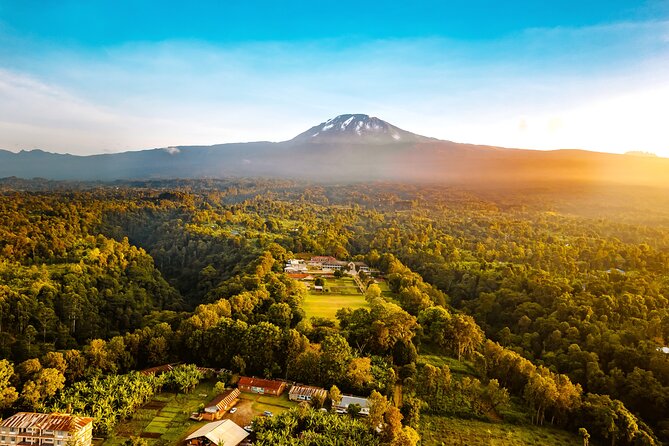
Marangu’s huts are its main practical advantage. You receive a mattress and pillow, but you must bring a sleeping bag. The dormitory setup is basic, and you should expect shared sleeping space rather than privacy.
The lower huts have better facilities, including flushing toilets and running water. At Kibo Hut, the setup becomes much simpler, with long-drop toilets and buckets of water. This difference is normal for the route, but it is worth knowing before you book.
Meals are included, and the food received strong praise for both quality and quantity. You should still expect straightforward mountain meals, not a restaurant menu. The important point is that food is organized for you each day, so you do not need to carry your entire supply from Moshi.
The crew is central to the experience. The company assigns guides, cooks, and porters, and the trip’s feedback repeatedly highlights an attentive, professional support team. I would still ask about the crew structure before booking, including how many guides and porters will support your group, since individual names are not provided here.
The main drawback: five days is a tight schedule
Marangu is often described as the easiest route because the trail rises gradually and follows a direct path. That description can mislead you if you hear easy and imagine gentle.
The short five-day schedule leaves less time for acclimatization. Day three already takes you to about 4,695 meters, followed soon after by the summit attempt. The route may be straightforward to follow, but the altitude can make the climb very difficult.
The same-path ascent and descent also reduce the variety of views. You see the rainforest, heathland, moorland, saddle, and summit terrain, but you repeat much of the route on the way down. If changing scenery is a major reason for your Kilimanjaro trip, another route may appeal more.
Still, the direct path can be a benefit. You spend less time worrying about complicated route choices, and the huts remove the need to sleep in a tent. For many people, those practical advantages outweigh the repeated trail.
Who this Kilimanjaro trip suits best
I would consider this trip if you want the classic mountain experience with hut sleeping, a clear route, and most major costs included in one price. It suits someone with moderate physical fitness who is ready for long days and a very early summit start.
It also works well for a person who prefers a supported climb. Transport, meals, park fees, hut beds, safety equipment, guides, and porters are included. A solo climber can join a group of up to 15, and the crew support can make the experience feel more secure.
I would think twice if you need a longer acclimatization schedule, dislike dormitory sleeping, or want a different route for the ascent and descent. You should also be comfortable with mud, cold, simple washrooms, and a summit night that begins while most people are asleep.
The free cancellation policy gives you flexibility before the trip. You can cancel at least 24 hours before the local start time for a full refund. Cancellations or changes inside that 24-hour window are not refunded or accepted.
Should you book the Marangu Route with Kentau Safaris?
Book it if you value hut accommodation, organized support, and a direct route more than maximum scenery or extra acclimatization time. At $1,650, the package offers solid value because it includes the major costs that can otherwise pile up on Kilimanjaro.
Go in with realistic expectations. This is not a soft adventure, even if Marangu is one of the more gradual routes. The summit night, high altitude, cold, scree, and long descent will test you.
If you prepare for the mud with gaiters and poles, bring a proper sleeping bag, plan for crew tips, and respect the altitude, this can be a memorable way to reach Kilimanjaro’s summit. If you want the gentlest schedule possible, look for a longer climb instead.
FAQ
Where does the climb begin and end?
The activity starts in Moshi, Tanzania. Transport takes you to the Marangu entrance of Kilimanjaro National Park, and the experience ends back at the meeting point after the return drive from the park gate.
How long is the Mount Kilimanjaro climb?
The climb lasts approximately five days.
What time does the activity start?
The listed start time is 12:00 a.m. The summit section begins between midnight and 2 a.m. on day four.
Do I sleep in tents?
No. The Marangu Route uses dormitory-style mountain huts. Mattresses and pillows are provided, but you still need a sleeping bag.
Are meals included?
Yes. The package includes four dinners, five lunches, and four breakfasts.
What is not included in the price?
Tips for the crew, visas, and internal and external flights are not included.
Can I cancel for a full refund?
Yes. You can cancel at least 24 hours before the experience start time for a full refund. Cancellations or changes made less than 24 hours before the start time are not accepted, and the amount paid is not refunded.
Just added in Moshi
- Wildlife Extravaganza: Manyara, Tarangire & Ngorongoro in 3 Days★ 5.0 · 3 reviews
- West Kilimanjaro cycling Adventures★ 4.5 · 8 reviews
- machame route★ 5.0 · 16 reviews
- Kilimanjaro Climb • Machame Route ~ 10 Day★ 5.0 · 6 reviews
- Kilimanjaro Climbing Umbwe Route★ 5.0 · 3 reviews
- Mt Kilimanjaro 6 days Marangu route hike★ 5.0 · 3 reviews
- 3 Days Private E-Bike Tour in West Kilimanjaro★ 5.0 · 3 reviews
- Private Cycle to Kilimanjaro Bike Park Safari★ 5.0 · 6 reviews
Kilimanjaro Treks, compared.



8-Day Small-group Lemosho Kilimanjaro Summit Trekking
Read our review →

5 Days Best of Tanzania Luxury Safari Northern Circuit
Read our review →

Climbing Kilimanjaro through 7 days Machame Route
Read our review →
7-Day Machame Kilimanjaro Summit Tour from Arusha
Read our review →Browse the lists this tour appears in