Reviewed · SAFARI TOURS
5 Days Tanzania Private Safari Tour
Lake Manyara, the Serengeti, and Ngorongoro pack three of Tanzania’s best-known wildlife areas into five busy days. You begin with elephants and a soda lake, spend two nights around the Serengeti’s Seronera area, then finish with Olduvai Gorge and a half-day safari inside Ngorongoro Crater.
I like the private format, since your group does not share the activity with strangers. I also like the practical inclusions: park fees, meals, drinking water, soft drinks, and a driver-guide who can speak English, Spanish, or French. The main drawback is the pace. Long road transfers leave little room for rest, and the lodging details are not specified before booking.
Key points to know before booking
- Three major wildlife areas: Lake Manyara, Serengeti National Park, and the Ngorongoro Conservation Area are all included.
- Private travel: Only your group participates, with pickup from Arusha and return to your Arusha hotel.
- Seronera base: Two days focus on the central Serengeti, including the Sogore River Circuit and a picnic lunch.
- Olduvai Gorge stop: The route includes the archaeological site linked to important Leakey discoveries.
- Meals and drinks included: Breakfast, lunch, dinner, drinking water, and soft drinks are listed as part of the package.
- Budget around $20 per day for the guide: Tips are not included, and the suggested amount is supplied by the operator.
Three parks in five days
This is a classic northern Tanzania route. It gives you a taste of several very different settings without requiring you to arrange separate transport, meals, park entry, or daily game drives.
The trip starts at 7:00 a.m. in Arusha. From there, you head toward Lake Manyara National Park, continue to the Serengeti through the highlands and Ngorongoro area, and later return through Ngorongoro before driving back to Arusha.
I see the route as a good introduction rather than a slow, specialist safari. You will cover a lot of ground. That is useful if you have limited time, but it also means transfer days are substantial. The schedule works best for people who would rather see several famous areas than spend all five days in one park.
The private setup matters here. Your group can make the trip together without joining other passengers, and the driver-guide is listed as speaking English, Spanish, and French. No individual guide name is supplied, so you should confirm your assigned guide and the vehicle arrangements before departure.
Other park itineraries that start in Arusha:
- Serengeti Balloon Safari and authentic bush breakfast
★ 5.0 · 2,480 reviews - Balloon Safari & Bush Breakfast in Serengeti – Miracle Experience
★ 5.0 · 1,646 reviews - 4 Days Group Camping Safari
★ 5.0 · 1,101 reviews
Lake Manyara: elephants, flamingos, and a soda lake
Day one begins with pickup in Arusha and a transfer to Lake Manyara National Park. The plan is to reach the lodge in time for lunch, then take an afternoon game drive.
Lake Manyara is a compact but varied park at the foot of the western escarpment of the Great Rift Valley. A shallow soda lake covers about two-thirds of the park, creating a striking setting and attracting large flocks of flamingos when conditions are right.
The park is especially known for elephants and its tree-climbing lions. The lions are not guaranteed to appear in trees, but the possibility gives this first game drive a distinct character. You are not simply driving across open grassland. The lake, escarpment, woodland, and wildlife all sit close together.
The listed stop lasts about six hours, though the actual flow depends on the road transfer, lunch, park conditions, and time spent searching for animals. Since this is your first safari afternoon, the game drive also gives you a chance to get used to the pace of watching wildlife from a vehicle.
I like Lake Manyara as an opening stop because it offers variety quickly. The drawback is that you get only one afternoon here. If elephants or tree-climbing lions are your main goal, that short visit may feel brief.
The road to Seronera and the central Serengeti
After breakfast on day two, you travel through the high farmland around Karatu and across the Ngorongoro Conservation Area before entering Serengeti National Park. The route changes gradually from cultivated highlands to the wide open plains associated with the Serengeti.
The plan is to reach the Seronera area in time for lunch and then take an afternoon game drive. Seronera is central to the park and is associated with the Seronera River, an important water source for wildlife. The itinerary describes it as one of the strongest areas in the park for seeing a broad range of species.
This is the heart of the safari, but the transfer itself takes up much of the day. You should expect a long road journey rather than a quick hop between parks. The reward is that you reach one of the Serengeti’s key wildlife zones without having to arrange another internal connection.
A central base also makes sense for the next morning’s drive. Instead of changing camps every night, you can focus on the Seronera area for a second day. That reduces some packing and unpacking, though the overall program remains active.
The exact lodging is not identified in the supplied details. That is one of the most important things to confirm before paying, especially at a price of $2,000 per person. Ask for the names and locations of the lodges or camps, and check how many people share the private vehicle.
Sogore River Circuit and the Serengeti Visitor Centre
Day three is the most focused wildlife day in the itinerary. After breakfast, you take a morning drive along the Sogore River Circuit, a route south of the Seronera River.
The area is noted for possible sightings of lion, Thomson’s gazelle, topi, ostrich, and cheetah. As always with a safari, possible does not mean promised. Wildlife moves freely, and your guide’s skill, recent sightings, weather, and timing all affect what you see.
The program also includes time at the Serengeti Visitor Centre near Seronera Lodge and the public campsites. This is a useful pause from the vehicle. Displays explain local wildlife, while the centre has maps, information leaflets, cold drinks, snacks, a picnic area, and a trail around a nearby kopje.
That stop gives the day some balance. You get wildlife viewing, a little interpretation, and a chance to stretch your legs in an organized visitor area. The plan includes a relaxed picnic lunch, which can make the day feel less rushed than a meal eaten quickly during a transfer.
I particularly like this day for families. Children often benefit from breaking up a long game drive with a visitor centre, snacks, and a short educational stop. Still, the schedule says approximately six hours for the stop, so you should not expect an entire day of exploring on foot. Most safari time remains vehicle-based.
Other safaris people book out of Arusha:
- 5 Days Group Camping Safari
★ 5.0 · 730 reviews - 3 Days Serengeti & Ngorongoro Group Camping Safari
★ 5.0 · 574 reviews - 7-Day Premium Luxury Tanzania Safari All-Inclusive
★ 5.0 · 426 reviews - 3-Day Classic Serengeti Safari
★ 5.0 · 263 reviews
Olduvai Gorge and the move to Ngorongoro
On day four, you leave the Serengeti after breakfast and travel toward the Ngorongoro Conservation Area. The route includes a stop at Olduvai Gorge, an important archaeological site connected with the work of Louis and Mary Leakey.
The site is linked to discoveries such as Nutcracker Man and Handy Man, which are significant in the study of human evolution. For many people, Olduvai adds meaning to the safari because it connects the animals and ecosystems around you with the much older human story of East Africa.
The schedule then takes you to lunch at the lodge before a descent of more than 600 meters into Ngorongoro Crater for a half-day wildlife drive. The crater has a year-round water supply and food sources, which help support large numbers of animals.
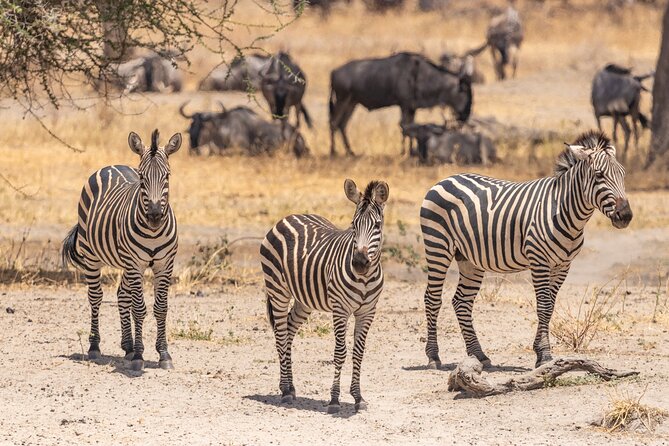
You may see wildebeest, zebra, buffalo, and other species in the crater. The wording supplied for the itinerary cuts off during the animal list, so you should ask the operator which crater route and viewing areas are planned.
This day combines a historical stop, another transfer, lunch, and a major game drive. It is one of the most rewarding days on paper, but also one of the fullest. If you dislike early starts and long road sections, this is where the pace may catch up with you.
The final transfer back to Arusha
Day five begins with breakfast before the return journey to Arusha. Lunch is planned after arrival, and the safari ends with a drive back to your hotel.
There is no final park activity listed for this day. Think of it as a travel day, not another full wildlife outing. That is sensible after the previous four days, but it means the five-day duration includes the return transfer.
The endpoint is the original meeting point in Arusha. Pickup is offered at the start, and the activity ends back at the meeting point. If you have an international flight or another scheduled activity on the same day, allow plenty of time beyond the stated itinerary. The supplied information does not give an exact arrival hour.
What the $2,000 price covers
At $2,000 per person, this safari is not a bare-bones park visit. The price includes all fees and taxes, five breakfasts, five lunches, five dinners, drinking water, soft drinks, and a professional driver-guide.
The private format adds value for families and small groups. You are not paying for a seat on a shared activity with strangers, and your group participates alone. The multilingual guide option is also helpful if your group prefers English, Spanish, or French.
The price is harder to judge without the lodge names, room categories, vehicle details, and group size. These points can change the value substantially. Before booking, I would ask:
- Which lodges or camps are used each night?
- Is accommodation included in the $2,000 price?
- How many people can travel in the private vehicle?
- Are park fees and crater fees fully covered?
- Is the safari cook separate from the driver-guide?
- What happens if road or park conditions alter the schedule?
The included meals are convenient, but the package does not include international flights, visas, travel insurance, or tips. The suggested tip for the guide is about $20 per day. Tips for the driver-guide and safari cook are specifically excluded, so you should carry enough cash for gratuities.
Food, service, and family comfort
All five breakfasts, lunches, and dinners are listed as included, along with drinking water and soft drinks. Other dietary requirements can be requested, which is useful for families or anyone with food restrictions. You should make those requests before the trip rather than waiting until arrival.
The accommodation information is limited, but the available description includes a positive account of a clean hotel and attentive care for a family. It also highlights wilderness breakfasts as a memorable part of the trip. I would treat that as a useful clue, not a guarantee of the exact meal setup for every departure, since the specific lodges are not named.
A professional guide who speaks multiple languages can make a real difference on a private safari. You can ask questions as you go, and families may find it easier to keep the group together. Since the guide’s name is not provided, confirm the language and guide assignment in advance.
The practical drawbacks
The main issue is time. You have only one afternoon at Lake Manyara, two main Serengeti days, one packed Serengeti-to-Ngorongoro day, and a final return to Arusha. This is a broad tour, not a relaxed stay in one reserve.
The itinerary also uses approximate six-hour blocks. That does not tell you exactly how many hours will be spent on the road, at meals, inside the parks, or at the visitor centre. Ask for a more precise daily schedule if you need to coordinate flights or hotel check-in.
The lodging is another open question. Since the price is substantial, the type and location of accommodation should be part of your decision. A lodge near a park entrance creates a different experience from accommodation farther away, especially when early drives are involved.
Finally, sightings are never guaranteed. The tour gives you strong wildlife areas and well-chosen routes, but no operator can promise lions, cheetahs, flamingos, or tree-climbing lions on a particular day.
Who should book this safari
I would recommend this trip to a family or private group that wants the main northern Tanzania highlights in a single package. It suits you if you value having meals, park costs, drinks, transport, and a guide arranged together.
It is also a good fit if you want a private activity rather than a shared group tour. The multilingual guide option may help international families decide more comfortably.
I would be more cautious if you want long stays in each park, luxury accommodation, or a slow photography schedule. In that case, ask for a longer Serengeti stay or a custom itinerary. This five-day plan is designed for coverage and convenience.
Should you book it?
Book this safari if your priority is seeing Lake Manyara, the central Serengeti, Olduvai Gorge, and Ngorongoro Crater with one private operator and a clear set of included meals and park costs. The clean accommodation and special wilderness breakfasts described for the experience add appeal, especially for families.
Before booking, get the lodge list, vehicle details, group size, guide name, and exact transfer times in writing. If those details match your expectations, the $2,000 price can offer solid convenience for a five-day private safari. If you need more rest or more time in the Serengeti, choose a longer itinerary instead.
Free cancellation is available if you cancel at least 24 hours before the 7:00 a.m. start time. Cancellations within 24 hours are not refundable, and changes within that window are not accepted.
FAQ
Where does the safari start and end?
The safari starts in Arusha, Tanzania, with pickup offered at 7:00 a.m. It ends back at the meeting point in Arusha, with a drive to your hotel.
How long is the experience?
The safari lasts approximately five days.
Which parks and areas are included?
The route includes Lake Manyara National Park, Serengeti National Park, the Ngorongoro Conservation Area, Ngorongoro Crater, and a stop at Olduvai Gorge.
Is this a private tour?
Yes. Only your group participates in the activity.
What meals and drinks are included?
The package lists five breakfasts, five lunches, five dinners, drinking water, soft drinks, and other dietary requirements on request.
What is not included in the price?
International flights, travel insurance, visas, and tips for the driver-guide and safari cook are not included. The suggested guide tip is about $20 per day.
Just added in Arusha
- 4 Days Private Midrange Lodge Safari to Serengeti & Ngorongoro★ 5.0 · 4 reviews
- Extraordinary Hot air Bolloon ride in Serengeti | BURIGI CHATO SAFARIS CO L.T.D★ 5.0 · 6 reviews
- 3 days leopard safaris★ 5.0 · 4 reviews
- 8 Days Serengeti Migration safari★ 5.0 · 11 reviews
- tarangire, ngorongoro & lake manyara park 3 days private tour★ 5.0 · 11 reviews
- serengeti, ngorongoro & tarangire 4 days private tour★ 5.0 · 18 reviews
- tarangire & ngorongoro 2 days tour★ 5.0 · 14 reviews
- Mt. Kilimanjaro: Shira plateau to Cathedral point 3872m Day hike★ 5.0 · 7 reviews
Safari Tours, compared.
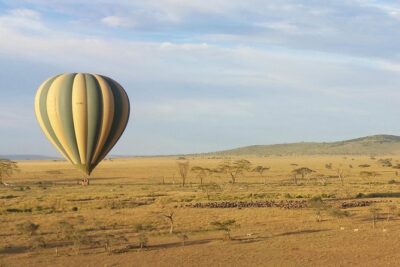
Serengeti Balloon Safari and authentic bush breakfast
Read our review →
Mikumi Safari Day Trip with Flights and Meal
Read our review →
3 Days Serengeti & Ngorongoro Group Camping Safari
Read our review →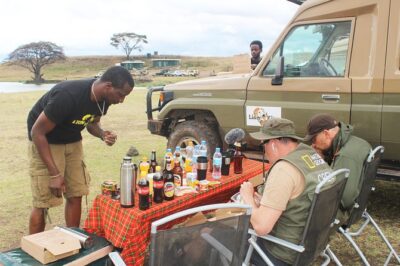
7-Day Premium Luxury Tanzania Safari All-Inclusive
Read our review →
Safari Blue Lagoon Trip with Snorkeling and Lunch
Read our review →