
Reviewed · KILIMANJARO TREKS
6-Day Kilimanjaro Machame Route – A Stunning Trek to Uhuru Peak
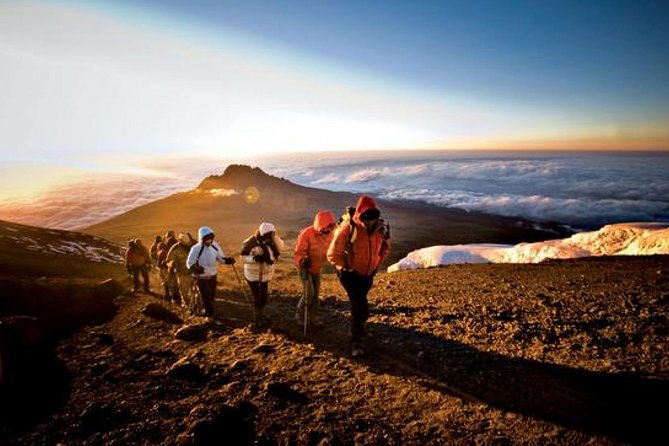
The Machame Route earns its Whiskey Route nickname honestly: it is scenic, demanding, and not softened by a short approach. In six days, you move from thick rainforest to high moorland, cross the Shira Plateau, pass Lava Tower, climb over Barranco Wall, and make a midnight push for Uhuru Peak at 5,895 meters.
I like the route’s changing scenery and the useful acclimatization day from Shira to Barranco, where you climb high toward Lava Tower and sleep lower. I also like that the price covers the working parts of a real mountain expedition: guides, porters, cook, tents, meals, transfers, water, and emergency oxygen.
The main caution is the schedule. Summit day can take 11 to 14 hours, and the six-day version gives you less time than longer Kilimanjaro routes. You need moderate fitness, proper clothing, and a willingness to sleep in tents and walk slowly for several demanding days.
Key points before you book
- Rainforest to alpine desert in six days: The route gives you one of Kilimanjaro’s best changes of scenery.
- Lava Tower is an important acclimatization test: You climb to about 4,650 meters, then descend to Barranco Camp.
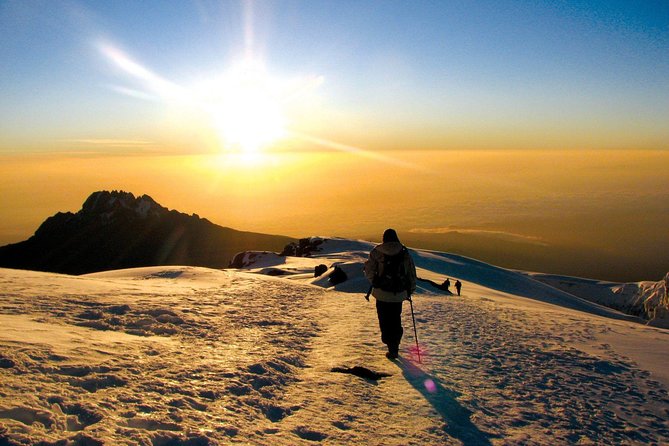
- The summit starts around midnight: Expect a long, cold push to Stella Point and Uhuru Peak.
- The practical services are mostly covered: Porters, a cook, tents, mattresses, meals, water, airport transfers, and emergency oxygen are included.
- Hot water is provided daily: It is for washing, not a full shower, but it matters greatly after a long day.
- Pinnacle’s team gets strong praise for organization and care: Names appearing in the supplied feedback include Justin and Frazier, though your exact guide assignment is not specified.
What the 6-Day Machame Route feels like
This is not a sightseeing walk with a mountain in the background. It is a structured high-altitude trek with early starts, slow climbing, basic camps, and one very long summit night. The reward is variety. Few mountain routes change so quickly from forest shade to bare volcanic ground.
The private format means only your group participates. That can make the pace and daily routine easier to manage than a large mixed departure, though the information also refers to operations involving groups of almost 70 people. Ask Pinnacle how many people will be in your own group and how many guides and porters will support it.
The team’s strongest reported qualities are organization, communication, and kindness. Justin is singled out for helping make a successful climb possible, while Frazier is praised for leading a professional team. One useful detail is that hot water was available every day, a small comfort that becomes important when washing at altitude.
You pay $2,253 per person. That is not a cheap holiday, but it covers much more than a basic walking guide. Airport transfers, mountain staff wages, camping gear, food, water, and emergency equipment are included. You still need to budget for flights, a visa, insurance, personal gear, snacks, medicine, water purification tablets, a portable toilet if you choose one, and tips.
Other routes up the mountain from Moshi:
- Kilimanjaro climb by Lemosho Route (7-day)
★ 5.0 · 651 reviews - Kilimanjaro climb, Machame Route (7-day)
★ 5.0 · 262 reviews - Kilimanjaro Climbing Lemosho Route 8 Days.
★ 5.0 · 186 reviews
Day 1: Machame Gate to Machame Camp
Your morning begins with a briefing and gear check before driving from Moshi or Arusha to the Machame Gate. The first walking day covers about 11 kilometers, rising from roughly 1,640 meters to 2,835 meters, with five to seven hours on foot.
The forest is the star here. The trail passes through lush rainforest, with native plants and possible wildlife sightings. This opening section feels enclosed and damp compared with the exposed upper mountain, so breathable layers and reliable rain protection matter.
You finish at Machame Camp, where dinner and the first night in a tent await. The itinerary describes camping equipment including tents, camp chairs, tables, and sleeping mattresses. That setup is more useful than it sounds, since a chair and a place to sit make meals and evening gear sorting easier.
Your first-day challenge is not just distance. You are learning the daily rhythm: walk slowly, drink regularly, keep your clothing dry, and prepare your sleeping space before darkness and fatigue take over.
Day 2: Moorland and the Shira Plateau
Day two is shorter at about five kilometers, but it climbs from 2,835 to 3,850 meters. Allow four to six hours. You leave the forest behind and enter steeper moorland, crossing streams on the way toward Shira Cave Camp.
This is where Kilimanjaro begins to feel wide open. The route offers views toward Mount Meru and surrounding valleys, and the Shira Plateau provides a stark change from the damp forest below. At night, you camp under the stars if conditions allow.
Do not judge this day by distance alone. The altitude gain is significant, and a short walk can still leave you tired. Keep your pace conservative. Your goal is not to arrive first. Your goal is to arrive ready for the next morning.
Day 3: Lava Tower and the Barranco acclimatization day
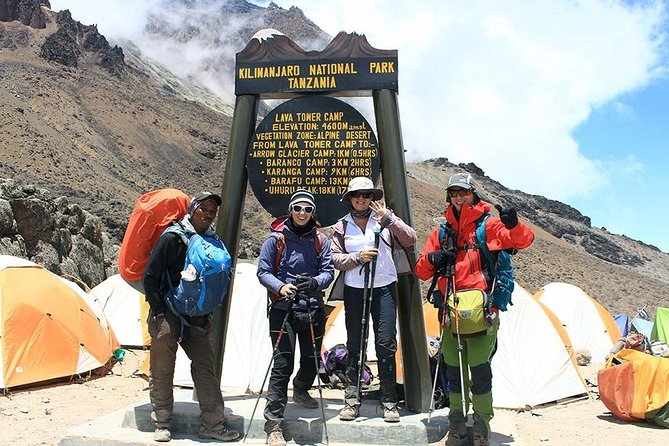
Day three is one of the most important parts of the trip. You walk about 10 kilometers for five to six hours, beginning near 3,850 meters and finishing around 4,000 meters at Barranco Camp.
The trail heads east along a ridge, then turns southeast toward Lava Tower, also called Shark’s Tooth. The tower reaches about 4,650 meters. After this high point, you descend to Barranco Camp. That climb high and sleep lower is exactly the kind of rhythm that helps your body prepare for the summit.
The day also passes junctions for the Kibo summit route and Arrow Glacier. You do not need to treat those junctions as side trips. The important point is the gradual progression toward the upper mountain and the chance to notice how your body responds above 4,000 meters.
Barranco Camp is especially memorable because it sits beneath the Barranco Wall. You can look up at the next day’s route and understand that the mountain is about to become more physical. If you have a headache, unusual weakness, or other altitude concerns, tell your guide promptly. Emergency oxygen and a basic first aid kit are carried for emergencies, but oxygen is not intended as a summit aid.
Same base, a different kind of day out:
- Safari Serengeti And Ngorongoro
★ 5.0 · 288 reviews - Climbing Kilimanjaro – Machame Route
★ 5.0 · 170 reviews - Climbing Kilimanjaro through 7 days Machame Route
★ 5.0 · 151 reviews - Kilimanjaro climb, Lemosho Route (8-day)
★ 5.0 · 148 reviews
Day 4: Barranco Wall to Barafu Camp
Day four takes you from Barranco through Karanga Valley and onward to Barafu Hut, also called the Barafu Stella Trail in the schedule. The route covers about nine kilometers and takes seven to nine hours, climbing into alpine desert from roughly 13,000 to 15,000 feet.
The Barranco Wall is the day’s defining feature. You follow a steep ridge, then continue through Karanga before joining the Mweka Trail junction and climbing to Barafu. This is not a technical climbing day in the information provided, but it is steep and tiring. You will want both hands free, a secure daypack, and poles if you use them.
At Barafu, you have completed the South Circuit, with views of Kibo and Mawenzi from different angles. This camp is a staging area more than a place to relax. You eat dinner, organize your summit clothing, prepare your headlamp, and try to sleep before the midnight start.
The short rest window is a real drawback of the six-day plan. The schedule packs a great deal into four days before the summit. If you prefer a slower approach and more time for altitude adjustment, compare this route with a longer Kilimanjaro itinerary before paying.
Day 5: Stella Point, Uhuru Peak, and Mweka Camp
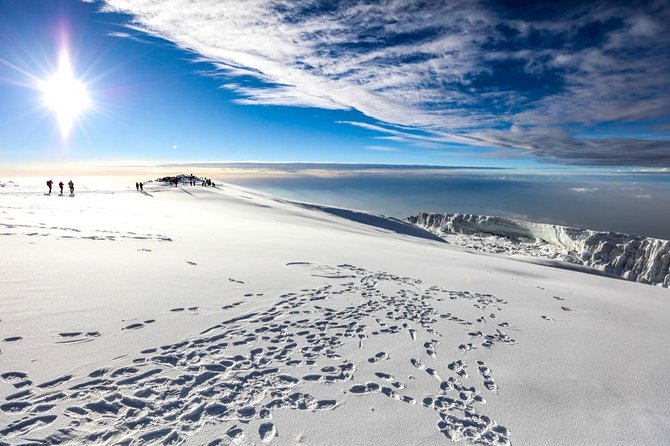
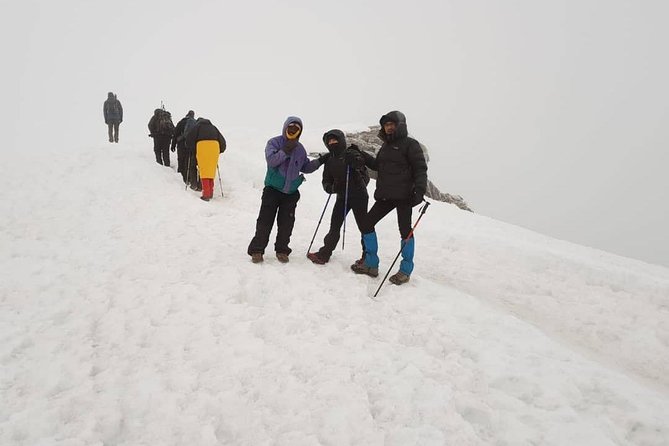
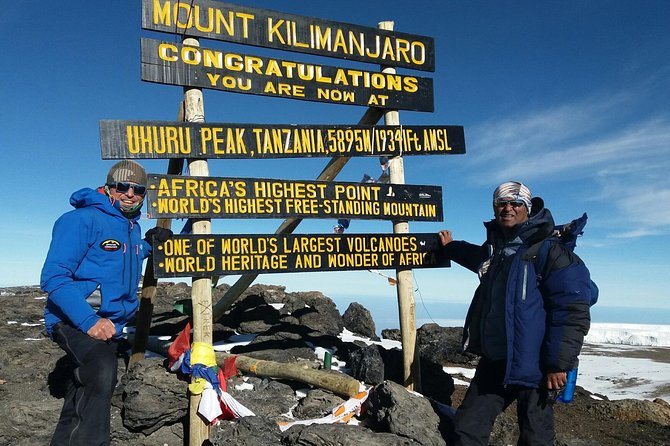
Summit day is the hardest part of the experience. You leave around midnight and climb toward Stella Point at 5,756 meters before continuing to Uhuru Peak at 5,895 meters, Africa’s highest point.
The full day covers about 17 kilometers and lasts 11 to 14 hours. That includes the ascent, time at the summit, and the descent to Mweka Camp. Cold, darkness, thin air, and fatigue combine to make this much harder than the distance suggests.
The final walk to Uhuru Peak follows the crater rim from Stella Point. The exact condition of the trail is not supplied, so expect the guide to set the pace according to altitude, weather, and the condition of your group. Your summit clothing should be packed where you can reach it quickly, since you may begin the day in one set of layers and need more protection higher up.
At the summit, you have time to celebrate and take photographs before descending. Do not linger too long. The descent is still substantial, and reaching Mweka Camp safely matters more than squeezing every possible minute from the summit sign.
This is also the day to be realistic. A guide can encourage and manage the route, but no operator can guarantee a summit. Your preparation, health, altitude response, weather, and the group’s pace all affect the result.
Day 6: Mweka Trail and the return to Moshi
The final descent runs from about 3,090 meters to 1,680 meters. You walk roughly 10 kilometers in three to four hours, then continue from Mweka Park Gate to Mweka Village, where a vehicle takes you back to your Moshi hotel in about 30 minutes.
The lower trail can be wet and muddy. Gaiters and trekking poles are specifically useful here. You can switch to shorts and a T-shirt at lower elevations, but keep rain gear and warmer clothing easy to reach because conditions can change during the descent.
At the park gate, you receive your summit certificates. This is a practical ending to a physically intense week. You still have a final walk to the village, so do not pack your day bag as if the gate is the end of all movement.
What is included, and what you still need
The package covers return Kilimanjaro airport transfers, transport between the mountain and Moshi, all listed fees and taxes, and the mountain crew’s wages. Your support team includes a qualified mountain guide, assistant guides, porters, and a cook.
Camping equipment includes tents, camp chairs, tables, and a sleeping mattress. Food includes five dinners, five breakfasts, and six lunches, along with fresh drinking water and hot water for washing each day.
You need to arrange or pay separately for:
- Flights and a Tanzanian visa
- Travel and health insurance
- Personal hiking and trekking clothing
- Personal medicine and water purification tablets
- Snacks and drinks not listed in the package
- Tips for the mountain crew
- An optional portable toilet, which is highly recommended
The portable toilet deserves special attention. It costs extra, but the recommendation is practical. Ask for the current price and exact arrangement before departure.
You can rent personal trekking gear from an equipment store in Tanzania, but do not leave every important item until arrival. At minimum, confirm what is available in your size and condition before relying on rentals.
Guides, organization, and the human side
The strongest praise attached to this experience concerns the staff. The supplied comments highlight organization from airport pickup through the mountain and back again, clear information, professional conduct, and strong local guiding.
Justin is specifically named as a guide whose help mattered to a successful climb. Frazier is also identified in connection with a professional team. Those names give you useful points to ask about, but the exact guide lineup for your departure is not stated.
The team also received praise for environmental knowledge, local area skills, communication, and kindness. One practical complaint involved the transfer of PCR results at the airport, with a suggestion that a Pinnacle representative stay nearby until airport entry. That issue may relate to past travel rules, but it still offers good advice: confirm airport transfer details and document handling before your trip.
Is $2,253 good value?
The price makes more sense when you separate the mountain service from the flights and personal costs. You are paying for a private six-day operation with staff wages, food, camping infrastructure, transport, and safety equipment, not simply access to a trail.
The included porters and cook are especially important. Carrying less can help you maintain a steady pace, while cooked meals and hot washing water make the camp routine more manageable. Airport transfers also reduce the need to arrange separate transport between Kilimanjaro Airport and Moshi.
Still, the value depends on expectations. This is not a luxury lodge trek. You sleep in tents, spend long hours walking, and need your own insurance and gear. Tips are not included, and you should plan for them as part of the real cost.
Who should choose this climb?
I would consider this route for someone with moderate physical fitness who wants Kilimanjaro’s most varied scenery and is comfortable with a demanding schedule. It suits an active first-time high-altitude trekker if that person prepares seriously and understands that the summit day is extreme.
It is less suitable if you want short walking days, guaranteed comfort, or a relaxed holiday pace. The six-day schedule is efficient, but not generous. A longer route may suit you better if altitude adjustment is your main concern.
The private format is useful for couples, families, or friends who want to move together. Ask about group size, guide numbers, sleeping arrangements, gear rental, and the portable toilet before booking. Those details can change how the same $2,253 experience feels on the mountain.
Booking is flexible up to three full days before the local start time for a full refund. Cancellations or changes made inside that window are not accepted for a refund, so check your flights and insurance before the cutoff.
Should you book the Machame Route?
Book it if you want strong scenery, organized support, and a direct route to Uhuru Peak without paying for a luxury mountain camp. The rainforest, Shira Plateau, Lava Tower, Barranco Wall, and alpine desert give you a memorable progression in a short period.
Think twice if you dislike camping, have not trained for long walking days, or want the best possible altitude margin. The summit schedule is punishing, and six days leaves little spare time.
For the right person, this is a well-equipped, high-effort Kilimanjaro climb with a clear payoff. Go in prepared, ask exact questions about your guide team and equipment, and treat the mountain as the main commitment, not just another tour from Moshi.
FAQ
Where does the Kilimanjaro trek start and end?
The activity starts in Moshi Urban, Tanzania, with pickup offered. It ends back at the meeting point after transport from Mweka Village to your Moshi hotel.
How long is the Machame Route experience?
The trek lasts approximately six days. Walking times range from about three to four hours on the final day to 11 to 14 hours on summit day.
What is the highest point reached?
The trek reaches Uhuru Peak at 5,895 meters. You also pass Stella Point at 5,756 meters during the summit ascent.
Are airport transfers included?
Yes. Return transfers between Kilimanjaro Airport and Moshi are included.
Are meals included?
Yes. The package includes five dinners, five breakfasts, and six lunches. Meals and drinks not specified are not included.
Is camping equipment provided?
Yes. Tents, camp chairs, tables, and sleeping mattresses are included. Personal trekking gear is not included, although gear rental is available from equipment stores in Tanzania.
Is emergency oxygen provided?
Yes. Emergency oxygen and a basic first aid kit are included. The oxygen is for emergencies only and is not provided as summit assistance.
What fitness level is required?
The experience is intended for people with a moderate physical fitness level. The longest day lasts 11 to 14 hours and includes the ascent to Uhuru Peak followed by a descent to Mweka Camp.
More Hiking & Trekking in Moshi
- Private Kilimanjaro Hike 7 Day Lemosho Route
★ 5.0 · 60 reviews - Best Kilimanjaro hiking day trip tour with Kilinge Adventures
★ 4.5 · 54 reviews - #1. Best Kilimanjaro Day hike Tour-Machame Route-ISMANI
★ 4.2 · 47 reviews - Best Kilimanjaro Adventure 7 days Machame route Trekking
★ 5.0 · 42 reviews
Just added in Moshi
- Wildlife Extravaganza: Manyara, Tarangire & Ngorongoro in 3 Days★ 5.0 · 3 reviews
- West Kilimanjaro cycling Adventures★ 4.5 · 8 reviews
- machame route★ 5.0 · 16 reviews
- Kilimanjaro Climb • Machame Route ~ 10 Day★ 5.0 · 6 reviews
- Kilimanjaro Climbing Umbwe Route★ 5.0 · 3 reviews
- Mt Kilimanjaro 6 days Marangu route hike★ 5.0 · 3 reviews
- 3 Days Private E-Bike Tour in West Kilimanjaro★ 5.0 · 3 reviews
- Private Cycle to Kilimanjaro Bike Park Safari★ 5.0 · 6 reviews
Kilimanjaro Treks, compared.



8-Day Small-group Lemosho Kilimanjaro Summit Trekking
Read our review →

5 Days Best of Tanzania Luxury Safari Northern Circuit
Read our review →

Climbing Kilimanjaro through 7 days Machame Route
Read our review →
7-Day Machame Kilimanjaro Summit Tour from Arusha
Read our review →Browse the lists this tour appears in