
Reviewed · KILIMANJARO TREKS
6 Days Kilimanjaro climb – Marangu route
Kilimanjaro’s Marangu Route is the mountain’s classic hut-to-hut climb. You follow the historic path associated with Hans Meyer, passing from tropical forest to moorland, volcanic desert, and ice-cold summit terrain. The sleeping huts are the big draw: you do not carry a tent or sleep on bare ground.
I like two things right away. The extra acclimatization day at Horombo gives your body more time at altitude, and the route’s private format means your group climbs together rather than joining a large public departure. The crew support also sounds strong, with one six-person group supported by 27 guides, cooks, and porters.
The catch is simple: six days is still a demanding schedule, and the summit day can last about 13 hours. The short itinerary leaves less room for your body to adjust than longer Kilimanjaro programs, and altitude sickness can still force you to turn back.
Key points to know before booking
- Hut lodging replaces camping, making Marangu the most straightforward choice if you prefer a bed and fixed shelter.
- Day three is for acclimatization, with a walk toward Mawenzi Ridge and a return to Horombo Hut.
- Summit day begins around midnight and includes a climb to Uhuru Peak followed by a long descent.
- The route covers four major habitat zones, from rainforest and heath to alpine desert and Arctic conditions.
- The $2,000 price includes private transport and meals, but tipping the mountain crew and personal expenses are extra.
- Issa handles reservations, with booking answers reported within a day and detailed replies to questions.
Why the Marangu Route appeals to first-time climbers
The Marangu Route has a friendly reputation, helped by its old Coca-Cola nickname and its relatively gradual trail. Do not mistake that nickname for an easy walk. Kilimanjaro rises to 19,341 feet, and the thin air near the summit can overwhelm strong hikers.
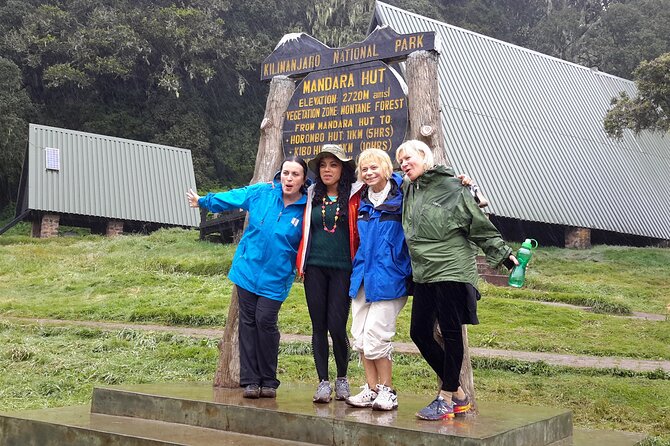
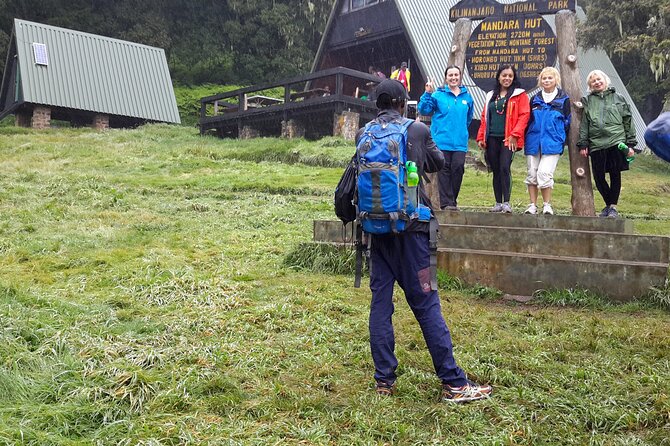
What Marangu offers is comfort in the right places. You sleep in huts at Mandara, Horombo, and Kibo rather than carrying a tent or crawling into a damp sleeping bag after a long day. That can make a real difference when rain, cold, or fatigue sets in.
I also like the route’s changing scenery. On day one, you walk beneath forest canopy. By day four, you cross the bare Saddle between Mawenzi and Kibo. During the summit push, the world becomes dark, cold, and almost empty, with the sunrise near Gilman’s Point as the reward for several hard hours.
The route has one clear drawback. Marangu uses the same trail for much of the ascent and descent, so you do not get the constantly changing path found on some other routes. The benefit is a simpler route with hut accommodation. The tradeoff is less variety underfoot.
Other routes up the mountain from Moshi:
- Kilimanjaro climb by Lemosho Route (7-day)
★ 5.0 · 651 reviews - Kilimanjaro climb, Machame Route (7-day)
★ 5.0 · 262 reviews - Kilimanjaro Climbing Lemosho Route 8 Days.
★ 5.0 · 186 reviews
Starting in Moshi and entering the rainforest
The day begins around 7:00 a.m. with transport from Moshi to Marangu Gate. Registration and required mountain formalities happen there before you start walking. Private transportation is included, which keeps the morning easier for your group and avoids arranging a separate transfer.
The first day climbs from about 6,046 feet to 8,858 feet. The trail covers 8 kilometers, or roughly 5 miles, and takes about four to five hours. You walk through rainforest, where the air is cooler and the surroundings feel far removed from Moshi.
At the upper edge of the forest, you might see blue monkeys. The trail then broadens as you approach Mandara Hut, with open hillsides replacing some of the dense vegetation.
This is a sensible first day. It is long enough to begin the climb but not so long that you should arrive exhausted. Keep your pace slow from the start. The mountain is not impressed by speed, and saving energy matters more than reaching Mandara early.
Mandara to Horombo through heath and moorland
Day two covers about 12 kilometers, or 7 miles, in six to eight hours. You leave the forest behind and enter high moorland, a more open zone with low vegetation and broad views.
This is where you may get your first clear views of Kibo and Mawenzi, two of Kilimanjaro’s three volcanic peaks. Kibo is the summit cone, while Mawenzi has a more jagged profile. Seeing both helps you understand the mountain’s scale before the final push.
The stated elevation rises from 8,858 feet to 12,205 feet. That gain is serious, even if the trail itself feels manageable. You may find the thinner air more noticeable than the walking. Keep drinking, take short breaks, and let the guide set a patient pace.
Horombo Hut becomes your base for the next two nights. That extra night matters. Many short mountain programs keep moving upward every day, giving your body little time to respond to altitude. Here, the schedule pauses before the steepest part of the climb.
The Mawenzi Ridge acclimatization day
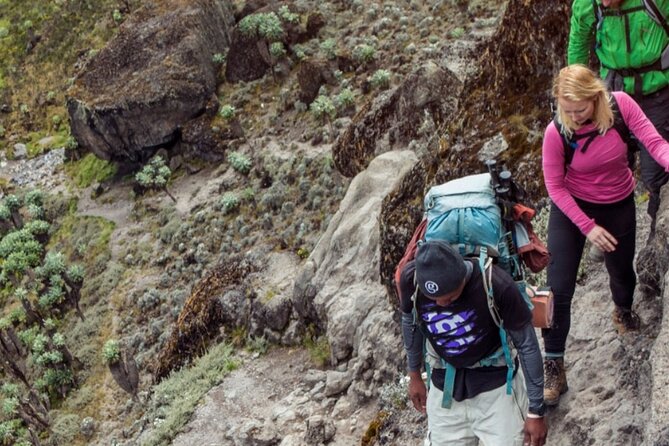
Day three is the clever part of this six-day plan. Instead of moving to a higher sleeping point, you hike from Horombo toward Mawenzi Ridge, reaching about 14,400 feet before returning to Horombo at 12,205 feet.
The walk takes about two to three hours up and one to two hours back. The listed distance is about 5 kilometers each way. You gain altitude during the day but sleep lower that night, giving your body a useful practice session without committing to a higher hut.
The views toward Kibo and Mawenzi make this more than a slow rest day. The Mawenzi side of Kilimanjaro has a rougher, more dramatic appearance, and the open setting provides a good contrast with the rainforest below.
Still, this is not a free day. You are already at a high elevation, and a tiring side walk can work against acclimatization if you push too hard. The sensible approach is to treat it as a controlled outing, not a test of strength.
Same base, a different kind of day out:
- Safari Serengeti And Ngorongoro
★ 5.0 · 288 reviews - Climbing Kilimanjaro – Machame Route
★ 5.0 · 170 reviews - Climbing Kilimanjaro through 7 days Machame Route
★ 5.0 · 151 reviews - Kilimanjaro climb, Lemosho Route (8-day)
★ 5.0 · 148 reviews
Crossing the Saddle to Kibo Hut
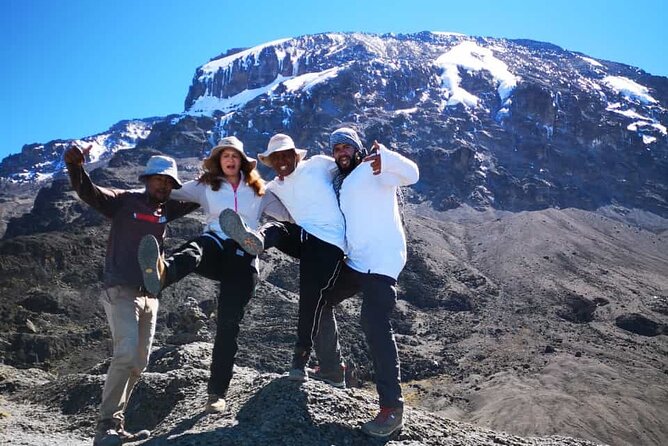
On day four, you climb from 12,205 feet to 15,430 feet. The walk takes about six to eight hours and covers approximately 10 kilometers, or 6 miles.
The route gradually leaves the heath behind and enters alpine desert. The most striking section is the Saddle, a broad, barren stretch between Mawenzi and Kibo. Vegetation becomes scarce, and the mountain feels more severe. There is little shelter from the elements, so clothing that worked well in the forest may no longer be enough.
Kibo Hut sits at the foot of Kibo’s crater wall. Once you arrive, you rest and eat an early dinner before the summit attempt. The timing is designed around a midnight start, which means your evening is short. Try to organize your summit clothing, water, and small personal items before lying down.
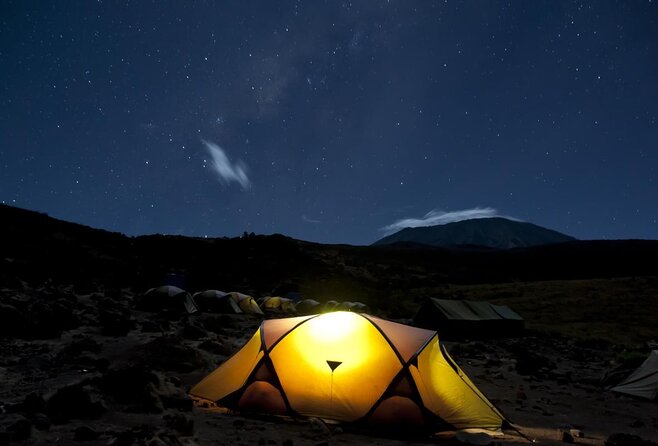
Kibo is the least comfortable night of the trip for many people. You are sleeping at 15,430 feet, and the next climb begins only a few hours later. The hut helps by keeping you out of a tent, but it cannot remove the altitude or the cold.
The midnight push to Uhuru Peak
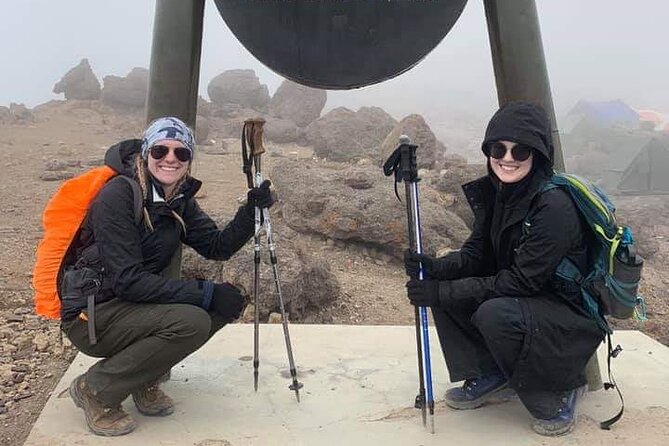
Summit day is the heart of the climb and the section you need to respect most. You begin around midnight and climb in darkness for six to eight hours, gaining nearly 4,000 feet before reaching Uhuru Peak at 19,341 feet.
The trail is cold, windy, and physically demanding. Breaks are frequent but short, since standing still can make you colder. The pace is deliberately slow. At this altitude, even a modest slope can feel hard, and breathing becomes part of the work.
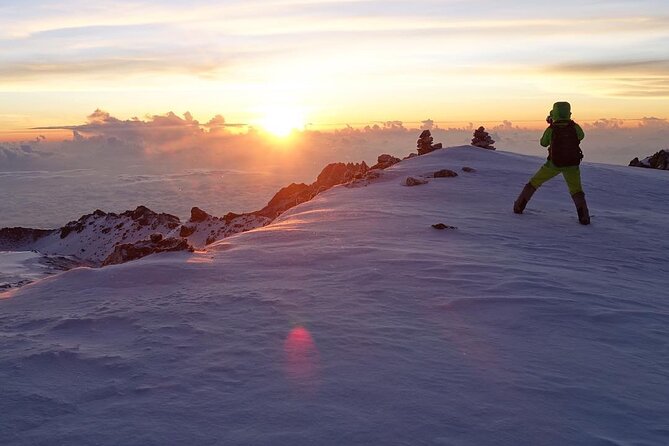
At about 18,600 feet, Gilman’s Point offers a major milestone. From there, sunrise over Mawenzi can be spectacular, with light spreading across the volcanic peaks. You still have to continue toward Uhuru Peak, but this point gives you a psychological lift during the hardest stretch.
Reaching Uhuru Peak is not guaranteed. One of the supplied accounts describes a climber turning back after altitude sickness, despite careful support. That is an important reminder: a good crew can watch you, encourage you, and help you make safe choices, but no company can promise a summit.
After the summit, you descend to Kibo Hut and continue down to Horombo Hut. The total day is listed at about 13 hours, with roughly 6 kilometers to the summit area and 16 kilometers overall. That combination of ascent and descent makes day five a serious endurance test.
The long descent to Mweka Gate
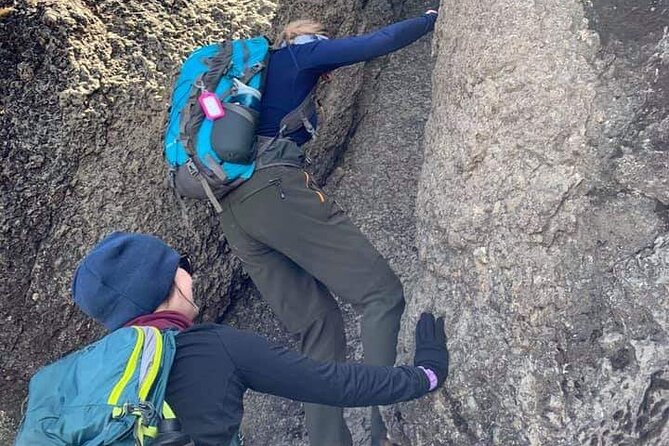
The final day drops from 12,205 feet to 6,046 feet. You walk about 20 kilometers, or 12 miles, in five to seven hours.
The descent returns through heath and rainforest, so the air gradually becomes warmer and thicker. Lower sections can be wet and muddy. Trekking poles, sturdy footwear, and patience will be useful here, though the supplied details do not specify whether poles are provided.
You continue to Mweka Gate to collect summit certificates. From the gate, the plan includes another hour of walking to Mweka Village, where a vehicle meets you for the drive back to your Moshi hotel.
Do not underestimate this final day. Descending is easier on your lungs than climbing, but it can be hard on tired legs and knees. After the summit night, a 12-mile descent is a fittingly large finish.
What the $2,000 price covers
At $2,000 per person, this is not a budget walk, but the value depends on what you place on hut lodging and crew support. The price includes private transportation, six lunches, five breakfasts, and five dinners. Admission to the mountain is included in the daily program.
The private format is useful if you want your own group’s pace and arrangements. The experience is listed as private, so only your group participates. That can make difficult decisions more personal, especially if one person needs to slow down or stop.
The support structure is another major part of the value. One account describes six climbers accompanied by 27 guides, cooks, and porters. That is a substantial crew, though you should ask the operator exactly how staffing works for your own departure.
The price does not include tips for the mountain crew or personal expenses. Budget for those separately. Since tipping is excluded and personal expenses are not defined in detail, ask for current guidance before you arrive.
Food, support, and communication
Meals are included throughout the climb, with breakfast and dinner provided on five days and lunch listed for six days. Fresh food was specifically praised in one account, which is encouraging after long days at altitude.
You should still confirm the meal plan before departure if you have dietary needs. The available details do not state how special diets, snacks, drinking water, or packed lunches are handled.
Communication before the climb appears to be one of the stronger parts of the operation. Issa, who handles reservations, was described as responding to emails within a day and giving detailed answers. That matters for a mountain trip, since questions about luggage, tipping, meals, timing, and preparation are easier to solve before you arrive.
The crew support also matters when the route gets difficult. One climber who fell behind was not left alone, and the group received help when altitude sickness became a problem. That does not remove the need for personal preparation, but it suggests that the operation takes supervision seriously.
Who should choose this six-day climb
I would consider this trip if you want to climb Kilimanjaro without camping and prefer a private departure. It suits people who like a fixed route, hut accommodation, included meals, and a dedicated support crew.
It is also a reasonable choice if you want an acclimatization day but cannot commit to a much longer program. Day three gives you a useful pause before Kibo, although six days remains a compact schedule.
You should think twice if you want a relaxed ascent with generous time at altitude. The summit day is long, and the itinerary does not provide an extra contingency day for poor weather, illness, or a slower pace.
A moderate fitness level is required. You do not need to be an elite athlete based on the supplied requirements, but you should be ready for several long walking days, a midnight summit start, cold conditions, and a final 12-mile descent.
Free cancellation is available if you cancel at least 24 hours before the local start time. Cancellations inside that window are not refunded, and late changes are not accepted.
Should you book the Marangu Route?
Book it if hut accommodation, a private group, and a planned acclimatization day matter more to you than having the longest possible schedule. The route gives you Kilimanjaro’s major scenery without camping, and the $2,000 price includes transport, meals, and crew support.
Before paying, ask Issa for the current crew arrangement, meal details, tipping guidance, and what personal expenses you should expect. If you understand the altitude risk and accept that the summit is never guaranteed, this is a practical way to approach Kilimanjaro on the historic Marangu path.
FAQ
How long is the Kilimanjaro climb?
The experience lasts six days, beginning and ending with transport connected to Moshi.
How much does the climb cost?
The price is $2,000 per person.
Does the tour include accommodation?
The Marangu Route uses sleeping huts at the mountain stops, including Mandara Hut, Horombo Hut, and Kibo Hut.
What meals are included?
The package includes six lunches, five breakfasts, and five dinners.
Is transportation included?
Yes. Private transportation is included, including pickup arrangements and the drive back to the Moshi hotel after reaching Mweka Village.
What time does the experience start?
The stated start time is 7:00 a.m.
Is this a private tour?
Yes. Only your group participates in the activity.
What happens if I cancel?
You receive a full refund if you cancel at least 24 hours before the local start time. Cancellations or changes made within 24 hours are not accepted and are not refunded.
Just added in Moshi
- Wildlife Extravaganza: Manyara, Tarangire & Ngorongoro in 3 Days★ 5.0 · 3 reviews
- West Kilimanjaro cycling Adventures★ 4.5 · 8 reviews
- machame route★ 5.0 · 16 reviews
- Kilimanjaro Climb • Machame Route ~ 10 Day★ 5.0 · 6 reviews
- Kilimanjaro Climbing Umbwe Route★ 5.0 · 3 reviews
- Mt Kilimanjaro 6 days Marangu route hike★ 5.0 · 3 reviews
- 3 Days Private E-Bike Tour in West Kilimanjaro★ 5.0 · 3 reviews
- Private Cycle to Kilimanjaro Bike Park Safari★ 5.0 · 6 reviews
Kilimanjaro Treks, compared.



8-Day Small-group Lemosho Kilimanjaro Summit Trekking
Read our review →

5 Days Best of Tanzania Luxury Safari Northern Circuit
Read our review →

Climbing Kilimanjaro through 7 days Machame Route
Read our review →
7-Day Machame Kilimanjaro Summit Tour from Arusha
Read our review →Browse the lists this tour appears in