
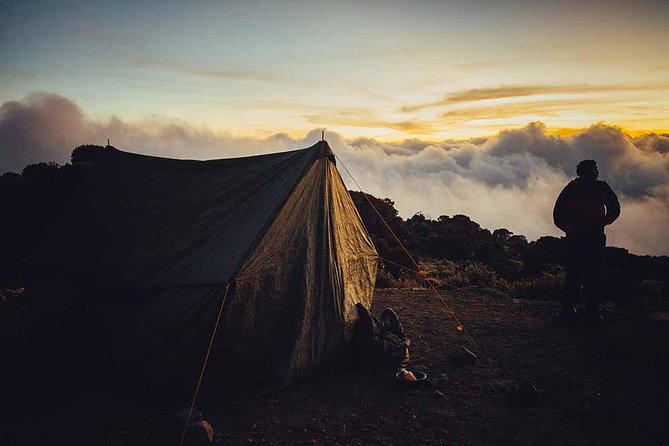
Reviewed · KILIMANJARO TREKS
6 Days Kilimanjaro Trekking – Machame Route
Kilimanjaro’s Machame Route gives you the mountain in changing chapters: coffee and banana farms near Moshi, wet rainforest, high moorland, volcanic rock, glaciers, and a sunrise summit at 5,895 meters. The toughest part is not technical climbing. It is the long, cold, breathless push from Barafu Camp to Stella Point and Uhuru Peak.
I like the private format, since your pace, meals, and support stay focused on your own group. I also like the careful acclimatization day at Lava Tower and Barranco, where you climb high and sleep lower. The main concern is the compressed six-day schedule. It is physically demanding, and the supplied schedule has a few unclear camp names and day labels, so confirm the exact daily plan before paying.
Key points to know before you book
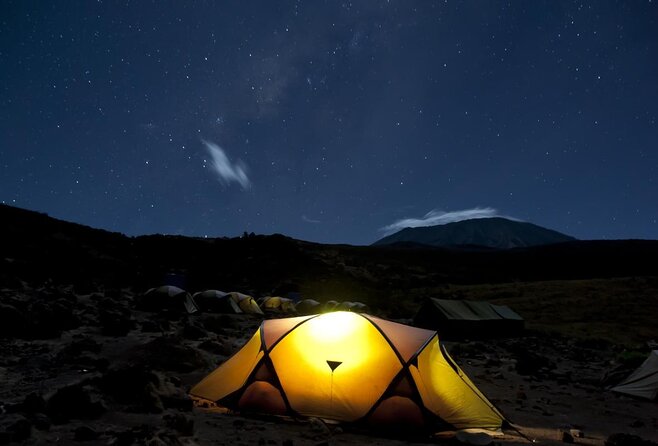
- Summit night begins around midnight to 2 a.m., making day five the hardest part of the trek.
- Lava Tower and Barranco provide useful altitude practice, even though you finish that day lower than you began.
- The private tour keeps the group together, with a professional guide, porters, transport, and hotel transfers included.
- The route changes scenery quickly, from rainforest and heather to the Shira Plateau, Barranco Wall, and high volcanic scree.
- The $1,715 price covers major essentials, including five nights, park fees, lunch, guide, porter, and pickup and drop-off.
- Guide and chef support gets strong praise, with Peter, Alex, Habibu, Kijaji, Adam, and chef Daniel named in trip accounts connected with the operator.
Why the Machame Route is worth six demanding days
At 5,895 meters, Kilimanjaro is Africa’s highest mountain and the world’s tallest free-standing mountain. You are not signing up for a technical mountaineering expedition, but you are committing to serious high-altitude walking with little room for shortcuts.
The Machame Route earns its popular nickname, the Whiskey Route, through variety and effort. You do not simply walk uphill for six days. You pass through several climate zones, climb toward the summit from the south, and use the South Circuit for broad views of Kibo and Mawenzi, Kilimanjaro’s two best-known peaks.
I like the way the route combines scenery with altitude planning. The climb to Lava Tower, followed by a descent to Barranco, follows the useful high-and-sleep-lower principle. That does not make altitude sickness impossible, but it gives your body a better chance to adjust than a simple nonstop ascent.
This is a private activity, so only your group participates. That matters on a mountain. You are not tied to a large group’s walking speed, though you still need to follow the guide’s safety decisions. The listed price is $1,715 per person, and it includes the major operating costs. You should still confirm exactly what meals are provided, since lunch is specifically listed while breakfast and dinner are not clearly detailed in the inclusions.
Other routes up the mountain from Moshi:
- Kilimanjaro climb by Lemosho Route (7-day)
★ 5.0 · 651 reviews - Kilimanjaro climb, Machame Route (7-day)
★ 5.0 · 262 reviews - Kilimanjaro Climbing Lemosho Route 8 Days.
★ 5.0 · 186 reviews
Day one: Moshi to Machame through farm country
Your first drive takes you from Moshi toward Kilimanjaro National Park. Along the way, you may see coffee and banana plantations, both important local crops. This short stretch gives you a glimpse of the working countryside before the forest takes over.
The route begins at Machame. The first walking section moves through rainforest, where the trail can feel damp and shaded. The forest is one of the most pleasant parts of the lower mountain, but it can also be muddy, especially after rain.
The schedule lists Machame Hut as the overnight point. Confirm the exact sleeping arrangement, since this route commonly uses camps and the supplied information refers to both huts and camps at different points. Dinner and an early night are planned, which makes sense. You need to protect your energy from the start, not spend it celebrating the first day.
The opening stage is not usually the mental highlight of the trek, but it sets the rhythm. Walk steadily, keep your pack manageable, and avoid racing simply because you feel fresh.
Day two: Leaving the rainforest for Shira
After breakfast, you leave the trees and climb into heather and moorland. The trail crosses a small valley and follows a steep, rocky ridge before turning west toward a river gorge.
This is a shorter day in the supplied schedule, listed at about three to four hours of walking. That makes it a useful transition day. You gain height, but you also have time to rest at Shira Camp and settle into the mountain routine.
The scenery changes quickly. The thick forest gives way to more open ground, with wide views and less shelter from weather. You may find this section easier underfoot than the lower forest, but the increasing altitude can make a moderate trail feel much harder than its distance suggests.
The camp on the Shira Plateau is special because it gives you your first real sense of being high on Kilimanjaro. The mountain begins to feel less like a forest walk and more like a serious high-altitude journey.
Day three: Lava Tower, Barranco, and the most useful acclimatization day
From Shira, you continue east along a ridge. You pass the junction leading toward Kibo, then turn southeast toward Lava Tower, also called the Shark’s Tooth. The route reaches about 4,876 meters near the Arrow Glacier junction before descending to Barranco at roughly 3,860 meters.
This is an excellent day in the route design. You climb high during the day and sleep lower that night. You may feel tired, headachy, or short of breath at Lava Tower, but the descent to Barranco gives your body a chance to recover.
The schedule refers to both Barranco Hut and Millennium Camp for this stage. That is one detail I would clarify with Afrishare before departure. Ask for the exact overnight location, the expected walking time, and whether the six-day plan uses the same camp sequence described here.
Barranco is known for the steep wall you tackle the next morning. From camp, you can look up at the rock face and wonder how the trail gets over it. The answer is that the path is steep but generally follows a route used by trekkers, rather than requiring technical climbing equipment. Still, you should expect scrambling-style steps and careful foot placement.
Same base, a different kind of day out:
- Safari Serengeti And Ngorongoro
★ 5.0 · 288 reviews - Climbing Kilimanjaro – Machame Route
★ 5.0 · 170 reviews - Climbing Kilimanjaro through 7 days Machame Route
★ 5.0 · 151 reviews - Kilimanjaro climb, Lemosho Route (8-day)
★ 5.0 · 148 reviews
Day four: Barranco Wall, Karanga Valley, and Barafu Camp
After breakfast, you climb the Barranco Wall. This is one of the most memorable sections of the Machame Route because it feels more dramatic than a normal trail. Your guide will set the pace, and you should keep your hands free and move carefully.
The path continues through Karanga Valley, with lunch listed at about 4,200 meters. You then join the Mweka Trail and continue to Barafu Camp. At this point, you have completed the South Circuit, which gives you views of the summit from different angles.
Barafu means ice in Swahili, and the camp sits in a stark high zone. From here, you can see Mawenzi and Kibo. The two peaks look close on a clear day, but the summit push still requires many hours of walking over rough volcanic ground.
This is not a normal camping night. You eat, rest, organize your summit clothing, and try to sleep before the midnight start. The supplied plan includes dinner and overnight at Barafu Camp, but because dinner is not clearly listed among the inclusions, confirm this in writing.
Day five: Stella Point, Uhuru Peak, and the long descent
The summit attempt begins between midnight and 2 a.m. You ascend in darkness toward the crater rim, moving between the Rebmann and Ratzel glaciers and then across heavy scree toward Stella Point.
This is the most physically and mentally demanding section. The pace should be slow and steady. You may spend hours taking short steps up loose volcanic ground while the cold and altitude drain your energy. The private format helps here because the guide can adjust the pace to your group’s ability.
Stella Point sits at about 5,685 meters. If the weather cooperates, sunrise from the crater rim can be extraordinary. From Stella Point, the route continues for about an hour toward Uhuru Peak, the highest point in Africa. Snow may remain on this section, so warm clothing and suitable footwear matter.
Reaching Uhuru Peak is the obvious goal, but it is only half of the day. After photos and a short rest, you descend toward Barafu and then continue down to a lower camp, listed in the schedule as Mweka Camp. Your legs may feel worse on the descent than on the climb, especially after the summit effort.
The day is long, cold, and tiring. It is also the point when preparation matters most. The operator’s trip accounts give special credit to guides who kept a steady pace, adjusted the climb to individual ability, and encouraged people through the summit attempt. Guide names associated with the company include Peter, Alex, Habibu, Kijaji, and Adam. Your assigned team may be different, so request the names before departure.
Day six: Mweka Gate and the return to Moshi
After breakfast, you descend through wetter, lower forest toward Mweka Park Gate. The trail can be muddy, and the supplied advice to bring gaiters and trekking poles is practical. Keep rain gear and a warmer layer handy even if you expect a warm finish.
At the gate, you receive summit certificates. The transfer then continues to Mweka Village, where a vehicle takes you back to your hotel in Moshi or Arusha, or to the airport if arranged.
The schedule places the summit attempt and the descent under one stop before describing the final Mweka Gate section. Because of that compressed presentation, ask the operator to confirm where you sleep after summit night and how long the final walking day will be.
The return drive is part of the reward. After several days of cold, high camps and early starts, a shower, a proper bed, and a meal in town will feel very welcome. The itinerary also reminds you to tip guides and porters. Tipping is not included in the stated price, and you should budget for it separately.
What the $1,715 price covers
At $1,715 per person, this trek includes:
- Five nights of accommodation
- Park fees, taxes, and other listed fees
- Lunch
- Professional guide
- Porter
- Hotel pickup and drop-off
- Private touring for your group
That is a fair-looking package for a guided Kilimanjaro trek because park access, mountain staff, transport, and accommodation make up much of the cost. The porter is particularly important. You should pack carefully and carry only what you need for the walking day, while also treating the porter team fairly and following responsible luggage limits set by the operator.
The value is less clear if you assume every meal is covered. Breakfast and dinner appear in the daily plan, but only lunch is clearly included in the formal price details. Ask these questions before booking:
- Are breakfast and dinner included every night?
- What type of accommodation is used at each camp?
- Is airport transfer included, or only hotel pickup and drop-off?
- What tipping guidance does the company provide?
- What happens if weather or park conditions alter the schedule?
Alcoholic drinks are not included, though they can be purchased. The listing also excludes a driver tip. Other tipping expectations should be confirmed directly.
Food, guides, and camp support
The strongest practical praise connected with this operator centers on the mountain team. Peter and Alex are described as punctual, clear in communication, helpful, and good at adjusting the pace. They also identify plants along the route, which adds interest to the long walking days.
Habibu and Kijaji are also associated with a well-organized Machame climb. Adam is described as fun company during a seven-day trek, while Ibrahim handled communication well before the trip. These names do not guarantee your exact crew, but they give you useful names to ask about when you communicate with Afrishare.
Chef Daniel receives particular credit for preparing varied meals despite the mountain conditions. Food variety can make a real difference when you are eating large meals day after day, but the formal inclusions do not clearly spell out all meals. State any vegetarian needs or other dietary requirements at booking.
Who should book this climb
This tour suits you if you want a private Kilimanjaro attempt with a guide and porter team, hotel transport, and a route known for changing scenery. You should have a moderate level of physical fitness and be ready for steep, long walking days.
It is a good match if you value personal pacing more than a bargain group departure. The private format lets your group focus on its own rhythm, but it does not turn the climb into an easy holiday.
You should think twice if you want a relaxed mountain break, dislike cold nights, or cannot manage long days on uneven ground. The midnight summit start, high altitude, heavy scree, and long descent are serious demands.
Children must be accompanied by an adult, and the child rate applies only when sharing with two paying adults. The activity operates in all weather, so you need suitable clothing and should accept that conditions can affect comfort and timing.
Practical booking advice before departure
Confirmation is provided at booking, and pickup is offered. The stated meeting point is Kilimanjaro Airport and Kilimanjaro National Park in Tanzania, with operating hours listed around the clock.
The free-cancellation rule is useful: you can cancel at least 24 hours before the local start time for a full refund. Cancellations or changes inside 24 hours are not refunded or accepted.
The most important predeparture step is checking the six-day schedule. The supplied plan names Machame Hut, Shira Camp, Barranco, Millennium Camp, Barafu Camp, and Mweka, but some labels overlap or appear out of order. Ask for a day-by-day version showing walking hours, sleeping points, meal coverage, and transport.
Should you book the six-day Machame Route?
Book it if you want a private, well-supported Kilimanjaro climb and are comfortable with a demanding schedule. The route offers excellent variety, a useful Lava Tower acclimatization day, a dramatic Barranco Wall, and a genuine summit attempt at Uhuru Peak.
I would not book until Afrishare confirms the camp sequence and meal inclusions in writing. If you prefer more time for acclimatization, ask if a seven-day Machame option is available. The six-day version can work, but its tight schedule leaves less margin for altitude problems and fatigue.
For a fit walker who wants strong mountain scenery, personal support, and a direct route to Africa’s highest point, this is a compelling package. Just treat the price as a starting figure and budget separately for tips, gear, and any meals or transfers not clearly included.
FAQ
How long is the Kilimanjaro Machame Route tour?
The tour is scheduled for six days, approximately.
What is the price per person?
The listed price is $1,715 per person.
Is this a private tour?
Yes. Only your group participates in the activity.
What is included in the price?
The price includes five nights of accommodation, all listed fees and taxes, lunch, a professional guide, a porter, hotel pickup and drop-off, and the private tour.
Are alcoholic drinks included?
No. Alcoholic drinks are available to purchase but are not included.
Is tipping included?
No. Tipping for the driver is specifically excluded. The itinerary also advises you to tip the guides and porters.
Where does the tour start?
The listed meeting point is Kilimanjaro Airport and Kilimanjaro National Park in Tanzania. Pickup is offered.
What fitness level is required?
You should have a moderate physical fitness level. The trek includes steep trails, high altitude, a midnight summit start, and a long descent.
Can I request vegetarian meals?
Yes. A vegetarian option is available. You should advise the operator of this and any other dietary requirements when booking.
What is the cancellation policy?
You can cancel at least 24 hours before the local start time for a full refund. Cancellations or changes made less than 24 hours before the start are not accepted and are not refunded.
More Hiking & Trekking in Moshi
- Private Kilimanjaro Hike 7 Day Lemosho Route
★ 5.0 · 60 reviews - Best Kilimanjaro hiking day trip tour with Kilinge Adventures
★ 4.5 · 54 reviews - #1. Best Kilimanjaro Day hike Tour-Machame Route-ISMANI
★ 4.2 · 47 reviews - Best Kilimanjaro Adventure 7 days Machame route Trekking
★ 5.0 · 42 reviews
Just added in Moshi
- Wildlife Extravaganza: Manyara, Tarangire & Ngorongoro in 3 Days★ 5.0 · 3 reviews
- West Kilimanjaro cycling Adventures★ 4.5 · 8 reviews
- machame route★ 5.0 · 16 reviews
- Mt Kilimanjaro 6 days Marangu route hike★ 5.0 · 3 reviews
- Kilimanjaro Climb • Machame Route ~ 10 Day★ 5.0 · 6 reviews
- Kilimanjaro Climbing Umbwe Route★ 5.0 · 3 reviews
- 3 Days Private E-Bike Tour in West Kilimanjaro★ 5.0 · 3 reviews
- Private Cycle to Kilimanjaro Bike Park Safari★ 5.0 · 6 reviews
Kilimanjaro Treks, compared.



8-Day Small-group Lemosho Kilimanjaro Summit Trekking
Read our review →

5 Days Best of Tanzania Luxury Safari Northern Circuit
Read our review →

Climbing Kilimanjaro through 7 days Machame Route
Read our review →
7-Day Machame Kilimanjaro Summit Tour from Arusha
Read our review →Browse the lists this tour appears in