
Reviewed · KILIMANJARO TREKS
6 Days Mount Kilimanjaro Climbing via Rongai Route
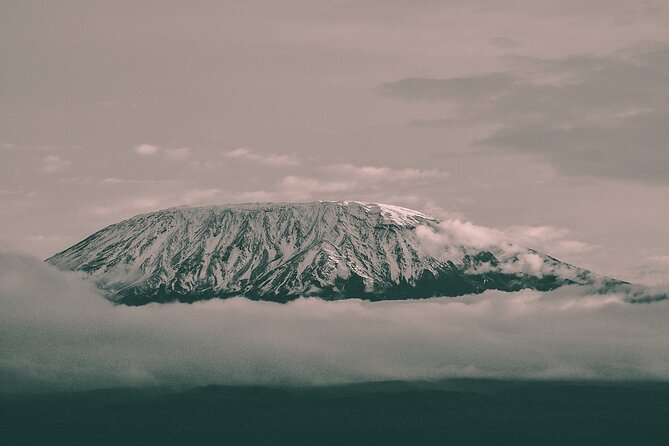
Rongai gives you a quieter way up Kilimanjaro, with a steady slope, views toward Kenya, and a northern approach that can be useful in the rainy season. You’ll sleep near caves, cross moorland and alpine desert, and make the hard midnight push to Uhuru Peak.
I like the remote feel and the fact that the route is less abrupt than some alternatives. I also like the practical planning: Kentau Safaris includes hotel transfers, meals, park fees, and mountain accommodation, while owner Dominic is involved from planning through the climb. The catch is simple: six days is still a demanding schedule, and the summit night is tough even for fit walkers.
The route in a few clear points
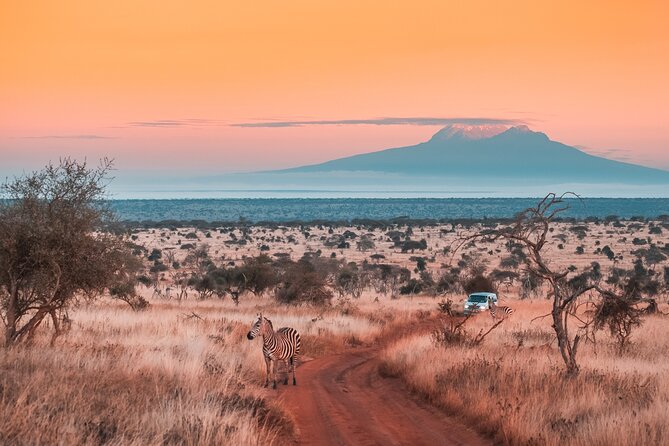
- A quieter northern approach: Rongai is a good alternative to the busy Marangu Route and receives less rain than Kilimanjaro’s southern side.
- A gradual first half: The route begins with a moderate slope through forest and moorland, making it suitable for climbers with limited backpacking experience.
- Five distinct mountain zones: You move from wooded trails to moorland, semi-desert, alpine desert, and the icy summit area.
- A shared summit path: At Kibo Huts, Rongai joins the Marangu Route for the final climb to Stella Point and Uhuru Peak.
- A very early summit start: Expect to leave between midnight and 2 a.m. for the steep ascent over scree.
- A wet, muddy descent: The Marangu-side return can be slippery, so gaiters and trekking poles are sensible additions.
Why Rongai can be the right Kilimanjaro route
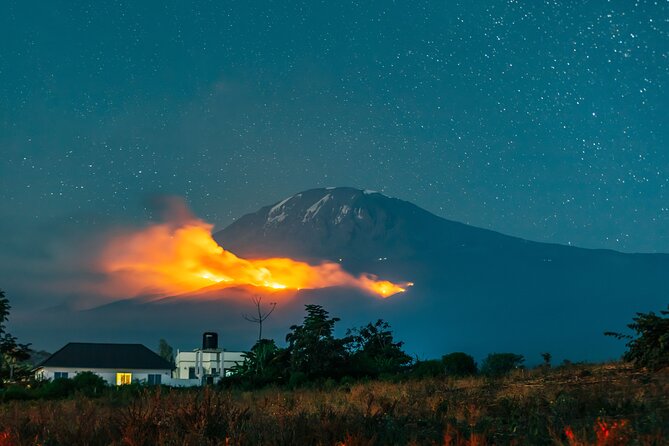
Kilimanjaro is not a technical climb in the mountaineering sense, but it is a serious high-altitude trek. The challenge comes from thin air, long walking days, cold, tired legs, and the need to keep moving when the summit still looks far away.
Rongai is often chosen because its early stages are relatively moderate. You are not attacking a steep trail from the first hour. That matters if you have some walking fitness but little experience carrying a pack over rough ground.
The northern side also receives less precipitation than the southern side. That does not promise dry weather, but it makes Rongai a sensible option during wetter months. You still need waterproof clothing and footwear. Mountain weather can change quickly.
The route feels more remote than Marangu during the approach. You begin near the village of Nale Muru, then move through wooded trails and open moorland toward Kibo. The route is not flat or easy, but its measured rise helps you settle into the mountain rhythm.
Other routes up the mountain from Moshi:
- Kilimanjaro climb by Lemosho Route (7-day)
★ 5.0 · 651 reviews - Kilimanjaro climb, Machame Route (7-day)
★ 5.0 · 262 reviews - Kilimanjaro Climbing Lemosho Route 8 Days.
★ 5.0 · 186 reviews
Day 1: Nale Muru to Simba Camp
Your morning begins in Moshi at about 7 a.m. The drive to the Kilimanjaro National Park gate takes roughly four to five hours. Along the way, you pass coffee plantations and the village of Nale Muru before reaching the park entrance.
There is a practical pause at the gate while permits are issued. This is not wasted time. Park operations can be busy, and several climbing teams may be preparing at once. Use the wait to check your pack, fill water, and get ready for the first walking day.
The route then enters wooded country. Your guide can point out local plants, wildlife, and the changing forest as the trail rises. The walking time is listed at about seven hours, so this is a full opening day rather than a short warm-up.
Simba Camp sits near the first cave at the edge of the moorland zone. You get broad views toward the plains of Kenya, a welcome change after the forest. The camp location also gives you your first clear sense that the mountain is opening around you.
The long drive before the hike is the main drawback. You may feel that the day has already started before your boots hit the trail. Keep your morning simple and avoid using too much energy during the transfer.
Day 2: Moorland views and Second Cave
After breakfast, you continue across moorland on a steady uphill trail. This section is less enclosed than the forest, so you begin to see more of Kibo and the eastern ice fields.
The shrubs become thinner as you approach Second Cave. That change in plant life is one of the pleasures of Rongai. You can read the altitude in the ground around you, not just on a sign or map.
The day is again listed at about seven hours. The route is not described as steep, but the steady climb can wear you down. Walk slowly, drink regularly, and tell your guide if you develop a headache, nausea, unusual tiredness, or other signs of altitude sickness.
Temperatures begin to fall as you rise. This is the point to keep a warm layer handy rather than buried at the bottom of your bag. You may start the morning comfortably and need more clothing by the afternoon.
The views toward Kibo are the reward. They also make the scale of the climb clear. The summit may look close, but you still have several demanding stages ahead.
Day 3: Third Cave and the semi-desert zone
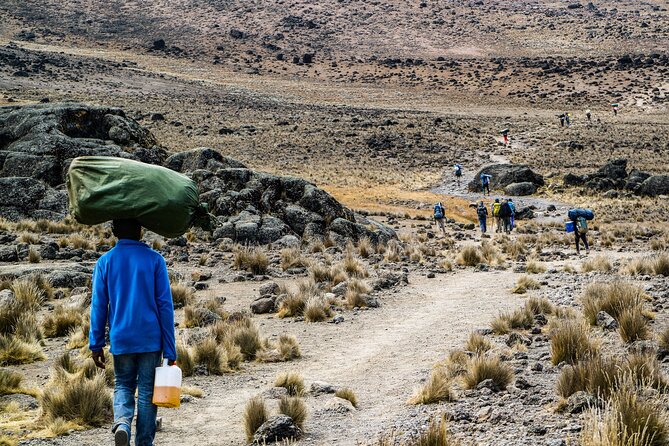
Day three is shorter, at about six hours, and continues the gradual ascent. After breakfast and packing, you leave the moorland behind and enter semi-desert terrain.
The thinner vegetation gives the mountain a more exposed feel. You are now moving closer to the eastern ice fields, which remain a major visual feature of the route. The walk is relatively short, but altitude can make any uphill distance feel longer than expected.
This is a good day to pay attention to your body. The itinerary specifically stresses communication with your guide about altitude sickness. Do not treat that as a formality. If something feels wrong, say so early. A guide can only respond well if you provide clear information.
The camp near Third Cave also marks your preparation for the highest part of the climb. Your energy may still be good, but the cold and thinner air are becoming more noticeable. Keep your evening routine calm and use the time to organize clothing, water, and personal gear.
Same base, a different kind of day out:
- Safari Serengeti And Ngorongoro
★ 5.0 · 288 reviews - Climbing Kilimanjaro – Machame Route
★ 5.0 · 170 reviews - Climbing Kilimanjaro through 7 days Machame Route
★ 5.0 · 151 reviews - Kilimanjaro climb, Lemosho Route (8-day)
★ 5.0 · 148 reviews
Day 4: Kibo Huts and the final preparation
You leave the semi-desert zone early and continue into alpine desert. The route takes you below the Kibo crater wall to Kibo Huts, where Rongai joins the Marangu Route.
This is one of the most important route changes. The quieter northern approach is over, and you now share the final summit path used by Marangu climbers. The walking day lasts about six hours, but the real task is getting ready for the summit attempt.
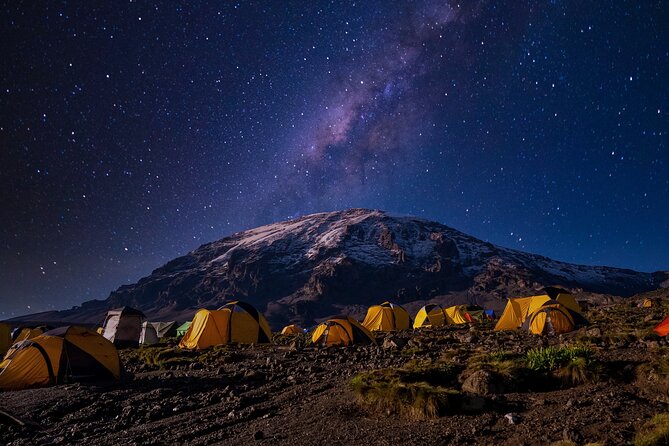
The schedule calls for preparing clothing and equipment before bed, replacing batteries in your headlamp and camera, and trying to sleep by 7 p.m. Your summit start will be between midnight and 2 a.m., so organization matters.
Set out the clothing you need before you lie down. Put critical items where you can reach them quickly. Cold fingers and a dark room are not the time to search through every pocket.
Sleep may be brief. That is normal for a midnight summit schedule, but it is still a drawback of the six-day format. The itinerary gives you an acclimatization-focused progression, yet it does not provide an extra rest day. Your fitness, pacing, and response to altitude will matter.
Day 5: Stella Point, Uhuru Peak, and the hardest hours
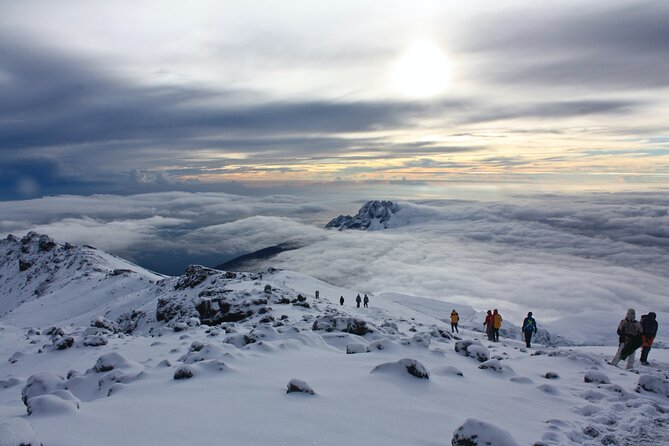
Summit day begins in the middle of the night. The early start allows you to climb during the coldest, darkest hours and aim for sunrise near the crater rim.
You ascend between the Rebmann and Ratzel glaciers, then use a switchback route through heavy scree toward Stella Point. Scree is loose volcanic rock, and each step can slide a little. This section is physically tiring and mentally repetitive. Keep your pace slow and steady.
Stella Point sits on the crater rim and offers a major psychological lift. You may rest briefly there and watch the sunrise. Faster climbers might see the sunrise from Uhuru Peak, but the timing depends on your pace and conditions.
From Stella Point, the final ascent to Uhuru Peak takes about another hour according to the itinerary. Uhuru Peak is Kilimanjaro’s highest point. Reaching it is the central goal of the climb, but remember that the day is not finished at the summit.
The listed duration is about seven hours, though the full summit experience can feel longer because it includes the ascent, time at the top, and the descent toward camp. The information provided does not give a separate detailed descent schedule, so you should ask Kentau Safaris how the day is paced for your group.
This is where your guide’s safety role matters most. The operator places emphasis on keeping you informed about altitude symptoms, and that should remain a two-way conversation. You need to report how you feel, not simply push on because the peak is close.
The climb is described as tough but enjoyable by the people who have completed it. That combination is believable: the summit can be one of the most rewarding moments of the trip, but it asks a lot from your legs and concentration.
Day 6: Mandara Huts, the Marangu gate, and Moshi
After breakfast and a farewell ceremony with the crew, you begin the descent. You stop at Mandara Huts for lunch and continue to the Marangu Park Gate.
The final trail is wetter, muddier, and steeper than the upper mountain. That is why gaiters and trekking poles are specifically recommended. Poles help with balance, while gaiters keep mud and water out of your boots.
The change in temperature can feel dramatic. You are leaving the cold summit zone and returning to warmer conditions, but the descent still demands care. Tired legs and slick ground are an awkward pair.
At the Marangu gate, you receive your summit certificates. You also say goodbye to the guides, cooks, and porters, and this is the appropriate time to give tips to the climbing team. Tips are not included in the price, so budget for them before departure.
A vehicle then takes you back to your Moshi hotel. The drive is about 45 minutes. You may be ready for a shower, a proper bed, and a very quiet evening.
What the $2,200 price covers
The listed price is $2,200 per person, which is a substantial sum, but it covers several major costs of a Kilimanjaro expedition. Included are accommodation during the hike, park-related fees and taxes, hotel pickup and drop-off, five lunches, six dinners, and five breakfasts.
Those inclusions make the price easier to assess. You are not simply paying for a walking guide. The package includes the mountain operation, meals, lodging on the route, permits and fees, and transport at the beginning and end.
Personal expenses remain outside the price. You need to arrange your flights, travel insurance, entry visa, and personal gear. Tips for the guides, cooks, and porters are also not included.
The meal count is worth checking before you book. Five breakfasts and five lunches are listed alongside six dinners, which appears to match a six-day mountain schedule but should be confirmed with the operator. Ask what food is served, what drinking-water arrangements are provided, and what happens if you need a different meal.
The price offers good value if you want one company handling the core logistics. It is less attractive if you already have mountain accommodation, transfers, or equipment arranged elsewhere. Since this is a private tour, you are paying for an experience limited to your own group rather than a shared departure.
How the operator handles the experience
The small amount of available feedback points to organization, updates, safety, and the attitude of the team. One person specifically praised being kept informed at each stage. Another highlighted the professionalism of the team and the owner, Dominic, who helped from the planning stage through the end of a five-day hike. A third described the climb as difficult but enjoyable, with a professional and fun crew.
I would treat that as encouraging, while remembering that three ratings are still a small sample. The strongest practical signal is the repeated focus on communication and organization. Those qualities matter on Kilimanjaro because permits, transfers, meal planning, camp changes, weather, and health checks all have to work together.
You should ask for the name of your lead mountain guide before departure, since Dominic is named as the owner but no other guide names are provided. Confirm the exact camping or hut arrangements, the tipping guidance, and how the operator responds if someone develops serious altitude symptoms.
Who should choose this six-day climb?
This route suits you if you want a quieter alternative to Marangu and prefer a gradual approach. It is also a reasonable option for someone with moderate fitness and limited backpacking experience, provided you take the altitude seriously.
You should be comfortable walking for six to seven hours on several consecutive days. You also need to manage cold conditions, early starts, uneven ground, and the possibility of a muddy descent.
This may not suit you if you want a leisurely schedule or an extra acclimatization day. The route is described as moderately difficult, but that does not make it easy. The summit push is still steep, cold, dark, and tiring.
Because the tour is private, it can work well if you want your group to travel together. The available information does not state the maximum group size, so ask before booking if that affects your decision.
Pickup is offered, and the meeting point is in Moshi at 7 a.m. The activity is near public transportation, but the provided details focus on the arranged hotel or residence transfer rather than independent arrival instructions.
Booking and cancellation details to know
Confirmation is provided at the time of booking. Free cancellation is available if you cancel at least 24 hours before the local start time. Cancelling within 24 hours, or making changes during that period, does not qualify for a refund.
You should check the local time carefully, especially if you are booking from another country. Personal gear is not included, so request a complete packing list before you travel. The operator also states that participants should have a moderate level of physical fitness.
Should you book the Rongai Route with Kentau Safaris?
I would choose this climb if you want the quieter northern route, a moderate early slope, and one package covering the main mountain costs. The views toward Kenya, the changing plant zones, and the approach to Kibo give the six days a clear sense of progress.
I would pause if you need a generous acclimatization schedule, dislike midnight starts, or want every equipment and meal detail spelled out before payment. Ask about the exact group size, guide assignment, meal plan, tipping expectations, and summit-day schedule.
For a fit walker who accepts that Rongai is still a serious high-altitude climb, this is a well-organized option with useful practical coverage. Go in prepared, pace yourself, and treat the summit as only one part of the six-day experience.
FAQ
Where does the climb start?
The experience starts in Moshi, Tanzania, with a listed start time of 7 a.m.
How long is the Kilimanjaro climb?
The experience lasts approximately six days.
Which Kilimanjaro route does the tour use?
The ascent uses the Rongai Route. On day four, the route joins the Marangu Route near Kibo Huts for the summit approach and descent.
Is hotel pickup included?
Yes. Pickup from and drop-off at your hotel or residence are included.
What meals are included?
The package lists five lunches, six dinners, and five breakfasts.
Are park fees and taxes included?
Yes. All fees and taxes are included in the listed price.
Is this a private tour?
Yes. Only your group participates in the activity.
What is the cancellation policy?
You can receive a full refund if you cancel at least 24 hours before the local start time. Cancellations or changes made within 24 hours are not refunded or accepted.
Just added in Moshi
- Wildlife Extravaganza: Manyara, Tarangire & Ngorongoro in 3 Days★ 5.0 · 3 reviews
- West Kilimanjaro cycling Adventures★ 4.5 · 8 reviews
- machame route★ 5.0 · 16 reviews
- Kilimanjaro Climb • Machame Route ~ 10 Day★ 5.0 · 6 reviews
- Kilimanjaro Climbing Umbwe Route★ 5.0 · 3 reviews
- Mt Kilimanjaro 6 days Marangu route hike★ 5.0 · 3 reviews
- Kilimanjaro Climb • Marangu Route ~ 9 Day★ 5.0 · 4 reviews
- 3 Days Private E-Bike Tour in West Kilimanjaro★ 5.0 · 3 reviews
Kilimanjaro Treks, compared.



8-Day Small-group Lemosho Kilimanjaro Summit Trekking
Read our review →

5 Days Best of Tanzania Luxury Safari Northern Circuit
Read our review →

Climbing Kilimanjaro through 7 days Machame Route
Read our review →
7-Day Machame Kilimanjaro Summit Tour from Arusha
Read our review →Browse the lists this tour appears in