
Reviewed · WILDEBEEST MIGRATION SAFARIS
6Days Migration Safari
The great draw here is the chance to follow the Great Migration through several Serengeti zones rather than sit in one camp and hope the herds pass by. You begin with an afternoon in the Ngorongoro Crater, then move through Lobo, the Grumeti area, and northern Serengeti, where wildebeest may gather in huge numbers.
I like two things right away: the small maximum group of six, which gives you a better chance to ask questions and spend time at sightings, and the route itself, which follows seasonal wildlife movement. Guides including Laurent and Raymond are praised for clear explanations, safe driving, and adjusting the daily pace to suit the group.
The main caution is timing. Migration sightings are never guaranteed, and the strongest chance in each area depends on the month. At $3,700 per person, you should also confirm the exact lodges, internal flights, and transfer details before paying.
Key points to know before booking
- Ngorongoro comes first: You descend more than 600 meters into the crater for an afternoon game drive.
- The route follows seasonal movement: Lobo is most useful around July, August, late October, and November, while Wagakuria is generally favored from August through October.
- Grumeti adds different wildlife: Hippos, large crocodiles, resident game, and wildebeest around waterholes give this section a character of its own.
- The group is capped at six: That is a strong advantage for vehicle space, guide access, and flexibility.
- Full board is included: Safari accommodation, taxes, and two-way transfers are covered, but the Tanzania visa is extra.
- The final day uses Kogatende airstrip: You get a last game drive on the way to the airstrip before continuing toward Arusha.
A six-day route built around the migration
This is not a quick park-hopping safari. The plan gives you five full safari days, with most days lasting about eight hours, and uses different parts of northern and western Serengeti to improve your odds of finding moving herds.
That approach matters because the wildebeest do not follow a fixed schedule. They respond to rain, grass, water, and pressure from predators. A route that reaches more than one migration zone gives you a better spread of possibilities than a fixed stay in one corner of the park.
The schedule is also fairly demanding. You will spend long hours on game drives, and the value of the trip depends heavily on how well your guide reads the conditions. The named guides connected with this operator include Laurent and Raymond, with Faiza handling bookings and communication. You should ask who will lead your departure and confirm the vehicle plan before you go.
Other park itineraries that start in Moshi:
- Safari Serengeti And Ngorongoro
★ 5.0 · 288 reviews - Big Five Safari In Tanzania
★ 5.0 · 99 reviews - Unforgettable Tanzania Safari And Zanzibar Beach
★ 5.0 · 97 reviews
Day 1: Ngorongoro Crater from the Arusha area
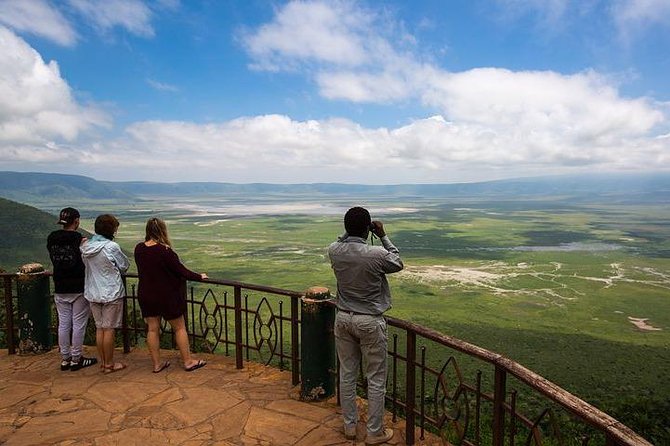
The first day is described under Arusha, but the key activity is an afternoon safari in the Ngorongoro Crater. You descend more than 600 meters into the crater for wildlife viewing, with about eight hours assigned to the day.
The crater is special because its steep walls keep a large number of animals within a relatively compact area. That makes it a good opening day. You can begin seeing wildlife without immediately chasing the migration across a huge area, and the crater offers a strong chance to see a broad mix of animals in one setting.
The afternoon timing gives you a clear focus, though it leaves less room for delays. If you are arriving through Kilimanjaro International Airport, clarify exactly when pickup occurs and how the first day connects with your arrival. The listed start time is 12:00 am, which is unusually broad and may simply reflect a booking-system setting rather than a literal midnight departure.
The first day also sets expectations for the rest of the trip. This is an active safari, not a lodge holiday with a short drive each morning. You should be ready for a full day in the vehicle and changing road conditions.
Day 2: Lobo and the northern Serengeti
The route continues from Ngorongoro toward the Serengeti’s Lobo area. The migration normally passes through Lobo around July and August while moving north, then again in late October and November as the herds head back toward the southern Serengeti.
That seasonal detail is the heart of the itinerary. If your dates match those windows, Lobo can be a sensible part of the route. If they do not, you may still see excellent resident wildlife, but the trip should not be sold to you as a guaranteed migration crossing.
This is an important distinction. The Serengeti has good wildlife year-round, while the migration is a moving event spread across a very large area. You may find wildebeest in Lobo outside the usual period, but the exact location can shift quickly.
Day 2 is listed as an eight-hour safari day. That gives your guide time to combine the transfer with wildlife viewing rather than treating the road as dead time. Still, the exact amount of game-drive time will depend on road conditions, sightings, and how far the group must travel.
Day 3: Lobo and the Grumeti River
The third day stays in the Lobo and Grumeti area, giving you a better chance to explore instead of packing and moving again. This is one of the stronger design choices in the program. One night in an area can feel rushed, while a second day gives your guide room to try another route or return to a promising sighting.
The Lobo area has resident game throughout the year. That makes this day less dependent on migration timing. Even if the wildebeest are elsewhere, you still have a reason to spend time here.
The Grumeti River brings a different kind of safari scene. You might find large pods of hippos and very large crocodiles, along with other wildlife drawn to the water. River areas can be especially useful during dry periods, but the program does not guarantee particular sightings, so keep your expectations flexible.
I also like the rhythm of this day: less emphasis on covering ground, more chance to watch. Ask your guide how much time you can spend at a good sighting. The ability to pause, rather than rush to the next camp, is one of the benefits of a small group.
Other safaris people book out of Moshi:
- 8-Day Essence of Tanzania Safari – Luxury
★ 5.0 · 72 reviews - Great Migration Safari In Tanzania
★ 5.0 · 71 reviews - 6 Days 5 Night Safari
★ 5.0 · 57 reviews - 7-Day Magical Tanzania Safari -Premium High End Package
★ 5.0 · 53 reviews
Day 4: Wagakuria and the northern Serengeti
The fourth day shifts toward the Wagakuria area in northern Serengeti. The wildebeest can normally be found here from August through October, making this the most clearly timed migration section of the route.
If you are traveling in that window, this is likely to be one of the most important days of the safari. The northern Serengeti can offer dramatic herd movement, but migration viewing is not a stage show. You might find the animals spread out, gathered near water, or already moving beyond the planned zone.
This is where a good guide earns the day. Laurent and Raymond are associated with strong explanations and practical driving, and one useful detail from previous bookings is that the guide could adjust safari timing to suit the group. That matters when wildlife activity changes during the day.
You should ask about the expected driving time between areas. The itinerary gives an eight-hour day but does not state exact distances, lodge names, or road conditions. Those details affect how much time you spend watching animals instead of traveling between zones.
Day 5: Grumeti wildlife and waterhole activity
The fifth day returns attention to western Serengeti and the Grumeti River area. You might find hippos and crocodiles here, but the most striking description is of wildebeest gathering around waterholes in the midmorning.
When herds gather at water, the scene can change quickly. A wide group may look scattered at first, then tighten around a water source as more animals arrive. This kind of viewing is different from waiting at a river crossing. It is less about one dramatic instant and more about watching animal behavior build over time.
The midmorning timing is useful because it gives you a target for the day without forcing every sighting into a rigid schedule. Your guide can shape the drive around waterholes and nearby wildlife. You should still expect an eight-hour day, with plenty of time in the vehicle.
This day also helps balance the migration focus. Hippos, crocodiles, and resident game remain worthwhile even when the herds are not exactly where expected. That makes the itinerary stronger than a plan based only on crossing sightings.
Day 6: Kogatende airstrip and the trip back to Arusha
After breakfast at the lodge, you depart for Kogatende airstrip. A game drive takes place on the way, so your final morning is not simply a transfer.
That is a smart use of the last hours. Wildlife can be active early, and the drive gives you one more chance to see the northern Serengeti before leaving. The listed duration is about six hours, shorter than the earlier safari days but still substantial.
The schedule then connects with Arusha. The advertised end point is Kilimanjaro International Airport, so ask for the exact sequence: lodge to Kogatende, air connection, onward transfer, and airport drop-off. The provided details confirm two-way transfers, but they do not spell out every internal transport segment or flight time.
Do not plan a tight onward connection without checking those details. A safari day can shift because of road conditions, airstrip timing, or an unexpected wildlife sighting.
What $3,700 includes and what it means
The price is $3,700 per person. That is a major outlay, but it includes full-board safari accommodation, all listed fees and taxes, and transfers in both directions.
The group limit of six improves the value. On a safari, the number of people in the vehicle affects how easily you can see, how often you can ask the guide to stop, and how much discussion is possible during the day. A six-person maximum is not the same as a private safari, but it is more manageable than a large coach-style group.
The price is harder to judge because the accommodation names are not provided. Lodge quality, room type, internal flights, and the exact vehicle arrangement can change the value considerably. Before booking, request a written day-by-day cost breakdown and confirm what full board means at each property.
The Tanzania visa is not included. The listed cost is $50 for United States and Canadian passport holders, or $100 for some other nationalities as specified by the operator. Check the amount that applies to your passport before departure.
Guides, communication, and group size
The strongest service details are personal. Faiza is described as the main contact for planning, with prompt and professional communication. Previous bookings also identify Laurent and Raymond as safari guides.
Laurent is associated with careful service, safe driving, and the ability to adjust safari timing to suit the group. Raymond is described as able to explain wildlife and answer questions clearly. Those qualities matter more than a polished brochure because your guide controls the daily pace and helps you make sense of what you see.
The provider offers a local number for communication during the trip. That is useful if you need help with timing or logistics, especially on a route involving remote camps and an airstrip.
Confirmation is provided at booking, and the activity is listed as suitable for most people. The maximum group size is six. No detailed mobility information is supplied, so anyone with specific physical needs should ask about vehicle access, road conditions, and lodge arrangements before confirming.
The best and weakest times to choose this safari
The itinerary is most closely matched to migration movement in several periods:
- Lobo is normally used in July and August as herds move north.
- Lobo may also see the herds in late October and November as they move south.
- Wagakuria is normally favored from August through October.
- Grumeti offers resident wildlife and river viewing throughout the year.
These are useful guideposts, not promises. The animals may arrive early, late, or move beyond the area. If you care most about the migration, tell Ungitours your exact dates and ask which zone is most likely to produce sightings then.
If your dates fall outside the main windows, the safari can still make sense because Ngorongoro, Lobo, Grumeti, and northern Serengeti all offer resident wildlife. Just book it as a broader wildlife trip rather than a guaranteed wildebeest event.
Who should book it
I would recommend this trip to you if you want a focused safari with long game-drive days, a small group, and several chances to find the migration across different zones. It suits people who value a guide’s explanations and are willing to accept that wildlife follows nature, not a timetable.
It is also a good fit for a honeymoon or special trip if you want the operator to handle the route and communication. Previous honeymoon arrangements were tailored by Faiza, with Laurent providing attentive guiding.
I would be more cautious if you want luxury details spelled out before booking, short driving days, or a fixed guarantee of seeing a river crossing. The route is active, the accommodation details are not listed, and the final airstrip transfer needs clarification.
Should you book this six-day safari?
Book it if the dates match the migration zones, you are comfortable with eight-hour safari days, and the operator confirms the lodge and flight details in writing. The small group, full-board plan, and multi-zone route give the $3,700 price a reasonable basis, especially when you value personal guiding and included transfers.
Before paying, ask four direct questions: Who is the guide, which lodges are included, what internal flights are covered, and where is the migration expected during your dates? If the answers suit you, this is a well-focused way to see northern Tanzania without trying to cover every major park in one hurried trip.
FAQ
Where does the safari start?
The listed start point is Kilimanjaro Airport in Kilimanjaro National Park, Tanzania.
Where does the safari end?
The listed end point is Kilimanjaro International Airport on Kilimanjaro Airport Road, Tanzania.
How long is the experience?
The safari lasts approximately six days.
What is the price per person?
The listed price is $3,700 per person.
How many people can join the tour?
The activity has a maximum of six participants.
Is accommodation included?
Yes. Full-board accommodation on safari is included.
Are transfers included?
Yes. Transfers in both directions are included.
Is the Tanzania visa included?
No. The visa is not included. The listed cost is $50 for United States and Canadian passport holders, and $100 for the passport holders specified by the operator.
Can I cancel for a full refund?
Yes, if you cancel at least 24 hours before the experience start time. Cancellations made less than 24 hours in advance are not refunded, and changes within that period are not accepted.
More migration safaris from Moshi
- 6 Days Tanzania Budget Camping Safari with Migration
★ 5.0 · 31 reviews - 8 Days Great Wildebeest Migration – Mara River Crossing
★ 5.0 · 28 reviews - Tanzania Safari – The Great Migration in the North of the Serengeti and Lake Natron
★ 5.0 · 25 reviews - 7 Days Wildebeest Migration – Ndutu Calving Season
★ 5.0 · 18 reviews
Just added in Moshi
- Wildlife Extravaganza: Manyara, Tarangire & Ngorongoro in 3 Days★ 5.0 · 3 reviews
- West Kilimanjaro cycling Adventures★ 4.5 · 8 reviews
- machame route★ 5.0 · 16 reviews
- Mt Kilimanjaro 6 days Marangu route hike★ 5.0 · 3 reviews
- Kilimanjaro Climb • Machame Route ~ 10 Day★ 5.0 · 6 reviews
- Kilimanjaro Climbing Umbwe Route★ 5.0 · 3 reviews
- 3 Days Private E-Bike Tour in West Kilimanjaro★ 5.0 · 3 reviews
- Private Cycle to Kilimanjaro Bike Park Safari★ 5.0 · 6 reviews
Wildebeest Migration Safaris, compared.
8 Days Great Wildebeest Calving Migration Safari from Arusha
Read our review →
10-Day Serengeti Wildebeest Migration Safari from Arusha
Read our review →
8 Day Spectacular Migration Serengeti mid -Range Tanzania Safari
Read our review →
9-Day Serengeti Migration Footsteps Tanzania Safari
Read our review →
Private 6-Day Great Migration Ndutu Serengeti Safari Tour
Read our review →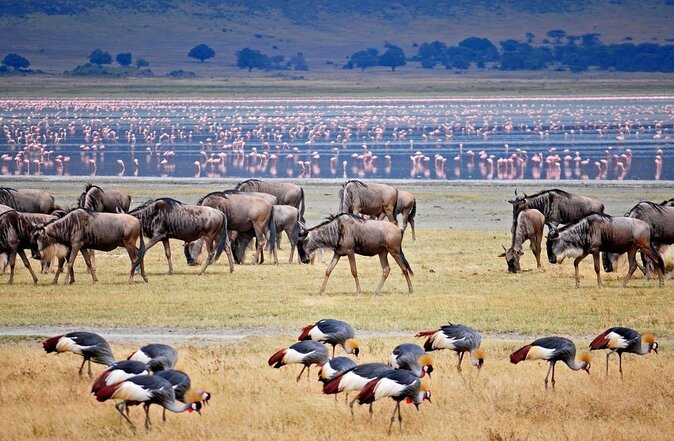
4 Day Great Migration Safari Serengeti & Ngorongoro Crater
Read our review →Browse the lists this tour appears in