
Reviewed · WILDEBEEST MIGRATION SAFARIS
Private 6-Day Great Migration Ndutu Serengeti Safari Tour
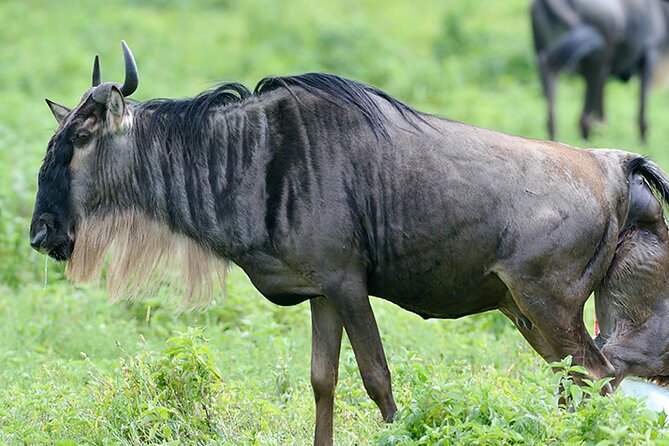
The real prize here is Ndutu from December through April, when vast herds of wildebeest and zebra gather on the short-grass plains. January is especially exciting: calves arrive in huge numbers, and hungry predators patrol nearby. I like the route’s variety, from elephant country in Tarangire to the Ngorongoro Crater and bird-filled Lake Manyara. I also like that this is private, so your group can set the pace.
The main drawback is the amount of ground covered in six days. You will spend long hours in a safari vehicle, and the quality of the migration sighting depends on nature’s timing, not a fixed schedule. The price is also firm at $2,827 per person, and the non-refundable booking rule calls for careful planning.
Key points at a glance
- Ndutu is the focus: The best viewing period is generally December to April, with January often offering the strongest calving action.
- Four major wildlife areas: You visit Tarangire, the Ndutu region, Ngorongoro Crater, and Lake Manyara.
- Private touring: Only your own group takes part, with pickup offered and group discounts available.
- Experienced field guides: Guides named in past departures include Shafino, Gilbert, Ozzie, Meck, Evans, Goodluck, Gama, Luther, and Sahele.
- Big Five potential: The route gives you a chance at lion, leopard, elephant, buffalo, and rhino, though sightings can never be promised.
- Arusha is both start and finish point: The trip begins with an overnight in Arusha and ends back at the meeting point after Lake Manyara.
Why Ndutu makes this six-day safari different
Many northern Tanzania safaris focus on the Serengeti as a broad destination. This one gives special attention to the southern Serengeti ecosystem around Lake Ndutu, within the Ngorongoro Conservation Area. That matters because the herds gather here at a particular time of year, rather than spreading evenly across the Serengeti.
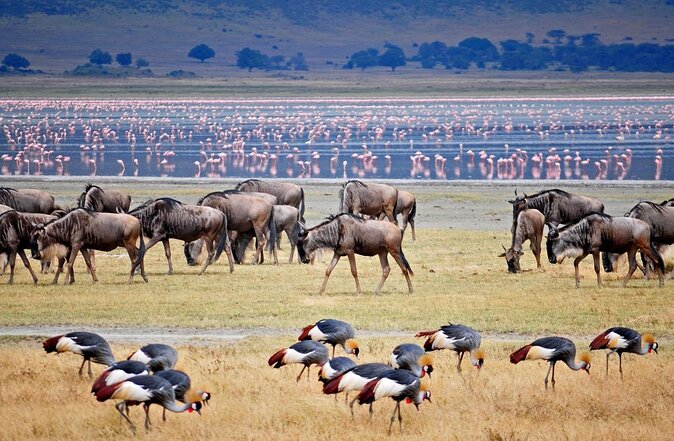
The key months are December through April. By January, the short grass can be filled with wildebeest and zebra, and the calving season brings a remarkable change in behavior. Newborn wildebeest can run within minutes, but their first days are still dangerous. Lions, cheetahs, hyenas, and other predators have an easy supply of vulnerable young nearby.
I would choose this tour for its seasonal focus, not simply because it includes several famous parks. If you visit outside the December to April window, you may still see excellent wildlife, but the central migration spectacle is less likely to be in Ndutu.
The setting around the lake is not just open grassland. You can pass through swamps, woodland, soda lakes, and broad plains. Those different habitats help explain why one full day here can feel more varied than the name Lake Ndutu suggests.
Other park itineraries that start in Arusha:
- Serengeti Balloon Safari and authentic bush breakfast
★ 5.0 · 2,480 reviews - Balloon Safari & Bush Breakfast in Serengeti – Miracle Experience
★ 5.0 · 1,646 reviews - 4 Days Group Camping Safari
★ 5.0 · 1,101 reviews
Day 1: A quiet Arusha arrival
The first day is deliberately gentle. A Lion King representative collects you from the airport and takes you to accommodation in Arusha. The stated overnight base is Arusha Planet Lodge, where you can rest and prepare for the early starts ahead.
Arusha is the practical gateway for this northern Tanzania route. After an international flight, a simple overnight is useful. You are not trying to squeeze in a game drive immediately, and you have time to settle in before leaving for Tarangire.
One point needs clarification before booking. The stated meeting point is Mount Meru Hotel on Arusha-Taveta Road, while the first-day plan refers to airport collection. Confirm your exact pickup arrangement and arrival details directly with the operator.
Day 2: Tarangire’s elephants and seasonal river
Your safari vehicle leaves Arusha in the morning for Tarangire National Park. The drive crosses Maasai country, with acacia trees, open plains, and people moving between villages on foot, bicycles, and donkey carts. Even before entering the park, you get a sense of the region beyond the wildlife circuit.
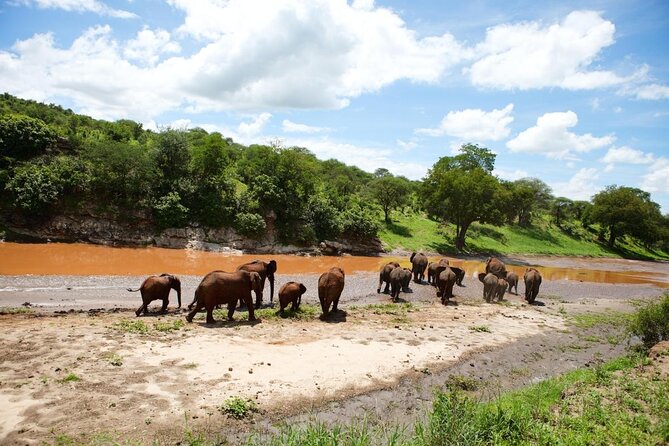
Tarangire is especially known for its elephant herds. The Tarangire River and seasonal swamps draw animals when water is scarce, and the park can also produce sightings of zebra and many other species. From the open roof of the safari vehicle, you get a good viewing position and a chance to photograph animals without window glass in the way.
This is an important contrast with Ndutu. Tarangire gives you larger trees, river country, and a different feel from the short-grass plains. The park’s elephants are the headline, but the value of the stop is the change in habitat.
The day is listed at about eight hours. That does not mean eight hours of uninterrupted driving, but you should expect a full day in the vehicle. Safari roads can be rough, and the open-sided format is wonderful for views but offers little protection from dust, sun, or cool morning air. Bring a light layer, a hat, and something to cover your camera when the road turns dusty.
Day 3: Reaching the Ndutu region
After breakfast, you drive for about three hours toward the Lake Ndutu region. The route crosses the Rift Valley and leads into the southern Serengeti ecosystem. The lake is alkaline, as are several lakes in the Rift Valley, and the surrounding area supports a wide range of wildlife.
Once you arrive, the emphasis shifts from covering ground to looking closely. A game drive in the Ndutu area may bring you near wildebeest and zebra herds, though their exact position changes with rain, grass, and water. The late afternoon drive is especially useful for getting a first sense of where animals are gathering before you settle in for dinner and the night.
The three-hour transfer is manageable by safari standards, but the total day may feel longer once game viewing is added. The reward is that you arrive in the zone that gives this tour its name. If the herds are in the area, you are already positioned for the next day’s full exploration.
Other safaris people book out of Arusha:
- 5 Days Group Camping Safari
★ 5.0 · 730 reviews - 3 Days Serengeti & Ngorongoro Group Camping Safari
★ 5.0 · 574 reviews - 7-Day Premium Luxury Tanzania Safari All-Inclusive
★ 5.0 · 426 reviews - 3-Day Classic Serengeti Safari
★ 5.0 · 263 reviews
Day 4: A full day among the calving herds
This is the core of the trip. After breakfast, you spend the full day in Ndutu, moving through swamps, woodland, soda lakes, and the open short-grass plains. A full day matters here because animal movement is unpredictable. You are not restricted to a quick morning visit before transferring to another park.
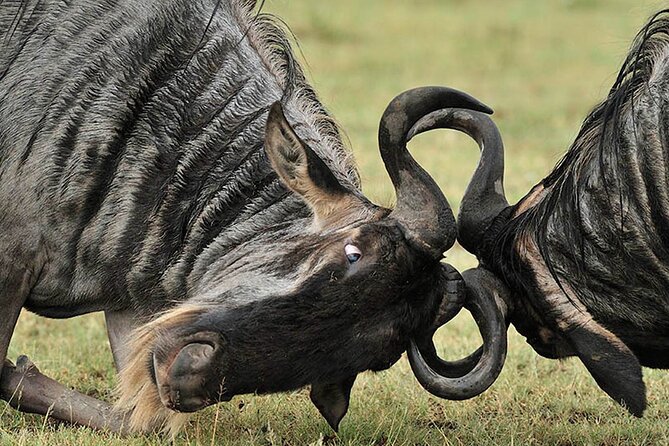
During the main calving period, often around January and lasting roughly three weeks, hundreds of thousands of wildebeest calves may be born. The open grass provides little cover, which makes the young easy to see and also exposes them to predators. You may witness active herds, mothers with newborns, or predators waiting near the edges of the groups.
Keep expectations realistic. A safari guide can read tracks, animal behavior, and reports from other vehicles, but nobody can promise a birth or a hunt. That uncertainty is part of the reason a full day is valuable. It gives you more time for quiet observation rather than turning the visit into a quick checklist.
This is also the day when your guide’s ability matters most. Past departures have included guides called Shafino Dominick, Gilbert, Ozzie, Meck, Evans, Goodluck, Gama, Luther, and Sahele. Specific guide assignments can change, but the strongest feedback centers on patient animal spotting, careful driving, wildlife explanations, and efforts to locate particular species such as leopard, rhino, and adult male lion.
Day 5: From the plains to Ngorongoro Crater
After breakfast, you begin the journey toward Ngorongoro Crater with an en-route game drive through the Serengeti. This creates another chance for wildlife before the scenery changes again. With good timing, you might see some of the Big Five, including lion, leopard, elephant, buffalo, and rhino.
The crater is a dramatic geological setting. It formed after a huge volcanic explosion millions of years ago and reaches about 610 meters deep, covering roughly 304 square kilometers. Its enclosed shape supports a high concentration of animals, making it one of Tanzania’s strongest areas for general game viewing.
You arrive at the crater rim before lunch, where the view down into the basin is a major moment of the trip. From above, the crater’s scale is easier to understand than it is from the floor. The descent and game drive then bring you close to a compact area with grassland, woodland, and water sources.
The crater can be busy, and its roads may feel more crowded than the remote stretches around Ndutu. That is the tradeoff for its reliable animal concentration. I would value this day for variety and the chance of seeing several major species, not for solitude.
The listed duration is about eight hours. Expect another long day with road time, viewing stops, and changing elevation. Pack snacks and water for the vehicle if those are not specifically supplied, and ask before departure what is included in your package.
Day 6: Lake Manyara’s birds and tree country
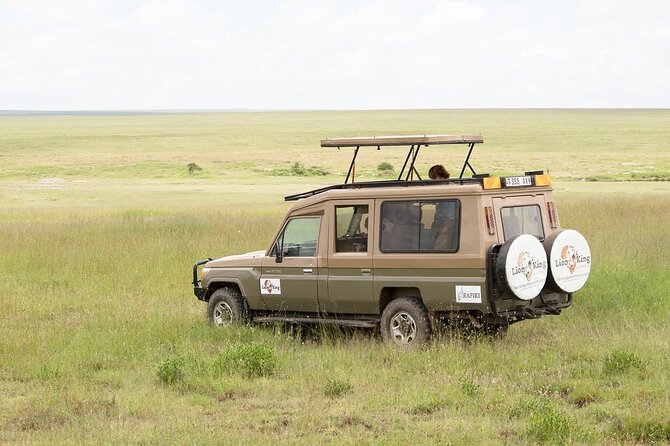
The last safari day takes you to Lake Manyara National Park, about 120 kilometers west of Arusha. The shallow alkaline lake can cover roughly 70 percent of the park in wet periods, then shrink as conditions change. Flamingos and a large number of other bird species are among the main attractions.
Lake Manyara offers a final change of pace. Instead of Ndutu’s wide plains or the crater’s enclosed basin, you may pass open grassland, woodland full of monkeys, baobab-marked cliffs, and lake country. Possible wildlife includes giraffe, zebra, wildebeest, buffalo, elephant, and lion.
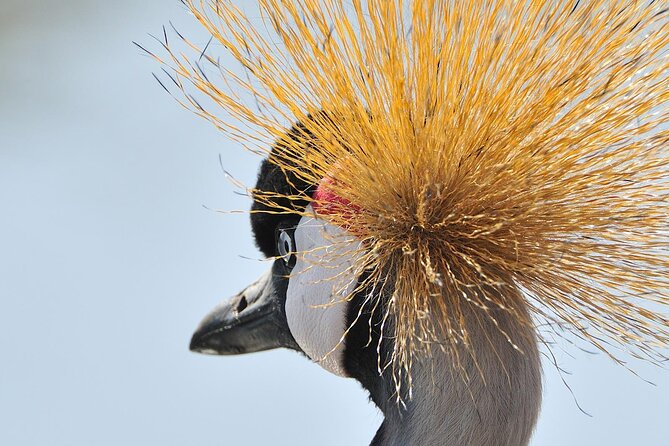
The park is also associated with lions that rest in trees. That sighting is not guaranteed, but it adds a fun element to the day. The birdlife is a serious reason to bring binoculars, even if your main goal is mammals. The park is said to support around 500 bird species, and flamingos can gather when water conditions suit them.
After lunch, the safari returns to Arusha and ends back at the meeting point. At roughly eight hours, this is not a short transfer day. If you have an evening flight, leave plenty of margin and confirm the expected arrival time before booking your onward travel.
What the private format changes
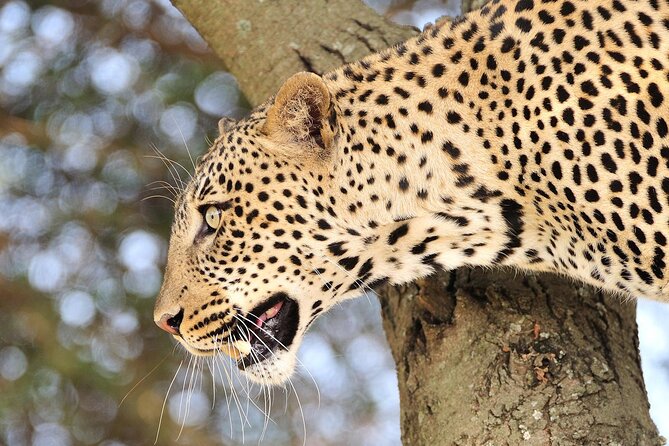
A private safari gives your own group the vehicle and guide. That is more than a comfort detail. You can discuss how long to stay at an animal sighting, ask for explanations at your own pace, and avoid being paired with strangers who want a different style of trip.
The private format is especially helpful in Ndutu, where patience can pay off. One person may want to wait near a herd, while another may prefer to continue looking for a predator. Your guide still makes the final call based on road conditions and park rules, but the day is not built around a large shared group.
It also makes this trip a good choice for families, couples, and small groups with a shared interest in wildlife photography. Group discounts are available, which may improve the per-person value as your party grows.
Guides, vehicles, and the practical side of safari days
The open-roof safari vehicle provides wide views and a good angle for photographs. Past guide feedback places strong emphasis on driving skill, animal spotting, route knowledge, and help with individual wildlife goals. One guide, David, was especially praised for handling muddy paths, rocky tracks, and difficult terrain.
That does not remove the physical demands. You will spend much of the trip seated in a vehicle, often on uneven roads. Dust, heat, early starts, and long transfers are part of the deal. This is not a relaxing lodge holiday with short excursions.
Communication before departure is another positive feature of the operation. Office staff named in past bookings include Pendo, Carolyn, Florida, and Naurey, with particular praise for prompt replies and help with arrangements. Still, you should confirm the exact vehicle setup, lodging names, meal plan, airport transfers, and departure times because the supplied trip details do not spell out every inclusion.
Is $2,827 per person good value?
At $2,827 per person, this is a serious purchase, but the route packs four major wildlife areas into six days and uses a private format. The price has greater appeal if you care most about the Ndutu migration and want your own guide rather than a shared vehicle.
The value is strongest in the timing. A trip centered on Ndutu during calving season can be far more rewarding than a generic safari taken at the wrong time of year. You are also paying for access to Tarangire, Ngorongoro Crater, and Lake Manyara, each with a different type of wildlife viewing.
The value is harder to judge without a full list of inclusions. Accommodation beyond Arusha Planet Lodge is not named in the supplied details, and the meal and park-fee breakdown is not provided. Ask for the full cost sheet before paying.
The booking is non-refundable and cannot be changed for any reason. That makes travel insurance and firm dates sensible, especially for an expensive seasonal trip.
Who should book this safari?
I would recommend it to you if your first priority is seeing the migration in southern Serengeti, especially between December and April. It also suits anyone who wants a private vehicle, a strong chance at varied wildlife, and a compact route through several famous parks.
It is less suitable if you dislike long drives, want a slow lodge-based holiday, or need complete certainty about seeing newborn calves, predators, or the Big Five. Nature controls the schedule, and six days means several full days on the road.
Should you book it?
Book this safari if you can travel during the Ndutu season and accept that wildlife sightings are never guaranteed. The full day in Ndutu is the strongest reason to choose it, while Tarangire, Ngorongoro Crater, and Lake Manyara give the trip welcome variety.
Before paying, confirm airport pickup, the Mount Meru Hotel meeting details, all accommodation names, what meals and park fees cover, and the exact guide assignment. If those details suit your budget, this is a focused private safari with a real seasonal purpose rather than a simple tour of famous park names.
FAQ
How long is the safari?
The safari lasts approximately six days.
Where does the safari start?
The stated meeting point is Mount Meru Hotel on Arusha-Taveta Road in the Sekei area of Arusha. Airport pickup is also offered for the first day.
Where does the safari end?
The activity ends back at the meeting point in Arusha.
Is this a private safari?
Yes. Only your own group takes part in the activity.
How much does the safari cost?
The stated price is $2,827 per person.
When is the best time to see the migration at Ndutu?
The migration is generally in the Ndutu area from December through April. January is highlighted as a strong month for calving.
How long is the drive from the Ndutu region?
The drive to the Lake Ndutu region after breakfast on Day 3 takes approximately three hours.
Which parks and areas are included?
The route includes Tarangire National Park, the Lake Ndutu region, the Ngorongoro Conservation Area and Crater, and Lake Manyara National Park.
Is airport pickup available?
Yes. Pickup is offered, and the first day describes collection from the airport by a Lion King representative.
Can the booking be cancelled or changed?
No. The experience is non-refundable and cannot be changed for any reason.
More migration safaris from Arusha
- 8 Days Great Wildebeest Calving Migration Safari from Arusha
★ 5.0 · 254 reviews - 10-Day Serengeti Wildebeest Migration Safari from Arusha
★ 5.0 · 218 reviews - 8 Day Spectacular Migration Serengeti mid -Range Tanzania Safari
★ 5.0 · 161 reviews - 9-Day Serengeti Migration Footsteps Tanzania Safari
★ 5.0 · 96 reviews
More Serengeti safaris from Arusha
- 5-Day Highlights mid-Range Crater, Serengeti, Tarangire
★ 5.0 · 296 reviews - Private 6-Day Tarangire Manyara Crater and Serengeti with Mid-Range Lodges
★ 5.0 · 238 reviews - 5 Days Camping Tarangire, Serengeti & Ngorongoro crater & Visiting Maasai
★ 5.0 · 229 reviews - 4 Days Join Group tour Tarangire Serengeti and Ngorongoro crater
★ 5.0 · 219 reviews
Just added in Arusha
- 2-Day Private Luxury Safari from Zanzibar with Flights★ 3.2 · 5 reviews
- 7-Day Private Tanzania Safari with Sunset Walking on the Crater Rim and Maasai★ 5.0 · 40 reviews
- Saadani Day Trip★ 5.0 · 13 reviews
- Nyssa Luxury Balloon in Safaris and Serengeti★ 5.0 · 69 reviews
- Arusha National Park Day Trip★ 4.5 · 18 reviews
- Arusha National Park Private Safari★ 5.0 · 59 reviews
- Arusha: Maasai Village Tour★ 4.8 · 22 reviews
- 3 Days Serengeti & Ngorongoro Tour★ 5.0 · 22 reviews
Wildebeest Migration Safaris, compared.
8 Days Great Wildebeest Calving Migration Safari from Arusha
Read our review →
10-Day Serengeti Wildebeest Migration Safari from Arusha
Read our review →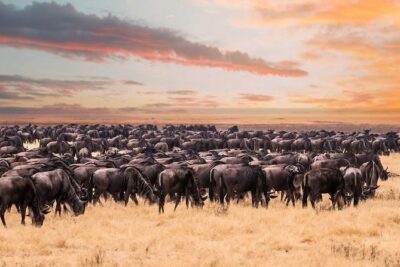
8 Day Spectacular Migration Serengeti mid -Range Tanzania Safari
Read our review →
9-Day Serengeti Migration Footsteps Tanzania Safari
Read our review →
4 Day Great Migration Safari Serengeti & Ngorongoro Crater
Read our review →
6 Days Tanzania Budget Camping Safari with Migration
Read our review →Browse the lists this tour appears in