
Reviewed · NGORONGORO CRATER TOURS
7-Day Group Camping Tarangire/Serengeti/Ngorongoro/lake Manyara
The main appeal here is simple: in one week, you see four of northern Tanzania’s major wildlife areas, including the Serengeti during the migration season. The route gives you repeated game drives rather than one quick park visit, with time for sunrise, sunset, and the chance to follow moving herds.
I like two things right away. First, the price of $1,790 includes meals, airport transfers, two nights in Arusha, park fees, and a 4×4 safari vehicle with a pop-up roof. Second, the small camping setup lets you spend more time in the parks and less time returning to town each evening. The main consideration is the pace: long drives, early breakfasts, basic camping, and several ten-hour days demand stamina.
Key points to know before booking
- Four major wildlife areas in seven days: Tarangire, Serengeti, Ngorongoro Crater, and Lake Manyara all appear on the route.
- Migration timing matters: The program is promoted for October through December, but its own schedule also identifies July through September as the strongest period for northern Serengeti river crossings.
- A skilled driver can shape the safari: Guides such as Mohamed, Jacob, Nuru, and Freddy have been assigned on different departures, with particular praise for animal spotting and positioning.
- Camping comes with fresh meals: Breakfast, lunch, and dinner are included for all seven days, with a dedicated cook on some departures.
- The vehicle is built for viewing: The extended 4×4 has a pop-up roof, giving you a clear standing or seated view of wildlife.
- The final days add cultural stops: Mto wa Mbu village and a Maasai boma bring people and daily life into a trip otherwise focused on animals.
What the seven-day route really gives you
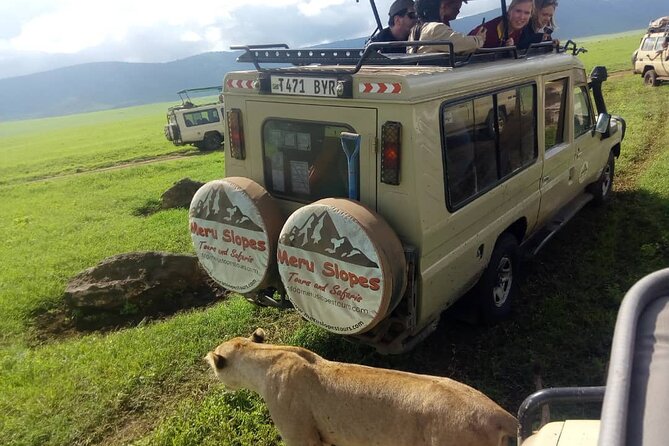
This is not a relaxed lodge holiday. You move through a large part of northern Tanzania by safari vehicle, often leaving camp early and reaching the next area after several hours on rough park roads. That effort buys you variety: elephants and baobabs in Tarangire, open plains and predators in Serengeti, dense animal viewing in Ngorongoro Crater, and a different setting at Lake Manyara.
You also get a good spread of safari hours. Day 1 is a full Tarangire game drive. Days 2 through 5 focus heavily on Serengeti, including an early morning drive and movement toward northern areas. Day 6 takes you into Ngorongoro Crater, and Day 7 finishes at Lake Manyara before the return to Arusha.
The schedule uses group camping, though the booking information also describes the activity as private to your group. Confirm the exact passenger arrangement before paying, especially if you are booking alone or with only one companion. The supplied trip details and past guide assignments suggest that some departures combine a few people in one vehicle, which can make the long drives more social and helps keep the price below a private luxury safari.
Other trips down into the crater from Arusha:
- 3 Days Serengeti & Ngorongoro Group Camping Safari
★ 5.0 · 574 reviews - 5 Days Camping Tarangire, Serengeti & Ngorongoro crater & Visiting Maasai
★ 5.0 · 229 reviews - 4 Days Join Group tour Tarangire Serengeti and Ngorongoro crater
★ 5.0 · 219 reviews
Day 1: Tarangire’s elephants and baobabs
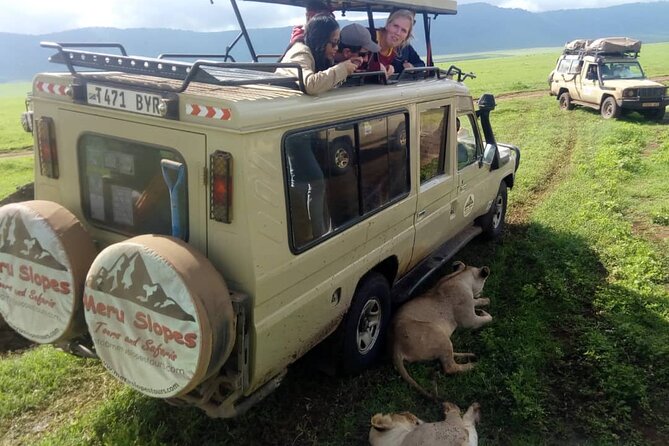
Pickup is scheduled around 8:00 a.m. from your Arusha hotel, followed by a roughly three-hour drive to Tarangire National Park. The park lies about 115 kilometers from Arusha and covers roughly 2,800 square kilometers, so this is not a token stop. You have a full day for game viewing before heading to Jambo Lodge for dinner and the night.
Tarangire is a strong opening act because it looks and feels different from the Serengeti. The park is known for large elephant herds, striking baobab trees, and pythons that can climb trees. Lions, leopards, and other animals are also possible, though no safari can promise a particular sighting.
The Tarangire River helps explain the park’s importance. Wildlife gathers around available water, and the river gives the area its name. Your guide will be watching not only for animals but also for behavior: elephants at water, predators near prey, and birds using the river corridor.
The drawback is the driving time on the first morning. You leave Arusha after breakfast and spend much of the day on the move, so pack water, sun protection, and a small bag you can reach inside the vehicle. The pop-up roof is useful here, since you can scan the trees and open ground without looking through a window.
Day 2: From the Rift Valley to central Serengeti
After breakfast, you pack the vehicle and begin an en-route game drive toward Serengeti National Park. Lunch is taken inside the safari vehicle, and the route includes views of the Rift Valley and Ngorongoro Crater before you reach the Serengeti around 3:00 p.m.
This is one of the most scenic transfer days, but also one of the longest, listed at about ten hours. You should think of it as a moving safari rather than a simple road transfer. The route gives you changing views and a first look at the scale of the region before you enter central Serengeti.
An evening drive in central Serengeti brings the first major chance to watch the sun go down in the park. You then spend the night at Seronera campsite inside Serengeti. Sleeping within the park matters because you are already close to the next morning’s wildlife areas, rather than starting with another long drive from outside.
Camping is the practical trade-off. You gain location and lower cost, but you should be comfortable with a basic outdoor night. This is not the choice for someone who wants a private bathroom, air conditioning, and a late start every day.
Days 3 and 4: Following the wildebeest in Serengeti
Days 3 and 4 are the heart of the safari. You begin with breakfast and spend full days on game drives, heading toward the northern Serengeti and looking for the wildebeest migration. The route description points to the Mara River and Ndutu Plains as key areas, although the exact position of the herds changes from year to year.
The migration is not a scheduled parade. Wildebeest respond to rainfall and fresh grass, and the herds may cross the Mara River more than once or remain in another part of the park. The schedule identifies July through October as the strongest period for river-crossing activity, with July through September offering the most favorable chance around northern Serengeti.
The program is also promoted for October through December, so check the exact travel dates with the operator. October can still offer excellent northern Serengeti viewing, while December may bring changing conditions. The important point is to book for the full Serengeti experience, not only for a guaranteed crossing.
This is where the driver matters most. In a park as large as Serengeti, finding the right area requires attention, communication, and patience. Drivers assigned on different departures have included Mohamed, Jacob, Nuru, and Freddy. Jacob has been especially valued for spotting animals, while Mohamed has been praised for reaching wildlife scenes before other vehicles gathered around them.
You should still expect quiet stretches. A day in Serengeti can include a dramatic predator sighting, a herd spread across the plains, or long periods of searching. That uncertainty is part of the experience, but it is worth knowing before you commit to two consecutive ten-hour game-drive days.
Other Serengeti itineraries out of Arusha:
- Serengeti Balloon Safari and authentic bush breakfast
★ 5.0 · 2,480 reviews - Balloon Safari & Bush Breakfast in Serengeti – Miracle Experience
★ 5.0 · 1,646 reviews - 5-Day Highlights mid-Range Crater, Serengeti, Tarangire
★ 5.0 · 296 reviews - 3-Day Classic Serengeti Safari
★ 5.0 · 263 reviews
Day 5: Sunrise, another drive, and the move toward Ngorongoro
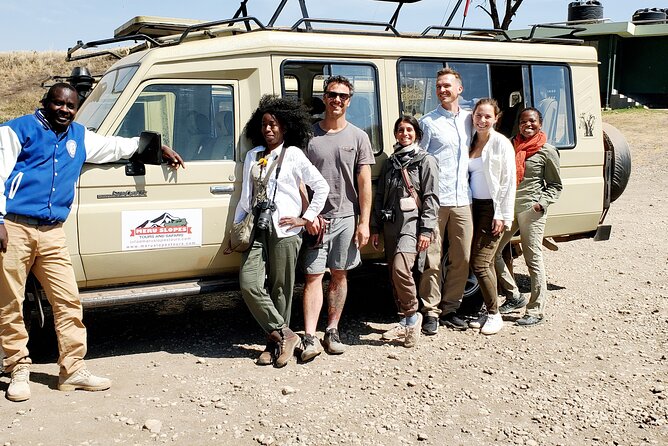
Day 5 starts early, with breakfast around 5:45 a.m. You watch the sun rise inside Serengeti, take an early game drive until about 11:30 a.m., then return to camp for hot lunch and packing.
After lunch, you continue with a game drive while heading toward Ngorongoro Conservation Area. Dinner and the night are at Simba campsite. This day combines one of the best safari time slots with a necessary relocation, so it is efficient but busy.
The early start is worth it. Dawn is a cooler time for wildlife activity, and the light is excellent for photography. It also means you should not expect a leisurely breakfast or much downtime. Bring warm layers for the morning and keep your camera, binoculars, and water close at hand.
The cook is an important part of this style of trip. Breakfast, lunch, and dinner are included throughout the seven days, and departures have included cooks such as Salim and Gadi. Meals have been described as freshly prepared, which makes a real difference after a dusty day in the vehicle. Tips for the safari guide and cook are not included, so budget for those separately.
Day 6: Ngorongoro Crater and Mto wa Mbu
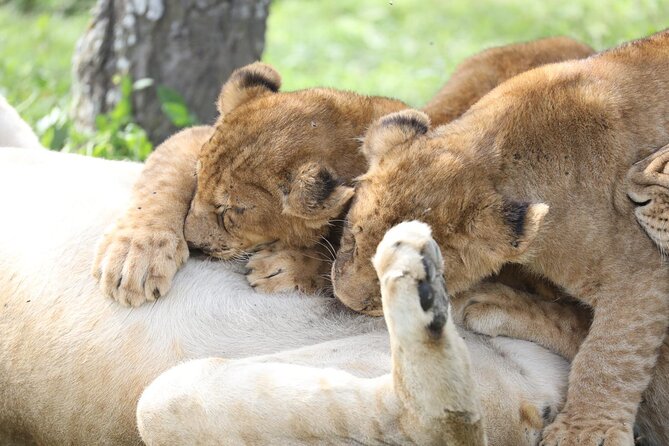
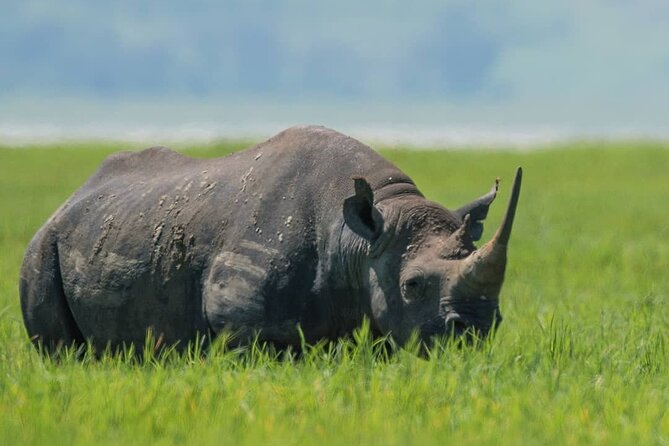
You wake around 5:30 a.m., eat breakfast, and descend into Ngorongoro Crater. The crater floor is the most concentrated wildlife stop on the route, with a stated chance to see the Big Five, birds, flamingos, and black rhinoceros.
The crater is especially rewarding for anyone who wants a compact day of animal viewing. You spend six to seven hours on the floor, eat lunch while watching the natural setting, and then climb back out. The high walls help create a contained wildlife area, though sightings are never guaranteed.
The scenery changes quickly from open animal country to crater viewpoints and forested slopes. Bring layers, since the early morning at elevation can feel cool before the day warms up. The ride in and out also adds time, and the road may feel demanding if you are tired after several days of camping.
After the crater, the itinerary adds a walking tour in Mto wa Mbu village. You may see banana plantations, learn about local life, and taste local food. This is a welcome change of pace after so many hours watching animals from the vehicle. It also gives you a chance to connect the protected areas with the communities living around them.
You return to Jambo Lodge for dinner and the night. That lodge night provides a little more comfort before the final park day, although the schedule remains full.
Day 7: Lake Manyara, hot springs, and a Maasai boma
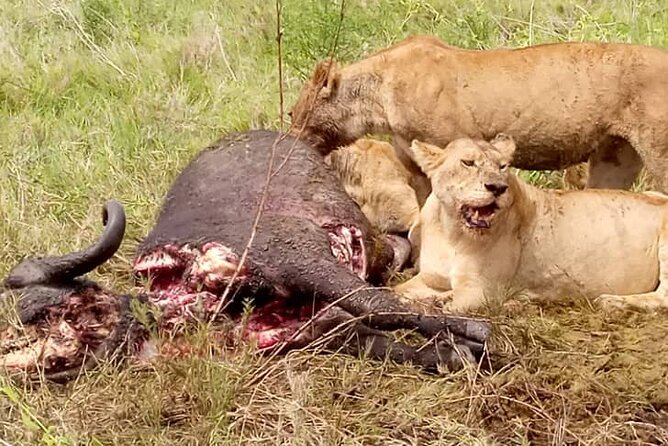
After breakfast, you drive to Lake Manyara National Park for a full-day game drive. The park is known here for tree-climbing lions, flamingos attracted by algae in the lake, and a hot spring.
Lake Manyara gives the trip a different final note. Instead of the wide Serengeti plains, you look for wildlife around a lake and varied vegetation. The tree-climbing lions are a headline sight, but they are not a certainty, so treat them as a possibility rather than a promise.
The hot spring adds another short stop, and the day includes a visit to a Maasai boma. You learn about Maasai traditions and daily life, giving the final day a human and cultural focus. I like that this is not simply another game drive followed by a long road back to Arusha.
You then drive back to Arusha for dinner and overnight accommodation. Two nights in Arusha are included in the overall package, one before the safari and one after it. Airport transfers in both directions between Arusha and the international airport are also included, which is useful if you are arriving tired or leaving on a tight schedule.
Camping, meals, and the safari vehicle
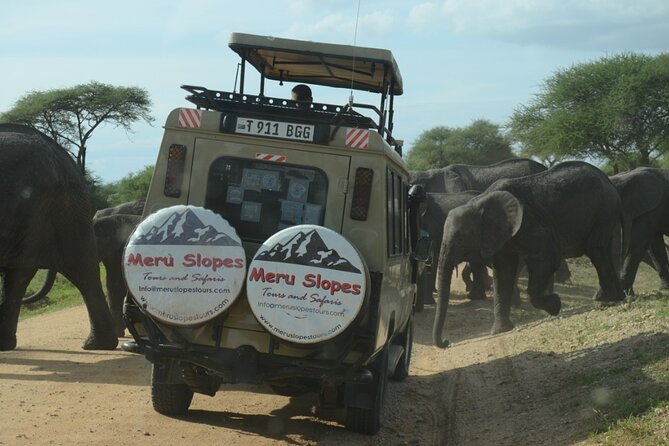
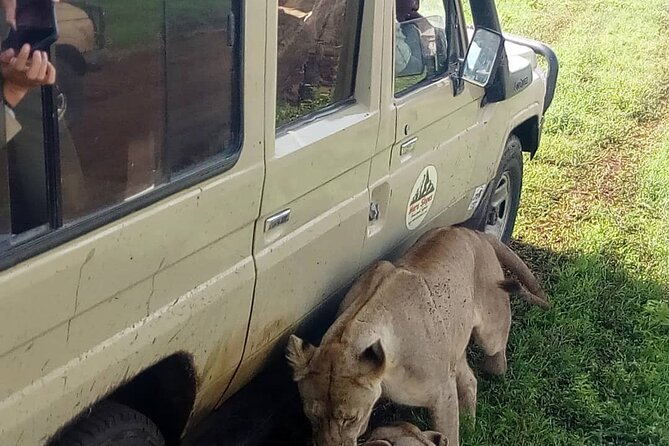
The included 4×4 is described as an extended luxury safari jeep with a pop-up roof. That roof is one of the most useful features on any wildlife trip. You can stand or sit higher than the surrounding grass, scan for movement, and photograph without a side window blocking the view.
The word luxury should be understood in safari terms, not hotel terms. It refers mainly to the vehicle and viewing setup. The accommodation is group camping for much of the route, with lodge nights at Jambo Lodge and camping at Seronera and Simba. Confirm the precise room and tent arrangement before booking if accommodation standards matter strongly to you.
All seven breakfasts, lunches, and dinners are included. Lunch is often eaten in or near the vehicle on driving days, while hot meals are served at camp when the schedule allows. This makes the package easy to budget, but you should still carry personal snacks and water for the long drives if you prefer to eat between scheduled meals.
Is $1,790 a good value?
At $1,790 per person, the value is strongest for someone who wants a long safari without paying lodge-safari prices. The package covers park fees, transfers, two Arusha nights, the 4×4, and all meals. It also gives you four major destinations and several days in Serengeti, where a shorter itinerary can feel rushed.
The price does not include tips and gratuities for the guide and cook. You also need to account for personal spending and any costs not specified in the package. Ask the operator to confirm the exact camping setup, group size, and whether your departure is shared or private, since those details affect the feel of the trip.
A private luxury safari may offer more control over meal times, route changes, and accommodation. This tour makes a different bargain: more time in the parks, a social vehicle, basic nights, and a lower overall cost. If you care most about wildlife access and a skilled driver, that is a sensible trade.
Who should book this safari?
I would recommend it to you if you want a wildlife-first itinerary and can handle early starts, dusty roads, and long days. It works especially well for a first safari because you see several different environments and receive repeated chances to learn how the parks function.
It also suits solo bookers and couples who prefer a lower price and do not mind sharing the safari format. The small-group setup can make the week feel social, and past departures have included a couple traveling with a solo participant.
You may want another option if you need predictable private space, short transfer days, or high-end lodging every night. You should also rethink the trip if the migration is your only goal. The animals move with rain and grass, and even a well-positioned guide cannot guarantee a Mara River crossing.
Practical booking advice
The advertised start time is 7:30 a.m., while the first pickup description gives 8:00 a.m. Confirm your exact pickup time and hotel location before the day begins. Pickup is offered, and the activity includes airport transfers in both directions between the international airport and Arusha.
Confirmation is provided at booking, and most people can participate. The experience requires good weather. If poor weather causes cancellation, you are offered another date or a full refund. Free cancellation is available up to 24 hours before the start time, but changes or cancellations inside that window are not accepted.
Ask about the exact migration route for your dates. The supplied schedule refers to northern Serengeti and Mara River crossings, while the promoted operating season is October to December. That does not make the trip unsuitable, but it makes a date-specific conversation with the operator especially important.
Should you book it?
Book this safari if you want the broadest wildlife circuit possible in seven days and value park time over polished accommodation. The combination of Tarangire elephants, several Serengeti days, Ngorongoro’s concentrated wildlife, and Lake Manyara’s lake setting gives you a strong introduction to northern Tanzania.
I would book it with three questions in writing: How many people will share the vehicle, where exactly will you camp, and which Serengeti area is planned for your dates? If the answers suit you, $1,790 is a solid price for the number of parks, meals, transfers, and game-drive hours included.
FAQ
How long is the safari?
The experience lasts approximately seven days, beginning in Arusha and returning there after the Lake Manyara visit.
Which parks and conservation areas are included?
The route includes Tarangire National Park, Serengeti National Park, the Ngorongoro Conservation Area and Crater, and Lake Manyara National Park.
Is the Great Migration guaranteed?
No. The migration changes each year and follows rain and fresh grass. The schedule identifies July through September as a strong period for northern Serengeti river crossings, while the experience is also offered from October through December.
Are meals included?
Yes. Breakfast, lunch, and dinner are included for all seven days.
Is accommodation included?
Yes. Two nights in Arusha are included, along with camping and lodge accommodation during the safari route. The itinerary names Seronera campsite, Simba campsite, and Jambo Lodge.
Are airport transfers included?
Yes. Transfers in both directions between the international airport and Arusha are included.
What is not included in the price?
Tips and gratuities for the safari guide and cook are not included.
More camping and lodge safaris from Arusha
- 4 Days Group Camping Safari
★ 5.0 · 1,101 reviews - 5 Days Group Camping Safari
★ 5.0 · 730 reviews - 5 Days Best of Tanzania Luxury Safari Northern Circuit
★ 5.0 · 174 reviews - 6 Days Private Budget Safari
★ 5.0 · 163 reviews
More Tarangire safaris from Arusha
- Private 6-Day Tarangire Manyara Crater and Serengeti with Mid-Range Lodges
★ 5.0 · 238 reviews - 4-Day Safari from Arusha: Tarangire, Serengeti and Ngorongoro
★ 5.0 · 173 reviews - 2 Days Tarangire and Ngorongoro Group Camping Safari
★ 5.0 · 146 reviews - 4 Days Tarangire Serengeti Ngorongoro Crater
★ 5.0 · 117 reviews
Just added in Arusha
- 4 Days Private Midrange Lodge Safari to Serengeti & Ngorongoro★ 5.0 · 4 reviews
- Extraordinary Hot air Bolloon ride in Serengeti | BURIGI CHATO SAFARIS CO L.T.D★ 5.0 · 6 reviews
- 3 days leopard safaris★ 5.0 · 4 reviews
- 8 Days Serengeti Migration safari★ 5.0 · 11 reviews
- tarangire, ngorongoro & lake manyara park 3 days private tour★ 5.0 · 11 reviews
- Mt. Kilimanjaro: Shira plateau to Cathedral point 3872m Day hike★ 5.0 · 7 reviews
- serengeti, ngorongoro & tarangire 4 days private tour★ 5.0 · 18 reviews
- tarangire & ngorongoro 2 days tour★ 5.0 · 14 reviews
Ngorongoro Crater Tours, compared.
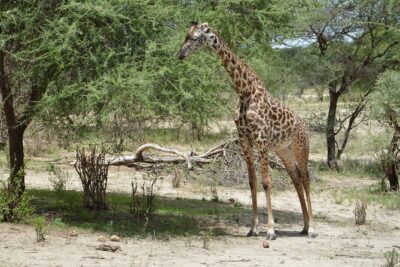
3 Days Serengeti & Ngorongoro Group Camping Safari
Read our review →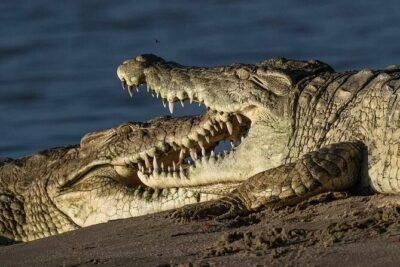
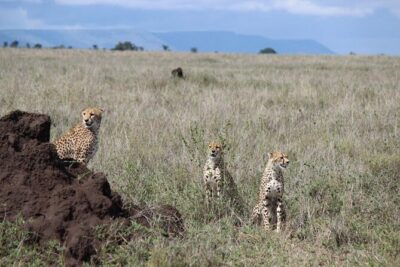
4-Day Safari from Arusha: Tarangire, Serengeti and Ngorongoro
Read our review →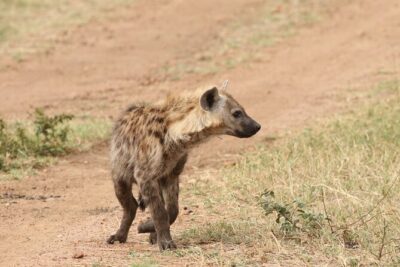
2 Days Tarangire and Ngorongoro Group Camping Safari
Read our review →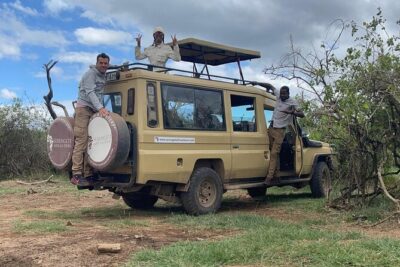
3 Days Private Safari – manyara, Ngorongoro & Tarangire
Read our review →
5 Days Tanzania Group Joining Safari, Tarangire/Serengeti/Ngorongoro Crater
Read our review →
4 Days Tarangire, Serengeti and Ngorongoro Mid-Range Group Safari
Read our review →Browse the lists this tour appears in