
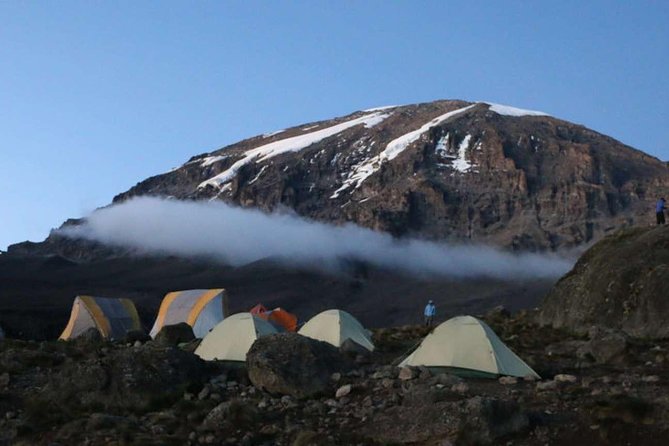
Reviewed · KILIMANJARO TREKS
7-Day Kilimanjaro Climb Machame Route–The Best Path to Uhuru Peak
The best part of the 7-day Machame Route is the change in scenery. You begin under thick rainforest, cross open moorland and alpine desert, scramble up the Barranco Wall, then reach Uhuru Peak by moonlight. It feels like several different treks stitched into one demanding climb.
I like the careful climb-high, sleep-lower pattern on Day 3, and I like that the price includes guides, porters, a cook, tents, meals, transfers, and basic safety equipment. The main drawback is the summit day: up to 12 hours of walking, much of it in darkness, followed by a long descent.
This is a private trip for your group, with a qualified mountain guide, assistant guides, porters, and cook. Past trips have featured team leaders and guides named Frazier, Justin, Joan, and Abraham. Names can change, so confirm your guide team before you go.
Key points at a glance
- Machame Gate to Uhuru Peak: Seven days take you from 1,800 meters to Africa’s highest point at 5,895 meters.
- A strong acclimatization plan: The Lava Tower ascent to 4,600 meters, followed by a night at Barranco Camp, gives your body useful practice at altitude.
- The Barranco Wall: Expect a safe but hands-on scramble, not technical climbing with ropes.
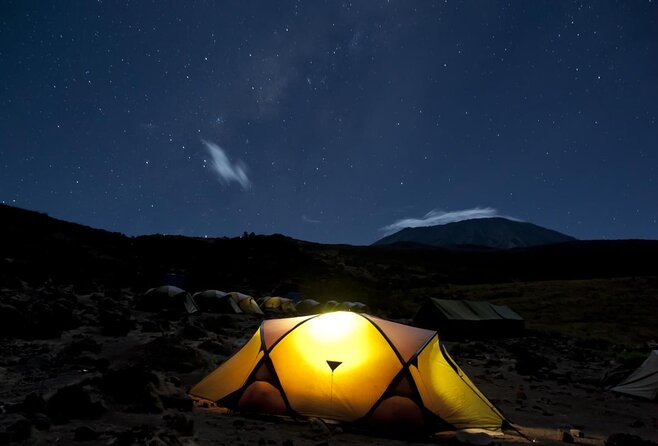
- A fully supported camp trek: Porters, a cook, tents, mattresses, camp furniture, meals, drinking water, and daily hot wash water are included.
- A demanding summit push: Day 6 lasts 10 to 12 hours and begins just after midnight.
- Good value at $2,812: The package covers major costs, though flights, visas, insurance, personal gear, medicine, snacks, and a portable toilet are extra.
Why the Machame Route earns its reputation
Machame is popular for good reason. It gives you more visual variety than a simple up-and-down route, and the seven-day schedule allows more time for your body to adjust to altitude.
You begin at 1,800 meters and finish at 5,895 meters. That is a major change in air pressure, so the route’s gradual rise matters. The itinerary also includes a climb to Lava Tower at 4,600 meters before dropping to Barranco Camp at 3,900 meters. I consider this one of the most useful parts of the plan because you gain height during the day but sleep lower at night.
Still, do not mistake a longer route for an easy one. You need a moderate level of fitness, and you should be ready for steep walking, cold conditions, basic camping, and a very long summit day. The mountain makes the final decision, not the booking confirmation.
Other routes up the mountain from Moshi:
- Kilimanjaro climb by Lemosho Route (7-day)
★ 5.0 · 651 reviews - Kilimanjaro climb, Machame Route (7-day)
★ 5.0 · 262 reviews - Kilimanjaro Climbing Lemosho Route 8 Days.
★ 5.0 · 186 reviews
Day 1: Machame Gate and the rainforest
The trek begins at Machame Gate, where the route climbs from 1,800 meters to Machame Camp at 2,835 meters. The walk takes about five to seven hours.
This first section runs through lush rainforest. It is a gentler introduction than the upper mountain, but the trail can still feel long if you have just arrived in Tanzania. The forest gives you shade and plenty to look at, with unusual plant life and the possibility of spotting local fauna.
I like this opening because it lets you settle into the walking rhythm before the air gets thin. Keep your pace slow from the first hour. A common mistake on Kilimanjaro is spending too much energy while the trail still feels easy.
At Machame Camp, the camping setup becomes your home. Tents, sleeping mattresses, camp chairs, tables, dinner, and drinking water are included. Hot water for washing is also provided each day, a small comfort that becomes much more valuable after a muddy or tiring walk.
Day 2: Shira Plateau and wider views
Day 2 climbs from 2,835 meters to Shira Cave Camp at 3,750 meters. Plan on four to six hours of walking.
The trees thin out as you move into heath and moorland. The route opens, and you begin to see Kibo Peak and the valleys around it. This is your first clear sense that Kilimanjaro is a huge volcanic mountain rather than simply a tall hill with a summit trail.
Shira Camp sits on the Shira Plateau, which gives the day a broad, open feel. The scenery is excellent, but the higher altitude may be more noticeable than the distance suggests. You might feel a headache, reduced appetite, or unusual tiredness. Tell your guide early if you feel unwell.
The support team is important here. A qualified mountain guide and assistant guides lead the group, while porters carry camping equipment and supplies. A cook prepares the included meals. You still need to carry your daypack, personal water, and items you want during the walk, but the heavy camping load is handled by the crew.
Day 3: Lava Tower and Barranco Camp
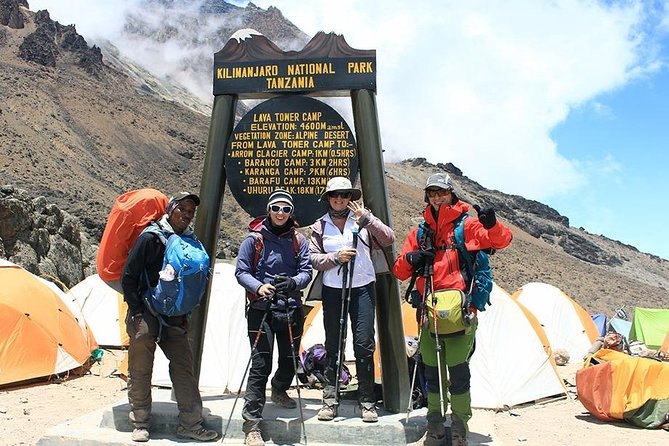
Day 3 is the route’s key acclimatization day. You climb from 3,750 meters to Lava Tower at 4,600 meters, then descend to Barranco Camp at 3,900 meters. The full day takes about six to eight hours.
This climb-high, sleep-lower pattern is valuable. You get a direct taste of the altitude at Lava Tower, then recover at a lower camp. It can be tiring, but it is far more useful for adjustment than simply gaining height every day.
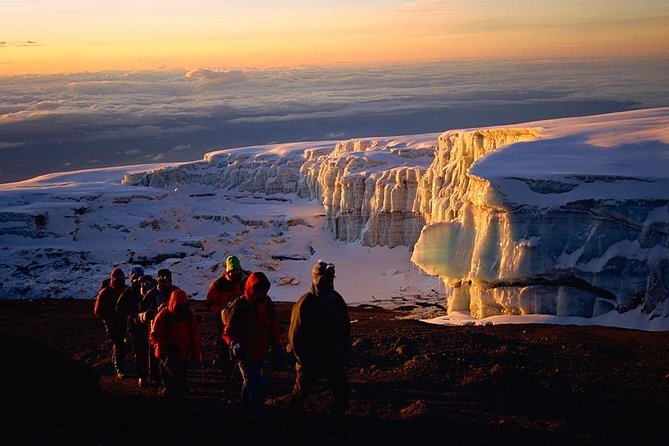
The scenery changes again as you cross alpine desert terrain. Vegetation becomes sparse, the air feels colder, and the mountain takes on a more severe character. At Barranco Camp, you are surrounded by striking volcanic scenery and high ridges.
This is also the point where the trip starts to feel serious. You are not yet on the summit push, but the altitude has arrived. Eat what you can, drink regularly, and follow the guide’s pace. Emergency oxygen is carried for emergencies only. It is not included as a way to help you reach the summit if your body cannot safely continue.
Same base, a different kind of day out:
- Safari Serengeti And Ngorongoro
★ 5.0 · 288 reviews - Climbing Kilimanjaro – Machame Route
★ 5.0 · 170 reviews - Climbing Kilimanjaro through 7 days Machame Route
★ 5.0 · 151 reviews - Kilimanjaro climb, Lemosho Route (8-day)
★ 5.0 · 148 reviews
Day 4: Scrambling up the Barranco Wall
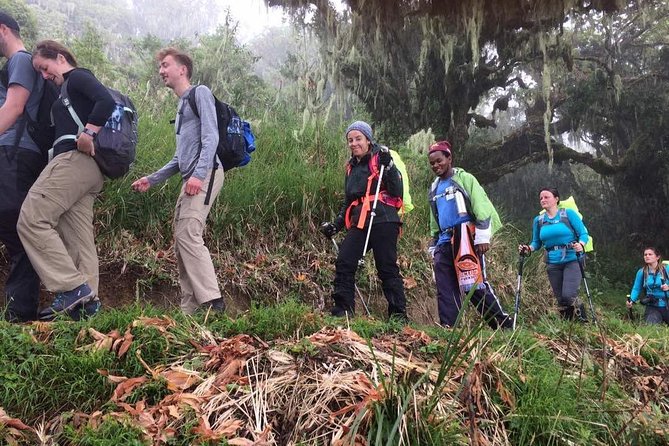
Day 4 runs from Barranco Camp at 3,900 meters to Karanga Camp at 4,035 meters. The walking time is about four to five hours.
The main feature is the Barranco Wall. Despite its dramatic appearance, the route describes it as a thrilling but safe scramble. You use your hands at times and move carefully over uneven ground, but this is not presented as a technical rock-climbing section.
The wall is one of the most memorable parts of the route because it adds variety to the walking. After several days of steady uphill trails, you get a more active climb with plenty of visual interest. Follow the guide’s instructions and avoid rushing people in front of you.
After the wall, the route crosses valleys toward Karanga Camp. The distance is shorter than some other days, but the altitude still makes the effort count. This is a good time to protect your energy for the summit attempt. I would keep the afternoon quiet, organize your clothing, and check that your headlamp, gloves, water, and warm layers are ready.
Day 5: Karanga to Barafu Camp
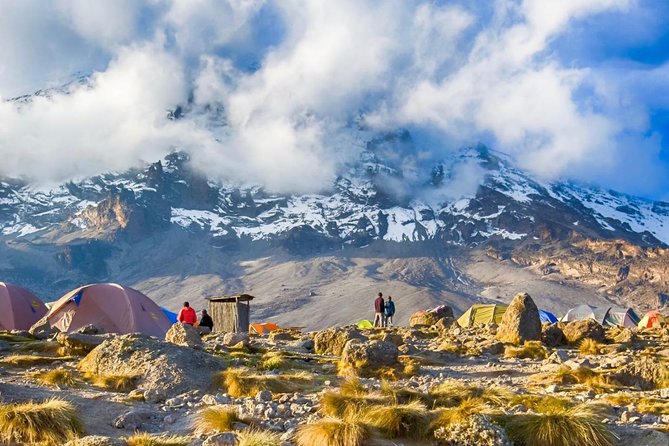
The route climbs from 4,035 meters to Barafu Camp at 4,640 meters. Expect four to five hours of walking.
Barafu is the base camp for the summit attempt. The approach is gradual, but the thin air makes even a moderate climb feel demanding. The word Barafu means ice in Swahili, and the setting marks the transition into the coldest and most exposed part of the trek.
You rest early because the final climb starts just after midnight. This schedule can feel strange. You may eat an early dinner, try to sleep in the evening, then wake for the summit push while the rest of the mountain is dark.
Use this afternoon well. Lay out your clothing in the order you will need it, fill your water containers, and keep your personal items close. Personal hiking and trekking gear is not included, though you can rent equipment in Moshi. The supplied information does not specify which items are available for rent, so arrange this before leaving town.
Day 6: Uhuru Peak and the long descent
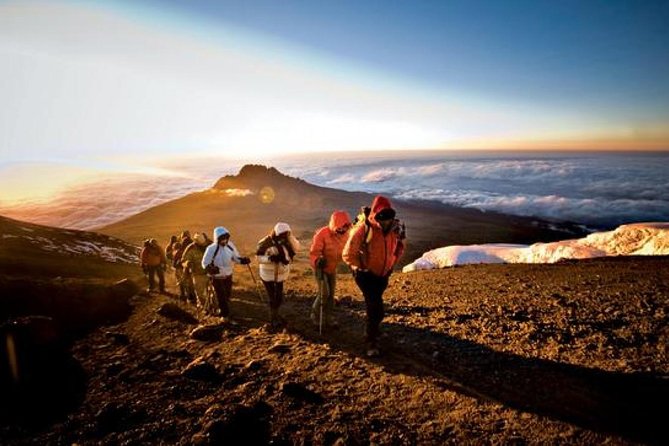
Day 6 is the hard one. You climb from Barafu Camp at 4,640 meters to Uhuru Peak at 5,895 meters, then descend all the way to Mweka Camp at 3,080 meters. The day takes about 10 to 12 hours.
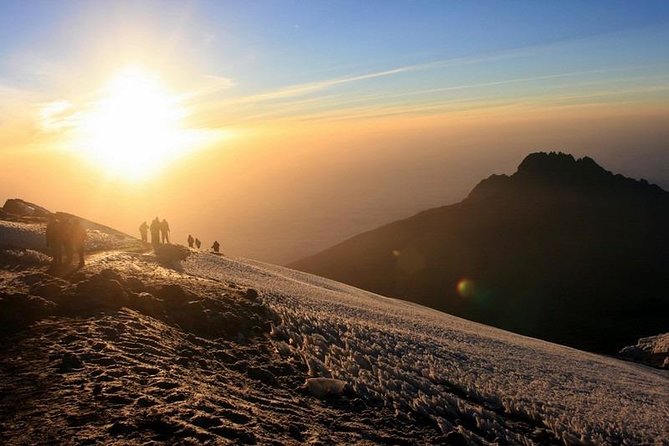
The summit attempt begins just after midnight. You walk by moonlight and headlamp, usually at a slow, steady pace. The cold and altitude are the real challenges. The route is not long because of technical climbing, but because every step takes effort at high elevation.
Reaching Uhuru Peak gives you the highest point in Africa. You have time to mark the achievement, take photos, and enjoy the sense of scale before beginning the descent. Keep that celebration brief and protect your energy. The mountain is only halfway done with you.
The descent to Mweka Camp is a major part of the day. Many people focus so closely on reaching the summit that they forget they still need to walk down thousands of meters. Your knees and feet may complain more on the descent than during the climb.
This is the day when guide support matters most. The team’s job includes monitoring your condition and helping manage the pace. Past trips have praised the care provided by guides and porters, including Frazier, Justin, and Abraham on different departures. You should still speak clearly about symptoms and follow safety decisions made by the mountain team.
Day 7: Mweka Trail and return to Moshi
The final day descends from Mweka Camp at 3,080 meters to Mweka Gate at 1,640 meters. The walk takes about three to four hours.
You return through rainforest, bringing back the trees, humidity, and softer air of the lower mountain. After the stark alpine zones, the forest feels like a different world. At Mweka Gate, you receive your summit certificate and return to Moshi.
This last walk is shorter, but tired legs can make it feel longer than the numbers suggest. Wear comfortable footwear and keep water handy. Your airport transfer is included at the beginning and end of the trip, with transport between Kilimanjaro Airport and Moshi.
What the $2,812 price really covers
At $2,812 per person, this is not a budget walk, but the package includes the main services that make a supported Kilimanjaro climb possible.
You get return airport transfers, all listed fees and taxes, a qualified guide, assistant guides, porters, a cook, camping tents, sleeping mattresses, camp chairs, tables, meals, drinking water, daily hot wash water, emergency oxygen, and a basic first aid kit.
Meals cover seven dinners, seven lunches, and six breakfasts. Snacks and drinks not specified are extra, as are personal medicine and water-purifying tablets.
The price does not include flights, visas, travel insurance, health insurance, personal items, or personal trekking gear. A portable toilet is optional but highly recommended, and it costs extra. Yellow fever vaccination is stated as compulsory, so check the health requirements that apply to your own trip before arrival.
The value depends on how much support you want. If you prefer to carry your own tent, food, and cooking equipment, this is not the right format. If you want a staffed climb with meals and camping logistics handled for you, the inclusion list makes the cost easier to justify.
The human side of the climb
The strongest part of this experience is the team structure. You are not simply handed a route map and sent uphill. A guide team leads the climb, porters carry camp equipment, and a cook prepares meals.
Past departures included guides and team members named Frazier, Justin, Joan, and Abraham. The most praised qualities were kindness, positive leadership, safety checks, food, and the feeling of becoming close to the team over seven days. Those are not minor details on Kilimanjaro. A calm guide and reliable camp routine can make a hard day feel manageable.
The trip is private, meaning only your group participates. That gives you a more personal setting than a large shared departure, though the exact group size is not stated. Ask the provider how many people are in your party and how many porters and assistant guides will support it.
Who should book this climb
I would recommend this route to someone who wants the most scenic version of a standard Kilimanjaro climb and is ready for a serious physical challenge. It suits first-time high-altitude climbers as well as experienced hikers, provided they understand that fitness alone does not prevent altitude problems.
You should be comfortable walking for several hours on consecutive days, sleeping in tents, managing cold conditions, and starting the summit attempt around midnight. You should also be prepared for the possibility that a guide may decide you cannot safely continue.
This is less suitable for someone wanting a relaxed holiday with a little hiking added. The summit day is long, and the inclusion of emergency oxygen should not be read as a promise that every climber will reach Uhuru Peak.
The cancellation terms are strict close to departure. You receive a full refund if you cancel at least three full days before the start time. Cancellations or changes made less than three full days before departure are not accepted for a refund.
Should you book the 7-day Machame Route?
Book it if you want changing scenery, a structured acclimatization plan, and a full support crew that handles camp, meals, and transfers. The Lava Tower day, Barranco Wall, and long summit approach give this route plenty of character, not just a direct uphill march.
Think twice if you dislike camping, cannot manage a 10 to 12-hour summit day, or want every expense included. You will still need flights, visas, insurance, personal gear, medicine, snacks, and possibly a portable toilet.
For the right climber, this is a strong seven-day plan. It gives you time to adjust, lets you cross several distinct mountain zones, and leaves the hard work in your hands while the support team handles much of the practical load.
FAQ
Where does the Kilimanjaro climb begin and end?
The activity begins in Moshi Urban, Tanzania, and ends back at the meeting point after the return from Mweka Gate.
How long is the Machame Route experience?
The climb lasts approximately seven days.
How high is Uhuru Peak?
Uhuru Peak is 5,895 meters above sea level.
How long is the summit day?
The summit day takes about 10 to 12 hours, including the climb to Uhuru Peak and the descent to Mweka Camp.
Is airport transportation included?
Yes. Return transfers between Kilimanjaro Airport and Moshi are included.
Are guides and porters included?
Yes. The package includes a qualified mountain guide, assistant guides, porters, and a cook, along with their wages.
Are meals included?
Yes. The package includes seven dinners, seven lunches, and six breakfasts.
Is personal trekking gear included?
No. Personal hiking and trekking gear is not included. You can choose to rent gear from equipment stores in Moshi. Personal medicine, water-purifying tablets, snacks, and unspecified drinks are also extra.
Just added in Moshi
- Wildlife Extravaganza: Manyara, Tarangire & Ngorongoro in 3 Days★ 5.0 · 3 reviews
- West Kilimanjaro cycling Adventures★ 4.5 · 8 reviews
- machame route★ 5.0 · 16 reviews
- Kilimanjaro Climb • Machame Route ~ 10 Day★ 5.0 · 6 reviews
- Kilimanjaro Climbing Umbwe Route★ 5.0 · 3 reviews
- Mt Kilimanjaro 6 days Marangu route hike★ 5.0 · 3 reviews
- 3 Days Private E-Bike Tour in West Kilimanjaro★ 5.0 · 3 reviews
- Private Cycle to Kilimanjaro Bike Park Safari★ 5.0 · 6 reviews
Kilimanjaro Treks, compared.



8-Day Small-group Lemosho Kilimanjaro Summit Trekking
Read our review →

5 Days Best of Tanzania Luxury Safari Northern Circuit
Read our review →

Climbing Kilimanjaro through 7 days Machame Route
Read our review →
7-Day Machame Kilimanjaro Summit Tour from Arusha
Read our review →Browse the lists this tour appears in