
Reviewed · KILIMANJARO TREKS
7-Day Kilimanjaro Climb Machame Route
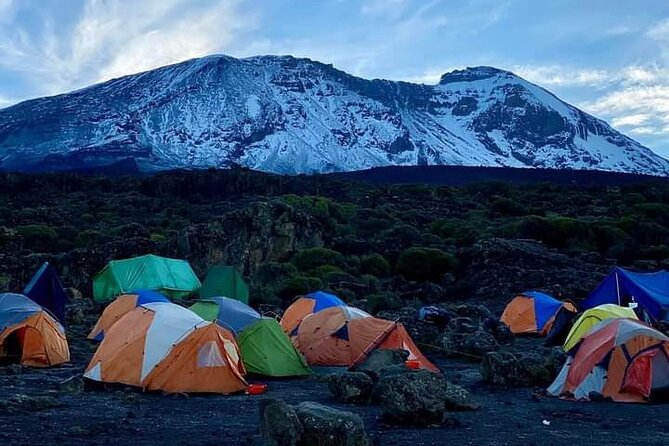
Machame earns its nickname, the Whisky Route, with a gradual high-altitude approach and big changes in scenery. You start beneath tall rainforest, cross open moorland, pass through alpine desert, and finish at Africa’s highest point. The route circles around the mountain rather than simply marching uphill, which gives your body useful time to adjust.
I like the strong guide-and-crew focus, with names such as Mwinyi, Gloria, Shani, Gasper, Goodluck, Ngoko, and Emmanuel appearing in the trip details. I also like the practical rhythm of climbing high to Lava Tower, then sleeping lower at Barranco Camp. The main drawback is the price of $3,100 per person, especially since the supplied details do not spell out every included service, and the summit day is a very demanding overnight effort.
Key points to know before you book
- A seven-day mountain climb with eight days overall: You spend an arrival night in Moshi, climb for six days, then return to town after the final rainforest walk.
- The route changes scenery almost every day: Expect rainforest, heath and moorland, Shira Plateau, alpine desert, the Barranco Valley, and glacier views.
- The best acclimatization day is built into the plan: You climb to Lava Tower at about 4,640 meters, then descend to Barranco Camp to sleep lower.
- The summit push begins around midnight: Reaching Stella Point takes about five to seven hours, followed by another one to two hours to Uhuru Peak.
- The mountain crew is central to the experience: Past trips highlight guides including Mwinyi, Gloria, Shani, Gasper, Goodluck, Ngoko, and Emmanuel, along with cooks and porters.
- You need moderate fitness and patience: The walking is not described as technical climbing, but the altitude, cold, long hours, and rough footing make this a serious trek.
What the Machame Route feels like on the mountain
Machame is a fine choice if you want more than a direct path to the summit. The route gives you a changing set of views and a gradual rise through several ecological zones. That matters on Kilimanjaro, where the altitude is the main challenge, not rock climbing.
You’ll walk for several hours most days, often at a steady pace. The plan includes a useful high point at Lava Tower followed by a lower camp at Barranco. This climb-high, sleep-lower pattern gives your body a better chance to adjust than a rapid straight ascent.
The route is not presented as a technical mountaineering trip. Even the Barranco Wall is described as a hiking passage where you may use your hands for balance and grip, not a vertical climbing section. Still, you should expect uneven ground, repeated ascents and descents, tired legs, and a very early summit start.
The experience is private, so only your group takes part. That can make the pace and daily conversations feel more personal, though the exact group size is not provided. The trip is operated by Kilimanjaro Heroes Adventures, and the high rating of 4.9 from 11 listed ratings, along with a 100 percent recommendation figure, points to a strong overall record in the information provided.
Other routes up the mountain from Moshi:
- Kilimanjaro climb by Lemosho Route (7-day)
★ 5.0 · 651 reviews - Kilimanjaro climb, Machame Route (7-day)
★ 5.0 · 262 reviews - Kilimanjaro Climbing Lemosho Route 8 Days.
★ 5.0 · 186 reviews
Arrival in Moshi and the first briefing
Your trip begins with airport pickup at Kilimanjaro International Airport and a drive to Moshi. The first night is set aside for a meet-and-greet, briefing, and rest before the climb begins.
Keys Hotel is named as the place where clients meet and spend the night. The day is listed as lasting up to 12 hours, though much of that time is arrival, transfer, and preparation rather than walking.
This overnight stop is useful. You can meet the mountain team, ask final questions, check your personal gear, and settle in before the trail. The stated start time is 8:00 am, but the actual climb begins the following day after breakfast and the drive to the park gate.
One practical point deserves a direct question before you pay. The arrival details refer to Keys Hotel, while the first climbing day says pickup from Stella Maris Lodge. Ask the operator to confirm your exact hotel and transfer plan. That is a small matter, but clarity is welcome when you are arriving in a new country with expedition gear.
Day 1 on the trail: Machame Gate to Machame Camp
The drive to Kilimanjaro National Park gate takes about one hour from the accommodation named in the plan. At the gate, your guide handles the entry forms while the crew prepares supplies and equipment.
This preparation period is part of the experience. You’ll see different teams loading food and gear, and you’ll begin to understand how much work goes into supporting a climb of this length. The mountain crew carries and organizes the practical side of the trip while you focus on walking and adjusting to the altitude.
The first hike to Machame Camp takes about five to six hours. The trail passes through rainforest, so this is one of the greener and more sheltered sections of the climb. It is a gentle introduction to the route, but do not mistake the trees for an easy day. You are already gaining height, and the first day is a good time to settle into a slow, even rhythm.
Your first night on the mountain is also your first test of camp life. Dinner, rest, and an early start become the pattern for the days ahead. The details provided do not specify tent arrangements, meal menus, or bathroom facilities, so ask about those before departure.
Day 2: Shira Plateau and the first wide views
The second trail day is shorter in feel, though it is still listed at about six hours. The rainforest gives way to heath and moorland, and the change is striking. Trees thin out, the air feels more open, and the route begins to look like a high mountain trek rather than a forest walk.
Shira Plateau is one of the appealing parts of this route. Your camp sits in a broad high area with views toward the mountain range, and the Kibo glacier may catch the last light at sunset. This is the sort of evening that makes the long approach worthwhile, especially if the weather stays clear.
The early start is sensible. Reaching camp around mid-afternoon leaves some time to eat, rest, and take in the setting without rushing into the evening. You should still keep your effort modest. The goal is not to prove anything on the lower days. The goal is to arrive at summit morning with energy left.
Same base, a different kind of day out:
- Safari Serengeti And Ngorongoro
★ 5.0 · 288 reviews - Climbing Kilimanjaro – Machame Route
★ 5.0 · 170 reviews - Climbing Kilimanjaro through 7 days Machame Route
★ 5.0 · 151 reviews - Kilimanjaro climb, Lemosho Route (8-day)
★ 5.0 · 148 reviews
Day 3: Lava Tower, Barranco Valley, and better acclimatization
This is the most carefully designed day in the plan. You climb from Shira Plateau to Lava Tower at roughly 4,640 meters, gaining about 700 meters, then continue down through the Barranco Valley to camp at a lower level.
The walking takes about six to seven hours. The terrain changes again, this time to alpine desert. The plant life becomes sparse but memorable, with small lobelia plants and giant Senecio plants in the Barranco Valley. These details help make the route feel like a passage through distinct mountain zones rather than a long uphill road.
Lava Tower is important because it lets you spend time at a higher altitude before sleeping lower. You might feel the height here, even if you are still walking comfortably. Take the guide’s pace seriously, drink as advised, and tell the crew promptly if you feel unwell.
Barranco Camp is one of the scenic overnight stops. It offers a dramatic mountain setting and prepares you for the next morning’s famous wall. This day is long enough to tire you, but the slower pace and lower sleeping altitude are valuable.
Day 4: The Barranco Wall and the ridge walk
After breakfast, you tackle the Barranco Wall. The description makes an important distinction: you may use your hands for grip, but there are no technical climbing passages. You should still listen closely to your guides, especially where the trail narrows or the footing feels awkward.
This is likely to be one of the most memorable sections of the route because it feels more physical than the earlier walking. You gain and lose height several times, then continue along a mountain ridge with Kibo and its glacier in view.
The walking time is listed at three to four hours, making this one of the shorter days. That does not mean it is effortless. Repeated ups and downs can be tiring, and the altitude makes every small climb feel bigger. The shorter schedule gives you time to reach camp, eat, and rest before the summit approach.
The strong crew culture matters here. Past trip details repeatedly single out guides and cooks by name, including Mwinyi, Gloria, Tammy, Mussa, Shani, Gasper, Siza, Anthony, Joshua, and Juma. You cannot assume you will be assigned any particular person, but it is clear that guide communication and food are treated as major parts of the trip.
Day 5: Barafu Camp and the quiet before the summit
The next goal is Barafu Camp, reached after roughly three to four hours. The route passes through a moonlike alpine desert, with little vegetation and an increasingly stark feel.
Barafu is the launch point for the summit attempt. After dinner, you go to bed early because the climb begins around midnight. The schedule is simple, but the timing is not easy. You may spend much of the evening trying to rest while thinking about the long night ahead.
This is where preparation pays off. Keep the evening calm, organize the items you need for the summit, and avoid wasting energy. The provided information does not give a packing list, so ask the operator what clothing, headlamps, trekking poles, water containers, and personal medicines you should bring.
Day 6: The midnight climb to Uhuru Peak
The summit day is the hardest part of the trip. You are woken shortly before midnight for tea and biscuits, then begin climbing in darkness.
It takes about five to seven hours to reach Stella Point on the crater rim. From there, you need another one to two hours to reach Uhuru Peak at 5,895 meters. This is not a quick photo stop. You are climbing through the coldest and most tiring portion of the trip after several days on your feet.
The reward is sunrise from the top of Africa, weather permitting. The views are the main prize, but reaching the summit also gives the day its emotional force. After Uhuru Peak, you descend to Barafu Camp in about one to two hours, where the mountain crew waits with snacks before you continue resting.
The day is listed at about nine hours, but summit-day timing can feel longer because of the midnight start, the slow pace, the altitude, the stop at Stella Point, and the descent. You should book this only if you can accept that reaching the summit is not guaranteed. The plan provides support, but no operator can remove the effects of altitude or bad conditions.
Day 7: Mweka Gate, farewell, and a proper shower
The final mountain morning begins with breakfast and a farewell ceremony from the mountain crew. Then you walk for about two to three hours through rainforest to Mweka Gate.
A vehicle takes you back to Keys Hotel for a shower, a cold drink, a debrief, and a certificate of achievement. After several nights in the mountain environment, that shower is not a minor detail. It is one of the day’s great rewards.
The afternoon is left open for rest and reflection. This is a sensible finish because you have just completed the summit push and descent. The advertised duration is about eight days overall, even though the climb itself is commonly described as a seven-day Machame trek. Think of it as one arrival day, six mountain walking days, and one return day.
Guides, food, and the human side of the climb
The strongest theme in the available trip details is the mountain crew. Guides such as Mwinyi, Gloria, Shani, Gasper, Goodluck, Ngoko, and Emmanuel are praised for care, patience, humor, and steady support. Cooks and porters also receive specific attention, with Saloum and Juma named for food that helped climbers keep going.
That human support is not decoration. On a high-altitude climb, your guides set the pace, watch how you are coping, explain tricky sections, and help you make sensible choices. A friendly crew can also make long, tiring days feel less grim.
At the same time, the supplied details do not clearly state porter numbers, food arrangements, accommodation standards, tipping guidance, or the full list of price inclusions. Ask for those details in writing. The price is easier to judge when you know exactly what the $3,100 covers.
Is $3,100 a fair price?
At $3,100 per person, this is a serious purchase. The value comes from the length of the route, park access, airport pickup, guiding, camp support, meals if included, transfers, and the organizational work required to move a crew up and down Kilimanjaro.
I would not compare the price with a basic day hike. This is a multi-day high-altitude expedition with a midnight summit attempt and a full support team. The seven-day route is also preferable to a rushed ascent for many people because it gives more time to adjust.
Still, do not book on price alone. Confirm whether accommodation before and after the climb, transfers, meals, park fees, crew costs, emergency support, and the certificate are included. The supplied details confirm admission tickets and pickup, but they do not spell out every cost.
Free cancellation is available if you cancel at least 24 hours before the local start time. Cancellations within 24 hours are not refunded, and changes inside that window are not accepted.
Who should book this Kilimanjaro climb?
I would recommend it to an active person who wants a scenic route, a private group setting, and several days to adjust to altitude. It suits you if you like a clear daily structure, do not mind early starts, and are prepared for basic mountain conditions.
It is less suitable if you want a relaxed holiday, dislike cold nights, or expect a guaranteed summit. The operator asks for moderate physical fitness, but you should think beyond fitness alone. Patience, mental stamina, and the ability to walk slowly for hours matter just as much.
The route also suits people who care about the character of the crew. The named guides, cooks, and porters are a recurring strength of the experience, and the farewell ceremony gives the final day a human touch.
Should you book it?
I would book this Machame climb if you want a well-paced route with strong scenery and a support team that appears to be a major part of the experience. The climb-high, sleep-lower day at Lava Tower is a real advantage, and the progression from rainforest to glacier views gives the week plenty of variety.
Before paying $3,100, get the exact inclusions, hotel details, group size, equipment guidance, and crew arrangements in writing. If those answers are clear and you are ready for the midnight summit push, this is a serious but appealing way to reach Uhuru Peak.
FAQ
How long does the Kilimanjaro experience take?
The experience lasts about eight days overall. It includes an arrival night in Moshi, the mountain climb, and the final return to the hotel after walking to Mweka Gate.
How many days are spent climbing the Machame Route?
The climb is described as a seven-day Machame Route trip, with the first and last days involving mountain access and descent. The full program includes the arrival and return days as well.
Where does the trip begin?
You are picked up at Kilimanjaro International Airport and taken to Moshi for a briefing and overnight stay. Keys Hotel is named as the meeting and pre-climb hotel.
What time does the experience start?
The stated meeting time is 8:00 am. The summit climb itself starts around midnight on the summit day.
How high is Uhuru Peak?
Uhuru Peak is at 5,895 meters above sea level.
Is the Barranco Wall technical climbing?
No technical climbing passages are described. You may use your hands for grip, and the guides will direct you through the section safely.
What level of fitness do I need?
The experience asks for a moderate physical fitness level. You should be ready for several hours of walking each day, altitude, repeated ascents and descents, and the long summit day.
Is this a private experience?
Yes. Only your group participates in the activity. The exact group size is not provided.
Can I cancel for a full refund?
Yes, if you cancel at least 24 hours before the local start time. Cancellations or changes made within 24 hours are not accepted for a refund.
Just added in Moshi
- Wildlife Extravaganza: Manyara, Tarangire & Ngorongoro in 3 Days★ 5.0 · 3 reviews
- West Kilimanjaro cycling Adventures★ 4.5 · 8 reviews
- machame route★ 5.0 · 16 reviews
- Kilimanjaro Climb • Machame Route ~ 10 Day★ 5.0 · 6 reviews
- Kilimanjaro Climbing Umbwe Route★ 5.0 · 3 reviews
- Mt Kilimanjaro 6 days Marangu route hike★ 5.0 · 3 reviews
- 3 Days Private E-Bike Tour in West Kilimanjaro★ 5.0 · 3 reviews
- Private Cycle to Kilimanjaro Bike Park Safari★ 5.0 · 6 reviews
Kilimanjaro Treks, compared.



8-Day Small-group Lemosho Kilimanjaro Summit Trekking
Read our review →

5 Days Best of Tanzania Luxury Safari Northern Circuit
Read our review →

Climbing Kilimanjaro through 7 days Machame Route
Read our review →
7-Day Machame Kilimanjaro Summit Tour from Arusha
Read our review →Browse the lists this tour appears in