
Reviewed · KILIMANJARO TREKS
7 Day Kilimanjaro Climbing Via Lemosho Route
The Lemosho Route gives you Kilimanjaro at its most varied. You begin in rainforest, cross the open Shira Plateau, pass giant senecios and volcanic rock, then make a cold, pre-dawn push to Uhuru Peak. It is a serious high-altitude trek, not a simple hike with a summit photo at the end.
I like the careful altitude profile, especially the climb high to Lava Tower followed by a lower night at Barranco. I also like the camping setup: spacious tents, a separate dining tent, catered meals, and a local crew that includes guides such as William, Rama, and Emanuel. The main drawback is the schedule itself. Seven days is workable, but summit day is long, cold, and physically taxing, so you need solid fitness and a sensible attitude about turning around if your body says no.
Key points to know before booking
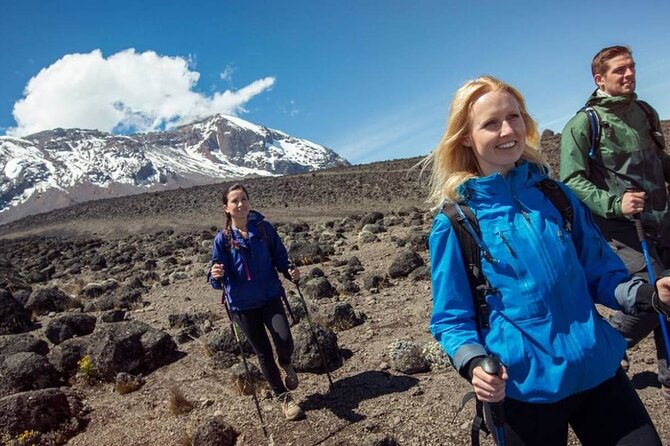
- Six ecological zones in one climb: Start in Afromontane rainforest, then pass through heather, moorland, alpine desert, and the arctic summit zone.
- Lava Tower acclimatization: Day three takes you up to about 15,223 feet before dropping to Barranco, a useful high-then-low pattern.
- A real summit night: You leave around midnight for Stella Point and Uhuru Peak, with the coldest and windiest hours coming before sunrise.
- Comfortable camp routine: Spacious tents, a dining tent, catered food, and three included meals each day make the basic camp life easier.
- Local guiding team: William, Rama, Emanuel, and other Spirit of Kilimanjaro guides are named in the tour feedback, with praise for safety, pacing, care, and mountain knowledge.
- Good value at $2,566: The price covers seven days of trekking, camping, breakfast, lunch, dinner, park access, and pickup, but not your visa.
Why Lemosho is a strong route to Uhuru Peak
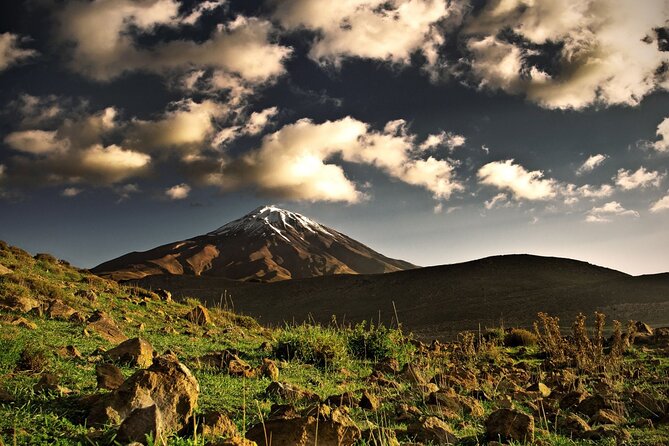
Kilimanjaro is often described as a walkable high mountain, and that is only partly true. The trails do not require technical climbing equipment, but the summit reaches 19,341 feet. At that height, cold, thin air, steep sections, poor sleep, and simple fatigue can matter more than your normal hiking ability.
Lemosho is appealing because the scenery changes often. You do not spend the entire climb on one type of trail. The route begins on the western side of the mountain and moves through forest, open high country, volcanic terrain, and the stark upper slopes of Kibo.
The route also gives you a useful acclimatization pattern. You gain height gradually, spend time above 13,000 feet, climb high to Lava Tower, then sleep lower at Barranco. That does not remove altitude risk, but it is a more thoughtful plan than rushing straight upward.
Spirit of Kilimanjaro uses a local guiding team and supplies a full camping operation. Your crew carries the camp gear and prepares meals while you focus on walking, drinking, resting, and managing your energy. Past feedback gives special credit to guides William, Rama, Emanuel Hoblen, and Emanuel Mkumbo, as well as guides called Rama and William together. Names and assignments can vary, but these are useful names to know when you communicate with the operator.
Other routes up the mountain from Moshi:
- Kilimanjaro climb by Lemosho Route (7-day)
★ 5.0 · 651 reviews - Kilimanjaro climb, Machame Route (7-day)
★ 5.0 · 262 reviews - Kilimanjaro Climbing Lemosho Route 8 Days.
★ 5.0 · 186 reviews
Day 1: Rainforest from Londorossi Gate to Forest Camp
The first day begins with a long drive from Arusha to Londorossi Gate, the entry point for the western approach. The stated meeting time is 9:00 a.m., and pickup is offered.
From the gate, you walk from about 7,742 feet to 9,498 feet. The distance is roughly four miles, with three to four hours of walking. The pace is meant to be gentle, which is welcome after the vehicle transfer and park formalities.
This first section passes through Afromontane rainforest. The air is damp, the trail is shaded, and the vegetation gives you your first clear sense that Kilimanjaro is more than a bare volcanic cone. You may also keep watch for wildlife, though the main focus is simply getting used to the daily walking rhythm.
Lunch is taken on the trail before you reach Forest Camp in the middle of the afternoon. That early arrival matters. You have time to settle into camp, eat again, and rest before the route becomes higher and more exposed.
Day 2: The Shira Plateau and views toward Kibo
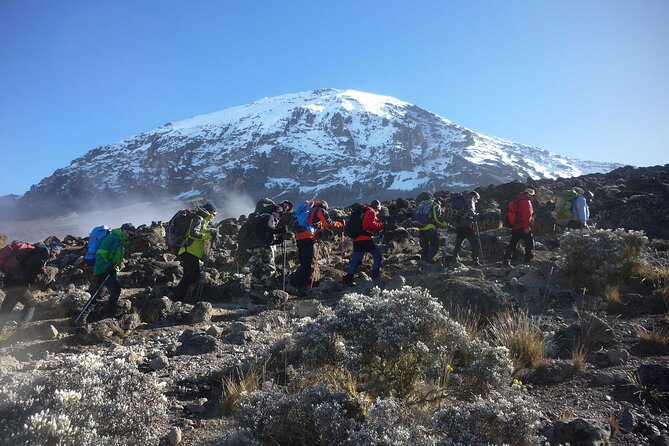
Day two climbs from about 9,498 feet to 11,500 feet over roughly five miles. Expect five to six hours on foot.
The forest thins into podocarpus and juniper woodland, then gives way to heather, lichen-covered volcanic rock, and the open Shira Plateau. This is one of the first major visual changes on the route. You leave behind the enclosed feel of the forest and begin walking in broad, high country.
Shira was once Kilimanjaro’s third volcanic peak before collapsing. You do not need a geology lecture to appreciate the result. The plateau gives you open views and a strong look toward Kibo, the main summit.
You sleep at Moir Hut, although the accommodation is camping rather than a hut stay in the usual lodge sense. The advertised camp elevation is around 11,500 feet, and the day is long enough to make a hot meal and a dry sleeping space feel valuable.
This is also a good point to learn your personal pace. The guides are expected to keep the group moving slowly and steadily. Do not treat the first two days as a race. The summit is still several days away, and saving energy is part of the climb.
Day 3: Lava Tower, giant senecios, and Barranco Valley
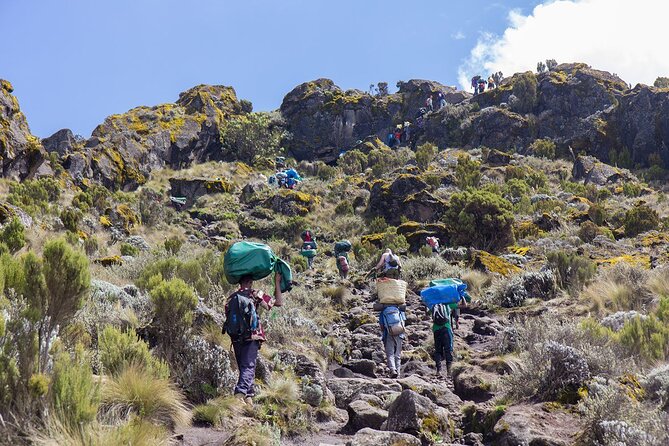
Day three is one of the smartest parts of the route. You climb from roughly 13,800 feet to 15,223 feet at Lava Tower, then descend to about 13,044 feet at Barranco Camp. The walk covers about seven kilometers and takes four to six hours.
The high section is sparse. There is little plant or animal life because of the cold and changing conditions. Lunch is usually taken near Lava Tower, a tall volcanic formation. If you feel strong, you can make an optional ascent of the roughly 300-foot tower, but there is no need to prove anything here. The main purpose of the day is acclimatization and steady progress.
After Lava Tower, the trail drops toward Barranco. The descent can feel like a gift to your lungs, though your legs may notice the extra work. Along the way, you pass the Garden of the Senecios, where giant groundsels and giant lobelias create some of the route’s strangest plant scenes.
Barranco Valley is one of the prettiest sections of the climb. Its cliffs and high volcanic walls give the route a sense of scale before the summit attempt. You camp at about 13,044 feet, so sleep may still be imperfect. That is normal for a high-altitude itinerary, and the extra time at this elevation is part of the plan.
Same base, a different kind of day out:
- Safari Serengeti And Ngorongoro
★ 5.0 · 288 reviews - Climbing Kilimanjaro – Machame Route
★ 5.0 · 170 reviews - Climbing Kilimanjaro through 7 days Machame Route
★ 5.0 · 151 reviews - Kilimanjaro climb, Lemosho Route (8-day)
★ 5.0 · 148 reviews
Day 4: The Barranco Wall and Karanga Camp
Day four covers only about three miles, but short mileage does not mean an easy day. You climb from approximately 13,044 feet to 13,123 feet, with four to five hours of walking.
The main feature is the Barranco Wall. It can look intimidating from camp, and you should expect to use your hands as well as your feet in places. This is not described as technical climbing, but it is a rough, steep mountain path where balance and patience matter.
The guides can help set a slow pace through the more awkward sections. Keep your pack light and follow instructions. The wall is often more manageable once you are on it than it appears from below.
After the wall, the trail moves through repeated inclines and declines toward Karanga Camp. The distance is modest, but the altitude and uneven ground can make the day feel longer. The camp sits high on the southern side of the mountain, with views toward glacial valleys and ice fields.
The late afternoon can be especially rewarding here. Sunsets are often a highlight, and the elevated camp gives you another chance to spend time at altitude before the summit push. This is one of those days where a slow schedule is more useful than a bigger mileage target.
Day 5: Barafu Camp and the quiet before the summit
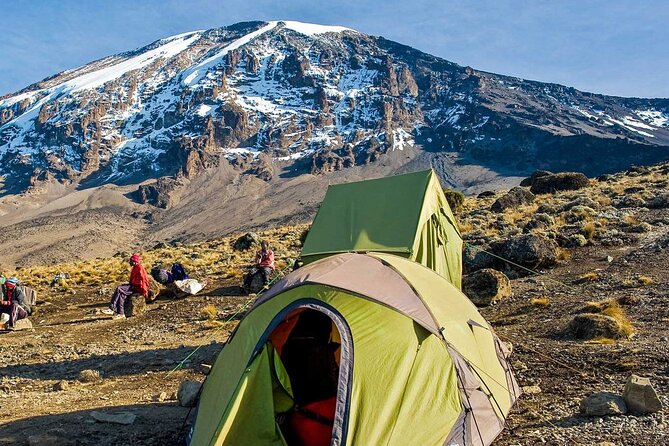
The published day plan describes a half-day climb to Barafu Camp, followed by lunch and rest before the summit bid. The camp sits at about 15,288 feet, in an alpine desert with strong winds and little shelter from the elements.
You may have views toward Mawenzi Peak, one of Kilimanjaro’s major volcanic summits. The setting is stark and beautiful, but comfort is limited. Wind can blow across camp, temperatures drop sharply, and you may not feel much appetite or sleepiness at this height.
An early dinner is planned before you rest for the night. In practice, this is a preparation period rather than a normal evening. Organize warm layers, water, headlamp, snacks, and whatever personal items you need before trying to sleep.
There is a confusing elevation and timing detail in the supplied schedule. Day five lists the summit elevation and descent figures even though the written description places the summit attempt on day six. The practical reading is clear: Barafu is your high camp, and the summit push starts before midnight, but confirm the exact day-by-day timing with Spirit of Kilimanjaro before departure.
Day 6: Stella Point, Uhuru Peak, and the long descent
The summit day begins just before midnight. This is the hardest part of the trip.
You climb in darkness toward Stella Point at about 18,652 feet. The cold and wind are usually at their worst during these hours. Progress can feel slow, and the route demands patience. Your guide’s job is especially important here, since the right pace matters more than speed.
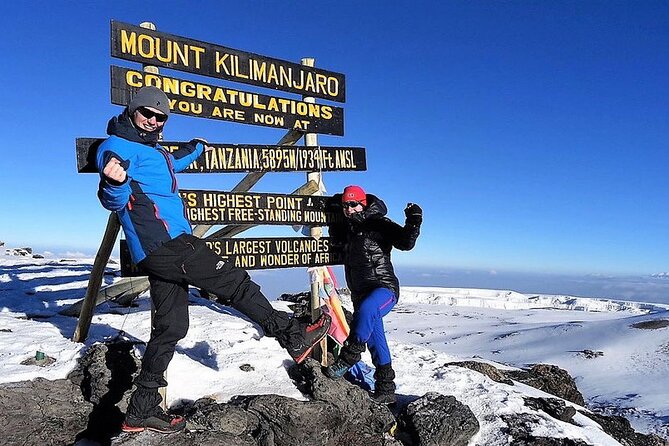
By dawn, the route aims to reach Stella Point, where you can see the first light over Mawenzi Peak. That sunrise is one of the great rewards of this schedule. From Stella Point, you continue along the crater rim to Uhuru Peak, the highest point on Kilimanjaro.
The final section may be shorter than the approach to Stella Point, but it is not easy. You are already tired, cold, and high above sea level. Take photographs if you have the energy, but do not let the summit picture distract you from staying warm and following the guide’s instructions.
After the summit, you descend. The supplied schedule gives about six miles and three to four hours for the descent to 5,380 feet, while the earlier day description also references a longer summit ascent and descent. Exact distances may vary by camp and final routing, but you should expect a very long day overall, with the summit attempt and descent combined.
This is why the seven-day format demands fitness. You are not simply walking uphill for a few hours. You are climbing through the night, reaching nearly 20,000 feet, then continuing downhill when your legs and concentration are already tired.
Day 7: Forest descent and a proper shower
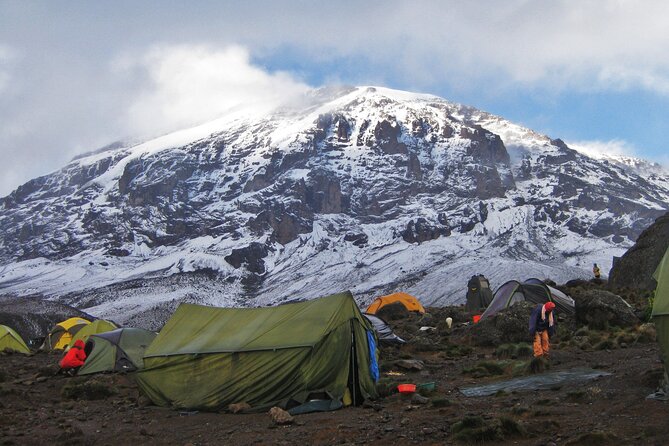
The final day takes you down through montane forest. The stated trekking time is four to seven hours, followed by pickup and transfer back to your hotel around midday.
The forest feels warmer and more alive after the upper mountain. You also have time to say goodbye to the crew before returning to the hotel for a much-needed shower and celebratory dinner.
This last day is not just an administrative finish. The descent gives your body a gradual return to lower altitude and lets the trip end with the people who made camp life work. The crew’s practical support is one of the strongest parts of this experience. The camp is set up before you arrive, and meals are served in a dining tent rather than eaten wherever you happen to stop.
Camping, meals, and the value of the $2,566 price
The listed price is $2,566 per person. For seven days on Kilimanjaro, that is a substantial purchase, but the value depends on what you want from the climb.
This is not a bare-bones trek where you carry all your equipment and sort out food as you go. Camping, breakfast, lunch, and dinner are included for the seven-day program. The setup features spacious tents and a separate dining tent, and the food is catered by a dedicated chef.
That support changes the experience. At the end of a cold, tiring day, you can focus on dry clothes, food, hydration, and sleep instead of pitching every tent or cooking a meal. Specific feedback gives the chef high marks for tasty food, and the catering can accommodate vegetarian, vegan, and gluten-free diets.
The price does not include a visa. You should also confirm exactly what pickup covers, since pickup is offered but the supplied details do not state every transfer point or airport arrangement.
The maximum group size is listed as 100 people. That is a large possible cap, even if a particular departure is smaller. Ask how many people are in your actual group and how guides, porters, and dining arrangements are organized. Group size affects pace, trail congestion, communication, and the feel of camp.
What kind of fitness do you need?
The tour calls for a moderate level of physical fitness, but I would treat that as a starting point rather than a full description of the challenge. The distance on most days is manageable, yet the altitude changes everything.
You should be comfortable walking for several hours, handling uneven ground, climbing steep sections, and continuing when the weather turns cold. The Barranco Wall requires careful movement, while summit day requires endurance after very little sleep.
The most useful mental habit is to walk slowly and accept the mountain’s schedule. The guides associated with Spirit of Kilimanjaro are praised for steady pacing, safety checks, and care. William and Rama are repeatedly linked with strong organization and encouragement, while Emanuel Hoblen and Emanuel Mkumbo are noted for attentive guiding. Ask who will lead your departure and what their altitude procedure is.
Who should choose this climb?
I would choose this trip if you want a scenic route, a full camping experience, and strong logistical support without reducing the climb to a luxury lodge holiday.
It suits you if:
- You want varied scenery rather than the shortest possible route.
- You are comfortable sleeping in tents for six nights.
- You value local guides and a full support crew.
- You can walk for several hours each day and prepare for a midnight summit start.
- You want catered meals with dietary options.
- You accept that reaching the summit is never guaranteed.
It may not suit you if you want a relaxed holiday, dislike camping, or expect seven days to feel like a standard hiking vacation. The schedule is carefully arranged, but altitude can still stop a strong person.
Should you book the Lemosho climb?
Book it if the combination of scenery, acclimatization, and full camp support matches what you want from Kilimanjaro. The high-to-low day at Lava Tower, the Barranco Wall, the open Shira Plateau, and the sunrise summit attempt give this route plenty of variety.
I would ask Spirit of Kilimanjaro three things before paying: the exact group size, the names of your assigned guides, and how they handle altitude problems or an early descent. Also confirm the day five and day six timing, since the supplied schedule mixes summit figures into the Barafu day.
At $2,566, the trip offers solid value for a seven-day guided climb with camping, meals, pickup, and a local support team. Just book it with realistic expectations. The mountain can be beautiful, funny, exhausting, and uncooperative all in the same morning.
FAQ
How long is the Kilimanjaro Lemosho climb?
The experience lasts approximately seven days, including the final descent and transfer back to your hotel.
Where does the climb begin?
The route begins at Londorossi Gate in Kilimanjaro National Park after the drive from Arusha.
What time does the experience start?
The listed start time is 9:00 a.m.
Is pickup offered?
Yes. Pickup is offered, and the final day includes a transfer back to your hotel after the descent.
What is the price per person?
The listed price is $2,566 per person.
Are meals included?
Yes. Breakfast, lunch, and dinner are included for all seven days.
Can the meals meet dietary needs?
Yes. The catering can accommodate vegetarian, vegan, gluten-free, and similar dietary requirements.
What level of fitness is required?
A moderate level of physical fitness is required. You should be prepared for several hours of walking each day and a cold, demanding summit attempt.
How high is Uhuru Peak?
The summit is listed at 19,341 feet.
Is a visa included?
No. A visa is not included in the tour price.
What happens if I need to cancel?
You can cancel at least 24 hours before the experience start time for a full refund. Cancellations or changes made less than 24 hours before the start time are not accepted for a refund.
Just added in Moshi
- Wildlife Extravaganza: Manyara, Tarangire & Ngorongoro in 3 Days★ 5.0 · 3 reviews
- West Kilimanjaro cycling Adventures★ 4.5 · 8 reviews
- machame route★ 5.0 · 16 reviews
- Mt Kilimanjaro 6 days Marangu route hike★ 5.0 · 3 reviews
- Kilimanjaro Climb • Machame Route ~ 10 Day★ 5.0 · 6 reviews
- Kilimanjaro Climbing Umbwe Route★ 5.0 · 3 reviews
- 3 Days Private E-Bike Tour in West Kilimanjaro★ 5.0 · 3 reviews
- Private Cycle to Kilimanjaro Bike Park Safari★ 5.0 · 6 reviews
Kilimanjaro Treks, compared.



8-Day Small-group Lemosho Kilimanjaro Summit Trekking
Read our review →

5 Days Best of Tanzania Luxury Safari Northern Circuit
Read our review →

Climbing Kilimanjaro through 7 days Machame Route
Read our review →
7-Day Machame Kilimanjaro Summit Tour from Arusha
Read our review →Browse the lists this tour appears in