
Reviewed · KILIMANJARO TREKS
7-Day Kilimanjaro Climbing Via Machame Route
The Machame Route gives you Kilimanjaro in full: tropical forest, high moorland, volcanic desert, and an Arctic summit. You begin on the mountain’s southern side and finish at Uhuru Peak, Africa’s highest point, after a carefully staged climb.
I like the route’s gradual rhythm, especially the high point of hiking toward Lava Tower before descending to Barranco Camp. I also like the strong guiding team around William, with guides including Rama, David, Zachariah, Joseph, Paul, Izadini, and Donovan named in the trip’s feedback. The main drawback is simple: summit night is hard, cold, and long, and the day-six schedule leaves little room for anything but walking and recovery.
Key things to know before booking
- The seven-day schedule is the better choice: The extra day gives you more time to adjust to altitude than the shorter six-day version.
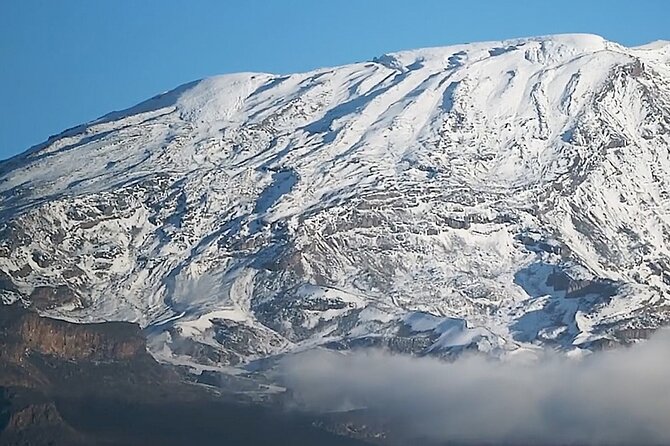
- You cross several climate zones: The route starts in rainforest and ends in a stark summit desert near 5,895 meters.
- Barranco Wall looks tougher than it is: The climb is not technical, and guides assist you across it.
- Summit day starts around midnight: Expect a seven-hour climb to Uhuru Peak, followed by a six to eight-hour descent to Mweka Camp.
- The price includes core mountain support: Meals, porters, guides, camping, and the park route are part of the package, while visas and international flights are not.
- The team receives especially strong praise: William and guides such as Rama, David, Zachariah, and Donovan are repeatedly singled out for care, motivation, and organization.
Why the Machame Route earns its Whiskey Route nickname
Machame is often called the Whiskey Route, a playful contrast with the easier-sounding Coca-Cola Route. The name fits its reputation for being a more active, scenic climb, though you should not read it as a technical mountaineering route. You walk on established mountain paths, with the hardest challenge coming from altitude, steep sections, cold, fatigue, and the length of summit day.
I like the way the route changes character as you climb. On day one, you are under tall forest. By day three, trees have largely disappeared and the mountain feels broad, dry, and exposed. Near the summit, plants give way to volcanic rock and cold desert.
That variety makes Machame a better choice for you if scenery matters as much as reaching the top. It also gives each day a clear purpose. You are not simply walking uphill for a week. You are moving through Kilimanjaro’s ecological zones while giving your body time to adjust.
The seven-day version costs $2,565 per person. That is a serious outlay, but it covers the central services needed for a guided Kilimanjaro climb: mountain transport, guides, porters, camping, and meals listed as seven breakfasts, seven lunches, and six dinners. You still need to budget for your visa and international flights.
Other routes up the mountain from Moshi:
- Kilimanjaro climb by Lemosho Route (7-day)
★ 5.0 · 651 reviews - Kilimanjaro climb, Machame Route (7-day)
★ 5.0 · 262 reviews - Kilimanjaro Climbing Lemosho Route 8 Days.
★ 5.0 · 186 reviews
Day one: Moshi to Machame Gate and the rainforest
The climb begins with a drive from Moshi to Machame Gate on Kilimanjaro’s southern side. The published timing is inconsistent, listing both a roughly 45-minute drive and a shorter transfer from Aishi Machame Hotel, so I would confirm the exact pickup time and hotel arrangement before setting out. The supplied meeting time is listed as 12:00 am, which also deserves clarification because the first walking day begins at the gate rather than at midnight.
At Machame Gate, you start at about 1,748 meters. The first walk to Machame Camp rises to 2,850 meters and takes roughly five to seven hours. This is a full opening day, but the forest helps make it feel less exposed than the higher sections to come.
The trail passes through Kilimanjaro’s tropical rainforest zone. Expect a damp, shaded start, with roots and uneven ground making good footwear important. You are not yet facing the extreme cold of summit night, but you should still keep rain protection handy.
Machame Camp is your first overnight stop. The value of this day is not speed. It is the steady beginning of the altitude transition. Walk slowly, drink as directed by your guides, and resist the temptation to treat the first day as a test of fitness.
Day two: Heather country and the climb to Shira 2
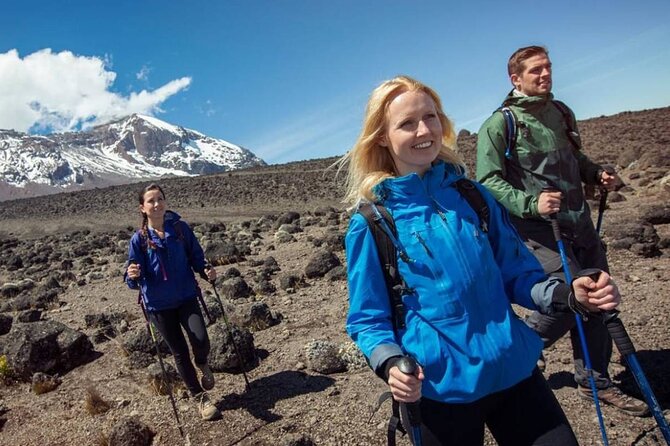
From Machame Camp, you leave the rainforest and walk toward Shira 2 Camp at about 3,847 meters. The day takes around eight hours, making it one of the longer standard walking days before the summit attempt.
The change in plant life is one of the route’s pleasures. Tall trees become scarce, while heather and smaller plants fill the open moorland. You begin to feel the mountain’s scale because the shade thins and the views open out.
This is also where altitude starts to matter more. You gain nearly 1,000 meters from the previous camp, so your pace should remain deliberately slow. The guides’ job is not only to lead the trail. It is also to watch how you are coping and keep the group moving at a sensible speed.
Shira 2 is high enough that sleep may feel different from the night before. That is normal on a climb of this kind, but any serious symptoms should be reported promptly. A seven-day itinerary helps because the route does not rush straight from low elevation to the summit.
Day three: Lava Tower, Barranco Camp, and the best mountain views
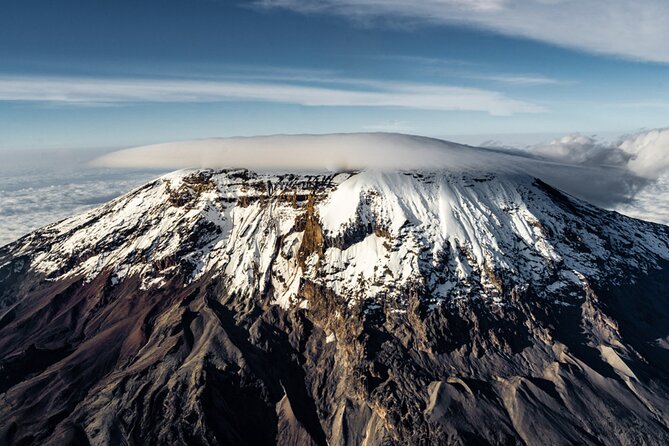
Day three is one of the smartest parts of the route. You start at Shira 2, hike toward Lava Tower for lunch, then descend to Barranco Camp at about 3,983 meters.
The day takes roughly eight hours, and the climb to Lava Tower brings you to about 4,600 meters before you sleep lower at Barranco. This is the classic climb high, sleep lower pattern. You spend time at a greater height, then give your body a slightly easier night.
After lunch, the trail drops toward Barranco. The surroundings grow drier and more severe as the desert zone takes over. From Barranco Camp, the Great Barranco Wall provides one of the route’s most memorable views. It rises sharply above camp and can look intimidating from below.
You will appreciate the next morning more if you understand that the Barranco Wall is not a technical climbing pitch. It is a steep scramble and walk, and guides help you choose the route. You need balance, patience, and confidence, not ropes and climbing equipment according to the supplied trip details.
Barranco is also a good place to remember that this is not a race. You have already walked for hours, gained significant altitude, and still have several demanding days ahead. Eat, drink, and rest even if the scenery makes you want to keep taking photographs.
Same base, a different kind of day out:
- Safari Serengeti And Ngorongoro
★ 5.0 · 288 reviews - Climbing Kilimanjaro – Machame Route
★ 5.0 · 170 reviews - Climbing Kilimanjaro through 7 days Machame Route
★ 5.0 · 151 reviews - Kilimanjaro climb, Lemosho Route (8-day)
★ 5.0 · 148 reviews
Day four: Across the Barranco Wall to Karanga
The move from Barranco Camp to Karanga Camp covers a shorter distance but includes the route’s most talked-about physical feature, the Barranco Wall. The crossing takes around four to five hours, though the full day is listed at about seven hours.
You climb over the wall with help from the guides, then continue to Karanga Camp at approximately 3,994 meters. The altitude gain from Barranco is small, which is useful. This day is less about reaching a much higher camp and more about positioning you for the final approach.
Karanga gives you time to rest for the remainder of the day. That pause matters. Kilimanjaro can punish anyone who spends every available hour walking, taking photographs, or trying to stay ahead of the group.
I would treat this as a recovery day with scenery, not as a free afternoon. Keep your clothing dry, organize your summit gear, and follow the guide’s instructions about the next day. Small tasks become harder when you are tired and at altitude.
Day five: The short push to Barafu Camp
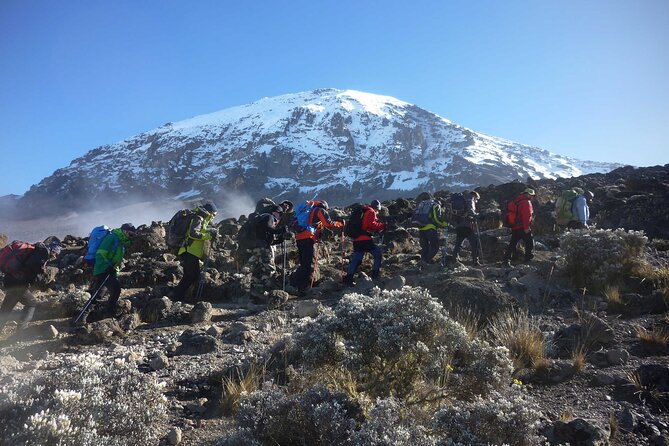
From Karanga, you climb to Barafu Camp at about 4,644 meters. The walk takes roughly four to five hours, with the overall day listed at about seven hours.
Barafu means ice, and the camp is the staging point for your summit attempt. The surroundings are high, open, and stark. You no longer have the forest or the softer moorland of the lower route. This is a functional stop, designed to put you in position for Uhuru Peak.
The schedule is demanding because you are expected to sleep around 7 pm and wake at 11 pm. That gives you only a short rest before preparing for the midnight start. Some people find it hard to sleep at that hour, especially at 4,644 meters, so do not judge the climb by how well you sleep at Barafu.
Use the afternoon wisely. Eat what you can, prepare warm layers, set out your headlamp if you have one, and keep your summit bag simple. You do not want to sort through every possession in the dark.
Day six: Uhuru Peak and the long descent to Mweka
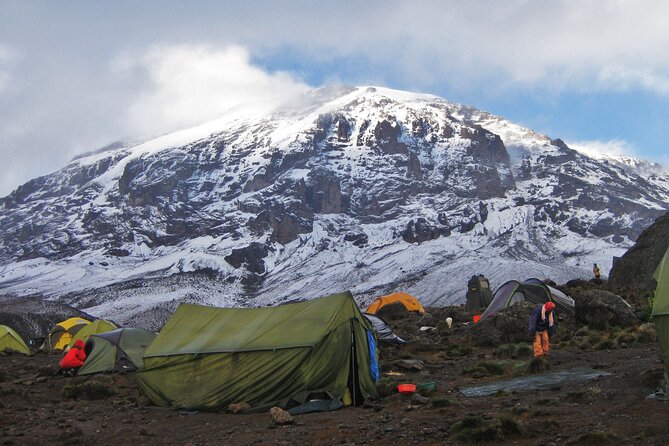
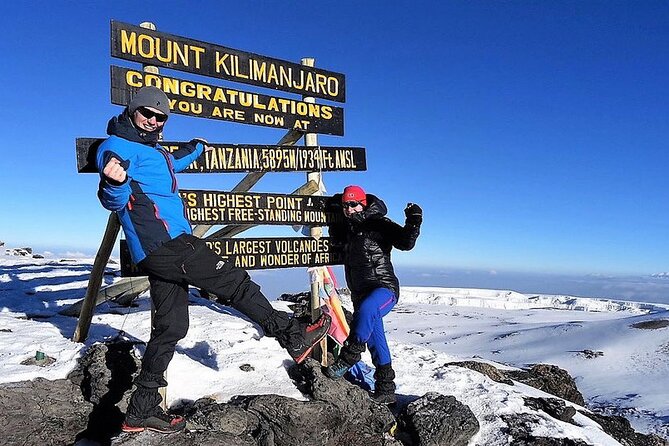
Summit day begins around midnight. From Barafu Camp, you walk for about seven hours toward Uhuru Peak, reaching the summit around sunrise if the schedule holds.
This is the toughest portion of the climb. You will be walking in darkness, cold, and thin air, with the trail rising steadily toward Stella Point and then Uhuru Peak at 5,895 meters. The goal is not to walk quickly. It is to maintain a slow, steady rhythm and let the guides set the pace.
The sunrise timing gives the summit its emotional lift, but the summit itself is only half of the day. After a few minutes for photographs and a pause to take in the achievement, you descend via Stella Point to Mweka Camp at about 3,110 meters.
That descent takes roughly six to eight hours. It is hard on tired legs, and loose volcanic ground can make the downhill walk feel awkward. The day is listed with only a few minutes at the attraction because the mountain timetable is really about movement, not a long summit visit.
This is where a well-organized team matters most. The guides named in the trip material, including William, Rama, David, Zachariah, and Donovan, are repeatedly associated with motivation and close support during the final ascent. The porters and cook also play a major part in getting you fed, equipped, and moving through the day.
Day seven: Mweka Gate, certificates, and the return to Moshi
After breakfast at Mweka Camp, you descend to Mweka Gate at about 1,653 meters. The final walk takes roughly three to four hours.
At the gate, you sign the official Kilimanjaro National Park register, have a cold drink, and receive an official Kilimanjaro certificate from the head guide. Those details may sound small after reaching Uhuru Peak, but they give the ending a useful sense of ceremony.
The return drive to the hotel in Moshi is listed as about three hours, with arrival expected around mid-afternoon, close to 3 pm depending on your departure from camp. You should keep this final day open rather than planning a tight onward connection.
What the price includes, and what it does not
At $2,565 per person, this is not a budget walk. The price makes more sense when you consider how much support a high-altitude climb requires. The package includes seven breakfasts, seven lunches, and six dinners, as well as the mountain operation indicated by the itinerary, including guides, porters, camps, transfers, and park access arrangements.
The food earns particular praise in the feedback, with the cook Hussein named alongside the guiding team. That is useful because meals are not a minor detail on a week-long climb. You need regular food and warm drinks when your appetite and energy may change at altitude.
The package does not include a Tanzanian visa or international flights. Pickup is offered, but confirm exactly where it begins and whether your hotel is included. The experience lists a maximum of 100 people, which is a large possible group size, although the feedback also describes private climbs. Ask whether your booking is private or shared before paying.
Who should choose this climb?
I would choose this route if you want a classic Kilimanjaro experience with strong scenery and a clear acclimatization plan. It suits a person with moderate physical fitness who is ready for long walking days, basic camping conditions, altitude, and a very demanding summit night.
You do not need to be an expert mountaineer. The Barranco Wall is not technical, and the route is guided. You do need to take the altitude seriously and accept that fitness alone does not guarantee a summit.
The seven-day version is the one I would favor over six days. You pay for an additional day, but that extra time gives your body a better chance to adjust. One past climber completed the route faster, but that is not a useful target for most people. A shorter schedule means less time to adapt and less room for a slow day.
The team is a major strength. William is repeatedly singled out for experience and organization, while guides such as Rama, David, Zachariah, Joseph, Paul, Izadini, and Donovan are named for encouragement and care. The porter and cooking staff also receive strong praise, especially for food and practical support.
Should you book the Spirit of Kilimanjaro Machame climb?
Book it if you want a seven-day route that shows Kilimanjaro’s changing zones, gives you the valuable Lava Tower to Barranco descent, and includes a highly praised guiding team. The price is reasonable for a guided summit attempt with meals, porters, and mountain logistics included, but it is still important to confirm group size, pickup details, hotel arrangements, and the listed midnight start time.
I would not choose it if you want a relaxed holiday or a short day hike. Summit day is an overnight effort followed by a long descent, and the whole climb asks for patience. For a prepared walker who wants the mountain’s full story, from rainforest to Uhuru Peak, this is a strong and carefully paced option.
FAQ
How long is the Kilimanjaro climb?
The experience lasts approximately seven days, including the return to Moshi on the final day.
Where does the climb begin?
The climb begins at Machame Gate on the southern side of Mount Kilimanjaro.
How high is Uhuru Peak?
Uhuru Peak is 5,895 meters, or 19,341 feet, above sea level.
Is the six-day or seven-day climb recommended?
The seven-day climb is preferred for better altitude adjustment.
What is the hardest day?
Day six is the most demanding. You wake around 11 pm, begin walking near midnight, climb for about seven hours to Uhuru Peak, then descend for another six to eight hours to Mweka Camp.
Is the Barranco Wall a technical climb?
No. The Barranco Wall is described as non-technical, and the guides assist you across it.
Are meals included?
Yes. The package lists seven breakfasts, seven lunches, and six dinners.
Are international flights and visas included?
No. International flights and visas are not included.
Can I cancel for a full refund?
Yes, if you cancel at least 24 hours before the experience start time. Cancellations made less than 24 hours in advance are not refunded, and changes within that period are not accepted.
Just added in Moshi
- Wildlife Extravaganza: Manyara, Tarangire & Ngorongoro in 3 Days★ 5.0 · 3 reviews
- West Kilimanjaro cycling Adventures★ 4.5 · 8 reviews
- machame route★ 5.0 · 16 reviews
- Kilimanjaro Climb • Machame Route ~ 10 Day★ 5.0 · 6 reviews
- Kilimanjaro Climbing Umbwe Route★ 5.0 · 3 reviews
- Mt Kilimanjaro 6 days Marangu route hike★ 5.0 · 3 reviews
- 3 Days Private E-Bike Tour in West Kilimanjaro★ 5.0 · 3 reviews
- Private Cycle to Kilimanjaro Bike Park Safari★ 5.0 · 6 reviews
Kilimanjaro Treks, compared.



8-Day Small-group Lemosho Kilimanjaro Summit Trekking
Read our review →

5 Days Best of Tanzania Luxury Safari Northern Circuit
Read our review →

Climbing Kilimanjaro through 7 days Machame Route
Read our review →
7-Day Machame Kilimanjaro Summit Tour from Arusha
Read our review →Browse the lists this tour appears in