
Reviewed · KILIMANJARO TREKS
7 Days Lemosho Route
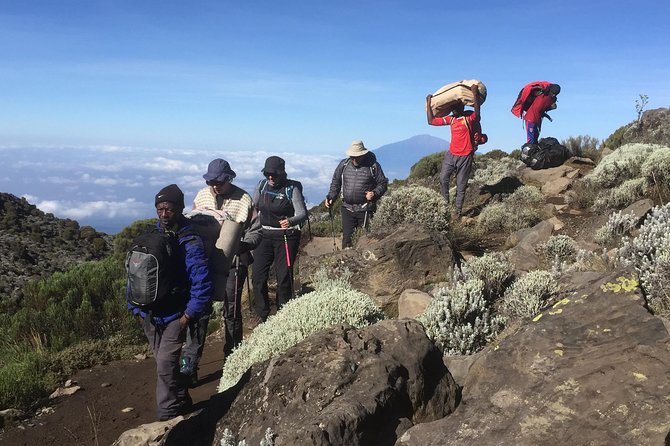
The best thing about this seven-day Lemosho climb is the change of scenery. You begin on quiet forest paths in the west, cross the high Shira Plateau, then join the busier southern route for Barranco Wall, Barafu, and the summit push. I like the steady rise, which gives you a better shot at adjusting to altitude, and I like that the first two days are usually quieter than the better-known approaches.
I also like the practical setup: airport pickup to Moshi is included, along with meals on the mountain, guides, porters, and a cook. The main consideration is the schedule. Summit night begins around 11:30 pm after a short sleep, and the hardest climbing comes on Day 6, so you need moderate fitness, patience, and a good attitude toward cold, darkness, dust, and tired legs.
Key points at a glance
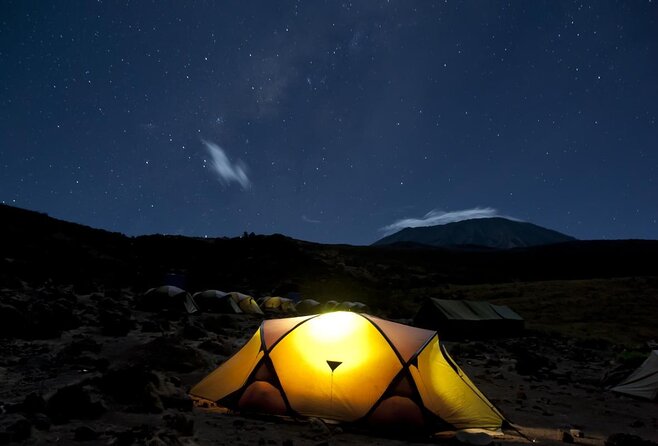
- Quiet western start: Walk through forest and heath before joining the more popular southern route.
- Useful altitude pattern: The route rises to Lava Tower, then drops to Barranco Camp, giving you an important acclimatization day.
- Barranco Wall included: The steep-looking rock obstacle is climbed on Day 4, followed by a shorter rest period.
- Long summit day: Expect a midnight start, about six hours to Stella Point, a summit attempt, and a descent to Mweka Camp.
- Meals and transfers included: Airport transport, six dinners, seven lunches, and six breakfasts are part of the package.
- Small-to-medium group size: The maximum is 20 people, with Golden Summit Adventures coordinating the trek.
Why Lemosho is a smart seven-day route
Lemosho approaches Kilimanjaro from the west, where the trail begins with forest and gradually moves into open moorland. That opening matters. You do not begin with a brutal uphill grind, and the first two days tend to have less foot traffic before the route meets the Machame trail.
I like Lemosho for its rhythm. Day 1 is short. Day 2 adds altitude but remains manageable. Day 3 gives you the classic climb-high, sleep-lower pattern by taking you up toward Lava Tower before dropping to Barranco. That is one of the most useful features of the route, since altitude adjustment is often more important than raw speed.
Seven days is a reasonable middle ground for a Kilimanjaro climb. An eight-day version is also referenced in the route description, but this package follows the seven-day schedule. The shorter plan saves time and can reduce the total cost, but it leaves less room for a slow adjustment than a longer itinerary.
The price is $2,050 per person. That is not a casual day hike, but it covers the mountain operation rather than only trail access. Airport transfers, meals during the climb, porters, guides, and camping support are included. You will still need to budget for hotel meals before and after the climb, drinks, insurance, laundry, and personal items.
Other routes up the mountain from Moshi:
- Kilimanjaro climb by Lemosho Route (7-day)
★ 5.0 · 651 reviews - Kilimanjaro climb, Machame Route (7-day)
★ 5.0 · 262 reviews - Kilimanjaro Climbing Lemosho Route 8 Days.
★ 5.0 · 186 reviews
Day 1: Forest trails to Mti Mkubwa Camp
The opening walk begins from the western trailhead area known as the Glades. You spend about three hours on forest paths before reaching Mti Mkubwa, or Big Tree, Camp.
This is a sensible first day. You are getting used to your boots, pack, walking pace, and the daily camp routine without being asked to cover a huge distance. The forest also gives the route a strong sense of arrival. Kilimanjaro is not only a summit; it is a series of changing ecological zones, and the first day begins among tall trees and shaded trails.
The short distance can feel deceptively easy. Do not use it as an excuse to rush. Your guide will need to set a pace that works for the group, and a slow start is helpful before the altitude begins to matter. Since pickup is offered from Kilimanjaro International Airport to your Moshi accommodation, the wider trip is easier to organize if you arrive with enough time to rest before the trek.
Day 2: Crossing Shira Ridge at 3,600 meters
The trail steepens gradually on Day 2, leaving the forest for giant heather and open high country. You cross Shira Ridge at about 3,600 meters, or 11,810 feet, then descend gently to Shira Camp 1 beside a stream on the Shira Plateau.
The walking time is about five hours. This is where the route begins to feel properly alpine. The trees fall away, the air gets thinner, and Kilimanjaro’s scale becomes easier to appreciate. You are no longer simply walking through woodland toward a mountain. You are moving across a broad high plateau with a much more exposed feel.
I like this stage because the ascent is steady rather than abrupt. Still, the higher altitude can affect your sleep, appetite, and energy even if the walking feels manageable. Drink regularly, follow your guide’s pace, and do not treat an easy trail as proof that your body has fully adjusted.
Day 3: Lava Tower, then down to Barranco
Day 3 is one of the route’s key acclimatization days. After breakfast, you climb east through increasingly sparse terrain toward the mass of Kilimanjaro. The trail rises to a lunch stop near Lava Tower, then drops for about two hours toward Barranco Camp.
The full day takes about seven hours. Lava Tower is around 4,600 meters, while Barranco Camp sits at about 3,950 meters, or 12,960 feet. You gain height during the day, then sleep lower. That pattern is demanding, but it gives your body a better chance to adjust than a simple day-after-day climb upward.
The descent below the lower cliffs of the Western Breach and Breach Wall brings you to Barranco Valley. The camp sits beneath the Great Barranco Wall, with the jagged rock formations providing one of the most memorable evening settings on the route. Expect a tiring day, and do not be surprised if the final descent feels almost as important as the morning climb.
Same base, a different kind of day out:
- Safari Serengeti And Ngorongoro
★ 5.0 · 288 reviews - Climbing Kilimanjaro – Machame Route
★ 5.0 · 170 reviews - Climbing Kilimanjaro through 7 days Machame Route
★ 5.0 · 151 reviews - Kilimanjaro climb, Lemosho Route (8-day)
★ 5.0 · 148 reviews
Day 4: Climbing Barranco Wall and resting at camp
After breakfast, you head up a steep ridge to the Great Barranco Wall. It looks formidable from below, but the route is described as easier to climb than it first appears. You should still expect hands-on movement and uneven rock, not a simple paved trail.
The climb takes about four hours, followed by a hot lunch at camp. Mawenzi’s sharp peaks can be seen to the east, adding another dramatic view to an already impressive section of the route.
This is a short day by Kilimanjaro standards, and that is exactly why it matters. You have just completed the long Lava Tower and Barranco day, and the summit push is close. Use the afternoon to rest or explore near camp, but do not turn it into an extra hike. A quiet afternoon can do more for your summit chances than squeezing in another few miles.
Day 5: Up to Barafu Hut
The trail continues east over ridges and valleys before joining the Mweka Route, which later becomes your descent path. From there, you turn toward the mountain and climb for another hour through sparse terrain to Barafu Hut.
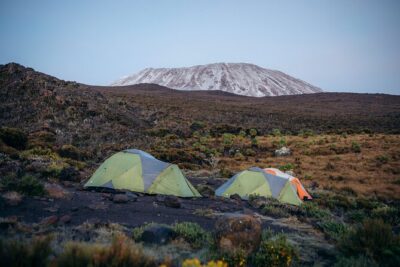
The walking time is about four hours, but this day prepares you for the hardest night ahead. Barafu Camp sits at about 4,673 meters, on a narrow, stony, wind-exposed ridge. Your tent will be pitched on that ridge, so you should organize your equipment before darkness makes the ground harder to read.
A hot lunch is provided at Barafu, followed by time to prepare warm clothing and summit gear. Dinner comes early, and then you try to sleep for a few hours before the midnight start. Many climbers find this awkward. You have spent the day thinking about the summit, then must sleep at an unusual hour, often while excitement and altitude compete with fatigue.
Take the instructions about fluids seriously. Put your headlamp, warm layers, gloves, water, and personal items where you can reach them easily. A rushed search inside a tent at 11:30 pm is no fun.
Day 6: Stella Point, Uhuru Peak, and Mweka Camp
Day 6 is the test. You rise around 11:30 pm for tea and biscuits, then begin walking in the dark. The climb toward Stella Point takes about six hours through heavy scree between the Rebmann and Ratzel glaciers.
This is the most physically demanding part of the route for many climbers. The ground is loose, the air is thin, and progress can feel slow. The darkness removes much of the visual scale, which can be helpful. You focus on the next few steps instead of staring at the full height still above you.
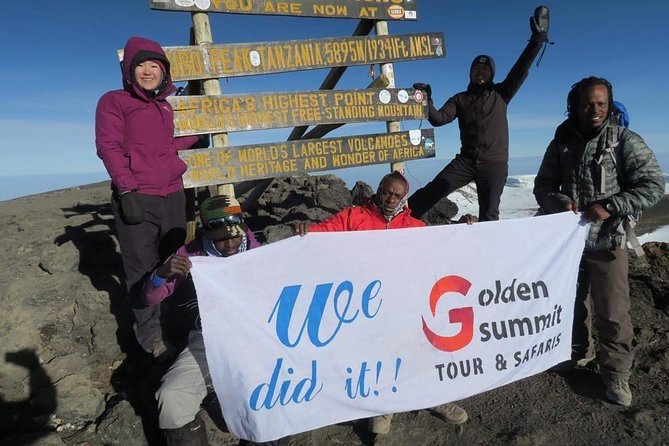
At Stella Point, about 5,685 meters or 18,650 feet, you can stop briefly and watch the sunrise. Climbers who reach Stella Point receive green summit certificates. Those who continue to Uhuru Peak receive gold certificates. The schedule describes a further summit effort, but the exact time and condition of the trail can vary with weather, altitude, and the group’s pace.
After the summit section, you descend for about three hours to Barafu Camp, collect your gear, and continue down through rock and scree toward the moorland and forest. The total day is listed at about eight hours, though the night start and summit effort make it feel longer than the number suggests. You finish at Mweka Camp, around 3,100 meters or 10,170 feet.
This is where good guiding and group discipline matter. Golden Summit Adventures has a maximum group size of 20, and its named team includes coordinator Elly for trip planning and guide Laraha among the mountain staff. You should confirm your exact guide team before departure, but the operating structure includes guides, porters, and a cook rather than a self-supported walk.
Day 7: Mweka Gate and the end of the climb
After breakfast, you hike for about three hours toward Mweka Gate. Compared with summit day, the trail feels straightforward, though tired knees can make even a mild descent noticeable.
At the gate, you can sign the register and receive your summit certificate. The route may then continue to Mweka Village. If the road is too muddy for vehicles, the final three kilometers can involve another hour of walking before transport is possible.
This is also the point to settle porter tips safely, after you and your gear have reached the gate. The practical advice is simple: do not hand over tips before the trek is finished. Staff tipping is an important part of the mountain experience, so plan for it separately from the tour price.
The listed inclusions cover seven lunches, six dinners, and six breakfasts. Hotel meals before and after the mountain are not included, and neither are drinks. The final village meal is described as part of the end-of-climb arrangements, but you should confirm exactly what is provided on your booking confirmation.
Meals, transfers, and group size
The $2,050 price includes private transport between Kilimanjaro International Airport and your accommodations in Moshi. That is useful after a long flight, when arranging a taxi and finding the right hotel can be one more nuisance you do not need.
On the mountain, the package includes six dinners, seven lunches, and six breakfasts. A cook is part of the support team, and the food is intended to keep you moving through long walking days. You should still bring any personal snacks or toiletries you need, since personal items are not included.
The maximum group size is 20. That is not a private trek, but it is also not an enormous mass departure. Ask how many people are actually booked for your dates, since the maximum tells you the upper limit rather than the likely number.
Before and after the climb, you pay for hotel lunches, dinners, and drinks. Travel insurance, laundry, personal items, and toiletries are also excluded. These are easy costs to overlook when comparing headline prices.
Who should book this climb?
I would choose this route if you care about scenery, prefer a gradual opening, and want a seven-day schedule that includes a real acclimatization pattern. It suits someone with moderate physical fitness who can walk for several hours, sleep in a tent, manage a midnight start, and accept that the summit result depends on conditions and health.
It is less suitable if you want a relaxed holiday with a few scenic walks. The summit day is serious, the Barafu camp is exposed, and the route includes loose scree, steep sections, cold, and altitude. You should also be comfortable with a fixed plan because the booking is non-refundable and cannot be changed after purchase.
Golden Summit Adventures appears particularly useful for people who want help with the whole arrangement rather than only a trail permit. Elly is identified as the coordinator who handles planning, packing guidance, vaccination information, and trip details. Named mountain staff include Laraha, and the operation includes guides, porters, and a cook.
Should you book the seven-day Lemosho Route?
Book it if you want Kilimanjaro’s varied scenery and a route that begins quietly before joining the busier southern trails. The forest, Shira Plateau, Lava Tower, Barranco Wall, and summit ridge give the week a satisfying progression, while the climb-high, sleep-lower day is a useful feature.
Think twice if you need flexible cancellation, dislike camping, or would rather have a slower eight-day schedule. The seven-day plan is well structured, but it is still compressed enough that the summit push will test you. At $2,050, the value is strongest for someone who uses the included transfers, meals, and mountain support. Confirm the exact inclusions, group size, guide team, and tipping expectations before paying, then arrive prepared to walk slowly and take the mountain seriously.
FAQ
How long is the Lemosho Route experience?
The experience lasts approximately seven days, from the first forest walk to the descent through Mweka Gate and Mweka Village.
Where does the climb begin?
The route approaches Mount Kilimanjaro from the west and begins from the Glades area before continuing to Mti Mkubwa Camp.
What time does the summit climb begin?
The summit push begins around 11:30 pm on Day 6, after tea and biscuits.
How high is Stella Point?
Stella Point is about 5,685 meters, or 18,650 feet, on the crater rim.
Are airport transfers included?
Yes. Private transport to and from Kilimanjaro International Airport and your accommodations in Moshi is included.
Which meals are included?
The package includes six dinners, seven lunches, and six breakfasts during the climb. Hotel meals before and after the climb, along with drinks, are not included.
How large can the group be?
The maximum group size is 20 people.
Is travel insurance included?
No. Travel insurance is not included and must be arranged separately.
More Kilimanjaro treks from Moshi
- Kilimanjaro climb, Lemosho Route (6-day)
★ 5.0 · 129 reviews - 7 Days Kilimanjaro via Machame route affordable price
★ 5.0 · 110 reviews - Kilimanjaro climb, Marangu route (6-day)
★ 5.0 · 72 reviews - Kilimanjaro Lemosho Route
★ 5.0 · 71 reviews
Just added in Moshi
- Wildlife Extravaganza: Manyara, Tarangire & Ngorongoro in 3 Days★ 5.0 · 3 reviews
- West Kilimanjaro cycling Adventures★ 4.5 · 8 reviews
- machame route★ 5.0 · 16 reviews
- Kilimanjaro Climb • Machame Route ~ 10 Day★ 5.0 · 6 reviews
- Kilimanjaro Climbing Umbwe Route★ 5.0 · 3 reviews
- Mt Kilimanjaro 6 days Marangu route hike★ 5.0 · 3 reviews
- Kilimanjaro Climb • Marangu Route ~ 9 Day★ 5.0 · 4 reviews
- 3 Days Private E-Bike Tour in West Kilimanjaro★ 5.0 · 3 reviews
Kilimanjaro Treks, compared.
8-Day Small-group Lemosho Kilimanjaro Summit Trekking
Read our review →
5 Days Best of Tanzania Luxury Safari Northern Circuit
Read our review →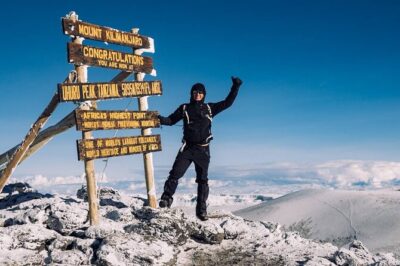
Climbing Kilimanjaro through 7 days Machame Route
Read our review →
7-Day Machame Kilimanjaro Summit Tour from Arusha
Read our review →Browse the lists this tour appears in