
Reviewed · WILDEBEEST MIGRATION SAFARIS
8-Day Grumeti Migration Safari-Luxury Tour May-July
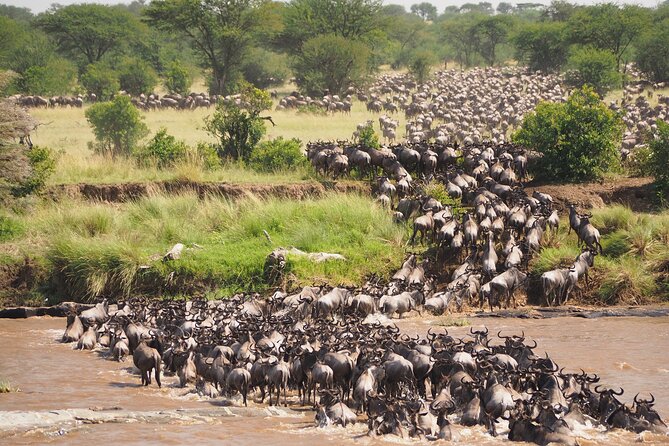
The main draw is the chance to follow the wildebeest migration into western Serengeti, where crossings of the crocodile-filled Grumeti River may occur from May through July. This eight-day route also gives you time in central Serengeti, so you are not betting the whole safari on one river crossing.
I like the mix of luxury lodges and tented camps close to nature, plus the private format, which lets your guide adjust the pace for wildlife sightings. I also like the strong guiding record associated with the operation: Calvin Kileo, Bariki, William, and Ombeni are among the guides praised for careful driving, animal spotting, clear explanations, and thoughtful attention to comfort.
The main caution is that migration timing and river crossings are never guaranteed. The route also covers long distances, and the written schedule has some confusing transfers between Serengeti and Ngorongoro, so you should confirm the exact overnight locations before paying.
Key points to know before booking
- Grumeti focus: May to July is chosen to improve your chance of seeing wildebeest near the western corridor and Grumeti River.
- Two Serengeti zones: You visit both the western corridor and central Seronera, giving you better wildlife coverage than a single-area stay.
- Private safari: Only your group participates, with a professional driver-guide and private vehicle.
- Luxury camping style: Lodge and tented camp accommodation keeps you close to the bush without giving up a higher level of comfort.
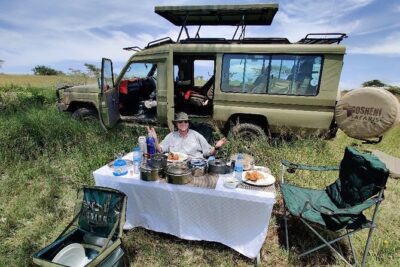
- Full safari days: Most game-drive days run for about eight hours, with hot picnic lunches prepared beside the vehicle.
- Broad wildlife mix: Tarangire, Manyara, Serengeti, and Ngorongoro each offer a different setting and different animal strengths.
Why the Grumeti River is worth the long drive
If your dream is a dramatic wildebeest crossing, the western Serengeti is a sensible target during the May to July season. The migration moves according to rain, grazing, and instinct, not a timetable printed on a brochure. You might see huge herds moving across open ground, or you might arrive while the animals are gathering, moving on, or waiting for better conditions.
That uncertainty is part of the deal. A river crossing can be thrilling, but spending eight days only chasing one event would be a poor safari plan. This route protects you from that gamble by including Seronera, the central Serengeti area known for resident wildlife and strong big-cat viewing.
The Grumeti section also gives the trip a quieter feel than the most heavily visited parts of northern Tanzania. You will spend more time on the road getting there, but the payoff is a safari that feels built around the migration rather than simply adding a quick Serengeti stop to a standard circuit.
Other park itineraries that start in Moshi:
- Safari Serengeti And Ngorongoro
★ 5.0 · 288 reviews - Big Five Safari In Tanzania
★ 5.0 · 99 reviews - Unforgettable Tanzania Safari And Zanzibar Beach
★ 5.0 · 97 reviews
Day 1: A soft start in Arusha
Your trip begins with pickup at Kilimanjaro Airport, followed by a transfer to Arusha for dinner and an overnight stay. Arusha sits near Mount Meru and serves as the main gateway for northern Tanzania’s safari parks.
This first night is useful. You can meet your guide, settle in, and receive a safari briefing before the serious driving begins. The stated transfer time is about four hours, so check your arrival time carefully. If your international flight lands late, you may need to arrange extra accommodation before the tour begins, since that is not included.
Day 2: Tarangire’s elephants and baobabs
After breakfast and a short briefing, you drive to Tarangire National Park for a full game-drive day. The park is especially known for elephants, birdlife, and a quieter safari atmosphere than some of Tanzania’s better-known stops.
Tarangire is a good opening park because it offers a different setting from the Serengeti. You might see large elephant groups, many bird species, and other resident animals during a day spent among its distinctive trees and open areas. The park is also known for seasonal elephant movement, which gives the wildlife a changing pattern across the year.
Lunch is prepared beside the vehicle. The menu is described as a hot meal with soup, bread rolls, a main dish, fruit salad, wine, tea, and coffee. That is a more civilized arrangement than eating a hurried boxed lunch, but it also means the day follows a long, full schedule. You should be comfortable spending many hours in the safari vehicle.
The night is at a lodge. The exact property is not named in the information provided, so ask for the accommodation list if room style, location, or facilities matter to you.
Day 3: Lake Manyara for birds and tree-climbing lions
Lake Manyara National Park brings a new set of sights. The park is an excellent introduction to Tanzanian birdlife, with more than 400 recorded species. Even a first-time safari visitor might see a remarkable range in a single day.
Manyara is also known for elephants and the possibility of seeing lions resting in acacia trees. That behavior is not guaranteed, but it is one reason the park earns a place on this route. The combination of lake, woodland, and open areas creates a different viewing experience from Tarangire.
You again receive a hot lunch prepared near the vehicle, then continue your game drive before heading to the lodge for dinner and the night. The day is listed at about eight hours. Since this route later reaches the Serengeti, Manyara works best as a varied stop rather than the central reason to book the safari.
Other safaris people book out of Moshi:
- 8-Day Essence of Tanzania Safari – Luxury
★ 5.0 · 72 reviews - Great Migration Safari In Tanzania
★ 5.0 · 71 reviews - 6 Days 5 Night Safari
★ 5.0 · 57 reviews - 7-Day Magical Tanzania Safari -Premium High End Package
★ 5.0 · 53 reviews
Day 4: Entering the Serengeti
After breakfast, you continue toward Serengeti National Park, searching for big cats and the Big Five. The Serengeti is famous for its large lion population, but it is not only a migration destination. Resident wildlife remains here throughout the year, so you can have good sightings even if the wildebeest are not exactly where you hoped.
The schedule describes a game drive, a hot lunch, and a late-afternoon movement toward Ngorongoro for dinner and the night. This is the first point where I would ask for clarification. The next day is meant to focus on the western Serengeti and Grumeti area, while the day-four description suggests movement toward Ngorongoro. Those locations involve substantial distances, and the final route may depend on the actual camps booked.
Do not treat this as a reason to reject the trip. Treat it as a reason to request a day-by-day map and confirmed camp names. A clear plan matters on a safari, especially when the purpose is to reach a specific migration zone.
Day 5: The western corridor and Grumeti area
This is the trip’s key migration day. You head into the western Serengeti and Grumeti area, looking for wildebeest movement, river activity, big cats, and other large animals.
A river crossing is a powerful sight, but it cannot be arranged on request. The herds may cross while you are elsewhere, or they may remain on one bank for hours or days. Your best advantage is the seasonal focus and private format, which may give your guide more freedom to spend time in promising areas.
The western corridor is valuable even without a crossing. The drive itself exposes you to one of the Serengeti’s major wildlife zones, and searching for predators around moving herds can produce excellent sightings. You have another prepared lunch during the day, then continue the game drive before returning to the lodge or camp.
Ask exactly how many nights are planned in the western corridor. A single night gives you a chance, but it leaves little room if the herds are spread out. If the price permits two nights in the area, the value of the migration focus improves considerably.
Day 6: Seronera and central Serengeti wildlife
Day six shifts to Seronera in central Serengeti. This is a smart counterweight to the western-corridor plan. If the migration does not cooperate, Seronera offers some of the park’s best-known resident wildlife areas, including opportunities to search for lions and other big cats.
You spend another full day on game drives, with lunch served near the vehicle. The schedule again allows about eight hours, so you should expect a steady rhythm: early start, wildlife viewing, a midday meal, more searching, and a return to camp in the evening.
Central Serengeti is usually a stronger choice than simply passing through. You have time to look carefully instead of treating the park as a road between other destinations. Your guide’s skill matters here. William has been praised for animal identification, patient explanations, road awareness, and spotting ability, while Calvin Kileo has been singled out for careful driving and noticing animals that might otherwise be missed. Guide assignments are not guaranteed, so ask who will lead your departure.
Day 7: The long move toward Ngorongoro
The seventh day includes more Serengeti wildlife viewing, followed by a late-afternoon transfer to Ngorongoro for dinner and the night. This can be another productive safari day, but it is also a long one.
You should expect substantial time in the vehicle. The benefit is that you continue looking for big cats and other animals rather than giving up the game drive early. The drawback is simple: repeated eight-hour days and long transfers can be tiring, especially on rough park roads.
The accommodation location matters here. If the camp is close to the crater, the next morning will be easier. If it is farther away, the early crater start will mean an even earlier departure. Ask for the camp name and approximate drive time to the crater gate.
Day 8: Ngorongoro Crater and the airport transfer
The final morning begins with an early breakfast and a drive into Ngorongoro Crater. The crater is a huge, unbroken volcanic caldera, about 20 kilometers across and roughly 600 meters deep. Its enclosed setting supports a high concentration of wildlife, and the crater floor includes Lake Magadi.
You spend the morning and early afternoon on a crater game drive, with another hot lunch prepared near the vehicle. This is a strong finale because it gives you one last concentrated wildlife area before returning toward Arusha.
The stated schedule says you leave the crater in the late afternoon and continue to Arusha for airport drop-off. Four hours is listed for this final section, but your actual timing depends on road conditions, game-drive length, and flight departure. I would not book a tight international connection without confirming the transfer plan directly.
Luxury means comfort, not a private lodge everywhere
The $6,276 price per person is substantial, but it covers much more than transport. Park fees, a professional driver-guide, airport transfers, eight breakfasts, seven lunches, and seven dinners are included. The trip also uses luxury lodges and tented camps, which can make a major difference after long game-drive days.
Still, luxury is a broad term. The exact accommodation names are not supplied, so you cannot judge room size, swimming pools, location, power supply, or dining style from the tour description alone. Ask for the full accommodation list and whether the camps are permanent or mobile.
The private format adds value. You are not sharing the schedule with a large group, and your guide can respond to your interests. If you care most about birds, predators, photography, or the migration, say so early. Guides such as Bariki have been praised for patient animal explanations and finding well-hidden wildlife, while Ombeni has been praised for careful driving and checking whether people were comfortable during the day.
The meals also add practical value. Seven hot lunches in the bush are included, along with dinners and breakfasts. Tips are not included, with a suggested guideline of $15 per person per day. International flights, visas, travel insurance, souvenirs, and extra nights before or after the tour are also your responsibility.
Who will get the most from this safari
I would recommend this route to you if the migration is a major goal but you also want a full northern Tanzania safari. The combination of Tarangire, Manyara, western Serengeti, Seronera, and Ngorongoro gives you more variety than a trip focused only on the Grumeti River.
It also suits couples, families, or a small private group that values personal guiding and higher-end accommodation. The food arrangements and airport transfers reduce the number of details you must manage yourself.
I would be more cautious if you want a relaxed holiday with short drives. This is an active safari with several long days. You also need patience with wildlife timing. No operator can promise a river crossing, and no guide can force wildebeest to gather at a certain bend in the river.
Practical questions to settle before you pay
The experience offers free cancellation up to 24 hours before the start time. Changes or cancellations inside that window are not refundable, and poor weather may lead to a different date or a full refund.
Ask these questions in writing:
- Which camps and lodges are booked each night?
- How many nights are spent in the western corridor?
- Does day four end in Serengeti or near Ngorongoro?
- How is the airport transfer timed around your flight?
- Which guide and vehicle will be assigned?
- Are drinks beyond the stated wine, tea, and coffee included?
- What baggage size and weight are suitable for the vehicle and camps?
Should you book the eight-day Grumeti safari?
Book it if you want a migration-focused private safari with a real attempt at the western Serengeti and enough time in Seronera, Tarangire, Manyara, and Ngorongoro to make the trip worthwhile even without a crossing.
Before booking, get the accommodation names and corrected route in writing. That one step will tell you how much time you truly receive in the Grumeti area and whether the luxury claim matches your expectations. If those details check out, the package offers a strong mix of comfort, guiding, wildlife variety, and seasonal purpose. If your only goal is a guaranteed river crossing, no safari can honestly offer that.
FAQ
Where does the safari begin?
The meeting point is Kilimanjaro Airport in Tanzania. Pickup is offered, and a roundtrip airport transfer is included.
When does this safari operate?
The route is designed for May through July, when wildebeest are commonly found in the western Serengeti and near the Grumeti River.
Is the Grumeti River crossing guaranteed?
No. The safari is designed to improve your chance of seeing the migration and a crossing, but wildlife movement depends on natural conditions.
Is this a private tour?
Yes. Only your group participates in the private tour or activity.
Which meals are included?
The package includes eight breakfasts, seven lunches, and seven dinners. Hot picnic lunches are prepared during the game-drive days.
Are park fees included?
Yes. Park fees for non-residents are included in the stated price.
Are tips included?
No. A tipping guideline of US$15 per person per day is provided.
Can I cancel for a full refund?
You can cancel at least 24 hours before the experience start time for a full refund. Cancellations made less than 24 hours before the start time are not refunded.
More migration safaris from Moshi
- 6 Days Tanzania Budget Camping Safari with Migration
★ 5.0 · 31 reviews - 8 Days Great Wildebeest Migration – Mara River Crossing
★ 5.0 · 28 reviews - Tanzania Safari – The Great Migration in the North of the Serengeti and Lake Natron
★ 5.0 · 25 reviews - 7 Days Wildebeest Migration – Ndutu Calving Season
★ 5.0 · 18 reviews
Just added in Moshi
- Wildlife Extravaganza: Manyara, Tarangire & Ngorongoro in 3 Days★ 5.0 · 3 reviews
- West Kilimanjaro cycling Adventures★ 4.5 · 8 reviews
- machame route★ 5.0 · 16 reviews
- Mt Kilimanjaro 6 days Marangu route hike★ 5.0 · 3 reviews
- Kilimanjaro Climb • Machame Route ~ 10 Day★ 5.0 · 6 reviews
- Kilimanjaro Climbing Umbwe Route★ 5.0 · 3 reviews
- 3 Days Private E-Bike Tour in West Kilimanjaro★ 5.0 · 3 reviews
- Private Cycle to Kilimanjaro Bike Park Safari★ 5.0 · 6 reviews
Wildebeest Migration Safaris, compared.
8 Days Great Wildebeest Calving Migration Safari from Arusha
Read our review →
10-Day Serengeti Wildebeest Migration Safari from Arusha
Read our review →
8 Day Spectacular Migration Serengeti mid -Range Tanzania Safari
Read our review →
9-Day Serengeti Migration Footsteps Tanzania Safari
Read our review →
Private 6-Day Great Migration Ndutu Serengeti Safari Tour
Read our review →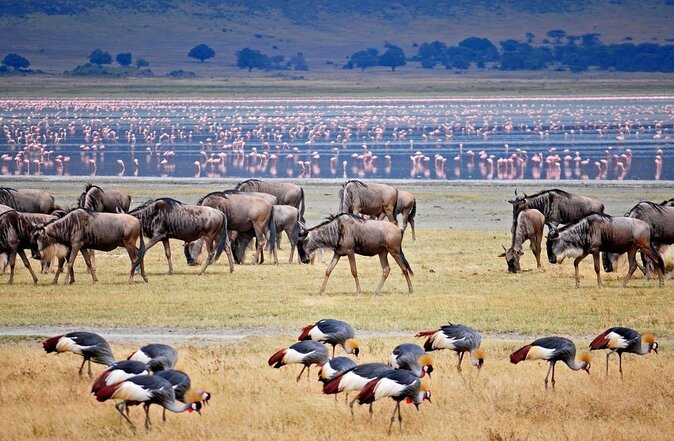
4 Day Great Migration Safari Serengeti & Ngorongoro Crater
Read our review →Browse the lists this tour appears in