
Reviewed · KILIMANJARO TREKS
8 Day Mount Kilimanjaro Trekking Lemosho Route
The Lemosho Route gives you eight days to reach Uhuru Peak, with a slow approach across forest, moorland, and high alpine desert. That extra time matters on Kilimanjaro, where acclimatization can make or break summit day. The first day may include an armed ranger because buffalo, elephants, and other wildlife live near the Lemosho Glades.
I like the quiet start and the useful climb-high, sleep-lower rhythm around Lava Tower and Barranco. I also like that pickup, park fees, and all trek meals are included. The main drawback is the $2,250 price does not cover lodging before or after the trek, personal gear, or crew tips, so your final budget will be higher.
Key points to know before booking
- Eight days give you more acclimatization time: The Shira Plateau and Lava Tower sections help your body adjust before the summit attempt.
- The route begins in wildlife country: An armed ranger may accompany the first day near Lemosho Glades.
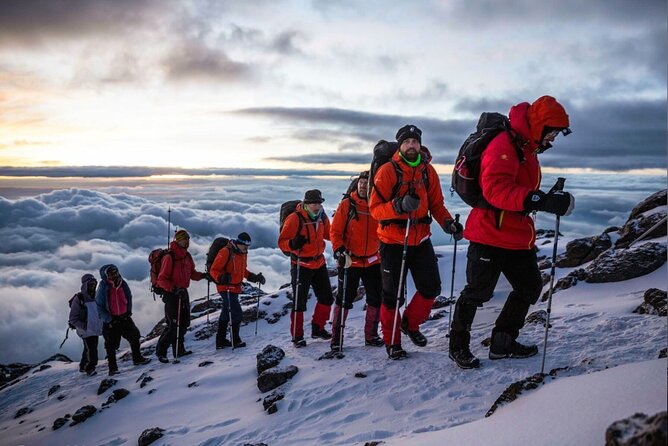
- You reach Uhuru Peak on Day 7: The summit push begins around midnight to 2 a.m. and includes steep scree, cold, darkness, and a long descent.
- The scenery changes sharply: You walk from montane forest to giant heather, moorland, semi-desert, alpine desert, and back into forest.
- Meals and major fees are included: Breakfast, lunch, dinner, taxes, and listed park admission are covered.
- You need to budget for extras: Personal trekking equipment, accommodation in Moshi, drinks, personal items, and tips are separate.
Why eight days on Lemosho is worth considering
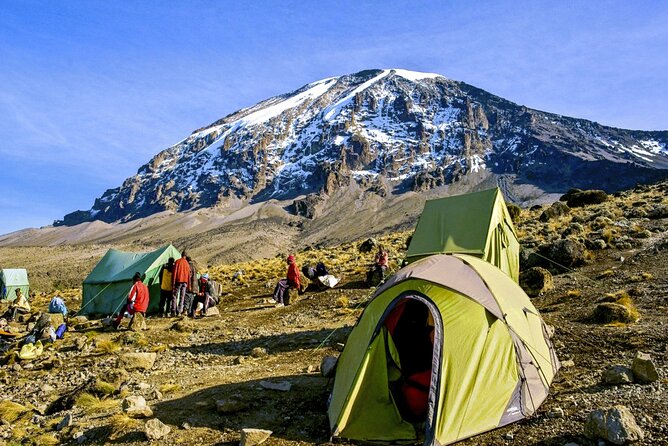
Kilimanjaro is not a technical mountaineering climb on this route, but it is a serious high-altitude trek. The summit rises to 5,895 meters, or 19,341 feet, and the mountain gives you no shortcut around thin air. Walking farther and more slowly can be more useful than trying to save money with a shorter itinerary.
The eight-day Lemosho plan is built around that idea. You gain height gradually, spend time on the Shira Plateau, then cross to the mountain’s southern side before making the summit attempt. Several days are not especially long by distance, yet they are valuable because your body has time to adjust.
I also like the route’s changing character. Day 1 begins in forest. By Day 2, the trees give way to giant heather and open moorland. Later, the trail becomes rocky and spare, with the summit zone feeling stark and exposed. The final descent returns you to wet forest and lower elevations.
This is a private activity, so only your own group participates. That can make the pace and breaks easier to manage than in a large mixed group, though the exact crew size is not stated. Pickup is offered, and the trek starts and ends in the Moshi area.
Other routes up the mountain from Moshi:
- Kilimanjaro climb by Lemosho Route (7-day)
★ 5.0 · 651 reviews - Kilimanjaro climb, Machame Route (7-day)
★ 5.0 · 262 reviews - Kilimanjaro Climbing Lemosho Route 8 Days.
★ 5.0 · 186 reviews
Day 1: Lemosho Gate to Mti Mkubwa
After breakfast and a briefing, you drive from Moshi toward Lemosho Park Gate. A four-wheel-drive vehicle then uses a forest track to reach the Lemosho Glades, where the walk begins.
The first day covers about 6 kilometers and takes roughly two to five hours. You climb from 1,830 meters to 2,650 meters, staying in the montane forest zone before reaching Mti Mkubwa, or Big Tree, Camp.
This is a gentle opening by Kilimanjaro standards, but do not treat it as a sightseeing stroll. The forest can be wet, and the trail may feel rough underfoot. Keep rain gear close rather than buried in your bag.
The wildlife detail is important. Buffalo, elephants, and other animals live around the Lemosho Glades, and groups may be accompanied by an armed ranger on this opening section. That does not mean a wildlife encounter is guaranteed. It does mean the first day has a more remote feel than a straightforward walk to a busy mountain gate.
Lunch and dinner are included. Your first camp night also gives you a chance to learn how the support system works, organize your sleeping kit, and decide what needs to stay near the tent entrance.
Day 2: Crossing Shira Ridge to Shira 1
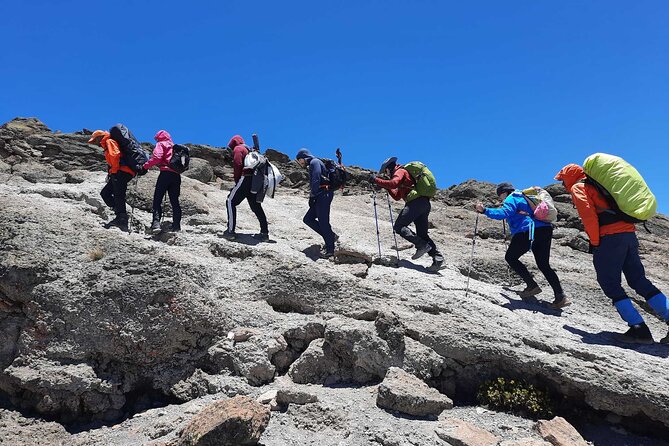
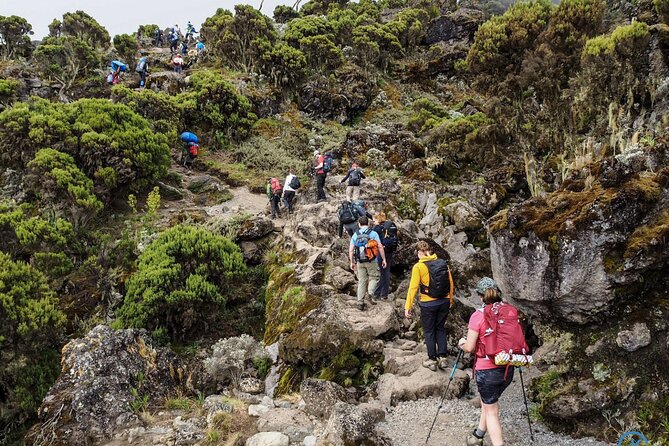
The trail steepens after breakfast as you leave the forest and enter the giant heather and moorland zone. You cross several streams, climb over Shira Ridge, and then descend gently toward Shira 1 Camp.
The day covers about 8 kilometers in four to five hours. Elevation rises from 2,650 meters to 3,500 meters. The distance is modest, but the altitude gain is noticeable, especially if you are still finding your walking rhythm.
Shira 1 sits near a stream on the Shira Plateau. This open setting changes your view of the mountain. You are no longer surrounded by trees, and the route begins to feel broader and more exposed.
The first rule here is simple: walk slowly, drink regularly, and do not race the group. You may feel perfectly fine at this stage. Altitude symptoms can appear later, so an easy pace is useful even when your legs want to move faster.
Breakfast, lunch, and dinner are included. You should have your personal layers ready because conditions in the moorland can change, and the provided information does not promise a specific weather pattern.
Day 3: A slower day on the Shira Plateau
Day 3 is an 8-kilometer walk from Shira 1 to Shira 2 Camp. The route crosses moorland meadows beside a stream and takes about four to five hours, with elevation rising from 3,500 meters to 3,850 meters.
This is one of the most useful days in the plan. It is not a rest day in the usual sense, but it is gentler than the harder sections ahead. The plateau also allows for additional walks, making it a good place to gain time at altitude without immediately forcing a major climb.
I like this kind of pacing. A shorter itinerary might hurry you across the plateau. Here, you have room to walk, rest, eat, and let your body adjust.
The tradeoff is that the scenery can feel sparse. Moorland is not a forest packed with obvious wildlife or a village route filled with activity. Its appeal comes from space, sky, unusual plants, and the gradual sense that you are getting high. If you want constant visual drama, this day may seem quiet. For acclimatization, quiet is useful.
Same base, a different kind of day out:
- Safari Serengeti And Ngorongoro
★ 5.0 · 288 reviews - Climbing Kilimanjaro – Machame Route
★ 5.0 · 170 reviews - Climbing Kilimanjaro through 7 days Machame Route
★ 5.0 · 151 reviews - Kilimanjaro climb, Lemosho Route (8-day)
★ 5.0 · 148 reviews
Day 4: Lava Tower and the descent to Barranco
This is the route’s key acclimatization day. From the Shira Plateau, you climb east along a ridge, pass the junction toward Kibo, and continue southeast toward Lava Tower, also called the Shark’s Tooth.
The route reaches about 4,650 meters at Lava Tower before dropping to Barranco Camp. The day covers about 8 kilometers and takes five to six hours. You begin around 3,850 meters and finish near 4,000 meters, so the camp is only slightly higher than your starting point.
That apparent lack of progress is the point. You climb higher during the day, then sleep lower at Barranco. This gives you useful exposure to altitude without making you spend the night at the highest point reached.
The terrain becomes semi-desert, with less vegetation and more rock. You may feel the thin air during the climb to Lava Tower, even if the walking itself is not technically difficult. Keep the day steady and tell the crew promptly if you feel unwell.
Barranco is one of the more memorable camps because the next morning begins with the Barranco Wall. Dinner and breakfast are included, and the evening is a chance to rest before the route becomes more physical.
Day 5: The Barranco Wall and Karanga Valley
After breakfast, you leave Barranco and climb the Barranco Wall. The route continues toward Karanga Valley, then connects with the Mweka Trail.
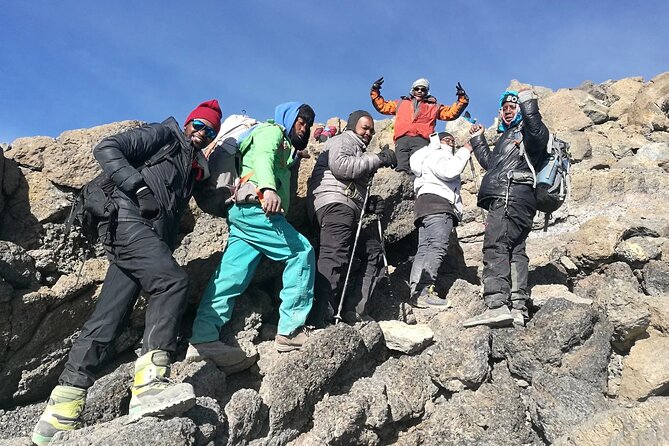
This is only about 5 kilometers and takes roughly three to five hours, but distance tells only part of the story. The Barranco Wall is steep and requires careful foot placement. It is not described as a technical rock climb, but you should expect hands-on movement in places and a slower pace than on an ordinary trail.
The route climbs from approximately 4,000 meters to 4,050 meters. The small net gain hides a series of ups and downs. You are walking in alpine desert, where the air is thin and the surroundings feel bare.
This day rewards patience. Let the guide set the pace, keep your hands free when possible, and avoid trying to squeeze around people on the steeper sections. A short day on paper can still leave you tired at this altitude.
Lunch and dinner are included, and the camp at Karanga helps break up the approach to Barafu. That matters because a direct push from Barranco to the high camp would be more demanding.
Day 6: Karanga to Barafu Camp
Day 6 takes you from about 4,050 meters to 4,700 meters. The distance is only 4 kilometers, and the climbing time is listed at three to four hours, but this is a serious high-altitude morning.
You continue through alpine desert to Barafu Camp, where the South Circuit is complete. The route has given you views of the summit from several angles, and now the focus shifts from sightseeing to preparation.
Barafu is the staging point for the summit attempt. You make camp, eat dinner, rest, and prepare for the midnight-to-2 a.m. start. Keep your warmest clothing, headlamp, water, and summit snacks easy to reach. The information provided does not list a gear package, so you need to bring or arrange your own personal trekking equipment.
The biggest challenge here is often sleep. You may have only a short rest before leaving for the summit, and altitude can make that rest less comfortable. Do not judge your chances by how well you sleep. Follow the guide’s advice and save energy for the climb.
Day 7: Stella Point, Uhuru Peak, and the Mweka descent
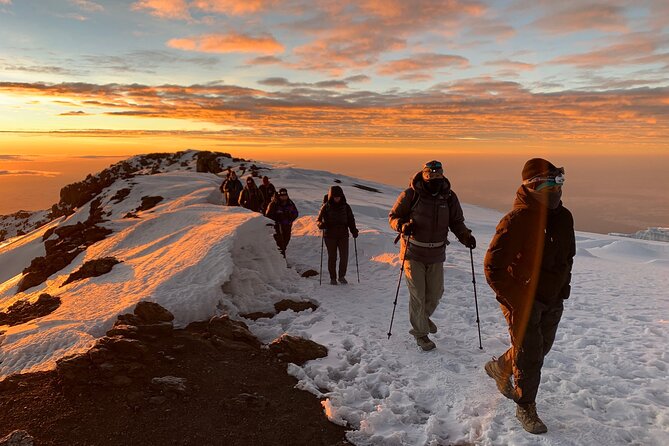
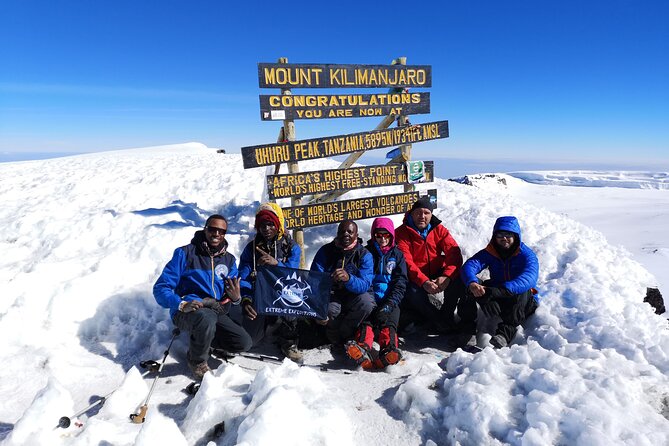
Summit day begins very early, between midnight and 2 a.m. You climb northwest between the Rebmann and Ratzel glaciers, moving through heavy scree toward Stella Point on the crater rim.
This is the most physically and mentally demanding part of the trek. The darkness hides much of the slope, the scree can shift underfoot, and the cold is likely to feel sharp after several days on the mountain. Progress may be slow. That is normal for this section.
At Stella Point, you pause briefly and may see sunrise over the crater rim. Faster walkers may reach Uhuru Peak in time for sunrise, but the timing will depend on pace, conditions, and how your body handles the altitude.
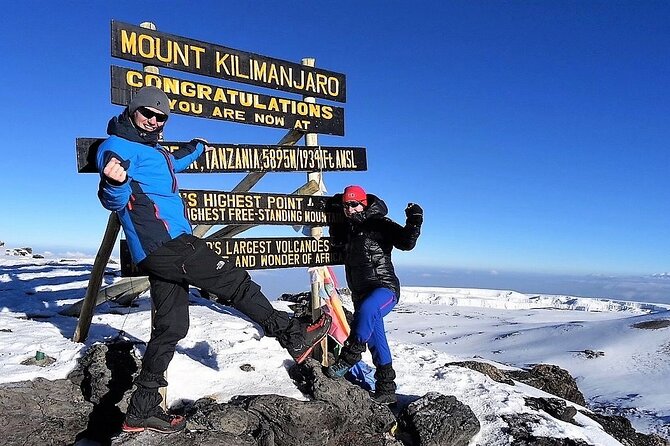
From Stella Point, the route continues for about an hour toward Uhuru Peak. Snow may appear along this section. At 5,895 meters, the summit is the highest point on Mount Kilimanjaro and the highest point in Africa.
After the summit, the day is far from finished. You descend toward Mweka, and the combined effort makes this a long, exhausting day. The supplied schedule lists about six hours for this portion, but summit-day duration can vary with pace and conditions, so you should ask for the operator’s full timing before departure. Eat and drink during the descent even if your appetite has disappeared.
Day 8: Mweka Gate and the return to Moshi
The final day descends from about 3,090 meters to 1,680 meters, covering roughly 10 kilometers in three to five hours. You return to forest, where conditions can be wet and muddy.
Gaiters and trekking poles are particularly useful here. The lower altitude may make breathing easier, but tired legs and slippery ground create their own problems. Keep rain gear and warmer clothing handy, even though shorts and a T-shirt may be comfortable at the lower elevations.
At Mweka Park Gate, you receive your summit certificates. A Monkey Adventures vehicle then takes you back to your Moshi hotel, with the drive listed at about 60 minutes.
Breakfast is included on the final morning. Accommodation in Moshi before and after the trek is not included, so plan those nights separately.
What the $2,250 price really covers
At $2,250 per person, this is not a bargain-basement Kilimanjaro climb. The value comes from the eight-day schedule, private participation, included meals, park-related fees, and pickup support.
The package includes:
- All fees and taxes
- Seven breakfasts
- Eight lunches
- Seven dinners
- Listed admission tickets
- Pickup support
- A private group format
The price does not include accommodation before or after the trek, personal trekking gear, alcohol, personal expenses, or crew tips. Those omissions are normal enough for a trekking package, but they affect your real cost. Ask for a clear packing list and a recommended tipping plan before you pay.
The meal arrangement is practical. Breakfast, lunch, and dinner are supplied on the main trekking days, and vegetarian food is available if requested at booking. You should also report specific dietary needs early.
Who should book this Lemosho trek
I would consider this route for someone who wants a quieter, slower Kilimanjaro approach and can handle several days of sustained walking. The eight-day schedule suits you if acclimatization is a priority and you prefer not to force the mountain into the shortest possible timetable.
It is also a good fit for a private group that wants to walk together rather than join a larger public departure. Families can participate under the stated conditions: children must be accompanied by an adult, and the child rate applies only when sharing with two paying adults.
This is not the right choice if you want a soft adventure with guaranteed comfort. You camp at high altitude, face cold and rough ground, and begin summit day in the middle of the night. You also need to arrange your own personal gear and additional lodging.
The activity operates in all weather, so proper clothing is essential. Confirmation is provided at booking, and free cancellation is available if you cancel at least 24 hours before the local start time. Changes or cancellations inside that window are not accepted for a refund.
Should you book it?
Book this trek if you value extra acclimatization days, a less-used approach, and a private group more than the lowest possible price. The Shira Plateau, Lava Tower acclimatization climb, Barranco Wall, and midnight summit attempt give the route real variety.
Before committing, confirm the summit-day timing, full equipment requirements, accommodation arrangements in Moshi, and crew tipping expectations. If your budget can absorb those extras and you are prepared for a demanding high-altitude trek, the eight-day Lemosho plan is a sensible way to attempt Kilimanjaro. If you want a shorter or more comfortable holiday, choose a different kind of Tanzania experience.
FAQ
Where does the Kilimanjaro trek start and end?
The activity starts in Moshi, Tanzania, and ends back at the meeting point after transport from Mweka Gate.
How long is the trek?
The trek lasts approximately eight days.
What is the highest point reached?
The route reaches Uhuru Peak, the highest point on Mount Kilimanjaro and the highest point in Africa.
When does the summit attempt begin?
The summit climb begins very early on Day 7, between midnight and 2 a.m.
Is pickup available?
Yes. Pickup is offered, and transport returns you from Mweka Gate to your Moshi hotel in about 60 minutes.
Are meals included?
Yes. The package includes seven breakfasts, eight lunches, and seven dinners.
Is accommodation included?
No. Accommodation before and after the trek is not included.
Is personal trekking gear included?
No. You must arrange your personal trekking gear separately.
Can I request vegetarian meals?
Yes. Vegetarian meals are available if requested at the time of booking. Specific dietary requirements should also be provided then.
More Hiking & Trekking in Moshi
- Private Kilimanjaro Hike 7 Day Lemosho Route
★ 5.0 · 60 reviews - Best Kilimanjaro hiking day trip tour with Kilinge Adventures
★ 4.5 · 54 reviews - #1. Best Kilimanjaro Day hike Tour-Machame Route-ISMANI
★ 4.2 · 47 reviews - Best Kilimanjaro Adventure 7 days Machame route Trekking
★ 5.0 · 42 reviews
Just added in Moshi
- Wildlife Extravaganza: Manyara, Tarangire & Ngorongoro in 3 Days★ 5.0 · 3 reviews
- West Kilimanjaro cycling Adventures★ 4.5 · 8 reviews
- machame route★ 5.0 · 16 reviews
- Kilimanjaro Climb • Machame Route ~ 10 Day★ 5.0 · 6 reviews
- Kilimanjaro Climbing Umbwe Route★ 5.0 · 3 reviews
- Mt Kilimanjaro 6 days Marangu route hike★ 5.0 · 3 reviews
- Kilimanjaro Climb • Marangu Route ~ 9 Day★ 5.0 · 4 reviews
- 3 Days Private E-Bike Tour in West Kilimanjaro★ 5.0 · 3 reviews
Kilimanjaro Treks, compared.



8-Day Small-group Lemosho Kilimanjaro Summit Trekking
Read our review →

5 Days Best of Tanzania Luxury Safari Northern Circuit
Read our review →

Climbing Kilimanjaro through 7 days Machame Route
Read our review →
7-Day Machame Kilimanjaro Summit Tour from Arusha
Read our review →Browse the lists this tour appears in