
Reviewed · KILIMANJARO TREKS
8 Days Kilimanjaro Climbing Lemosho Route
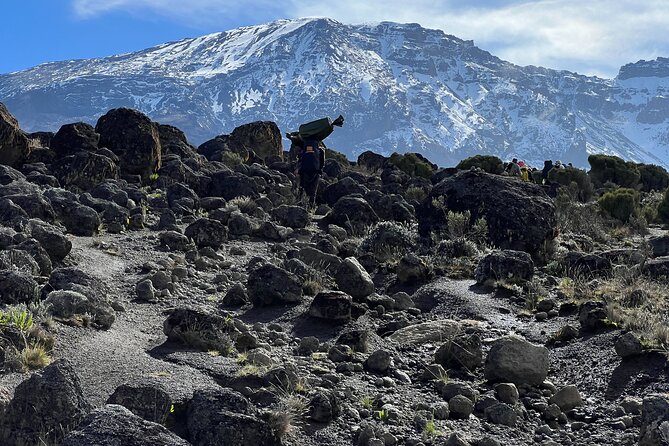
Kilimanjaro’s Lemosho Route gives you the mountain’s best mix of scenery, quiet trails, and time to adjust to altitude. You begin in cool forest, cross the wide Shira Plateau, pass Lava Tower and Barranco, then make the final push to Uhuru Peak under a starry sky.
I like the extra acclimatization day and the long, varied approach from the western side. I also like the practical support: airport pickup, a Moshi orientation, gear checks, porters, a cook, purified water, and rescue equipment. The main catch is the summit day, which can run 12 to 17 hours and requires a midnight start after sleeping at high altitude.
Key points to know before booking
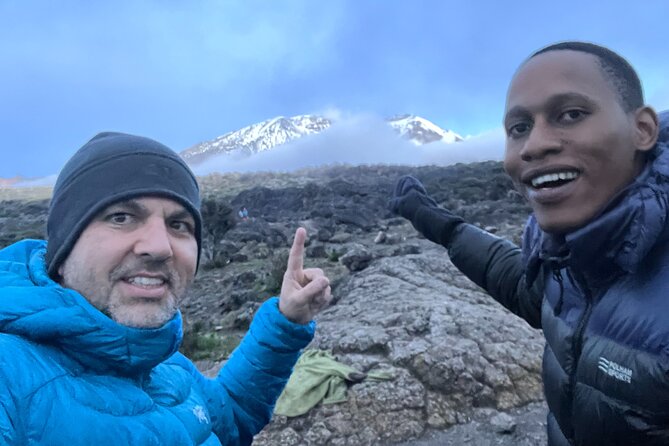
- Eight days gives your body more time to adjust, a major advantage over shorter Kilimanjaro routes.
- The Lemosho approach is quiet at first, with forest, wildlife signs, and open views across the Shira Plateau.
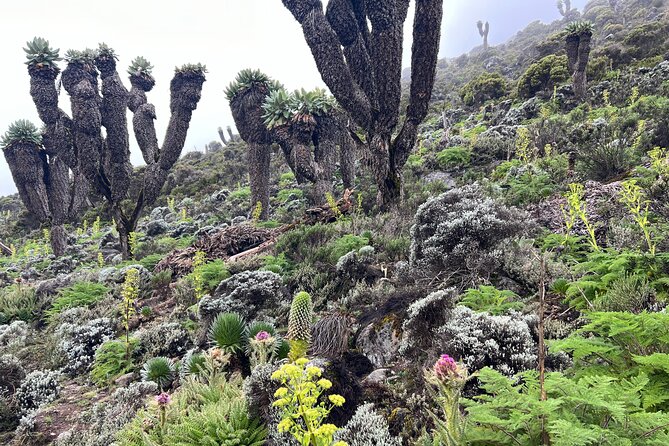
- You cross several climate zones, from rainforest to heath, alpine desert, and the icy summit zone.
- The summit night is very demanding, with six to seven hours to Stella Point and another one to two hours to Uhuru Peak.
- Furaha Adventures handles the core mountain logistics, including guides, porters, meals, tents, park fees, transfers, and rescue fees.
- The $2,300 price covers a lot, but drinks, tips, souvenirs, and personal spending are extra.
Why the Lemosho Route is worth eight days
Lemosho is a strong choice if you want more than a direct climb. The route begins on Kilimanjaro’s western side, where the trail passes through forest before reaching the open Shira Plateau. You get changing scenery almost every day, not just a long uphill march.
The route is also quieter at the start. It eventually joins the Machame route near Lava Tower, but the early walking feels more removed from the main flow of climbers. That matters on a mountain where popular paths can feel crowded around camps and trail junctions.
The eight-day schedule is especially useful. It adds time for your body to adjust as you sleep higher each night. Altitude affects people differently, and no itinerary can guarantee a summit, but a slower plan generally gives you a better chance to handle the climb sensibly.
Furaha Adventures runs this as a private activity, so only your own group takes part. That gives the guides more room to manage your pace and respond to how your group is doing. Past participants praised the planning, food, encouragement, and support from the mountain crew. Godfrey and Guiwa were singled out for their planning and guidance, although your exact guide team should be confirmed before booking.
Other routes up the mountain from Moshi:
- Kilimanjaro climb by Lemosho Route (7-day)
★ 5.0 · 651 reviews - Kilimanjaro climb, Machame Route (7-day)
★ 5.0 · 262 reviews - Kilimanjaro Climbing Lemosho Route 8 Days.
★ 5.0 · 186 reviews
Arrival in Moshi and the pre-climb check
Airport pickup is included, followed by transport to your hotel in Moshi. Before the climb, you receive an orientation covering the trek, and the guides check your equipment.
That meeting is more important than it sounds. It gives you a chance to identify missing or unsuitable gear before you are on the mountain. The supplied information does not specify the hotel, the exact pickup time, or the full equipment list, so ask Furaha Adventures for those details before you arrive.
Moshi is the practical base for the climb. The first mountain day begins with a drive to Londorossi Gate on the western side of Kilimanjaro. The drive from Arusha can take several hours, so expect an early start and a long day of transport plus walking.
Day 1: Forest, birds, and the Londorossi approach
At Londorossi Gate, you begin the Lemosho trail. The actual walking time is about three to four hours, ending at Forest Camp at roughly 9,498 feet.
The forest is one of the route’s appealing features. Look for unusual moss, flowers, bird calls, and possibly black-and-white colobus monkeys. You may also see signs of elephants moving through the area. The first day is not the big physical test, but it introduces the steady rhythm that will shape the week.
There is one practical warning. In rainy or muddy conditions, vehicles may not reach the true trailhead. If that happens, you may walk farther than planned before reaching camp. It is a small detail, but it can matter after a long transfer.
Day 2: First views of Kibo at Shira 1
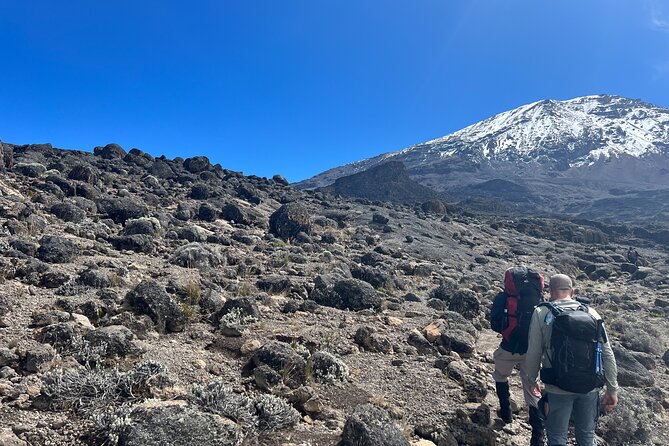
You leave the montane forest and enter the Hagenia zone, where the trees thin and the views open. Kibo, Kilimanjaro’s highest cone, begins to appear ahead.
This is a useful acclimatization day because the trail rises and falls over several ridges. You reach the day’s high point at about 11,500 feet, then descend to Shira 1 Camp. Walking time is listed at six to nine hours, so this is a longer day than the first.
The changing vegetation and first clear views of Kibo make this a satisfying stage of the climb. At the same time, the distance can be tiring. Keep your pace slow and steady. The goal is not to race into camp. It is to arrive with enough energy for the higher days ahead.
Same base, a different kind of day out:
- Safari Serengeti And Ngorongoro
★ 5.0 · 288 reviews - Climbing Kilimanjaro – Machame Route
★ 5.0 · 170 reviews - Climbing Kilimanjaro through 7 days Machame Route
★ 5.0 · 151 reviews - Kilimanjaro climb, Lemosho Route (8-day)
★ 5.0 · 148 reviews
Day 3: Across the Shira Plateau to Moir Camp
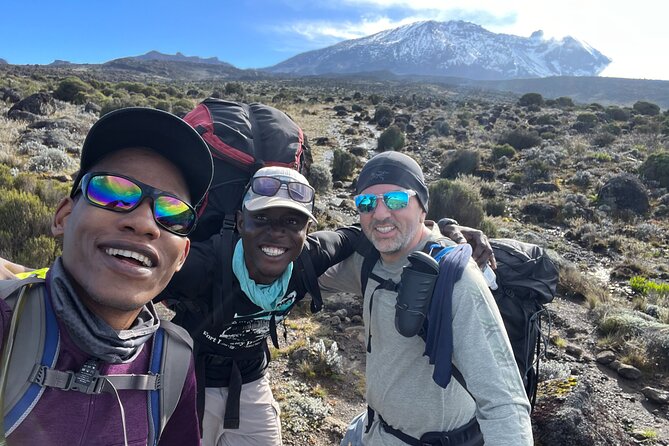
Day three crosses the heath zone of the Shira Plateau and begins the climb toward the western side of the Kibo Massif. The open setting gives you broad views and a strong sense of height.
You stop for a picnic lunch at Scott Fisher Memorial Camp. From there, the trail continues into the upper heath zone and on to Moir Camp, at roughly 13,650 feet. The planned walking time is five to six hours.
Depending on the weather, an afternoon acclimatization walk may be arranged. This is a good example of why a private group can be helpful. The guides can consider conditions and how your group is feeling before deciding whether extra walking makes sense.
Moir Camp is high enough that some people begin to notice altitude symptoms. Headaches, poor sleep, and reduced appetite can occur, though the supplied information does not promise how the guides will respond to every symptom. Be direct with your guide about how you feel.
Day 4: Lava Tower and the Barranco Valley
The route leaves the heath zone and enters the alpine zone. You climb past Lava Camp to about 14,300 feet, crossing a stark volcanic setting before dropping into the Barranco Valley.
Walking time is about four to six hours, with camp at roughly 13,044 feet. The high point and lower sleeping altitude create a useful climb-high, sleep-lower pattern. That is one of the best features of this itinerary from an acclimatization point of view.
This section is also where the route feels less gentle. The surroundings become more exposed, and the air is thinner. You will want warm layers, water, and a pace that lets you breathe comfortably. Barranco Camp is scenic, but reaching it after the Lava Tower section can leave you tired.
Day 5: The Barranco Wall and Karanga Camp
The day begins with the Barranco Wall, one of the best-known physical sections on this route. You climb the wall with views toward Kilimanjaro’s ice fields, then continue over a series of small valleys to Karanga Camp.
The walking time is about three to five hours, with camp at around 13,106 feet. The trail is not simply uphill. You gain and lose height as it crosses the valleys, which can make the day feel longer than the clock suggests.
The Barranco Wall may look intimidating, but the itinerary presents it as a climb rather than a technical rock route. Still, you should expect hands-on sections and uneven ground. Follow the guide’s pace and keep your pack manageable.
Karanga is a useful stop before the final climb to Barafu. The shorter day gives you time to rest, eat, and prepare for the summit schedule.
Day 6: Barafu Camp and the midnight plan
You walk three to five hours to Barafu Camp, reaching roughly 15,100 feet. The route again crosses small valleys, and the final approach is high and exposed.
At camp, the team demonstrates safety equipment such as the Gamow bag and oxygen. This is reassuring, but it also makes the point that high-altitude climbing carries real risks. Rescue fees and an oximeter are included, yet equipment alone does not replace careful pacing or honest communication with your guide.
After an early supper, you rest until the wake-up call around 11 p.m. or midnight. Sleep may be short and uncomfortable at this altitude. Pack your summit items before lying down so you are not sorting through your gear in the dark.
Day 7: Stella Point, Uhuru Peak, and Mweka Camp
Summit day is the hardest part of the trip. You begin around midnight and climb by headlamp toward Stella Point. The ascent usually takes six to seven hours, followed by another one to two hours to Uhuru Peak at 19,341 feet.
The goal is often sunrise, but do not treat that as a promise. Hiking speed, energy, and altitude response vary widely. You may reach the summit several hours before or after another member of your group. Extra lithium batteries are a smart item to bring because cold conditions can drain ordinary batteries quickly.
After photographs and a short summit celebration, you descend to Barafu for lunch, then continue to Mweka Camp at about 10,448 feet. The full day typically lasts 12 to 17 hours, with major ups and downs. This is not a normal hiking day. It is a prolonged effort at altitude followed by a long descent.
The reward is reaching Uhuru Peak, Africa’s highest point, but the descent deserves respect. Tired legs and loose volcanic ground can create their own problems. Save some energy for the walk down.
Day 8: The final descent and return to town
The last day involves three to five hours of walking to the trailhead. You eat lunch there, say goodbye to the mountain crew, and return to town, usually arriving at the lodge between 3 and 5 p.m.
This final section is less dramatic than summit day, but it completes the route through the lower forest. You will probably be ready for a shower, a proper bed, and a slower evening.
The timing also matters if you have onward travel. The tour data gives a usual arrival window, not a guarantee, so do not schedule a tight same-day connection without checking with the operator.
What the $2,300 price covers
At $2,300 per person, this is not a bare-bones trail package. The price includes park fees, airport transfers, professional mountain guides, porters, cook salaries, private four-season waterproof tents, purified drinking water, meals on the mountain, rescue fees, and an oximeter.
The meal allowance lists eight breakfasts, eight lunches, and seven dinners. That matches a trip with eight mornings and eight midday meals, but seven mountain dinners before the final return to town. Alcohol, soft drinks, tips, souvenirs, and personal purchases are not included.
The value depends on what you want handled for you. If you tried to arrange park access, transport, camping equipment, food, porters, and safety support separately, the price would be harder to compare. The main thing to clarify is what happens with any pre- or post-climb hotel nights, since the provided details mention a lodge but do not state that lodging is included.
Tips are also a real part of your budget. The amount is not specified here, so ask the operator for current guidance and plan to carry personal spending money.
Who should choose this climb
I would choose this route if you want Kilimanjaro’s scenery and are willing to give the mountain a full eight days. It suits people who prefer a private group, gradual altitude gain, and strong logistical support.
It is not an easy holiday walk. You need to handle repeated long days, cold nights, thin air, uneven ground, and a very long summit push. The itinerary says most travelers can participate, but that should not be read as a promise that the climb is suitable for every medical condition or fitness level.
The route also suits people who enjoy a changing setting. You move from forest and wildlife signs to open plateau, volcanic heath, alpine terrain, and the summit zone. If your only goal is reaching the top as quickly as possible, a shorter route may look tempting, but it gives you less time to adjust.
Booking confirmation is provided at the time of purchase. Pickup is offered, and the activity is listed as available from Kilimanjaro Airport and Kilimanjaro National Park. The stated cancellation policy allows a full refund if you cancel at least 24 hours before the start time. Changes or cancellations inside 24 hours are not refunded.
Should you book the eight-day Lemosho climb?
Book it if you want the scenic western approach, a quieter opening, an extra acclimatization day, and a package that takes care of the main mountain costs. The encouraging signs are the detailed safety setup, included rescue fees, private group format, and repeated praise for the guides, food, planning, and support.
Before paying, ask for the exact hotel arrangements, guide names, group size, recommended tipping amount, equipment list, and the plan for rainy trail conditions. Those details will help you compare the $2,300 price fairly.
The decisive question is simple: can you accept a midnight start and a 12 to 17-hour summit day? If yes, the eight-day Lemosho route gives you a sensible, scenic way to take on Kilimanjaro. If that schedule sounds too severe, admire the mountain from below and choose a shorter day experience instead.
FAQ
How long is the Kilimanjaro Lemosho Route experience?
The climb lasts about eight days, including the approach, summit attempt, descent to Mweka Camp, and final return to town.
Where does the climb begin?
The route begins at Londorossi Gate on the western side of Mount Kilimanjaro. In poor rainy or muddy conditions, the vehicle may not reach the true trailhead, creating extra walking.
Where does the descent take place?
The descent uses the Mweka Route, with the final overnight at Mweka Camp before walking to the trailhead.
Is airport pickup included?
Yes. Airport transfers are included, and the meeting point is listed at Kilimanjaro Airport.
Are meals included?
Yes. The package includes meals on the mountain, with eight breakfasts, eight lunches, and seven dinners listed.
Are tents and drinking water provided?
Yes. The package includes private waterproof four-season mountain tents and clean, purified drinking water.
Are park and rescue fees included?
Yes. Park fees and rescue fees are included, along with an oximeter and a demonstration of safety equipment at Barafu Camp.
How difficult is summit day?
Summit day is very demanding. You usually start around 11 p.m. or midnight, climb six to seven hours to Stella Point, continue one to two hours to Uhuru Peak, then descend through Barafu to Mweka. The full day typically lasts 12 to 17 hours.
What is the cancellation policy?
You can receive a full refund if you cancel at least 24 hours before the experience begins. Cancellations or changes made within 24 hours are not refunded.
Just added in Moshi
- Wildlife Extravaganza: Manyara, Tarangire & Ngorongoro in 3 Days★ 5.0 · 3 reviews
- West Kilimanjaro cycling Adventures★ 4.5 · 8 reviews
- machame route★ 5.0 · 16 reviews
- Kilimanjaro Climbing Umbwe Route★ 5.0 · 3 reviews
- Mt Kilimanjaro 6 days Marangu route hike★ 5.0 · 3 reviews
- Kilimanjaro Climb • Machame Route ~ 10 Day★ 5.0 · 6 reviews
- 3 Days Private E-Bike Tour in West Kilimanjaro★ 5.0 · 3 reviews
- Private Cycle to Kilimanjaro Bike Park Safari★ 5.0 · 6 reviews
Kilimanjaro Treks, compared.



8-Day Small-group Lemosho Kilimanjaro Summit Trekking
Read our review →

5 Days Best of Tanzania Luxury Safari Northern Circuit
Read our review →

Climbing Kilimanjaro through 7 days Machame Route
Read our review →
7-Day Machame Kilimanjaro Summit Tour from Arusha
Read our review →Browse the lists this tour appears in