
Reviewed · SAFARI TOURS
7 Days Tanganyika Wilderness Safari
The best part of this safari is the variety packed into one week: elephant country in Tarangire, wide-open Serengeti plains, and the wildlife-filled bowl of Ngorongoro Crater. You travel in a private 4WD with a pop-up roof, so your group can stop for animals without sharing the vehicle with strangers.
I like the practical setup: lodging, meals, park fees, transfers, water, and game drives are covered. I also like the guide-led approach. Guides such as Laban, George, Juma, Francis, and Albert are praised for spotting hard-to-see animals, explaining behavior, and handling the rough roads with care. The tradeoff is real: some days involve long drives and bumpy tracks, and the final night is not included.
- Tarangire gives you a quieter start with elephants, birds, and a less hurried safari feel.
- Serengeti receives two game-viewing days, including central Seronera.
- Ngorongoro Crater adds a concentrated wildlife day around Lake Magadi.
- Your private 4WD includes useful safari gear, including a fridge, binoculars, guidebooks, maps, and a pop-up roof.
- The price covers most major trip costs, including accommodation, meals, fuel surcharge, government tax, and park fees.
- Guide quality is central to the experience, with repeated praise for Laban, George, Juma, Francis, and others.
A seven-day route through Tanzania’s best-known parks
This is a classic northern Tanzania safari, but it is not a rushed checklist. The route links Tarangire National Park, the Serengeti, and Ngorongoro Conservation Area, with two nights in the Serengeti and two nights near Ngorongoro.
You begin and end around Arusha. The tour is private, so only your own party joins the vehicle. That matters on safari. You can ask to pause longer at a sighting, discuss what you are seeing with your guide, and keep the pace suited to your group rather than a larger bus.
The advertised price is $2,929.49 per person. That is a serious sum, but it includes much more than transportation and park entry. Accommodation, breakfast, lunch, dinner, unlimited bottled water, a private 4WD, driver-guide service, airport transfers, park fees, fuel surcharge, taxes, snacks during drives, and a glass of wine at a sundowner are all included.
International or local flights, insurance, visas, extra alcoholic drinks, and accommodation on the final day are not included. You should also plan your own hotel or onward arrangement after returning to Arusha unless your flight timing makes a same-day airport transfer practical.
Day one: an easy arrival at Kibo Palace Hotel
The first day is mainly about getting settled. You are met at Kilimanjaro Airport and transferred to Kibo Palace Hotel in Arusha.
That airport pickup is useful after an international flight. You do not need to work out a taxi or navigate an unfamiliar arrival area before the safari begins. The day also gives you a chance to rest, organize camera gear, and check that your clothing and luggage are ready for several days in a vehicle.
The published meeting point is in Arusha, with an 8:30 a.m. start time. Confirm the precise pickup plan before arrival, especially if you are staying somewhere other than the arranged accommodation.
Other park itineraries that start in Arusha:
- Serengeti Balloon Safari and authentic bush breakfast
★ 5.0 · 2,480 reviews - Balloon Safari & Bush Breakfast in Serengeti – Miracle Experience
★ 5.0 · 1,646 reviews - 4 Days Group Camping Safari
★ 5.0 · 1,101 reviews
Day two: elephants and open space in Tarangire
After breakfast, you drive from Arusha to Tarangire National Park, then continue to Maramboi Tented Lodge for the night.
Tarangire is a fine first park because it offers a different feel from the Serengeti. It is known here for elephant migration, birdlife, and a quieter safari atmosphere. The route description points out that many people either skip the park or spend only a few hours inside it, so this stop gives you time in a less hurried setting.
You might see elephants, many bird species, and other African animals during the game drive. The exact sightings will depend on season and conditions, but Tarangire is included for its own character, not simply as a stop on the way to somewhere more famous.
Maramboi Tented Lodge provides the night’s accommodation. The combination of tented lodging and a national park setting fits the safari mood, while the included meals keep the evening simple. You will want to keep expectations practical: this is an outdoor trip, and the days are built around driving and wildlife viewing rather than resort leisure.
Day three: Olduvai Gorge and the central Serengeti
After breakfast, the route continues toward the Serengeti through Olduvai Gorge. This prehistoric site is associated with Dr. Louis Leakey’s discovery of Homo habilis, often called handy man. It gives the drive a human story as well as a wildlife focus.
The journey then reaches the Serengeti, one of the world’s most famous wildlife areas. The park covers about 15,000 square kilometers and supports large numbers of mammals, including the animals commonly grouped as the Big Five: lion, leopard, elephant, buffalo, and rhinoceros.
Your game drive continues toward the central Serengeti, where you spend the night at Serengeti Acacia Camps. The route passes through varied habitats, including woodland, swamps, soda lakes, and short-grass plains.
This is also one of the longer travel days. You should expect time in the vehicle, not just short transfers between attractions. The payoff is that you move from Tarangire’s distinct setting into the broad Serengeti system, where animal sightings can unfold across a much larger area.
Day four: a full day around Seronera
Day four is devoted to a full game drive toward central Serengeti, around the Seronera area, with another night at Serengeti Acacia Tented Camps.
A full day matters here. The central Serengeti is a major wildlife area, and the extra time gives your guide room to search rather than hurry you toward the next lodge. The guide’s skill becomes especially important on a day like this. Guides named in the supplied feedback, including Laban and George, are praised for seeing small signs of animals, predicting behavior, and adjusting routes sensibly. Juma is also praised for combining driving, navigation, and animal spotting.
You may see lions, leopards, cheetahs, elephants, buffalo, giraffes, hippos, or many bird species. The tour description also highlights wildebeest and other large mammals. No safari can promise every animal, but two nights in the Serengeti give you a better chance than a brief pass through.
The open vehicle design is a major part of the experience. A pop-up roof lets you stand or look upward for a wider view, useful for birds and animals close to the vehicle. The included binoculars and guidebooks are practical extras, though you may still want to bring your own camera equipment and spare batteries.
Other safaris people book out of Arusha:
- 5 Days Group Camping Safari
★ 5.0 · 730 reviews - 3 Days Serengeti & Ngorongoro Group Camping Safari
★ 5.0 · 574 reviews - 7-Day Premium Luxury Tanzania Safari All-Inclusive
★ 5.0 · 426 reviews - 3-Day Classic Serengeti Safari
★ 5.0 · 263 reviews
Day five: leaving the Serengeti for Ngorongoro
After breakfast, you leave the Serengeti and travel toward the Ngorongoro Conservation Area. The route description refers to traveling from the northern Serengeti area toward Ngorongoro, with a late-afternoon drive to the lodge.
Ngorongoro is famous for its volcanic crater, described as the world’s largest unflooded and unbroken caldera. It is about 20 kilometers across, around 600 meters deep, and roughly 300 square kilometers in area. Those figures give you a sense of scale, but the first view is likely to be the more useful measure. The crater is a huge natural bowl with grassland and water below its rim.
Lake Magadi, a shallow alkaline lake in the crater, is an important stop. Flamingos, hippos, and other water birds can often be seen around it. The lake is one reason this area offers a different kind of wildlife scene from the open plains of the Serengeti.
You spend the night at Ngorongoro Farm House Lodge. The move from Serengeti to the crater area makes day six easier, since you are already near the crater for the morning game drive.
Day six: concentrated wildlife inside Ngorongoro Crater
After breakfast, you take a morning game drive in Ngorongoro Crater, then return to Ngorongoro Farm House Lodge in the late afternoon.
This is one of the most efficient wildlife days on the route. The crater’s enclosed shape brings many habitats into a compact area, and the itinerary specifically includes Lake Magadi. You may see lions, elephants, buffalo, hippos, flamingos, and other water birds. Rhino sightings are possible, but no animal sighting should be treated as guaranteed.
The timing is sensible. A morning drive gives you several hours in the crater before returning to the lodge. You should still expect a long day in the vehicle, and the road surfaces can be rough. One of the clearest practical points from the trip feedback is that wildlife viewing can be excellent while the rides remain bumpy. Bring a small cushion if you are sensitive to jolts, and keep water within reach.
This is also the point where a good guide can turn a viewing session into a lesson. Laban, George, Francis, Albert, and other named guides are repeatedly singled out for explaining animal habits, local culture, and the places you pass. If you have a particular interest, such as birds, predators, photography, or family-friendly pacing, tell your guide early.
Day seven: back to Arusha and onward travel
After breakfast, you drive back to Arusha. From there, the operator provides an airport transfer for an international flight or returns you to a hotel arranged by you.
Do not book a tight same-day connection without checking the expected drive time and your flight schedule. The itinerary includes the transfer, but it does not include the final night’s accommodation. If your flight leaves the following day, arrange a hotel in Arusha yourself.
The return drive also means the safari ends with transportation rather than another park visit. That is normal for this route, but it is worth knowing when comparing it with longer programs that include a final Arusha night or a domestic flight.
Why the private vehicle matters
The private format is one of the strongest reasons to consider this trip. Your group has its own vehicle and driver-guide, rather than joining a mixed party. That lets you ask questions freely and spend more time at sightings that interest you.
The included 4WD is fitted with a pop-up roof, fridge, binoculars, guidebooks, and destination maps. Unlimited game mileage is also included, so the listed price is not based on a small daily driving allowance.
Your driver is also your main wildlife interpreter. The strongest praise is aimed at guides who can spot animals, explain their behavior, drive steadily, and keep the days organized. Francis is described as having more than 15 years with the company. Laban is praised for tracking ability and hospitality, while George receives particular credit for route planning and animal behavior. Juma is singled out for driving skill and persistence in finding elusive wildlife.
Guide assignment is not stated in advance, so you should not assume you will receive one particular person. Still, these names give you a useful picture of the guide role to expect.
Meals, drinks, and what the price really covers
At $2,929.49 per person, the cost makes the most sense for someone who values a private vehicle and a largely prepaid trip. You do not have to separately budget for park fees, fuel surcharge, government tax, airport pickup, airport drop-off, bottled water, or the listed meals.
Breakfast, lunch, and dinner are included according to the itinerary. Snacks are provided during game drives, and a glass of wine is included at a sundowner. Other alcoholic drinks can be purchased, but they are not part of the base price.
The cost does not include visa fees, insurance, or air transportation. You should also give the operator any dietary requirements when booking. Children must be accompanied by an adult, and the tour recommends a moderate level of physical fitness.
The rough edges you should accept
A safari is not a soft-seat sightseeing tour. You will spend long periods on uneven roads, and the route covers large distances between parks. The excellent animal sightings described for this program do not remove the basic realities of dust, jolts, early starts, and changing conditions.
The schedule also leaves little room for a relaxed city stay. Arusha is mainly your arrival and departure point, while the focus stays on the parks. If you want more time for local markets, museums, or cultural visits, you would need to add that separately.
The accommodation list is specific, but room details, Wi-Fi, and other property amenities are not given. If those points matter to you, ask before paying. Also confirm how airport timing will work on day seven and where you will stay if your flight is not the same day.
The cancellation terms are strict close to departure. You can receive a full refund if you cancel at least six full days before the start time. Cancellation two to six full days ahead allows a 50 percent refund, while cancellation less than two full days before departure is nonrefundable. The operator may offer another date or a full refund if the minimum number of participants is not met.
Who should book this safari
I would choose this trip if you want the main northern Tanzania parks in one well-organized week and prefer a private vehicle. It suits couples, families with adult supervision, and small groups who want one guide, one vehicle, and a shared schedule.
It also suits first-time safari visitors who want the major names without arranging lodging, park entry, meals, and transfers separately. The inclusion of Tarangire is a plus, since it gives you a quieter contrast to the Serengeti and Ngorongoro.
I would think twice if you dislike rough roads, long drives, or a tightly planned route. You may also prefer a longer safari if you want more time in the western or northern Serengeti, or if your priority is a specific migration location at a particular time of year.
Should you book the 7 Days Tanganyika Wilderness Safari?
Book it if your priority is a private, full-board safari with strong coverage of Tarangire, central Serengeti, and Ngorongoro Crater. The route gives you two Serengeti nights, a full crater drive, useful vehicle equipment, and a long list of included costs.
Before booking, confirm the exact guide, accommodation details, airport timing, and final-night arrangements. If you can handle bumpy roads and long drives, this is a well-rounded way to see Tanzania’s best-known wildlife areas in seven days without managing every moving part yourself.
FAQ
Where does the safari start?
The safari starts in Arusha, in Tanzania’s Arusha Region. The published start time is 8:30 a.m., and airport pickup is provided from Kilimanjaro Airport.
How long does the safari last?
The experience lasts approximately seven days, from arrival and transfer to the return drive to Arusha and airport transfer on day seven.
Is this a private tour?
Yes. Only your own group participates in the private tour or activity.
Which parks and areas are included?
The route includes Tarangire National Park, the Serengeti, Olduvai Gorge, Ngorongoro Conservation Area, Ngorongoro Crater, and Lake Magadi.
What accommodation is included?
The itinerary lists Kibo Palace Hotel, Maramboi Tented Lodge, Serengeti Acacia Camps or Serengeti Acacia Tented Camps, and Ngorongoro Farm House Lodge. Accommodation is included except on the final day.
Are meals included?
Yes. Breakfast, lunch, and dinner are included according to the itinerary. Snacks during game drives are also included.
Is airport transportation included?
Yes. Airport pickup and drop-off are included, along with round-trip private transfers.
What equipment is supplied in the safari vehicle?
The 4WD vehicle includes a pop-up roof, fridge, binoculars, guidebooks, destination maps, and unlimited bottled water. A driver-guide is also included.
What is not included in the price?
International or local flights, insurance, visas, extra alcoholic drinks, and accommodation on the last day are not included. One glass of wine at a sundowner is included.
Just added in Arusha
- 2-Day Private Luxury Safari from Zanzibar with Flights★ 3.2 · 5 reviews
- 7-Day Private Tanzania Safari with Sunset Walking on the Crater Rim and Maasai★ 5.0 · 40 reviews
- Saadani Day Trip★ 5.0 · 13 reviews
- Nyssa Luxury Balloon in Safaris and Serengeti★ 5.0 · 69 reviews
- Arusha National Park Day Trip★ 4.5 · 18 reviews
- Arusha National Park Private Safari★ 5.0 · 59 reviews
- Arusha: Maasai Village Tour★ 4.8 · 22 reviews
- 3 Days Serengeti & Ngorongoro Tour★ 5.0 · 22 reviews
Safari Tours, compared.
Serengeti Balloon Safari and authentic bush breakfast
Read our review →
Mikumi Safari Day Trip with Flights and Meal
Read our review →
3 Days Serengeti & Ngorongoro Group Camping Safari
Read our review →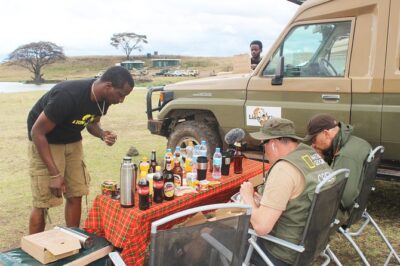
7-Day Premium Luxury Tanzania Safari All-Inclusive
Read our review →
Safari Blue Lagoon Trip with Snorkeling and Lunch
Read our review →
Browse the lists this tour appears in