Reviewed · SAFARI TOURS
7-Day Tanzania Private Guide Motorcycle Safari Tour
Tanzania looks different from the back of a motorcycle. This seven-day route trades the usual safari roads for loose gravel, sandy tracks, mountain bends, and village roads, linking Lake Chala, Mkomazi, the Pare and Usambara Mountains, the Manyara and Tarangire region, and Lake Eyasi. You get scenery, wildlife country, and a closer look at daily life outside the main tourist circuit.
I like the route’s variety and the private format, which lets your group ride at its own pace with a guide and technical support. I also like that the motorcycles are maintained Honda CRF300s, a sensible choice for rough roads. The main caution is the physical demand: some days run up to 16 hours, with one 190-kilometer off-road section, so this is not a gentle sightseeing ride.
Key points to know before you book
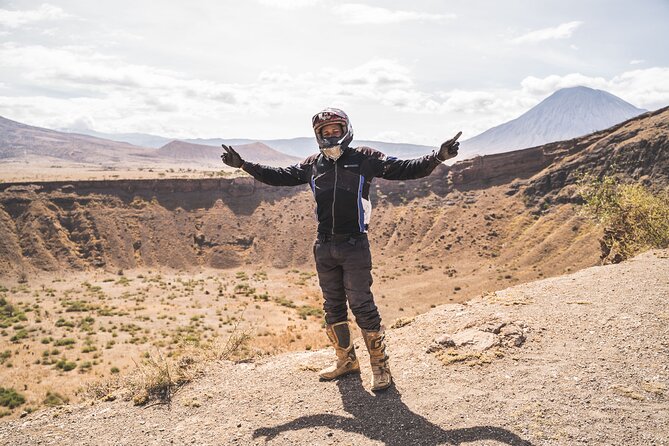
- Lake Chala opens the trip with a volcanic lake and a short lesson in local lore.
- Mkomazi, the Pare Mountains, and the Usambara Mountains bring long days of dirt roads and sharp corners.
- The route uses loose gravel, sand, stones, and unpaved mountain tracks, not just easy adventure roads.
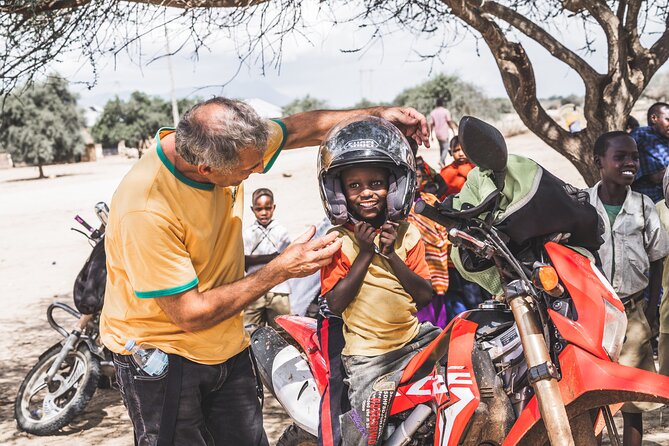
- You ride through Maasai country and visit the Hadza community near Lake Eyasi.
- Honda CRF300 motorcycles, safety gear, meals, and a private guide team are included.
- The $2,600 price makes the most sense for riders who value a fully arranged, multi-day route rather than a simple motorcycle rental.
What this seven-day motorcycle safari really offers
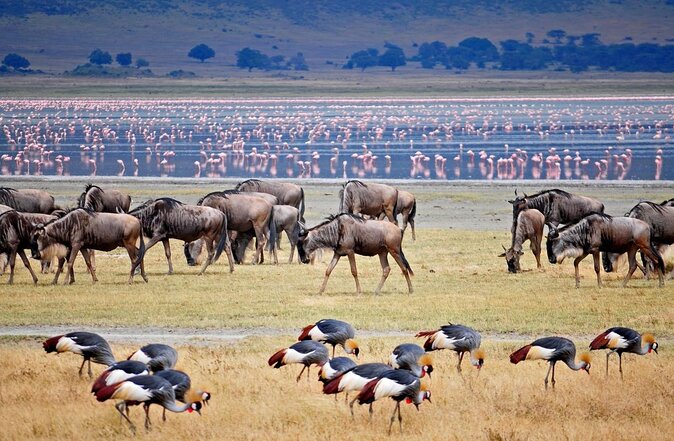
This is an off-road tour with a safari flavor, not a standard game-drive holiday. You spend much of the week riding between lakes, mountain ranges, villages, conservation areas, and semi-arid plains. Wildlife can appear along the route, but the attraction is the complete ride: changing scenery, rough tracks, local communities, and the freedom of moving through Tanzania under your own power.
The tour starts at the Mount Meru Hotel in Arusha at 7:00 a.m. Pickup is offered, and confirmation is provided at booking. Since this is a private activity, only your own group rides together. That matters on rough roads. You are not being held to the pace of a large convoy, although the guide still has to manage daylight, road conditions, meals, and accommodation.
The guide team, led by Alpha according to the supplied tour information, handles the route and technical side. Past riders singled out the team’s ability to solve problems and keep the trip moving. That is important here because a long ride on gravel and sand brings more variables than a paved-road tour.
Other park itineraries that start in Arusha:
- Serengeti Balloon Safari and authentic bush breakfast
★ 5.0 · 2,480 reviews - Balloon Safari & Bush Breakfast in Serengeti – Miracle Experience
★ 5.0 · 1,646 reviews - 4 Days Group Camping Safari
★ 5.0 · 1,101 reviews
Day 1: Lake Chala and the first taste of eastern Tanzania
The opening day centers on Lake Chala, a striking body of water near the Tanzania and Kenya border. The ride takes about 10 hours, including the stop, so you get an immediate sense of the scale of this trip.
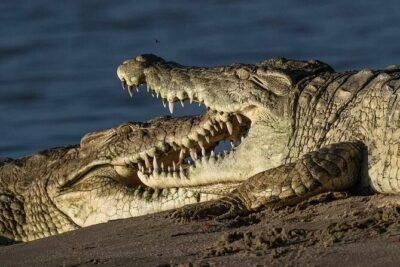
Lake Chala has a curious crocodile story. Crocodiles were introduced in the 1930s and were linked by local lore to British explorer E. S. Grogan, who became known for walking from Cape Town to Cairo in 1898. The lake’s steep, unsuitable shoreline made breeding difficult, and a later effort removed the remaining crocodiles after fishermen complained about damaged nets.
The practical point for you is simple: the lake is considered safe for swimming, though sensible care around natural water is still wise. If you want a soft start, this stop gives you scenery and a chance to settle into the motorcycle before the harder mountain days arrive.
Day 2: Mkomazi, Lake Jipe, and the South Pare Mountains
Day two is a long riding day, listed at about 16 hours. You leave after breakfast and follow curved dirt roads toward the Pare Mountains, with a stop for lunch before continuing toward Lake Jipe.
The route then climbs toward the South Pare Mountains. From the hills, you look down over small towns and villages. The final approach to the accommodation follows dirt roads with many sharp corners. This is described as preparation for the more intense riding ahead, and that is a useful warning rather than marketing language.
The accommodation near Same serves as a base for Mkomazi National Park, the South Pare Mountains, and Shengena Forest. Its position gives you broad mountain views, but you should not mistake a scenic motel night for a luxury lodge stay. The strength here is location and recovery after a demanding day.
Mkomazi adds a wildlife setting to the ride, but this is not presented as a full-day game drive. You are passing through a wider region where conservation areas, villages, mountains, and working roads sit close together. I like that mix because it shows how much of Tanzania exists beyond the famous safari parks.
Day 3: A 190-kilometer ride through the Pare and Usambara ranges
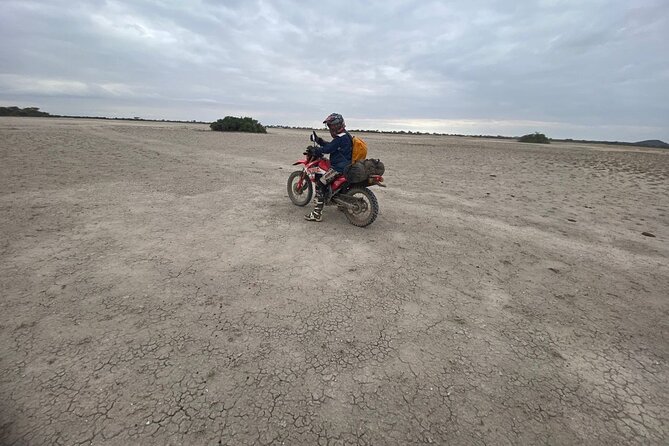
Day three is likely the toughest riding day. The route covers about 190 kilometers in roughly seven hours of riding, using sandy, hilly, and stony trails. There is no tarmac on this section.
You ride through the eastern Pare Mountains and descend toward the southern ranges. The trail passes through open savannah before reaching Lake Kalimawe, which is bordered by rice plantations and small villages. This is one of the more interesting parts of the trip because the road connects working farmland and rural communities rather than simply moving between tourist stops.
After lunch, the route continues toward the Usambara Mountains. You pass the small villages of Mnazi and Mlalo, then climb a zigzag road toward Mtae and Mambo village at more than 2,300 meters. The views from this high point are a major payoff for the rough approach.
You should be comfortable standing on the foot pegs, managing loose surfaces, and riding repeated bends before booking this section. The tour is open to riders of different experience levels, but that does not mean every rider will find it easy. The physical fitness requirement is moderate, and the long day makes pacing essential.
Other safaris people book out of Arusha:
- 5 Days Group Camping Safari
★ 5.0 · 730 reviews - 3 Days Serengeti & Ngorongoro Group Camping Safari
★ 5.0 · 574 reviews - 7-Day Premium Luxury Tanzania Safari All-Inclusive
★ 5.0 · 426 reviews - 3-Day Classic Serengeti Safari
★ 5.0 · 263 reviews
Day 4: The Manyara and Tarangire region
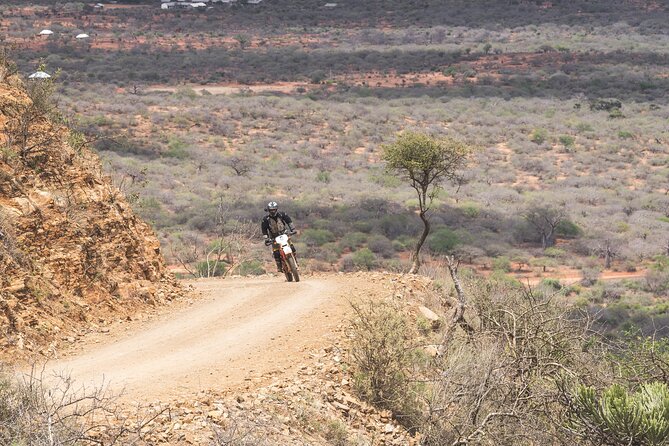
The fourth day shifts from mountain riding to the semi-desert country around Lake Manyara and Tarangire. The route description places you near Maramboi Tented Camp, between Tarangire and Manyara, where permanent camp facilities sit beside broad golden grasslands and palm-lined dry country.
This region also gives you a useful introduction to the Rift Valley. The area is tied to the larger story of human evolution and the origins of mankind, and the scenery helps explain the Rift Valley’s scale. You are not simply looking at a dry plain. You are crossing a zone shaped by fault lines, changing elevation, seasonal water, and wildlife movement.
The day is listed at about 16 hours, so expect a full schedule. The accommodation provides a place to rest, eat, and take in the open views rather than a short roadside stop. Admission is listed as free for this part of the route.
One practical point deserves attention: the daily descriptions place Lake Manyara, Tarangire, and Maramboi close together, but the exact order and amount of time at each area can depend on road conditions and the guide’s plan. Ask for the final daily routing before departure if a particular park visit is essential to you.
Day 5: Tarangire country, Maasai communities, and 275 kilometers of gravel
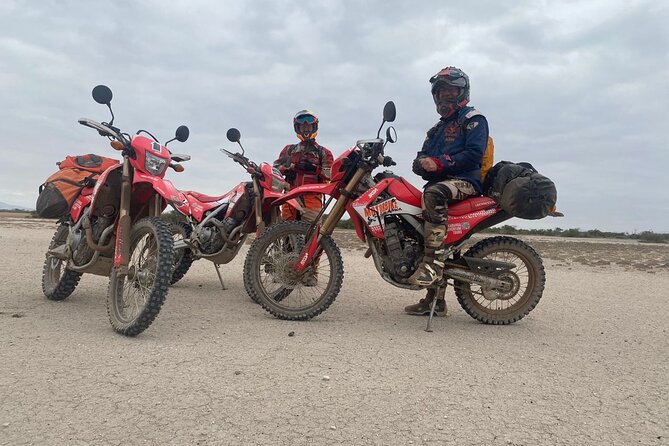
Day five covers about 275 kilometers, with the first 225 kilometers on loose gravel and the final 50 kilometers on tarmac. The estimated riding time is eight hours, though the day is listed as up to 16 hours when stops and the full program are counted.
The road crosses semi-arid savannah used by wildlife and Maasai communities. This is also part of the migratory corridor linked to the Tarangire and Manyara ecosystem. You may see animals along the way, but the setting is just as important as any single sighting. You are riding through a living region where herding, conservation, and transport routes overlap.
After lunch, you continue on dirt for about an hour before reaching the maintained paved road to the accommodation. That final stretch should feel welcome after loose gravel. If you are new to long-distance dirt riding, this is a day when hydration, steady speed, and regular checks of your hands and shoulders will make a real difference.
Day 6: Lake Eyasi and the Hadza community
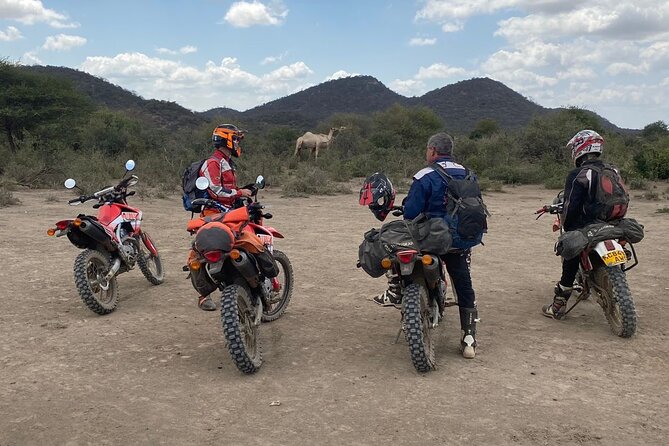
The sixth day is described under Lake Natron, but the detailed route heads toward Lake Eyasi and the Hadza community. It covers about 140 kilometers in roughly six hours, using tarmac, hilly tracks, loose gravel, and sand.
You leave camp and ride along the Rift Valley escarpment toward Hadza country. The road is rocky and hilly, passing through changes in altitude and vegetation before reaching Magara village near Lake Manyara National Park. After a packed lunch, you continue toward Lake Eyasi.
The Hadza are described as hunters and gatherers, and the planned visit includes hunting with them on their traditional grounds. This is a valuable part of the trip because it moves beyond scenery and gives you contact with a community whose way of life differs sharply from that of the farming and herding areas along the route.
Approach this visit with respect and attention. You are entering someone else’s home region, not watching a staged performance. The tour information does not specify the length or exact format of the community visit, so ask the guide what the day will involve and what cultural expectations you should follow.
The evening returns to camp, with food and cold drinks waiting after the ride. That small detail matters after a dusty day of rocks and sand.
Day 7: Maasai country and the return to Arusha
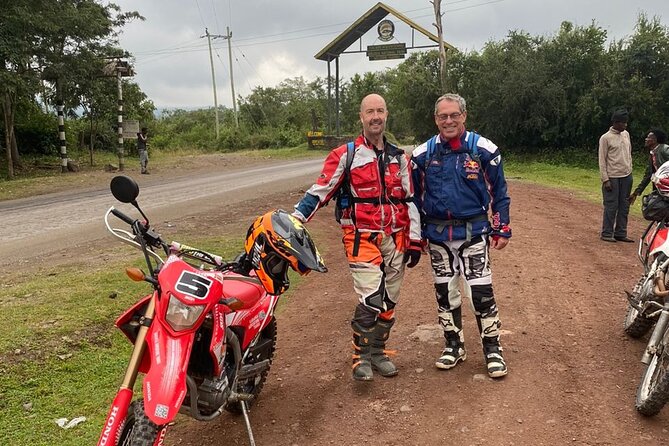
The final ride takes you back toward Arusha through rolling country covered with scrub and scattered thorn trees. You may see Maasai herding cattle and goats, along with antelope and zebra. A predator is possible, though never guaranteed.
You can choose between a harder Monduli route and an easier option. The road includes loose gravel and some sand before reaching a better-maintained dirt road to Longido village. From Longido, you join tarmac for the final ride to Arusha.
The guide may add a few side trails if time allows, but the schedule is designed to get you back early enough to shower and catch an evening flight. If you are not flying that day, transport is provided to the reserved accommodation.
This final day is a good example of the tour’s character. You are not finishing with a grand city attraction. You are returning through open country, livestock areas, and rough roads, then gradually shifting back to paved travel and city comforts.
Motorcycles, support, food, and what is included
The supplied information specifies Honda CRF300 motorcycles in good condition. That model is well suited to the mix of gravel, sand, hills, and tarmac described here. A maintained bike is one of the most important parts of a motorcycle safari, and the technical support adds useful security on a route this remote and varied.
Safety gear is included, along with a safari briefing on arrival. Confirm exactly which items are supplied before you fly, since the information only says safety gear rather than listing every piece of equipment.
Breakfast, lunch, and dinner are included for all seven days. Extra meals and drinks are not included, except for bottled water. Personal items, flights, visas, medical insurance, and a tip for the guide are also separate costs.
The food and accommodation are described as good and suitable for rest, but this is not sold as a high-end luxury trip. The price pays for a private guide setup, motorcycles, safety equipment, meals, route planning, and seven days of access to difficult terrain. At $2,600 per person, it offers reasonable value if you want the full riding operation arranged for you. It is less attractive if you only want a short motorcycle outing or prefer to choose your own hotels and route.
Who should book this ride
I would recommend it to riders who want:
- A private route rather than a large group
- Long days on dirt and gravel
- Mountain roads, lakes, villages, and wildlife country in one trip
- A direct cultural encounter near Lake Eyasi
- A supported ride with motorcycles and meals arranged
- A route that includes easier and harder options on selected sections
I would think twice if you dislike sand, loose stone, sharp corners, or long hours in the saddle. The phrase riders of all levels should be read alongside the moderate fitness requirement and the demanding day descriptions. A beginner may manage the trip with the guide’s help, but should not expect a relaxed introduction to motorcycling.
The itinerary also contains some naming and timing differences, especially around Lake Natron, Lake Eyasi, Lake Manyara, and Tarangire. I would ask the operator to confirm the final route, daily riding hours, motorcycle availability, and exact accommodation before paying. That is normal planning for a private off-road trip, not a reason to dismiss it.
Should you book the seven-day Tanzania motorcycle safari?
Book it if you want Tanzania from the back roads, with mountain views, local villages, Maasai country, lakes, wildlife areas, and a real amount of dirt riding. The strongest features are the route variety, private format, maintained Honda CRF300 motorcycles, and the guide team’s reported ability to handle problems.
Do not book it simply because the price includes meals and a motorcycle. You need to want the riding itself. For the right person, this is a bold way to see eastern Tanzania, with far more time on rural roads than a standard safari. For anyone uncertain about a 16-hour day or a 190-kilometer trail section, ask for the easier route options and the exact daily schedule before making the call.
Cancellation terms are strict close to departure. You can receive a full refund by canceling at least six full days before the start time, a 50 percent refund two to six days ahead, and no refund less than two days before departure. The cut-off follows local Tanzanian time.
FAQ
Where does the tour start?
The tour starts at Mount Meru Hotel, Arusha, Tanzania, at 7:00 a.m. Pickup is offered.
Is this a private tour?
Yes. Only your group participates in the activity.
What type of motorcycle is provided?
The tour information specifies well-maintained Honda CRF300 motorcycles.
Are meals included?
Yes. Breakfast, lunch, and dinner are included for all seven days. Extra meals and drinks are not included, apart from bottled water.
What physical ability do I need?
A moderate level of physical fitness is required. The route includes loose gravel, sand, stone, hilly trails, sharp corners, and long riding days.
Is safety equipment included?
Yes. Safety gear and a safety briefing on arrival are included. Flights, visas, medical insurance, personal expenses, and guide gratuities are not included.
Just added in Arusha
- 4 Days Private Midrange Lodge Safari to Serengeti & Ngorongoro★ 5.0 · 4 reviews
- Extraordinary Hot air Bolloon ride in Serengeti | BURIGI CHATO SAFARIS CO L.T.D★ 5.0 · 6 reviews
- 3 days leopard safaris★ 5.0 · 4 reviews
- 8 Days Serengeti Migration safari★ 5.0 · 11 reviews
- tarangire, ngorongoro & lake manyara park 3 days private tour★ 5.0 · 11 reviews
- Mt. Kilimanjaro: Shira plateau to Cathedral point 3872m Day hike★ 5.0 · 7 reviews
- serengeti, ngorongoro & tarangire 4 days private tour★ 5.0 · 18 reviews
- tarangire & ngorongoro 2 days tour★ 5.0 · 14 reviews
Safari Tours, compared.
Serengeti Balloon Safari and authentic bush breakfast
Read our review →
Mikumi Safari Day Trip with Flights and Meal
Read our review →
3 Days Serengeti & Ngorongoro Group Camping Safari
Read our review →
7-Day Premium Luxury Tanzania Safari All-Inclusive
Read our review →
Safari Blue Lagoon Trip with Snorkeling and Lunch
Read our review →