
Reviewed · KILIMANJARO TREKS
5 Days Marangu Route Kilimanjaro hiking
Kilimanjaro’s Marangu Route gives you a direct path to Uhuru Peak, Africa’s highest point, without camping in a tent each night. You sleep in mountain huts, pass through rainforest and open moorland, and make the final climb under headlamp toward Gilman’s Point and sunrise.
I like the steady route and the practical hut setup. I also like that a full crew, including a guide, cook, and porters, is included, so you can focus on walking rather than hauling every meal and bedroll uphill. The main catch is the five-day schedule: Marangu is straightforward underfoot, but the altitude and long summit day are serious tests.
Key points to know before you book
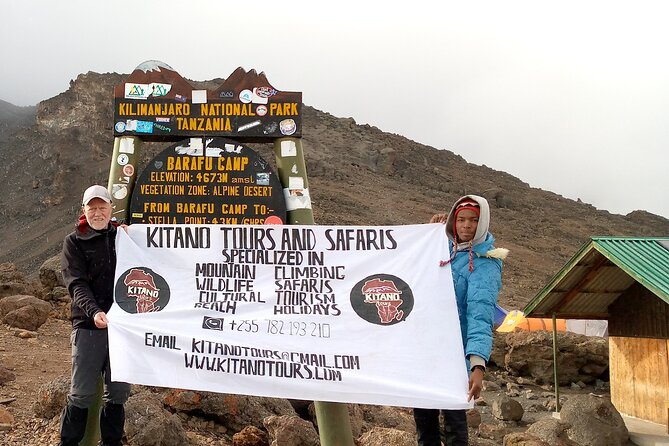
- Hut nights instead of tents: You sleep at Mandara, Horombo, and Kibo huts during the climb.
- A direct summit route: The trail leads through Marangu Gate, the rainforest, the saddle between Mawenzi and Kibo, and on to Uhuru Peak.
- The hardest section comes at night: The summit push begins around midnight to 2 am, with steep scree, cold, darkness, and a return to Horombo the same day.
- A strong support team is included: Guide, cook, porters, gate transfer, meals, and fair crew wages are listed as part of the package.
- A five-day climb demands sensible pacing: You gain altitude quickly, especially from Horombo to Kibo, so slow walking and close attention to your guide matter.
- The price is not all-inclusive: At $1,014 per person, you still need to budget for park fees and tax, flights, visas, personal items, laundry, and tips.
What the five-day Marangu climb is really like
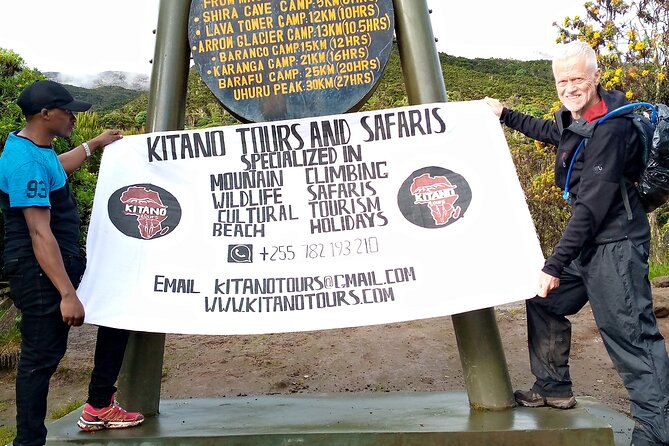
Marangu is often called the Coca-Cola Route because it is the most direct and hut-based route on Kilimanjaro. That nickname can make it sound easy. It is not an easy holiday walk. The trail is less technical than some mountain routes, but the summit reaches 5,895 meters, and altitude sickness can stop a strong hiker just as quickly as a beginner.
The appeal is its simple shape. You walk uphill through several clear climate zones, sleep indoors at huts, and return by the same general route. There is no need to carry a tent or sleep on bare ground. For many people, that makes the trip more comfortable and easier to organize.
You should also understand what five days means. This is a relatively short schedule for a very high mountain. The itinerary includes a large altitude gain by Day 3, followed by a midnight summit attempt and a long descent on Day 4. If you are comparing options, a longer route may offer more time to adjust, but this trip is aimed at people who want a compact Kilimanjaro climb.
Other routes up the mountain from Moshi:
- Kilimanjaro climb by Lemosho Route (7-day)
★ 5.0 · 651 reviews - Kilimanjaro climb, Machame Route (7-day)
★ 5.0 · 262 reviews - Kilimanjaro Climbing Lemosho Route 8 Days.
★ 5.0 · 186 reviews
Day 1: Marangu Gate to Mandara Hut
The morning begins with breakfast and a briefing, followed by a drive of about 45 minutes to Kilimanjaro National Park Gate. The listed start time is 8:30 am, and the meeting point is Cable Millan on Rengua Road. Pickup is offered, but confirm the exact pickup arrangement before you go, especially if you are staying in Moshi or Arusha.
At the gate, you register before starting the walk. This first day covers about 7 kilometers and takes roughly four to five hours. The route climbs from about 1,700 meters to 2,740 meters, so you gain height without facing the extreme cold found higher up.
The trail runs through rainforest, with tall eucalyptus trees, birds, and the chance to see black-and-white colobus monkeys. The forest is more than a warm-up. It gives you shade and a clear sense that the mountain is changing around you as you climb.
You sleep at Mandara Hut and receive lunch and dinner. A side trip to Maundi Crater is suggested as a way to look across northern Tanzania and Kenya. It is a useful extra walk early in the trip, when your legs are still fresh, but ask your guide about timing and weather before setting off.
Keep your rain gear handy. Forest paths can be wet, and the lower part of the mountain may feel warm when you begin. You do not need to dress for summit conditions on Day 1, but you should keep warmer layers accessible rather than burying them in your bag.
Day 2: Moorland views on the way to Horombo
Day 2 leaves the rainforest behind and moves into open moorland. The route climbs toward Horombo Hut, with views of Mawenzi and Kibo, the two major peaks of Kilimanjaro. Giant lobelias and groundsels give this section a distinctly high-mountain character.
The stated walking time is about eight hours. That is a long day, even though the path is not described as technically difficult. Walk slowly from the start. A fast pace on the lower slopes can leave you tired before the altitude becomes the main challenge.
This is also the day when you may first notice headaches, unusual tiredness, shortness of breath, or a reduced appetite. Do not hide symptoms to prove your toughness. Tell your guide early. The crew is there to monitor your condition and help you make sensible decisions.
Horombo is a major stopping point on the route. It is high enough for altitude to matter, but it still offers broad views and plant life before the trail becomes much barer. The exact meal details and distance for this day are not given, so ask during the briefing how the day will be paced and what time you are expected to leave.
Day 3: Crossing the saddle to Kibo Hut
Day 3 is where the mountain begins to feel severe. You pass the last watering point and cross the broad saddle between Mawenzi and Kibo. The vegetation fades from upper heathland into a stark moonscape, with little shelter and fewer visual distractions.
The day covers about 10 kilometers and takes six to eight hours. You climb from roughly 3,700 meters to 4,700 meters. That final altitude is close to Kibo Hut, where you eat dinner, rest, and prepare for the summit attempt.
There is an important practical point here: Kibo is not just another overnight stop. It is your launch point for the hardest part of the climb. You may arrive tired, eat early, lay out your headlamp and warm layers, and try to sleep before getting up around midnight to 2 am.
The saddle can feel exposed and monotonous, especially in poor weather. Bring enough water, protect your face from sun and wind, and do not race simply because the route looks straight. This is a day for saving energy.
Same base, a different kind of day out:
- Safari Serengeti And Ngorongoro
★ 5.0 · 288 reviews - Climbing Kilimanjaro – Machame Route
★ 5.0 · 170 reviews - Climbing Kilimanjaro through 7 days Machame Route
★ 5.0 · 151 reviews - Kilimanjaro climb, Lemosho Route (8-day)
★ 5.0 · 148 reviews
Day 4: Gilman’s Point, Uhuru Peak, and the long return
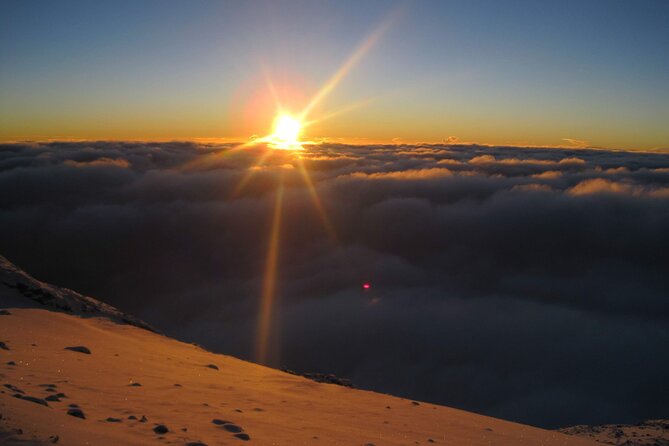
Summit day is the reason you come, but it is also the section that deserves the most respect. You start in darkness with a headlamp or flashlight and climb steep trails covered in loose scree or snow toward Gilman’s Point on the crater rim.
The cold is intense until you begin descending. Wear your warmest layers, gloves, hat, and suitable footwear, and keep spare layers available. The information provided specifically warns that you need all your warm clothing, and that advice should be taken seriously.
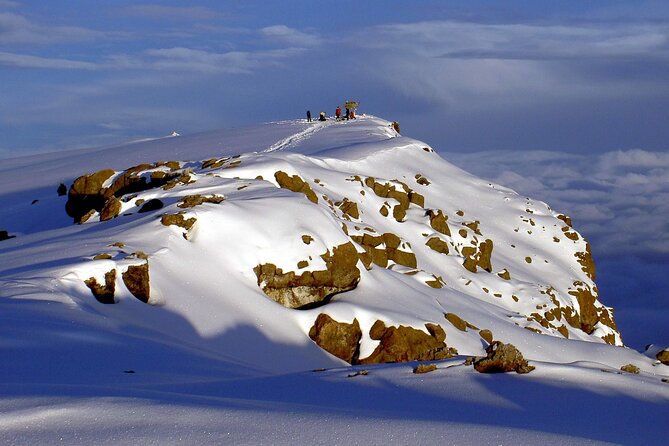
Gilman’s Point is not the final summit. From the crater rim, you continue toward Uhuru Peak, the highest point in Africa. The route can feel slow because of the altitude, darkness, cold, and loose footing. Your guide sets the pace, and the crew’s encouragement becomes especially useful here.
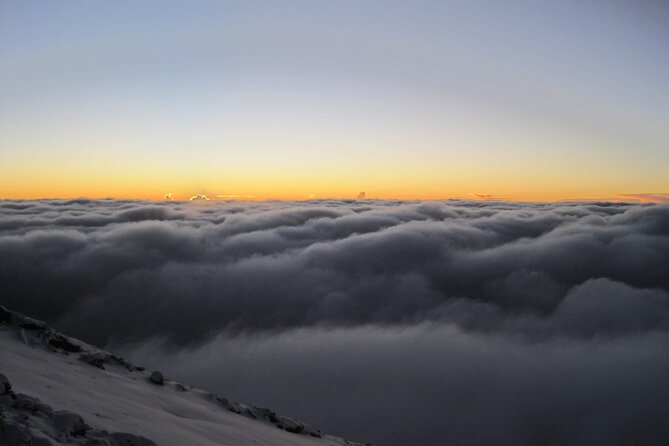
At Uhuru Peak, you have time for the classic summit photograph and views in every direction when conditions allow. The sunrise is a major part of the experience. Starting before dawn gives you the chance to watch the sky brighten from the mountain, but cloud or weather can affect what you see.
The itinerary gives about 10 hours for this day, including the summit climb and descent to Horombo. You stop at Kibo for lunch and a rest, then continue down to Horombo Hut. This is an unusually demanding schedule. The climb is not over when you reach the summit. The return is long, and tired legs can make the descent harder than expected.
Past departures have included guides named Mudi, Tadey, Daniel, Martin, Michael, and David. The exact team is not guaranteed, but the repeated praise for patient encouragement, organization, and attention to safety is useful when judging what kind of support this operator aims to provide. Ask who will lead your group and how guide-to-hiker ratios will be handled.
Day 5: Horombo to Marangu Gate
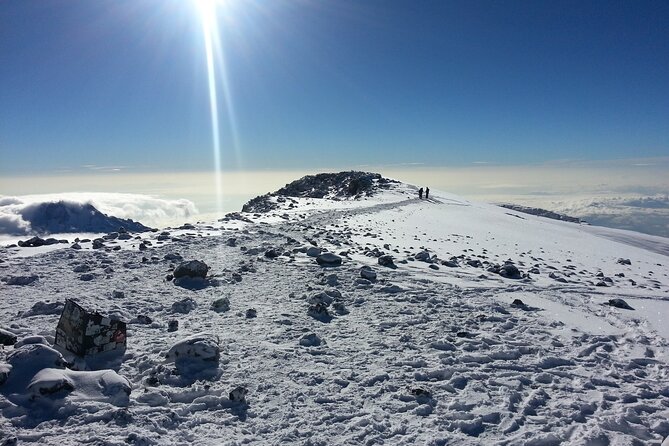
After breakfast, you descend through moorland to Mandara Hut, then continue through the rainforest to Marangu Gate. The stated distance is 18 kilometers, with five to seven hours of walking. After the summit effort, this is a tiring but generally satisfying final day.
Lower sections can be wet and muddy. Gaiters and trekking poles are specifically recommended, and I would keep rain gear in a daypack even if the morning looks clear. Shorts and a T-shirt may be comfortable at lower elevations, but keep warmer clothing close in case the weather shifts.
At the gate, a vehicle takes you back to your hotel in Moshi or Arusha. The experience ends back at the meeting point. This is also the time to tip your Tanzanian guides and porters. Tips are not included, so plan for them as part of the real cost of the climb and ask your operator for current guidance before departure.
What the $1,014 price covers
At $1,014 per person, the package offers a useful amount of infrastructure for a five-day mountain trip. It includes a guide, cook, porters, crew wages, gate transfer, hut accommodation, and meals listed as four dinners, five breakfasts, and five lunches.
The fair and sustainable salary wording is important. A Kilimanjaro climb depends on a large support team, and responsible payment matters. The trip descriptions also point to a crew that may include a camp master and waiter on some departures, though the exact staffing can vary.
The price does not include park fees and tax, flights, visas, personal items, laundry, or tips. Park fees can be a major addition, so do not compare $1,014 directly with another advertised price until you know what both packages include.
You also need personal clothing and equipment. The supplied information specifically points to headlamps, warm layers, rain gear, gaiters, and trekking poles. It does not provide a full equipment list, so ask for one before booking. You may also want to confirm luggage storage, water arrangements, and the exact hut sleeping setup.
Meals, huts, and the human side of the climb
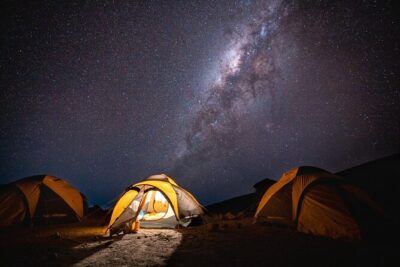
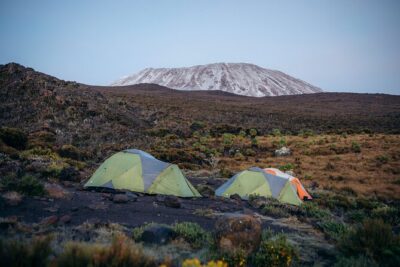
Sleeping in huts is the main comfort advantage of Marangu. You avoid carrying or sleeping in a tent, though hut accommodation is still basic mountain lodging rather than a hotel. Bring realistic expectations and treat the hut as a place to rest, eat, and prepare for the next day.
Meals are included throughout the five days. Past feedback repeatedly highlights good food, friendly staff, and attentive care. That matters on a climb where appetite may drop and every meal helps you keep moving. Tell the operator about dietary needs before arrival, since the provided details do not explain how special diets are handled.
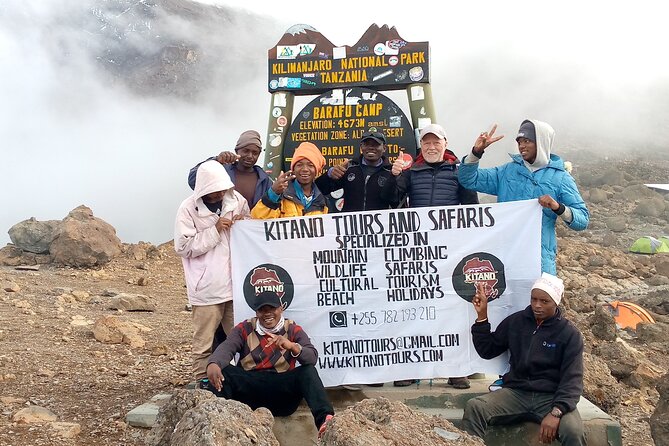
The crew is a large part of the experience. Past groups described singing, dancing, talking about Tanzanian life, and forming a family-like atmosphere with the staff. That human contact can make the long days more enjoyable, but you should still keep the relationship professional and remember that tipping is separate from the booking price.
The tour allows a maximum of 100 participants. That is a high possible group limit, even if your actual departure is smaller. Ask about your expected group size before you commit. A smaller group may make communication and pacing easier, while a larger operation may provide more staff and logistical support.
Safety, altitude, and the real level of difficulty
Most people can participate according to the supplied activity information, but that does not mean the hike is suitable for every person. Kilimanjaro is a high-altitude climb, and Day 4 is physically demanding even for fit walkers.
The route is called one of the easiest because it is direct and does not require technical climbing. You still face loose scree, darkness, cold, steep sections, long walking days, and a rapid gain in altitude. Fitness helps, but it cannot guarantee that your body will adjust well.
Use the guide’s pace. The common mountain advice of walking slowly is especially useful here. Drink as directed, eat even when you are not hungry, and report symptoms early. The crew’s role is not only to encourage you to continue. It is also to help you recognize when continuing may be unsafe.
A headlamp is essential for the summit attempt. Warm clothing is essential too. On the lower descent, the needs change quickly, so pack in a way that lets you add or remove layers without emptying your bag.
Who should choose this Marangu Route trip?
I would consider this trip if you want a direct Kilimanjaro route, hut accommodation, organized meals, and a support crew at a stated mid-range price. It suits a person who prefers a clear trail and does not want to camp every night.
It also works for people who want a five-day schedule and are prepared for a very hard summit day. The route is not a technical climbing course, but you need patience, stamina, and a serious attitude toward altitude.
I would think twice if you want a relaxed acclimatization plan. The itinerary gains height quickly and places the summit attempt on Day 4 after reaching Kibo at about 4,700 meters. A longer climb may be a better fit for anyone who wants more time at altitude, though no alternative schedule is included here.
Booking confirmation is provided at the time of purchase. Free cancellation is available up to 24 hours before the local start time, while later cancellations and changes are not accepted. That gives you some flexibility, but you should still confirm the start location, pickup, crew, park-fee total, and equipment list before paying.
Should you book this Kilimanjaro climb?
Book it if you want the traditional Marangu Route, prefer huts to tents, and value a guide and porter team that can handle the daily logistics. The repeated praise for support, organization, food, and encouragement gives the operator a promising record, and the inclusion of crew wages is a positive point.
Do not book it simply because the route is called easy. The midnight summit climb, high altitude, cold, and long Day 4 return are the heart of the challenge. At $1,014, it can offer good value, but only after you add park fees, tax, tips, and personal gear to your budget.
FAQ
How long is the Kilimanjaro Marangu Route tour?
The tour lasts approximately five days, with the climb beginning after breakfast and a briefing on Day 1.
Where does the climb start?
The listed meeting point is Cable Millan, 3445 Rengua Road, Tanzania. The first mountain transfer takes about 45 minutes to Kilimanjaro National Park Gate.
What time does the activity start?
The stated start time is 8:30 am.
Where do you sleep during the climb?
You sleep in huts during the climb, including Mandara Hut, Horombo Hut, and Kibo Hut.
Is a guide included?
Yes. A guide, cook, porters, and crew wages are included in the listed package.
Are meals included?
Yes. The package lists four dinners, five breakfasts, and five lunches.
Does the tour reach Uhuru Peak?
Yes. The itinerary includes a summit attempt from Kibo Hut, a climb to Gilman’s Point, and a continuation to Uhuru Peak.
Is the final summit climb done at night?
Yes. The summit attempt begins very early, between midnight and 2 am, and requires a headlamp or flashlight.
Are park fees included in the $1,014 price?
No. Park fees and tax are listed as exclusions, along with flights, visas, personal items, laundry, and crew tips.
What happens after the descent?
After reaching Marangu Gate on Day 5, a vehicle takes you back to your hotel in Moshi or Arusha. The activity ends back at the meeting point.
More Hiking & Trekking in Moshi
- Private Kilimanjaro Hike 7 Day Lemosho Route
★ 5.0 · 60 reviews - Best Kilimanjaro hiking day trip tour with Kilinge Adventures
★ 4.5 · 54 reviews - #1. Best Kilimanjaro Day hike Tour-Machame Route-ISMANI
★ 4.2 · 47 reviews - Best Kilimanjaro Adventure 7 days Machame route Trekking
★ 5.0 · 42 reviews
Just added in Moshi
- Wildlife Extravaganza: Manyara, Tarangire & Ngorongoro in 3 Days★ 5.0 · 3 reviews
- West Kilimanjaro cycling Adventures★ 4.5 · 8 reviews
- machame route★ 5.0 · 16 reviews
- Kilimanjaro Climb • Machame Route ~ 10 Day★ 5.0 · 6 reviews
- Kilimanjaro Climbing Umbwe Route★ 5.0 · 3 reviews
- Mt Kilimanjaro 6 days Marangu route hike★ 5.0 · 3 reviews
- Kilimanjaro Climb • Marangu Route ~ 9 Day★ 5.0 · 4 reviews
- 3 Days Private E-Bike Tour in West Kilimanjaro★ 5.0 · 3 reviews
Kilimanjaro Treks, compared.
8-Day Small-group Lemosho Kilimanjaro Summit Trekking
Read our review →
5 Days Best of Tanzania Luxury Safari Northern Circuit
Read our review →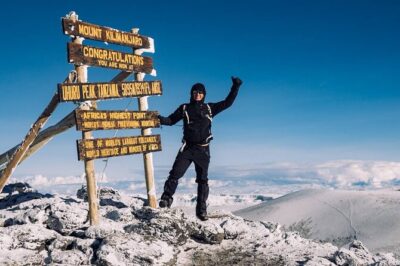
Climbing Kilimanjaro through 7 days Machame Route
Read our review →
7-Day Machame Kilimanjaro Summit Tour from Arusha
Read our review →Browse the lists this tour appears in