
Reviewed · KILIMANJARO TREKS
6 Days Kilimanjaro Climbing Marangu Route
Kilimanjaro’s Marangu Route gives you the mountain’s classic progression in six days: wet rainforest, open moorland, a stark high saddle, and a cold summit push before sunrise. It is the only Kilimanjaro route described here with hut accommodation, which makes it appealing if you prefer a roof and bunk over a tent each night.
I like the extra acclimatization day at Horombo Huts, and I like the private format, where only your group takes part. The main caution is that the supplied schedule contains conflicting accommodation details: it names huts, but also includes private tents and places you at Mweka Camp after the summit. Confirm the sleeping arrangements before paying.
Key points to know before booking
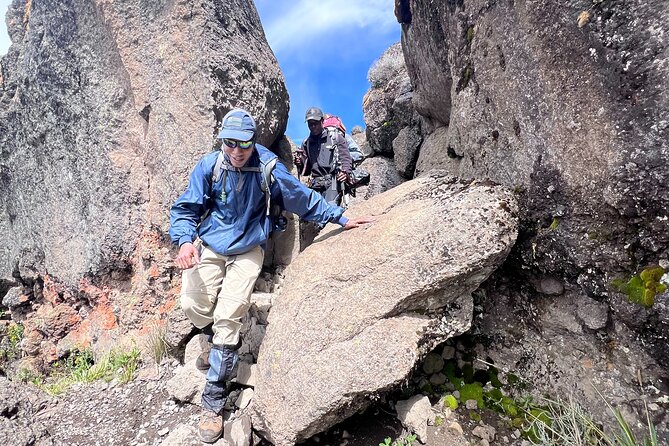
- Hut-based route: Marangu is known as the Coca-Cola Route because it is the most established and popular path, with hut accommodation instead of camping as its defining feature.
- A useful acclimatization stop: Day three gives you a second night at Horombo Huts, with time to rest or walk toward Mawenzi Base Camp.
- A hard summit day: The climb to Uhuru Peak begins between midnight and 2 a.m., reaches 5,895 meters, and includes a long descent.
- Strong crew support: The price includes guides, porters, a cook, park fees, meals, and purified drinking water. Godfrey is identified as the booking contact.
- Prepare for mud and cold: Gaiters and trekking poles are advised in the rainforest and on the descent, while summit night brings cold, fatigue, and possible snow.
- Check the route details: The schedule lists Marangu huts, private mountain tents, and a Mweka Camp night. Ask Furaha Adventures which plan applies to your departure.
Why the Marangu Route appeals to first-time climbers
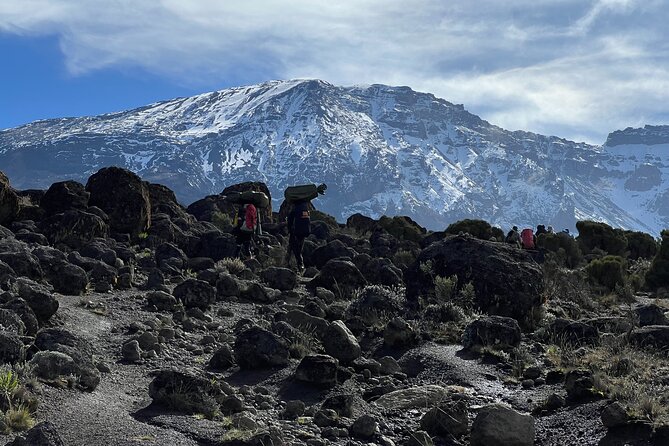
Marangu is often the first Kilimanjaro route people investigate because its profile is easy to understand. You start at about 1,905 meters and climb through several distinct plant zones before reaching the summit at 5,895 meters. The route is not a stroll, but the huts remove one task from a demanding week: carrying or sleeping in a tent.
The six-day plan also has a sensible feature. You spend an extra night at Horombo rather than rushing upward every day. That pause gives your body more time at altitude and lets you walk a shorter distance toward Mawenzi Base Camp before returning to sleep at the same hut.
That matters because the summit attempt is not simply a final hike. You begin in the middle of the night, climb in darkness and cold, reach the crater rim area at Gillman’s Point, continue toward Uhuru Peak, then descend a great distance. The more time you allow your body to adjust beforehand, the more useful your energy becomes on summit day.
Still, Marangu is not automatically easy. The route gains nearly 4,000 meters from its starting point to Uhuru Peak, and Day 5 combines the greatest altitude with the hardest schedule. The Coca-Cola nickname should not make you think of a gentle mountain walk.
Other routes up the mountain from Moshi:
- Kilimanjaro climb by Lemosho Route (7-day)
★ 5.0 · 651 reviews - Kilimanjaro climb, Machame Route (7-day)
★ 5.0 · 262 reviews - Kilimanjaro Climbing Lemosho Route 8 Days.
★ 5.0 · 186 reviews
Day 1: rainforest from 1,905 to 2,723 meters
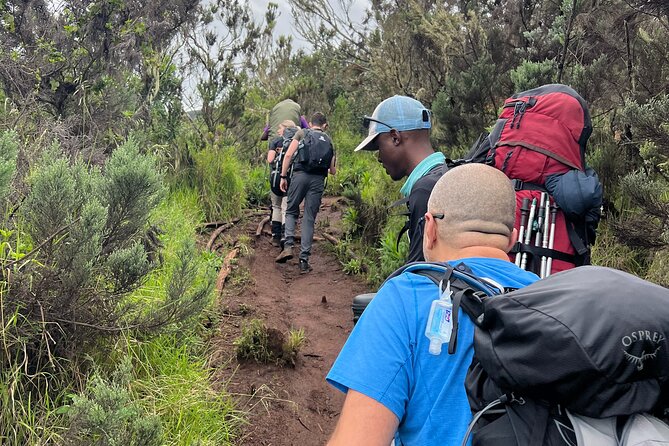
The climb begins with a drive from Moshi of about 45 minutes. The route passes through Machame village before reaching the Kilimanjaro National Park Gate, where your crew waits for permits to be issued. This gate can feel busy as different teams prepare their equipment and begin their walks.
Once you set off, the trail enters rainforest. Expect wet ground, slippery sections, and a steady climb rather than a flat warm-up. Your guide is scheduled to explain local plants, animals, and the natural setting as you walk.
The day takes about five hours and gains 818 meters. That is a manageable opening, but muddy footing can slow you down. Pack gaiters and trekking poles where you can reach them, not buried at the bottom of your bag.
The schedule names Mandara Huts as the overnight stop. This is your first night at altitude, so keep the evening simple: eat, drink the supplied water, organize your clothing, and sleep as much as you can.
Day 2: heathland and the first big view of Mawenzi
After breakfast, the rainforest gives way to heathland. The vegetation becomes shorter and more open, with giant lobelias and groundsels noted along the route. You continue into moorland, where small shrubs replace the thicker forest growth.
This six-hour day gains 998 meters, taking you from 2,723 to 3,721 meters. You stop for lunch along the way, with views toward Mawenzi. The mountain scenery becomes more dramatic here because the trees no longer block the wider view.
Horombo Huts are the overnight base. Temperatures begin to drop, and you will notice the change after sunset. Keep warm layers close and do not treat the hut as a place to spread all your belongings. A tidy sleeping bag area and a dry set of clothes can make the evening much more comfortable.
This is also the point where altitude begins to shape the trip. Walk slowly, follow your guide’s pace, and treat a headache or unusual fatigue seriously. The supplied information does not set out a medical procedure, so ask the operator before departure how the crew handles altitude symptoms.
Day 3: the Horombo acclimatization day
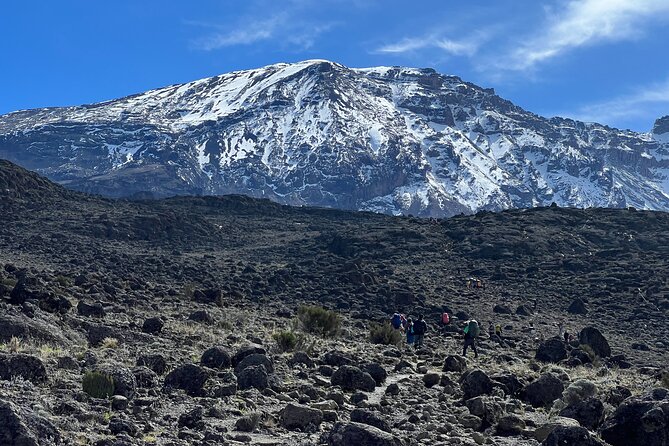
Day three is the plan’s best practical feature. You stay a second night at Horombo instead of moving higher immediately. You may rest at the huts or take a walk toward Mawenzi Base Camp before returning to Horombo.
The schedule assigns up to 12 hours to this day, though the actual walking time depends on the optional outing and your pace. You gain no new sleeping altitude, which is the point. Your body gets more time to adjust before the next move toward Kibo.
You also get a better look at the mountain’s weather and changing conditions. At this height, clouds, wind, cold, and tiredness can affect the feel of a short walk. Use the day well. A gentle outing can help you learn how you respond to the altitude, while a hard effort can leave you short on energy for the next stage.
Horombo is listed as the accommodation again. The separate inclusion of private, waterproof, four-season mountain tents does not fit neatly with the hut-based schedule, so this is a good time to ask for a clear answer. Are you sleeping in huts, tents, or using tents only on a different version of the route?
Same base, a different kind of day out:
- Safari Serengeti And Ngorongoro
★ 5.0 · 288 reviews - Climbing Kilimanjaro – Machame Route
★ 5.0 · 170 reviews - Climbing Kilimanjaro through 7 days Machame Route
★ 5.0 · 151 reviews - Kilimanjaro climb, Lemosho Route (8-day)
★ 5.0 · 148 reviews
Day 4: crossing the saddle to Kibo Huts
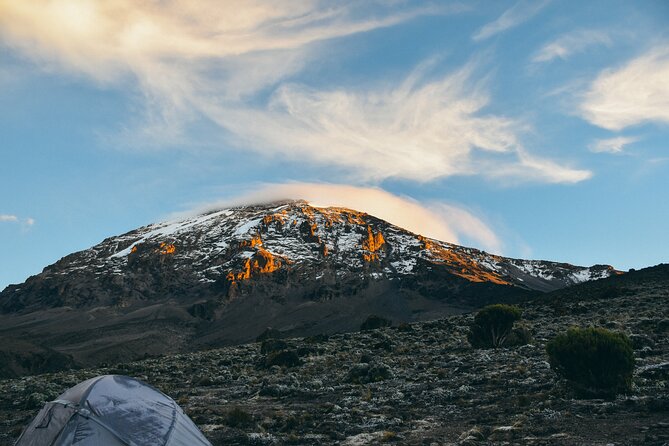
The trail leaves the heathland behind and enters a much barer setting. You cross the broad saddle between Mawenzi and Kibo, a large open area where the summit route ahead is visible. Lunch on this stretch gives you time to study the climb you will begin just hours later.
The day gains 993 meters, from 3,721 to 4,714 meters, and takes about six hours. The walking itself may not be the longest part of the trip, but the altitude changes the effort. Short steps and a slow pace are more useful than trying to keep up a fast rhythm.
Kibo Huts are named as the overnight stop. This is the high point before the summit attempt, and the plan calls for a midnight start. Eat the included dinner, prepare your warmest clothing, and arrange your headlamp, gloves, water, snacks, and trekking poles before trying to sleep.
A midnight start can feel strange. You may eat when you are not hungry and lie down when your body is still alert. Keep the evening calm. Your goal is not to feel energetic, but to preserve enough strength for the long climb and descent.
Day 5: Gillman’s Point, Uhuru Peak, and a punishing descent
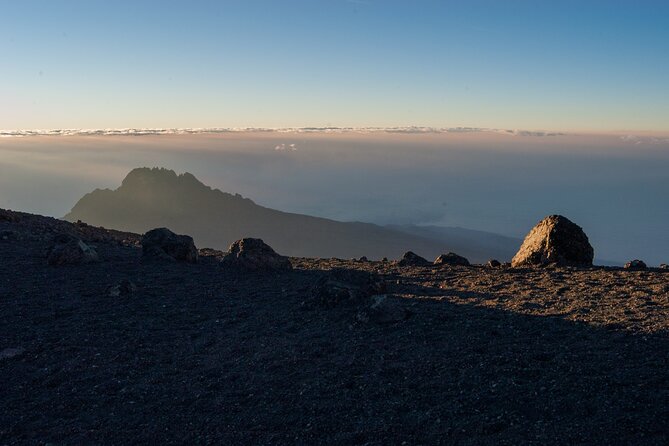
Summit day begins between midnight and 2 a.m. The route rises in switchbacks toward Gillman’s Point. This is the coldest and most tiring part of the trip, and you will be walking while much of the mountain is still dark.
The summit elevation is listed as 5,895 meters, with 1,181 meters of ascent from Kibo Huts. The dawn view near Gillman’s Point is one of the major rewards of the route. From there, Uhuru Peak is described as roughly another hour away, possibly over snow.
Reaching Uhuru Peak is the obvious high point, but the day is far from finished. You then descend steeply, with the schedule showing a total descent to 3,721 meters and an overnight at Mweka Camp. The listed accommodation stop also mentions Horombo Huts, creating another inconsistency that needs clarification.
The route description refers to descending via Barafu before Mweka Camp. That wording does not line up cleanly with the rest of a standard Marangu schedule, so do not assume you know the exact descent until Furaha Adventures confirms it in writing. This is not a minor detail. It affects your walking distance, sleeping arrangements, and how much recovery time you have after the summit.
Gaiters and trekking poles are useful here, especially if the ground is loose, wet, or snowy. Your knees will appreciate the poles on the way down. Keep your expectations realistic: reaching the summit is only part of the day, and the descent can be the section that leaves you most worn out.
Day 6: muddy descent and the return to Moshi
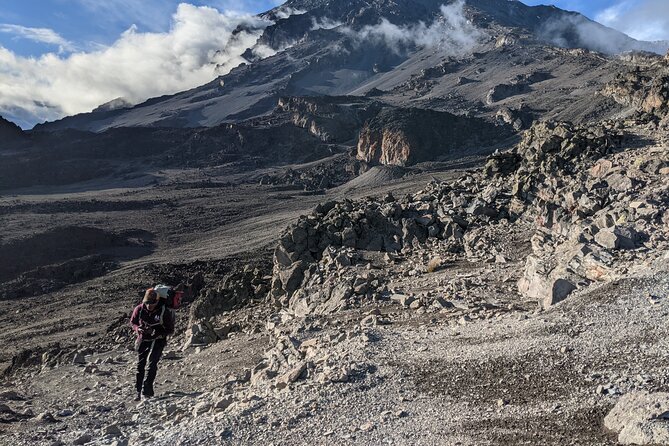
After breakfast, the schedule includes a farewell ceremony with the crew before the final descent. You continue through Mandara Huts, stopping there for lunch, then walk to the Marangu Park Gate.
The route drops from about 3,721 to 1,905 meters, losing 1,816 meters over roughly six hours. As you move into warmer, wetter conditions, the trail can become muddy, steep, and slippery. Keep those gaiters and poles available until you reach the gate.
At the park gate, you receive summit certificates. A vehicle then takes you back to your Moshi hotel, a drive of about 45 minutes. The hot shower and proper meal afterward will feel well earned.
The schedule asks you to tip guides, porters, and cooks as you leave them. Tips are not included in the $2,000 price, so plan for that additional personal expense. Alcohol, soft drinks, souvenirs, and other spending money are also excluded.
What the $2,000 price covers
At $2,000 per person, this is not a bare park-entry package. The listed price includes all park fees, airport transfers, professional mountain guides, porters, a cook, purified drinking water, and breakfast, lunch, and dinner for six days.
That bundle has real value. Park fees alone form an important part of a Kilimanjaro budget, while meals and crew wages cover much of the practical work that makes the climb possible. A private trip also means your group is not combined with strangers, which can make pacing and decisions simpler.
The price information needs one clarification. The package includes waterproof four-season private mountain sleeping tents, while the route description names Mandara, Horombo, and Kibo Huts and later Mweka Camp. Ask exactly what $2,000 provides: hut beds, tent nights, or a combination.
Also confirm airport transfer details. Airport transfers are included, but the daily meeting information refers to Kilimanjaro Airport and the national park area. Ask where you will be collected and whether the transfer applies on both arrival and departure.
The crew and the private-trip format
The package includes guides, porters, and a cook, with guide salaries and porter salaries included in the price. That is important because the crew handles much of the food and mountain support while you focus on walking, pacing, and staying warm.
The supplied feedback places strong emphasis on friendly guides and porters, with particular praise for support throughout the climb. Godfrey is named as a helpful contact during the booking process and through the end of the Tanzania trip. No individual mountain guide names are provided, so ask who will lead your group before departure.
Because this is a private activity, only your group participates. That suits you if you want a more personal pace or prefer not to join a large departure. It may also mean your group needs to be honest about its fitness and altitude response, since there is no larger team setting the rhythm.
Practical preparation for this six-day climb
You should prepare for very different conditions in one trip. The rainforest can be wet and slippery, while Kibo and the summit section are cold. The supplied advice specifically recommends gaiters and trekking poles on muddy sections and during the descent.
Keep warm clothing, waterproof layers, gloves, and spare dry items easy to reach. The information provided does not give a full packing list, so ask Furaha Adventures for its current gear requirements rather than treating a general day-hike list as enough.
You also need to plan around the midnight summit departure. Eat the included meals, drink the purified water, and use the Horombo rest day to conserve energy. Do not spend that day racing toward Mawenzi Base Camp simply because you feel good in the morning.
Most people can participate according to the supplied booking information, but this remains a high-altitude climb with long walking days. If you have health concerns, get medical advice before booking and ask the operator how it assesses altitude problems.
Booking details and cancellation terms
Confirmation is provided at booking, and mobile tickets are offered. The activity is listed as available from February 17, 2024, through December 31, 2029, with opening hours shown as 7 a.m. to 9 p.m. Monday and Tuesday.
Free cancellation is available if you cancel at least 24 hours before the local start time. Changes or cancellations made inside that 24-hour window are not accepted for a refund.
Should you book this Marangu Route climb?
Book it if you want a private six-day Kilimanjaro climb with an extra Horombo night, organized meals, a supporting crew, and the practical appeal of the Marangu Route. The $2,000 price can be good value because it includes park fees, transfers, guides, porters, a cook, water, and six days of meals.
Before booking, get the accommodation plan in writing. The biggest weakness in the supplied details is the mismatch between hut accommodation, private tents, Horombo, and Mweka Camp. If Furaha Adventures clearly explains the sleeping arrangements and the exact summit-day descent, this becomes a sensible option for a prepared first-time climber who values structure and crew support.
FAQ
Where does the Kilimanjaro climb begin?
The experience is based in Moshi, Tanzania. The meeting information refers to Kilimanjaro Airport and Kilimanjaro National Park, with a roughly 45-minute drive from Moshi to the park gate.
How long is the Marangu Route experience?
The climb lasts approximately six days.
What is the highest point reached?
The summit section reaches Uhuru Peak at 5,895 meters, or 19,341 feet.
Is airport pickup included?
Yes. Airport transfers are listed among the included services.
Are meals included?
Yes. Breakfast, lunch, and dinner are included for six days.
Are park fees and crew wages included?
Yes. The price includes park fees, guide salaries, porter salaries, and the cook’s salary.
Is this a shared group tour?
No. It is described as a private activity, so only your group participates.
What is not included in the price?
Alcoholic drinks, soft drinks, tips, and personal spending money for souvenirs are not included.
Just added in Moshi
- Wildlife Extravaganza: Manyara, Tarangire & Ngorongoro in 3 Days★ 5.0 · 3 reviews
- West Kilimanjaro cycling Adventures★ 4.5 · 8 reviews
- machame route★ 5.0 · 16 reviews
- Kilimanjaro Climb • Machame Route ~ 10 Day★ 5.0 · 6 reviews
- Kilimanjaro Climbing Umbwe Route★ 5.0 · 3 reviews
- Mt Kilimanjaro 6 days Marangu route hike★ 5.0 · 3 reviews
- 3 Days Private E-Bike Tour in West Kilimanjaro★ 5.0 · 3 reviews
- Private Cycle to Kilimanjaro Bike Park Safari★ 5.0 · 6 reviews
Kilimanjaro Treks, compared.



8-Day Small-group Lemosho Kilimanjaro Summit Trekking
Read our review →

5 Days Best of Tanzania Luxury Safari Northern Circuit
Read our review →

Climbing Kilimanjaro through 7 days Machame Route
Read our review →
7-Day Machame Kilimanjaro Summit Tour from Arusha
Read our review →Browse the lists this tour appears in