
Reviewed · KILIMANJARO TREKS
Climb Kilimanjaro via Marangu Route 6 Days
Kilimanjaro’s Marangu Route gives you the mountain’s most direct hut-based climb, beginning in rainforest and ending at Uhuru Peak, Africa’s highest point. The six-day plan includes an extra acclimatization day at Horombo Huts, which is one of the most important features of the schedule.
I like the steady change in scenery, from wet forest and birdlife to Mawenzi’s sharp volcanic ridges and the stark high country around Kibo. I also like that park fees, meals, mountain crew wages, sleeping mats, tents, and tax are built into the $1,800 price. The main drawback is the altitude: strong fitness is required, and the final push can be cold, steep, tiring, and affected by snow.
Key points to know before booking
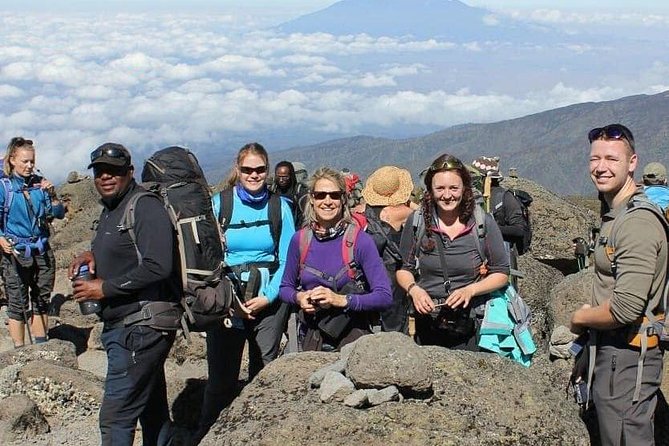
- You sleep in huts at the main camps: The route includes overnight stops at Mandara, Horombo, and Kibo, though the included equipment also lists three-season tents.
- The extra Horombo day helps with acclimatization: You can rest or walk toward Mawenzi Hut and Zebra Rocks, depending on how you feel.
- The summit reaches 5,895 meters: Uhuru Peak is the highest point in Africa, but altitude sickness is a serious concern.
- The scenery changes quickly: Expect rainforest, heath, moorland, volcanic highlands, and alpine desert.
- A private group takes part: Only your own party participates, rather than joining a large shared group.
- The price covers many major costs: Park fees, taxes, meals, mats, tents, crew wages, and onboard WiFi are included, while tips, flights, personal items, and a doctor are extra.
What the $1,800 price really covers
The $1,800 per-person price is not simply a guiding fee. It includes all fees and taxes, plus 18 percent VAT on tour services. You also get five breakfasts, five lunches, and five dinners, which matters on a six-day climb because food at altitude is part of the practical support you are paying for.
Mountain equipment listed in the package includes three-season tents and double-layered sleeping mats. The inclusion of fair wages for the mountain crew, set according to Kilimanjaro National Park Authority standards, is another important point. You should still budget for tips to the crew, since gratuities are not included.
Flights, personal items, and a doctor for the group are also outside the price. A portable flush toilet with a toilet tent costs an extra $150 per toilet and tent. That last option may be worth considering if you want more privacy and comfort at camp, but it is not required by the package.
WiFi on board is included, though the details of where and when it is available are not specified. Treat it as a useful extra rather than something to depend on during the climb.
Other routes up the mountain from Moshi:
- Kilimanjaro climb by Lemosho Route (7-day)
★ 5.0 · 651 reviews - Kilimanjaro climb, Machame Route (7-day)
★ 5.0 · 262 reviews - Kilimanjaro Climbing Lemosho Route 8 Days.
★ 5.0 · 186 reviews
Day 1: Marangu Gate to the rainforest
After breakfast in Moshi, you drive toward the southeast entrance of Kilimanjaro National Park and Marangu Gate. Registration and check-in take place here before you start walking.
The first day leads through rainforest, with eucalyptus trees and bird species along the way. You might spot a black-and-white colobus monkey, so keep your eyes in the trees rather than staring only at the trail.
The walk takes about five to seven hours, ending at roughly 8,858 feet. Wet, muddy ground is possible at this lower elevation, making proper footwear important. This is not the day to test a brand-new pair of boots.
The rainforest section gives you a gentle introduction to the mountain, but do not mistake the first day for an easy stroll. You are carrying or managing equipment, gaining altitude, and beginning a six-day effort. Keep your pace calm and let your guide know early if anything feels wrong.
Day 2: Moorland views and the first altitude warning
Day two begins with the final stretch of woodland before the route opens into heath and moorland. The visual change is one of the pleasures of this climb. Trees thin out, open slopes appear, and the jagged peaks of Mawenzi come into view.
You walk for roughly five to seven hours and finish at Horombo Huts, about 12,205 feet above sea level. This is where altitude problems may begin. Headache, unusual tiredness, or feeling unwell should be reported to your guide immediately.
After reaching camp, you have time to unpack and look across toward Kibo before dinner. Horombo is an important stop because you return here after the summit attempt, giving you a familiar place to rest during the descent.
The mountain scenery becomes more open here, but the comfort level becomes more basic. You should expect a high-altitude camp, not a hotel room. Keep essential warm clothing easy to reach, even if you feel comfortable when you arrive.
Day 3: The useful extra day at Horombo
The third day is built around acclimatization. You remain at Horombo Huts, at approximately 14,400 feet, rather than climbing higher and immediately pushing onward.
If you feel tired or show signs of altitude illness, the sensible choice is to rest at camp. If you feel well, you can take a short walk toward Mawenzi Hut to see Kibo and Mawenzi from a different angle. Another option is Zebra Rocks, reached by a climb of about 310 meters.
The scheduled hiking time is only one to two hours, but the value of this day is greater than the distance suggests. A slow day gives your body time to adjust before the route reaches Kibo and the summit zone.
Do not turn this into a race. The goal is not to collect the most steps. Your guide should help judge how far you should go, and you should be honest about your condition. This is also a good time to organize clothing, water, and personal equipment for the harder days ahead.
Same base, a different kind of day out:
- Safari Serengeti And Ngorongoro
★ 5.0 · 288 reviews - Climbing Kilimanjaro – Machame Route
★ 5.0 · 170 reviews - Climbing Kilimanjaro through 7 days Machame Route
★ 5.0 · 151 reviews - Kilimanjaro climb, Lemosho Route (8-day)
★ 5.0 · 148 reviews
Day 4: Across the volcanic highlands to Kibo Huts
From Horombo, the vegetation becomes thinner and the route crosses the dry highlands between Mawenzi and Kibo. The ground is marked by volcanic rocks, both large and small, giving this section a stark, exposed feel.
The day takes about five to seven hours. The last stretch to Kibo Huts is described as steep and physically demanding, so conserve energy early rather than treating the entire walk as a fast march.
Kibo Huts sit at roughly 15,430 feet in alpine desert. This is the highest overnight point before the summit attempt. Once you arrive, arrange your equipment and prepare your warm clothing for the next stage.
A useful detail is the advice to place summit water in a thermos so it does not freeze. That small preparation can matter in cold conditions. You should also aim to sleep early, since the following day is the main test of the climb.
The surroundings here are less forgiving than the rainforest. There is little shelter in the high country, and the route may feel dry, bare, and exposed. The reward is a close view of the mountain’s upper slopes and a clear sense that the summit is near.
Day 5: Uhuru Peak and the long return to Horombo
The summit day takes you toward Uhuru Peak, at 5,895 meters, the highest point in Africa. Snow may appear on the final section, depending on conditions and the time of year.
Reaching the Uhuru Peak sign is the high point of the trip, but the summit is only part of a demanding day. Afterward, you return to Kibo Huts for lunch and a rest before continuing to Horombo Huts. The listed hiking time is four to five hours, though you should confirm the day’s exact timing with the operator because summit schedules can vary.
The return to Kibo may feel quicker than the climb up, but you still have to manage tired legs and high altitude. Lunch at Kibo breaks the descent into two stages, and the night at Horombo gives you a more comfortable recovery point than trying to continue all the way to the gate.
Keep your camera and warm layers accessible. The route can shift from snow or cold upper slopes to lower, milder ground as you descend, so you will likely adjust clothing more than once.
Day 6: Back through the forest to the gate
The final day takes you down through the rainforest to Marangu Gate. The walk is listed at five to seven hours, followed by lunch and a farewell to the mountain crew.
From the gate, you leave Kilimanjaro National Park and drive back to Arusha for a shower and a commemorative dinner. The schedule lists the final overnight altitude as 1,843, though the trip description presents Arusha as the post-climb destination rather than another mountain camp.
This last walk is more than a formality. Descending through the forest gives you one final change in scenery, and tired legs can make the trail feel longer than expected. Keep a little energy in reserve and do not rush simply because the summit is behind you.
Guides, crew, and the feel of a private climb
This is a private activity, so only your group participates. That can make the pace and daily decisions more personal than on a large shared departure, especially when someone needs extra rest or a shorter acclimatization walk.
The team connected with Enjoy Kili includes guides named Seleman Honguo and Allen Katunzi, along with David, the company owner, and Joachim, a cook named in the service details. The operation also highlights friendly, professional support and flexibility. One previous party even completed the route in four days, but that should not be treated as the target for this six-day plan.
The safer approach is to use the full schedule. The extra day at Horombo is there for your body, not for padding the program. You should also remember that the mountain crew carries out much of the practical work, from camp support to meals. Tipping is not included, so plan for it separately.
What to pack and what to confirm
The package includes sleeping mats and three-season tents, but you still need suitable personal clothing and footwear. The first day can be wet and muddy, while the upper mountain requires warm layers and a way to keep drinking water from freezing.
Before setting out, confirm the exact sleeping arrangements. The route names hut stops, while the included equipment lists tents. That may reflect different camp arrangements or backup equipment, and it is worth clarifying with Enjoy Kili before you pay.
You should also confirm:
- The pickup time and location in Moshi
- The exact availability of WiFi on the mountain
- The summit-day departure schedule
- Which meals are provided on each day
- The recommended tipping amount for the crew
- Whether the extra toilet package is available for your group
The stated start time is 12:00 am, which appears to be a booking-system entry rather than a clear departure time. Ask for the actual pickup schedule before the climb.
Who this six-day route suits best
This route suits you if you want a structured Kilimanjaro climb with an extra acclimatization day and a private group. It is also a good match if you value a route that begins in lush forest and finishes among volcanic rock and alpine desert.
You should have a strong level of physical fitness. The route includes several five-to-seven-hour walking days, a steep approach to Kibo, and a summit attempt at nearly 5,900 meters. No level of fitness can guarantee that you will avoid altitude sickness, so communication with your guide is essential.
The route may not suit you if you want a short, easy mountain holiday or if you dislike basic camp conditions. You should also think carefully before choosing it if you are tempted to compress the schedule. The four-day completion described by the operator is possible for some groups, but the six-day structure gives you more time to adjust.
Cancellation and booking details
You can cancel up to 24 hours before the experience begins for a full refund. Cancellations or changes made less than 24 hours before the local start time are not refunded or accepted.
The climb depends on good weather. If poor weather causes cancellation, you are offered another date or a full refund. Confirmation is provided at booking, and the experience is near public transportation, with pickup offered.
Should you book the Marangu Route with Enjoy Kili?
I would consider this a good-value Kilimanjaro package if you want a private climb with meals, park charges, crew wages, sleeping mats, tents, and tax already included. The strongest feature is the extra Horombo day, since a slower ascent gives you a better chance to manage the mountain sensibly.
Book it if you are fit, comfortable with basic conditions, and ready to follow your guide’s advice about altitude. Before committing, clarify the hut and tent arrangements, the midnight start listing, summit-day timing, and tipping expectations.
If the $1,800 price fits your budget and you want the direct Marangu approach, this is a practical way to reach Uhuru Peak without stripping away the support that makes a high-altitude climb workable.
FAQ
Where does the Kilimanjaro climb begin?
The experience begins in Moshi, Tanzania. After breakfast, you travel to Marangu Gate, the southeast entrance to Kilimanjaro National Park.
How long is the climb?
The scheduled duration is six days. Hiking times range from about one to two hours on the acclimatization day to five to seven hours on several full walking days.
What is the highest point reached?
The route aims for Uhuru Peak, which is 5,895 meters above sea level and the highest point in Africa.
Is this a private activity?
Yes. Only your own group participates in the activity.
Are meals included?
Yes. The package includes five breakfasts, five lunches, and five dinners.
Are park fees and taxes included?
Yes. All fees and taxes are included, along with 18 percent VAT on tour fees and services.
Is camping equipment provided?
Three-season mountain tents and double-layered sleeping mats are included. The route also names hut stops, so you should confirm the exact sleeping arrangements with the operator.
Is a portable toilet included?
No. A portable flush toilet with a toilet tent is an optional extra costing $150 per toilet and toilet tent.
What happens if bad weather cancels the climb?
You are offered a different date or a full refund if the experience is canceled because of poor weather.
Just added in Moshi
- Wildlife Extravaganza: Manyara, Tarangire & Ngorongoro in 3 Days★ 5.0 · 3 reviews
- West Kilimanjaro cycling Adventures★ 4.5 · 8 reviews
- machame route★ 5.0 · 16 reviews
- Kilimanjaro Climbing Umbwe Route★ 5.0 · 3 reviews
- Mt Kilimanjaro 6 days Marangu route hike★ 5.0 · 3 reviews
- Kilimanjaro Climb • Machame Route ~ 10 Day★ 5.0 · 6 reviews
- 3 Days Private E-Bike Tour in West Kilimanjaro★ 5.0 · 3 reviews
- Private Cycle to Kilimanjaro Bike Park Safari★ 5.0 · 6 reviews
Kilimanjaro Treks, compared.



8-Day Small-group Lemosho Kilimanjaro Summit Trekking
Read our review →

5 Days Best of Tanzania Luxury Safari Northern Circuit
Read our review →

Climbing Kilimanjaro through 7 days Machame Route
Read our review →
7-Day Machame Kilimanjaro Summit Tour from Arusha
Read our review →Browse the lists this tour appears in