
Reviewed · KILIMANJARO TREKS
6 Days Mount Kilimanjaro Trek Marangu Route
Kilimanjaro’s Marangu Route gives you the mountain’s most direct introduction, with dormitory huts instead of tents and a gradual five-day climb to Uhuru Peak. The sixth day is crucial: an extra night at Horombo lets your body adjust before the hard push to 5,895 meters.
I like the simple hut setup and the strong support package, which includes guides, porters, a cook, meals, transfers, and hotel nights in Moshi. I also like the route’s changing scenery, from rainforest and monkeys to empty high moorland and the stark saddle below Kibo.
The catch is that Marangu’s easy reputation can mislead you. The summit day lasts 12 to 15 hours, and the route returns the same way, so this is still a serious high-altitude climb. The five-day version is not offered here, thankfully. Six days gives you a better chance, but no itinerary can guarantee a summit.
Key points to know before booking
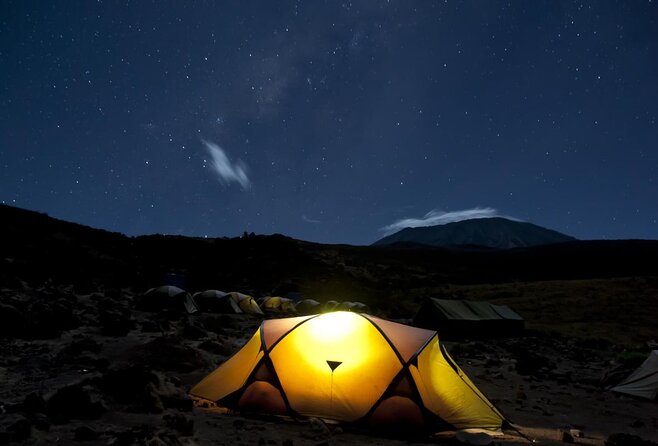
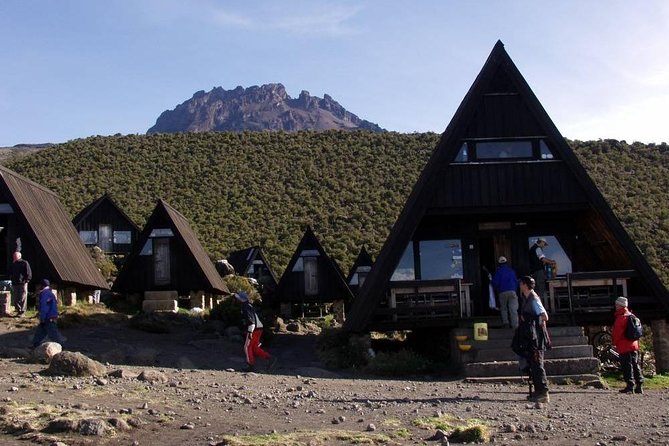
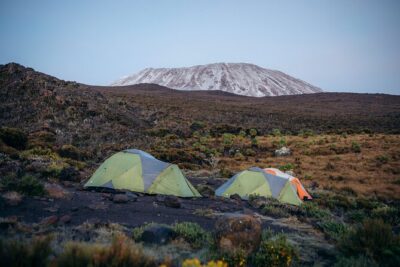
- Dormitory huts replace tents: Marangu is the only Kilimanjaro route in this program with hut accommodation, though you should confirm the exact sleeping setup because the inclusions also mention camping equipment.
- Horombo is your acclimatization base: The extra day includes a hike toward Mawenzi Ridge or Zebra Rock before returning to the hut.
- The summit push starts around midnight: You climb through the coldest hours, reach Gilman’s Point at sunrise, then continue to Uhuru Peak.
- The support team is a major part of the value: A guide, assistant guides, porters, cook, emergency oxygen, meals, transfers, and hotel nights are included.
- The itinerary is physically demanding: You cover 22 kilometers on summit day, followed by a long descent toward Horombo.
- The price is $2,350 per person: That is a substantial package, but it includes many costs that can add up quickly on a Kilimanjaro trip.
Why six days is the sensible Marangu schedule
Marangu is often called the Coca-Cola Route, a friendly nickname that suggests an easier climb. The trail is well established, the grade is relatively steady, and you sleep in huts rather than carrying or using a tent each night.
That does not make the mountain easy. The real challenge is altitude. At Horombo, you sleep at about 3,700 meters. Kibo Hut sits around 4,700 meters, and Uhuru Peak reaches 5,895 meters. Your legs may cope with the walking, but your body still needs time to handle thinner air.
That is why I would choose this six-day plan over the minimum five-day schedule. Day 3 is not a rest day in the lazy sense. You hike up toward Mawenzi Ridge or Zebra Rock, then return to Horombo for lunch, rest, dinner, and sleep. The point is to gain height during the day and sleep lower, giving your body useful exposure without adding another summit night.
The route is private, so only your group participates. That gives you more room to discuss pace, rest, and how you are feeling with the guide team. The information provided does not give a fixed group size, so ask how many guides and porters will be assigned to your party.
Other routes up the mountain from Moshi:
- Kilimanjaro climb by Lemosho Route (7-day)
★ 5.0 · 651 reviews - Kilimanjaro climb, Machame Route (7-day)
★ 5.0 · 262 reviews - Kilimanjaro Climbing Lemosho Route 8 Days.
★ 5.0 · 186 reviews
Day 1: Marangu Gate to Mandara Hut through rainforest
Your morning begins with breakfast and pickup from your Moshi lodge. You then drive to Marangu Gate, where registration and park paperwork take place before you begin walking.
The first 8.3 kilometers lead through dense rainforest to Mandara Hut. The walk takes about five hours, though your pace and gate formalities can affect the timing. This is a pleasant opening stage, with thick vegetation and the possibility of seeing primates in the trees.
Mandara is more than a place to sleep. If you still have energy, your guide can take you to Maundi Crater. From there, you get a broad view toward the Kenyan interior, a rewarding extra after the shaded forest walk.
I like this first day because it eases you into the climb. You do not begin on bare rock or steep scree. The drawback is that wet forest conditions can make the trail feel muddy or slippery, and the first day still requires a full half-day of walking.
Day 2: Mandara to Horombo and the first big altitude gain
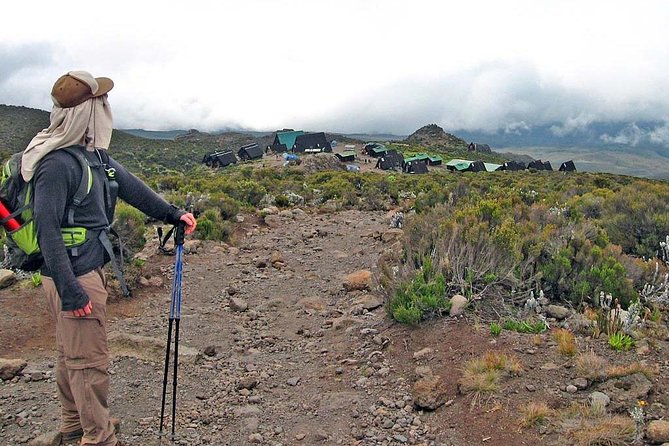
After breakfast, you leave the rainforest behind. The vegetation changes as you reach the timberline, then opens into the heath and moor zone.
The listed distance is 12.5 kilometers, with the walking time described as roughly four to six hours in the route notes, although the day summary gives about nine hours. Treat that difference as a planning warning. Mountain schedules are estimates, and breaks, weather, pace, and group needs all matter.
Horombo Hut sits at about 3,700 meters. From here, you can look toward Mawenzi and Kibo, with the Masai Steppe spreading below. This is the first point where Kilimanjaro feels properly high and exposed.
You should take the afternoon seriously. Eat, drink, and rest even if you feel strong. Altitude symptoms can appear later, and the next morning’s acclimatization walk depends on arriving at Horombo with enough energy.
Day 3: A useful acclimatization walk toward Mawenzi
This is the day that makes the six-day plan worthwhile. From Horombo, you hike toward Mawenzi Ridge or Zebra Rock for about four hours, then return to the hut for lunch and a long rest before dinner.
The exact route choice is made by the guide team. Both options give you a chance to walk higher without committing to a new sleeping altitude. You also get fine views across the high mountain zone, with Mawenzi providing a dramatic backdrop.
Do not treat the extra day as wasted time. Many people make the mistake of thinking summit success depends only on fitness. Altitude is less predictable. A steady acclimatization day can help, though it cannot remove the risk of altitude sickness.
The pace should be slow and controlled. This is a good moment to speak plainly with your guide about headaches, nausea, unusual tiredness, or shortness of breath. Emergency oxygen is included for emergencies only. It is not intended to help you force your way to the summit.
Same base, a different kind of day out:
- Safari Serengeti And Ngorongoro
★ 5.0 · 288 reviews - Climbing Kilimanjaro – Machame Route
★ 5.0 · 170 reviews - Climbing Kilimanjaro through 7 days Machame Route
★ 5.0 · 151 reviews - Kilimanjaro climb, Lemosho Route (8-day)
★ 5.0 · 148 reviews
Day 4: Horombo to Kibo across the Saddle
The route now becomes barer and more severe. You pass the Last Water point, then cross the Saddle, a broad plateau with very little vegetation between Mawenzi and Kibo.
This stage covers 9.5 kilometers and takes about six to seven hours. The trail itself is described as well built, but the altitude and lack of cover make the day tiring. Kibo Hut sits at roughly 4,700 meters, and you will notice that even simple tasks require more effort.
The plan is to reach Kibo, eat an early evening meal, and go to bed early. The night will be short because the final ascent begins around midnight.
This is where good personal preparation matters. Keep your summit clothing, headlamp, water, snacks, gloves, and other essentials ready before sleeping. You do not want to search through a bag in the dark while the rest of the group is preparing to leave.
Day 5: The midnight climb to Uhuru Peak
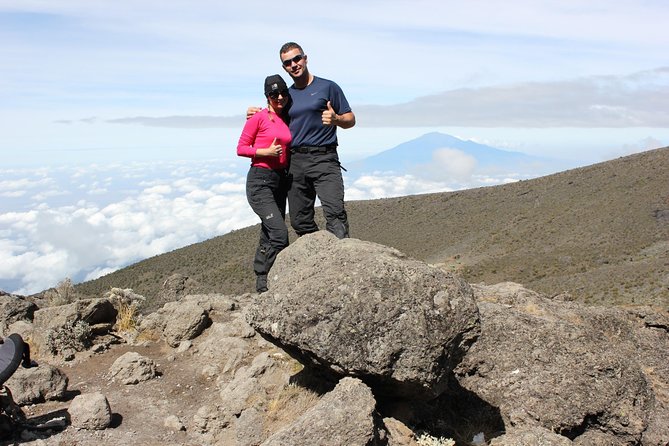
Summit day is the hardest part of the trip. The full route is listed at 22 kilometers, with 12 to 15 hours of walking. You begin around midnight, climbing slowly through the cold and darkness.
The path passes Hans Meyer Cave at about 5,220 meters. From there, the slope continues upward toward Gilman’s Point at 5,681 meters, reached around sunrise if the pace goes well.
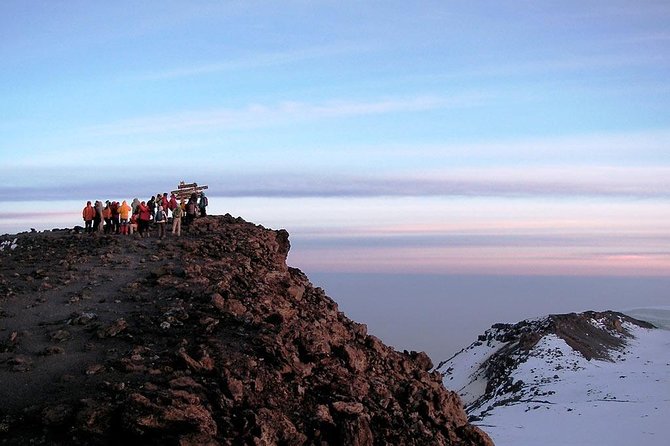
Gilman’s Point is on the crater rim. The first sunlight can warm your face after several cold hours, and the view changes as the sky brightens. From here, you still have another one to two hours to Uhuru Peak.
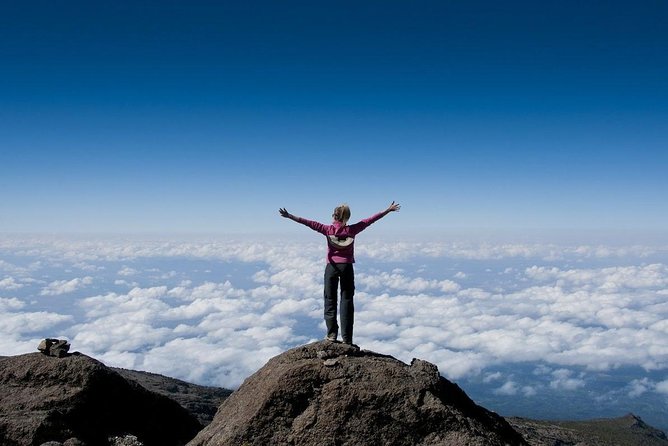
At 5,895 meters, Uhuru is the highest point in Africa. Reaching it is a major achievement, but you should not assume that reaching Gilman’s Point means the day is over. You still need to cross the crater-rim section and then descend.
After Uhuru, you return to Kibo Hut for a warm meal and a one to two-hour break. Then you continue down to Horombo. This is a long day, and the descent can be surprisingly tough on tired knees and feet.
The accounts connected with this experience include both successful summits and at least one person who did not reach the top and planned to try again. That is an important reminder: a well-run climb improves your chances, but the mountain decides the result. A safe turnaround is not a failure.
Day 6: Horombo back to Marangu Gate and Moshi
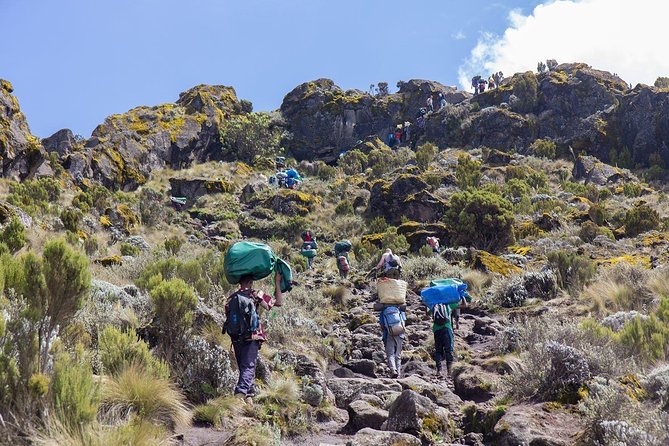
The final morning takes you down through the heath and moor zone to Mandara Hut, where lunch is provided. You then re-enter the rainforest and continue to Marangu Gate.
The route covers about 20.8 kilometers and is listed at roughly eight hours, though the detailed description gives about six hours of trekking. Again, use the estimate as a guide rather than a promise.
At the gate, you say goodbye to the mountain team and transfer back to your Moshi hotel. A warm shower and a proper bed will feel well earned. The package includes a hotel night after the climb, with dinner and breakfast, so you do not have to arrange that recovery night separately.
What the $2,350 price covers
At $2,350 per person, this is not a budget walk. It is also more than just a guide fee and park entry. The package includes:
- All fees and taxes
- Airport transfers between Kilimanjaro Airport and Moshi
- One hotel night before and one after the climb
- Dinner and breakfast at those hotel stays
- A qualified mountain guide, assistant guides, porters, and cook
- Wages for the support team
- Meals on the mountain
- Fresh drinking water and hot water for washing each day
- Emergency oxygen
- Camping equipment listed in the package
- Six lunches and five breakfasts
- Five dinners
The value depends on how much support you want. You are paying for a staffed climb, food logistics, transport, park costs, and two Moshi hotel nights in one price. That can be worthwhile for a first Kilimanjaro attempt, especially if you do not want to arrange each part separately.
I would ask one practical question before paying: why does the package list both dormitory huts and camping equipment? Marangu is known for hut sleeping, while the inclusion list mentions tents, camp chairs, tables, and mattresses. The listing may use a standard equipment description, but you should confirm exactly where you sleep and what equipment is supplied.
Flights, visas, travel insurance, health insurance, personal hiking gear, medicine, snacks, and water-purifying tablets are not included. A portable toilet is optional but highly recommended, and it costs extra. You can rent some personal equipment from the company’s store in Tanzania.
Food, staff, and the human side of the climb
Food matters more than many first-time climbers expect. You are walking for hours each day, and on summit day you need calories even when altitude reduces your appetite.
The meals are one of the strongest parts of this program. The cooking team provides breakfast, lunch, and dinner across the mountain stages, while hot washing water is supplied each day. The included experiences also describe guides arranging small personal touches, including a birthday cake and champagne at Horombo.
The team names that appear in the experience material include Wence Tarimo, who handled personal communication in some cases. The support crew is described as including guides, porters, cooks, and assistant guides. Since the exact guide assigned to your group is not stated, ask for those names during your pre-climb briefing.
The strongest praise centers on planning, airport transfers, food, equipment, and safety attention. That is precisely what you want on a mountain climb. Still, ask how wages and tipping are handled, since the package says staff wages are included but does not state a recommended tip amount.
Who should choose this Marangu Route climb?
This trip suits you if you want a private six-day climb with a gradual route, hut accommodation, organized meals, and a full support team. It is also a reasonable choice if you prefer not to sleep in tents.
You should have a moderate level of physical fitness. You do not need to be an elite athlete based on the information provided, but you must be ready for repeated long walking days, cold conditions, high altitude, and a 12 to 15-hour summit stage.
I would not choose it if you want a short sightseeing outing with a guaranteed summit. The route’s Coca-Cola nickname can make it sound gentle, but the final ascent is demanding. I would also think carefully if you dislike returning over the same trail, since the Marangu route uses the same general approach and descent.
Pickup is offered, and return airport transfers are included. Confirmation is provided at booking, and the activity is private for your group. You can cancel for a full refund if you do so at least 24 hours before the local start time. Personal insurance remains your responsibility.
Should you book this Kilimanjaro trek?
I would book this six-day Marangu itinerary if hut accommodation, a private group, and a full mountain support team matter to you. The extra acclimatization day is the right choice, and the package covers many costly essentials, including food, staff, transfers, hotel nights, and park-related fees.
Before booking, confirm the sleeping arrangements, the daily schedule differences, the guide team, equipment rental costs, and tipping expectations. If you accept that summit success is never guaranteed and prepare properly for the long final day, this offers a practical route to one of Africa’s great high-altitude experiences.
FAQ
How long is the Kilimanjaro Marangu Route experience?
The climb lasts six days, with pickup from Moshi, five nights of mountain and hotel arrangements as provided, and a return transfer to Moshi after descending from Marangu Gate.
What is the highest point reached?
The summit goal is Uhuru Peak at 5,895 meters. You first reach Gilman’s Point at 5,681 meters on the crater rim, then continue for another one to two hours toward Uhuru Peak.
Where do you sleep on the Marangu Route?
Marangu uses dormitory-style mountain huts. However, the package also lists camping equipment, so confirm the exact sleeping arrangements with Intrepid Explorer Tanzania before departure.
Is an acclimatization day included?
Yes. Day 3 is an extra acclimatization day at Horombo Hut. You hike toward Mawenzi Ridge or Zebra Rock, then return to Horombo for lunch, rest, dinner, and overnight accommodation.
Are meals and drinking water included?
Yes. Breakfast, lunch, dinner, fresh drinking water, and hot water for washing are included according to the package details. The package lists five breakfasts, five dinners, and six lunches.
What is not included in the price?
Flights, visas, travel and health insurance, personal hiking gear, personal items, medicine, snacks, and water-purifying tablets are not included. A portable toilet is optional but recommended, and personal equipment can be rented from the company’s store in Tanzania.
More Hiking & Trekking in Moshi
- Private Kilimanjaro Hike 7 Day Lemosho Route
★ 5.0 · 60 reviews - Best Kilimanjaro hiking day trip tour with Kilinge Adventures
★ 4.5 · 54 reviews - #1. Best Kilimanjaro Day hike Tour-Machame Route-ISMANI
★ 4.2 · 47 reviews - Best Kilimanjaro Adventure 7 days Machame route Trekking
★ 5.0 · 42 reviews
Just added in Moshi
- Wildlife Extravaganza: Manyara, Tarangire & Ngorongoro in 3 Days★ 5.0 · 3 reviews
- West Kilimanjaro cycling Adventures★ 4.5 · 8 reviews
- machame route★ 5.0 · 16 reviews
- Kilimanjaro Climbing Umbwe Route★ 5.0 · 3 reviews
- Mt Kilimanjaro 6 days Marangu route hike★ 5.0 · 3 reviews
- Kilimanjaro Climb • Machame Route ~ 10 Day★ 5.0 · 6 reviews
- 3 Days Private E-Bike Tour in West Kilimanjaro★ 5.0 · 3 reviews
- Private Cycle to Kilimanjaro Bike Park Safari★ 5.0 · 6 reviews
Kilimanjaro Treks, compared.
8-Day Small-group Lemosho Kilimanjaro Summit Trekking
Read our review →
5 Days Best of Tanzania Luxury Safari Northern Circuit
Read our review →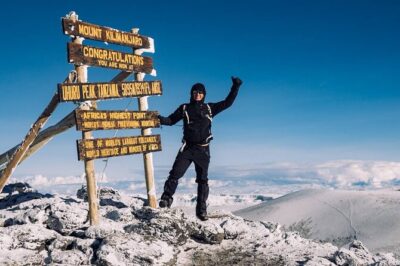
Climbing Kilimanjaro through 7 days Machame Route
Read our review →
7-Day Machame Kilimanjaro Summit Tour from Arusha
Read our review →Browse the lists this tour appears in