
Reviewed · KILIMANJARO TREKS
Best 7 Days Machame Route group hiking on Kilimanjaro
The Machame Route earns its nickname, the Whiskey Route, honestly. It is scenic, demanding, and direct, taking you from the rainforest on Kilimanjaro’s southern side to Uhuru Peak at 5,895 meters. I like the route for two clear reasons: the scenery changes dramatically each day, and the southern circuit gives you several angles on Kibo and Mawenzi before the summit push.
I also like that the $2,080 price includes park fees, private transport, airport pickup, six lunches, six breakfasts, and five dinners. The crew support is a major part of a Kilimanjaro climb, and the strongest praise for this operator centers on its guides, porters, chef, and personal care. Names that appear in the trip details include Nalisis and Omary.
The catch is simple: this is not an easy mountain walk. The six-day version combines the Barranco to Karanga and Karanga to Barafu sections into one long day, leaving less time to adjust to altitude. Also, the description uses both private and group language, so confirm your exact arrangement before paying.
Key points to know before booking
- Machame is scenic but strenuous: Expect steep trail sections, loose scree, cold camps, mud, and a difficult summit night.
- The six-day plan is the faster option: It skips an overnight at Karanga by combining two hiking days.
- The route uses the southern circuit: You approach from Machame, cross Shira Plateau, pass Lava Tower and Barranco, then summit from Barafu.
- The final climb begins around midnight to 2 a.m.: Reaching Stella Point and Uhuru Peak requires a long, cold night ascent.
- The price covers core trip costs: Park fees, transport, meals listed in the package, and airport pickup are included.
- Equipment and tips are extra: You must budget for personal hiking gear, visa costs, flights, and gratuities for the crew.
Why the Machame Route is so popular
Machame is Kilimanjaro’s best-known route because it gives you a strong mix of scenery and mountain atmosphere. You begin in thick rainforest, move through moorland and high desert, cross the Shira Plateau, and then circle below the Southern Ice Field.
That variety makes the route more interesting than a steady uphill walk through one type of terrain. You get changing plants, wider views, volcanic rock, glaciers, high camps, and a true summit night.
The route is also efficient. It approaches from the south and descends by Mweka, so you do not simply retrace your steps. I like that arrangement because the ascent and descent feel like two different parts of the trip.
Still, Machame is not the gentlest choice. The trail can be steep, especially around the Barranco Wall and on the summit approach. The six-day version is particularly demanding because it compresses the route. If you have some hiking, backpacking, or high-altitude experience, the challenge may feel worthwhile. If you are new to long mountain walks, the pace deserves serious thought.
Other routes up the mountain from Moshi:
- Kilimanjaro climb by Lemosho Route (7-day)
★ 5.0 · 651 reviews - Kilimanjaro climb, Machame Route (7-day)
★ 5.0 · 262 reviews - Kilimanjaro Climbing Lemosho Route 8 Days.
★ 5.0 · 186 reviews
Day 1: From Moshi to the Machame rainforest
The day begins after breakfast, with pickup from the Moshi or Arusha area. The supplied meeting information lists Shanty Town as the start point and an 8 a.m. start, while the route description refers to an early hotel pickup from Arusha at about 1,400 meters. Confirm the exact pickup location when booking.
You drive toward Machame Village, where you can buy mineral water and receive a packed lunch. Depending on road conditions, the vehicle may continue toward the Machame Gate. If the road is too muddy, you walk about 3 kilometers from the village to the gate, which can take roughly an hour.
That detail matters. The first day may include an extra muddy approach before the official hike begins. Wear shoes you can clean and keep rain protection handy.
At Machame Gate, you register and start climbing into the rainforest almost at once. The trail is expected to be wet, muddy, and slippery, especially when rain moves through the forest. A lunch stop comes roughly halfway through the hiking day.
The first day takes about seven hours. It is not the highest or most dramatic day, but it sets the tone: steady walking, damp conditions, and a gradual climb beneath dense forest. The main drawback is the mud. Gaiters and trekking poles are useful here, and you should not pack rain gear at the bottom of your bag.
Day 2: Leaving the forest for Shira Plateau
You leave Machame Camp after breakfast and climb for about an hour toward the top of the forest. The trail then becomes gentler for roughly two hours as you enter the moorland zone.
After lunch and a rest, you continue along a rocky ridge toward Shira Plateau. The vegetation opens up, and you begin to see farther across the mountain. The route also gives you views toward the Western Breach and its glaciers.
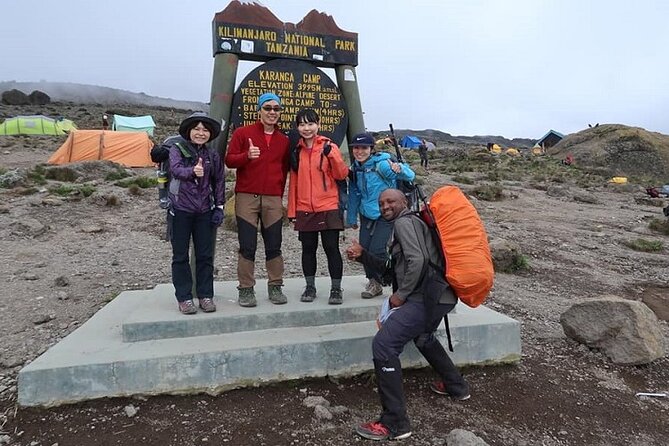
Shira Camp sits at about 3,840 meters. The camp is exposed, so conditions can feel much colder than they did in the forest. The supplied itinerary warns that temperatures can drop well below freezing.
This is where a good sleeping system and warm layers matter. Your crew boils water for drinking and washing, then serves dinner. You should expect simple camp routines rather than hotel comforts: arrive, settle in, wash if practical, eat, and get ready for a cold night.
The hiking day lasts about six hours. The trail is generally less muddy than the rainforest, but the altitude begins to affect how quickly you move. Walk slowly from the start. You do not gain anything by racing ahead on this mountain.
Day 3: Lava Tower and the Barranco acclimatization day
Day 3 is one of the most useful days on the route. From Shira Plateau, you continue east along a ridge, passing a junction toward Kibo before turning southeast toward Lava Tower, also called the Shark’s Tooth.
The route reaches about 16,000 feet near the Arrow Glacier junction before dropping to Barranco Camp at about 13,000 feet. You finish the day at roughly the same elevation where you began, but you have walked much higher in between.
That up-and-down profile is valuable for acclimatization. Your body gets time at a higher level before you sleep lower at Barranco. It is also a good example of why Kilimanjaro is not simply about counting kilometers. Altitude, pace, rest, and overnight elevation all matter.
The day takes around six hours. Expect rocky ground and a noticeable climb toward Lava Tower, followed by a descent to camp. Barranco is one of the more memorable camps because of its position beneath the mountain’s upper slopes. The mountain feels closer here, and the next morning’s Barranco Wall is already part of the conversation.
You rest, eat dinner, and sleep at camp. If the altitude is affecting you, tell your guide early. The guide team is central to the safety and success of the climb, and the trip information places strong emphasis on experienced support from guides, porters, and the chef.
Same base, a different kind of day out:
- Safari Serengeti And Ngorongoro
★ 5.0 · 288 reviews - Climbing Kilimanjaro – Machame Route
★ 5.0 · 170 reviews - Climbing Kilimanjaro through 7 days Machame Route
★ 5.0 · 151 reviews - Kilimanjaro climb, Lemosho Route (8-day)
★ 5.0 · 148 reviews
Day 4: Barranco Wall, Karanga, and Barafu in one push
The day starts with the Barranco Wall. This is a steep section, but it is not described as a technical climbing pitch in the supplied information. You use your hands at times, move carefully, and follow the guide’s pace.
After the wall, the trail continues toward Karanga Valley. The six-day version then does not stop for an overnight at Karanga. Instead, you continue from Karanga toward the junction with the Mweka Trail and climb to Barafu Hut.
That combination is the biggest practical difference between the six-day and seven-day versions. The six-day plan saves a day, but Day 4 becomes a long and tiring effort before the summit attempt. The seven-day version provides a separate night around Karanga, giving you a less compressed schedule.
At Barafu, you have completed the southern circuit. The camp gives views toward both Mawenzi and Kibo, and you can see the summit area from another angle. This is where you rest, eat, and prepare for the hardest part of the climb.
The six-hour estimate for this day should not make it sound easy. The combination of the Barranco Wall, Karanga, and Barafu requires energy, and you will need to manage your food, water, and pace carefully. The summit attempt begins soon after.
Day 5: The midnight climb to Uhuru Peak
Summit day begins very early, usually between midnight and 2 a.m. You leave Barafu in darkness and climb between the Rebmann and Ratzel glaciers.
The route heads northwest through heavy scree toward Stella Point on the crater rim at about 18,600 feet. This is described as the most mentally and physically difficult part of the climb, and that is easy to understand. You are walking at night, the ground is loose, the air is cold, and every step feels harder at altitude.
At Stella Point, you stop briefly. If the weather cooperates, sunrise provides the great reward of the climb. From there, you may encounter snow during the final hour to Uhuru Peak.
Uhuru Peak is the highest point on Kilimanjaro and the highest point in Africa. The summit elevation is 5,895 meters. Faster hikers may have more time at the top, but your guide should help you judge how long to remain there based on conditions and how you feel.
The supplied itinerary lists about six hours for this day, but the actual summit effort can feel much longer because it includes the early start, the climb to Stella Point, the final push to Uhuru, and the return toward camp. You should prepare mentally for a slow, repetitive pace. The goal is not speed. The goal is safe progress.
Bring your warmest clothing for this section, even if lower parts of the mountain felt mild. Keep rain gear and extra layers accessible. At high altitude, weather can change quickly, and you do not want to unpack your entire bag beside the trail.
Day 6: Descending through Mweka to Moshi
After breakfast, you descend toward Mweka Park Gate. The lower trail may be wet and muddy, especially after the colder upper sections.
This is where trekking poles and gaiters become useful again. You may find that shorts and a T-shirt are enough at lower elevations, but keep rain protection and warmer clothing within reach because conditions can change during the descent.
At Mweka Gate, you receive your summit certificates. A vehicle then takes you back to your Moshi hotel. The supplied itinerary describes this as about six hours, although the exact timing will depend on your pace and how quickly the gate formalities are completed.
The descent is not just an afterthought. Tired legs and loose or muddy ground can make it harder than expected. Do not rush simply because you are going downhill. The final hours are part of the climb, and careful footing will help you finish well.
What the $2,080 price really covers
At $2,080 per person, the package is not just a park entry ticket and a guide. It includes all fees and taxes, private transportation, airport pickup, six lunches, six breakfasts, and five dinners.
That is useful value for a supported Kilimanjaro climb because the cost of meals, transport, permits, camp logistics, and crew support can add up quickly. The inclusion of airport pickup also makes the first arrival easier, although you should confirm the exact transfer details and whether the pickup applies to your arrival time.
The listed price does not include your visa, flights, personal hiking equipment, or tips for the crew. Those are not minor details. Proper clothing and footwear are especially important on a route that combines rainforest mud, freezing camps, rocky ridges, and snowy summit conditions.
Tips should also be planned before you go. The guides, porters, and chef are part of the working team that makes a supported climb possible. The price tells you what is included, but it does not remove the need to budget for the people who support you on the mountain.
Group, private, or shared arrangements
The trip information describes this as a private activity, with only your group participating. At the same time, the title refers to group hiking, and the supplied trip details describe shared climbs with groups of about eight to ten people.
That is an important point to settle before booking. Ask whether your reservation is private, a joining group, or a shared departure. The experience can feel quite different depending on the answer.
A private climb may give your party more control over pace and breaks. A joining group can add companionship and may appeal to you if you like meeting people from different countries. The group accounts associated with this operator include parties of five, six, eight, and ten people, with positive comments about the welcoming and caring team.
The guide’s role is especially important in a group. People climb at different speeds and may respond differently to altitude. The named staff references include Nalisis, described in the trip details as an organizer connected with the climbs, and Omary, associated with a successful summit outing. Confirm who will lead your own departure rather than assuming a named person will be present.
Who should choose this climb?
I would choose this route if you want Kilimanjaro’s most scenic standard approach and are comfortable with a serious physical challenge. It suits people with hiking or backpacking experience who understand that a six-day mountain itinerary leaves little spare time.
The seven-day version is the better choice if you can afford the extra day and want a less compressed schedule. The separate Karanga overnight may make the approach to Barafu more manageable.
I would think twice about the six-day plan if you are new to altitude or do not regularly walk for several hours. The route is called popular, but popular does not mean easy. The rainforest can be slippery, the camps can be below freezing, and the summit night is physically and mentally demanding.
You should also be comfortable with basic camping conditions. The crew provides boiled drinking and washing water, meals, tents, and mountain support as part of the operation described, but this is still a high-altitude trek rather than a lodge-to-lodge holiday.
Booking details and cancellation
Confirmation is received at booking, and mobile tickets are available. The stated meeting point is Shanty Town in Tanzania, with an 8 a.m. start, and the activity ends back at the meeting point after the return transfer.
The cancellation policy allows a full refund when you cancel at least 24 hours before the experience start time. Cancellations made less than 24 hours before the start are not refunded, and changes inside that period are not accepted. Cutoff times use local time.
Most people can participate according to the supplied information, but that should not be confused with the route being easy. You are still signing up for steep hiking, high altitude, cold camps, and a demanding summit attempt.
Should you book the Machame Route with Rede Tours?
I would recommend this climb to a fit, prepared hiker who wants strong scenery, a direct route, and a fully supported experience from Moshi. The price includes many of the costly practical elements, and the repeated praise centers on the guide team, porters, chef, hospitality, and successful summit support.
My main advice is to book the seven-day version if your schedule and budget allow it. The six-day plan is attractive at first glance, but combining Barranco, Karanga, and Barafu creates a tougher fourth day just before the summit.
Before confirming, get three points in writing: your exact number of days, whether the departure is private or group based, and the name of your lead guide. If those details suit you and you prepare properly for rain, cold, mud, altitude, and a midnight summit start, the Machame Route offers one of the fullest ways to experience Kilimanjaro.
FAQ
How long is the Machame Route climb?
The experience is offered as a six to seven day Kilimanjaro climb. The six-day version combines the Barranco to Karanga and Karanga to Barafu sections into one day.
Where does the climb start?
The listed meeting point is Shanty Town, Tanzania, with an 8 a.m. start. The route itself begins at Machame Gate after transport from the Moshi or Arusha area.
Where does the activity finish?
The activity ends back at the meeting point after a vehicle transfers you from Mweka Gate to your hotel in Moshi.
Is this a private or group tour?
The additional information describes it as a private activity, while the tour title and trip details also refer to joining or group departures. Confirm the arrangement for your specific booking.
What is included in the price?
The price includes all fees and taxes, private transportation, airport pickup, six lunches, six breakfasts, and five dinners.
What is not included?
Visa costs, tips for the crew, flights, and personal hiking equipment are not included.
When does the summit attempt begin?
The summit climb starts very early, generally between midnight and 2 a.m., from Barafu Camp.
What is the highest point reached?
The climb reaches Uhuru Peak at 5,895 meters, the highest point on Mount Kilimanjaro and in Africa.
Can I cancel for a full refund?
Yes. You can receive a full refund if you cancel at least 24 hours before the experience start time. Cancellations or changes made less than 24 hours before the start are not accepted for a refund.
More Hiking & Trekking in Moshi
- Private Kilimanjaro Hike 7 Day Lemosho Route
★ 5.0 · 60 reviews - Best Kilimanjaro hiking day trip tour with Kilinge Adventures
★ 4.5 · 54 reviews - #1. Best Kilimanjaro Day hike Tour-Machame Route-ISMANI
★ 4.2 · 47 reviews - Best Kilimanjaro Adventure 7 days Machame route Trekking
★ 5.0 · 42 reviews
Just added in Moshi
- Wildlife Extravaganza: Manyara, Tarangire & Ngorongoro in 3 Days★ 5.0 · 3 reviews
- West Kilimanjaro cycling Adventures★ 4.5 · 8 reviews
- machame route★ 5.0 · 16 reviews
- Kilimanjaro Climb • Machame Route ~ 10 Day★ 5.0 · 6 reviews
- Kilimanjaro Climbing Umbwe Route★ 5.0 · 3 reviews
- Mt Kilimanjaro 6 days Marangu route hike★ 5.0 · 3 reviews
- 3 Days Private E-Bike Tour in West Kilimanjaro★ 5.0 · 3 reviews
- Private Cycle to Kilimanjaro Bike Park Safari★ 5.0 · 6 reviews
Kilimanjaro Treks, compared.



8-Day Small-group Lemosho Kilimanjaro Summit Trekking
Read our review →

5 Days Best of Tanzania Luxury Safari Northern Circuit
Read our review →

Climbing Kilimanjaro through 7 days Machame Route
Read our review →
7-Day Machame Kilimanjaro Summit Tour from Arusha
Read our review →Browse the lists this tour appears in