
Reviewed · KILIMANJARO TREKS
Mountain Kilimanjaro Climbing 7 Days Machame Route
Machame is Kilimanjaro’s Whiskey Route, and the name fits. You trade the gentler Marangu trail and hut beds for steeper paths, tent camps, mud, scree, and a stronger sense of being on a real mountain. The payoff is a changing world: thick forest, open moorland, volcanic rock, glaciers, and sunrise at Uhuru Peak.
I like two things right away: the seven-day schedule gives your body more time to adjust, and the route crosses the mountain’s southern side before approaching the summit from the east. The main drawback is equally clear: this is a hard trek, not a scenic walk, and summit day lasts about 15 hours.
Key points to know before booking
- Seven days and six nights on the mountain: The extra day compared with the minimum six-day version gives you a better pace for altitude adjustment.
- The route reaches 5,895 meters: Uhuru Peak is the final goal, with Stella Point at 5,739 meters shortly before it.
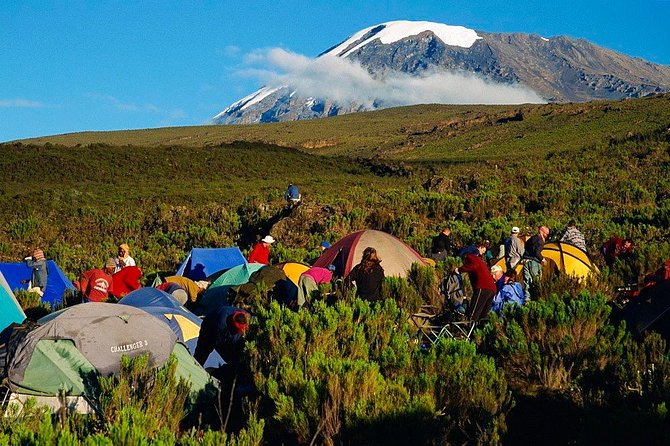
- You sleep in tents: Machame has no hut accommodation on the route, so camping is part of the experience.
- Day three reaches 4,600 meters: You walk high near Lava Tower, then sleep lower, following the useful walk high, sleep low approach.
- Summit day begins around midnight: You climb scree for four to five hours to Stella Point, continue to Uhuru Peak, then descend to Millennium Camp.
- The group is capped at 15 people: Pickup is offered, mobile tickets are provided, and park admission is included in the daily itinerary.
Why the seven-day Machame Route is worth considering
The Machame Route gives you a fuller mountain experience than a simple up-and-down trail. You start in warm, wet rainforest and finish in a cold, bare high-altitude zone where even ordinary walking takes effort. The route also circles part of Kilimanjaro, so the mountain keeps changing shape as you move around it.
The seven-day version matters. Machame can be completed in six days, but squeezing the climb into the shortest schedule leaves less time for your body to respond to thin air. Here, you spend six nights on the mountain and have a separate day for the Karanga to Barafu section before the summit push.
The price is listed at $2,564.11 per person. That is a serious amount, but the value depends on what you expect to receive from the operator. The stated package includes pickup, mobile ticketing, and park admission. It also gives you a guided seven-day climb with a maximum group size of 15. Before paying, I would ask for a precise list of what the price covers beyond those points, especially meals, camping equipment, transfers, permits, and any hotel nights.
Exceed Expectations Tours & Safari is associated with Oscar Swai, who responds as the company director in the supplied booking feedback. Several past clients specifically praised prompt replies, clear quotations, reasonable pricing, and the care given by the mountain crew. That is useful reassurance, but you should still ask direct questions about equipment, porter welfare, emergency procedures, and the exact support provided on summit night.
Other routes up the mountain from Moshi:
- Kilimanjaro climb by Lemosho Route (7-day)
★ 5.0 · 651 reviews - Kilimanjaro climb, Machame Route (7-day)
★ 5.0 · 262 reviews - Kilimanjaro Climbing Lemosho Route 8 Days.
★ 5.0 · 186 reviews
Day one: Machame Gate to the rainforest
Your first mountain morning starts with about an hour of driving from Moshi to Machame Gate. Park formalities take place here, and you meet the crew of porters before setting off.
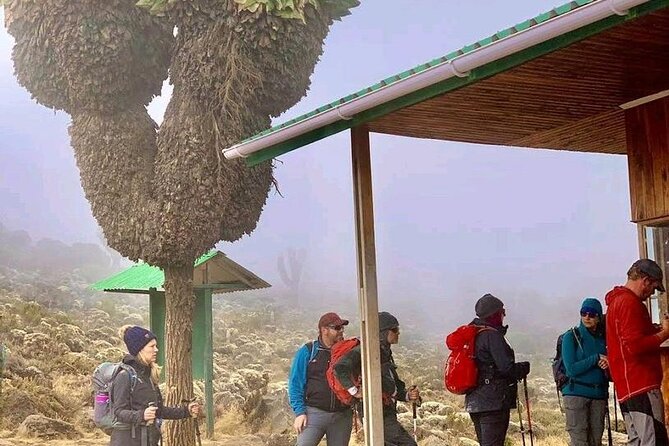
The trail climbs steadily through thick rainforest. This is one of the most atmospheric parts of the route, with dense greenery and a clear sense that you have left the roads and town behind. It is also one of the wettest sections. The path can be overgrown in places, and mud underfoot is common.
Allow about six hours for the day. That time is not just about distance. The trail rises steadily, and the wet ground can make every step slower. Good footwear and patience matter more than speed.
This first section is a useful test. If your boots rub, your pack feels wrong, or your rain protection fails, you want to discover that here rather than on the upper mountain. Keep your day bag simple and carry only what you need for the hours ahead.
Day two: climbing toward the Shira Plateau
Day two continues upward through the forest before a steeper climb takes you onto the Shira Plateau. The change in scenery is striking. The trees thin out, the air feels cooler, and the views open toward the mountain.
You may see Mount Meru rising in the distance above the Arusha area. That distant peak helps put Kilimanjaro in context. You are no longer just walking through a forest. You are moving into a broad high-altitude world with long views and fewer signs of ordinary life.
The walking time is about five hours, but the steeper ascent can make the day feel demanding. This is a good point to settle into the guide’s pace. On Kilimanjaro, moving too fast early can cost you later.
The Shira Plateau also marks the beginning of the route’s more exposed character. Weather can shift quickly at altitude, and you have less shelter than in the forest. Keep warm layers and rain protection easy to reach rather than buried in your luggage.
Day three: Lava Tower and the value of sleeping lower
Day three is about eight hours and reaches as high as 4,600 meters. You walk across high moorland, pass beneath Lava Tower, and continue near the final section of the Western Breach before reaching camp.
This is one of the most important days for altitude adjustment. You spend the day high, then sleep lower, following the mountaineering rule walk high, sleep low. The schedule does not remove the risk of altitude sickness, but it gives your body a better chance to adapt than a rushed itinerary would.
The scenery feels stark now. Forest has disappeared, and the vegetation becomes much sparser. The route beneath Lava Tower is a reminder that Kilimanjaro is a serious high-altitude climb even though it does not require technical climbing equipment on this itinerary.
Do not judge your summit chances by how you feel at sea level or during the first two days. Headaches, poor sleep, and unusual fatigue can appear as you gain height. Tell your guide promptly if you feel unwell. The available information confirms the altitude profile, but it does not spell out the operator’s medical or evacuation procedures, so ask about those before departure.
Same base, a different kind of day out:
- Safari Serengeti And Ngorongoro
★ 5.0 · 288 reviews - Climbing Kilimanjaro – Machame Route
★ 5.0 · 170 reviews - Climbing Kilimanjaro through 7 days Machame Route
★ 5.0 · 151 reviews - Kilimanjaro climb, Lemosho Route (8-day)
★ 5.0 · 148 reviews
Day four: the Barranco Wall and Karanga Camp
The morning begins with a descent into the Great Barranco, followed by the climb up the Barranco Wall. The wall looks intimidating because it rises steeply above the ravine, but the route is described as a nontechnical rock climb. You use your hands at points, yet this is not a rope-and-harness climbing route.
It is still long and tiring. The wall divides the ravine from Kilimanjaro’s southeastern slopes, and the trail passes beneath the Heim and Kersten glaciers before reaching the Karanga Valley.
From the valley, you climb again to Karanga Camp at 3,963 meters. The day takes about five hours, with an optional afternoon acclimatization walk to around 4,200 meters before returning to camp.
This day is a good example of Machame’s rhythm. You descend, climb hard, recover, then climb again. The distance may look modest on paper, but altitude and uneven rock change the effort. Move carefully, especially if your legs are tired from the previous day.
Day five: Barafu Camp and the long wait for midnight
After breakfast, you walk toward Barafu Camp at 4,640 meters. The route crosses bare scree slopes with no vegetation, and the steep climb feels harder because of the altitude.
The stated walking time is about three hours. That does not mean the day is easy. Barafu is a launch point for the summit, and the real work begins after dark. Once you arrive, the plan is to eat, stay hydrated, keep warm, and rest through the afternoon.
You are expected to have an early dinner and try to sleep before waking around 11 p.m. or midnight. That broken sleep is part of the physical challenge. You may not feel rested when you stand up for the summit attempt, so keep your evening calm and organize your clothing, water, and headlamp before lying down.
Barafu is also where you should be honest with yourself and your guide. If you are sick, badly exhausted, or showing signs of altitude trouble, the summit attempt deserves careful discussion. Reaching a lower camp safely is more important than forcing the final ascent.
Day six: Stella Point, Uhuru Peak, and Millennium Camp
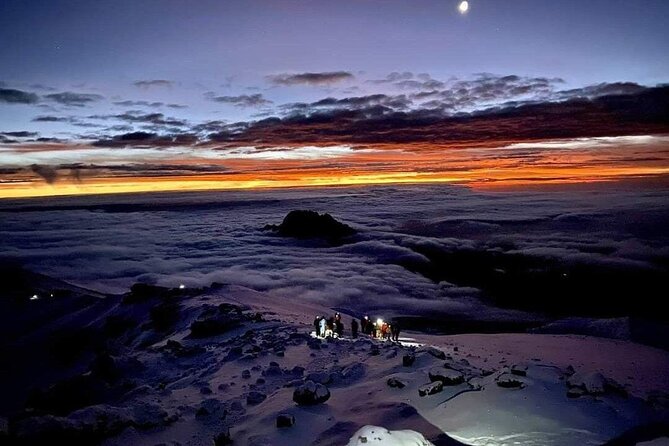
Summit day begins around midnight and lasts about 15 hours. You climb steeply over scree toward the summit glaciers, usually spending four to five hours gaining height over a relatively short distance.
The goal is Stella Point at 5,739 meters, reached around sunrise if the schedule holds. From there, you see ice cliffs inside the crater and the jagged Mawenzi Peak beyond. The final walk to Uhuru Peak takes about another hour, bringing you to 5,895 meters.
This is the emotional high point of the climb, but it is also the coldest and most physically demanding section. The thin air makes every slope feel longer. The early start helps with timing, yet it also means you are climbing when tired and sleep deprived.
After Uhuru Peak, you return to Stella Point and descend on scree to Barafu Camp for breakfast. That is not the end of the day. You continue down to Millennium Camp, where a long rest waits.
The descent deserves respect. Loose ground can punish knees and ankles, and exhaustion can make slips more likely. Trekking poles may be useful, though the supplied details do not state whether they are provided. Ask what gear the operator supplies before you arrive.
Day seven: Mweka Gate and the return to Moshi
The final day is a roughly six-hour descent through rainforest to Mweka Gate. Compared with summit day, it is gentler, but your legs may be tired and the downhill pressure can be uncomfortable.
At the gate, you complete park formalities and receive a certificate. Vehicles then meet you for the return to your Moshi hotel, where a hot shower will feel well earned.
The Mweka descent is practical as well as scenic. You do not retrace the Machame trail, so the route gives you one last change of scenery before leaving the mountain. It also keeps the climb and descent on separate paths, which makes the seven days feel like a true crossing of Kilimanjaro’s southern side.
What the price and group size mean
At $2,564.11 per person, this is not a budget day trip. It is a seven-day mountain program with park access listed, pickup offered, and a group limit of 15. The six nights on the mountain also require a larger support operation than a short excursion.
The maximum group size is reasonable for a guided climb, but 15 people can still feel like a sizable party on narrow trails. Ask how many people are expected in your departure group and how guides are assigned. A solo booking may join a group, as happened with one past client who came from the United States and joined a seven-day Machame climb.
The booking feedback also includes people who combined the climb with a Tanzania safari, including a Serengeti balloon safari. That combination can work well if you want to add wildlife after the mountain, but it is not part of the stated seven-day climbing itinerary. Treat it as a separate arrangement and request a separate quote.
Who should book this climb
I would choose this experience if you want the harder, more scenic Machame route and prefer a slower seven-day schedule over the shortest possible climb. It suits someone who is ready for steep trails, tent camping, long walking days, and a midnight summit start.
You need a moderate level of physical fitness, according to the stated requirements. That phrase should not be read as permission to arrive unprepared. The route includes 15-hour summit day, repeated steep climbs, high altitude, cold conditions, loose scree, and a demanding descent.
This is not the best match if you want hut beds, short walking days, or a flexible holiday schedule. It is also not a good choice if you are uncomfortable camping or have not made a plan for altitude concerns.
The operator has a maximum of 15 people, so you can expect a shared group setting rather than a private climb unless you arrange otherwise. Oscar Swai is the named company director, and past booking feedback highlights quick communication and detailed quotes. Use that contact before booking to clarify every practical point that is not stated here.
Practical details to confirm before departure
Pickup is offered, and the experience uses a mobile ticket. The listed start time is 12:00 a.m., which fits the summit departure but may not describe your first transfer from Moshi. Confirm the exact pickup time and location in writing.
Park admission is included in the daily itinerary. The supplied information does not specify the full list of included meals, tents, sleeping bags, transfers, hotel nights, tips, or personal gear, so ask for an itemized package.
Free cancellation is available if you cancel at least 24 hours before the local start time. Changes or cancellations made inside that window are not accepted for a refund.
Should you book the seven-day Machame climb?
Book it if you want Kilimanjaro’s classic progression from rainforest to Uhuru Peak and can accept a tough, tent-based climb. The seven-day schedule, high Shira Plateau, Barranco Wall, Lava Tower acclimatization day, and southern-circuit views give you more than a direct uphill march.
I would be cautious only about the missing package details. Before paying $2,564.11, get clear answers about equipment, meals, porter support, medical planning, transfers, and hotel arrangements. If those details suit your needs, this is a strong choice for a serious first Kilimanjaro attempt, especially if you value a slower altitude plan over the shortest itinerary.
FAQ
How long is the Kilimanjaro Machame Route tour?
The climb lasts approximately seven days, including six nights on the mountain.
Where does the climb begin?
The trek begins at Machame Gate, reached by about a one-hour drive from Moshi.
Where does the descent finish?
The descent follows the Mweka trail and finishes at Mweka Gate, where vehicles take you back to your hotel in Moshi.
What is the highest point reached?
The summit is Uhuru Peak at 5,895 meters. Stella Point, on the crater rim, is at 5,739 meters.
Do I sleep in huts or tents?
You sleep in tents on the Machame Route. The route does not use the hut accommodation associated with Marangu.
How long is summit day?
Summit day lasts approximately 15 hours. You start around midnight, reach Stella Point around sunrise if conditions and pace allow, continue to Uhuru Peak, then descend to Millennium Camp.
Is park admission included?
Park admission is marked as included for each itinerary day.
How many people can join the tour?
The maximum group size is 15 people.
What is the cancellation policy?
You can cancel at least 24 hours before the experience start time for a full refund. Cancellations or changes made less than 24 hours before the local start time are not accepted.
Just added in Moshi
- Wildlife Extravaganza: Manyara, Tarangire & Ngorongoro in 3 Days★ 5.0 · 3 reviews
- machame route★ 5.0 · 16 reviews
- West Kilimanjaro cycling Adventures★ 4.5 · 8 reviews
- Kilimanjaro Climb • Machame Route ~ 10 Day★ 5.0 · 6 reviews
- Kilimanjaro Climbing Umbwe Route★ 5.0 · 3 reviews
- Mt Kilimanjaro 6 days Marangu route hike★ 5.0 · 3 reviews
- 3 Days Private E-Bike Tour in West Kilimanjaro★ 5.0 · 3 reviews
- Private Cycle to Kilimanjaro Bike Park Safari★ 5.0 · 6 reviews
Kilimanjaro Treks, compared.



8-Day Small-group Lemosho Kilimanjaro Summit Trekking
Read our review →

5 Days Best of Tanzania Luxury Safari Northern Circuit
Read our review →

Climbing Kilimanjaro through 7 days Machame Route
Read our review →
7-Day Machame Kilimanjaro Summit Tour from Arusha
Read our review →Browse the lists this tour appears in