
Reviewed · KILIMANJARO TREKS
Discover Our Latest 6 Days Climbing Kilimanjaro – Marangu Route
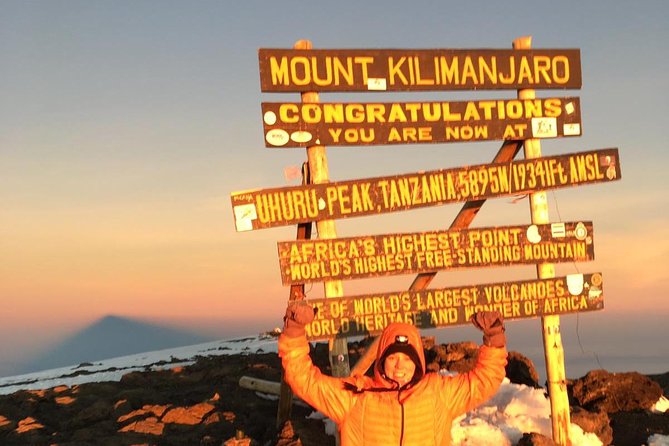
The biggest draw here is the chance to reach Uhuru Peak at 5,895 meters while sleeping in huts instead of tents. The Marangu Route gives you forest, open moorland, high desert, and a sunrise summit push in one compact six-day trip.
I like the private-group format, since you are not tied to a large mixed party. I also like the full acclimatization day at Horombo, plus the steady support of a guide, chef, and porter team. The main concern is the schedule: six days is still a short time for such a high mountain, and the summit day can last about 12 hours.
Key points to know before booking
- Private group format: You hike with your own party rather than an unfamiliar shared group.
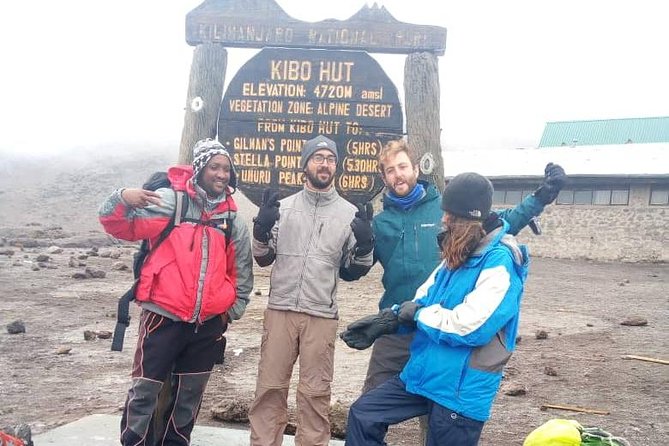
- Marangu Route huts: Dormitory-style huts replace camping tents, with limited facilities at Kibo Hut.
- Horombo acclimatization day: A four to five-hour walk toward Mawenzi Peak takes you as high as 4,600 meters before returning to sleep lower.
- Midnight summit attempt: You leave Kibo Hut shortly after midnight to reach Gillman’s Point around sunrise, then continue toward Uhuru Peak if you have enough strength.
- Meals and transfers included: Breakfast, lunch, dinner, hotel pickup, and return transport from Moshi are covered.
- Important extra costs: Park fees, tips, insurance, flights, personal hiking gear, and Moshi hotel nights are not included.
Why the Marangu Route works for a six-day climb
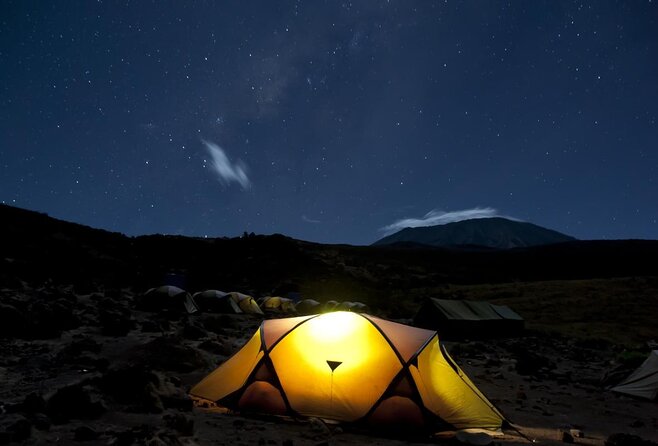
The Marangu Route is often called the easier Kilimanjaro path because the trail is comparatively direct and uses huts. That does not make the climb easy. You still face thin air, long uphill hours, cold nights, and a final ascent that begins in darkness.
What makes this route practical is its clear rhythm. You start in rainforest, move into moorland, spend an extra night at Horombo for altitude adjustment, cross the Saddle, and then make the summit attempt from Kibo Hut. The route gives you a simple story to follow, with each day bringing a noticeable change in scenery.
You also hike with a private party. That matters when the pace becomes slow or the altitude affects your energy. Your guide can work with your group’s condition rather than trying to balance several unrelated parties.
The trip costs $1,150 per person. For that price, you receive a professional mountain guide, porters, meals during the climb, hut accommodation, a briefing, a trekking certificate, and private transport from Moshi to the gate and back. You still need to budget for park fees, personal equipment, insurance, tips, flights, and hotel nights in town.
Other routes up the mountain from Moshi:
- Kilimanjaro climb by Lemosho Route (7-day)
★ 5.0 · 651 reviews - Kilimanjaro climb, Machame Route (7-day)
★ 5.0 · 262 reviews - Kilimanjaro Climbing Lemosho Route 8 Days.
★ 5.0 · 186 reviews
Day 1: Marangu Gate to Mandara Hut
Your morning begins with pickup from your Moshi hotel and a drive to Marangu Gate. At the gate, registration takes place while the mountain crew prepares for the climb. The guide and porters are part of the working team that carries supplies and supports the group along the route.
The first walking day lasts about four to five hours. The trail passes through rainforest, where you might see colorful birds, colobus monkeys, other monkey species, mosses, lichens, flowers, and orchids. On a clear day, you may also see Moshi and the plain below.
This is a pleasant introduction to Kilimanjaro, but do not waste the day racing uphill. The forest can feel humid, and you have several more demanding days ahead. Keep your water and rain protection easy to reach. The provided information does not specify meal times or water arrangements, so ask your operator during the briefing how water is handled.
Mandara Hut is your first overnight stop. The accommodation is hut-based rather than tent-based, but you should expect dormitory-style sleeping, not a private room.
Day 2: Mandara Hut to Horombo at 3,720 meters
After breakfast, the trail continues through the last part of the rainforest before opening into alpine meadow. Huge heather replaces the thicker forest, and the views widen. Kibo, the snow-capped main summit, and the rocky Mawenzi Peak come into view.
This day takes about five to seven hours, with a gain of roughly 1,000 meters. The advice to walk pole pole, meaning slowly, is central to the climb. A quick pace may feel fine at lower altitude, but it can leave you struggling later.
Horombo Huts sit at 3,720 meters. This is where the trip begins to feel like a high-altitude climb rather than a forest hike. You have a longer evening to eat, rest, and prepare for the acclimatization day.
The huts are a major reason people choose Marangu, especially if you prefer not to sleep in a tent. Still, hut accommodation is basic and shared. Bring a sleeping bag and personal items suited to cold nights, since hut accommodation does not mean hotel comfort.
Day 3: The Mawenzi acclimatization walk
Day three is the quiet engine of the trip. You remain at Horombo and take a four to five-hour round-trip walk toward the base of Mawenzi Peak. The route reaches about 4,600 meters before returning to the hut for dinner and sleep at the lower elevation of Horombo.
This is valuable because you gain height during the day without spending the night at the highest point reached. The schedule gives your body more time to adjust before the summit push. It also gives you a chance to see Mawenzi up close, with its sharp, rocky profile contrasting with Kibo.
Do not treat this as a spare sightseeing day. It is still a proper mountain walk, and you should keep your pace controlled. The climb is designed around gradual adjustment, so pushing too hard here works against the plan.
This day may also be the best part of the route for people who want time to look around. The summit day is dominated by effort, cold, darkness, and a strict pace. At Mawenzi, you have more room to notice the high-altitude plants, wide views, and changing colors of the mountain.
Same base, a different kind of day out:
- Safari Serengeti And Ngorongoro
★ 5.0 · 288 reviews - Climbing Kilimanjaro – Machame Route
★ 5.0 · 170 reviews - Climbing Kilimanjaro through 7 days Machame Route
★ 5.0 · 151 reviews - Kilimanjaro climb, Lemosho Route (8-day)
★ 5.0 · 148 reviews
Day 4: Horombo to Kibo Hut across the Saddle
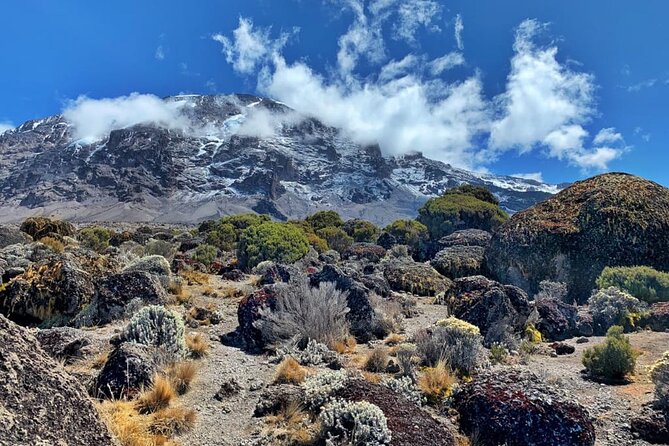
The trail from Horombo to Kibo Hut takes about five to seven hours. Vegetation becomes sparse, the ground more stony, and the surroundings increasingly dry. You pass the last water point and cross the Saddle, a broad high area between Mawenzi and Kibo.
The Saddle can feel stark and exposed. There is little vegetation, and the distance between landmarks can make the walk seem longer than expected. This is a day for patience, regular drinking, and conserving energy.
Kibo Hut sits at 4,705 meters. It has dormitory space and limited amenities. Once you arrive, you prepare for the summit attempt. Repack your bag and leave unnecessary items with the porters if the guide advises you to do so. You want a light load for the night climb.
The early start means you will not have a normal night of sleep. Think of the afternoon as recovery time, not as a chance to explore. Eat what you can, organize your headlamp and warm layers, and follow the guide’s instructions about the wake-up time.
Day 5: Gillman’s Point, Uhuru Peak, and the long descent
Day five is the hardest part of the trip. The guides wake you shortly after midnight. You begin by torchlight, climbing a long slope of scree while the ground is still frozen. Frozen scree can be easier to walk on than loose, warm gravel, but the slope remains demanding.
After about two hours, you reach Hans Meyer’s Cave. After roughly three hours of climbing, you reach Johannes’ Notch near the crater rim. The route then becomes steeper before the final push to Gillman’s Point at 5,685 meters.
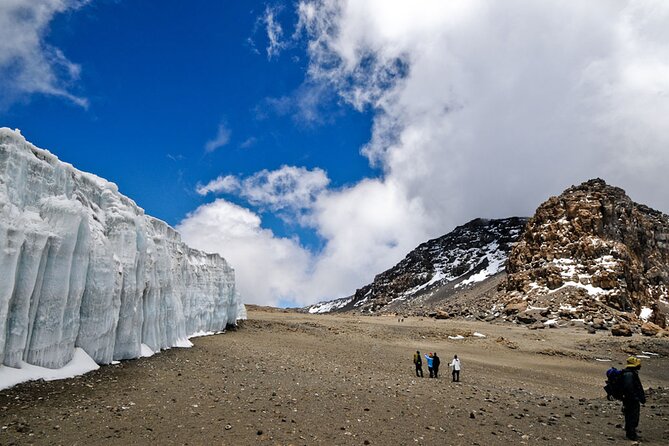
The goal is to reach Gillman’s Point around sunrise. At that hour, you may see the ice fields and the jagged form of Mawenzi catching the first light. It is a powerful moment, but do not confuse reaching Gillman’s Point with reaching Uhuru Peak. Uhuru is farther around the crater rim.
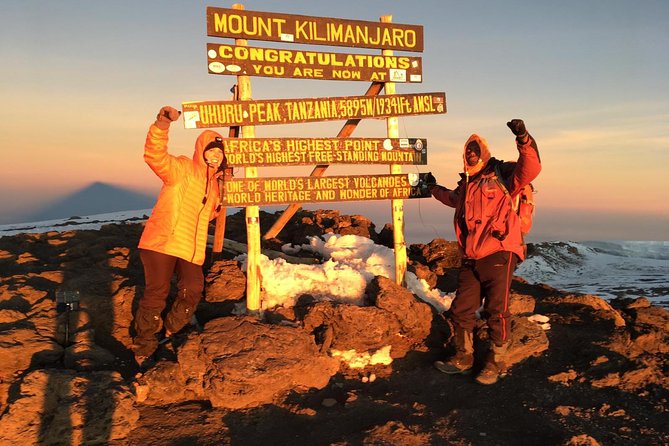
If your condition allows, you continue toward Uhuru Peak, the highest point on Kilimanjaro. The supplied schedule describes this as a day of about 12 hours, so you should expect a long return after the summit effort. The route back to Kibo Hut is followed by a descent toward Horombo Huts.
This day demands both physical strength and mental control. Your guide’s support matters here. A previous participant specifically praised the guide for encouraging the final effort, along with the porters and chef who helped keep the climb moving. That kind of support can make a real difference when the air is thin and every step feels slow.
You should also be honest about your condition. A certificate and summit photo are not worth ignoring serious altitude symptoms. The trip is guided, but your guide needs clear information from you throughout the climb.
Day 6: Horombo to Marangu Gate and Moshi
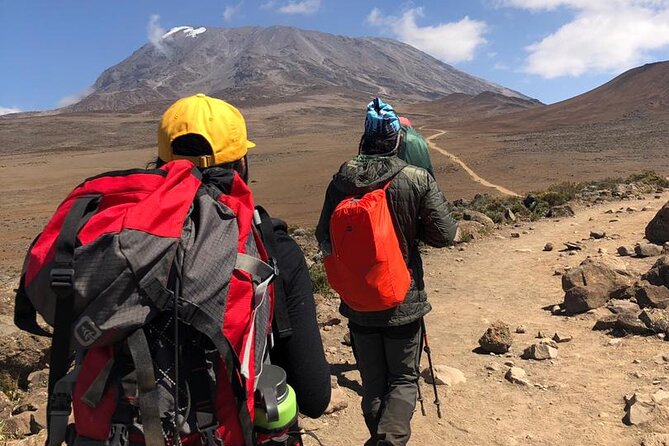
The final morning is a long downhill walk through alpine meadow and rainforest. You pass Mandara Hut again before continuing to Marangu Gate. The stated walking time is about eight hours, with a distance of roughly 20.8 kilometers, or 12.9 miles.
Downhill sounds easy after the summit, but tired legs and rough ground can make it uncomfortable. Trekking poles may be useful, though personal hiking gear is not included. Take care with your knees and keep your pace steady.
At Marangu Gate, transport takes you back to your Moshi hotel. Breakfast and lunch are included on this day. The trip ends with the return drive, rather than with an additional night or airport transfer.
What the $1,150 price really covers
The price is reasonable for a private six-day climb if you already have suitable gear and a hotel in Moshi. The package includes:
- Pickup from your Moshi hotel
- Return transport from Marangu Gate to Moshi
- Professional Kilimanjaro guide
- Porters and mountain support
- Breakfast, lunch, and dinner during the trek
- Hut accommodation
- Camping fees
- Pre-climb briefing
- Trekking certificate
The phrase camping fees can be confusing because the Marangu Route uses huts. The important point is that accommodation on the mountain is included, but the huts are shared and basic.
Park fees are not included and must be paid either directly to the park or through the tour operator. You also pay for tips to the mountain crew, travel and medical insurance, flights, airport transfers, personal hiking gear, and hotel nights before and after the trek.
Ask for the exact park-fee total before paying. It is one of the largest items that can change the true cost of a Kilimanjaro climb.
Private group benefits and group-size limits
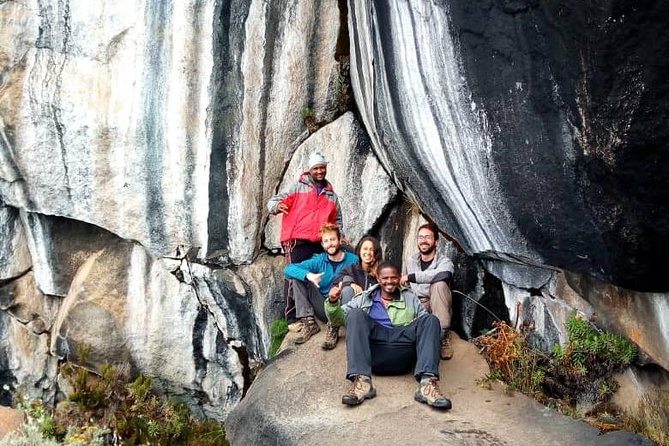
The private format is one of the strongest reasons to choose this trip. You can share the climb with your own companions and avoid being placed with an unfamiliar party. It also gives the guide a clearer idea of your group’s pace and needs.
The activity allows a maximum of 90 participants, so confirm how your own private party will be organized. The private-group wording is more useful than the overall maximum, but you should still ask how many people will be assigned to your guide and porter team.
The support crew is not a minor detail. One account praised the guide, porters, and chef for helping make the summit possible. You should plan to tip the mountain crew, since gratuities are not included and are an important part of the climb’s final cost.
Who should book this Kilimanjaro climb
I would consider this trip if you want the most direct introduction to Kilimanjaro and prefer huts over tents. It suits people who value a private group, want transport handled from Moshi, and can manage long days on foot.
It is also a good match if you appreciate a planned acclimatization day. The Horombo rest day is not a complete rest, but the extra time at altitude gives the schedule more balance than a rushed ascent.
I would be cautious if you have little hiking experience, poor cold-weather gear, or limited time to recover between long walking days. The Marangu Route is often described as easier, but the mountain remains high and physically serious. Six days gives you a workable plan, not an effortless one.
The activity is listed as suitable for most people, but that should not replace honest preparation. You should be comfortable with long walks and seek medical advice about high-altitude travel if you have health concerns.
What to confirm before you pay
The booking confirmation is issued at the time of booking, and pickup is available from a hotel in Moshi. The activity is near public transportation, though the package specifically provides private transfers from your Moshi hotel to the gate and back.
Before departure, confirm:
- The total park-fee amount
- Your exact hotel pickup point in Moshi
- The private group size
- What personal gear you need to bring or rent
- How water is supplied during the trek
- The recommended tip amount for the crew
- The hut sleeping arrangements for your group
Free cancellation is available if you cancel at least 24 hours before the local start time. Changes or cancellations inside that window are not accepted for a refund. If poor weather cancels the climb, you are offered another date or a full refund.
Should you book the six-day Marangu Route?
Book this climb if you want a structured Kilimanjaro attempt with huts, private transport, meals, porters, and a full day devoted to acclimatization. The rainforest, Mawenzi walk, Saddle crossing, and sunrise summit attempt give you a varied route in a short time.
Think twice if you want a relaxed mountain holiday or if you dislike basic dormitory accommodation. The summit day is long, park fees and gear add to the cost, and six days still leaves little room for a slow adjustment.
For a prepared hiker who wants a private party and a clear route to Uhuru Peak, this is a practical package. Just price the extras first, pack for cold and wet conditions, and treat the Horombo acclimatization day as essential rather than optional.
FAQ
How long is the Kilimanjaro experience?
The climb lasts approximately six days. The itinerary begins with pickup in Moshi and ends with transport back to Moshi after the descent.
Which Kilimanjaro route does the tour use?
The tour uses the Marangu Route, which passes through rainforest, alpine meadow, high desert, and the Saddle between Mawenzi and Kibo.
Is the climb private?
The experience is described as a private guided climb, allowing you to hike with your own party rather than an unfamiliar shared group.
Where do you sleep during the climb?
You sleep in dormitory-style mountain huts. Kibo Hut has limited amenities, and the accommodation is basic rather than hotel-style.
Is an acclimatization day included?
Yes. Day three is spent at Horombo Huts, with a four to five-hour walk toward Mawenzi Peak reaching about 4,600 meters before returning to Horombo.
Are meals included?
Breakfast, lunch, and dinner are included during the trek. Breakfast and lunch are specifically included on the final day.
Is transport from Moshi included?
Yes. Pickup from your Moshi hotel to Marangu Gate and return transport from the gate to your Moshi hotel are included. Airport transfers are not included.
Are Kilimanjaro park fees included in the price?
No. All Mount Kilimanjaro park fees are excluded and can be paid directly to the park or through the tour operator. Insurance, tips, flights, personal hiking gear, and Moshi hotel nights are also excluded.
Just added in Moshi
- Wildlife Extravaganza: Manyara, Tarangire & Ngorongoro in 3 Days★ 5.0 · 3 reviews
- West Kilimanjaro cycling Adventures★ 4.5 · 8 reviews
- machame route★ 5.0 · 16 reviews
- Kilimanjaro Climb • Machame Route ~ 10 Day★ 5.0 · 6 reviews
- Kilimanjaro Climbing Umbwe Route★ 5.0 · 3 reviews
- Mt Kilimanjaro 6 days Marangu route hike★ 5.0 · 3 reviews
- 3 Days Private E-Bike Tour in West Kilimanjaro★ 5.0 · 3 reviews
- Private Cycle to Kilimanjaro Bike Park Safari★ 5.0 · 6 reviews
Kilimanjaro Treks, compared.



8-Day Small-group Lemosho Kilimanjaro Summit Trekking
Read our review →

5 Days Best of Tanzania Luxury Safari Northern Circuit
Read our review →

Climbing Kilimanjaro through 7 days Machame Route
Read our review →
7-Day Machame Kilimanjaro Summit Tour from Arusha
Read our review →Browse the lists this tour appears in