
Reviewed · KILIMANJARO TREKS
7 Days Kilimanjaro Trekking Machame Route
The big draw here is the Machame Route’s changing scenery. In seven days, you move from thick montane forest to open moorland, volcanic rock, glaciers, and the rough alpine desert around Barafu Camp. The route gives you a real sense of Kilimanjaro as a mountain with several distinct worlds, not just a long walk uphill.
I like the built-in acclimatization day at Lava Tower and Barranco Camp, and I like the strong personal support associated with guide Sebastian Shirima, Henry, and the wider Kiwoito team. The private format also means your group is not folded into a large mixed party. The catch is simple: this is a serious trek, with steep sections, long summit hours, tent camping, and no hut beds.
Key points to know before booking
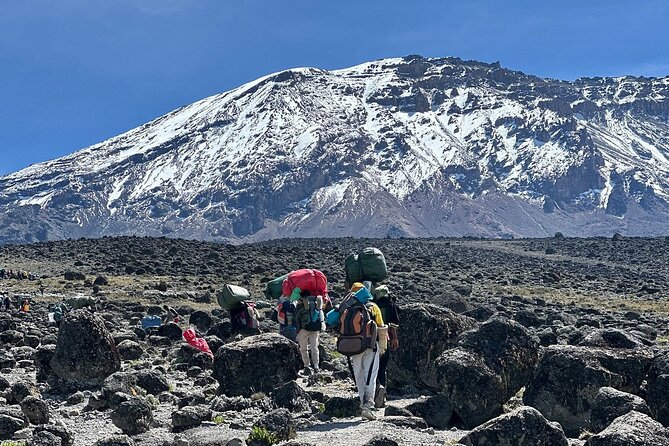
- A scenic seven-day route: Machame crosses rainforest, heath, moorland, semi-desert, alpine desert, and high alpine terrain.
- A demanding camping trek: You sleep in tents rather than huts, and several days involve steep or rocky trails.
- Useful acclimatization design: Day three climbs to Lava Tower before dropping to Barranco Camp, helping you adjust to altitude.
- A technical-feeling highlight: The Barranco Wall is a 257-meter rock face requiring basic scrambling.
- A midnight summit attempt: You start between midnight and 2:00 am, reach Stella Point, then continue to Uhuru Peak.
- A private group with local support: Sebastian Shirima, Henry, and the Kiwoito team are named in connection with the guiding and support.
What the $2,500 price means on Machame
The listed price is $2,500 per person for about seven days. That is a major spend, but Kilimanjaro is not a simple self-guided hike. You are paying for a private organized climb, transfers, camp arrangements, guiding, and a support crew. The available details do not spell out every inclusion, so I would ask for a written list of transport, meals, park fees, camping equipment, porter support, hotel nights, and tips before paying.
The value is strongest if you want a managed climb rather than a do-it-yourself effort. The operator is described as a small local company, and direct contact with people such as Evaline and Charles was praised for quick answers and careful planning. That kind of access matters when you are arranging an expedition from abroad.
The price does not make the route easy. You still need suitable boots, warm layers, rain gear, a headlamp, gaiters, trekking poles, and a pack you can carry comfortably. The route is approximately 62 kilometers from gate to gate, but the real challenge is altitude, uneven ground, cold, and the summit schedule.
Other routes up the mountain from Moshi:
- Kilimanjaro climb by Lemosho Route (7-day)
★ 5.0 · 651 reviews - Kilimanjaro climb, Machame Route (7-day)
★ 5.0 · 262 reviews - Kilimanjaro Climbing Lemosho Route 8 Days.
★ 5.0 · 186 reviews
Day 1: Machame Gate to the 3,000-meter forest camp
After breakfast, you are transferred to Machame Gate. The morning includes registration and preparation before you begin walking through montane forest toward Machame Camp.
The first day covers about 11 kilometers and takes roughly five to seven hours. At 3,000 meters, the altitude is already noticeable, though the forest setting makes this a relatively welcoming introduction. Expect a long uphill walk, damp or muddy ground in places, and a proper shift from road travel to mountain routine.
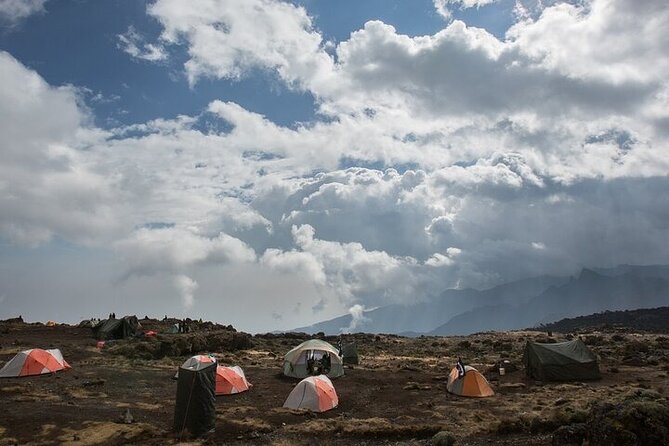
You camp at Machame Camp, where dinner and the night’s accommodation are arranged. Camping is an important part of this route. Unlike the Marangu Route, you do not return to huts at the end of each day, so you should be comfortable with basic camp living and changing clothes in a tent.
I would keep the first day slow. There is no prize for rushing into camp, and the guiding advice on Kilimanjaro is usually reflected in the local phrase pole pole, meaning slowly, slowly. Your best investment on this day is a steady pace and regular drinking.
Day 2: Shira Plateau and the first real altitude gain
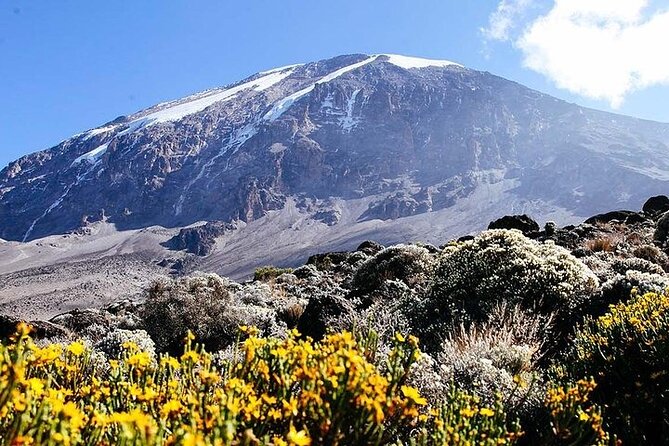
From Machame Camp, the forest gives way to heather and open moorland. The trail crosses a valley and climbs a rocky ridge, with steeper sections as you leave the trees behind.
You gain about 850 meters, moving from 3,000 to 3,850 meters. The day covers 9 kilometers and takes about four to six hours. The terrain feels more exposed than the forest, and the views open across the Shira Plateau.
The route crosses a large river gorge before reaching Shira 2 Camp. This is a useful day for learning how your body reacts to height. You may feel fine, or you may notice a headache, low appetite, or a slower pace. Do not treat an easy-feeling morning as proof that altitude will not affect you later.
The moorland scenery is one of Machame’s strong points. You are no longer simply walking through woodland. The plants become lower, the air feels thinner, and the volcanic setting becomes much more obvious. The afternoon at camp is a good time to eat, rest, and organize your layers for the colder days ahead.
Day 3: Lava Tower, the Shark’s Tooth, and Barranco
Day three is one of the most useful parts of the route. From the Shira Plateau, you climb east toward Lava Tower, also called the Shark’s Tooth, reaching about 4,600 meters before descending to Barranco Camp at roughly 3,960 meters.
The written altitude figures vary slightly, with the day described around 12,500 to 13,000 feet in one section and Lava Tower listed at about 16,000 feet. The important point is the pattern: you climb high, then sleep lower. That makes this a key acclimatization day.
The walking distance is about 10 kilometers, with six to eight hours on the trail. The habitat changes to semi-desert, with rough volcanic ground and sparse plant life. After Lava Tower, you descend toward Barranco Hut or Barranco Camp.
This day can feel strange because you work hard uphill but finish near the same sleeping elevation where you began. That is intentional. The route gives your body time to adjust before the summit push. I would not judge the whole trek by how you feel here. The long ascent, cold, and altitude can make even strong hikers feel slow.
Same base, a different kind of day out:
- Safari Serengeti And Ngorongoro
★ 5.0 · 288 reviews - Climbing Kilimanjaro – Machame Route
★ 5.0 · 170 reviews - Climbing Kilimanjaro through 7 days Machame Route
★ 5.0 · 151 reviews - Kilimanjaro climb, Lemosho Route (8-day)
★ 5.0 · 148 reviews
Day 4: Scrambling over the 257-meter Barranco Wall
The Barranco Wall is the day’s main event. This 257-meter rock face requires basic scrambling skills, but it is not described as a technical climbing route. You use your hands in places, take short steps, and follow the guide’s line up the wall.
The trail then drops and rises through the Karanga Valley before reaching Karanga Camp at 3,960 meters. The day covers about 7 kilometers and takes around seven hours, despite the relatively short distance. Steep ground and repeated inclines and declines explain the slow pace.
This is where having a calm, experienced guide matters. Sebastian Shirima is repeatedly singled out by name, along with Henry and other members of the support team. The praise centers on encouragement, motivation, and professional handling of the climb, which are especially valuable when the trail feels awkward rather than simply steep.
You should keep your hands free for the Barranco Wall. Trekking poles can help on the approach and after the scramble, but you may need to stow them briefly while using both hands. Do not hurry this section. The goal is controlled movement, not speed.
Day 5: Karanga to Barafu Base Camp
Day five is short by Kilimanjaro standards. You walk about 6 kilometers from Karanga Camp to Barafu Camp, reaching 4,680 meters in roughly three hours.
The route joins the Mweka trail and crosses alpine desert. There is not much to see in the way of vegetation now, but the bare volcanic setting makes the summit feel close. Barafu is the launch point for the night climb, so the main purpose of this day is to arrive, rest, eat, and prepare.
The advice to use an easy hiking pace is sound. You should not spend your best energy on this short approach. Check your headlamp, batteries, warm clothes, water, gloves, and summit snacks. Lay out the clothing you will need before trying to sleep.
Sleeping at Barafu can be difficult because of altitude, cold, nerves, or the short night ahead. That does not mean you are failing. The schedule is designed around a very early start, not a long night of normal sleep.
Day 6: The midnight push to Uhuru Peak
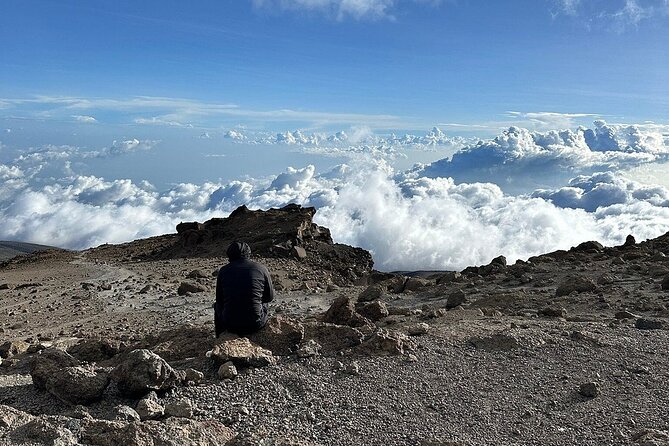
The summit day begins between midnight and 2:00 am. You climb between the Rebmann and Ratzel Glaciers toward Stella Point at about 18,600 feet. This is the hardest day by far, both physically and mentally.
The trail is steep, dark, cold, and slow. At Stella Point, you may rest briefly and, if the weather cooperates, watch sunrise. From there, the route continues for about another hour toward Uhuru Peak, the highest point on Kilimanjaro and in Africa. Faster hikers may reach the summit in time for sunrise, but timing depends on pace, conditions, and how your body handles the altitude.
Snow may appear near the upper section. Loose gravel makes the descent particularly awkward, so gaiters are useful and trekking poles can help. The descent goes back to Barafu for lunch, then continues to Mweka Hut or Mweka Camp.
The full day is extremely long. The supplied schedule leaves the hiking time unfinished, so you should not assume a neat or short summit day. Plan mentally for a long period on your feet, with a night ascent followed by a major descent.
Your guide’s job is not just to point out the route. You need pacing, encouragement, and careful decisions if someone is struggling. The personal support associated with Sebastian, Henry, and the wider team is one of the strongest reasons to consider this operator.
Day 7: Mweka descent and the return to Arusha
After breakfast, you descend from Mweka Camp to Mweka Park Gate. The route covers about 10 kilometers and takes three to four hours, dropping from roughly 10,000 feet to 5,400 feet.
The environment changes back to rainforest. Lower down, the trail can be wet and muddy. Gaiters and poles are useful here too, and you should keep rain gear and warmer clothing within reach even if you are wearing shorts and a T-shirt.
At the gate, you receive your summit certificates. The stated plan includes another hour of walking to Mweka Village, where a vehicle meets you for the drive back to your hotel in Arusha. Since the trip begins with a transfer from the Moshi area but the return mentions Arusha, confirm your exact hotel transfer before departure.
The final day is not just a formality. Tired legs, wet ground, and downhill walking can be surprisingly hard after the summit. Take small steps, protect your knees, and do not treat the certificate stop as the end until you are safely at the vehicle.
The guides and the feel of a private climb
This is a private activity, so only your own group participates. That is useful if your group has its own pace, needs extra encouragement, or wants more direct communication with the guide.
Sebastian Shirima is the most consistently named guide, with Henry also associated with the guiding team. Charles and Evaline are connected with the local planning and communication side, while the wider Kiwoito crew includes guides and porters who are praised for motivation, reliability, and practical help.
The tone of the feedback is unusually personal. People describe singing, dancing, encouragement, and a strong sense of teamwork. That does not remove the hard parts of the trek, but it can make a major difference during the Barranco Wall and the pre-dawn summit climb.
I would still ask practical questions before booking. Request the guide-to-climber ratio, porter arrangements, sleeping setup, meal plan, emergency procedures, and exact airport or hotel transfers. Friendly communication is valuable, but clear written details are just as important.
Who should choose Machame over Marangu?
Choose Machame if you want varied scenery, are comfortable camping, and have a moderate to strong level of fitness. Some hiking experience is recommended because the route includes steep trails, long days, rocky ridges, and the Barranco Wall.
Machame is not the best choice if you want gentle gradients or hut accommodation. The route is tougher than the Marangu option described in the tour information, but it also gives you more changes in habitat and a stronger sense of moving through the mountain’s different zones.
You do not need to be a technical climber, but you do need to accept discomfort. Cold, early starts, altitude, wet forest trails, and a very long summit day are part of the deal.
Practical packing advice for this exact route
Bring layers rather than one bulky jacket. Conditions shift from warm, wet forest to cold alpine ground, and the summit start happens in darkness.
Useful items include:
- Sturdy hiking boots with good grip
- Warm gloves, a hat, and several insulating layers
- Waterproof rain gear
- Gaiters for loose gravel, mud, and possible snow
- Trekking poles
- A headlamp with spare batteries
- Comfortable clothing for tent nights
- Snacks and water containers
- A small day pack for personal essentials
The provided information confirms that service animals are allowed and that the starting point is near public transportation, but this is still a remote mountain trek. Ask the operator about any health restrictions, luggage storage, equipment rental, and medical support before you arrive.
Should you book the seven-day Machame trek?
I would book this trip if you want a private, scenery-heavy Kilimanjaro climb and you are ready for a real physical challenge. The seven-day plan has a sensible high-and-low acclimatization pattern, a short rest-focused approach to Barafu, and a full day for the summit and descent.
I would hesitate if you dislike tents, struggle with steep trails, or want a relaxed walking holiday. The $2,500 price can be fair for a properly supported private climb, but only after you confirm exactly what it covers.
The strongest reason to consider Kiwoito Africa Safaris is the human support linked with Sebastian Shirima, Henry, and the wider team. Ask detailed questions, prepare seriously, and choose this route for the mountain experience, not just the certificate at the top.
FAQ
How long is the Kilimanjaro Machame trek?
The trek lasts approximately seven days. The route is about 62 kilometers, or 37 miles, from gate to gate.
Where does the trek start?
The trip begins with a transfer to Machame Gate after breakfast. The listed meeting time is 7:00 am.
Where does the trek finish?
The descent finishes at Mweka Park Gate, followed by about one more hour of walking to Mweka Village. A vehicle then drives you back to your hotel in Arusha.
How much does the trek cost?
The listed price is $2,500 per person.
Do I sleep in huts or tents?
You sleep in tents on the Machame Route. The tour differs from the Marangu Route, which uses hut accommodation.
Is this a private tour?
Yes. Only your group participates in this private activity.
How fit do I need to be?
A moderate level of physical fitness is required, and the route is designed for people who are physically fit with some hiking experience.
What happens on summit day?
You start between midnight and 2:00 am, climb to Stella Point, continue to Uhuru Peak, descend to Barafu for lunch, and then continue to Mweka Camp.
Is the Barranco Wall a technical climb?
The Barranco Wall is a 257-meter rock face requiring basic scrambling skills. The provided information does not describe it as a technical climbing route.
Can I cancel for a full refund?
Yes, if you cancel at least 24 hours before the experience start time. Cancellations within 24 hours are not refunded, and changes within that period are not accepted.
More Hiking & Trekking in Moshi
- Private Kilimanjaro Hike 7 Day Lemosho Route
★ 5.0 · 60 reviews - Best Kilimanjaro hiking day trip tour with Kilinge Adventures
★ 4.5 · 54 reviews - #1. Best Kilimanjaro Day hike Tour-Machame Route-ISMANI
★ 4.2 · 47 reviews - Best Kilimanjaro Adventure 7 days Machame route Trekking
★ 5.0 · 42 reviews
Just added in Moshi
- Wildlife Extravaganza: Manyara, Tarangire & Ngorongoro in 3 Days★ 5.0 · 3 reviews
- West Kilimanjaro cycling Adventures★ 4.5 · 8 reviews
- machame route★ 5.0 · 16 reviews
- Kilimanjaro Climb • Machame Route ~ 10 Day★ 5.0 · 6 reviews
- Kilimanjaro Climbing Umbwe Route★ 5.0 · 3 reviews
- Mt Kilimanjaro 6 days Marangu route hike★ 5.0 · 3 reviews
- 3 Days Private E-Bike Tour in West Kilimanjaro★ 5.0 · 3 reviews
- Private Cycle to Kilimanjaro Bike Park Safari★ 5.0 · 6 reviews
Kilimanjaro Treks, compared.



8-Day Small-group Lemosho Kilimanjaro Summit Trekking
Read our review →

5 Days Best of Tanzania Luxury Safari Northern Circuit
Read our review →

Climbing Kilimanjaro through 7 days Machame Route
Read our review →
7-Day Machame Kilimanjaro Summit Tour from Arusha
Read our review →Browse the lists this tour appears in