
Reviewed · KILIMANJARO TREKS
10 Days Machame Route Kilimanjaro Climb
Kilimanjaro’s Machame Route gives you the mountain in changing chapters: thick rainforest, open moorland, high desert, glaciers, and a final push across dark volcanic slopes to Uhuru Peak. The route is harder than Marangu, but its scenery is far more varied, and the extra acclimatization days make the 10-day schedule a sensible choice.
I like the slow build toward the summit and the short acclimatization day after the Barranco Wall. I also like the practical safety setup, including oximeters, emergency oxygen, a hyperbaric chamber, and Flying Doctors Insurance. The catch is simple: this is a serious high-altitude trek, not a scenic stroll. Long uphill days, cold nights, basic camping, and a midnight summit start will test you.
Key points to know before booking
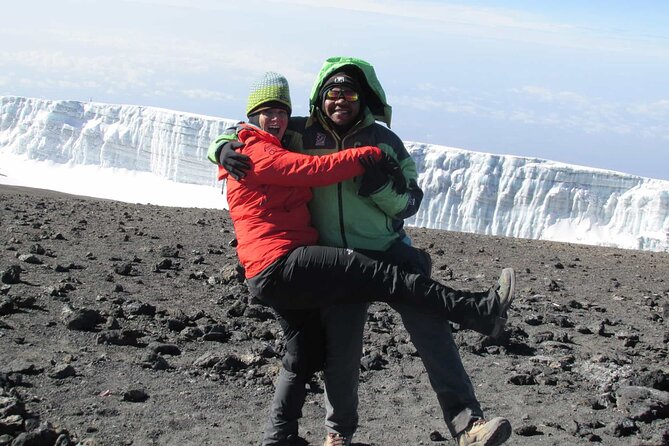
- The route crosses five distinct climate zones, from tropical forest to the cold, dry summit zone.
- The 10-day schedule allows useful acclimatization, including a night at about 4,250 meters before sleeping lower at Barranco.
- Barranco Wall is a scramble, not a technical climb, but you still need steady footing and a head for steep ground.
- Summit day lasts roughly 7 to 8 hours upward, followed by a long descent toward the Mweka side.
- The price includes the major mountain costs, including park fees, camping, meals, guides, porters, and emergency equipment.
- The tour is private, so only your own group takes part, with pickup from Kilimanjaro International Airport.
Why the 10-day Machame Route is worth considering
At $3,025 per person, this is not a cheap holiday. Kilimanjaro permits, park fees, food, camping equipment, guide wages, porter wages, airport transfers, and mountain safety support add up quickly. The price includes these core costs, which makes it easier to compare this trip with other Kilimanjaro packages.
I see the 10-day length as one of the strongest points. The Machame Route can be completed more quickly, but extra time at altitude generally gives you a better chance to adjust to the thin air. This itinerary does not rush from the gate to the summit. It gives you an easier day on the Shira Plateau, a high point near 4,250 meters before descending to Barranco, and another short hiking day after the Barranco Wall.
The route is recommended for people with moderate fitness, but I would treat that phrase seriously. You should be comfortable walking for several hours, climbing steep paths, carrying a daypack, and continuing when the air feels thin. Previous hiking or backpacking experience is useful, especially because the Machame trail is steeper and rougher than the Marangu Route.
You do not need technical climbing skills. The Barranco Wall is climbed on foot, and the trip is guided. Still, this is an endurance hike at altitude. Your success will depend as much on pacing and patience as on strength.
Other routes up the mountain from Moshi:
- Kilimanjaro climb by Lemosho Route (7-day)
★ 5.0 · 651 reviews - Kilimanjaro climb, Machame Route (7-day)
★ 5.0 · 262 reviews - Kilimanjaro Climbing Lemosho Route 8 Days.
★ 5.0 · 186 reviews
Moshi arrival and the pre-climb briefing
Your trip begins with pickup at Kilimanjaro International Airport. You are taken to a Moshi hotel, either Bristol Cottages or Parkview Inn, where you have time to settle in.
The second day is deliberately light. You can rest during the morning, then meet the team after lunch for an orientation and equipment check. That check matters. It gives you a chance to identify missing warm layers, unsuitable shoes, or a sleeping setup that may not work once temperatures drop.
A town tour follows the briefing. This is a useful buffer before the mountain, since you are not expected to start hiking immediately after a long international flight. Dinner and the night are again at Bristol Cottages or Parkview Inn.
The listed start time is 8:00 a.m., but the actual mountain departure begins after breakfast on the third day, around 9:30 a.m. Confirm the precise pickup time with the operator, especially if your flight arrives late or you are arranging your own hotel.
Day 3: rainforest from Machame Gate
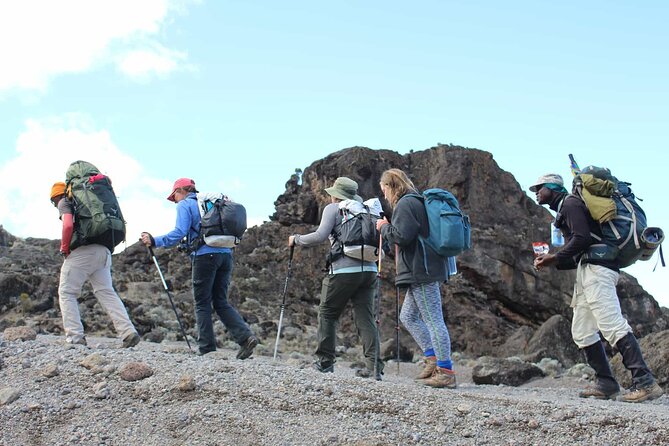
After breakfast, you drive to Machame Gate, where you meet the mountain crew and complete the park formalities. From there, the trail enters thick tropical forest.
The first mountain day takes about five to seven hours and ends at Machame Camp, around 3,000 meters. The forest is the most enclosed part of the route, with damp ground, dense vegetation, and a marked change from the roads around Moshi.
This is not the place to race. The first day can feel easy because the altitude is still manageable, but a fast start wastes energy you will need later. Walk slowly, drink the provided boiled or filtered water, and keep rain protection close at hand.
You sleep in a mountain camp and receive breakfast, lunch, and dinner on the hiking day. Camping is a basic part of the experience, so you should expect less comfort than at the Moshi hotel and prepare for cool, possibly wet conditions in the forest.
Day 4: Shira Plateau and the first big views
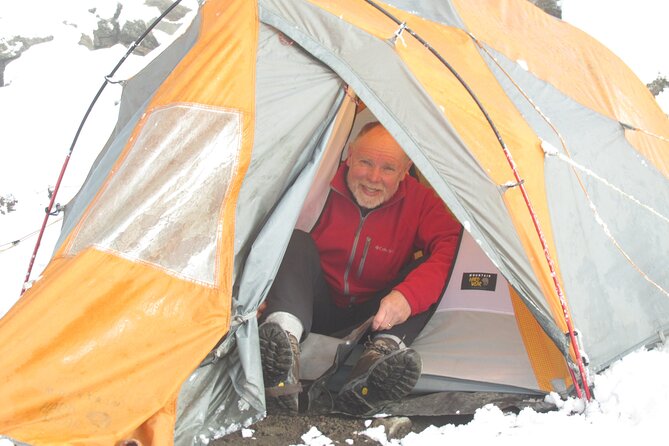
The route leaves much of the forest behind as it climbs through moorland toward the Shira Plateau. You cross streams and a river gorge during a shorter four to five-hour day.
This is one of the most rewarding transitions on the route. The trees thin out, the air feels cooler, and the views open toward Kilimanjaro and Mount Meru. The Shira Plateau gives you the first broad sense of the mountain’s scale.
The itinerary calls this an easy-paced acclimatization day, and that is good news. Do not mistake a shorter day for a free pass. You are already sleeping high, and your body is beginning the adjustment that will shape the rest of the climb.
The plateau can feel exposed compared with the forest. Sun, wind, and cold may all be stronger, so sunscreen, warm layers, and a hat become more important.
Same base, a different kind of day out:
- Safari Serengeti And Ngorongoro
★ 5.0 · 288 reviews - Climbing Kilimanjaro – Machame Route
★ 5.0 · 170 reviews - Climbing Kilimanjaro through 7 days Machame Route
★ 5.0 · 151 reviews - Kilimanjaro climb, Lemosho Route (8-day)
★ 5.0 · 148 reviews
Day 5: high moorland, 4,250 meters, and Barranco
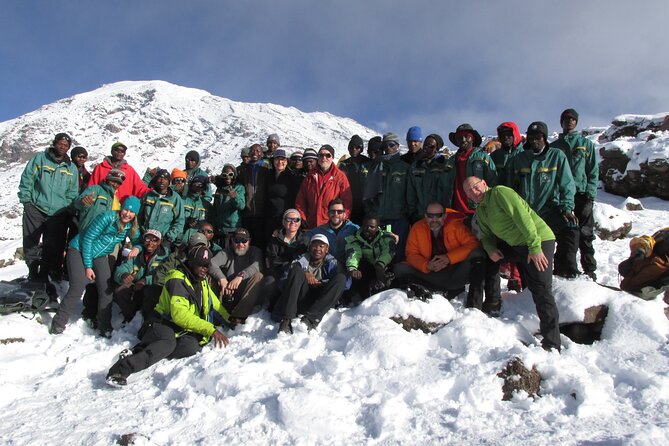
Day five is an important acclimatization day. You climb toward about 4,250 meters, entering the alpine zone where vegetation becomes sparse and only tough grasses and lichens remain.
The route reaches a high point before descending into the Barranco gorge. That up-and-down pattern can be tiring, but it has a clear purpose: you gain altitude during the day and sleep lower at Barranco. This is one of the better features of the itinerary for anyone concerned about altitude adjustment.
You will see the Western Breach of Kibo from this section, weather permitting. The scenery feels more severe here, with open ground, little shade, and a greater sense of exposure.
The hiking time is listed as five to six hours, though the schedule also notes about four hours for the stop. Expect the day to vary with group pace, rest breaks, and trail conditions. The important point is that it is not a flat walk. Your legs will work hard even if the distance looks modest.
Day 6: the Barranco Wall and a short Karanga day
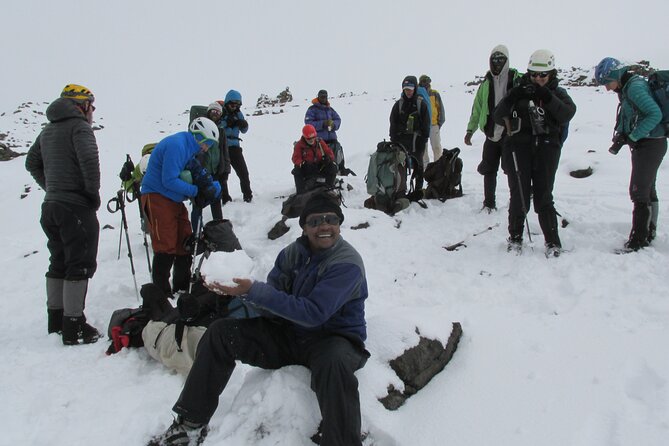
The morning begins with the Barranco Wall. It is not a technical climb, but you will use your hands in places and move carefully over steep, uneven ground. Guides are there to set the pace and help you choose the safest line.
This section often becomes a memorable part of the climb because it feels more dramatic than the previous trail. You gain height along the wall, then continue on the Kibo South Circuit beneath the southern glaciers. Clear weather may reveal impressive views of Kibo’s ice fields.
The day is intentionally short, around three to four hours, with camp set beyond the Karanga Valley on a ridge. Arriving near lunchtime gives you time to eat, rest, drink, and prepare for the higher camps ahead.
I like this design. After a physical morning, you have space to recover instead of stacking another long march onto the Barranco Wall. You should use the afternoon wisely: organize your summit clothing, check your headlamp, refill water, and rest even if you do not feel tired yet.
Day 7: Barafu Camp and the summit wait
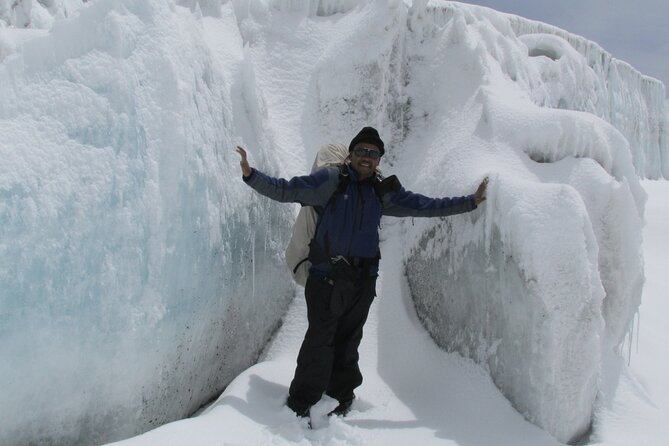
The trail climbs steadily toward Barafu Camp, whose name means ice in Kiswahili. The vegetation becomes thinner and the ground more barren as you enter the high alpine zone.
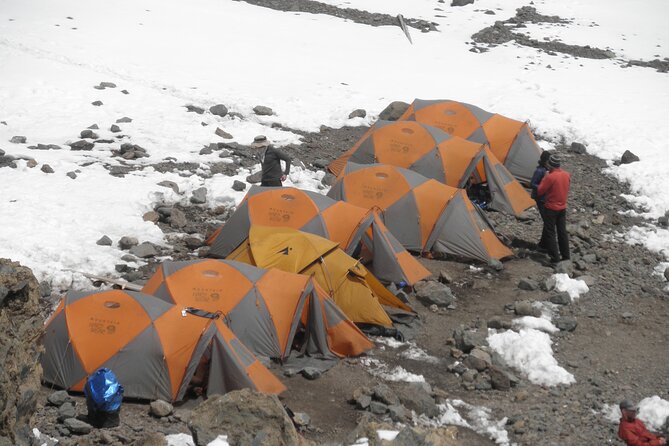
The hike takes about four to five hours, with arrival expected around lunchtime. Barafu sits on an exposed ridge and serves as the launch point for the summit attempt. This is not a camp where you spend a relaxed evening around a fire. The cold, wind, altitude, and early wake-up call make it a place for eating, checking gear, and sleeping if you can.
The midnight start is one of the hardest parts of the trip. You need warm layers, gloves, a hat, headlamp, water, and snacks ready before bed. Ask during the equipment check how much personal gear you carry and what the porters transport, since that affects both comfort and packing.
Day 8: the midnight summit push
Summit day begins around midnight. From Barafu, the trail climbs steeply toward Stella Point, passing near Rebmann Glacier at about 4,870 meters and continuing between the Rebmann and Ratzel glaciers.
The climb to the crater rim takes roughly six to seven hours. From near Stella Point, you follow the rim for about another hour toward Uhuru Peak, at 5,895 meters, or 19,340 feet.
The timing is designed to get you to the summit in the morning, before clouds commonly build. From Uhuru Peak, you may have wide views across Africa if the weather is clear. The summit moment is brief, cold, and physically demanding, so do not judge the experience by how long you remain at the top.
The listed ascent takes seven to eight hours. You then begin a long descent toward the Mweka side of the mountain. This is where tired knees can become a problem. Trekking poles are strongly worth bringing, especially for the steep sections and loose ground.
The summit day is the main drawback of the itinerary. Even with good preparation, altitude can bring headache, nausea, weakness, or breathlessness. The guides and safety equipment add reassurance, but no equipment removes the physical risk of high altitude. Follow instructions, report symptoms early, and understand that turning back is sometimes the correct decision.
Day 9: descent to Mweka Gate and the hot shower
The final hiking day takes about three to four hours down to Mweka Gate, losing roughly 3,500 feet. The trail can be steep and slippery when wet, so poles remain useful even though you are heading downhill.
At the gate, you say goodbye to the mountain crew and have a picnic lunch before returning to your Moshi hotel. After several nights in tents, a hot shower at Bristol Cottages or Parkview Inn will feel like a major event.
This return to town is more than a comfort stop. It gives you time to recover before a flight, safari, or Zanzibar connection. If you have a tight onward schedule, check the timing carefully. The trip ends back at the meeting point in Moshi, and airport transfer is available the next day.
Food, water, safety, and the mountain crew
The package includes seven breakfasts, seven lunches, and six dinners during the climb and related hotel days. Alcohol and soft drinks are not included, and personal spending money is your responsibility.
Boiled or filtered water is provided on the mountain. That removes one major packing concern, though you still need a bottle or hydration system to carry water during the day.
The safety provisions are stronger than the basic essentials. The package lists emergency oxygen, oximeters, a hyperbaric chamber, and Flying Doctors Insurance. These tools are useful, but they do not replace careful pacing or medical advice. You should also carry your own travel insurance, which is not included.
The guide, chef, and porters’ salaries are included, along with park fees and camping accommodation. Tips are not included. Bring enough local currency or confirm the preferred tipping method before the climb, since tipping is an important part of the mountain budget.
The operator has been associated with guides named Freddie Chikima, Hans, and Wilfred in its Kilimanjaro work. When booking, ask who will lead your specific departure and how large your private group will be. The tour is private, but the number of people in your own group is not stated.
Who should book this climb?
I would choose this trip if you want the scenic Machame Route and prefer a slower 10-day schedule over a rushed ascent. It suits hikers with moderate fitness, some experience on steep trails, and enough patience to walk slowly for the sake of altitude adjustment.
It is also a good fit if you want airport pickup, a Moshi orientation, mountain meals, a private group, and a clear package that includes major park and crew costs. The emergency support is a meaningful inclusion for anyone comparing operators.
I would hesitate if you dislike camping, struggle with cold, need a luxury lodge each night, or have little tolerance for long uphill walks. The Machame Route is more demanding than Marangu, and summit night is a genuine physical challenge.
Free cancellation is available when you cancel at least 24 hours before the local start time. International flights, visas, alcohol, soft drinks, personal purchases, tips, and travel insurance remain outside the $3,025 price.
Should you book the Real Life Adventure Travel climb?
Book it if the route scenery matters to you, you want ten days for acclimatization, and you are ready for a hard but carefully paced mountain trip. The combination of the Shira Plateau, Barranco Wall, southern glacier views, and Mweka descent gives you a varied Kilimanjaro experience rather than a simple up-and-down walk.
Before paying, confirm the exact hotel, group size, guide names, tipping guidance, equipment list, summit-day plan, and the details of the truncated descent schedule after Uhuru Peak. If those answers are clear and your fitness matches the demands, this is a strong option for an adventurous first Kilimanjaro climb.
FAQ
How long does the Kilimanjaro climb last?
The full experience lasts about 10 days, including airport pickup, two Moshi hotel days, the mountain climb, descent, and return to Moshi.
Where does the tour start and finish?
It starts in Moshi, Tanzania, with pickup offered from Kilimanjaro International Airport. The activity ends back at the Moshi meeting point.
What route is used to climb Kilimanjaro?
The ascent uses the Machame Route. The descent uses the Mweka Route.
Is the Barranco Wall a technical climb?
No. The Barranco Wall is described as a non-technical climb, though the trail is steep and you should move carefully.
What is included in the price?
The price includes park fees, mountain camping, guide, chef and porter salaries, boiled or filtered water, emergency oxygen, oximeters, a hyperbaric chamber, Flying Doctors Insurance, and specified breakfasts, lunches, and dinners.
Are flights and travel insurance included?
No. International or local flights, visa fees, tips, personal spending, and travel insurance are not included. Alcohol and soft drinks are also excluded.
How fit do I need to be?
You should have a moderate level of physical fitness. The Machame Route is steep and challenging, with hiking days lasting up to seven or eight hours and a midnight summit attempt.
Just added in Moshi
- Wildlife Extravaganza: Manyara, Tarangire & Ngorongoro in 3 Days★ 5.0 · 3 reviews
- West Kilimanjaro cycling Adventures★ 4.5 · 8 reviews
- machame route★ 5.0 · 16 reviews
- Kilimanjaro Climb • Machame Route ~ 10 Day★ 5.0 · 6 reviews
- Kilimanjaro Climbing Umbwe Route★ 5.0 · 3 reviews
- Mt Kilimanjaro 6 days Marangu route hike★ 5.0 · 3 reviews
- 3 Days Private E-Bike Tour in West Kilimanjaro★ 5.0 · 3 reviews
- Private Cycle to Kilimanjaro Bike Park Safari★ 5.0 · 6 reviews
Kilimanjaro Treks, compared.



8-Day Small-group Lemosho Kilimanjaro Summit Trekking
Read our review →

5 Days Best of Tanzania Luxury Safari Northern Circuit
Read our review →

Climbing Kilimanjaro through 7 days Machame Route
Read our review →
7-Day Machame Kilimanjaro Summit Tour from Arusha
Read our review →Browse the lists this tour appears in