
Reviewed · KILIMANJARO TREKS
The Best & Unique Kilimanjaro Hiking tour 7 days Machame route
The most useful feature of this 7-day Machame Route is the way it breaks up the approach to the summit. Instead of making the hard push from Barranco toward Barafu in one long day, you spend a night at Karanga first. That gives you a shorter walk before summit night, when energy and sleep matter most.
I like two things here. First, meals, a tent, mattress, guide, and Moshi hotel transfers are included, so you do not need to organize the basic mountain operation yourself. Second, guides Maneno and Hassan are noted for adjusting the walking pace, a practical advantage when one person in the group moves faster or slower than another.
The main caution is the price structure. The tour costs $1,200 per person, but park entry, camping, and rescue fees are not included. You also pay separately for hotels, airport transfers, and tips, so check the full trip budget before you book.
Key points to know before climbing
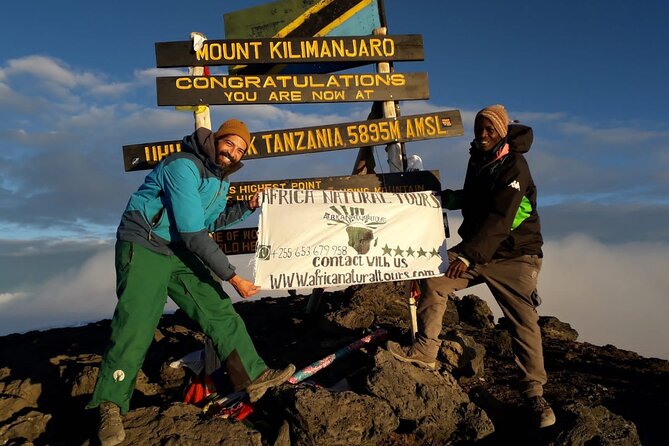
- The route reaches 19,341 feet at Uhuru Peak, with the summit attempt beginning from Barafu Camp.
- Karanga Camp breaks up the climb to Barafu, leaving you with a shorter pre-summit hiking day.
- Lava Tower provides a useful high-altitude day, followed by a descent to Barranco Camp.
- Meals, a tent, mattress, guide, and Moshi transfers are included, but park fees are extra.
- The climb uses five nights of mountain camps, with a final night at Mweka Camp before the gate.
- The group can include up to 50 people, although the supplied experience also emphasizes private transportation.
Why the seven-day Machame plan matters
Kilimanjaro is not a technical rock climb on this route, but it is a serious high-altitude trek. The challenge comes from long walking days, cold camps, limited sleep, and the thin air above 12,000 feet.
The seven-day schedule gives you more time than a shorter itinerary to gain height gradually. That does not make the mountain easy, but it gives your body more time to adjust and gives the guides more room to manage the pace.
The key design choice is the split between Barranco, Karanga, and Barafu. On Day 4, you walk from Barranco to Karanga. On Day 5, you continue from Karanga to Barafu. Those are still demanding days, but neither is as long as combining both sections into one push.
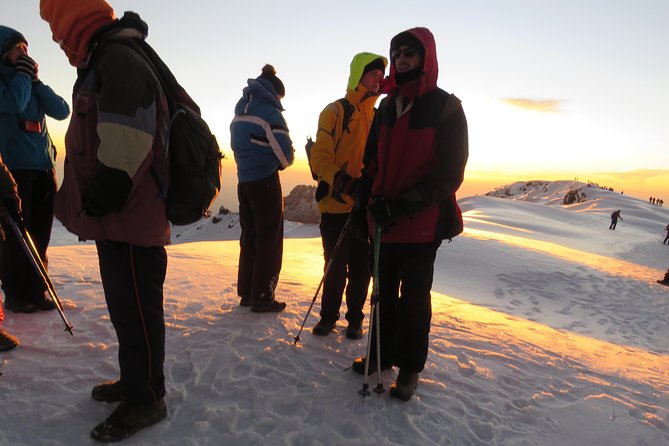
That matters because summit day starts after a short night at high altitude. You need to leave Barafu around midnight, according to the stated summit timing, with the hardest ascent still ahead. A shorter approach to Barafu can leave you with more strength for the final climb.
You should still view this as a demanding physical undertaking. The required fitness level is moderate, but the elevation makes ordinary walking feel harder. If you are comparing routes, do not choose this one simply because the daily distances look manageable on paper.
Other routes up the mountain from Moshi:
- Kilimanjaro climb by Lemosho Route (7-day)
★ 5.0 · 651 reviews - Kilimanjaro climb, Machame Route (7-day)
★ 5.0 · 262 reviews - Kilimanjaro Climbing Lemosho Route 8 Days.
★ 5.0 · 186 reviews
Day 1: Machame Gate to Machame Camp
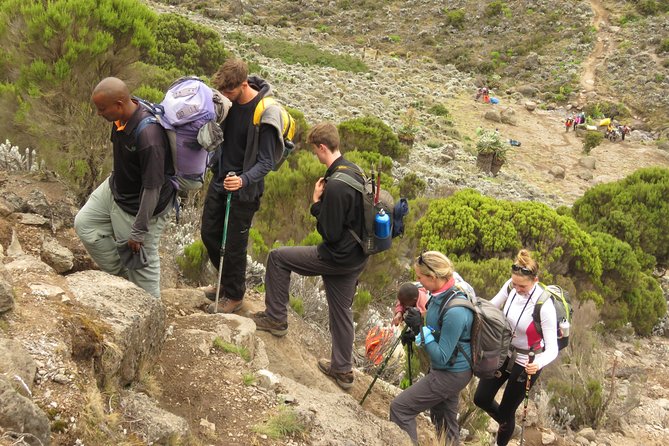
The first day takes you from Machame Gate at 5,380 feet to Machame Camp at 9,350 feet. The distance is 11 kilometers, and the expected walking time is five to seven hours.
This section passes through rainforest. It is a full opening day, but the gain in height is steady rather than extreme. The forest setting also gives the climb a clear sense of progression: you begin among dense vegetation and finish at a much higher camp where the surroundings start to change.
Your pickup from a hotel in Moshi town to Machame Gate is included. That removes one early practical task, though airport pickup is not included, and accommodation before or after the climb must also be arranged separately.
At the gate, you should expect the start of a formal mountain trip rather than a casual day walk. Your guide leads the route, and the crew carries and manages the camping equipment supplied for the trip. You will need to carry your own personal day-to-day items.
The first night is at Machame Camp. The five to seven-hour estimate is useful, but you should not treat it as a fixed schedule. The guides may set a pace that feels slow, especially if you are fit, because conserving energy early is part of reaching the summit later.
Day 2: Machame Camp to Shira 2 Camp
Day 2 covers only five kilometers, but the climb continues from 9,350 feet to 12,500 feet. The walk takes about four to six hours and moves into heath habitat.
This is a good example of why distance alone does not tell you how hard a day will feel. Five kilometers at rising altitude can require more care than a longer walk at low elevation. You may find the shorter distance helpful, but the gain of more than 3,000 feet still deserves respect.
Shira 2 Camp is important because it puts you at a much higher sleeping elevation early in the trip. The heath zone also gives you a visible change from the rainforest of Day 1.
Breakfast, lunch, and dinner are included during the trek. That is a real convenience on a camping route, especially when you are adjusting to the cold, the effort, and the height. You will not need to arrange meals at each camp, but you should confirm any dietary needs directly before departure because no special meal details are provided.
Day 3: Lava Tower and the descent to Barranco
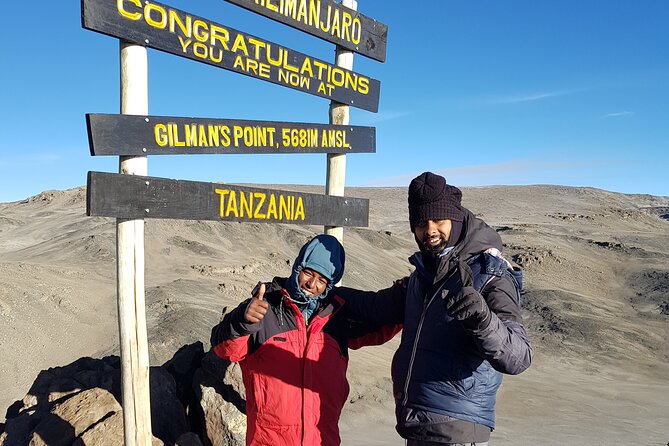
Day 3 is the route’s big acclimatization day. You walk from Shira 2 Camp at 12,500 feet to Lava Tower at 15,190 feet, covering seven kilometers in about four to five hours. The habitat is alpine desert.
Then the route drops three kilometers to Barranco Camp at 13,044 feet, taking another two to three hours. The total day is therefore ten kilometers and roughly six to eight hours of walking.
The climb to Lava Tower is the important part. You spend time at a higher elevation before descending to sleep lower at Barranco. That up-and-down pattern can feel tiring, but it gives the itinerary a useful high point before the next night.
Barranco Camp is lower than Lava Tower, but it is still more than 13,000 feet above sea level. Do not assume the descent makes the day easy. You have already spent several hours climbing, and the later section still requires careful footing and steady effort.
This is also one of the days when a good guide matters. Maneno and Hassan are identified as the guides for the experience, and their ability to adjust the pace is particularly useful on a day with a high point followed by a descent. You should expect the walking speed to be set around the group rather than around the fastest person.
Same base, a different kind of day out:
- Safari Serengeti And Ngorongoro
★ 5.0 · 288 reviews - Climbing Kilimanjaro – Machame Route
★ 5.0 · 170 reviews - Climbing Kilimanjaro through 7 days Machame Route
★ 5.0 · 151 reviews - Kilimanjaro climb, Lemosho Route (8-day)
★ 5.0 · 148 reviews
Day 4: Barranco Camp to Karanga Camp
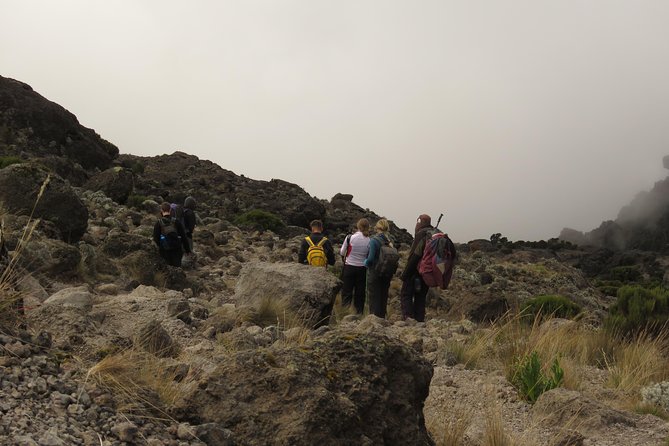
Day 4 covers five kilometers from Barranco Camp to Karanga Camp. The route rises only slightly, from 13,044 to 13,106 feet, but the stated walking time is four to five hours.
The modest elevation change does not mean this is a throwaway day. At this height, the route can still feel slow, and the terrain requires attention. The value of this day is where it places you in the overall plan: Karanga becomes a staging camp before the final move to Barafu.
This is the first major reason I prefer the seven-day version over a compressed schedule. You are not trying to force the entire Barranco to Barafu section into one exhausting day. Instead, you get a shorter transition that lets you preserve some energy for the summit.
You should use this day to keep your routine simple. Eat the included meals, drink what you need, protect your sleeping gear, and avoid spending all your energy rushing ahead. The summit is still not close in practical terms, even though the route is moving toward it.
Day 5: Karanga Camp to Barafu Camp
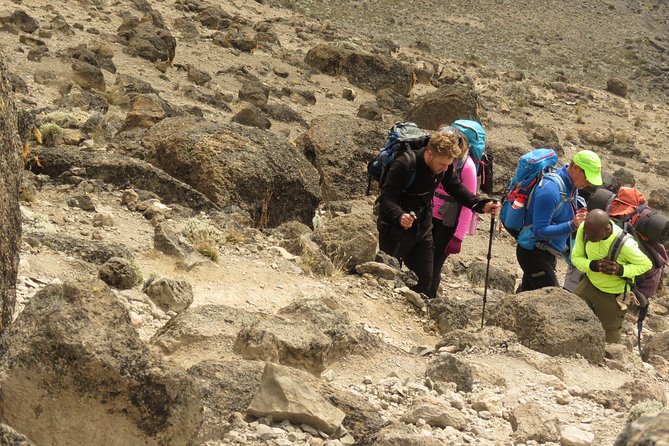
The walk from Karanga to Barafu covers four kilometers and climbs from 13,106 to 15,331 feet. It takes about four to five hours and passes through alpine desert.
This is a short distance with a substantial elevation gain. Barafu is the high camp for the summit attempt, and reaching it is not the end of the hard work. It is the place where you rest, eat, and prepare for the midnight climb to Uhuru Peak.
The timing makes this day unusual. You may arrive after several hours of walking, but the real test comes later. Since the final ascent begins at night, your time at Barafu is more about recovering than sightseeing.
This is where the split itinerary earns its keep. Karanga to Barafu is still steep and high, but it is shorter than a combined Barranco to Barafu day. You cannot count on a full night of sleep, so having a less punishing approach can be a meaningful advantage.
The camping arrangement includes a tent and mattress. It does not include hotel accommodation in Moshi, and the supplied details do not specify additional comfort features at Barafu. You should prepare mentally for a basic mountain camp and a cold, interrupted rest period.
Day 6: Barafu to Uhuru Peak and down to Mweka
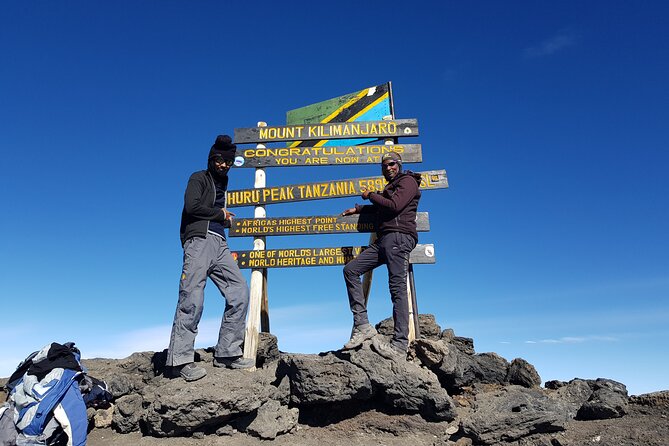
Day 6 is the hardest and longest day. From Barafu Camp at 15,331 feet, you climb five kilometers to Uhuru Peak at 19,341 feet. The ascent takes about seven to eight hours and enters the Arctic habitat zone.
After reaching the summit, you descend 12 kilometers to Mweka Camp at 10,065 feet. That descent takes another four to six hours and returns you to rainforest habitat.
The summit section is demanding for several reasons at once: high altitude, darkness, cold, little sleep, and a steep gain of more than 4,000 feet. The walking time is only an estimate, and the guide’s pace will matter. The experience information specifically notes that Maneno and Hassan can adapt the pace, which is useful when the group has different walking speeds.
Uhuru Peak is the highest point on Mount Kilimanjaro, and at 19,341 feet it is the defining goal of the trip. The reward is not only reaching the summit marker. You also get the satisfaction of seeing the route’s major zones unfold beneath you, from rainforest to alpine desert and finally the cold upper slopes.
The descent to Mweka Camp is no small afterthought. Twelve kilometers after the summit makes this a very long day, even though you lose height quickly. Your knees and feet may be more troubled by the descent than by the climb. Save enough water, food, and attention for the trip down.
Arriving at Mweka Camp brings the biggest relief of the trek. You are still camping, but you have completed the summit attempt and dropped nearly 9,300 feet from Uhuru Peak.
Day 7: Mweka Camp to Mweka Gate
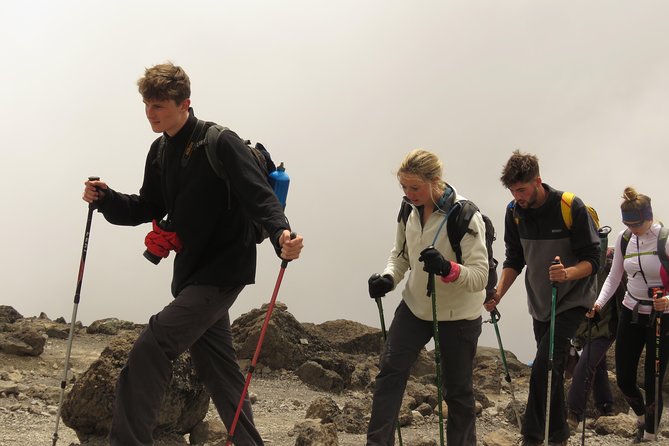
The final day covers ten kilometers from Mweka Camp at 10,065 feet to Mweka Gate at 5,380 feet. The walk takes three to four hours and returns through rainforest.
This is a straightforward finish compared with summit day, but tired legs can make a familiar trail feel long. The descent gives you time to look back on the height and terrain changes of the week without needing to push for another major objective.
At Mweka Gate, the included transport takes you back to your Moshi hotel. The return transfer is for a hotel in Moshi town. Drop-off at Kilimanjaro International Airport is not included, so leave extra time and arrange that separately if you are flying out.
What the $1,200 price really covers
At $1,200 per person, the price pays for the guided mountain operation and several useful basics. You receive breakfast, lunch, and dinner during the trek, an English-speaking professional guide, camping equipment including a tent and mattress, and pickup and drop-off between your Moshi hotel and Machame Gate.
The value depends heavily on what you would otherwise need to arrange yourself. A guide, mountain camping setup, food, and transport are not small details. Having them bundled together makes the trip easier to plan and keeps you focused on the climb.
Still, the headline price is not the complete cost. Park entry, rescue, and camping fees are excluded. You also pay for tips to the mountain crew, hotels before and after the trek, and airport transportation.
I would make a simple written budget before booking. Add the park-related charges, two Moshi hotel stays if needed, airport transfers, tips, and personal equipment. The tour can still be good value, but only if you compare the total cost rather than the advertised base price.
Guides, group size, and practical comfort
The English-speaking guide is central to this experience. The named guides are Maneno and Hassan, and the available feedback gives particular attention to their flexibility with walking pace. That is the kind of detail I value more than a long list of generic promises.
The tour allows a maximum of 50 people. That is a large possible group, so ask how your departure will be organized if group size matters to you. The experience also highlights private transportation, which should make the Moshi to Machame Gate transfer less crowded and more direct, but it does not mean the mountain itself will feel private.
You should have moderate physical fitness before starting. The itinerary has long days, major elevation changes, and a summit day that lasts up to 14 hours when the climb and descent are combined. A moderate rating should not be read as an easy rating.
Confirmation is provided at booking. The meeting point is Africa Natural Tours on Mkwawa Avenue in Tanzania, and the activity ends back at the meeting point, with the stated hotel transfers handling the Moshi transport. Free cancellation is available up to 24 hours before the start time. Inside that window, the payment is not refunded and changes are not accepted.
Who should choose this Kilimanjaro climb
I would recommend this route to you if you want a guided Kilimanjaro experience with meals and camping basics arranged, and if you prefer a seven-day schedule that breaks up the approach to the summit.
It is a good fit for people who value pacing and structure. The split between Barranco, Karanga, and Barafu gives you a more measured build toward summit night. It also suits anyone who wants a clear daily plan, rather than making separate arrangements for food, tents, transport, and mountain guiding.
I would be cautious if you need a small private group, because the maximum group size is 50. I would also be cautious if your budget is fixed at $1,200, since the excluded park charges, hotels, airport transfers, and tips can add to the final amount.
You should also be honest about your fitness. The route has no gentle substitute for the summit day. You will still climb to 19,341 feet, sleep at high camps, and descend 12 kilometers after reaching the peak.
Should you book this Machame Route tour?
Book it if the seven-day structure appeals to you and you want the basic mountain logistics handled by a professional English-speaking guide. The Karanga overnight is the strongest feature: it breaks up the approach to Barafu and gives you a better chance of reaching summit night with useful energy left.
Before paying, confirm the full cost of park fees and ask how the group will be managed. If you are comfortable with camping, moderate fitness, a possible group of up to 50, and a very long summit day, this is a practical way to tackle Kilimanjaro from Moshi.
FAQ
How long is the Kilimanjaro Machame Route tour?
The tour lasts seven days. It begins at Machame Gate, includes nights at Machame, Shira 2, Barranco, Karanga, Barafu, and Mweka camps, and ends at Mweka Gate.
What is the highest point reached on the climb?
The route reaches Uhuru Peak at 19,341 feet. The summit ascent begins from Barafu Camp at 15,331 feet.
Are meals included during the trek?
Yes. Breakfast, lunch, and dinner are included during the mountain trek.
Is airport pickup included?
No. Pickup and drop-off to Kilimanjaro International Airport are not included. Pickup and drop-off between a hotel in Moshi town and Machame Gate are included.
Are park fees included in the $1,200 price?
No. Entry fees, rescue fees, and camping fees are not included. Hotel accommodation in Moshi and tips for the mountain crew are also separate.
What happens if I cancel the booking?
You can receive a full refund if you cancel at least 24 hours before the experience starts. Cancellations or changes made less than 24 hours before the start time are not accepted, and the payment is not refunded.
More Hiking & Trekking in Moshi
- Private Kilimanjaro Hike 7 Day Lemosho Route
★ 5.0 · 60 reviews - Best Kilimanjaro hiking day trip tour with Kilinge Adventures
★ 4.5 · 54 reviews - #1. Best Kilimanjaro Day hike Tour-Machame Route-ISMANI
★ 4.2 · 47 reviews - Best Kilimanjaro Adventure 7 days Machame route Trekking
★ 5.0 · 42 reviews
Just added in Moshi
- Kilimanjaro Airport Private Transfer from/to Moshi★ 5.0 · 14 reviews
- Kilimanjaro Climbing 5 days Marangu route★ 5.0 · 22 reviews
- 6 Days Machame route Kilimanjaro climbing★ 5.0 · 22 reviews
- 7 Days Highlight of Tanzania Mid-Range Standard★ 5.0 · 22 reviews
- 4 Day Mid-range Serengeti Safari★ 5.0 · 22 reviews
- 4 Days Tanzania Budget Safari★ 5.0 · 26 reviews
- 7 Days Machame Route Climbing Mt. Kilimanjaro★ 5.0 · 24 reviews
- Machame Route 6 days 5 Nights/Kilimanjaro Climb★ 5.0 · 23 reviews
Kilimanjaro Treks, compared.
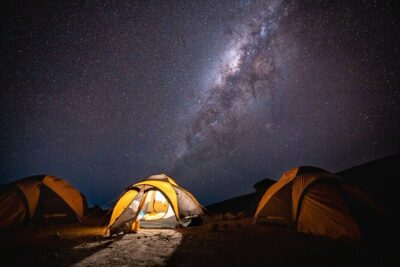
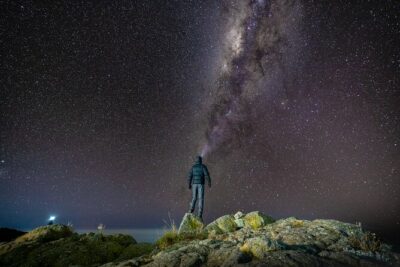
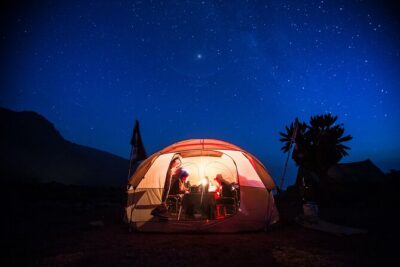
8-Day Small-group Lemosho Kilimanjaro Summit Trekking
Read our review →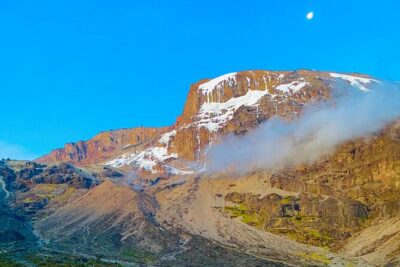
5 Days Best of Tanzania Luxury Safari Northern Circuit
Read our review →
Climbing Kilimanjaro through 7 days Machame Route
Read our review →
7-Day Machame Kilimanjaro Summit Tour from Arusha
Read our review →Browse the lists this tour appears in